Loto-Québec
Loto-Québec, officially the Société des loteries du Québec, is a provincial Crown corporation established in 1969 to oversee and operate legalized games of chance in Quebec. As a member of the Interprovincial Lottery Corporation, it administers national lottery games within the province while running its own extensive network of casinos, video lottery terminals, bingo halls, and online gaming platforms. The corporation is a significant economic entity, employing over 5,000 people and generating substantial revenue for the provincial government through its diverse gaming and lottery offerings. Its operations include flagship draw games like Lotto Max and Lotto 6/49, four major casinos, and the Espacejeux online portal, all governed by a framework that includes responsible gaming certification.
Corporate Structure and Operations
Loto-Québec's activities are managed through a series of specialized subsidiaries, each responsible for distinct segments of the gaming market. The Société des casinos du Québec operates the corporation's four land-based casinos: the Casino de Montréal, Casino de Charlevoix, Casino du Lac-Leamy in Gatineau, and the Casino de Mont-Tremblant. This subsidiary also manages associated hotel and restaurant services at these locations, which collectively employ nearly 4,500 of Loto-Québec's total workforce. The Société des établissements de jeux du Québec oversees the network of approximately 12,000 video lottery terminals (VLTs) installed in bars and brasseries across Quebec, along with operating bingo networks and the Kinzo hall concept. Another subsidiary, Casiloc inc., is tasked with construction projects, acquiring furniture and equipment, and purchasing property for lottery, VLT, and bingo operations.
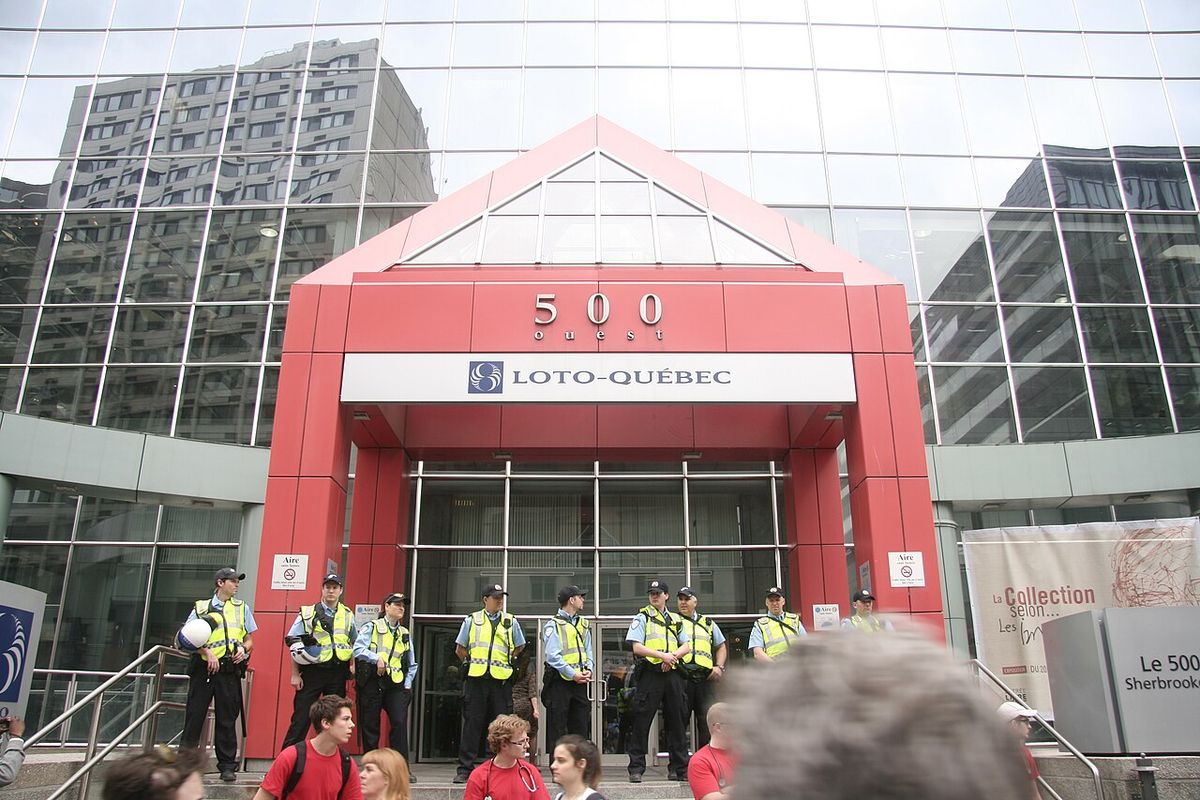
Technologies Nter develops or acquires and operates the computer systems that support Loto-Québec. Lotim Inc. owns the building at 500 Sherbrooke Street West in Montréal that houses the head offices of Loto-Québec and its subsidiaries. The corporation has a program for the acquisition of contemporary Quebec art in its Collection Loto-Québec. The collection holds more than 4,900 works of art created by roughly 1,200 Quebec artists.
Historical Development
The corporation was created in 1969 when the Government of Quebec passed the Act respecting the Société des loteries du Québec, establishing a legal monopoly over games of chance. Loto-Québec held its first lottery draw on March 14, 1970, for a game called Inter Loto, which featured a jackpot of $125,000 and tickets costing $2. Jurisdiction over lotteries was initially contested, leading the federal government to create Loto-Canada in 1972 to help finance the 1976 Summer Olympics in Montreal. Sustained pressure from the provinces resulted in Loto-Canada's dissolution in 1979, cementing provincial control over lottery operations, though provinces are required to transfer a portion of profits to the federal government, amounting to $14.1 million from Quebec in 2006. Loto-Québec introduced its first million-dollar draw in 1976 with Super Loto, and on June 12, 1982, it helped launch Lotto 6/49 as the first pan-Canadian lottery with a jackpot of $500,000.
The corporation expanded into television entertainment with the weekly game show La Poule aux œufs d'or, which debuted in 1993 on the TVA network and was first hosted by Guy Mongrain. The early 2000s saw significant public debate over gaming expansion, including a controversial 2005 proposal with Cirque du Soleil to relocate the Casino de Montréal to the Peel Street Basin, a project that was ultimately abandoned following a critical government report and public health warnings. On March 30, 2006, Loto-Québec became a partner in the Casinos Développement Europe group through its Casino Mundial subsidiary, with a 35% share ownership position. On November 2, 2006, the Quebec Cabinet authorized Loto-Québec to open four gaming halls, to be known as Ludoplexes, though these plans evolved into the opening of new casinos in Trois-Rivières (2007), Quebec City (2007), and Mont-Tremblant (2009). The corporation also faced a major class-action lawsuit regarding VLTs, which was settled out of court in December 2009.
- 1969: Loto-Québec is established by provincial statute.
- March 14, 1970: First lottery draw (Inter Loto) is held.
- 1976: First million-dollar draw with Super Loto.
- June 12, 1982: Launch of pan-Canadian Lotto 6/49 with a $500,000 jackpot.
- 1993: Debut of the TV game show La Poule aux œufs d'or.
- October 25, 2007: Casino de Trois-Rivières opens.
- December 6, 2007: Casino de Quebec City opens.
- June 24, 2009: Casino de Mont-Tremblant is inaugurated.
- December 1, 2010: Official launch of the Espacejeux.com online gaming platform.
Lottery Games and Draws
Loto-Québec operates a wide array of lottery games, including national draws administered through the Interprovincial Lottery Corporation and its own exclusive Quebec products. The flagship national games are Lotto Max and Lotto 6/49, which feature multi-million dollar jackpots and draws held multiple times per week. Lotto Max draws occur every Tuesday and Friday at 10:30 p.m., with each $6 play consisting of three selections of seven numbers from 1 to 52. The game's prize structure includes a main jackpot, Maxplus prizes of $100,000, and Maxmillions $1 million prizes that are added when the jackpot reaches $50 million. Lotto 6/49, Canada's original national lottery, continues to be a popular weekly draw. Quebec-specific draw games include Grande Vie, Banco, and special event games like Célébration, a televised game with a multi-million dollar grand prize.
The corporation also offers instant win scratch tickets at various price points, typically $2, $5, or $10, with grand prizes starting at $150,000. Televised draws for games like La Poule aux œufs d'or air on the TVA network, typically on Sundays at 6:30 p.m. Players can purchase tickets through a network of retail retailers, via Quick Pick computer-generated selections, or through online methods. All game operations are tightly controlled, with plays only valid once registered in Loto-Québec's central computer system, and tickets must be verified and signed at the point of sale. Results for all draws are published promptly on the corporation's official website.
| Game | Draw Schedule | Cost per Play | Notable Feature |
|---|---|---|---|
| Lotto Max | Tuesday & Friday, 10:30 p.m. | $6 | Maxmillions $1M prizes at $50M jackpot |
| Lotto 6/49 | Weekly | Varies | First pan-Canadian lottery (1982) |
| Grande Vie | Weekly | $6 | Quebec-exclusive draw game |
| Banco | Multiple draws weekly | $3 | Numbers game with daily draws |
| Célébration (2026) | Special gala draws | $25 | Grand prize of $5,000,000 |

Online Gaming and Espacejeux
Loto-Québec's online gaming platform, Espacejeux.com, was launched on December 1, 2010, following government authorization earlier that year. The platform was developed in response to the proliferation of illegal online gaming sites, which the corporation noted exceeded 2,000 with few responsible gaming measures. Espacejeux offers a comprehensive suite of digital gaming products, including online lottery ticket purchases for draw games like Lotto Max and Lotto 6/49. Players can complete entire transactions online or generate a bar code to present at a retail retailer for ticket issuance. The platform also features a full online casino with virtual slot machines, table games, and live dealer games, as well as online poker, sports betting, and bingo.
The introduction of online gaming faced opposition from public health authorities and the EmJEU coalition, which advocated for a government moratorium. Despite a petition tabled in the National Assembly of Quebec, the government proceeded, with Loto-Québec arguing that a regulated platform allowed for the implementation of responsible gaming controls. All free plays won through online purchases are automatically issued for the draw following the one for which they were won. The corporation maintains strict account security protocols, and customer service representatives cannot discuss account details via email to protect personal information. The platform is accessible via desktop and mobile devices, allowing players to engage with Loto-Québec's games on the go.
Responsible Gaming and Social Responsibility
Loto-Québec's approach to responsible gaming has been a subject of both recognition and scrutiny. On April 1, 2009, the corporation was awarded the highest available level of international certification (Level 4) in responsible gaming by the World Lottery Association. This certification followed the implementation of a 2004 development plan that included measures to tighten access to gaming, such as reducing the number of video lottery terminals by 20% between 2006 and 2009, from 14,301 to 11,410 machines. The corporation states that its regulated online platform, Espacejeux, incorporates responsible gaming measures not present on illegal sites. It also operates a self-exclusion program and provides information on gambling risks.
Public debate over the social impact of gaming has been persistent. In 2004, the EmJEU coalition (Ethics for moderation in gambling) was formed by activists and public personalities to demand more ethical administration from Loto-Québec. A major class-action lawsuit, begun in 2002 by former gambler Jean Brochu, accused the corporation of encouraging VLT use without adequately informing users of dependency risks. The suit was settled out of court in December 2009, with the plaintiffs acknowledging that VLTs were not the sole cause of compulsive gambling. The settlement included provisions for the Quebec government to refund therapy costs for compulsive gamblers from 1994 to 2002, with Medicare covering costs since 2002, and capped total indemnity payments at $50 million. Loto-Québec provides links to the provincial help line, 1 800 461‑0140, a confidential and free service available 24/7.

Casino and Gaming Hall Network
The corporation's land-based gaming operations are a major component of its business, managed by the Société des casinos du Québec. The flagship Casino de Montréal, one of the largest casinos in the world, underwent a $100 million renovation announced in March 2009. The Casino du Lac-Leamy in Gatineau offers gaming alongside hotel and entertainment facilities. The Casino de Charlevoix is located in the Pointe-au-Pic sector of La Malbaie in a popular tourist region, while the Casino de Mont-Tremblant, inaugurated on June 24, 2009, serves the Laurentian resort area. These properties collectively offer thousands of slot machines, hundreds of table games, poker rooms, and high-limit salons, alongside dining, live entertainment, and conference facilities.
Beyond casinos, Loto-Québec operates a network of gaming halls and bingo parlours. The Société des établissements de jeux du Québec runs two gaming hall entertainment complexes in Quebec City and Trois-Rivières. The bingo network was refreshed with the launch of Kinzo on October 19, 2010, a modern bingo hall concept designed with a lounge-like atmosphere, shorter games, and bar service to attract a younger clientele than traditional bingo. The corporation's extensive VLT network, though reduced from its peak, remains a significant revenue generator, with the 11,410 terminals in operation in 2009 generating sales of approximately $670 million. These terminals are located in licensed bars and brasseries, providing a widespread form of electronic gaming across the province.
- Casino de Montréal: The corporation's largest casino property, located on Notre-Dame Island.
- Casino du Lac-Leamy: Located in Gatineau, includes a hotel and theatre.
- Casino de Charlevoix: Situated in the Pointe-au-Pic sector of La Malbaie.
- Casino de Mont-Tremblant: Opened in 2009 in the Laurentian resort region.
- Gaming Halls: Entertainment complexes in Quebec City and Trois-Rivières.
- Kinzo Halls: Modern bingo venues with a lounge atmosphere.
Claiming Prizes and Customer Service
Winners of Loto-Québec games must follow a specific procedure to claim their prizes, details of which are published on the corporation's website. For smaller prizes, winners can typically claim at any licensed retailer, while larger prizes must be claimed at designated Loto-Québec offices or by mail. The head office at 500 Sherbrooke Street West in Montreal houses administrative offices and a prize payment centre, open Monday to Friday from 8:30 a.m. to 4:30 p.m., excluding holidays. Other prize claim locations include the casino offices in Gatineau and Mont-Tremblant, as well as service centres in Quebec City's Méga Centre Beauport and Trois-Rivières. Players are advised to sign their tickets immediately after purchase and to verify all information printed on the ticket before leaving the retailer.
Customer service for general inquiries can be reached by telephone at 1 866 611‑LOTO (5686) on weekdays from 8:30 a.m. to 4:30 p.m. For questions related to online gaming accounts, security protocols prevent service agents from discussing account details via email, directing users to secure account management functions instead. The corporation provides comprehensive game rules and conditions on its website, with updates published as official PDF documents. For problem gambling support, Loto-Québec directs individuals to the provincial help line at 1 800 461‑0140, a confidential, free, and bilingual service available 24 hours a day, seven days a week. This line offers information, advice, and referrals for those seeking help with gambling-related issues.
Questions about Loto-Québec
What is Loto-Québec and when was it founded?
Loto-Québec is the provincial Crown corporation responsible for overseeing and operating legalized games of chance in Quebec. It was established in 1969 through the Act respecting the Société des loteries du Québec. The corporation holds a monopoly on lottery and gaming operations within the province and is a member of the Interprovincial Lottery Corporation. Its first lottery draw was held on March 14, 1970, for a game called Inter Loto with a $125,000 jackpot.
What are Loto-Québec's most popular lottery games?
The most popular lottery games offered by Loto-Québec include the national draws Lotto Max and Lotto 6/49. Lotto Max draws occur every Tuesday and Friday at 10:30 p.m., with tickets costing $6 per play and featuring prizes like Maxmillions when the jackpot reaches $50 million. Lotto 6/49 was the first pan-Canadian lottery, launched on June 12, 1982, with an initial jackpot of $500,000. Quebec-specific games include Grande Vie, Banco, and special event games like Célébration, which in 2026 offered a $5 million grand prize.
How can I play Loto-Québec games online?
You can play Loto-Québec games online through its Espacejeux.com platform, launched on December 1, 2010. The site allows for the online purchase of lottery tickets for draws like Lotto Max and Lotto 6/49, either through a complete online transaction or by generating a bar code to present at a retailer. The platform also hosts a full online casino with slots, table games, live dealers, poker, and sports betting. All free plays won online are automatically issued for the next consecutive draw.
Where are Loto-Québec's casinos located?
Loto-Québec operates four casinos through its subsidiary, the Société des casinos du Québec. These are the Casino de Montréal on Notre-Dame Island, the Casino du Lac-Leamy in Gatineau, the Casino de Charlevoix in the Pointe-au-Pic sector of La Malbaie, and the Casino de Mont-Tremblant in the Laurentians. The Casino de Trois-Rivières opened on October 25, 2007, and the Quebec City casino opened on December 6, 2007, though these later evolved into gaming hall complexes. The Casino de Mont-Tremblant was inaugurated on June 24, 2009.
What is the phone number for Loto-Québec customer service?
For general inquiries, Loto-Québec's customer service can be reached at 1 866 611‑LOTO (5686), available Monday to Friday from 8:30 a.m. to 4:30 p.m. The corporation's head office and prize payment centre is located at 500 Sherbrooke Street West in Montreal. For questions about online accounts, agents cannot discuss details via email for security reasons. For problem gambling support, Quebec operates a confidential, free, and bilingual help line at 1 800 461‑0140, available 24/7.
How does Loto-Québec address responsible gaming?
Loto-Québec holds a Level 4 responsible gaming certification from the World Lottery Association, awarded on April 1, 2009. Its measures include a reduction in video lottery terminals from 14,301 in 2006 to 11,410 in 2009, self-exclusion programs, and responsible gaming tools on its Espacejeux platform. The corporation was part of a December 2009 out-of-court settlement of a class-action lawsuit regarding VLTs, which included provisions for the government to refund therapy costs for compulsive gamblers from 1994 to 2002. It directs individuals to the provincial help line at 1 800 461‑0140 for support with gambling problems.
Sources and further reading
- Loto-Québec (Wikipedia)
- How our games work (loteries.lotoquebec.com)
- Nous joindre, La Société - Loto-Québec, lotoquebec (societe.lotoquebec.com)
Checked by the Nosy Mag desk. Last updated 2026-11-07.