Plains Indians
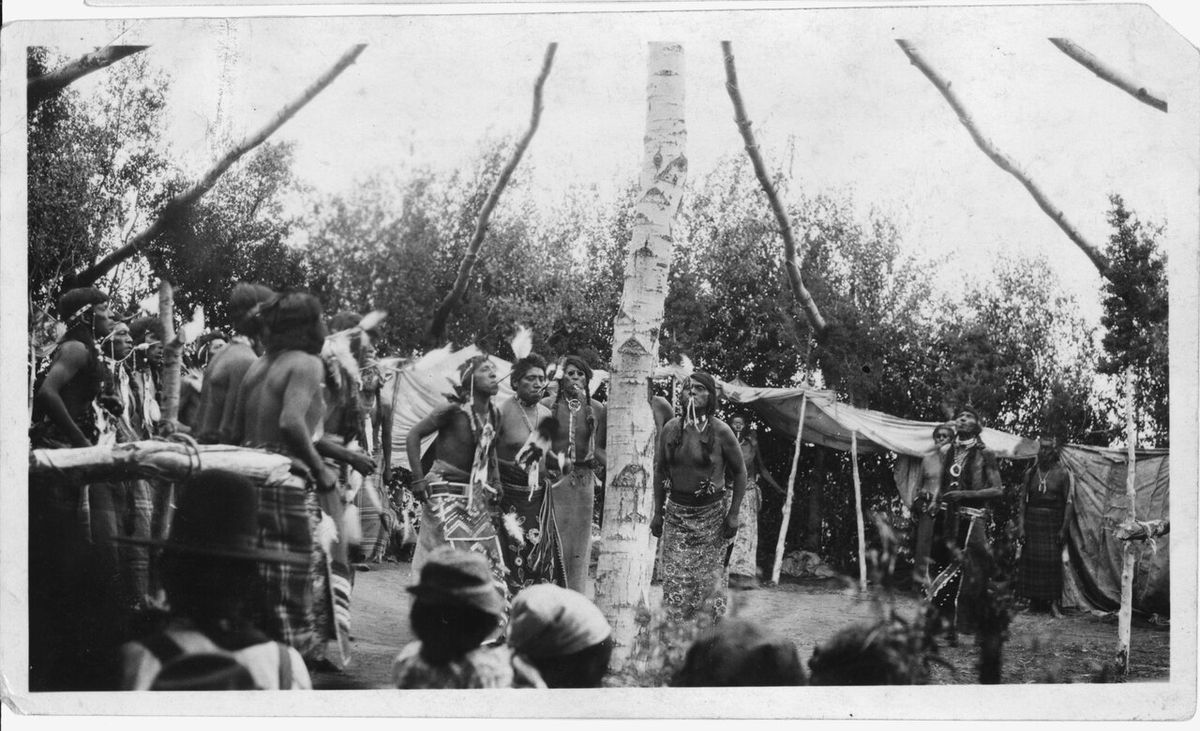
The Plains Indians, also known as the Indigenous peoples of the Great Plains, are the Native American tribes and First Nations peoples whose traditional territories span the vast Interior Plains of North America. Their history is defined by the rise of a distinctive horse culture in the 17th through 19th centuries, centred on the nomadic pursuit of the American bison. For Canadians, the Plains peoples, including nations like the Blackfoot, Plains Cree, Assiniboine, and Sioux, represent a foundational part of the nation's history and cultural fabric. Their legacy continues to shape contemporary Indigenous identity, cultural revitalization, and political discourse across the Prairies and beyond.
Historical Origins and Early Lifeways
The earliest peoples of the Great Plains were hunters and gatherers who developed horticulture and agriculture over centuries, settling into sedentary villages. The cultivation of maize, which spread north from the Southwest, became widespread in the southern Plains around 900 AD. Numerous Plains peoples hunted the American bison, using every part of the animal for food, clothing, tools, and shelter. They followed the seasonal migrations of the herds, living in portable tipis. Spanish explorer Francisco Vásquez de Coronado provided the first European descriptions of Plains Indian culture in 1541, noting skin tepees, dog-pulled travois, and the use of jerky and pemmican. Siouan-speaking peoples may have originated in the lower Mississippi River region and were possibly part of the Mound Builder civilization. Wars with the Ojibwe and Cree peoples pushed the Lakota west onto the Great Plains in the mid to late 17th century. The Shoshone originated in the western Great Basin and spread into present-day Idaho and Wyoming by 1500.
The Horse Revolution and Nomadic Culture
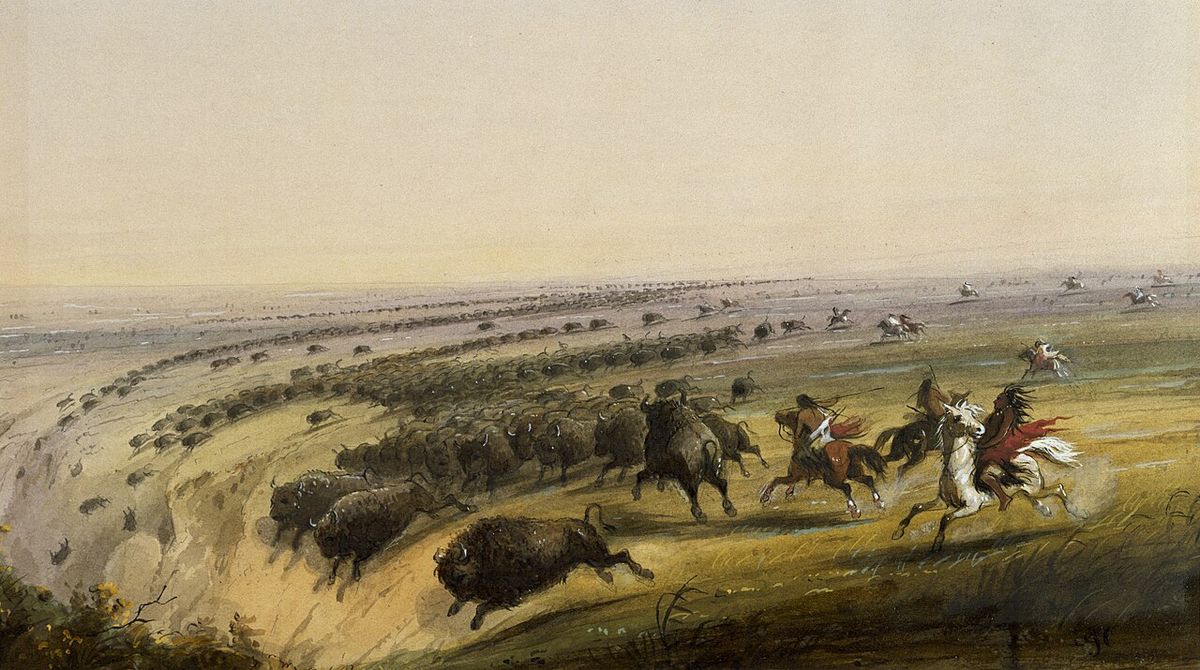
The reintroduction of the horse, which had been extinct in the Americas for 15,000-13,000 years, deeply transformed Plains societies starting in the 16th century. Horses initially obtained from Spanish colonists in New Mexico spread north through trade, raid, and escape. The Comanche were among the first to fully commit to a mounted nomadic lifestyle by the 1730s. The horse allowed tribes to hunt bison with far greater efficiency, travel longer distances, and transport more goods. Equestrianism became a central element of prestige. The distribution moved rapidly, with the Shoshone in Wyoming having horses by about 1700 and the northern Blackfoot acquiring them by the 1730s. By 1770, a mounted bison-hunting culture was established from Saskatchewan southward. The first Spanish conqueror to bring horses was Hernán Cortés in 1519 with about sixteen horses. Juan de Oñate's 1592 expedition brought 7,000 head of livestock, including mares, to New Mexico, which was more significant for herd establishment.
The adoption of the horse also reshaped social structures and intensified intertribal competition. In the south, Comanche and Kiowa families owned an average of 35 horses and mules each by the 19th century. This wealth created more stratified societies and increased the practice of raiding. On the colder northern Plains, horses were scarcer, which encouraged warfare over the limited number that could survive the winter. The Lakota, positioned in the prime bison range, maintained smaller herds and traded furs and guns with French and American traders, rising to dominance by the mid-19th century. The milder winters of the southern Plains favoured a pastoral economy, while northern tribes remained more dependent on dogs for transport before acquiring horses.
Tribal Diversity and Classifications
Plains tribes are broadly classified into two overlapping groups based on their primary subsistence strategies and mobility. The first group became fully nomadic horse cultures in the 18th and 19th centuries, following the bison herds. The second group were more sedentary or semi-sedentary, living in agricultural villages while also hunting bison. These groups spoke languages from several major families. The Southern Plains villagers, probably Caddoan speakers, were the first farmers on the Plains.
Nomadic Horse Cultures:- Arapaho
- Assiniboine
- Blackfoot (Piegan, Blood, Siksika)
- Cheyenne
- Comanche
- Crow
- Gros Ventre (Atsina)
- Kiowa
- Lakota (Teton Sioux)
- Lipan Apache
- Plains Apache (Kiowa Apache)
- Plains Cree
- Plains Ojibwe
- Sarsi (Tsuut'ina)
- Stoney (Nakoda)
- Tonkawa
- Arikara
- Hidatsa
- Iowa
- Kaw (Kansa)
- Kitsai
- Mandan
- Missouria
- Omaha
- Osage
- Otoe
- Pawnee
- Ponca
- Quapaw
- Santee Dakota
- Wichita
- Yankton and Yanktonai Dakota
The Bison Economy and Its Destruction
The bison was the ecological and economic foundation of Plains life. The annual cycle for northern nomads like the Lakota involved a communal spring hunt, large summer encampments for ceremonies like the Sun Dance, and dispersal into smaller bands for the fall hunt. On the southern Plains, the Comanche conducted deep raids into Mexico for horses, sometimes venturing 1,000 miles south. This way of life was deliberately targeted for destruction in the 19th century. The U.S. federal government promoted bison hunting to clear land for cattle ranching and to subdue Indigenous nations. The railroad industry also wanted herds culled to prevent delays and damage to trains.
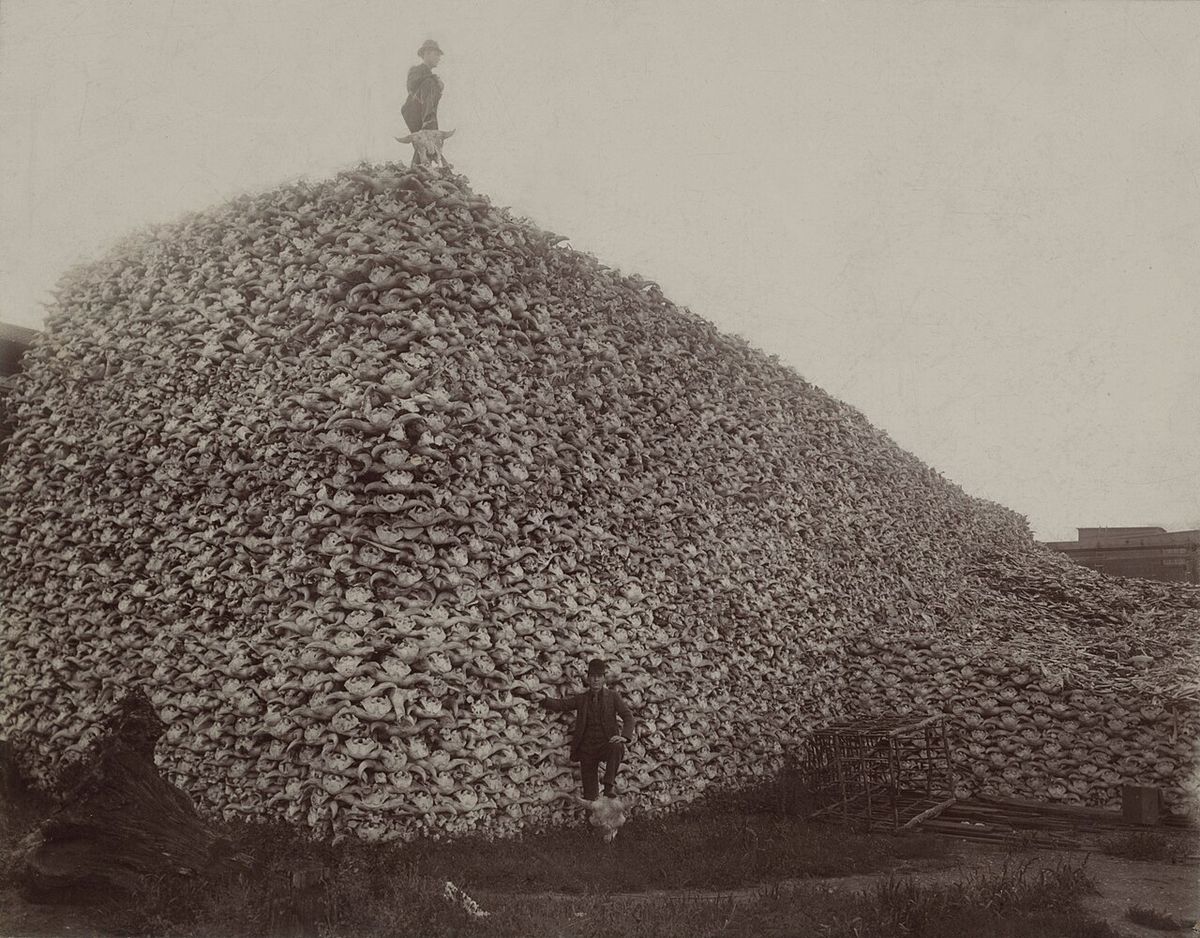
The slaughter was catastrophic and systematic. Hunters took hides for commercial sale, leaving carcasses to rot. Their bones were later collected and shipped east. In 1874, President Ulysses S. Grant pocket vetoed a federal bill to protect the herds. In 1875, General Philip Sheridan pleaded to a joint session of Congress to slaughter the herds to deprive the Plains Indians of their source of food. By the 1880s, the herds were decimated, reduced from tens of millions to a few hundred by the early 1900s. This had immediate and persistent adverse impacts. By the early 20th century, bison nations had greater child mortality and unemployment. By the late 20th century, income per capita was 25 percent lower for bison nations compared to other Indigenous nations.
Conflict, Resistance, and the Reservation Era
Armed conflicts known as the Indian Wars intensified in the late 19th century as Plains nations resisted American expansion. Notable conflicts include the Dakota War, Great Sioux War, Snake War and Colorado War. Comanche power peaked in the 1840s with large-scale raids into Mexico. The period culminated in the Wounded Knee Massacre on December 29, 1890. U.S. soldiers killed up to 300 Lakota, mostly women, children, and elderly men, during an attempt to disarm a camp where the Ghost Dance was being practiced. This religious movement was founded by the Northern Paiute spiritual leader Wovoka. The massacre marked a brutal end to major armed resistance. The loss of the bison and military defeat forced most Plains tribes onto reservations, often on lands deemed unsuitable for European American settlement.
The Canadian government similarly pursued a policy of treaties and established reserves. This transition disrupted traditional governance, economies, and social structures, imposing foreign systems of administration. The reservation era created conditions of poverty and marginalization. Plains nations have worked to overcome these through persistent efforts at cultural and political revitalization throughout the 20th and 21st centuries. They assert treaty rights and manage natural resources to build diverse economies.
Material Culture and Subsistence
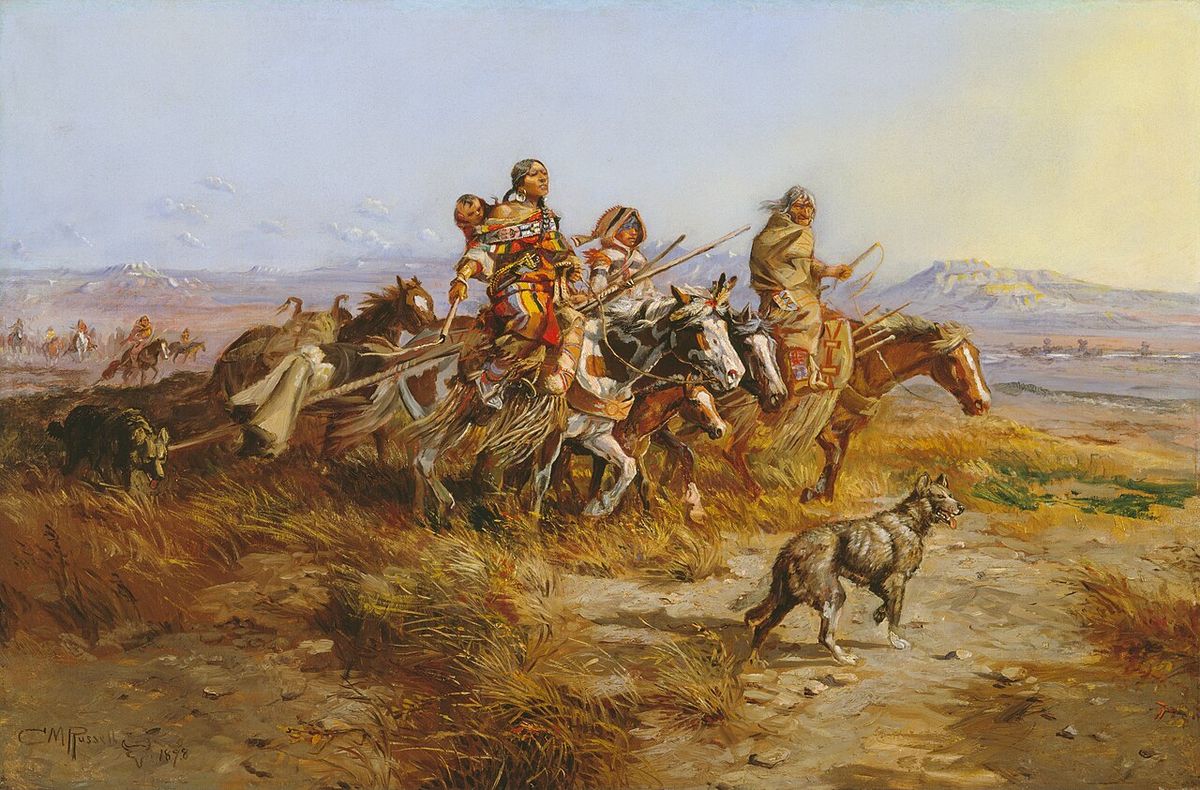
Plains material culture was intimately tied to the environment. For sedentary villagers like the Mandan, Hidatsa, and Arikara, agriculture was central. They cultivated drought-resistant varieties of corn, beans, squash, and sunflowers, employing water-harvesting techniques without irrigation. These groups lived in permanent earthlodge villages along rivers. Nomadic tribes used the tipi, a conical dwelling made of bison hides stretched over wooden poles. Its door always faced east. Other essential items included the travois for transport and parfleche bags for storage.
Hunting methods evolved with technology. Before horses, communal drives using pounds or cliffs were common. With horses, hunters could ride alongside herds using bows and later guns. The Plains Indians shortened their bows to three feet for use on horseback. The primary game was the bison, but elk, deer, and pronghorn were also hunted. Plant foods remained important, with women gathering prairie turnips, berries, plums, and chokecherries. These were often preserved by drying and incorporated into pemmican, a high-energy food of dried meat, fat, and berries. This staple was a key commodity in intertribal commerce. The farming tribes also traded corn to nomadic tribes for dried buffalo meat.
Cultural Practices and Social Organization
Plains cultures developed rich ceremonial and social traditions. Large summer gatherings were times for major ceremonies, political councils, and socializing. The Sun Dance was a widespread ceremony involving prayer, sacrifice, and dancing for community welfare. Given the linguistic diversity, a sophisticated system of hand signs, known as Plains Indian Sign Language, developed to facilitate communication during trade and diplomacy. Social organization varied but often included bands led by chiefs, with societies for warriors and women playing key parts in governance. Men gained status through bravery in war and success in hunting. The highest military honour was for 'counting coup' touching a live enemy. Women's roles were crucial in processing food and hides, crafting, and maintaining the household. Women typically owned the family's home and its contents. Spiritual beliefs were animistic, with a deep reverence for the natural world. The buffalo and eagle were particularly sacred. Visions sought through prayer and fasting were central to personal and communal guidance.
The Plains Indians Today
Contemporary Plains Indians are resilient nations actively working to preserve and revitalize their cultures, languages, and sovereignty. Many tribes host public powwows, ceremonies, and cultural festivals, such as on National Indigenous Peoples Day in Canada. Language preservation is a major focus, with tribes developing apps, immersion schools, and documentation projects. There is a significant movement to restore bison to tribal lands for cultural and ecological reasons. In the United States, 574 tribal entities were federally recognized as of 2024, many of which are Plains nations. Political and economic development continues, with tribes asserting treaty rights, managing natural resources, and building diverse economies. Historical trauma from colonization, the reservation system, and residential schools are addressed through community-led healing initiatives. The people of the Great Plains were found to be the tallest in the world during the late 19th century based on data collected by Franz Boas, a marker of health and standard of living. Their ongoing cultural expressions and political advocacy ensure their history and presence remain integral to North American society.
Questions about Plains Indians
Who are the Plains Indians?
The Plains Indians are the Native American tribes and First Nations peoples who have historically lived on the Interior Plains of North America. They are divided into two broad classifications. The first group became fully nomadic horse cultures during the 18th and 19th centuries, following the bison herds. The second group were sedentary and semi-sedentary, living in villages, raising crops, and trading with other tribes. The Southern Plains villagers were probably Caddoan speakers and the first farmers.
How did horses change Plains Indian culture?
Horses, reintroduced by the Spanish in the 16th century, revolutionized Plains life by the 18th century. They transformed bison hunting into a highly efficient individual pursuit, allowed tribes to follow herds more easily, and increased material wealth. Horses became symbols of prestige, intensified warfare, and enabled tribes like the Comanche and Lakota to expand their territories. The Comanche were among the first to commit to a fully mounted lifestyle by the 1730s. Juan de Oñate's 1592 expedition with 7,000 livestock was a key source for horses in New Mexico.
Why were bison so important to Plains Indians?
The American bison was the central resource for Plains Indian economies. It provided food, clothing from hides, and materials for tools and shelter. Its near-extinction in the late 19th century, driven by commercial hunting and U.S. government policy, was catastrophic, leading to starvation, economic collapse, and forced relocation. By the early 20th century, bison were reduced to a few hundred animals. This loss had long term impacts, including lower income per capita for bison nations in the late 20th century.
What was the Wounded Knee Massacre?
The Wounded Knee Massacre occurred on December 29, 1890, on the Lakota Pine Ridge Reservation in South Dakota. U.S. Army soldiers attempted to disarm a group of Lakota practicing the Ghost Dance, a religious movement founded by the Northern Paiute leader Wovoka. Gunfire erupted, and soldiers killed up to 300 Lakota, mostly women, children, and elderly men. This event marked the end of major armed resistance on the Plains during the Indian Wars era.
What is the difference between nomadic and sedentary Plains tribes?
Nomadic tribes, such as the Lakota and Comanche, adopted a horse-based culture focused on hunting bison and lived in portable tipis. Sedentary tribes, like the Mandan and Pawnee, lived in permanent earthlodge villages along rivers, practiced agriculture growing corn, beans, and squash, and also hunted bison. Village tribes traded agricultural surplus with nomadic tribes for bison products. The Hidatsa and Mandan cultivated maize at the northern limit of its range in North Dakota.
How do Plains Indians celebrate their culture today?
Plains tribes celebrate through public powwows, rodeos, and cultural festivals. Language preservation efforts include immersion programs and digital apps. There is a strong movement to restore bison herds to tribal lands for cultural and ecological reasons. Tribes assert sovereignty through economic development, legal action to protect treaty rights, and educational programs. As of 2024, there are 574 federally recognized tribal entities in the United States, many of which are Plains nations. Research shows the Plains peoples were the tallest in the world in the late 19th century.
Sources and further reading
- Plains Indians (Wikipedia)
- Native People of the American Great Plains (kids.nationalgeographic.com)
- Northern Plains Tribes, Fort Union Trading Post ... (nps.gov)
Checked by the Nosy Mag desk. Last updated 2026-10-19.