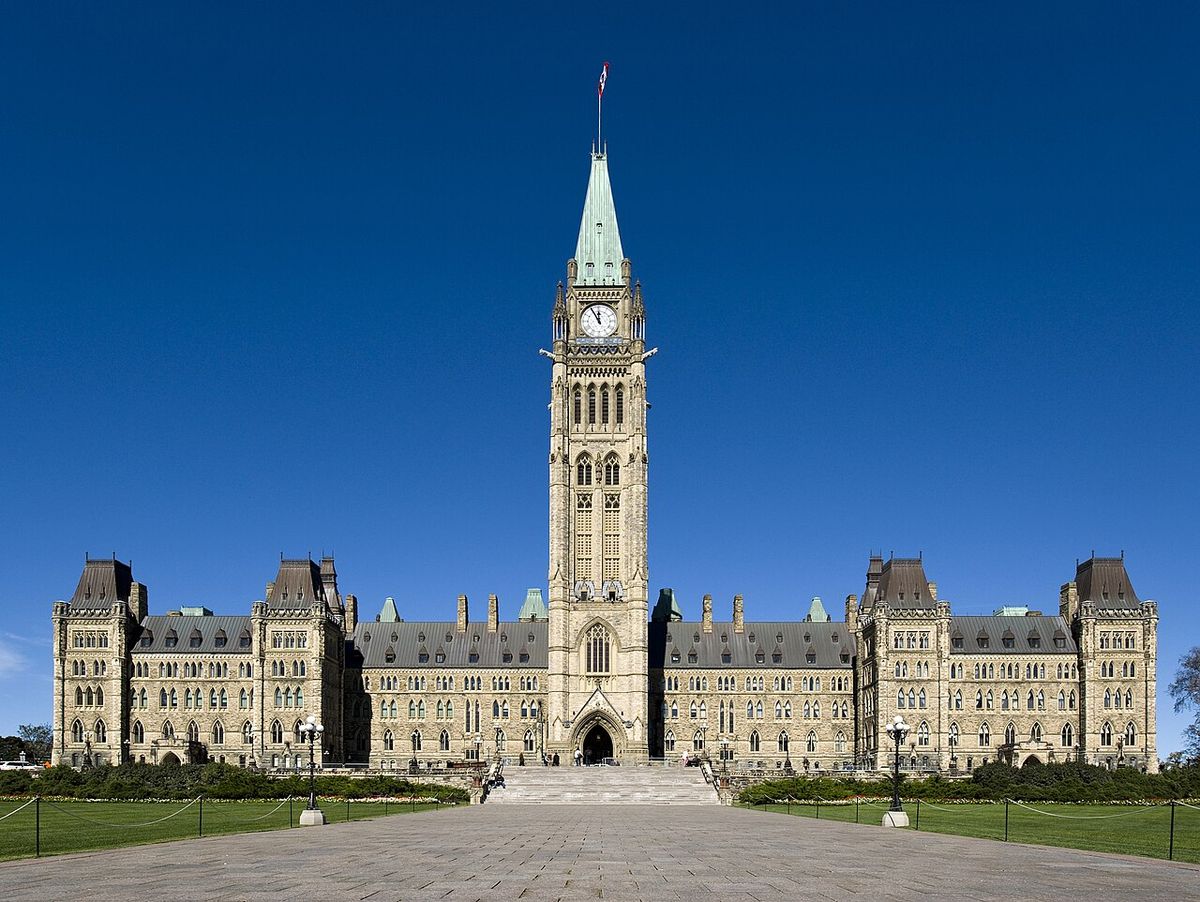
Rhinoceros Party
The Rhinoceros Party, officially the Parti Rhinocéros Party, is a Canadian federal political party founded on political satire and absurdist humour. Originally established in 1963 and active until 1993, the party was refounded in Montreal on May 21, 2006, and reregistered with Elections Canada on August 23, 2007. It is known for its foundational promise not to keep any of its promises if elected, offering an almost credible alternative to voters disillusioned by traditional politics. The party's platform consists of intentionally outlandish and impossible policies designed to entertain and critique the political process.
History and origins
The Rhinoceros Party was first founded in 1963 by Jacques Ferron, who was designated the Éminence de la Grande Corne du parti Rhinocéros. The party operated as a registered federal entity from the 1960s until its deregistration in 1993. Its creation was rooted in the tradition of political satire, aiming to mock and critique the earnestness of mainstream politics through humour. The party claimed spiritual descent from Cacareco, a Brazilian rhinoceros elected to a city council in São Paulo in 1958, and even listed Cornelius the First, a rhinoceros from Quebec's Granby Zoo, as its official leader. This original incarnation attracted a variety of artists, poets, and comedians who used candidacies as a form of performance art and social commentary.
The party was dissolved in 1993 after it abstained from that year's federal election to protest new rules requiring parties to run at least 50 candidates. Chief Electoral Officer Jean-Pierre Kingsley rejected the abstention and ordered the party removed from the Registry of Canadian Political Parties. After years of sporadic revival attempts, the party was successfully refounded on May 21, 2006, in Montreal by François Yo Gourd, a veteran of the original party. This new entity operated initially under the name Neorhino.ca, a nod to the original party and the character Neo from The Matrix, before formally readopting the Rhinoceros Party name in 2010. It was reregistered with Elections Canada on August 23, 2007, and has contested every federal election since. In 2001, a separate attempt to revive the party for a British Columbia provincial election saw candidates like Liar Liar and Helvis appear on ballots, while unregistered candidate Geoff Berner promised cocaine and whores to potential investors.
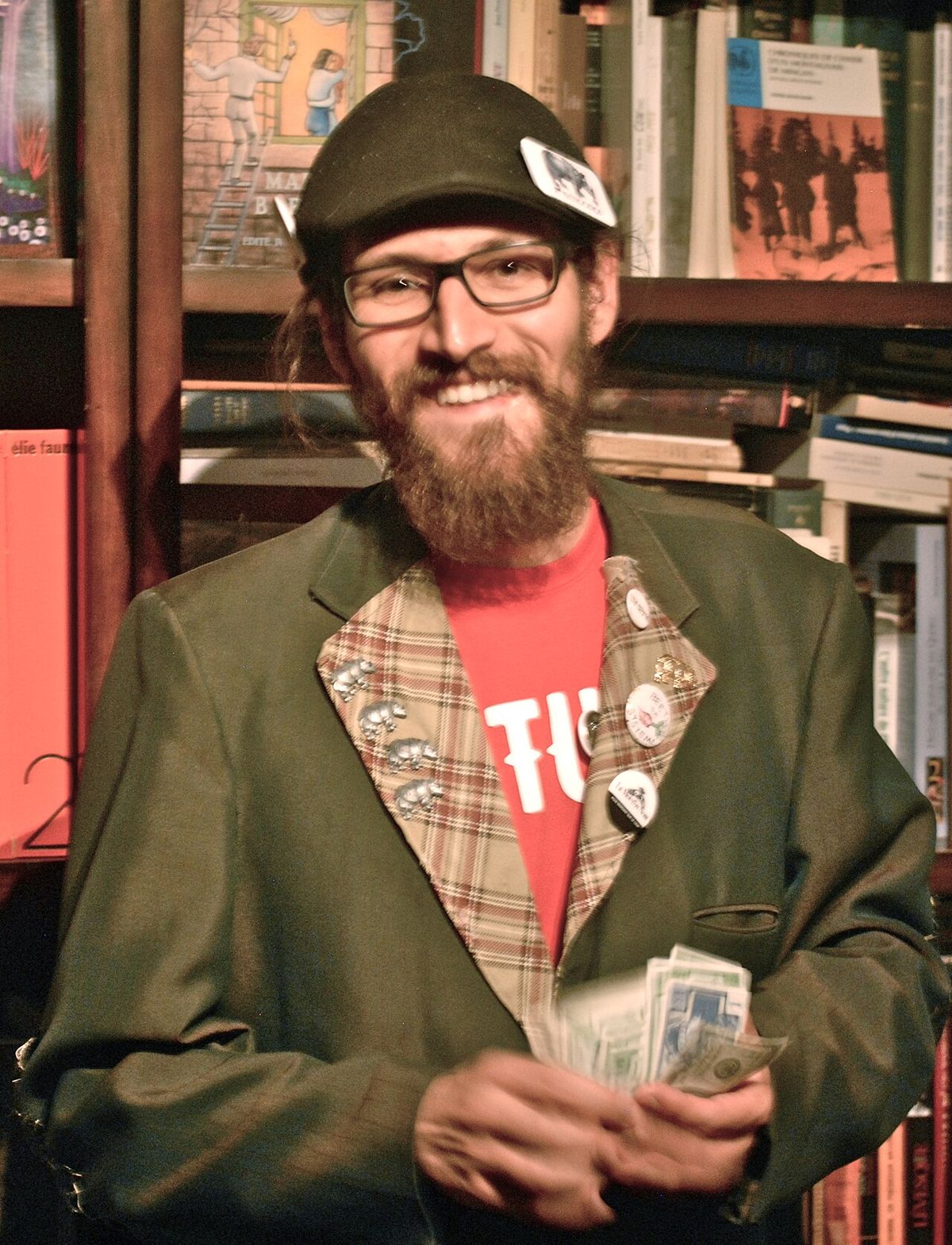
Philosophy and political style
The Rhinoceros Party's core philosophy is encapsulated in its primal promise to keep none of its promises if elected. This meta promise liberates the party to propose wildly impractical and humorous policies without the constraint of feasibility. The party describes politicians as being thick-skinned, slow-moving, and dim-witted, much like their rhinoceros mascot, and its campaigns are designed to highlight these perceived flaws through exaggeration. Its approach is not to govern but to entertain, provoke thought, and offer a protest vote for those dissatisfied with the conventional political landscape. The party also declared that, should it ever win an election, it would immediately dissolve and force a second election because elections are so much fun.
Candidates and members often adopted satirical ideological labels, such as describing themselves as Marxist-Lennonist, a pun referencing comedians Groucho Marx and musician John Lennon rather than political theorists. The party grants considerable autonomy to its candidates, allowing them to campaign on personal slogans and local joke platforms. This decentralized structure has led to a vast and creative array of campaign promises over the decades, all united by their shared absurdity and function as political theatre. The party's official communications state that its lies surpass all parliamentary standards of ridicule and that its candidates have gathered over 15,250,000 lies of experience. All election promises come with a standard warranty of two years or 50,000 votes.
Notable policies and campaign promises
Over its long history, the Rhinoceros Party has released hundreds of satirical policy proposals. These promises are never intended to be implemented but serve to lampoon political rhetoric, bureaucratic inefficiency, and national issues. The policies often involve literal interpretations of political slogans, impossible engineering projects, or playful critiques of Canadian institutions. Individual candidates have also contributed their own unique pledges, making the party's platform a collective work of comedic art.
- Repealing the law of gravity.
- Providing higher education by building taller schools.
- Making English, French and illiteracy Canada's three official languages.
- Tearing down the Rocky Mountains so Albertans could see the Pacific sunset.
- Abolishing unemployment by abolishing Statistics Canada.
- Annexing the United States to make it Canada's third territory.
- Paving the Bay of Fundy to create more parking in the Maritimes.
- Declaring war on Belgium because the cartoon character Tintin killed a rhinoceros.
- Storing nuclear waste in the Senate, arguing political waste had been stored there for years.
- Seating the Queen of Canada in Buckingham, Quebec.
- Appointing lottery winners to the Senate instead of giving cash prizes.
- Building one nuclear power plant per household and providing monthly lead underwear.
- Eliminating small businesses and replacing them with very small businesses having less than one employee.
In its more recent iterations, the party has continued this tradition. The 2019 campaign declared that national defence, the economy, education, employment, and the environment were each its number one priority. Specific promises included privatizing the Senate by 2026, changing 25 cent coins into thirty-cent coins to increase incomes by 16 percent, and forcing car manufacturers to produce more green cars in specific shades like forest green and neon green. The party also pledged to fight global warming by making it happen in 10 years instead of 20. Other 2019 pledges included opening tax havens in all provinces, allowing advertising in the Senate and House of Commons, and adding one holiday per month including April 1 and the party leader's birthday.
Electoral performance
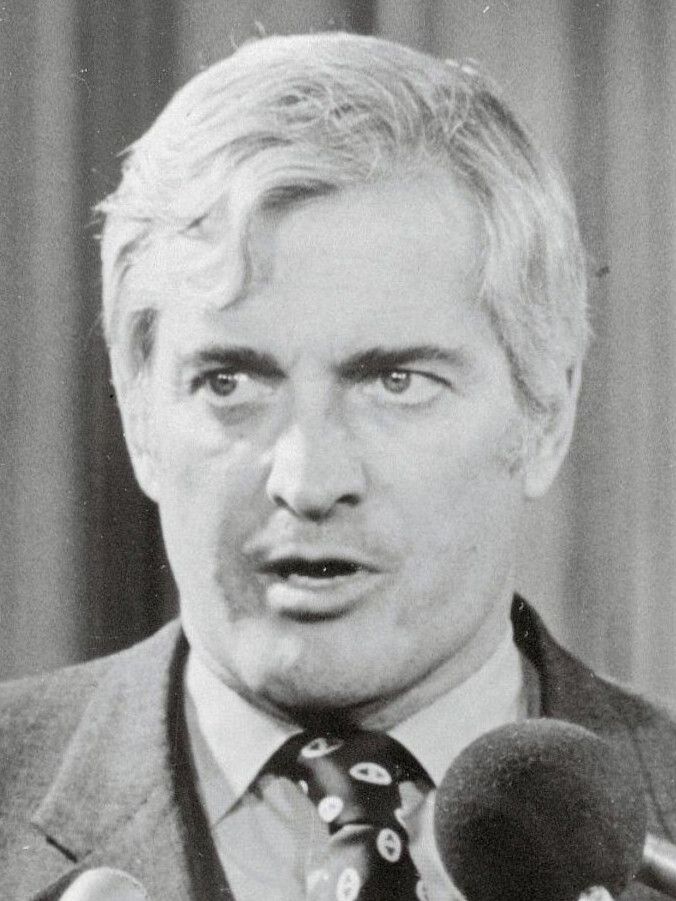
The Rhinoceros Party has never won a seat in the House of Commons. Its electoral significance lies in its ability to attract protest votes and occasionally embarrass mainstream parties by outpolling them in specific ridings. The party's peak in popular vote came in the 1984 federal election, where it finished fourth nationally, ahead of several other registered minor parties. In the 1980 election, candidate Sonia Chatouille Côté, a professional clown, finished second in the Montreal riding of Laurier, ahead of both the New Democratic and Progressive Conservative candidates. In the 1988 election, the party ran a candidate named John Turner against Liberal leader John Turner, receiving 760 votes in that riding.
Since its refounding in 2006, the Rhinoceros Party has participated in several federal elections. The party, initially known as Neorhino.ca, was registered with Elections Canada on August 23, 2007. It fielded candidates in the 2007 by-elections for the ridings of Outremont and Saint-Hyacinthe, Bagot. The party also ran candidates in the 2008 and 2011 federal elections. In the 2019 federal election, the party ran a candidate named Maxime Bernier in the riding of Beauce against the incumbent Maxime Bernier of the People's Party of Canada. The Rhino candidate received 1,084 votes in that election. Before 2007, the party had not fielded a candidate since Bryan Gold's failed bid in a 1990 by election in Beauséjour, New Brunswick.
| Election | Total Votes | Notes |
|---|---|---|
| 2008 | No seats won | Party ran as Neorhino.ca. |
| 2011 | No seats won | Party name changed to Rhinoceros Party in 2010. |
| 2015 | No seats won | Leader Sébastien Côrriveau campaigned as Sébastien CôRhino Côrriveau. |
| 2019 | No seats won | Includes 1,084 votes for Maxime Bernier in Beauce. |
| 2021 | No seats won | Party continued to contest elections. |
Leadership and organization
The original Rhinoceros Party was led symbolically by a rhinoceros, Cornelius the First, but was guided by founder Jacques Ferron and later by various artists and activists. After its refounding in 2006, François Yo Gourd served as its principal organizer. From 2014 until 2024, the party was led by Sébastien Côrriveau, who campaigned under the names Sébastien CôRhino Côrriveau in 2015 and Sébastien CoRhino in 2019. The party maintains a decentralized and volunteer driven structure, encouraging participation with the slogan that Rhinos are the best looking people in any room. In 2015, Côrriveau declared in Montreal he was willing to nationalize Tim Hortons and privatize the Royal Canadian Army simultaneously to study the results.
Membership in the Rhinoceros Party is free and voluntary, with the party promoting it as the only one to offer lifetime memberships. It lists advantages including no cost, no obligation, and a 75 percent tax credit for donations. The party's organization focuses on low barrier entry for candidates, though it notes the requirement to gather 140 signatures from electors in a riding to secure nomination. Its operations are funded through donations, and it actively recruits volunteers to join what it calls millions of activists from coast to coast. The party also promises to help victims of identity theft by providing a new name and date of birth to citizens who request it.
Notable candidates and stunts
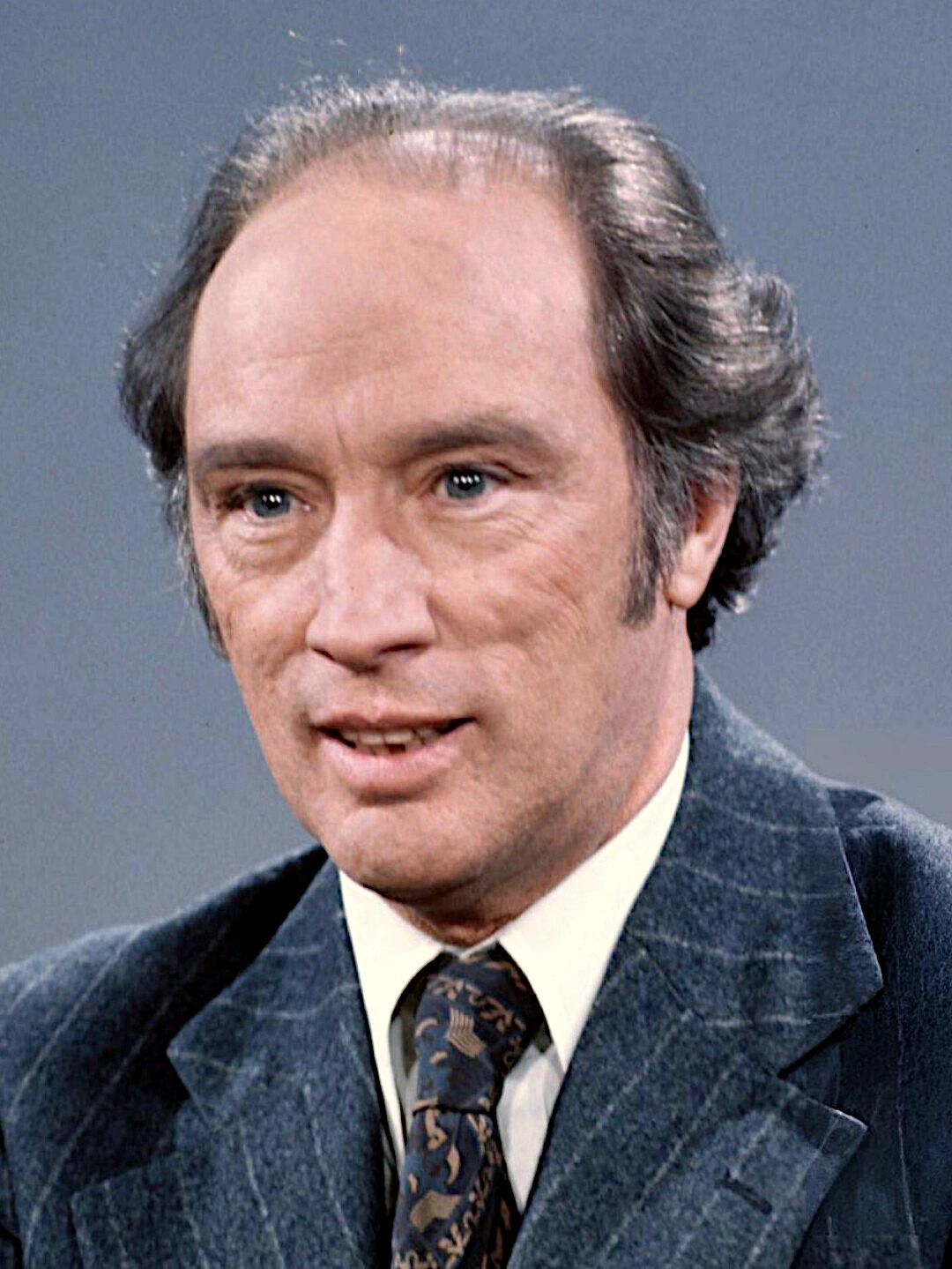
The party has featured a colourful roster of candidates who have used their campaigns as performance art. In the 1970s and 1980s, prominent Quebec artists like poet Gaston Miron and singer Michel Rivard ran against Prime Minister Pierre Trudeau in his Montreal seat. Rivard famously used his allocated television airtime to state only the words Celery and Sidewalk before signing off. In the 1980s, candidate Bryan Gold described his platform as the wooden one he was standing on, while Ted Not Too Sharp promised to tow Antarctica to the Arctic Circle to control the world's cold. Sharp also took a stand on abortion, promising if elected never to have an abortion, and on capital punishment, stating if it was good enough for my grandfather, then it's good enough for me.
- Penny Hoar, a safe sex activist who distributed condoms in Toronto under the slogan Politicians screw you, protect yourself.
- Stardust the Magician, who promised to put a roof on Montreal's Olympic Stadium using a $25 million handkerchief.
- Brian Godzilla Salmi, who campaigned in a Godzilla suit and later legally changed his name to Sa Tan to file a lawsuit against the government.
- In 2019, the party ran a candidate named Maxime Bernier against the actual Maxime Bernier.
- François Gourd, after his Rhino involvement, founded the entartistes, a group known for pieing politicians in the 1990s.
- Former baseball pitcher Bill Lee ran for President of the United States in 1988 on the Rhinoceros Party ticket.
- A British Columbia splinter group proposed running a professional dominatrix for party whip and renaming the province La La Land.
The party has also engaged in publicity stunts beyond elections. In response to its pledge to declare war on Belgium, the Belgian Embassy in Ottawa delivered a case of mussels and Belgian beer to the party's Montreal headquarters, effectively calling off the war. The party has also attempted to set a world record for the longest election ballot in history as a fundraising and awareness campaign.
Legal battles and party status
The Rhinoceros Party's existence has been shaped by legal conflicts over election laws and party registration. The original party was deregistered in 1993 for abstaining from the election, a move Chief Electoral Officer Jean-Pierre Kingsley stated was not allowed. The party's official agent, Charlie McKenzie, was ordered to liquidate party assets but refused, leading to a two year standoff with Ottawa that ended without prosecution, with McKenzie calling himself Canada's least-wanted fugitive. This deregistration was challenged years later, leading to a significant change in the law that benefited all small parties.
On August 7, 2007, then party president Brian Salmi announced a $50 million lawsuit contesting the 1993 election reform law that had stripped the party of its status. Having changed his name to Sa Tan, the lawsuit was filed as Sa Tan vs. Her Majesty The Queen. This lawsuit was dropped after the Chief Electoral Officer's ruling was effectively reversed by a new law passed in 2004. The new law stated a party only had to run one candidate in a federal election or by election to be considered registered, a much lower threshold than the previous 50 candidate rule. This legal victory allowed the refounded Rhinoceros Party to achieve and maintain its registered status with Elections Canada from 2007 onward.
Legacy and influence
The Rhinoceros Party holds a unique place in Canadian political culture as a long running institution of satire. It demonstrated that a protest vote could be organized, registered, and sustained over decades, providing a consistent outlet for voter cynicism and humour. Its legacy is evident in the continued recognition of its name and the occasional attempts by individuals to run as independent Rhino candidates even during the party's dormant periods. The party's style influenced other satirical political movements, such as the Parti citron (Lemon Party) in Quebec provincial politics.
The party's 1993 deregistration battle over candidate quota rules highlighted issues of fairness for small parties, and the subsequent legal change in 2004 requiring only one candidate for registration was a direct outcome of that struggle. While never a governing force, the Rhinoceros Party succeeded in its primary aim to critique politics through comedy, leaving an archive of creative, absurdist policy that continues to be referenced in discussions about political disillusionment and the role of humour in democracy. Its refounded version continues this tradition, promising funnier lies of superior quality and positioning itself as an almost credible alternative for the disenchanted voter. The party proudly offers a series of commitments as original as they are unrealistic, claiming to provide five times more promises than any competing party.
Questions about Rhinoceros Party
What is the main promise of the Rhinoceros Party?
The Rhinoceros Party's foundational and most famous promise is its pledge to keep none of its promises if elected. This meta commitment frees the party to propose any manner of absurd, humorous, or impossible policy without the expectation of follow through. It is a core part of their satirical critique of traditional political platforms and broken promises. The party describes this as its primal promise, central to its identity since its founding in 1963.
Has the Rhinoceros Party ever won a seat in Parliament?
No, the Rhinoceros Party has never won a seat in the House of Commons. Its purpose is satirical rather than electoral, though it has occasionally performed surprisingly well in specific ridings. In the 1980 election, candidate Sonia Côté came in second place in the Montreal riding of Laurier. In the 1984 federal election, the party achieved its highest national result, finishing fourth in the popular vote ahead of other minor parties.
What are some examples of Rhinoceros Party policies?
The party's policies are deliberately unrealistic and humorous. Classic examples include repealing the law of gravity, paving the Bay of Fundy for parking, tearing down the Rocky Mountains for a better view, and annexing the United States. More recent pledges include privatizing the Senate by 2026, changing 25 cent coins into thirty cent coins, and forcing car makers to produce vehicles in specific shades of green like khaki and neon. Each policy serves to mock political rhetoric and bureaucratic solutions.
How can someone join the Rhinoceros Party?
Membership in the Rhinoceros Party is free, voluntary, and does not entail any obligations. The party promotes its lifetime membership as the cheapest of any political party in Canada. Interested individuals can become members through the party's website, with advertised advantages including being among the best looking people in any room and eligibility for a 75 percent tax credit on donations. The party also seeks volunteers and candidates who must gather 140 signatures from their riding to run.
Is the Rhinoceros Party a registered political party?
Yes, the refounded Rhinoceros Party has been a registered federal political party with Elections Canada since August 23, 2007. It was originally registered from the 1960s until 1993, when it was removed from the registry for abstaining from an election. Changes to election laws in 2004 allowed it to reregister by running just one candidate, which it did. As a registered party, it can issue tax receipts, have its name on ballots, and receive limited broadcast time during elections.
Who founded the Rhinoceros Party?
The original Rhinoceros Party was founded in 1963 by Jacques Ferron, who was known as the Éminence de la Grande Corne du parti Rhinocéros. The party was a satirical political entity that operated until its deregistration in 1993. It was refounded in Montreal on May 21, 2006, by François Yo Gourd, who had been involved with the original party. Gourd named the revived party Neorhino.ca, a reference to both the original party and the character Neo from The Matrix. This new incarnation was officially registered with Elections Canada on August 23, 2007, and later reverted to the name Rhinoceros Party in 2010.
Sources and further reading
- Rhinoceros Party (Wikipedia)
- Credible candidates, Parti Rhinocéros Party (partyrhino.ca)
Checked by the Nosy Mag desk. Last updated 2026-10-23.