Omaha hold 'em
Omaha hold 'em, commonly called Omaha, is a community card poker game similar to Texas hold'em. Its defining rule is that each player receives four private cards and must construct their best five-card hand using exactly two of them combined with exactly three of the five community cards. The game is known for its high-action gameplay and strategic depth. In Canada, Omaha is widely available in live poker rooms like the Great Canadian Casino Resort Toronto and is a staple on online poker sites, with pot-limit Omaha (PLO) being particularly popular.
Gameplay and Core Rules
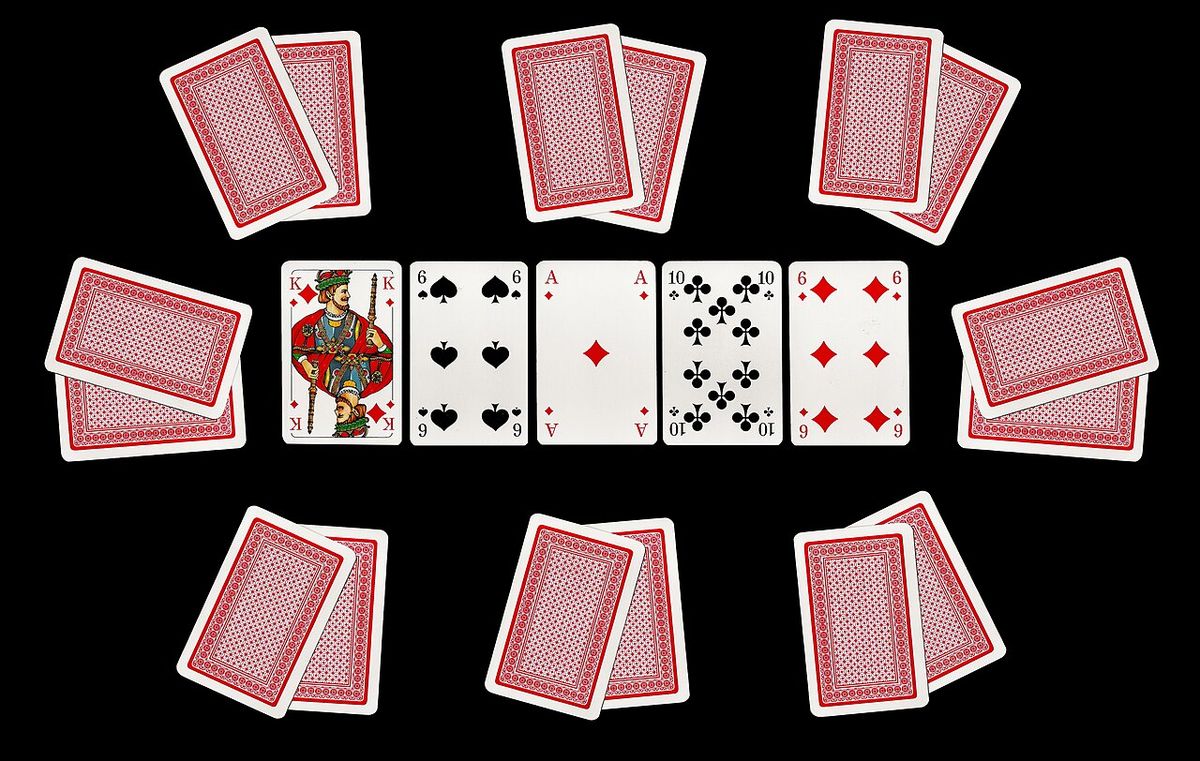
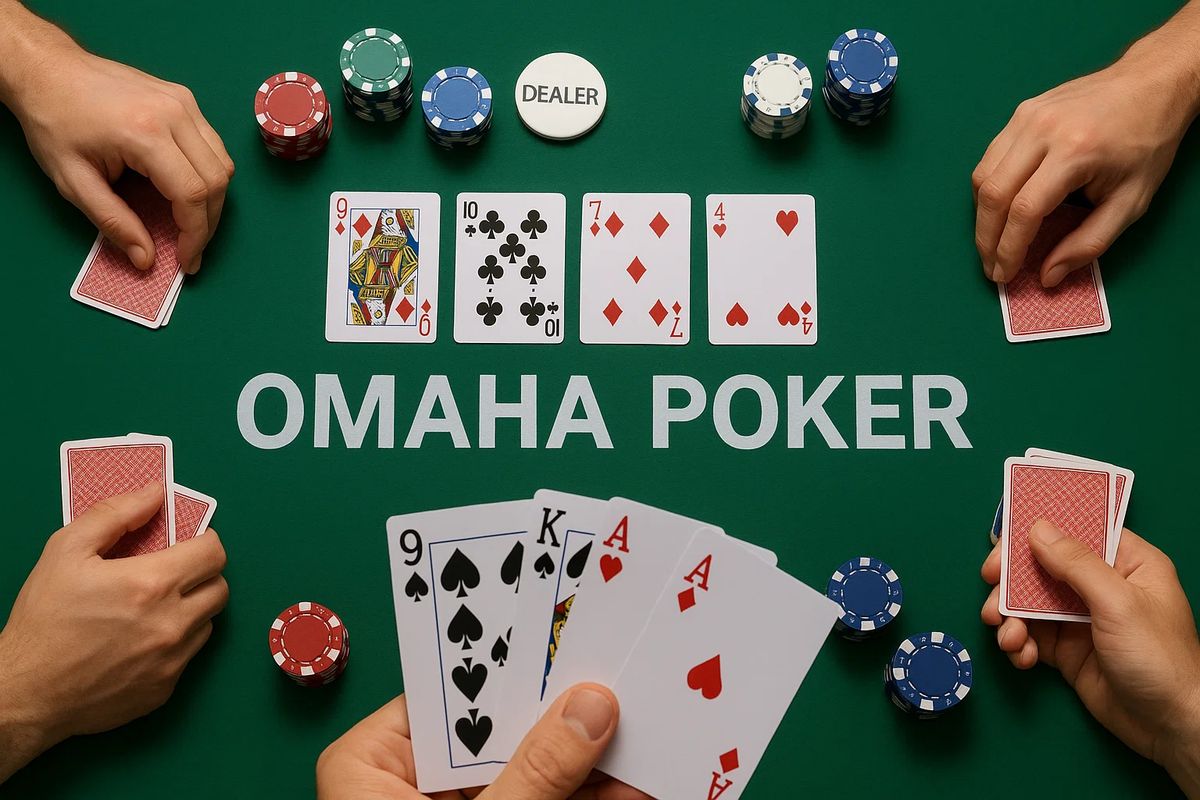
The fundamental structure of Omaha hold 'em closely mirrors that of Texas hold 'em, with betting rounds occurring before the flop, on the flop, on the turn, and on the river. A standard 52-card deck is used, and a maximum of eleven players can be dealt into a hand, though games are most commonly played with six or nine players. The critical rule that defines Omaha is the hand construction requirement. At showdown, a player must use precisely two of their four hole cards and exactly three of the five community board cards to make their best five-card poker hand. This rule creates significant strategic differences from Texas hold 'em. The betting structures used are fixed limit, pot limit, and no limit, with pot limit being especially prevalent for high-only games. In pot-limit games, the maximum bet is the current size of the pot.
The sequence of a hand follows a strict pattern. After blinds are posted, the dealer distributes four hole cards face down to each player. The first betting round begins with the player left of the big blind. Once betting concludes, the dealer reveals the three-card flop, followed by a second betting round. The dealer then reveals the single turn card, triggering a third betting round, and finally the single river card, which leads to the final betting round. If more than one player remains after the river betting, a showdown occurs where hands are revealed and the best hand wins. The game uses a dealer button that rotates clockwise after each hand to determine the posting order for the blinds.
Key Differences from Texas Hold'em
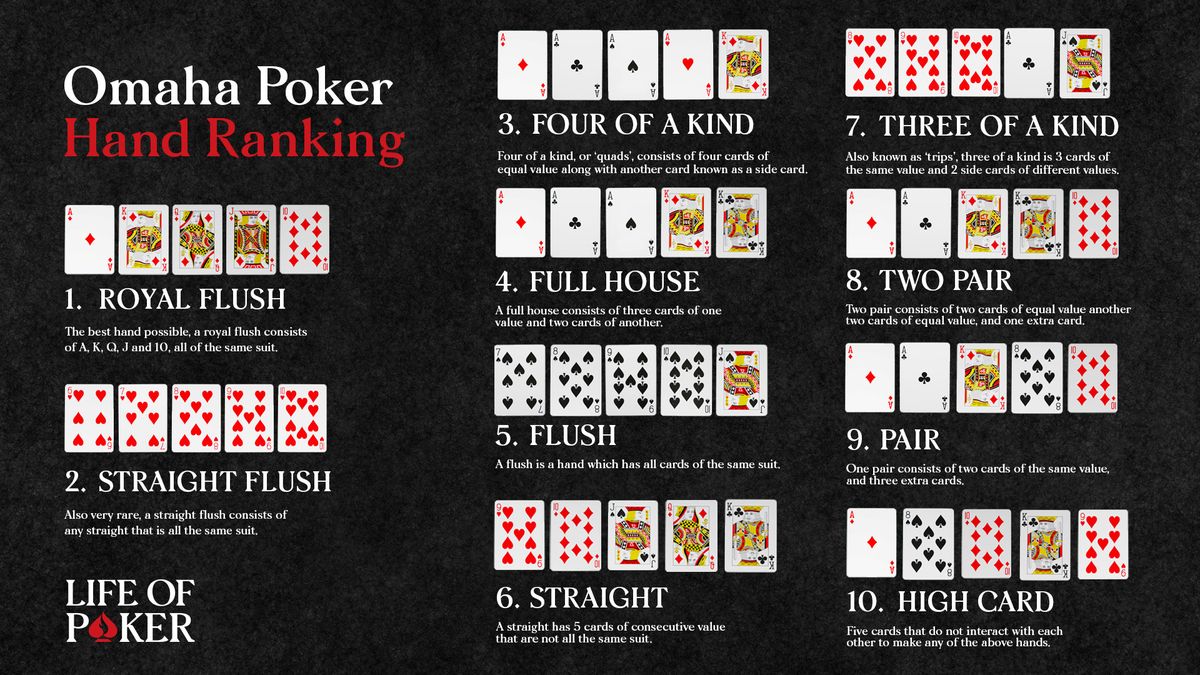
While the betting rounds and community card layout are identical, the four-hole-card format and the two-card usage rule lead to major gameplay distinctions. The increased number of hole cards means players have many more potential hand combinations, making strong draws and the absolute best possible hand, or 'the nuts', far more common. This also means that second-best hands like low flushes or non-nut straights are frequently losing propositions. Specific hand reading pitfalls arise directly from the two-card rule. A player cannot make a flush with only one card of that suit in their hand, even if the board shows four suited cards. Similarly, a player cannot make a straight using only one hole card to connect four consecutive board cards. A full house requires a player to have a pocket pair when the board shows three of a kind.
Common misread hands in Omaha include situations where a player incorrectly assumes they hold a strong hand. With a board showing three of a kind, a player must have a pair in their hand to make a full house. For example, on a board of J♠ J♦ A♦ J♥ K♣, a player holding A♠ 2♠ 3♥ K♦ has only three jacks with an ace-king kicker, not a full house. Another frequent error involves two pair on the board. With a board of J♠ J♦ 9♦ 5♥ 9♣, a player with A♠ 2♠ J♥ K♦ cannot make a full house of jacks over nines. They can only use the A-J, resulting in three jacks. These examples highlight the necessity of carefully selecting the correct two hole cards from the four available.
Popular Variants and Formats
Omaha hold 'em is played in several primary variants. The most common is high-only Omaha, where the best traditional poker hand wins the entire pot. This is frequently played under pot-limit betting rules, abbreviated as PLO, which is immensely popular in Europe, online, and in high-stakes mixed games. Omaha Hi-Lo Split-8 or Better, often called Omaha/8, is a split-pot game where the pot is divided between the best high hand and the best qualifying low hand. A low hand must be eight-high or lower, using ace-to-five ranking where aces are low for the low hand. This variant adds a layer of complexity as players compete for two halves of the pot simultaneously and can use different two-card combinations from their hand for the high and the low. Omaha/8 is commonly played as a fixed-limit game.
The main betting structures for Omaha games are defined by specific rules. Fixed limit games have bets and raises in fixed increments. Pot limit, or PLO, caps the maximum bet at the current pot size. No limit Omaha is rarer but allows a player to bet any amount up to their entire stack at any time. Blind structures also vary. These structures directly influence the game's pace, pot size, and strategic approach.
- Fixed Limit: Bets and raises are in fixed increments. In a $2/$4 game, bets are $2 on the flop and $4 on the turn and river.
- Pot Limit (PLO): The maximum bet is the current pot size.
- No Limit: A player may bet any amount up to their entire stack at any time, though this structure is rarer for Omaha.
- Blind Structures: In a $1/$2 pot-limit game, the small blind is $1 and the big blind is $2.

Strategic Concepts and Hand Values
Omaha strategy revolves around understanding the value of starting hands, the power of draws, and the importance of playing for the nuts. Because players must use two cards, the best starting hands feature coordinated cards that work together. Hands with paired aces, connected cards, and suits that are 'double-suited' are highly valuable. For example, A♠ A♥ K♠ Q♥ is considered a premium double-suited hand. In Omaha Hi-Lo, the most valuable starting holding is A-A-2-3 double-suited, as it offers strong potential for both the nut high and the nut low. Conversely, uncoordinated hands with middle cards or four of a kind are among the worst possible starters. Post-flop, the concept of a 'wrap' straight draw is crucial. A wrap is a straight draw with nine or more outs, possible because of the four hole cards. The largest possible wrap has 20 outs. Another key concept is a 'redraw,' where a player has the current best hand plus additional draws to an even stronger hand.
Computer analysis has identified specific starting hand strengths. The best starting hand for high-only Omaha is A-A-K-K double-suited. A hand like A-A-J-10 double-suited is also a favourite because it offers a wide range of nut straight possibilities. For Omaha Hi-Lo, A-A-2-3 double-suited is the most valuable. Hands to avoid include those with three or four cards of the same rank, four cards of the same suit, or four disconnected middle cards. The worst possible starting hand in the game is four deuces (2♠ 2♣ 2♥ 2♦), as it cannot make a low hand, is unlikely to make a full house, and offers no straight or flush potential.
| Hand Type | Example | Strategic Value |
|---|---|---|
| Premium High Hand | A♠ A♥ K♠ Q♥ | Double-suited with high pairs and connectors. |
| Premium Hi-Lo Hand | A♠ A♥ 2♠ 3♥ | Double-suited with nut low and high potential. |
| Strong Rundown | J♠ T♥ 9♦ 8♣ | Connected cards offering strong straight wraps. |
| Weak Hand | 9♦ 8♣ 7♥ 6♠ (rainbow) | Middle cards, no flush potential, non-nut straights. |
| Very Weak Hand | 2♠ 2♣ 2♥ 2♦ | Four of a kind, cannot make a low, limited high potential. |
Playing Omaha in Canada
Omaha hold 'em is widely accessible to Canadian players through both live casino poker rooms and online poker platforms. Major venues like the Great Canadian Casino Resort Toronto feature dedicated poker rooms with multiple Omaha tables running regularly. These rooms typically offer pot-limit Omaha cash games with specified blinds and buy-ins. The games are subject to a standard rake. Tournaments featuring Omaha are also available. Online, virtually all major international poker sites servicing Canadian players offer Omaha games, with pot-limit Omaha being one of the most active cash game formats.
The Great Canadian Casino Resort Toronto poker room provides a specific example of live Omaha play. The room offers a variety of games and has established rules for player conduct and game integrity. To manage table availability, the casino uses a pager system or the Poker Atlas App for waiting lists. The room also features promotional jackpots, including a Bad Beat Jackpot for Omaha with specific qualifying rules. The property remains open 24/7, with restaurants and complimentary parking available for guests. The poker room hosts weekend tournaments.
- Location: Great Canadian Casino Resort Toronto.
- Game Offered: Pot-Limit Omaha cash games at $2/$2 and $5/$5 stakes.
- Buy-in: For $5/$5 PLO, minimum $500, maximum $3,000.
- Rake: 10% of the pot, capped at a maximum of $20.
- Tournaments: Weekend poker tournaments are available.
- Waitlist: Managed via the Poker Atlas App or in-person pager.
- Bad Beat Jackpot: Available for Omaha with specific qualifying hand requirements.
History and Common Variations
The exact origin of Omaha hold 'em is not documented, but its introduction to casino play is credited to casino executive Robert Turner. Turner first brought the game into a casino setting when he introduced it to Bill Boyd, who then offered it at the Las Vegas Golden Nugget Casino, initially calling it 'Nugget Hold'em.' The name 'Omaha' itself is derived from an earlier poker game where players were dealt two hole cards and had to use both, a rule echoed in the modern requirement to use exactly two cards. The game gained wider recognition as part of mixed-game formats like H.O.R.S.E., where Omaha Hi-Lo 8-or-better is the 'O' game. Over the past decade, particularly pot-limit Omaha has surged in popularity.
Beyond the standard four-card versions, several related Omaha-style games have emerged. Five-card Omaha, often called 'Big O,' deals each player five hole cards with the same rule of using exactly two from hand and three from the board. This game originated in Southern California in 2008 and spread quickly. Six-card Omaha deals six hole cards, applying the same two-from-hand rule. Another variant is Courchevel, named after a French ski resort, where players are dealt five hole cards and the first community card is revealed before the initial betting round. After that round, the remaining two flop cards are dealt, and play proceeds like standard Omaha. Courchevel is also available in a hi-low split format and was historically played at the Aviation Club de France.
Essential Omaha Hi-Lo Concepts
Omaha Hi-Lo Split-8 or Better introduces unique mechanics centred on the low hand. A qualifying low hand must be five unpaired cards of rank eight or lower, with the ace counting as low. The best possible low is 5-4-3-2-A, known as a 'wheel.' If no player can make a qualifying low hand, the high hand wins the entire pot, an outcome called 'scooping.' Players can use any two of their hole cards for their high hand and any two for their low hand, and these can be different combinations. This leads to complex scenarios where a player might win only a quarter or half of the pot. A low hand is only possible if the board contains at least three unpaired cards of rank eight or lower. Statistically, a qualifying low hand is possible about 60% of the time. Key strategic concerns include 'counterfeiting,' where a board card duplicates a low card in a player's hand, weakening their low, and the value of a 'protected' nut low draw.
Several specific rules and outcomes define Omaha Hi-Lo play. A qualifying low must be five cards, eight-high or lower with no pair. The best possible low is the wheel, 5-4-3-2-A, and the worst qualifying low is 8-7-6-5-4. Scooping refers to winning both the high and low halves of the pot, while getting quartered means tying for one half of the pot and thus winning only one-quarter of the total pot. Counterfeiting occurs when a board card duplicates a player's low card, degrading their hand. A protected nut low, like A-2-3, is valuable because one card can be counterfeited without losing the best low. At least three unpaired board cards eight or lower are needed for any low to be possible.
- Qualifying Low: A hand must be five cards, eight-high or lower with no pair (e.g., 8-7-6-5-4).
- Best Low Hand: 5-4-3-2-A (the wheel). The worst qualifying low is 8-7-6-5-4.
- Scooping: Winning both the high and low halves of the pot.
- Getting Quartered: Tying for one half of the pot, thus winning only one-quarter of the total pot.
- Counterfeiting: When a board card duplicates a player's low card, degrading their hand.
- Protected Nut Low: A hand like A-2-3 where one card can be counterfeited without losing the best low.
- Board Requirement: At least three unpaired board cards eight or lower are needed for any low to be possible.
Questions about Omaha hold 'em
What is the main difference between Omaha and Texas hold'em?
The most crucial difference is the number of hole cards and the hand construction rule. In Omaha, each player is dealt four private cards instead of two. At showdown, a player must use exactly two of their hole cards combined with exactly three of the five community cards to make their best five-card hand. In Texas hold'em, players can use any combination of their two hole cards and the five board cards, including using just one or none of their hole cards. This rule makes Omaha a game with many more potential hand combinations and places a greater emphasis on holding the absolute best possible hand, or 'the nuts.'
How do you play Omaha Hi-Lo (Omaha/8)?
Omaha Hi-Lo Split-8 or Better is a split-pot game. Each player uses their four hole cards to make two separate five-card hands: the best traditional high hand and the best qualifying low hand. To qualify for the low, a hand must be eight-high or lower, with aces counting as low. The pot is then split evenly between the winner of the high hand and the winner of the low hand. A player can use different two-card combinations from their four hole cards for the high and the low. If no qualifying low hand exists, the high hand wins the entire pot. This game adds complexity, as players must constantly evaluate their chances for both halves of the pot.
What does 'Pot-Limit Omaha' (PLO) mean?
Pot-Limit Omaha refers to the betting structure used in a high-only Omaha game. In PLO, the maximum a player can bet or raise is the current size of the pot. This structure allows for large, exponential pot growth and is the most popular form of high-stakes Omaha, both online and in live casinos. The pot size for calculating a raise is defined as three times the previous bet or raise, plus the total of all other bets already in the pot for that round. This rule creates a dynamic where players can build very large pots, especially when drawing to strong hands like wraps.
Where can I play Omaha poker in Canada?
Omaha poker is available at many live casino poker rooms across Canada. A prominent example is the poker room at the Great Canadian Casino Resort Toronto, which offers pot-limit Omaha cash games like $2/$2 and $5/$5. Other major casino properties in cities like Vancouver, Calgary, and Montreal also frequently spread Omaha games. Online, Canadian players can access Omaha on licensed international poker sites that operate in the country. These sites offer a wide range of stakes and formats, including tournaments and cash games at all hours.
What is a 'wrap' in Omaha poker?
A 'wrap' is a term for a powerful straight draw unique to Omaha, made possible by having four hole cards. It describes a situation where a player holds multiple cards that can complete a straight across several ranks. In Omaha, straight draws can have up to 20 outs, which is far more than the maximum of eight in Texas hold'em. Wraps are a fundamental strategic concept in Omaha, especially in pot-limit games, as they provide enormous equity. An example is holding J-10-7-6 on a flop of 9-8-2, where any 5, 6, 7, 10, J, or Q gives the player a straight.
What are the worst starting hands in Omaha?
The worst starting hands in Omaha are those with poor coordination and no potential to make strong combinations. Four of a kind, like 2-2-2-2, is considered the absolute worst hand because the only two-card combination possible is a low pair. This hand cannot make a straight or a flush and is easily outdrawn. Other poor starters include hands with four disconnected middle cards, which are unlikely to make the nut straight or flush. Hands with three or four cards of the same suit are also weak, as they actually reduce the chance of making a flush since you can only use two of them.
Sources and further reading
- Omaha hold 'em (Wikipedia)
- How to Play Omaha Poker (pokerstars.com)
- How To Play Omaha Poker (PLO): Official Rules of the Game (pokernews.com)
- Poker, Texas & Omaha Hold'em (nintendo.com)
- Basic Rules for Omaha Hi-Lo (venetianlasvegas.com)
- Pot Limit Omaha Poker Strategy, Top Ten Tips (888poker.ca)
- The rules of Pot Limit Omaha (clubpierrecharron.com)
Checked by the Nosy Mag desk. Last updated 2026-11-10.