Marcel Colomb First Nation declares emergency over foul-smelling water
The northern Manitoba community says its water has a sulphur smell and residents are reporting illness.
Explainer
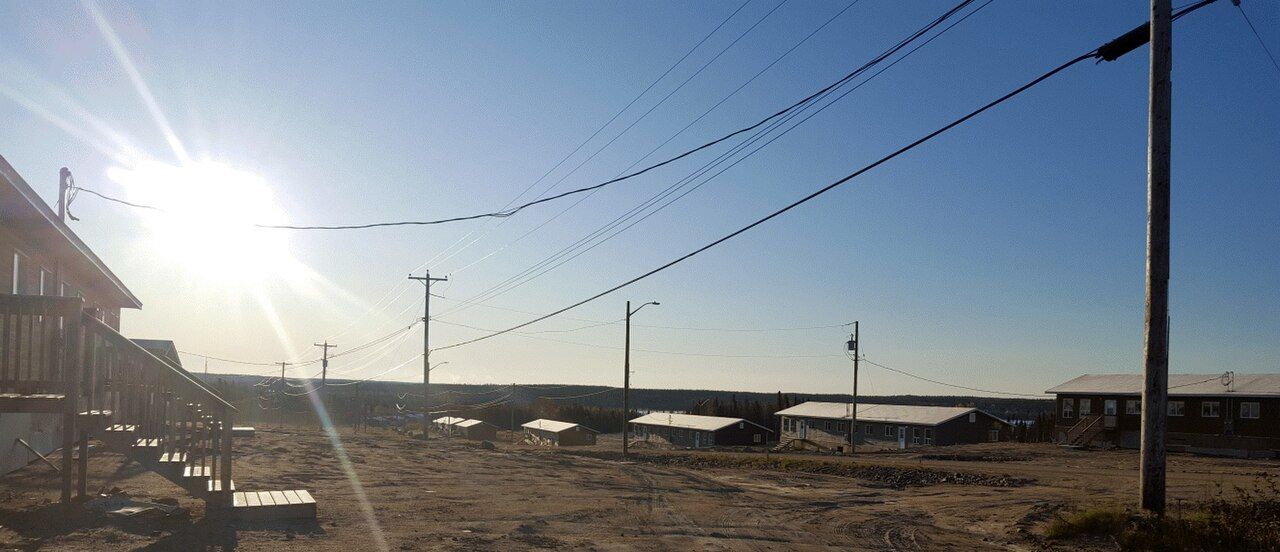
A First Nation in northern Manitoba has declared a state of emergency over what it says is unsafe drinking water. Marcel Colomb First Nation said its drinking water has taken on a sulphur smell this past week, and that people have become ill. Chief Delhia Hart said about half of the people living on the First Nation have gotten sick over the past three weeks, suffering symptoms like nausea or diarrhea. The Assembly of Manitoba Chiefs said it stands with the First Nation and is calling on the federal government to respond immediately. "The water that we consume on a daily basis tastes really funny and you can smell it," said Hart during a Friday news conference hosted by the Assembly of Manitoba Chiefs. She said issues with the water have been plaguing her community for about a decade. A bottle of water collected from the community just 12 hours before the news conference had a noticeable sulphur odor, according to community representatives.
What is causing the water problem?
Chief Hart said aging water infrastructure is to blame for the smell and the reported illnesses. Marcel Colomb has a water treatment system, but Hart said the infrastructure was poorly built. Most homes in the community, located about 800 kilometres northwest of Winnipeg, are not connected by pipes. Instead, water is delivered by truck and stored in cisterns, large tanks beneath people's homes. Hart said the community has not been able to clean a cistern that holds all of its water, and it fills up with "sludge." "They were built under the units where our public works people can't access them to clean them, and that's the reason our water smells and there is sludge in the bottom of the holding tanks," said Hart. The chief said the community has been asking for a complete piped system since 2013. While work is underway to bring water pipes to some homes, Hart said the project will only hook up 16 units compared to the 53 that exist in the community.
READ MORE: Manitoba to compensate Steinbach residents for 2025 flood damage
READ MORE: Winnipeg Punk Rock Flea Market draws hundreds seeking community and alternative art
How are residents coping?
Residents are having to purchase bottled water from the town of Lynn Lake, about 30 kilometres west of the First Nation. Hart said this comes at a significant personal cost to community members. "We really need bottled water to be shipped in, and not at our cost," Hart said. Elder Joyce Colomb said she now relies on bottled water, but that four cases cost her roughly $75.
Colomb described her own experience with the community's water. "Even me, when I was drinking it, drinking it three weeks ago, I had to run for one whole week from that water," she said. Hart said because of a lack of essential services, members have no other choice but to buy the bottled water. "Right now, for emergency purposes, we need bottled water to be shipped into our community that's the reason I called a press conference," said Hart.
Is there a federal drinking water advisory?
Marcel Colomb First Nation was not under an active federal drinking water advisory as of Friday, according to Indigenous Services Canada. It is also not on a federal list of 134 First Nations that have had long-term drinking water advisories, 37 of which remain active. However, Grand Chief Kyra Wilson of the Assembly of Manitoba Chiefs said the situation is part of a larger problem. She said Indigenous Services Canada confirms six First Nations communities in Manitoba continue to face long-term drinking water advisories. "Citizens of Marcel Colomb should not have to live with uncertainty about the safety of their water," Wilson said in a statement. The Assembly of Manitoba Chiefs said it is calling on the federal government to respond immediately. Indigenous Services Canada did not immediately respond to requests for comment from The Canadian Press or CityNews.
What is the background of the community?
Marcel Colomb First Nation had 499 members as of October 2026, according to federal government statistics. About a hundred of those members are listed as living on reserve. Chief Hart said the community's water troubles have persisted since at least 2016. "We've been there since 2016. And we haven't had no pipe system since then," she said. The chief expressed concern about the ongoing challenge of securing safe water. "I am worried because how do you boil water at a daily basis for 53 units that are in cisterns?" Hart asked.
While a medical connection between the water and the reported illnesses has not been confirmed, residents have reported nausea and diarrhea for weeks. Hart concluded her remarks by acknowledging the difficulty of the path ahead. "It's going to be a long, hard battle. I know that," she said.
With files from The Canadian Press, CBC News and CityNews