Indigenous Services Canada
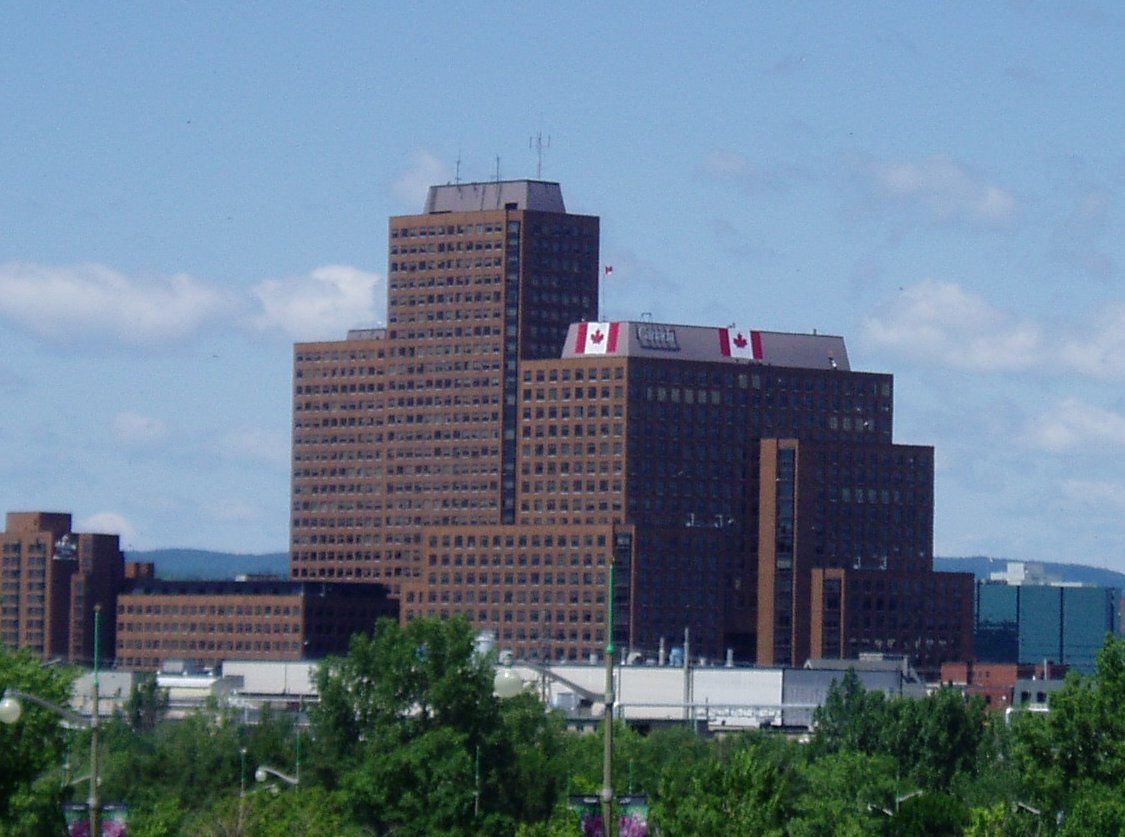
Indigenous Services Canada (ISC) is a federal department created in 2019 to improve access to high quality services for First Nations, Inuit, and Métis peoples. It was formed from the dissolution of the former Department of Indian Affairs and Northern Development, a restructuring intended to move away from a colonial, paternalistic model of engagement. The department works collaboratively with Indigenous partners to deliver services in areas including health, education, child and family services, infrastructure, and economic development. Led by the Minister of Indigenous Services, Mandy Gull-Masty as of 2025, ISC is headquartered in the Terrasses de la Chaudière complex in Gatineau, Quebec.
Creation and Mandate
The department was officially created on July 15, 2019, following an announcement by the Trudeau government in August 2017. This move dissolved the long-standing Department of Indian Affairs and Northern Development, splitting its functions into two new entities: Indigenous Services Canada and Crown-Indigenous Relations and Northern Affairs Canada. Prime Minister Justin Trudeau stated the rationale was to move beyond structures created during a paternalistic, colonial era of engagement under the Indian Act. The new structure aligns with recommendations from the 1996 Royal Commission on Aboriginal Peoples to dramatically improve service delivery and fast-track self-government. The department's mandate is to work collaboratively with partners to improve access to high quality services for First Nations, Inuit and Métis. Its vision, as stated in its 2026-27 plan, is to support and empower Indigenous peoples to independently deliver services and address the socio-economic conditions in their communities. The transition in 2019 was not instantaneous, with Orders-in-Council initially separating the portfolios before formal legislation was passed in July of that year.

Organizational Structure and Leadership
Indigenous Services Canada is responsible to Parliament through the Minister of Indigenous Services, who provides political and policy direction. As of 2025, the minister is Mandy Gull-Masty, and the day-to-day operations and administration of the department are managed by the Deputy Minister, a senior public servant named Michelle Kovacevic as of 2026. The department's main offices are located in the Terrasses de la Chaudière government complex in downtown Gatineau, Quebec, directly across the river from Ottawa. ISC operates with a regional structure to deliver programs and services across the country, engaging directly with First Nations, Inuit, and Métis communities and organizations. The department is one of two with responsibility for policies relating to Indigenous peoples in Canada, the other being Crown-Indigenous Relations and Northern Affairs Canada. This split was designed to separate the service delivery functions of ISC from the broader relationship and treaty negotiations handled by its sister department.
Key Priority Areas and Programs
ISC's work spans several critical areas essential to community well-being and self-determination. The department's key priorities for the 2026-27 fiscal year, as outlined in its departmental plan, focus on an integrated approach to improving outcomes. These priorities include reducing long-standing social and economic barriers, building capacity for strong governance, making investments in Indigenous youth, and creating pathways for economic participation. The department aligns programs across health, social services, education, child and family services, and skills development to ensure timely, culturally informed resources. A major ongoing focus is the reform of the First Nations Child and Family Services program to advance long-term improvements. ISC also administers numerous specific funding programs designed to support community-led initiatives, with the goal of fostering sustainable economic growth and resilience.
- First Nations Infrastructure Fund (FNIF): Introduced in 2007 to improve quality of life and the environment, this fund supported projects in planning, solid waste management, roads and bridges, energy systems, and connectivity. The amount available to each community was limited to $10 million over a five-year period.
- Indigenous Community Business Fund: Provides non-repayable grants to support Indigenous businesses, particularly during economic shocks like the COVID-19 pandemic, to maintain operations, address short-term concerns, and protect jobs.
- Strategic Partnerships Initiative (SPI): A collaborative federal program that helps Indigenous communities prepare for and engage in major economic opportunities in sectors like natural resources, energy, and forestry by pooling resources from various federal departments.
- New Paths for Education Program: Offers targeted funding to non-profit organizations working to improve Indigenous education systems, including strengthening community-based management, teacher recruitment, and parental involvement.
- First Nations and Inuit Youth Employment Strategy: Assists Indigenous non-profit organizations in providing skills development and job experience opportunities for youth.
- Trauma-Informed Health and Cultural Support Program: Provides culturally grounded, compassionate support for Survivors, Intergenerational Survivors, and families affected by the residential school system.
- First Nations Water and Wastewater Action Plan (FNWWAP): A plan with a lifespan funding of $2.5 billion aimed at addressing critical water and wastewater infrastructure needs.
In the 2026 to 2027 period, Indigenous Services Canada plans to support Indigenous communities in advancing business development and fostering sustainable economic growth. This work is guided by the United Nations Declaration on the Rights of Indigenous Peoples Act. The department uses its key priorities as a strategic lens in developing its departmental plan. This approach ensures that planned results reflect the interconnected nature of the department's programs and services. Many planned results support multiple priorities, recognizing that progress in one area often contributes to outcomes in others.
Community Infrastructure and the Water Crisis
A historic and central challenge for ISC and its predecessor has been addressing the severe infrastructure deficit in First Nations communities, particularly regarding water and wastewater systems. Government audits by January 2012 revealed the federal government had earmarked about $1.028 billion annually on constructing and maintaining First Nations infrastructure. Studies have consistently shown critical gaps, such as a 2007 survey finding more than one fifth of adult respondents had no garbage collection and nine percent of homes lacked sewage service or a septic tank. Only two thirds of respondents in that survey considered their water safe to drink, with over 60 percent obtaining drinking water from bottled water. The state of drinking water has been a persistent national concern, with a 2003 study by the former department finding 39 percent of water systems exceeded one or more risk indicator thresholds occasionally or continuously.
The capital cost to address deficiencies was estimated between $475 million and $560 million in 2003, with an additional $185 million needed to provide basic water and wastewater services to about 5,300 homes which lacked them. Support for normal recapitalization and expansion for growth was estimated at $90 million to $100 million annually at that time. The Circuit Rider Training Program began in 2000 to help operate these systems. The most comprehensive evaluation, the National Assessment of Water and Wastewater Systems in First Nation Communities released in April 2011, was the most rigorous ever undertaken, inspecting over 4,000 systems including 1,300 water and wastewater systems and more than 800 wells and 1,900 septic fields serving 571 First Nation communities. The assessment, which looked at a total population of 484,321 people in 112,836 dwellings, concluded that $1.2 billion was needed for immediate repairs and better infrastructure, plus an additional $4.7 billion over ten years to keep pace with growing demand.
| Risk Category | Percentage of Water Systems (2011) | Impact |
|---|---|---|
| High Risk | 39% (314 systems) | Affected 25% of on-reserve population. Systems had major deficiencies posing high risk to water quality and health. |
| Low/No Risk | 25% | Systems were in a satisfactory state. |
As of February 2011, 161 water systems in 116 First Nation communities were under Health Canada Drinking Water Advisories. These advisories may have been impacting up to 18,900 people, which is approximately 3.9 percent of the total on reserve population. In 2005, the Office of the Auditor General of Canada reported the lack of a legislative regime to ensure that water quality on reserves met the Guidelines for Canadian Drinking Water Quality, unlike in provinces and territories. The auditor general's 2011 report noted that the department and Health Canada did not ensure drinking water was tested on a regular basis.
Financial Planning and Recent Developments
Indigenous Services Canada operates under a detailed departmental plan that outlines its priorities, plans, and associated costs for three fiscal years. The 2026-27 Departmental Plan discloses significant planned spending reductions as part of a government-wide commitment to restrain the growth of day-to-day operational spending to make investments that grow the economy. ISC is planning spending reductions of $494,000,000 per year for the 2026-27, 2027-28, and 2028-29 fiscal years. The department is currently finalizing its approach to achieving these savings with input from relevant partners, and the figures in the published plan do not yet reflect these reductions. Despite these cuts, the plan emphasizes sustained action on long-standing social and economic barriers such as limited access to safe housing, clean water, quality health services, and community-led climate-resilient infrastructure. A continued focus on capacity building remains essential to support communities in strengthening governance structures, developing skills, and accessing the resources needed to advance self‑determination and improve long-term well-being.
The department also engages in regular events and gatherings to foster collaboration, such as the eighth annual Ontario Joint Gathering scheduled for October 28-29, 2026. ISC has also been subject to oversight under access to information laws. In a 2026 case (Indigenous Services Canada (Re), 2026 OIC 30), the Information Commissioner investigated a complaint that ISC had not conducted a reasonable search for records related to a video posted on Facebook on June 18, 2024. The request sought records including emails, briefing notes, and communications strategies from June 22, 2023, onward, excluding drafts. During the investigation, ISC's Communications and Public Affairs unit identified it had removed records deemed to be drafts, including logistics and approval documents for the video. As a result, ISC located 1,087 additional pages of records. The Commissioner ordered the Minister to process the additional records and provide a new response within 36 business days, an order the Corporate Secretary confirmed the department would implement.
Economic Development and Future Direction
Guided by the United Nations Declaration on the Rights of Indigenous Peoples Act, ISC is increasingly focused on creating stronger pathways for Indigenous economic participation and self-determined prosperity. The department's work supports business growth, improves access to capital, and helps communities leverage federal investments and procurement opportunities. Key actions for 2026-27 focus on supporting the development of major projects, enhancing planning and financial readiness, expanding access to community development supports, increasing Indigenous business participation in federal procurement, and integrating climate resilience into economic development programs. This economic focus aims to enable communities to build and retain generational wealth and fully benefit from federal policy decisions. ISC's funding programs are designed to help Indigenous businesses and non-profits achieve self-sufficiency and economic resilience, reinforcing community resilience and supporting long-term strategies grounded in Indigenous culture and traditions.
The department's future direction emphasizes improving program performance by enhancing coordination, strengthening governance, reducing administrative barriers, and designing services that are more responsive, community-driven, climate-resilient and outcomes-focused. This includes supporting strong First Nation governance and service delivery capacity. ISC's planned results are designed to support multiple priorities simultaneously, recognizing that progress in one area often contributes to outcomes in others. This integrated approach supports coherence across planning and reporting, promotes collaboration across sectors, and ensures departmental efforts are coordinated toward shared outcomes of improved well-being and self-determination for Indigenous peoples. These economic initiatives are part of a broader effort to ensure communities can design and implement long-term strategies grounded in their own culture and traditions.
Historical Context and Ongoing Challenges
The challenges ISC addresses are deeply rooted in historical underinvestment and policy failures. In 1991, less than 80 percent of on-reserve housing had basic water and sewer services. By 2001, improvements had raised that to about 98 percent with water and 94 percent with sewer services, but the quality and safety of these systems remained a major issue. The 2003 National Assessment revealed that of 740 community water systems, only 25 percent were in the low or no risk category, while 29 percent posed a potentially high risk. Similarly, 16 percent of 462 community wastewater systems were classified as high risk. The Office of the Auditor General of Canada noted in 2005 and again in 2011 that there was no legislative regime to ensure water quality on reserves met the Guidelines for Canadian Drinking Water Quality, unlike in provinces and territories, and that the department and Health Canada did not ensure drinking water was tested regularly.
The department continues to work within this legacy while aiming for a new partnership model. Its vision involves moving from direct service delivery to supporting Indigenous-led services, a complex transition requiring significant capacity building. The 2026-27 plan acknowledges that a continued focus on capacity building remains essential to support communities in strengthening governance structures, developing skills, and accessing resources needed for self-determination. This work occurs alongside ongoing efforts to close the infrastructure gap, improve health and education outcomes, and ensure the safety and well-being of children and families, representing a comprehensive and long-term commitment to reconciliation and improved quality of life. The department's integrated planning approach is intended to ensure that efforts in economic development, infrastructure, and social services are coordinated to achieve these shared outcomes.
Questions about Indigenous Services Canada
What is Indigenous Services Canada?
Indigenous Services Canada (ISC) is a department of the federal government created in 2019 to improve access to high quality services for First Nations, Inuit, and Métis. It focuses on delivering programs in health, education, child and family services, infrastructure, and economic development, working collaboratively with Indigenous partners. The department was formed from the split of the former Department of Indian Affairs and Northern Development, aiming to move beyond a colonial model of service delivery. Its mandate is to work with partners to improve services, and its vision is to support Indigenous peoples to independently deliver services in their communities.
Who is the current Minister of Indigenous Services?
As of 2025, the Minister of Indigenous Services is Mandy Gull-Masty. The minister is the political head of the department, providing policy direction and answering to Parliament. The day-to-day operations are managed by the Deputy Minister, Michelle Kovacevic, who is a public servant. The department's headquarters are located in the Terrasses de la Chaudière building in Gatineau, Quebec. The department is one of two responsible for Indigenous policies, the other being Crown-Indigenous Relations and Northern Affairs Canada.
What was the First Nations Infrastructure Fund?
The First Nations Infrastructure Fund (FNIF) was a targeted program introduced in 2007 to improve quality of life and the environment in First Nation communities. It accepted proposals for projects in planning and skills development, solid waste management, roads and bridges, energy systems, and connectivity. Funding was limited to $10 million per community over a five-year period. By March 2008, 262 out of 714 submitted proposals were approved, with $94.3 million in FNIF funding dispersed nationally. The FNIF had a total lifespan funding of $234 million.
How does ISC support Indigenous economic development?
ISC supports economic development through grants and funding programs like the Indigenous Community Business Fund and the Strategic Partnerships Initiative. These aim to foster self-sufficiency, support business growth, and help communities engage in major economic projects in sectors like natural resources. The department also works to improve access to capital, increase Indigenous participation in federal procurement, and integrate climate resilience into development programs. For 2026-27, key actions include supporting major project development, enhancing community financial readiness, and expanding business participation in federal contracts to build generational wealth.
What did the 2011 National Assessment of Water Systems find?
The 2011 National Assessment of Water and Wastewater Systems in First Nation Communities found that 39 percent of First Nations water systems were at high risk of being unsafe, affecting 25 percent of the on reserve population. This major study inspected over 4000 on reserve systems including 1300 water and wastewater systems serving 571 First Nation communities. The assessment estimated that $1.2 billion was needed for immediate repairs and better infrastructure, with an additional $4.7 billion required over ten years to keep pace with growing demand. As of February 2011, the study noted that 161 water systems in 116 communities were under Health Canada Drinking Water Advisories, potentially impacting up to 18900 people.
What are ISC's spending plans for 2026-27?
Indigenous Services Canada's 2026 27 Departmental Plan discloses planned spending reductions of $494,000,000 per year for 2026 27, 2027 28, and 2028 29 as part of a government commitment to restrain operational spending growth. The department is currently finalizing its approach to achieving these savings with input from relevant partners. Its key priorities for 2026 27 include sustained action to reduce long standing social and economic barriers such as limited access to safe housing and clean water. The plan also details investments in Indigenous youth, economic participation, and community led climate resilient infrastructure. This work is guided by the United Nations Declaration on the Rights of Indigenous Peoples Act to support business growth and community resilience.
Sources and further reading
- Indigenous Services Canada (Wikipedia)
- Indigenous Services Canada's 2026 to 2027 Departmental Plan (sac-isc.gc.ca)
- Indigenous Services Canada (Re), 2026 OIC 30 (oic-ci.gc.ca)
- Indigenous Services Canada (ISC) Funding Programs | 2026 (hellodarwin.com)
Checked by the Nosy Mag desk. Last updated 2026-10-31.