Vito Rizzuto
Vito Rizzuto, often called "Montreal's Teflon Don," was an Italian-Canadian crime boss alleged to lead the Sicilian Mafia in Canada. As head of the Rizzuto crime family based in Montreal, he oversaw a vast criminal empire involved in drug trafficking, money laundering, and racketeering for decades. His notoriety stems from his long evasion of major convictions, his central role in a famous 1981 New York triple murder, and his eventual extradition and imprisonment in the United States.
Early Life and Family Background
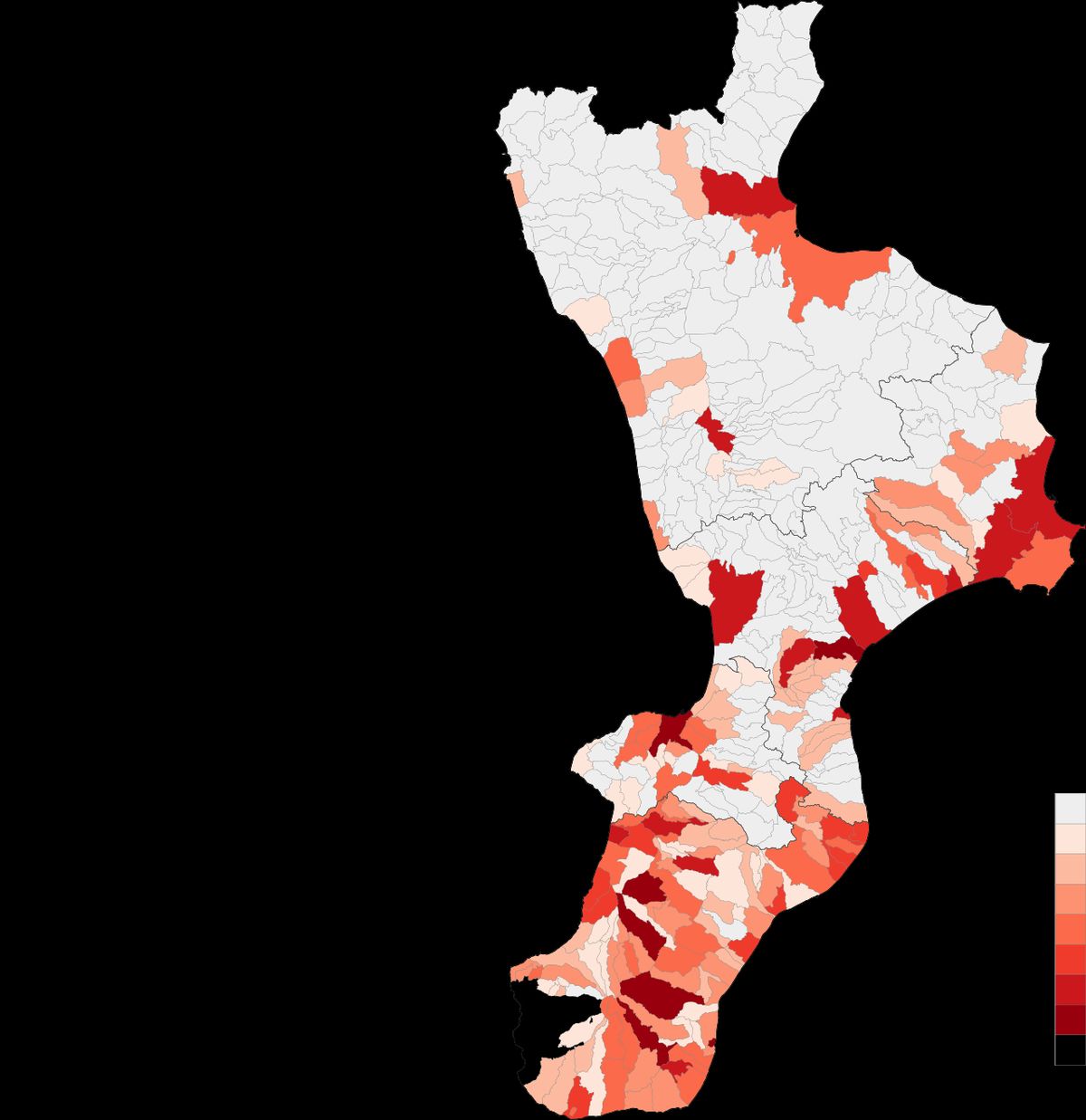
Vito Rizzuto was born on 21 February 1946 in Cattolica Eraclea, a town in the Sicilian province of Agrigento. His family history was steeped in Mafia connections from the start, as his mother, Libertina Manno, was the daughter of a local Mafia leader named Antonio Manno. Vito was named after his grandfather, who had been murdered in Patterson, New York, in 1933. On his eighth birthday in 1954, Rizzuto immigrated with his parents to Canada, arriving at Pier 21 in Halifax before the family settled in Montreal, Quebec. His father, Nicolo Rizzuto, would later establish his own criminal syndicate in the city after marrying into the mob. Vito married Giovanna Cammalleri, the daughter of compatriot mobster Leonardo Cammalleri, on 26 November 1966. The couple had three children: Nicolo Jr. (born 1967), Leonardo, and a daughter named Libertina, known as Bettina. His sister, Maria, was married to Paolo Renda, the reputed consigliere of the Rizzuto crime family.
Rise to Power and the Montreal Mafia War
In the 1970s, the Rizzutos were part of the Sicilian faction within the dominant Calabrian Cotroni crime family, which was led by Luigi Greco until his death in 1972. Tensions between the Calabrian and Sicilian factions grew into a violent power struggle, sparking a mob war in Montreal that began in 1973. This conflict resulted in the deaths of the Cotroni leadership, including Paolo Violi and his brothers, and spanned the mid 1970s to the early 1980s. By the mid 1980s, the Rizzuto crime family emerged victorious as Montreal's pre eminent criminal organization, having overtaken the Cotroni family. According to law enforcement officials, Vito Rizzuto then oversaw an empire that imported and distributed tons of heroin, cocaine, and hashish across Canada. His operations also involved laundering hundreds of millions of dollars, large scale loansharking, illegal gambling, fraud, and contract killings. He worked closely with the major international drug trafficking Cuntrera Caruana Mafia clan, led in Canada by Alfonso Caruana.
Legal Troubles and the "Teflon Don" Reputation
Despite his high profile, Rizzuto managed to avoid major convictions for years, earning his "Teflon Don" nickname. His first significant sentence was in 1972 for conspiring to commit arson at Paolo Renda's hair salon in Boucherville in 1968 with the intention of defrauding insurers, for which he served 18 months of a two year sentence. In October 1987, he faced serious charges after the RCMP seized a ship off the coast of northeast Newfoundland and Labrador and found 16 tonnes of hashish in the surrounding area. Rizzuto, along with associate Raynald Desjardins and four others, was arrested. He was freed on bail in March 1988. His trial began in St. John's in October 1990 but was dropped when the Newfoundland Supreme Court ruled the RCMP had overstepped by wiretapping restaurant conversations between Rizzuto and his lawyer. Later in 1990, he was arrested again for conspiring to import hashish. The key witness, drug dealer Normand Dupuis, attempted to extort Rizzuto for $1 million in exchange for not testifying. Rizzuto's lawyer recorded the conversation, leading to Dupuis being charged with obstruction of justice and Rizzuto being acquitted in 1989.
The 1981 Triple Murder and Extradition to the U.S.
A defining event in Rizzuto's criminal career occurred on 5 May 1981 in New York City. He was one of four men hired by Bonanno crime family captain Joe Massino to assassinate three rival capos, Philip Giaccone, Dominick Trinchera, and Alphonse Indelicato. Massino believed the three were planning a power grab after the incarceration of boss Philip Rastelli. The killings were later dramatized in the film Donnie Brasco. In early 2004, a Brooklyn federal grand jury indicted Rizzuto on racketeering conspiracy charges related to these murders. He was arrested in Montreal on 20 January 2004. After a 31 month legal battle, he was extradited to the United States on 17 August 2006, appearing in a Brooklyn federal court. Facing the prospect of testimony from the now cooperating Joe Massino, who had turned state's evidence in 2004, Rizzuto accepted a plea bargain in May 2007 before the case went to trial.
Guilty Plea, Imprisonment, and Release
On 4 May 2007, Vito Rizzuto pleaded guilty to conspiracy to commit murder and racketeering. In his plea, he admitted to being present at the 1981 triple murder but claimed he only yelled "it's a holdup" while others did the shooting. This statement contradicted prior testimony from Bonanno family informant Salvatore Vitale, who stated Rizzuto was the first mobster out from a hiding spot and the first to start shooting. As part of the plea deal, he received a 10 year prison sentence, was fined $250,000, and was subject to three years of supervised release. He was incarcerated at the Federal Correctional Institution in Florence, Colorado. Rizzuto was released on 5 October 2012 and immediately deported to Toronto, Ontario. Reports suggested he met with representatives of New York Mafia families upon his arrival in Canada. He initially stayed in Toronto before moving back to Montreal, where he lived in a well guarded apartment and had purchased an armoured vehicle, signalling he was back but knew his life was in danger.
International Warrants and Alleged Bridge Scheme
Beyond North America, Rizzuto was also wanted in Italy. On 11 February 2005, an arrest warrant was issued in Rome against him in connection with alleged Mafia involvement in plans to launder money through a massive public works project. The scheme allegedly involved using associate Giuseppe Zappia to funnel funds through the planned construction of the multi billion dollar Strait of Messina Bridge. This suspension bridge, planned to be 3,690 metres long and connect the Italian mainland with Sicily, was initially projected to cost about €5 billion and open by 2011. The warrant tied Rizzuto to high level financial corruption and demonstrated the transnational reach of his alleged criminal network.
Turf War and Family Losses During Incarceration
Rizzuto's imprisonment created a power vacuum that led to a brutal internal war, with a series of killings and disappearances targeting his closest family members and allies. His associate Federico del Peschio was killed behind a restaurant in August 2009. His eldest son, Nicolo Rizzuto Jr., was shot six times and killed near his car in December 2009. In 2010, his brother in law Paolo Renda disappeared on 20 May, his associate Agostino Cuntrera was executed in broad daylight on 29 June, and finally, his 86 year old father Nicolo was killed by a single sniper's bullet through his kitchen window on 10 November. Following Rizzuto's release in late 2012, a suspected retaliation campaign began. Several men allegedly implicated in attacks on the Rizzuto family were killed in November 2012, including drug dealers Emilio Cordileone, Tony Gensale, and Mohamed Awada. Former ally Joe Di Maulo, an influential mobster connected to the Cotroni family, was also executed that month. The violence continued into 2013 with the murders of figures like Moreno Gallo in Mexico and Juan Ramon Fernandez in Palermo. Rizzuto rival Giuseppe De Vito was killed by cyanide poisoning in prison in July 2013.
Death, Funeral, and Immediate Aftermath
Vito Rizzuto died on 23 December 2013 at the age of 67 at Sacré Cœur hospital in Montreal. The official cause was complications from pneumonia, which may have been induced by lung cancer. Although ruled natural causes, speculation about possible poisoning persisted, as no autopsy was performed. His funeral was held on 30 December at the Church of the Madonna della Difesa in Montreal's Little Italy, attended by approximately 800 people. He was buried at the Saint François d'Assise cemetery in Saint Leonard, Quebec. Even after his death, the Rizzuto crime family continued its revenge campaign. A former RCMP intelligence analyst, Pierre de Champlain, later stated that during Rizzuto's era, organized crime in Montreal operated smoothly because of his ability to manage various groups. After his death, no other leader proved capable of unifying the city's Mafia clans, leading to what was described as complete disarray and a more volatile underworld.
Legacy and the Next Generation's Legal Battles
After Rizzuto's death, leadership of the crime family was believed to have passed to his surviving son, Leonardo Rizzuto, and Stefano Sollecito, son of associate Rocco Sollecito. Both were arrested and charged with drug trafficking and gangsterism in November 2015 but were acquitted and released in February 2018. In 2025, a major investigation called Project Alliance led to the arrests of nearly the entire alleged leadership of the Montreal Mafia. Those charged included boss Leonardo Rizzuto, street boss David Barberio, underbosses Stefano Sollecito and Pietro D'Adamo, and top capos Vito Salvaggio and Nicky Spagmolo. They faced charges for multiple underworld homicides, gangsterism, and money laundering. The Crown's case was largely built on the testimony of former hit man Freddy Silva, who turned informant in 2022. While jailed, the alleged leaders are suspected of maintaining control and ordering murders via smuggled phones. Rival street gangs Arab Power and the Rap Pack Mob, once hired muscle for the Rizzutos, launched attacks on their weakened operations, firebombing businesses. The set of trials for the Rizzuto leadership is scheduled to begin in September 2026 and is anticipated to be the most significant organized crime trial in Canadian history.
Questions about Vito Rizzuto
Who was Vito Rizzuto?
Vito Rizzuto was an Italian Canadian crime boss alleged to be the leader of the Sicilian Mafia in Canada. He headed the Rizzuto crime family based in Montreal and was known as "Montreal's Teflon Don" for his ability to avoid major convictions for decades. His criminal empire was involved in large scale drug trafficking, money laundering, and racketeering. He died in December 2013.
What happened to Vito Rizzuto's family?
Several members of Vito Rizzuto's immediate family were killed during a power struggle while he was imprisoned in the United States. His eldest son, Nicolo Rizzuto Jr., was murdered in 2009. His father, Nicolo Rizzuto Sr., was killed by a sniper in 2010. His brother in law and consigliere, Paolo Renda, disappeared and is presumed dead in 2010. His surviving son, Leonardo Rizzuto, is an alleged leader of the Montreal Mafia.
What is the status of the Rizzuto crime family today?
As of 2026, the Rizzuto crime family is under severe pressure from law enforcement and rival gangs. A major police operation in 2025 led to the arrests of nearly its entire alleged leadership, including boss Leonardo Rizzuto, on charges of murder and gangsterism. Rival street gangs have attacked Rizzuto linked businesses. The jailed leaders are awaiting what could be the largest Mafia trial in Canadian history, creating significant instability in Montreal's underworld.
How did Vito Rizzuto die?
Vito Rizzuto died on 23 December 2013 at Sacré Cœur hospital in Montreal. The official cause of death was complications from pneumonia, which may have been induced by lung cancer. His death was ruled to be from natural causes, though speculation about poisoning existed because no autopsy was performed. He was 67 years old.
Sources: Wikipedia and current public reporting, checked by the Nosy Mag desk. Last updated 2026-10-21.