Polymarket
Polymarket is an American cryptocurrency-based prediction market platform that allows users to trade contracts on the outcomes of future events, including sports, politics, economics, and global conflicts. Launched in 2020, it operates as a peer-to-peer exchange where prices reflect collective market sentiment rather than odds set by a traditional bookmaker. The company is headquartered in Manhattan, New York City, and has legal domicile in Panama. It has faced significant legal scrutiny globally, including a major fine from U.S. regulators, and has drawn controversy for hosting markets on sensitive topics like armed conflicts and natural disasters.
Business Model and Platform Operations
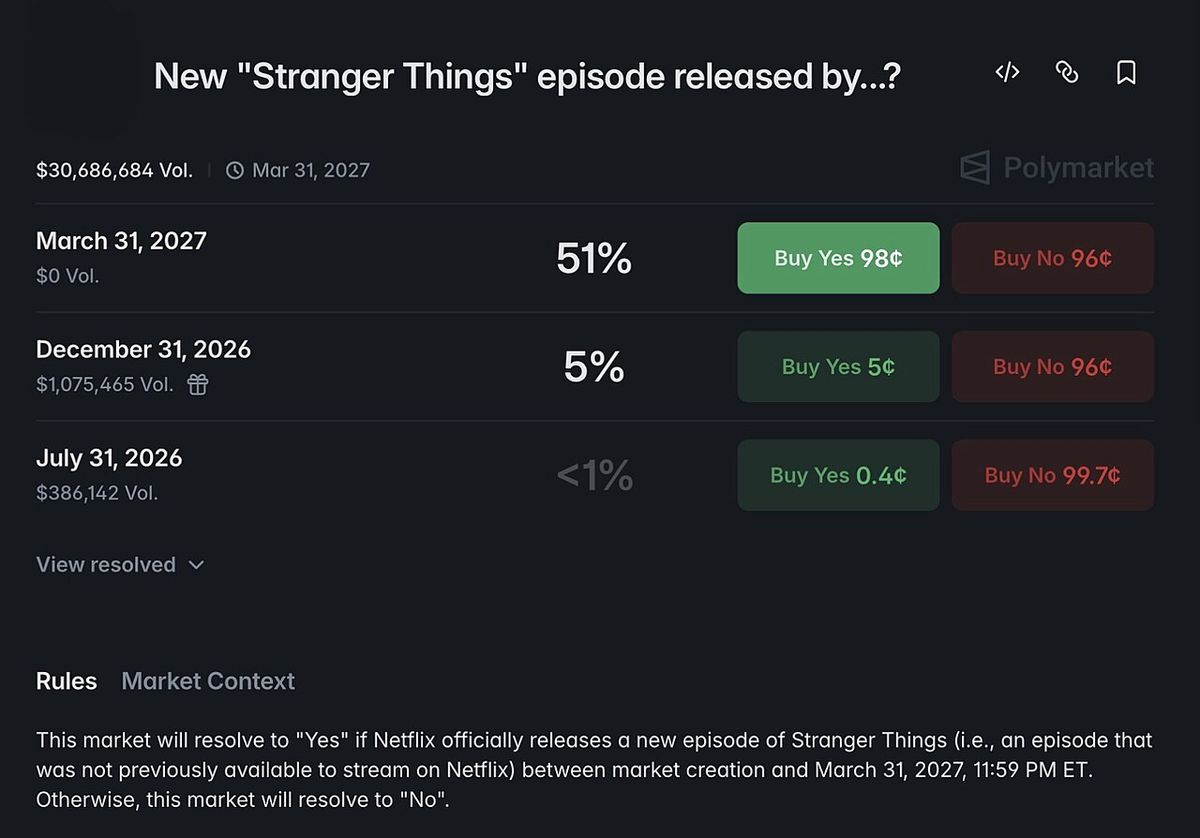
Polymarket functions as a prediction market, not a traditional sportsbook or casino. Users deposit cryptocurrency, primarily through the Polygon blockchain network, to buy and sell shares representing the probability of specific future outcomes. Share prices range from one cent to 99 cents, with the price reflecting the market's implied likelihood of an event occurring. The platform earns revenue through transaction fees on trades rather than by acting as a counterparty or holding a house edge. This peer-to-peer model means users trade directly with each other, and the platform's business depends on trading volume and liquidity. Polymarket US, a separate entity launched for the American market in 2025, operates as a Designated Contract Market regulated by the Commodity Futures Trading Commission following a $112 million acquisition of QCEX. The international Polymarket platform, which serves users outside specific regulated jurisdictions like the U.S., operates independently and is not CFTC-regulated.
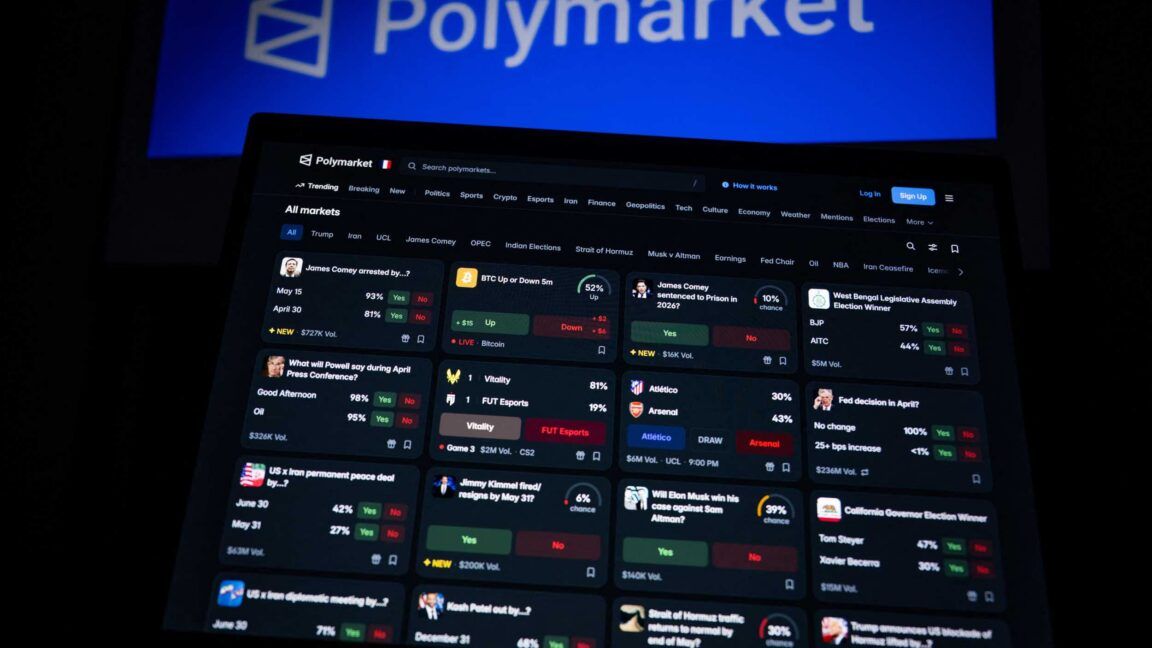
The platform hosts a vast array of markets, with sports constituting 63 percent of trading activity. Beyond sports, markets include political elections, economic indicators, entertainment awards, and geopolitical events. Contracts resolve using official data sources, such as Sportradar for sports, and verified news reports for other events. Every market page lists its resolution source before trading is allowed. The company has implemented some guardrails against insider trading, including blocking athletes, coaches, and political candidates from trading on events they can influence and providing a whistleblower tool on market pages.
History and Funding
Polymarket was founded in 2020 by Shayne Coplan and is headquartered in Manhattan, New York City, with a legal domicile in Panama. The company's early growth was marked by regulatory challenges, including a $1.4 million fine and a cease-and-desist order from the U.S. Commodity Futures Trading Commission in January 2022 for operating an unregistered Swap Execution Facility. Following this settlement, Polymarket blocked access to U.S.-based customers from 2022 until December 2025. In May 2022, the company appointed former CFTC commissioner J. Christopher Giancarlo as chairman of its advisory board. The platform gained wider public attention in June 2023 when a viral tweet about a bet on whether the Titan submersible would be found by a certain date increased interest in its markets.
Polymarket announced in May 2024 that it had raised $70 million across two funding rounds. These funding rounds included investments from Vitalik Buterin, the cofounder of Ethereum, and Founders Fund, a venture capital firm founded by Peter Thiel. In October 2025, Polymarket secured up to a $2 billion investment from Intercontinental Exchange (ICE), which valued the company at $8 billion. By February 2026, the company was valued at $9 billion. The second Donald Trump administration eased the regulatory environment for Polymarket, and in July 2025, the Commodity Futures Trading Commission and Department of Justice ended a probe into the company. In March 2026, Polymarket acquired Brahma, a crypto and DeFi infrastructure startup, to simplify its blockchain infrastructure for users.
- May 2024: Raised $70 million from investors including Vitalik Buterin and Founders Fund.
- May 2025: Acquired the viral X account "Has Mbappé Scored a Free Kick" and rebranded it as "Polymarket FC".
- July 2025: Added Donald Trump Jr. as an advisor after investment from his firm, 1789 Capital.
- October 2025: Secured up to a $2 billion investment from Intercontinental Exchange, valuing the company at $8 billion.
- February 2026: Company valuation reached $9 billion.
- March 2026: Acquired crypto infrastructure startup Brahma to simplify its blockchain operations.
Controversies and Ethical Concerns
Polymarket has consistently operated in what observers describe as a legal and ethical grey area due to the nature of the markets it hosts. The platform has allowed betting on armed conflicts, natural disasters, and other sensitive events, raising concerns about perverse incentives. For instance, it hosted bets on the January 2025 Southern California wildfires, which drew condemnation from U.S. senators who argued it could incentivize arson. The platform has also faced scrutiny for markets on potential nuclear detonations during the 2026 Iran war, where nearly $850,000 was wagered before the market was removed. These practices have prompted criticism from organizations like Reporters Without Borders and spurred legislative efforts in the U.S. to ban such markets.
Allegations of insider trading and market manipulation are recurrent issues. Scholars and journalists have challenged the platform's efficiency in accurately aggregating information, noting that large wagers by a few individuals can distort prices. A New York Times review found the platform published hundreds of false and misleading social media posts. Specific incidents have involved military personnel. In January 2026, a U.S. Special Forces soldier was arrested and charged for allegedly using classified information to bet on U.S. military action against Venezuela. Multiple members of the Israeli Air Force were also interrogated or indicted in 2026 for using insider knowledge to bet on strikes during the Twelve-Day War. In one case, an officer stated during interrogation that "the entire air force is betting."
- January 2025: Bets on Southern California wildfires draw political condemnation.
- March 2026: Users harass Israeli journalist Emanuel Fabian to alter war reporting for market gain.
- January 2026: U.S. soldier arrested for alleged insider trading on Venezuela intervention.
- February 2026: Two individuals charged in Israel for using insider knowledge on Polymarket.
- November 2025 to 2026: Platform hosts and then removes nuclear detonation bets during Iran war.
Legal and Regulatory Issues
Polymarket has faced legal issues and has been blocked in several countries. In January 2022, the U.S. Commodity Futures Trading Commission fined Polymarket $1.4 million for operating an unregistered derivatives platform. In November 2024, the FBI raided the home of founder Shayne Coplan as part of a Department of Justice investigation into alleged U.S. betting. The company settled with the CFTC in 2022, agreeing to wind down U.S. operations, but the second Donald Trump administration eased the regulatory environment. In July 2025, the CFTC and Department of Justice ended their probe. The company then acquired QCEX, a CFTC-licensed derivatives exchange, for $112 million to legally operate in the U.S. Some U.S. states, including Nevada and Massachusetts, have filed lawsuits arguing Polymarket should be regulated as gambling. In May 2026, Minnesota enacted a law banning prediction markets, which the U.S. Department of Justice immediately challenged.
Polymarket's legal domicile in Panama provides benefits such as protection against foreign court orders and zero tax on foreign income, though recent Panamanian law requires strategic business operations in the country to avoid a new 15 percent tax penalty. The betting markets and the potential for insider trading have been described as a legal grey area by U.S. representative Ritchie Torres. An estimated 0.1 percent of accounts net 67 percent of the profits on Polymarket, while more than 70 percent of users lose money. About 3 percent of traders account for the majority of price discovery on the platform. The company has a track record of changing the terms of wagers after bets have been made.
Global Bans and Restrictions
Polymarket has been banned or restricted in numerous countries due to violations of local gambling and financial regulations. The platform maintains a list of over 40 countries where access is completely blocked. These include France, Italy, Brazil, Gibraltar, Singapore, South Korea, Spain, Switzerland, Poland, Romania, Australia, and Lithuania. In many cases, national gambling authorities have issued orders for internet service providers to block the domain. For example, the Swiss Gambling Supervisory Authority added Polymarket to its blocked list in November 2024, and Portugal's Gaming Policy and Regulation Service issued a nationwide ban in March 2026. The platform also faces restrictions in specific regions within otherwise accessible countries. In Germany, trading is prohibited, though users can hold existing positions to resolution. In Italy and the Canadian province of Ontario, users can view markets but cannot deposit or trade.
The company implements these geographic restrictions to comply with international sanctions and regulatory requirements. It strictly prohibits the use of VPNs to bypass these blocks, considering it a violation of its terms of service. Permissions are based on a user's physical location at the time of access, not their country of residency. This means a Canadian traveler in a non-restricted country could theoretically trade, while someone in Ontario cannot. The pattern of global enforcement highlights the ongoing tension between innovative prediction market platforms and established national frameworks for regulating gambling and financial derivatives.
| Country/Region | Action | Date |
|---|---|---|
| Switzerland | Added to blocked domains list | November 26, 2024 |
| France | Geo-block agreed after investigation | November 29, 2024 |
| Poland | Added to internet gambling blacklist | January 8, 2025 |
| Singapore | Added to gambling blacklist | January 12, 2025 |
| Belgium | Platform banned | February 3, 2025 |
| Portugal | Nationwide ISP block ordered | March 17, 2026 |
| Bulgaria | Court demand for ISP block | February 2, 2026 |
| Netherlands | Rejected appeal by Polymarket | July 2026 |
| Italy | Re-added to unauthorized gambling list | July 2026 |
| Brazil | Prediction markets banned | April 26, 2026 |
- November 2024: Switzerland and France implement blocks.
- January 2025: Singapore and Poland add Polymarket to gambling blacklists.
- March 2026: Portugal orders a nationwide ISP block.
- February 2026: A Bulgarian court demands ISPs block the platform.
- July 2026: The Netherlands rejects an appeal by Polymarket.
Impact on Traditional Gambling and Markets
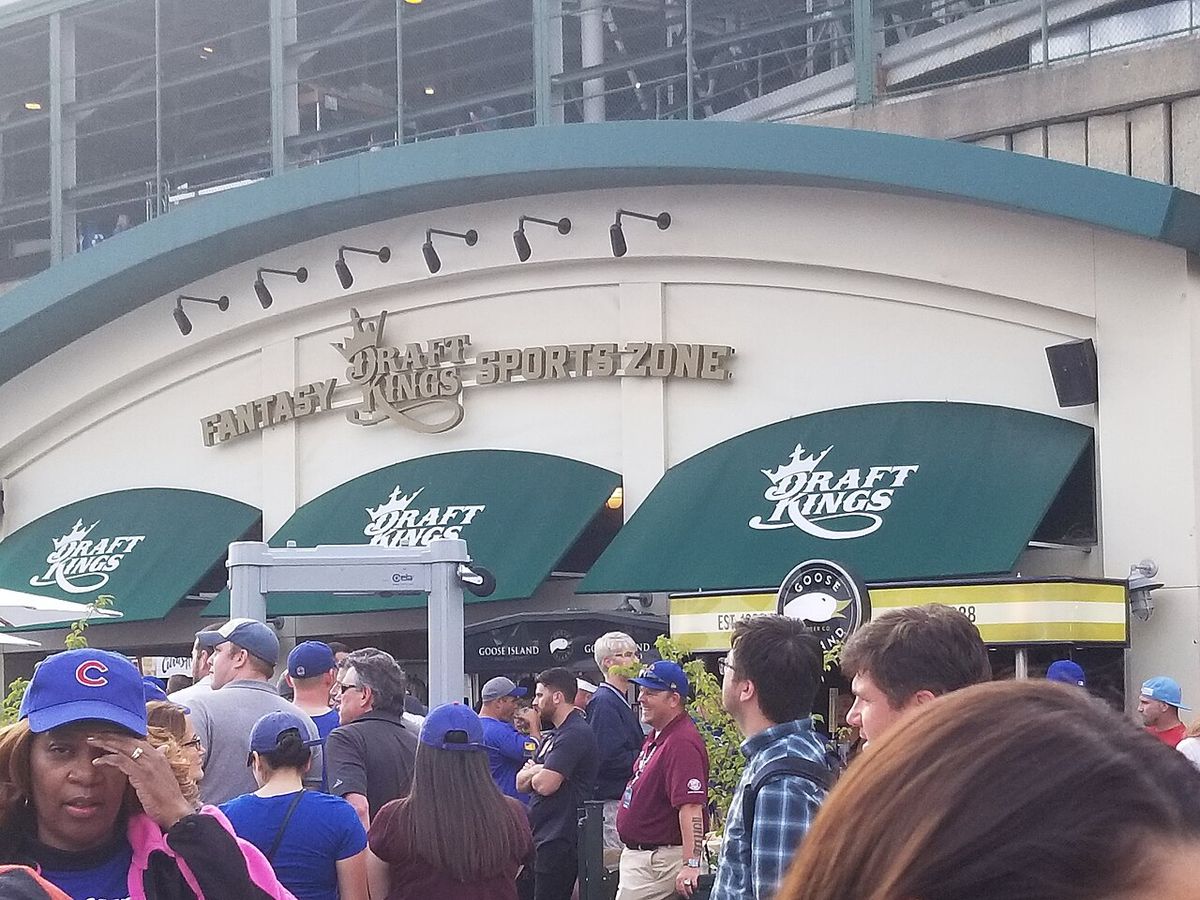
Polymarket and similar prediction markets have begun to affect the traditional online gambling and sports betting industry. Analysis indicates these platforms are costing established bookmakers and online casinos market share and revenue. This competitive pressure has been significant enough to prompt investment banks to downgrade the stock of several publicly traded iGaming companies, including DraftKings. The shift is driven by structural differences that appeal to experienced bettors. Traditional sportsbooks set odds with a built-in profit margin, or vig, and often limit or close the accounts of customers who win consistently. In contrast, prediction markets operate on a peer-to-peer model with lower trading fees and do not limit users for winning, as their revenue is based on transaction volume.
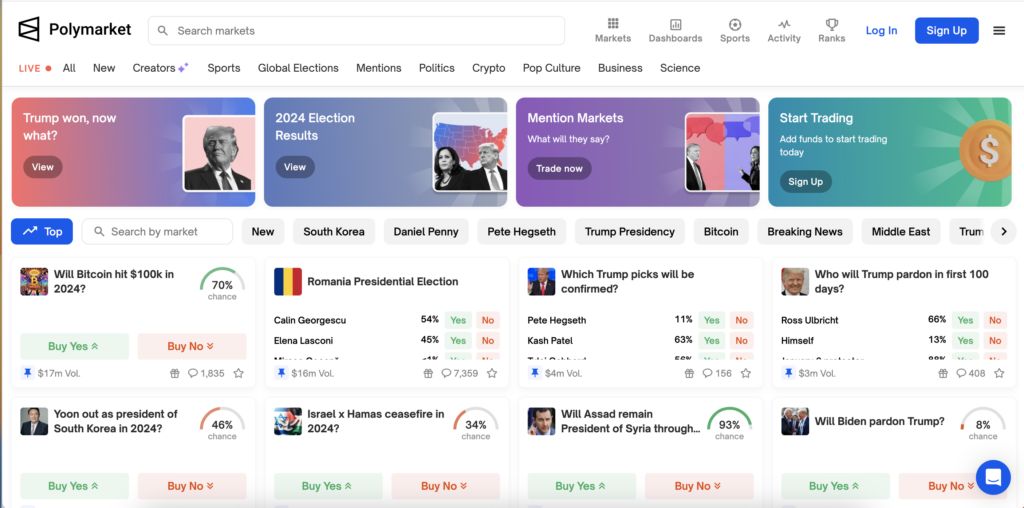
The breadth of available markets also represents a key competitive advantage. While sportsbooks typically offer bets on point spreads, moneylines, and totals for major sports, Polymarket allows trading on virtually any topic with a knowable outcome. This includes political elections, central bank decisions, technology developments, and entertainment awards, all on the same platform as sports. This open-ended nature attracts users with specialized knowledge who cannot find equivalent markets on traditional sites. The platform's claim to aggregate real-time sentiment and provide more accurate probabilities than pundits or polls, though debated by scholars, has also contributed to its growing influence as an alternative information and trading venue.
The 2024 U.S. Election and Market Scrutiny
The 2024 United States presidential election became the most active market on Polymarket, with over $3.3 billion wagered on the race between Donald Trump and Kamala Harris as of November 5, 2024. The platform's predictions sometimes diverged from other forecasters. For instance, days after the June 27 presidential debate, Polymarket showed a 70 percent chance Joe Biden would withdraw from the race, weeks before his official announcement. In October 2024, the platform showed a sudden spike in Trump's odds to 53.3 percent, while competitors like PredictIt and the FiveThirtyEight model, founded by Polymarket advisor Nate Silver, still showed Harris with a slight edge. This divergence was attributed by analysts to a few large wagers, possibly influenced by public statements from figures like Elon Musk, who had promoted Polymarket.
The incident prompted an internal investigation by Polymarket into potential market manipulation. The Wall Street Journal reported that the price movement might have been driven by four betting accounts behaving similarly, with about $30 million in Trump wagers. On October 24, 2024, Polymarket confirmed the accounts were controlled by a single French trader with a financial services background and found no evidence of manipulation. That trader ultimately won $85 million upon Trump's victory. This event highlighted a critical feature and criticism of the platform: the lack of a cap on individual bet amounts means large wagers by one or a few entities can significantly move prices, which may not reflect a broader change in the underlying probability of an event.
| Market or Event | Implied Probability / Outcome | Date / Context |
|---|---|---|
| Joe Biden withdraws from race | 70% chance | Days after June 27, 2024 debate |
| Kamala Harris picks Tim Walz as running mate | 23% odds | August 5, 2024 (selected August 6) |
| Donald Trump wins election (spike) | 53.3% odds | October 7, 2024 |
| Kamala Harris wins election (spike) | 46.1% odds | October 7, 2024 |
| Donald Trump wins election (peak) | 60% odds | October 18, 2024 |
| French trader's winnings on Trump victory | $85 million payout | After November 2024 election |
Questions about Polymarket
Is Polymarket legal in Canada?
Polymarket's legality in Canada is complex and varies by province. The platform is explicitly banned in Ontario, where the Ontario Securities Commission enforced a trading prohibition because Polymarket's short-term binary options contracts violate provincial securities law. In other provinces, there is no clear federal regulatory framework for decentralized prediction markets, creating a grey area. Canadians outside Ontario can access the global Polymarket platform to view markets, but the act of depositing funds and trading exists in an uncertain legal space and is not endorsed by provincial regulators.
Is Polymarket available in Canada?
Availability in Canada is heavily restricted by provincial regulations. Users in the province of Ontario cannot deposit funds or trade on Polymarket at all, though they may be able to view market data. For Canadians in other provinces, the international Polymarket platform is technically accessible through the internet. However, trading services are not officially sanctioned or regulated within Canada, and the platform uses geographic controls to block users based on their location. Using a VPN to circumvent these restrictions is a violation of Polymarket's terms of service and could lead to account suspension.
What is Polymarket's status in Ontario?
In Ontario, Polymarket is completely blocked for trading following definitive regulatory action. The Ontario Securities Commission determined that the platform's offerings constitute prohibited binary options under provincial securities law. As a result, Ontario residents cannot create accounts, deposit cryptocurrency, or place trades on Polymarket. The platform's own documentation lists Ontario as a region where trading services are unavailable. This makes Ontario the only Canadian jurisdiction to have taken such enforcement action against the prediction market as of 2026.
Has Polymarket had an IPO?
As of 2026, Polymarket has not conducted an initial public offering (IPO) and remains a privately held company. It has raised significant capital through private funding rounds, including a $70 million raise in May 2024 from investors like Vitalik Buterin and Founders Fund. A strategic investment of up to $2 billion from Intercontinental Exchange in October 2025 valued the company at $8 billion, and its valuation increased to $9 billion by February 2026. There is no public information indicating plans for an IPO in the near future.
How does Polymarket compare to traditional sportsbooks?
Polymarket differs from traditional sportsbooks in its fundamental peer-to-peer prediction market model. Users trade contracts with each other, and prices are set by supply and demand rather than by a bookmaker. Traditional sportsbooks set the odds and act as the counterparty to every bet, building a profit margin into their prices, while Polymarket charges trading fees. A major difference is that sportsbooks often limit or close accounts of successful bettors, while Polymarket does not restrict users for winning. However, Polymarket's liquidity can be thinner on some markets, which may affect the ability to place large trades without moving the price.
Did Polymarket have markets on the 2026 U.S. midterms?
The platform is known for hosting bets on various political outcomes, legislative events, and elections globally. The article covers events up to mid 2026, including regulatory actions and market activity for other events during that period. For example, there was significant betting activity related to the 2026 Dublin Central by-election in Ireland. However, the specific existence or activity of markets related to the 2026 U.S. midterm elections is not mentioned in the available source material.
Sources and further reading
- Polymarket (Wikipedia)
- Polymarket | The World's Largest Prediction Market™ (polymarket.com)
- Polymarket Review 2026 (actionnetwork.com)
- Polymarket vs Betting Sites: Why I ... (pillarlabai.com)
- Geographic Restrictions (help.polymarket.com)
- Should prediction markets be legal in Canada?, Canadian Affairs (osler.com)
- Should prediction markets be legal in Canada? (canadianaffairs.news)
Checked by the Nosy Mag desk. Last updated 2026-11-10.