Kalshi
Kalshi Inc. is a prediction market platform based in Manhattan, New York City, that launched in July 2021. The platform is used primarily for sports betting, which constitutes more than 90% of site activity and 89% of revenue in 2025. Individuals can place bets on other future outcomes, including economic indicators, weather patterns, awards, political and legislative outcomes, and military conflicts. The platform's legal status as a financial product versus an unlicensed gambling operator is the subject of numerous lawsuits and regulatory battles across the United States, shaping its availability and future.
Company Origins and Regulatory Framework
Kalshi was founded in 2018 in San Francisco by financial analysts Tarek Mansour and Luana Lopes Lara. The company, initially named Kownig, secured a critical licence from the U.S. Commodity Futures Trading Commission in November 2020, registering as a designated contract market. This made it the first regulated platform allowed to trade directly on the outcomes of real-world events through event contracts. The site launched publicly to users in July 2021. The core of Kalshi's business model is that users trade contracts against each other on a centralized exchange, with Kalshi collecting a fee on each transaction rather than profiting directly from user losses. This structure is central to the company's argument that it offers a financial product, not a traditional sportsbook. The platform's regulatory standing under the CFTC has been both its foundation and a source of continuous legal conflict, particularly as it has expanded into politically sensitive markets.

Market Offerings and Popularity
Kalshi hosts a wide array of event contracts, but sports betting dominates its activity. Analysts note that sports typically account for 80 to 90 percent of all bets on the site, a figure the company itself confirmed was over 90 percent of site activity and 89 percent of revenue in 2025. Popular sports wagers include predicting game winners, player performances, and parlays, which Kalshi terms 'combos'. Beyond sports, the platform offers markets on economic indicators like inflation and unemployment, political and legislative outcomes, awards shows, weather patterns, and even specific words used in political speeches. The platform saw record growth during major sporting events, gaining 3 million new users during the 2026 FIFA World Cup where over $1.2 billion was traded on predicting the winner. In 2025, Kalshi also became the infrastructure for Robinhood's Prediction Markets Hub. The company has pursued media partnerships, signing formal deals with CNN, CNBC, and Fox News to integrate its data and potentially its odds into broadcasts. A volume of $3 billion to $5 billion was bet on NFL games in 2025.
Expansion into Financial Derivatives and Corporate Growth
Beginning in 2026, Kalshi expanded its product line beyond traditional event contracts into federally regulated financial derivatives. This move placed it in closer competition with established exchanges like the CME Group. The company launched perpetual futures products, initially tied to cryptocurrency markets, which allow leveraged trading without a set expiration date. In October 2026, it introduced a perpetual futures contract linked to its US 500 index, which tracks 500 large American companies. This strategic shift aimed to financialize a broader range of assets, including discussions about contracts for metals, foreign exchange, and energy. The company's valuation reflects this ambitious growth, reaching $22 billion following a funding round led by TCV in May 2026. Kalshi's founder, Tarek Mansour, has stated the long-term vision is to 'financialize everything and create a tradeable asset out of any difference in opinion.'
Legal Challenges and State Lawsuits
Kalshi's operations have triggered numerous lawsuits from state attorneys general who allege the platform is conducting illegal, unlicensed gambling. These cases centre on whether Kalshi's event contracts, especially for sports, are gambling products subject to state law or financial derivatives under exclusive federal CFTC jurisdiction. By mid-2026, more than 20 federal lawsuits were pending. Key state actions include a preliminary injunction in Massachusetts in January 2026 banning sports-based markets, a lawsuit from Michigan in March 2026 alleging circumvention of state betting laws, and a major lawsuit from New York Attorney General Letitia James in July 2026 seeking approximately $36 billion in penalties. Other states like Arizona, Washington, Wisconsin, Ohio, and Nevada have also taken legal action. Court rulings have been split, with a federal judge in Arizona dismissing charges in May 2026 on the grounds of CFTC preemption, while an Ohio federal judge ruled in March 2026 that Kalshi's products constituted gambling under state law. The CFTC has actively defended its jurisdictional turf, filing lawsuits against states like New York and Wisconsin to reaffirm its exclusive oversight.
Several Native American tribes have also filed suits, arguing Kalshi's sports contracts violate their exclusive gaming rights on reservation lands under the Indian Gaming Regulatory Act. The legal actions from states in 2026 demonstrate the widespread regulatory pushback. Lawsuits also emerged from tribes including the Blue Lake Rancheria, Chicken Ranch Rancheria, and Picayune Rancheria in July 2025 and the Ho-Chunk Nation of Wisconsin in September 2025. In May 2026, Minnesota enacted a law banning prediction markets, but a federal judge ruled against the state in July 2026, finding the CFTC had exclusive jurisdiction.
- Massachusetts: Preliminary injunction issued in January 2026 blocking sports betting.
- New York: Lawsuit filed in July 2026 alleging illegal gambling and seeking $36 billion.
- Ohio: Federal judge ruled in March 2026 that products are gambling under state law.
- Arizona: Criminal charges filed and dismissed in 2026 on federal preemption grounds.
- Nevada: Reached an agreement in July 2026 to halt operations deemed unlawful by the state.
- Michigan: Lawsuit filed in March 2026 for circumventing the Lawful Sports Betting Act.
- Washington: Preliminary injunction granted in July 2026 blocking event contracts.
- Wisconsin: Lawsuit filed in April 2026 alleging illegal gambling schemes.
Controversies and Ethical Concerns
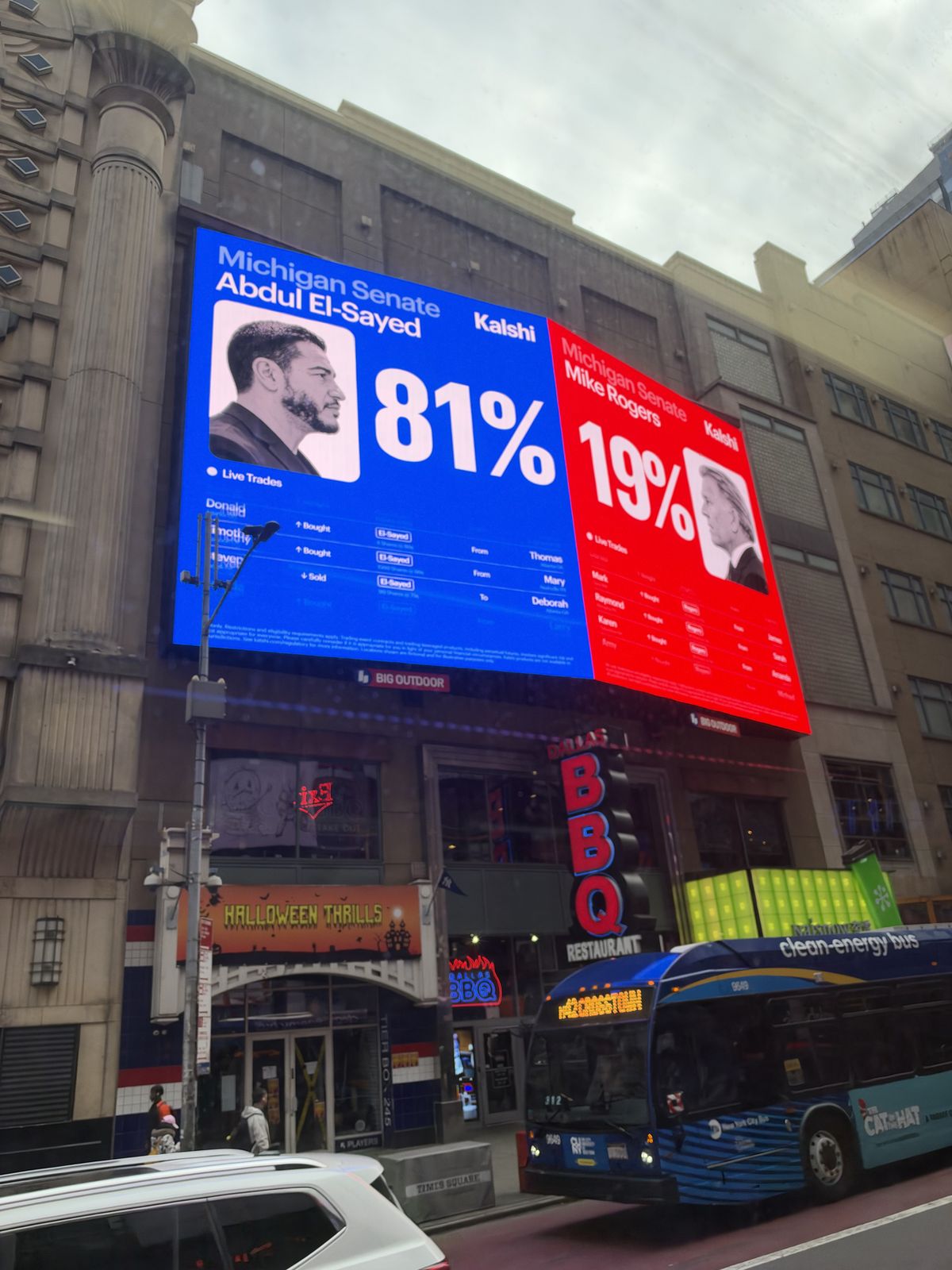
Kalshi has been involved in several controversies that extend beyond regulatory disputes. The platform has faced criticism for offering markets on sensitive subjects, including contracts related to the humanitarian situation during the Gaza genocide. Its efforts to offer election betting have drawn sustained opposition from politicians and consumer advocacy groups like Better Markets, who argue it commoditizes democracy and undermines public trust. In response to these concerns, the United States Senate banned its members and staff from using prediction markets like Kalshi in May 2026. The company also faced backlash in 2025 for a 'student ambassadors' program aimed at recruiting university students, which critics said effectively lowered the betting age from 21 to 18 by treating markets as commodity contracts. Several insider trading incidents have marred the platform's reputation, involving fines and suspensions for users with privileged information.
After Iranian supreme leader Ali Khamenei was killed, Kalshi froze $54 million in trades on a contract predicting Khamenei would be out as Supreme Leader. The platform later standardized its terms for markets affected by the death of a key figure to settle at the odds prior to that person's death. Subsequently, Kalshi made approximately $2.2 million in reimbursements to users. In July 2026, a trader on Kalshi using Spotify data analysis detected and flagged artificial streams, prompting Spotify to investigate and confirm the removal of over 500,000 fraudulent streams from the song Earrings by artist Malcolm Todd.
- February 2026: A video editor for YouTuber MrBeast was fined and suspended for suspected insider trading.
- April 2026: Three congressional candidates were fined and suspended for betting on their own campaigns.
- July 2026: A White House teleprompter operator was alleged to have bet on words the President would say.
- August 2026: Former congressman George Santos was fined by the CFTC and banned for life by Kalshi for market manipulation.
- January 2026: Kalshi initially withheld full payouts on winning NFL bets, releasing funds only after public backlash.
- 2025: The company hired Donald Trump Jr. as a strategic adviser, compensating him with over $300,000 in company shares.

Kalshi and the Canadian Market
Direct access to Kalshi's full platform is not available to Canadians. The company's own help centre and eligibility agreements list Canada as a restricted country, and its international expansion to 140 countries in late 2025 explicitly skipped Canada. Canadian securities regulators, including the Canadian Securities Administrators, have stated that prediction market products are not automatically entitled to enter Canadian markets simply because they are legal elsewhere. The primary legal barrier is Canada's nationwide ban on offering short-term binary options to retail investors, which includes contracts with a maturity of less than 30 days. This rule stems from Multilateral Instrument 91-102, enacted in 2017. The only authorized pathway for Canadian adults to access Kalshi-sourced contracts is through Wealthsimple Predict, a standalone app launched on July 29, 2026, after receiving authorization from the Canadian Investment Regulatory Organization in March 2026.
This partnership offers about 4,000 contracts, but they are a limited subset of Kalshi's total offering. Crucially, the Canadian version excludes all sports and election markets, focusing only on three CIRO-approved categories: economic indicators, financial markets, and climate-related events. Every contract must also run for at least 30 days to comply with the binary options ban. Canadians attempting to bypass geographic blocks to use the main Kalshi platform risk breaching terms of service, having funds frozen, and forfeiting Canadian investor protections. The regulatory stance suggests that any future expansion into sports betting in Canada would likely fall under provincial gaming law rather than securities regulation, as confirmed by the Canadian Securities Administrators staff who view sports contracts as outside securities legislation.
| Feature | U.S. Kalshi Platform | Wealthsimple Predict (Canada) |
|---|---|---|
| Availability | Direct account registration | Indirect via app only |
| Contract Types | Sports, politics, economics, entertainment, etc. | Economics, finance, climate only |
| Sports Betting | Available (over 90% of volume) | Not available |
| Election Betting | Available | Not available |
| Minimum Contract Duration | Varies, can be very short-term | 30 days minimum |
| Primary Regulator | U.S. Commodity Futures Trading Commission | Canadian Investment Regulatory Organization |
The Sportsbook Debate and Industry Impact
A central and unresolved question surrounding Kalshi is whether it functions as an unlicensed sportsbook or a novel financial exchange. Critics, including established sports betting operators and industry groups like the American Gaming Association, argue Kalshi has found a legal backdoor to offer sports betting without paying state gaming taxes or adhering to age restrictions, thereby gaining an unfair advantage. They point out that from a bettor's perspective, the experience is essentially identical to traditional sports betting. Kalshi's own advertising has sometimes targeted users of 'predatory sportsbooks,' though the company maintains its fundamental difference is its exchange model where users trade against each other. The debate has significant financial stakes, involving billions in potential tax revenue and shaping the future of the prediction market industry. The outcome of the numerous pending lawsuits will determine whether platforms like Kalshi will be forced to obtain state gambling licences or can continue operating under federal financial oversight.
Questions about Kalshi
Is Kalshi legal in Canada?
Kalshi's own platform is not legally accessible to Canadians for direct account opening. However, a legal and regulated pathway exists through a partnership with Wealthsimple. The Wealthsimple Predict app, authorized by the Canadian Investment Regulatory Organization, offers a limited set of Kalshi-sourced contracts focused on economics, finance, and climate. This authorized route complies with Canadian securities laws, which treat these contracts as derivatives. Any attempt to access the full U.S. Kalshi platform from Canada would breach its terms of service.
Can you use Kalshi in Canada?
Canadians cannot use the main Kalshi platform or open a Kalshi account. The only supported method is through the Wealthsimple Predict app, which launched in July 2026. This app provides access to approximately 4,000 Kalshi contracts, but it excludes all sports, election, and entertainment markets that are popular on the U.S. site. The Canadian version is a limited subset designed to comply with local regulations, particularly the ban on short-term binary options.
What is the difference between Kalshi and a regular sportsbook?
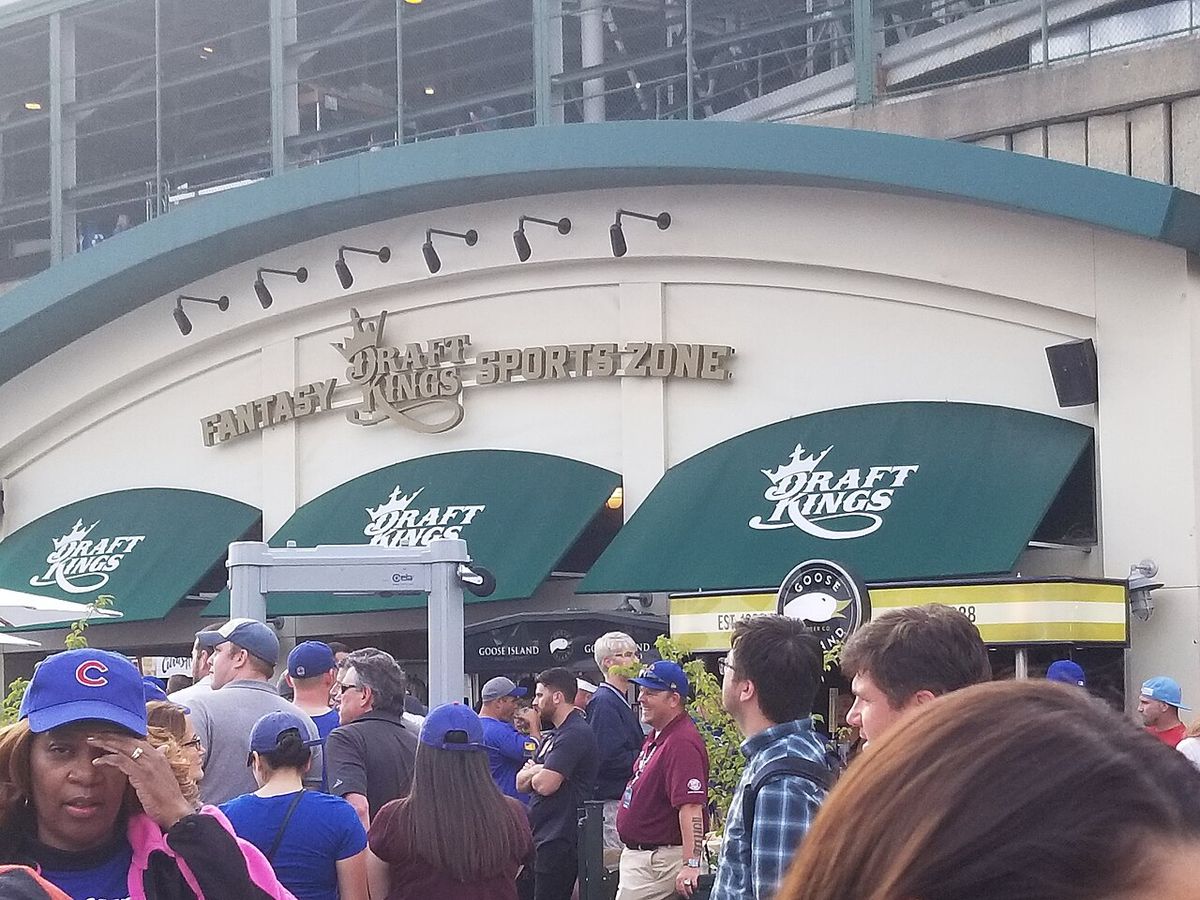
The primary difference lies in the trading model and regulatory classification. Traditional sportsbooks like DraftKings act as the 'house,' setting odds and profiting when users lose. Kalshi operates as an exchange where users trade contracts against each other, with Kalshi taking a fee per transaction. Kalshi is regulated by the U.S. Commodity Futures Trading Commission as a financial market, not by state gaming boards. This allows it to offer contracts on non-sports events and, controversially, to potentially accept users in states where sports betting is otherwise illegal.
Why is Kalshi banned in some U.S. states?
Kalshi is banned or faces legal action in several US states because state attorneys general allege it operates as an unlicensed gambling business. States including Massachusetts, Michigan, New York, and Wisconsin have filed lawsuits, arguing Kalshi's sports event contracts constitute illegal sports betting that bypasses state licensing laws and taxes. For instance, a Massachusetts judge issued a preliminary injunction in January 2026, requiring Kalshi to block state residents from sports markets. Kalshi maintains it is a federally regulated derivatives exchange under the Commodity Futures Trading Commission's jurisdiction, leading to direct legal conflicts. The CFTC has itself filed lawsuits against states like New York and Wisconsin to reaffirm its exclusive regulatory authority over such prediction markets.
What types of events can you bet on using Kalshi?
You can bet on a wide variety of future outcomes on Kalshi, though sports betting constitutes over 90% of site activity. Beyond sports, the platform allows bets on economic indicators like inflation and unemployment, weather patterns, awards shows, political and legislative outcomes, and military conflicts. This range includes unusual markets such as predicting Spotify's top artist or specific NFL events like Hall of Fame picks. The company's long term vision is to financialize everything and create a tradeable asset from any difference in opinion.
How accurate are Kalshi's prediction markets?
The accuracy of Kalshi's markets is debated. Some analysts, like Liz Hoffman, argue that from 2021 to mid 2026 the platform demonstrated a high degree of precision, particularly for economic and financial markets. A February 2026 study published by the Federal Reserve found the prediction market platform is a useful method for measuring macroeconomic expectations. However, political scientist John M. Sides and others have challenged whether Kalshi efficiently and accurately aggregates information about all outcomes, indicating that its reliability may vary across different event types.
Sources and further reading
- Kalshi (Wikipedia)
- 5:00 AM ET (npr.org)
- Kalshi in Canada: How Canadians Can Access It in 2026 (predictxmarkets.com)
- Odds and Ends: Canada Excluded From Kalshi Expansion (gmelawyers.com)
Checked by the Nosy Mag desk. Last updated 2026-11-10.