Cody Legebokoff
Cody Alan Legebokoff is a Canadian serial killer convicted in 2014 of four counts of first-degree murder for the killings of three women and a teenage girl in and around Prince George, British Columbia. His crimes, committed between 2009 and 2010, drew national attention. One of his victims, Natasha Lynn Montgomery, has been included in the list of missing women and girls suspected as victims in the Highway of Tears murders. Legebokoff, who was 20 at the time of his arrest, is one of the youngest individuals in Canada to be convicted as a serial killer. His conviction followed a police investigation and a trial where he claimed the murders were committed by unnamed drug dealers.
Early Life and Background
Cody Alan Legebokoff was born on 21 January 1990 and grew up in Fort St. James, British Columbia. Described by friends and family as a popular young man, he participated in ice hockey and showed no overt signs of violent behaviour. He had a minor criminal record but was not on the radar of local police prior to the murders. After graduating from Fort St. James Secondary School, Legebokoff lived briefly in Lethbridge, Alberta, before moving to Prince George. In Prince George, he shared an apartment with three female friends and worked at a local Ford dealership. He was an active user of the Canadian social networking site Nexopia under the username "1CountryBoy." His online activity later became a significant element in the police investigation into the murder of Loren Leslie.
The 2010 Arrest and Initial Investigation
The investigation began with a traffic stop on the evening of 27 November 2010 at approximately 9:45 p.m. Royal Canadian Mounted Police Constable Aaron Kehler, a rookie officer, observed Legebokoff's 2004 GMC pickup truck speeding erratically after it emerged from a remote logging road onto British Columbia Highway 27. Kehler found it suspicious for someone to be on that road so late in frigid November. He pulled the vehicle over for a routine traffic stop and was soon joined by a second RCMP officer. A search of the truck revealed a multi-tool and a wrench covered in fresh blood, along with a girl's backpack and a wallet containing a children's hospital card for 15-year-old Loren Leslie. Legebokoff claimed he had been poaching and had clubbed a deer to death, stating "I'm a redneck, that's what we do for fun." The truck did not contain a deer carcass. The officers arrested him under the Canada Wildlife Act. A conservation officer with animal tracking skills was called. The officer traced the tire tracks and footprints in the freshly fallen snow back up the logging road and discovered the beaten body of Loren Dawn Leslie. This discovery immediately escalated the matter from a suspected poaching incident to a homicide investigation.
The Victims
Legebokoff was linked through forensic evidence to the murders of four individuals. Jill Stacey Stuchenko, a 35-year-old mother of six, was last seen on 9 October 2009. She was found dead four days later in a gravel pit on the outskirts of Prince George. Natasha Lynn Montgomery, a 23-year-old mother of two, was last seen on 31 August or early 1 September 2010. Her body has never been found, but her DNA was later found in samples taken from Legebokoff's apartment. Cynthia Frances Maas, 35, was last seen on 10 September 2010. Her body was found in a Prince George park the following month. Maas died of blunt-force trauma to the head and penetrating wounds. She had a hole in her shoulder blade, a broken jaw and cheekbone, and injuries to her neck consistent with stomping. The Crown stated Stuchenko, Montgomery and Maas had worked in the sex trade. Legebokoff was addicted to cocaine and used sex workers to procure the drug. The final victim was Loren Dawn Leslie, a 15-year-old girl murdered on 27 November 2010. Leslie was legally blind, having one completely blind eye and 50 percent vision in the other. She was far younger than the other victims and allegedly met Legebokoff online at the website Nexopia. Leslie was not involved in the sex trade. She is included in the list of murder victims found along the Highway of Tears in northern British Columbia.
Police Investigation and Forensic Evidence
Following Legebokoff's arrest for the murder of Loren Leslie, the RCMP's Northern District Major Crime Unit launched an expansive investigation that ultimately connected him to the three earlier murders. Investigators collected and analyzed evidence from Legebokoff's truck, his apartment, and a secondary residence. The forensic work was meticulous, involving the analysis of clothing, suspected weapons, and other items at labs across North America. A critical breakthrough came when analysis of a blood-stained piece of carpet from Legebokoff's apartment yielded a DNA match for Natasha Montgomery, providing the first direct link between her disappearance and the accused. Further DNA testing connected Legebokoff to Cynthia Maas and Jill Stuchenko. Specific pieces of evidence were particularly damning. A pickaroon, a logging tool, was found to contain Maas's DNA, while an axe bore Montgomery's. Blood matching Stuchenko was found on a couch from the apartment. Police also discovered a blood-stained footprint on Legebokoff's kitchen floor, which forensic analysis determined was his bare foot in Montgomery's blood. The investigation involved contacting over 4,000 people, which produced 195 police witnesses and culminated in 95,000 pages of evidence presented at trial.
Trial and Conviction
Cody Legebokoff's trial on four counts of first-degree murder began in June 2014 in the Supreme Court of British Columbia before Justice Glen Parrett and a jury. The trial, originally scheduled for September 2013, was delayed a month until October, and then again until June 2014. Legebokoff pleaded not guilty to all four counts. Over the course of the proceedings, the Crown called 93 witnesses to present a case built on overwhelming physical and forensic evidence. Legebokoff took the stand in his own defence. He testified that he was "involved" in the deaths of Stuchenko, Maas, and Montgomery but claimed a drug dealer and two accomplices, whom he would only name as "X, Y and Z", were the actual murderers. He maintained that Loren Leslie had died from self-inflicted wounds and that he had only struck her with a wrench after finding her body. The Crown rejected his attempt to plead guilty to the lesser charge of second-degree murder. After hearing all evidence, the jury deliberated and found Legebokoff guilty on all four counts of first-degree murder on 11 September 2014. Five days later, Justice Parrett sentenced him to life in prison with no possibility of parole for 25 years, the mandatory sentence for first-degree murder. The judge also ordered Legebokoff added to the national sex offender registry, citing the sexual assaults committed during the murders and his degradation of the victims' bodies. Parrett stated that Legebokoff lacked "any shred of empathy or remorse" and should "never be allowed to walk among us again."
Appeals and Incarceration
In February 2015, Legebokoff, through his lawyer Eric Gottardi, filed an appeal of his convictions. The appeal centred not on the evidence of guilt, which Gottardi conceded was overwhelming, but on the appearance of unfairness in the trial process. The defence argued that Justice Parrett had made critical remarks about the conduct of Legebokoff's original defence lawyer in a written ruling from 2012. In that ruling, Parrett had described the defence's application for a change of venue as containing "misleading" arguments and a "recasting of reality." Those reasons were not released until after the 2014 conviction and sentencing. Legebokoff's appeal claimed that the failure to disclose this criticism earlier deprived him of the opportunity to consider changing counsel or applying for the judge's recusal, creating a miscarriage of justice. The Crown, represented by David Layton, argued the trial judge had no duty to disclose his concerns earlier and that no actual prejudice had been demonstrated. In September 2016, a three-judge panel of the British Columbia Court of Appeal unanimously dismissed the appeal, endorsing the original trial judge's decisions. Legebokoff subsequently sought leave to appeal to the Supreme Court of Canada under file 37313, but leave was not granted. Initially incarcerated at the Kent Institution, a maximum-security prison, Legebokoff was transferred to the medium-security Warkworth Institution in Ontario in March 2019.
Case Statistics and Investigation Scale
The police investigation into Cody Legebokoff's crimes was one of the most extensive in northern British Columbia's history. It began with a traffic stop on November 27, 2010, and involved thousands of hours of work by the RCMP. Investigators collected evidence from Legebokoff's truck and homes, and they sent items to forensic labs across North America for DNA analysis. The case ultimately produced 195 police witnesses and 95,000 pages of evidence, which were used at his trial. The investigation's success hinged on connecting disparate pieces of evidence from different crime scenes and times. The discovery of Natasha Montgomery's DNA in Legebokoff's apartment was a major development, transforming a missing persons case into a homicide investigation linked to a serial offender. The meticulous work of the Forensic Identification Services unit, which identified a blood-stained footprint, and the coordination between the Major Crime Unit and conservation officers were all critical in building an unassailable case for the Crown.
| Investigation Component | Quantity or Detail |
|---|---|
| People Contacted | Over 4,000 |
| Police Witnesses | 195 |
| Pages of Evidence | 95,000 |
| Crown Witnesses at Trial | 93 |
| Forensic Items Analyzed | Clothing, tools, carpet, vehicles |
| DNA Links Established | To all four victims |
| Key Forensic Labs | Multiple across North America |
| Date of Arrest | 27 November 2010 |
| Trial Start Date | June 2014 |
Media Coverage and Cultural Impact
The case of Cody Legebokoff has been the subject of significant media attention and has been featured in several true crime documentaries and publications. The story resonated due to Legebokoff's youth, the vulnerability of his victims, and the geographic connection to the Highway of Tears. Major media coverage included an episode of the CBS News program 48 Hours titled "Highway of Tears," which first aired on 17 November 2012 and discussed Legebokoff among other convicted murderers. The case was profiled in the 2015 documentary Highway of Tears, which examined the disappearances and murders of Indigenous women along northern British Columbia highways. In print, American author J.T. Hunter published a book in 2015 titled The Country Boy Killer: The True Story of Cody Legebokoff, Canada's Teenage Serial Killer. More recently, the Investigation Discovery series Web of Lies dedicated an episode to the case titled "Virtual Hitchhiking" in its seventh season, which aired on 8 March 2021. The case has also been featured in numerous podcasts, including the Canadian True Crime podcast. This sustained interest shows the case's significance within the broader narrative of violence against women in Canada and the dangers of online interactions.
Questions about Cody Legebokoff
How was Cody Legebokoff caught?
Cody Legebokoff was caught on the evening of November 27, 2010, after RCMP Constable Aaron Kehler pulled over his speeding 2004 GMC pickup truck on British Columbia Highway 27. The officer had observed the truck leaving a remote logging road late at night, which he found suspicious. A search of the vehicle revealed a multi-tool and a wrench covered in blood, along with a backpack and wallet belonging to 15-year-old Loren Leslie. A conservation officer then followed the truck's tire tracks and footprints in the snow to find Leslie's body, which led to Legebokoff's arrest under the Canada Wildlife Act and his eventual connection to three other murders.
What was Cody Legebokoff's sentence?
Cody Legebokoff was sentenced on September 16, 2014, to life in prison with no possibility of parole for 25 years. British Columbia Supreme Court Justice Glen Parrett imposed this mandatory sentence for first-degree murder. Justice Parrett also ordered that Legebokoff be added to the national sex offender registry, citing the sexual assaults committed during the murders and his degradation of the victims' bodies. The judge stated that Legebokoff lacked any empathy or remorse and should never be allowed to walk free again.
Did Cody Legebokoff appeal his conviction?
Yes, Cody Legebokoff appealed his conviction in February 2015. His lawyer argued that the trial judge's failure to disclose critical views about the defence counsel's conduct before the trial created an appearance of unfairness. The British Columbia Court of Appeal dismissed the appeal in September 2016. Legebokoff later sought leave to appeal to the Supreme Court of Canada, but leave was not granted.
How were the victims connected to Legebokoff?
Jill Stuchenko, Natasha Montgomery, and Cynthia Maas were connected to Legebokoff through the sex trade, which he used to obtain cocaine. Loren Leslie, the teenage victim, had no connection to the sex trade. Police believe Leslie met Legebokoff on the social networking website Nexopia. Forensic DNA evidence linked Legebokoff to all four victims, with their DNA found on his clothing, in his apartment, or on tools like a pickaroon and an axe in his possession.
Where is Cody Legebokoff now?
Cody Legebokoff is currently serving a life sentence in a federal penitentiary. Following his conviction on September 11, 2014, he was initially imprisoned at the Kent Institution, a maximum-security facility in British Columbia. In March 2019, he was transferred to the Warkworth Institution, a medium-security prison located in Ontario. His sentence carries no possibility of parole for 25 years from the date of his conviction.
Why is this case associated with the Highway of Tears?
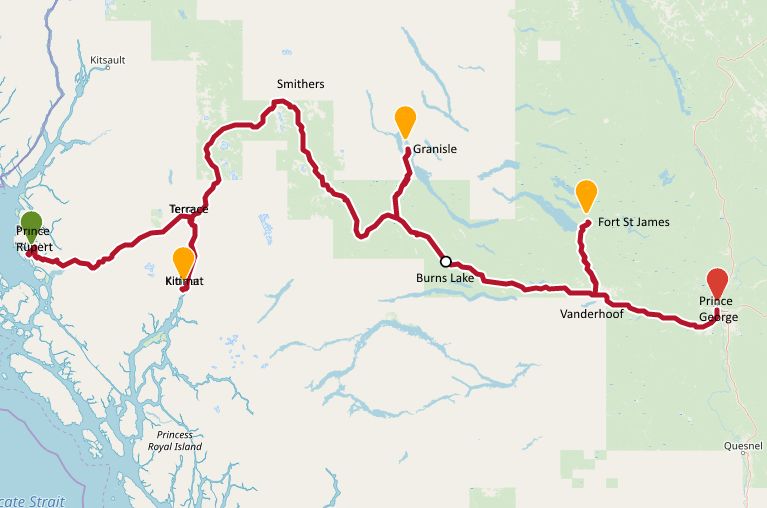
This case is associated with the Highway of Tears because the murders occurred in or near Prince George, British Columbia, a region connected to the infamous series of disappearances and murders along northern BC highways. Victim Loren Leslie is included on the official list of murder victims found along the Highway of Tears. Victim Natasha Lynn Montgomery has been included in lists of missing women and girls suspected as victims in the Highway of Tears murders. The case has been profiled in media such as the documentary 'Highway of Tears' and an episode of '48 Hours' titled 'Highway of Tears'.
Sources and further reading
- Cody Legebokoff (Wikipedia)
- Legwork helps convict serial killer (rcmp.ca)
- Convicted killer Cody Legebokoff seeks new trial (cbc.ca)
- Supreme Court of Canada | 37313 (scc-csc.ca)
- Cody Legebokoff, Canadian True Crime podcast (canadiantruecrime.ca)
Checked by the Nosy Mag desk. Last updated 2026-10-21.