2020 Nova Scotia attacks
The 2020 Nova Scotia attacks were a series of shootings and arsons committed by 51-year-old denturist Gabriel Wortman across multiple rural communities in Nova Scotia on April 18 and 19, 2020. Over a 13-hour rampage, Wortman, who was impersonating a police officer and driving a replica RCMP cruiser, killed 22 people and injured three others before being shot and killed by RCMP officers in Enfield. The tragedy led to a federal ban on certain firearms, a major public inquiry into police failures, and a national reckoning on intimate partner violence and emergency alert systems.
Chronology of the Attacks
The rampage began late on the evening of Saturday, April 18, 2020, in the small coastal community of Portapique, located about 130 kilometres north of Halifax. Wortman first assaulted his common-law partner, Lisa Banfield, at their cottage, pouring gasoline inside and setting it on fire. He confined her in the back of his replica RCMP cruiser, but she managed to escape and hid in the woods overnight. At approximately 22:01, the first of multiple 9-1-1 calls reported gunshots and fires in Portapique. Wortman, wearing an RCMP uniform, began systematically attacking his neighbours. He killed Greg and Jamie Blair in their home, and then shot teacher Lisa McCully when she approached what she believed was a police vehicle responding to the fires. Over the next hour, he killed several more residents, including Peter and Joy Bond, Corrie Ellison, and the family of Aaron Tuck, Jolene Oliver, and their daughter Emily Tuck. He also shot and injured a man who drove by to investigate the fires. The first three RCMP officers arrived on foot at 22:26, finding a scene of multiple fatalities and structure fires. Police established a perimeter, but Wortman had already escaped Portapique via an unblocked dirt road around 22:45, evading the initial response.
Wortman spent the night parked behind a welding shop in Debert. By 06:30 on Sunday, April 19, he had driven to a residence on Hunter Road in Wentworth, where he killed two acquaintances and their dogs. He remained there for about three hours. During this time, RCMP located Banfield, who confirmed Wortman was impersonating an officer and provided a photo of his vehicle. A province-wide 'Be on the Look Out' (BOLO) alert was issued to officers around 08:00, and Wortman was publicly identified as the suspect at 08:54. Wortman set the Wentworth house on fire and, as he left, killed a neighbour who had come to help. Driving south on Highway 4, he shot and killed a woman walking along the road in Wentworth Valley at 09:35. Shortly after, he attempted to gain entry to a home in Glenholme but was recognized by the occupants, who armed themselves and called police, prompting him to leave.
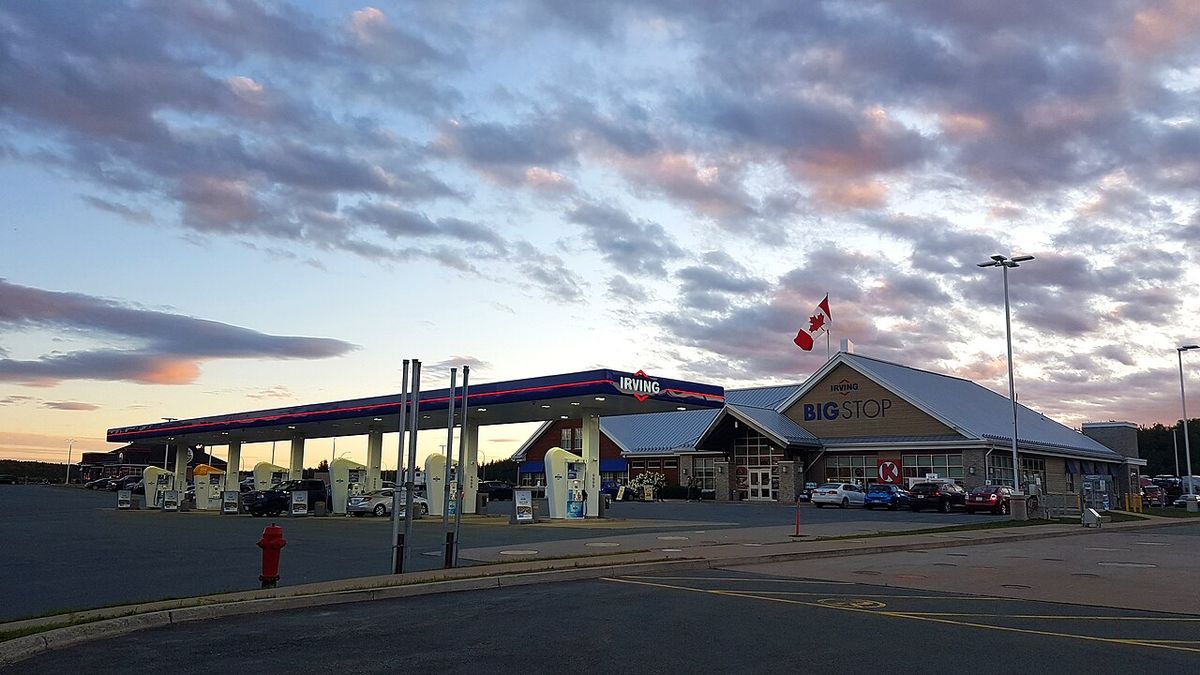
Before 10:00, in Debert, Wortman conducted two fake traffic stops and killed the lone occupants of each car. The RCMP publicly warned via Twitter at 10:17 that the suspect was impersonating a police officer. At approximately 10:49, in Shubenacadie, Wortman pulled alongside RCMP Constable Chad Morrison's cruiser and shot him, injuring him. Moments later, Wortman collided head-on with RCMP Constable Heidi Stevenson's vehicle. He engaged in a shootout, killed Stevenson, and stole her sidearm and ammunition before setting both vehicles ablaze. He then shot and killed a passing motorist who had stopped to help, stealing that victim's silver SUV. He later killed an acquaintance at her Shubenacadie home, stole her Mazda3, and continued south. At 11:26 a.m., Wortman stopped for fuel at the Irving Big Stop in Enfield. Two RCMP officers confronted him. Wortman raised Stevenson's pistol to his own head and fired, and the officers simultaneously shot him, ending the 13-hour manhunt.
The Perpetrator: Gabriel Wortman
Gabriel Wortman was a 51-year-old denturist who operated a clinic in Dartmouth, Nova Scotia, and owned a cottage in Portapique. Born on July 5, 1968, he grew up in Moncton and Riverview, New Brunswick. His estate, which included six properties and three corporations, was valued at approximately $2.1 million. Wortman had a history of violence and legal issues. In 2002, he pleaded guilty to assault and received nine months' probation, a weapons prohibition, and an order for anger management counselling. He was also involved in civil property disputes, including a case where he took ownership of a friend's house and evicted him, and another where he refused to return a property lent to him by his uncle. Witnesses and family described him as paranoid, manipulative, controlling, and struggling with alcohol use. A psychiatrist who saw him in 2000 noted he had a narcissistic personality. His uncle reported a family history of violence, and a cousin described him as 'almost a career criminal'. His business was negatively impacted by the COVID-19 pandemic, which forced the closure of non-essential denturist services, and his partner stated he had been 'consumed' by pandemic fears in the weeks before the attacks.
Wortman had a long-standing fascination with law enforcement. His high school yearbook stated he aspired to become a police officer, though his partner later told police he disliked law enforcement and 'thought he was better than them'. He collected police memorabilia and owned four decommissioned RCMP cruisers, which he refurbished to appear authentic. One was used during the attacks, while two others were found burning at his Portapique property. He had inquired about buying more police vehicles, sometimes claiming to be a retired officer. Neighbours reported he would sometimes dress in a police uniform and role-play. He also stockpiled gasoline and propane tanks, and boasted about having chemicals to dispose of bodies. Wortman did not possess a firearms licence. The guns used in the attacks were all acquired illegally, including one rifle inherited from a deceased friend, a handgun stolen from the RCMP officer he killed, and three firearms smuggled from the United States.
Victims and Impact
Gabriel Wortman killed 22 people across four main clusters of violence. Thirteen victims were found in Portapique, four in the Wentworth area, two in Debert, and three in Shubenacadie. Eight of the victims were discovered in the remains of homes set on fire. The victims included RCMP Constable Heidi Stevenson, a 23-year veteran of the force and mother of two. The other injured RCMP officer, Constable Chad Morrison, survived his wounds. Among the civilian victims were neighbours, acquaintances, and strangers. Some early victims had connections to Wortman, including property disputes or social relationships, while later victims appeared to be selected at random. The attacks left deep scars on the affected communities and the province. In May 2026, Clinton Ellison, a survivor of the shooting and brother of victim Corrie Ellison, died by suicide after struggling with post-traumatic stress disorder related to the attacks, underscoring the long-term trauma inflicted by the event. Thirteen of the victims were found in Portapique, four in Wentworth, two in Debert, and three in Shubenacadie. Eight of the victims were discovered in the remains of structure fires. The attacks resulted in the deaths of 22 people, including RCMP Constable Heidi Stevenson, making it the deadliest shooting rampage in Canadian history.
- Portapique: 13 victims killed on the night of April 18.
- Wentworth/Glenholme: 4 victims killed on the morning of April 19.
- Debert: 2 victims killed during fake traffic stops on April 19.
- Shubenacadie: 3 victims killed, including Constable Heidi Stevenson, on April 19.
Three people were injured during the attacks. RCMP Constable Chad Morrison was shot and survived. A man in Portapique was shot in the shoulder and survived. Wortman's partner, Lisa Banfield, was assaulted, restrained, and injured before she escaped. The shootings and fires occurred across 16 locations in Nova Scotia, devastating the rural communities where they took place.
Police Response and Criticisms
The RCMP response during the 13-hour rampage faced severe criticism in the aftermath. A primary failure was the decision not to use the national Alert Ready emergency broadcast system to warn the public that an armed man was impersonating a police officer and driving a replica cruiser. The RCMP instead relied on Twitter, with the first public warning about the police impersonation not issued until 10:17 a.m. on April 19, over 12 hours after the attacks began. The initial response in Portapique was hampered by confusion and a lack of resources. Officers arriving on scene were described as overwhelmed, and the RCMP's only Atlantic-based helicopter was unavailable due to maintenance. Wortman was able to escape the initial police perimeter via an unguarded dirt road. Throughout the night and following morning, residents in affected areas reported seeing little to no police presence despite ongoing 9-1-1 calls. Critical information about the suspect's identity, vehicle, and police uniform was confirmed by a key witness around 08:00 on April 19 but was not fully communicated to all officers or the public in a timely manner.
Specific incidents during the response highlighted systemic issues. At the Onslow-Belmont fire hall, which was being used as a shelter, two RCMP officers mistakenly opened fire on an emergency management officer, missing him but failing to check on the occupants afterward. The manhunt revealed coordination and communication gaps between different police units and detachments. These failures were later examined in detail by the Mass Casualty Commission, which concluded the RCMP's response was flawed and contributed to the prolonged duration and high death toll of the attacks. The commission's report, alongside a separate federal workplace incident report completed in 2024, called for major reforms in police training, equipment, inter-agency communication, and public alerting protocols.
The Mass Casualty Commission and Federal Reports
Public outcry over the RCMP's handling of the attacks led to the creation of the Mass Casualty Commission, a joint federal-provincial public inquiry announced on July 28, 2020. The commission's mandate was to examine the events of April 18-19, 2020, and the causes, context, and circumstances that contributed to the tragedy, including the role of gender-based and intimate partner violence. After extensive hearings and research, the commission released its final report, titled 'Turning the Tide Together', on March 30, 2023. The comprehensive report contained hundreds of findings and recommendations aimed at making communities safer. It condemned the RCMP's failures in command, control, communication, and its decision not to issue an emergency alert. The report called for dramatic reforms to policing, community safety, and how society addresses gender-based violence.
Separately, the federal government conducted a workplace incident investigation under the Canada Labour Code, as the deaths of Constables Stevenson and Morrison constituted a workplace fatality and injury. The existence of this report was disclosed in 2024. While covering similar ground as the public inquiry, it focused specifically on RCMP occupational health and safety compliance. The report, finalized in May 2024, found the RCMP had either complied with or was in the process of addressing all 49 corrective measures identified by investigators to fix gaps in operations, equipment, and training. This mirrored findings from previous tragedies like the 2014 Moncton shooting, where the RCMP was also found guilty of safety violations. The table below summarizes key inquiries and reports following the attacks.
| Body/Report | Type | Key Focus | Release Date |
|---|---|---|---|
| Mass Casualty Commission Final Report | Public Inquiry | Comprehensive examination of events, police response, and societal factors | March 30, 2023 |
| Federal Workplace Incident Report | Labour Code Investigation | RCMP occupational health and safety compliance and corrective actions | Report finalized May 2024 |
Aftermath and Policy Changes
The immediate political aftermath included a significant change to Canada's firearm laws. On May 1, 2020, Prime Minister Justin Trudeau announced an immediate ban on over 1,500 makes and models of what the government termed 'military-grade assault-style' weapons. This action fulfilled a 2019 campaign promise but was directly accelerated by the Nova Scotia attacks. Notably, all firearms used by Wortman were obtained illegally, highlighting the challenges of controlling the illicit gun market. The tragedy also intensified national discussions about intimate partner violence, as the rampage began with an assault on Wortman's partner, a pattern seen in other mass killings. Advocates pointed to the need for better protections and earlier interventions in cases of domestic abuse.
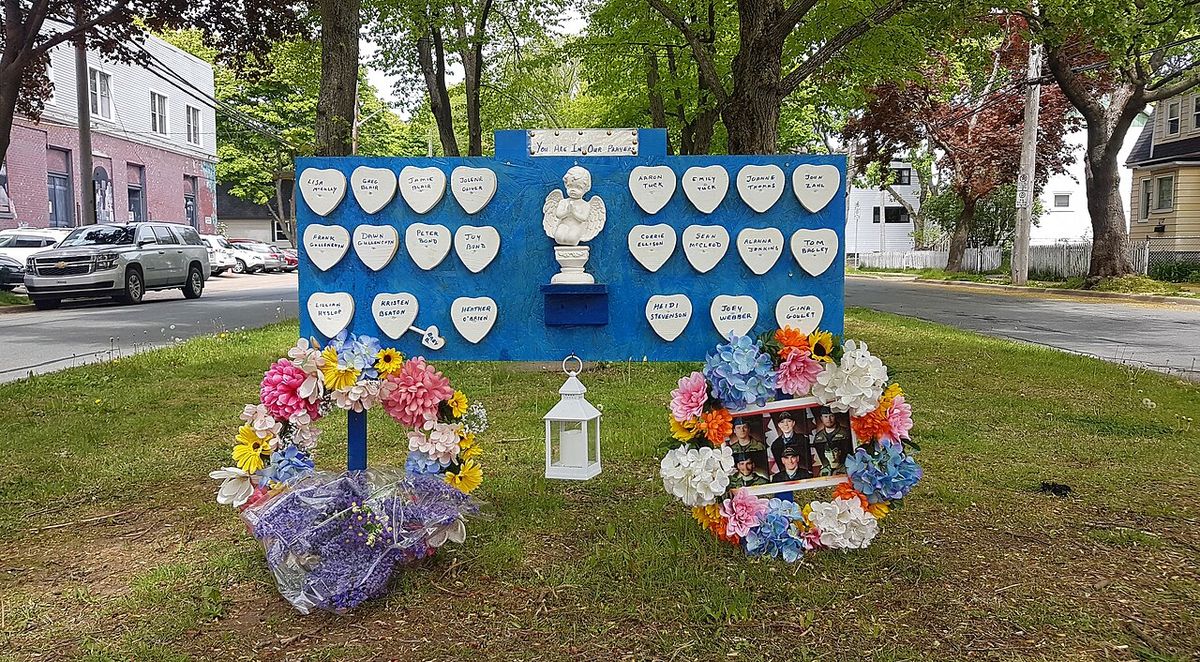
Other consequences included the removal of controversial decorative signs from Wortman's denture clinic in Dartmouth and the eventual demolition of the building in January 2022. The RCMP undertook internal reviews and began implementing recommendations from the various reports, focusing on improving emergency response coordination, officer training, and public communication. The attacks left a permanent mark on Nova Scotia, with memorials established in communities like Halifax's Hydrostone neighbourhood. The events of April 2020 continue to be studied as a case study in mass casualty response, the deadly intersection of misogyny and violence, and the limitations of existing police and public safety frameworks in rural Canada.
Missed Warnings and Prior Interactions with Police
In the years before the attacks, police were alerted to Gabriel Wortman's violent behaviour on multiple occasions but no decisive action was taken. In 2001, he was reportedly involved in an assault on a 15-year-old boy. In June 2010, Halifax Regional Police investigated Wortman for threatening his parents but took no official action due to insufficient evidence. A particularly stark warning came in May 2011, when the Truro Police Service received an anonymous email tip stating that Wortman had a stash of guns and a desire to 'kill a cop'. The tipster detailed Wortman's stress, mental health issues, and habit of keeping a handgun nearby. This information was transferred to the Nova Scotia RCMP, but the outcome of any follow-up investigation was not publicly disclosed prior to 2020. These prior interactions, revealed after the attacks, raised serious questions about whether earlier intervention could have prevented the tragedy. The Mass Casualty Commission examined these missed opportunities as part of its broader analysis of how systems failed to recognize and act upon the threat Wortman posed.
Questions about 2020 Nova Scotia attacks
How many people were killed in the 2020 Nova Scotia attacks?
Gabriel Wortman killed 22 people during his 13-hour rampage across central Nova Scotia. The victims included RCMP Constable Heidi Stevenson and 21 civilians. Three other people were injured: RCMP Constable Chad Morrison, a man shot in Portapique, and Wortman's partner, Lisa Banfield, who was assaulted at the outset. The attacks are the deadliest mass shooting in modern Canadian history.
What guns did the shooter use and how did he get them?
Wortman used five firearms: a Colt carbine rifle, a Ruger Mini-14 rifle, a Glock pistol, a Ruger P89 pistol, and a Smith & Wesson 5946 handgun he stole from RCMP Constable Heidi Stevenson after killing her. He did not have a firearms licence. The Ruger Mini-14 was inherited from a deceased friend. The other four guns were acquired illegally within Canada or smuggled from the United States. This illegal acquisition was a key factor cited in the post-attack debate on gun control.
What was the Mass Casualty Commission?
The Mass Casualty Commission was the independent public inquiry established in July 2020 to examine the April 2020 attacks. It investigated the causes, context, and circumstances of the tragedy, including the police response and the role of gender-based violence. The commission released its final report, 'Turning the Tide Together', on March 30, 2023. The report provided a comprehensive analysis and made numerous recommendations for reforming policing, emergency alerting, and community safety to prevent future tragedies.
What immediate policy change resulted from the attacks?
On May 1, 2020, the federal government announced an immediate ban on over 1,500 makes and models of 'military-grade assault-style' weapons. This included the Ruger Mini-14 rifle used in the attacks. The ban was implemented via an Order in Council and was part of a broader firearms control initiative. While the guns used by Wortman were all obtained illegally, the government stated the ban was aimed at reducing the availability of such weapons in Canada.
Were there warning signs about the shooter before the attacks?
Yes, police had been alerted to Gabriel Wortman's behaviour on several occasions prior to 2020. He had a 2002 assault conviction. In 2010, Halifax police investigated him for threatening his parents. Most notably, in 2011, Truro Police received an anonymous tip that Wortman had guns and wanted to 'kill a cop', noting his stress and mental health issues. This information was passed to the RCMP. The Mass Casualty Commission later examined these interactions as missed opportunities for intervention.
Why didn't the RCMP use the emergency alert system during the attacks?
The RCMP did not use the Alert Ready system to warn the public during the unfolding attacks. This decision was heavily criticized and became a key focus of the subsequent public inquiry into law enforcement's response. The RCMP instead relied on social media, first tweeting about a firearms complaint at 23:32 on April 18 and later warning the public that the perpetrator was impersonating a police officer at 10:17 on April 19. The Mass Casualty Commission, the public inquiry declared on July 28, 2020, examined this failure among other response gaps. The lack of a province wide emergency alert left many residents unaware of the active shooter situation as he travelled across Nova Scotia for over 13 hours.
Sources and further reading
- 2020 Nova Scotia attacks (Wikipedia)
- 2020 Nova Scotia Attacks (thecanadianencyclopedia.ca)
- Nova Scotia Mass Shooting Incident, Chronology of Events (publicsafety.gc.ca)
- Mass Casualty Commission (masscasualtycommission.ca)
- Federal report examines gaps in RCMP response to N.S. ... (cbc.ca)
Checked by the Nosy Mag desk. Last updated 2026-10-19.