Blackjack
Blackjack, also known as twenty-one, is a globally popular casino banking game where players compete against the dealer to achieve a hand value closer to 21 without exceeding it. It is one of the most widely played table games in Canadian casinos, both in physical establishments and online. The game's core objective is straightforward, but its appeal lies in the player decisions that can influence the outcome.
Historical Origins and Development
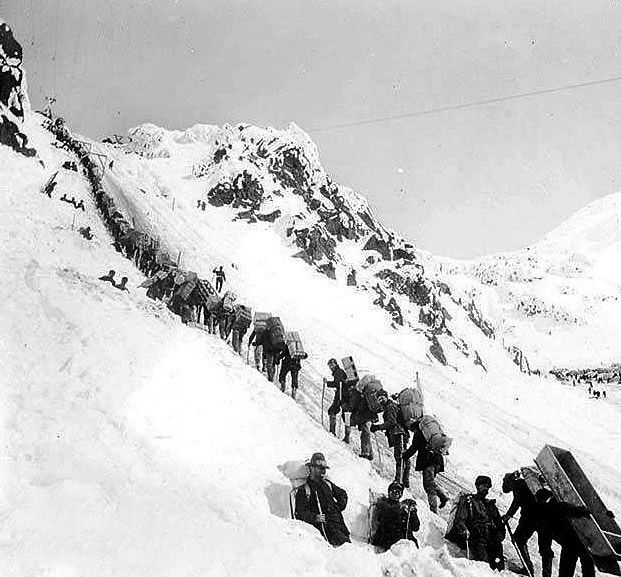
The earliest known written reference to a game resembling blackjack comes from the Spanish author Miguel de Cervantes in his work "Rinconete y Cortadillo," written between 1601 and 1602. The story features card cheats in Seville who are adept at a game called veintiuno, where the goal is to reach 21 points without going over and the ace counts as 1 or 11. The game was played with a Spanish deck. The first record of the game in France is from 1888 and in Britain during the 1770s and 1780s, with the first recorded rules published in Britain in 1800 under the name vingt-un. The game arrived in the United States in the early 1800s, where English vingt-un evolved into an American variant. The term "blackjack" emerged around 1899. A popular myth attributes the name to a special bonus payout for a hand containing the ace of spades and a black jack, but historical evidence suggests the name was transferred from the mineral zincblende, which prospectors during the Klondike Gold Rush associated with valuable deposits. The modern mathematical foundation for the game was established in September 1956 when Roger Baldwin, Wilbert Cantey, Herbert Maisel, and James McDermott published "The Optimum Strategy in Blackjack" in the Journal of the American Statistical Association. This work was later expanded upon by Edward Thorp, who published the influential book "Beat the Dealer" in 1963.
Standard Rules and Gameplay
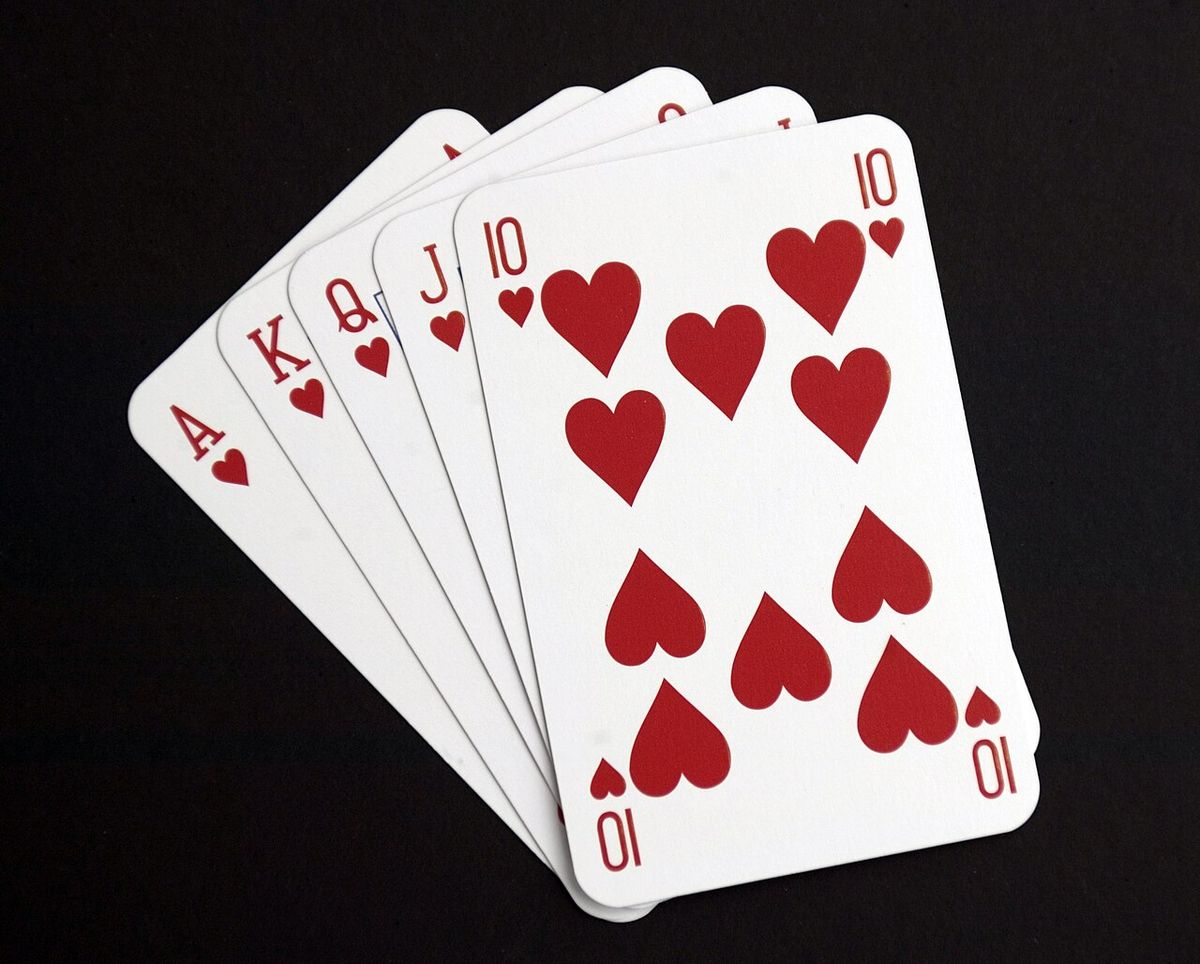
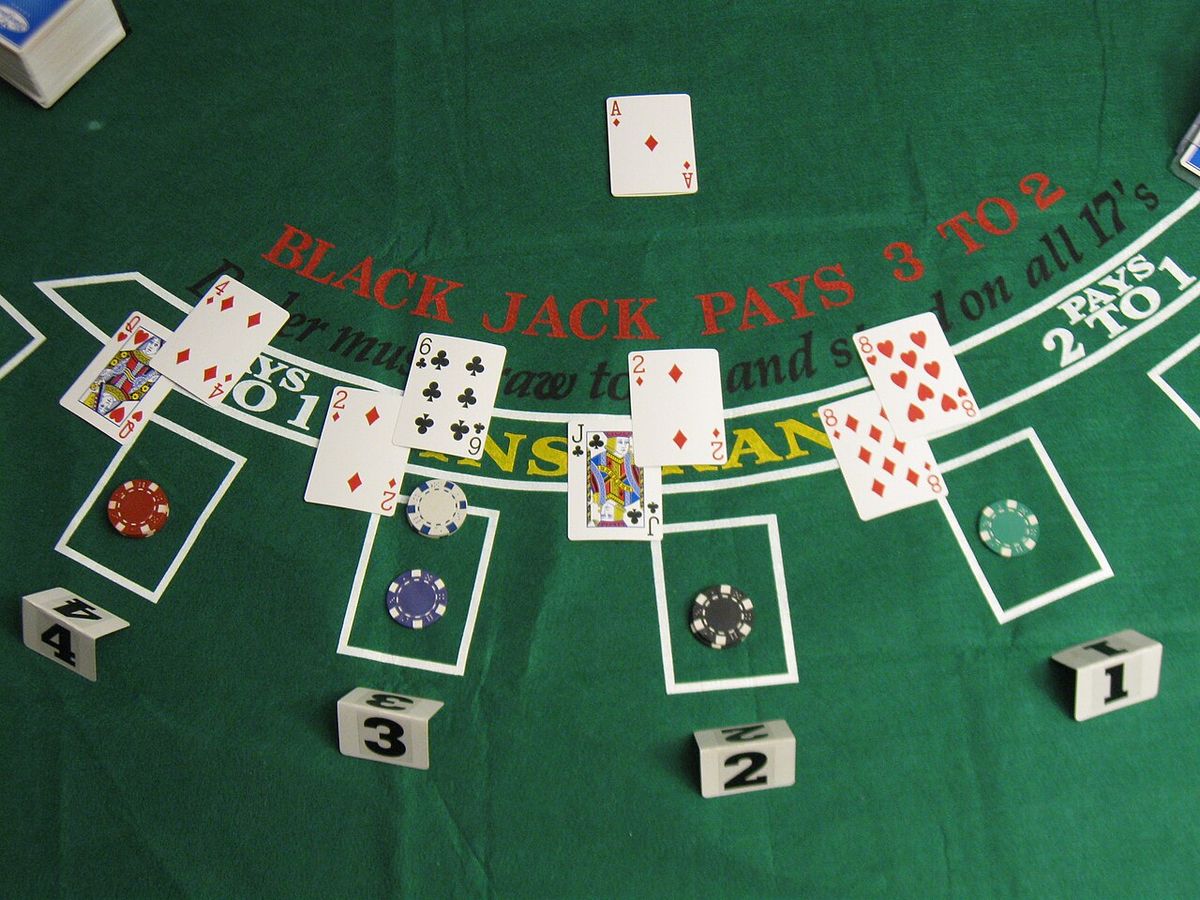
The objective of blackjack is to beat the dealer's hand by having a higher total without exceeding 21, or by having the dealer bust. Number cards are worth their pip value, face cards are worth 10, and an ace can be worth 1 or 11. A starting hand of an ace and a 10-value card is a blackjack, the strongest possible hand. Games are played at a semicircular table where the dealer faces between five and nine player positions. Between one and eight standard 52-card decks are used, shuffled together. Each player places a bet in their designated betting box to begin a round. The dealer deals two cards to each player and two to themselves, with one dealer card face-up. In hole card games, common in North America, the dealer's second card is dealt face-down and they check for blackjack if their upcard is an ace or 10. In no hole card games, more common in Europe, the dealer does not draw their second card until all players have acted. Players then make decisions for their hand in turn, starting from the dealer's left.
Once all players have finished their actions, the dealer reveals their hole card and draws additional cards according to a fixed rule. The dealer must draw until their hand totals 17 or higher. A key rule variation is whether the dealer must hit or stand on a soft 17, which is a hand containing an ace valued as 11. If the dealer busts, all remaining player hands win. If the dealer does not bust, each player's hand is compared to the dealer's. A higher hand wins, a lower hand loses, and an equal hand results in a push where the bet is returned. A player blackjack typically pays 3 to 2, while all other winning bets pay even money. If the dealer has a blackjack, all player hands that are not also a blackjack lose immediately.
Player Decisions and Hand Signals
On their initial two cards, a player has several options, each with a corresponding hand signal used for clarity and casino surveillance. The primary decisions are to hit, stand, double down, split, or surrender. To hit means to take another card, signalled by scraping cards on the table in face-down games or tapping the table in face-up games. To stand means to take no more cards, signalled by sliding cards under chips or waving a hand horizontally. Doubling down allows a player to double their initial bet in exchange for receiving exactly one more card, signalled by placing extra chips next to the original bet and pointing with one finger. Splitting is permitted when the first two cards are of the same value. The player places an additional bet equal to the original, and the two cards are separated to form two independent hands. This is signalled by placing extra chips and forming a V with two fingers. Surrender, when offered, allows a player to forfeit half their bet and end the hand immediately, signalled by drawing a line behind the bet. These signals take precedence over verbal declarations.
After splitting, most games allow players to double down on the resulting hands, though some restrict this. Resplitting, or splitting again if a new pair is dealt, is often allowed up to a limit, such as four total hands. Special rules typically apply to split aces, where usually only one additional card is dealt to each ace and the resulting hands are not considered blackjacks. The surrender option is not universally available and comes in two forms. Late surrender is only permitted after the dealer checks for blackjack, while early surrender, which is much more favourable to the player, is rarely offered. Player deviations from mathematically optimal basic strategy increase the house edge.
Rule Variations and House Edge
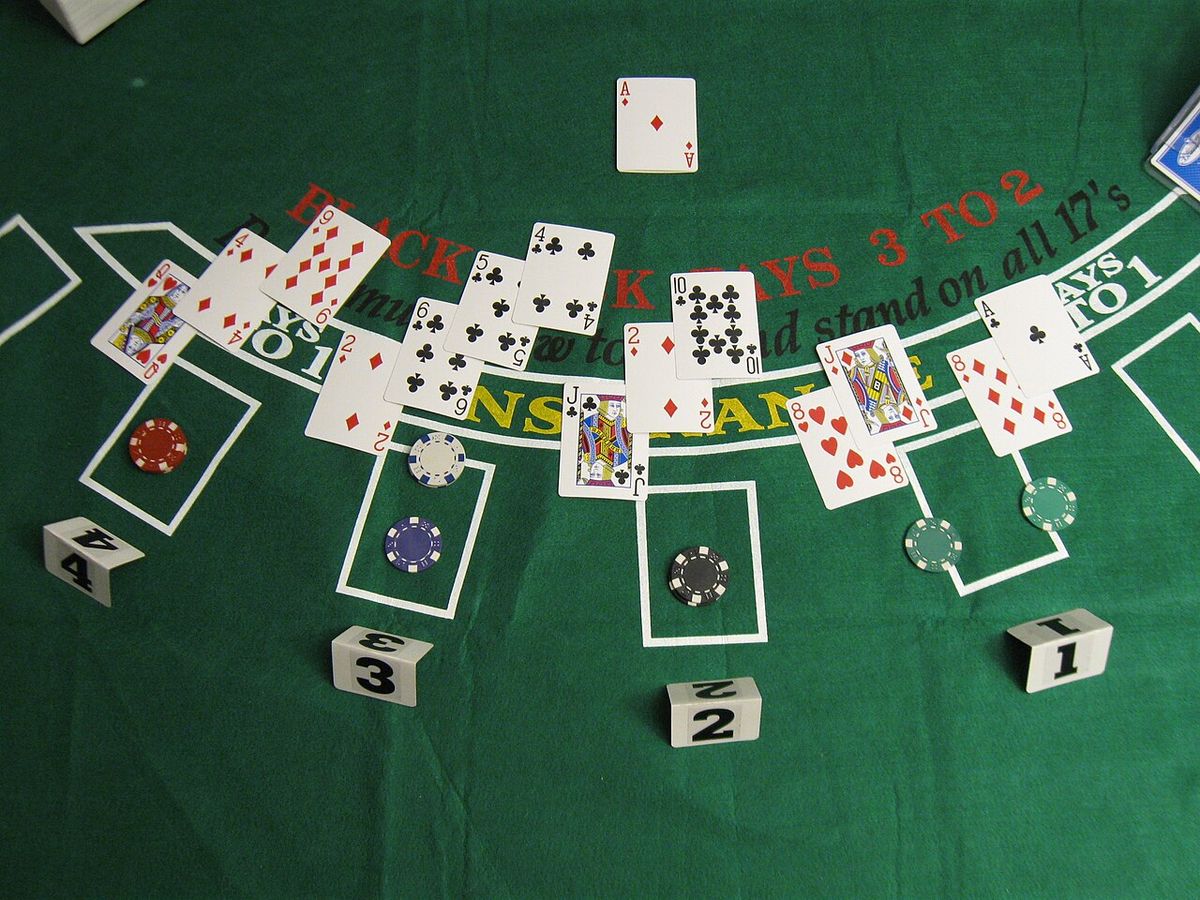
The specific rules of a blackjack game directly influence the house edge, which is the casino's statistical advantage. Under optimal basic strategy, the house edge in a standard game is typically less than one percent, making blackjack one of the casino games with the lowest edge. Several common rule variations can increase or decrease this edge. A major factor is the number of decks used. All else being equal, fewer decks favour the player by increasing the probability of blackjacks and beneficial doubling situations. Casinos often compensate for single or double-deck games by implementing stricter rules, such as paying blackjacks at 6 to 5 instead of 3 to 2, which alone increases the house edge by approximately 1.4 percentage points. Another critical rule is whether the dealer hits or stands on a soft 17. Requiring the dealer to hit soft 17 increases the house edge by about 0.2 percentage points compared to standing.
- Dealer hits soft 17 (H17): Increases house edge by ~0.2% vs. standing (S17).
- Blackjack pays 6 to 5: Increases house edge by ~1.4% vs. 3 to 2 payout.
- No doubling after split: Increases house edge by ~0.12%.
- No resplitting of aces: Increases house edge by ~0.03%.
- No surrender: Removes a player option that can reduce losses.
- Double down restricted to hard 10 or 11 only: Significantly increases house edge.
Other impactful variations include restrictions on doubling down, such as only allowing it on hard totals of 9, 10, and 11, or just 10 and 11. Disallowing doubling after a split increases the house edge, as does limiting the resplitting of pairs. The availability and type of surrender also affect the edge, with early surrender being a significant player advantage. Canadian players should always check the posted table rules.
Blackjack in Canadian Casinos and Online
Blackjack is a major game at land-based casinos across Canada, with provincial operators like the Casino de Montréal offering electronic versions such as Interactive Blackjack alongside traditional tables. Interactive Blackjack terminals feature a green playing surface and touch screens, allowing players to purchase credits and place bets electronically while the game deals physical cards. The minimum bet for such games can be as low as $10. The core objective remains to beat the dealer's hand without exceeding 21. Online blackjack has seen tremendous growth, with numerous licensed sites catering to Canadian players. These sites offer a vast range of game types, primarily through Random Number Generator software and live dealer studios. Leading online casinos in Canada for blackjack emphasize game variety, software quality, and secure banking options like Interac. They are licensed by provincial authorities such as iGaming Ontario or the Alcohol and Gaming Commission of Ontario.
The online blackjack market is characterized by extensive game catalogues and innovative formats. For example, Casino Days offers a catalogue of 160 blackjack games, including 45 RNG titles and 115 live dealer tables from providers like Evolution and Play'n GO. Live dealer games often feature Canadian-themed tables, such as Blackjack Montreal, Toronto, and Vancouver. Other popular online formats include games like ONE Blackjack, which allows unlimited players to bet behind a single hand, and Lightning Blackjack, which incorporates random multipliers. Betting limits online are highly flexible, with minimums often as low as $0.10 per hand. The shift to mobile play is significant, with casinos like LeoVegas optimizing their entire blackjack lobbies for play on smartphones and tablets.
- Casino Days: 160-game catalogue, 115 live tables, games like Blackjack Montreal.
- 888casino: 235-game catalogue with exclusive live tables and Mega Fire Blaze Blackjack.
- FireVegas: Features ONE Blackjack and Speed Blackjack, with bets from $0.10 to $1,000.
- DAZN Bet: 30-game selection including Bet Behind Pro Blackjack.
- LeoVegas: Mobile-optimized lobby with Lightning Blackjack and Infinite Blackjack.
- JackpotCity Casino: Nearly 40 blackjack titles, including Spanish 21 and Blackjack Switch.
Key Concepts and Side Bets
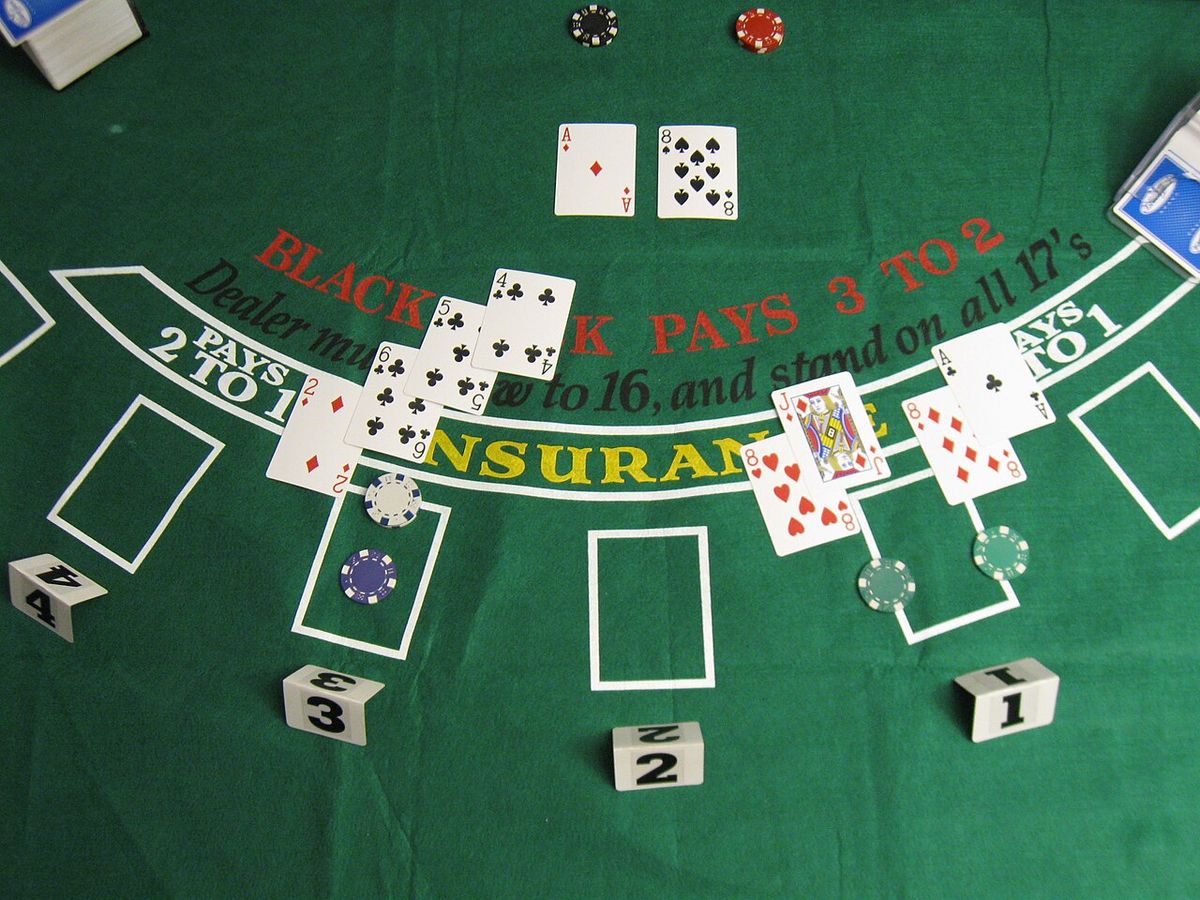
Beyond the basic decisions of hit and stand, several key concepts define blackjack strategy and gameplay. Insurance is a side bet offered when the dealer's upcard is an ace. Players can wager up to half their original bet that the dealer has a blackjack. If the dealer does have blackjack, the insurance bet pays 2 to 1, effectively offsetting the loss on the main bet. If the dealer does not have blackjack, the insurance bet is lost and play continues on the main hand. Taking insurance is generally considered a poor bet for basic strategy players, as the dealer has blackjack less than one-third of the time in this situation. However, it can be a valuable tool for card counters who track the ratio of high cards to low cards remaining in the deck. Another related concept is 'even money,' which is offered to a player with a blackjack when the dealer shows an ace. Accepting even money means taking a 1 to 1 payout immediately instead of waiting to see if the dealer has blackjack, which would result in a push. Mathematically, taking even money is identical to taking insurance with a blackjack.
The house edge in blackjack primarily stems from the fact that if both the player and dealer bust, the player loses their bet. This fundamental asymmetry is why following basic strategy, a set of optimal decisions for every possible player hand against every possible dealer upcard, is crucial for minimizing losses. Basic strategy charts are widely available and prescribe the mathematically correct play. Advanced players may employ card counting techniques to track the composition of the remaining deck and adjust their bets and plays accordingly, which can shift the edge in favour of the player. Casinos counter this with measures like using multiple decks, frequent shuffling, and restricting advantage players. Many blackjack tables also offer other side bets such as Perfect Pairs, 21+3, and Lucky Ladies, which generally have a higher house edge than the main game.
Selecting a Game: What Canadian Players Should Know
For Canadian adults choosing where to play blackjack, whether online or in a physical casino, several factors are critical for a safe and enjoyable experience. The single most important consideration is the licensing and regulation of the operator. Legitimate online casinos will display licensing information from a provincial authority like iGaming Ontario or the Kahnawake Gaming Commission in their website footer. This ensures the games are audited for fairness and player funds are protected. Players should then examine the specific rules of the blackjack game, as these directly impact the odds. A game that pays blackjack at 3 to 2 is vastly superior to one that pays 6 to 5. Similarly, games where the dealer stands on soft 17 are more favourable than those where the dealer hits. The number of decks in play and the available rule options like surrender and doubling after split should also be reviewed.
| Consideration | Player-Friendly Example | Less Favourable Example |
|---|---|---|
| Blackjack Payout | 3 to 2 | 6 to 5 |
| Dealer on Soft 17 | Stands (S17) | Hits (H17) |
| Number of Decks | 1 or 2 decks | 6 or 8 decks |
| Surrender | Late surrender offered | No surrender |
| Doubling Rules | Double on any two cards | Double on 10/11 only |
For online play, the quality and variety of the game selection are key. Top-rated sites in Canada offer hundreds of blackjack variants from leading software providers. Players should look for sites with a strong live dealer section, flexible betting limits to match their bankroll, and reliable customer support. Payment methods should include Canadian-friendly options like Interac for fast deposits and withdrawals. Finally, responsible gambling is paramount. Players should set strict limits on time and money spent and utilize tools like deposit limits and self-exclusion offered by licensed sites.
Questions about Blackjack
What are the basic rules of blackjack?
The goal is to have a hand value closer to 21 than the dealer's without going over. Number cards are worth their face value, face cards are worth 10, and aces can be 1 or 11. Players are dealt two cards and the dealer gets one card face up. Players can choose to hit, stand, double down, or split pairs. The dealer must draw cards until their hand reaches 17 or higher. If you beat the dealer's final hand without busting, you win even money on your bet. A two-card 21, or blackjack, typically pays 3 to 2.
What is blackjack basic strategy?
Blackjack basic strategy is a set of mathematically optimal decisions for every possible player hand against every possible dealer upcard. It minimizes the house edge to typically less than 1 percent. The strategy tells you precisely when to hit, stand, double down, or split. For example, it dictates always hitting a hard total of 12 against a dealer's 2 or 3, and always doubling down on a hard 11 against a dealer's 10. Using basic strategy provides the best possible odds over the long run.
Where can I play free blackjack games online?
Many websites offer free online blackjack games that require no download, registration, or real money. These free play versions are ideal for learning the rules, practicing basic strategy, and trying out different game variants without financial risk. These games use Random Number Generator software to simulate a real casino experience. While they are excellent for practice, they do not offer the opportunity to win real money, for which you must play at a licensed online casino.
What is the best online blackjack casino in Canada?
Determining the best online blackjack casino depends on individual preferences, but top-rated sites share common traits. They are fully licensed by provincial authorities like iGaming Ontario, ensuring security and fair play. They offer a wide variety of games, including both RNG and live dealer blackjack from reputable software providers like Evolution and Pragmatic Play. Key features include flexible betting limits, fast withdrawal methods like Interac, and quality customer support. Casino Days is often highlighted for its extensive catalogue of 160 blackjack games.
How does Interactive Blackjack work at Canadian casinos?
Interactive Blackjack is an electronic table game found at land-based casinos like the Casino de Montréal. Players sit at a terminal with a touch screen and a green playing surface. Instead of physical chips, players purchase credits to place electronic bets. The game deals physical cards from a shoe, which are displayed on the player's screen alongside calculated hand totals. Players make decisions via the touch screen. The rules are identical to standard blackjack. An electronic gaming attendant oversees the terminal to assist with any questions.
What is the difference between 3:2 and 6:5 blackjack payouts?
The payout for a winning blackjack hand is a critical rule difference. A 3 to 2 payout means if you bet $10, you win $15 for a blackjack. A 6 to 5 payout on the same $10 bet wins only $12. This seemingly small change significantly increases the house edge by approximately 1.4 percentage points, making the game much less favourable for the player. Always seek out tables that offer the traditional 3 to 2 payout for blackjack.
Sources and further reading
- Blackjack (Wikipedia)
- Best Blackjack Casino Sites Canada November 2026 (livescore.com)
- Game: Interactive Blackjack | Casino de Montréal (casinos.lotoquebec.com)
- Best online blackjack casinos Canada 2026 (nationalpost.com)
- Best Online Blackjack Casinos Canada January 2026 (restoquip.com)
Checked by the Nosy Mag desk. Last updated 2026-11-09.