Blackjack basic strategy
Blackjack basic strategy is a mathematically derived set of optimal playing decisions for the casino card game. It provides players with the statistically best action to take for every possible combination of their hand and the dealer's upcard, based on probability theory. For Canadian players, mastering basic strategy is the fundamental step to reducing the house edge and playing the game more effectively, whether in land based casinos or online. This strategy, which involves decisions to hit, stand, double down, split, or surrender, was developed through extensive computer simulations and has been refined over decades. Understanding and applying these rules transforms blackjack from a pure game of chance into one where skill and knowledge significantly influence the outcome.
The Foundation and Purpose of Basic Strategy
Blackjack basic strategy is not a gambling system but a precise mathematical framework designed to minimize the casino's inherent advantage. It was developed through computer simulations that played hundreds of millions of hands to determine the decision with the highest expected value for every possible scenario. The strategy accounts for the fixed rules the dealer must follow, such as standing on all 17s or hitting on soft 17, and provides the counter play for the human participant. This makes it the essential first step for any player seeking to approach the game seriously and with a better chance of long term success.
The core premise is that while the outcome of any single hand is subject to chance, making the statistically correct decision every time maximizes a player's probability of winning over the long run. Basic strategy charts condense this vast data into an easy to reference guide that categorizes decisions based on the player's hand type and the dealer's visible card. Learning this strategy is widely considered the baseline for skilled blackjack play. It does not guarantee wins on every hand, as short term luck remains a factor, but it provides the blueprint for optimal play, ensuring that players are not inadvertently increasing the house edge through suboptimal choices.
Key Components: Hand Types and Decision Hierarchy
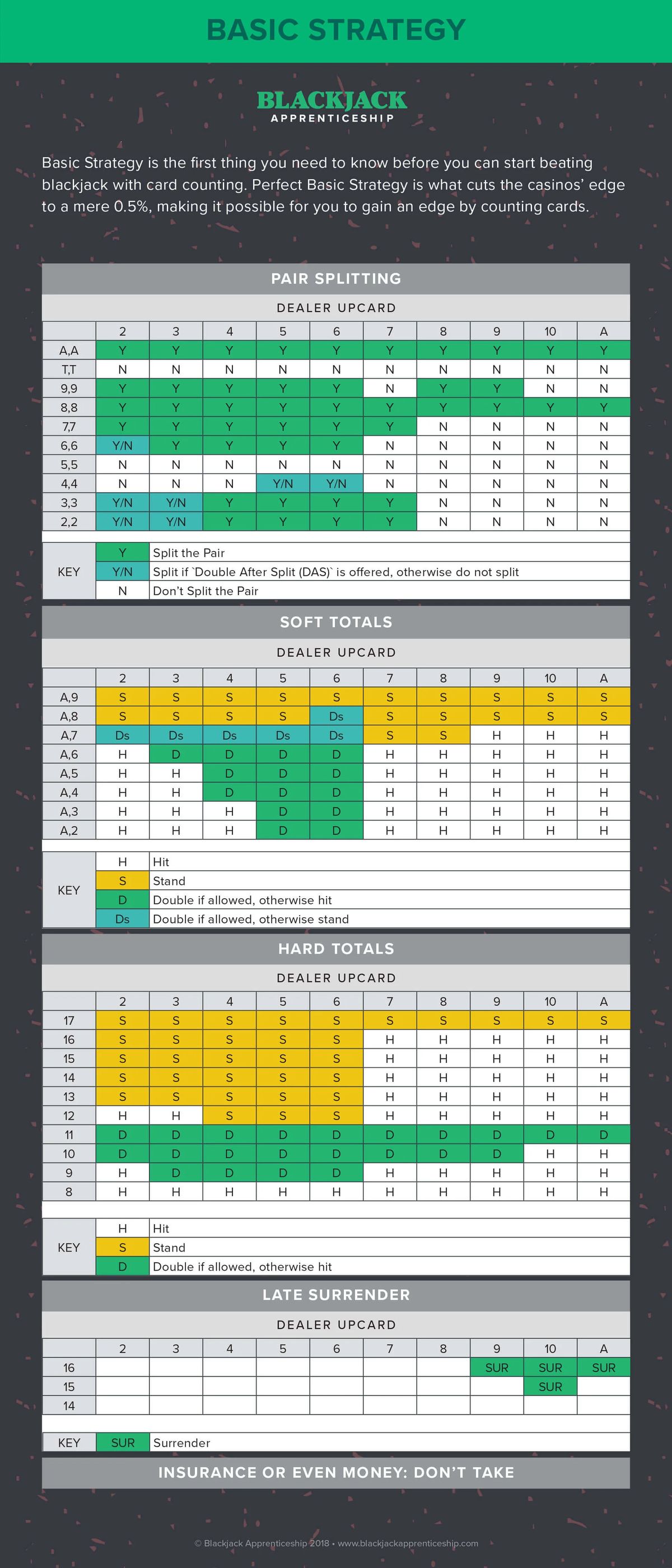
Basic strategy organizes play around three primary hand types: hard totals, soft totals, and pairs. A hard total is any hand without an Ace, or where the Ace must be counted as 1 to avoid busting, such as a hand of Ace, 7, and 9 which totals 17. A soft total is a hand containing an Ace counted as 11 without busting, like Ace 6, which is a soft 17. Pairs are two cards of the same rank, such as two 8s or two Jacks. The strategy prescribes different actions for each category based on the dealer's upcard. Players are advised to consider their options in a specific order to avoid missing advantageous plays.
The recommended decision hierarchy for playing a hand is to first consider surrender if the casino offers it, then splitting, then doubling down, and finally choosing to hit or stand. Surrender, when available, allows a player to forfeit half their bet on a very weak hand against a strong dealer upcard. The option to split pairs is only available on the initial two cards and requires doubling the bet to create two separate hands. Doubling down permits a player to double their initial bet in exchange for committing to take only one more card. If none of these special plays are recommended, the player then decides whether to take another card (hit) or end their turn (stand). This structured approach ensures all strategic avenues are evaluated.
Essential Rules for Hard Totals
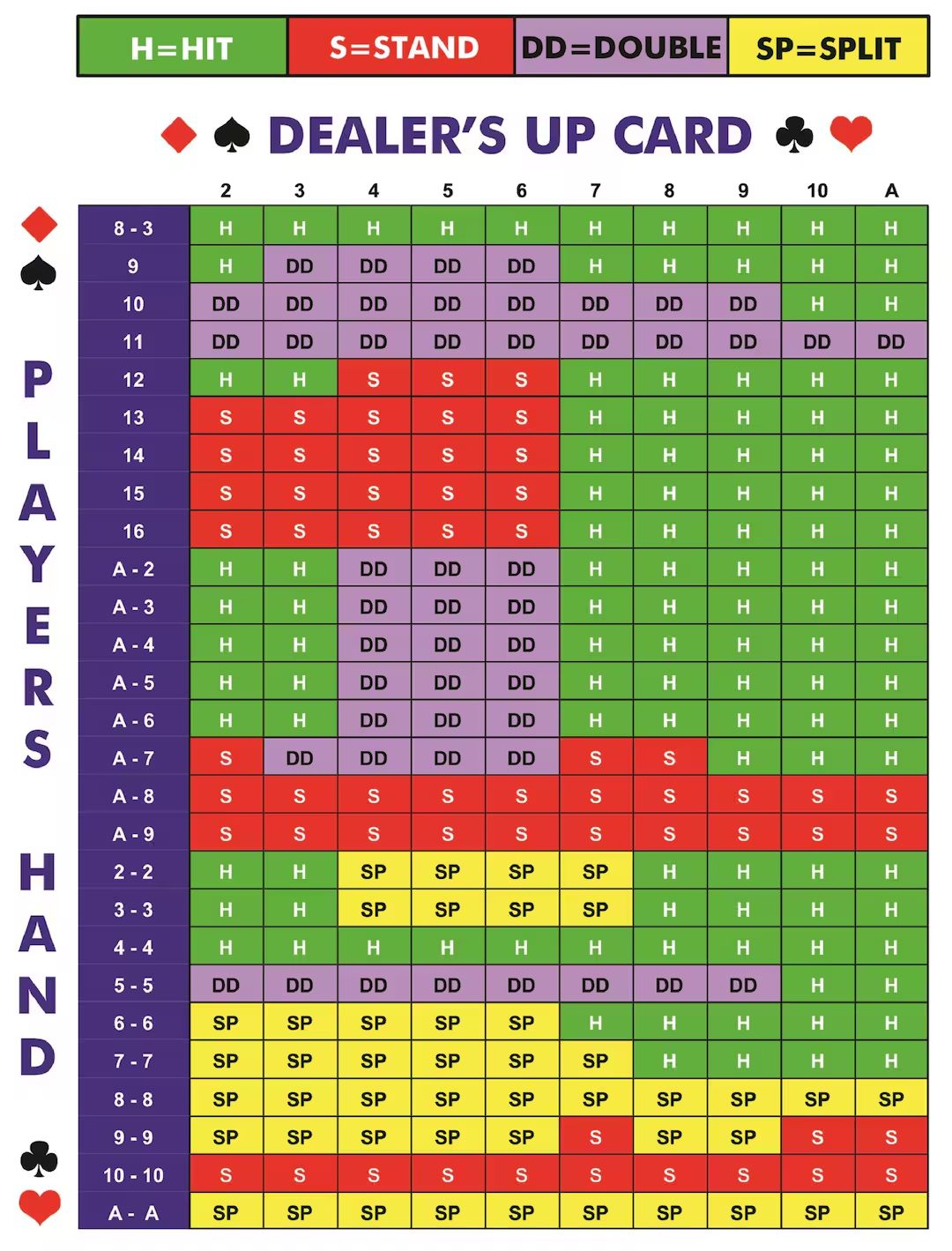
Hard totals are the most common hands in blackjack and have a set of straightforward rules. For hard totals of 17 or higher, the strategy is universal: always stand. The risk of busting by taking an additional card far outweighs any potential benefit. For hard totals of 12 through 16, the correct play depends heavily on the dealer's upcard. The general principle is to stand when the dealer shows a weak card (2 through 6) and to hit when the dealer shows a strong card (7 through Ace). The logic is that a dealer with a weak upcard is more likely to bust, so the player should avoid risking a bust themselves.
There are specific exceptions within this range that players must memorize. A hard 12 is a unique case where you stand only against a dealer 4, 5, or 6, but hit against a dealer 2, 3, or any card 7 and higher. Hard 11 is a powerful hand where the strategy is to always double down, as a one card draw is highly likely to result in a strong total of 18 through 21. Hard 10 also calls for doubling down against dealer upcards 2 through 9, only hitting against a 10 or Ace. Hard 9 should be doubled against dealer 3 through 6, otherwise hit. The most difficult hands are hard 13 through 16 against a dealer's strong upcard, where the correct but counterintuitive play is often to hit despite the high risk of busting.
Essential Rules for Soft Totals and Pairs
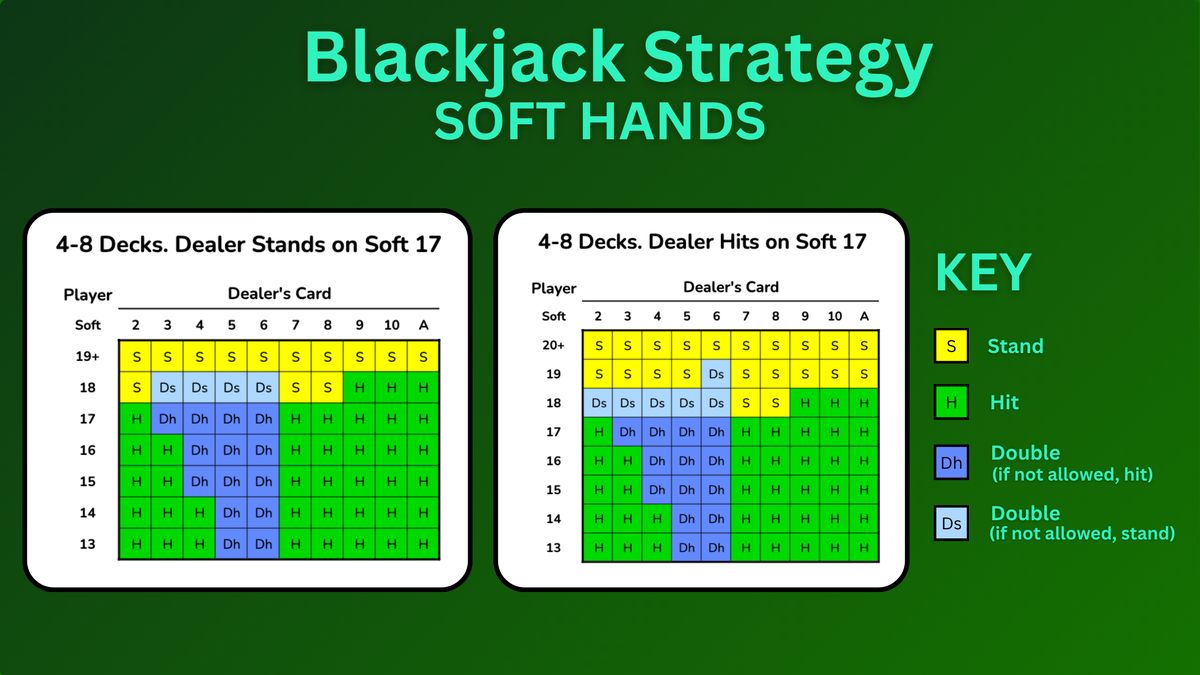
Soft hands, because they contain an Ace valued at 11, offer more flexibility and opportunities for aggressive play. A soft 20 (Ace 9) is an extremely strong hand and the player should always stand. A soft 19 (Ace 8) typically calls for a stand, but basic strategy advises doubling down if the dealer shows a 6. For soft 18 (Ace 7), the play varies: double down against dealer 2 through 6, stand against dealer 7 or 8, and hit against dealer 9, 10, or Ace. Softer hands like 13 through 17 (Ace 2 through Ace 6) often present doubling opportunities when the dealer shows a medium weak card.
The strategy for pairs is critical and includes some of the most memorable rules. The two cardinal rules are to always split Aces and always split 8s. Splitting Aces gives each new hand a starting value of 11, a prime position for drawing a 10 value card to make 21. Splitting 8s is recommended because a hard 16 is a very poor hand, while two separate hands starting with an 8 have better potential. Conversely, players should never split 10 value cards like two 10s or a Jack and a Queen, as a total of 20 is already a very strong hand. A pair of 9s should be split against dealer upcards 2 through 9, except for 7, otherwise stand. A pair of 5s is never split, instead it is treated as a hard 10 and doubled down against dealer 2 through 9.
- Always split Aces and 8s.
- Never split 10 value cards (10s, Jacks, Queens, Kings).
- Split 9s against dealer 2 6, 8, 9. Stand against 7, 10, Ace.
- Split 7s against dealer 2 7. Otherwise hit.
- Split 2s, 3s, and 6s against dealer 2 6. Otherwise hit.
- Split 4s only against dealer 5 and 6. Otherwise hit.
- Treat a pair of 5s as a hard 10 and double down.
The Surrender Option and Canadian Rule Variations
Surrender is a rule offered in some jurisdictions, including certain Canadian casinos, that allows a player to forfeit their hand and recover half their bet after seeing their initial cards and the dealer's upcard. This is a valuable tool for minimizing losses on very disadvantaged hands. Basic strategy dictates specific surrender scenarios. A player should surrender a hard 16 (but not a pair of 8s) when the dealer shows a 9, 10, or Ace. A hard 15 should be surrendered against a dealer 10, but not against a dealer Ace. It is crucial to consider surrender as the very first decision, before splitting or doubling. If surrender is not available or not advised, the player then proceeds through the standard decision hierarchy.
Canadian blackjack rules can have subtle variations that affect basic strategy. A common rule is that the dealer must hit on soft 17, often denoted as "H17". This rule slightly increases the house edge compared to games where the dealer stands on all 17s ("S17"). Another typical Canadian rule is the allowance of doubling down after splitting (DAS), which is player favourable. Some Canadian casinos also offer early surrender, where a player can surrender before the dealer checks for blackjack. These rule differences mean that the most accurate basic strategy chart for a player is one tailored to the specific rules of the table they are playing. Players should always confirm the house rules before sitting down to ensure they are applying the correct strategy.
Historical Development and Edward O. Thorp
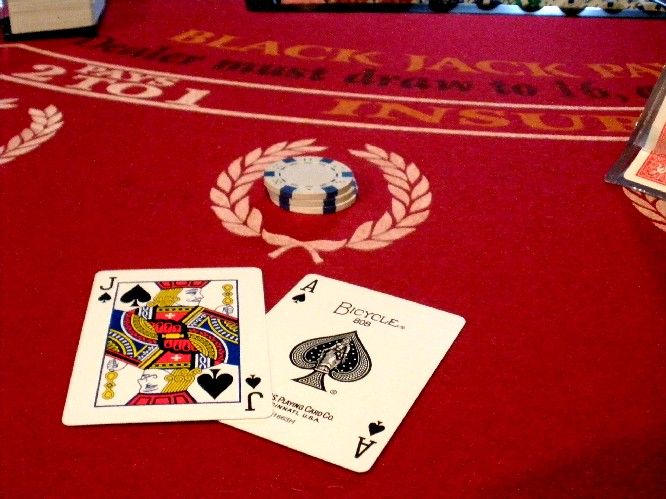
The mathematical analysis of blackjack began in earnest in the 20th century, but the game's origins trace back much further. An early version called "vingt et un" (twenty one) was popular in French casinos in the 1700s. The modern name "blackjack" is believed to have originated from a 19th century American bonus payout for a hand containing the Ace of spades and a black Jack. For centuries, however, play was guided by intuition rather than calculated strategy. The critical moment came in the early 1960s with the work of Dr Edward O. Thorp, a mathematics professor. Edward O. Thorp conducted the first rigorous computer aided analysis of blackjack probabilities.
Thorp's basic strategy was derived from statistical probability, teaching players the optimal move for every hand. His card counting method assigned values to cards to track the ratio of high to low cards remaining in the deck, informing bet sizing. Thorp famously tested his theories in Nevada casinos with successful results. His work revolutionized how the game was played, proved it could be beaten with skill, and forced casinos to adapt by introducing multiple decks and countermeasures. While online blackjack using random number generators has nullified card counting, Thorp's basic strategy remains the immutable foundation for optimal play.
Using Strategy Charts and Practical Application
For most players, memorizing every cell of a basic strategy chart is a daunting task. Fortunately, it is perfectly acceptable and common practice to use a physical basic strategy cue card at the casino table. These credit card sized guides summarize all the correct plays and can be consulted discreetly during a game. Many Canadian casinos and responsible gambling websites, such as GameSense in British Columbia, provide these charts for free. The key to mastery is consistent practice using these references until the decisions become second nature. Players can practice with free online simulators or with decks of cards at home to build speed and confidence.
Hands like hard 17 or soft 20 play themselves, but the middle range hands require recall. A practical method is to learn the strategy in chunks, starting with the uncompromising rules like always splitting Aces and 8s, and always standing on 17 or higher. From there, learn the doubling rules for hard 9, 10, and 11, and the soft hands from 13 to 18. Finally, tackle the more complex pair splits and the surrender rules. The goal is to reduce the house edge to its minimum, turning blackjack into one of the most favourable games in the casino for a disciplined player. Deviation based on hunches or short term results will erode its mathematical benefit.
- Start with absolute rules: always stand on 17+, always split Aces and 8s, never split 10s.
- Memorize doubling rules: always double hard 11, double hard 10 vs. 2 9, double hard 9 vs. 3 6.
- Learn soft hand strategy: stand on soft 19 20, double soft 18 vs. 2 6, and hit soft 18 vs. 9 Ace.
- Study pair splitting beyond Aces and 8s, such as splitting 9s and 7s under specific conditions.
- Incorporate surrender rules if available: surrender 16 vs. 9, 10, Ace and 15 vs. 10.
- Practice using a chart or simulator until decisions are automatic.
Comparison of Common Basic Strategy Decisions
The following table illustrates a selection of fundamental basic strategy decisions for a common multi deck game where the dealer hits on soft 17. Basic strategy charts are designed to show the correct decision for every hand. These decisions include when to hit, stand, double down, or split. The correct action changes based on the player's hand total and the dealer's visible upcard. Using this chart provides a clear reference for playing optimal blackjack.
| Player Hand | Dealer Upcard 2 6 | Dealer Upcard 7 | Dealer Upcard 8, 9, 10, Ace |
|---|---|---|---|
| Hard 12 | Stand vs 4 6, Hit vs 2 3 | Hit | Hit |
| Hard 11 | Double | Double | Double |
| Soft 18 (A,7) | Double | Stand | Hit |
| Pair of 9s | Split | Stand | Stand |
| Pair of 8s | Split | Split | Split |
| Pair of 10s | Stand | Stand | Stand |
This table highlights the dynamic nature of the strategy. For instance, a hard 16 is played differently against a dealer's 6 versus a dealer's 7. Similarly, a soft 18, which is a strong hand, becomes a doubling opportunity against a weak dealer card but a hand you must hit against a dealer's 9 or 10. The pair rules show the stark contrast between always splitting 8s and never splitting 10s. Consulting a full chart is necessary for all scenarios, but this sample demonstrates the logic of basic strategy: adapting your play based on the dealer's exposed card to maximize your expected value.
Responsible Gambling Considerations
While basic strategy improves a player's odds, it does not alter the fundamental nature of blackjack as a gambling activity with a house edge. In Canada, the legal age for casino gambling is 19 years, except in Alberta, Manitoba, and Quebec where it is 18. It is crucial for players to view blackjack as a form of entertainment with associated costs, not as a reliable income source. Basic strategy is a tool for playing smarter, not a guarantee of profit. Players should always set strict budgets and time limits before playing and never chase losses. Canadian provinces provide resources for those concerned about their gambling or the gambling of someone they know.
For example, in British Columbia, the GameSense program offers information and the Problem Gambling Helpline is available at 1 888 795 6111. Similar helplines operate nationwide. Applying basic strategy can make the game more engaging and intellectually stimulating, but it should always be paired with responsible gambling practices. The goal is to enjoy the skill based challenge of the game while maintaining control over one's participation.
Questions about Blackjack basic strategy
What is a blackjack basic strategy chart?
A blackjack basic strategy chart is a visual reference tool, often formatted as a table, that displays the optimal playing decision for every possible combination of a player's hand and the dealer's upcard. It condenses the mathematical probabilities derived from computer simulations into an easy to read guide. The chart is typically organized with player hand totals down the left side and dealer upcards across the top, with cells indicating whether to hit, stand, double down, split, or surrender. Canadian players can use these charts at the table, and they are available for free from many responsible gambling websites and casinos to help players make the best statistical decision.
Does basic strategy guarantee I will win at blackjack?
No, basic strategy does not guarantee wins on individual hands or sessions. Blackjack remains a game of chance in the short term. The purpose of basic strategy is to maximize your probability of winning over the long run by minimizing the house edge. It tells you the play with the highest expected value for each situation. While this significantly improves your odds compared to playing randomly or by gut feeling, luck still determines the outcome of each card drawn. Think of basic strategy as giving you the best possible mathematical footing, but it cannot control the random distribution of cards.
Should I always split Aces and 8s in blackjack?
Yes, according to basic strategy, you should always split a pair of Aces and always split a pair of 8s. Splitting Aces gives each new hand a starting value of 11, creating a high chance of drawing a 10 value card to make a strong 21. Splitting 8s is crucial because a hard total of 16 is one of the worst hands in blackjack. By splitting them, you turn one weak hand into two separate hands that each start with an 8, which have a much better chance of developing into a winning total. These are two of the most important and non negotiable rules in basic strategy.
When should I double down in blackjack?
Basic strategy recommends doubling down in specific situations where your hand is strong and the dealer's upcard is weak, maximizing your bet when the odds are in your favour. You should always double down on a hard 11. Double down on a hard 10 against dealer upcards 2 through 9. Double down on a hard 9 against dealer 3 through 6. For soft hands, doubling is advised on soft 13 through 18 against specific dealer upcards, such as doubling soft 18 (Ace 7) against dealer 2 through 6. Remember that when you double down, you commit to taking only one more card, and you must double your original bet.
What is the difference between a hard hand and a soft hand?
A hard hand in blackjack is any hand that does not contain an Ace, or where the Ace must be counted as 1 to prevent the total from exceeding 21. Examples include a hand of 10 and 7 (hard 17) or Ace, 6, and 10 (hard 17, as the Ace counts as 1). A soft hand contains an Ace that is being counted as 11 without busting, such as Ace 6 (soft 17). The key distinction is that a soft hand cannot bust by taking one more card, as the Ace can be revalued from 11 to 1 if needed. Basic strategy treats soft hands more aggressively, often recommending doubling down, because of this flexibility and lower risk of immediate busting.
Can I use a basic strategy card in a Canadian casino?
Yes, it is generally acceptable and common to use a basic strategy cue card while playing blackjack at Canadian casinos. These small reference cards are not considered cheating as they simply advise on the mathematically optimal play and do not affect the dealing of the cards. Many casinos even provide them for free upon request. Players should use the card discreetly, without slowing down the game excessively. It is a recommended tool for beginners learning the strategy and for experienced players who want to ensure they are not making memory errors on less common hand combinations.
Sources and further reading
- Blackjack Strategy Charts, How to Play Perfect Blackjack (blackjackapprenticeship.com)
- Blackjack Strategies (playsmart.ca)
- How To Play Blackjack (casinosbc.com)
- Blackjack Strategy Charts, How to Play Perfect Blackjack (blackjackapprenticeship.com)
- Blackjack Basic Strategy Chart, Learn when to Hit, Stand & Double Down (partycasino.com)
- Blackjack Strategies (playsmart.ca)
Checked by the Nosy Mag desk. Last updated 2026-11-11.