Martingale
The Martingale is a class of negative progression betting strategies where a gambler doubles their wager after each loss, aiming to recover all previous losses and secure a small profit on the first subsequent win. Originating in 18th-century France, it is most commonly applied to casino games with near-even-money wagers, such as betting on red/black in roulette. While its simple, rule-based structure appeals to many Canadian players, particularly in popular games like roulette, blackjack, and baccarat, mathematical analysis demonstrates it cannot overcome the house edge over the long term. The strategy carries significant risk of rapid, substantial losses during a losing streak, making bankroll management and adherence to personal limits essential for any adult considering its use.
Historical Origins and Basic Principle
The Martingale strategy has its roots in 18th-century France, designed initially for simple coin-toss games where the outcome was either heads or tails. The gambler's objective was to win their stake if the coin showed heads and lose it on tails. The system's foundational rule required the player to double the bet after every loss. This doubling continues until a win is achieved, at which point the gambler recovers all cumulative losses from that sequence and gains a profit equal to the original stake. The strategy's mathematical structure bears similarities to the St. Petersburg paradox, a theoretical game of chance involving repeated coin flips. This historical betting approach was later adapted to casino banking games, finding a natural, though flawed, application in games offering close to 50/50 odds.
Mechanics and Application in Casino Games
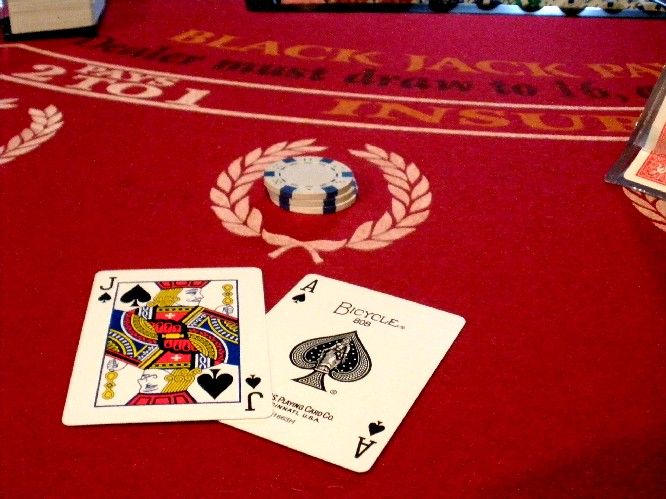
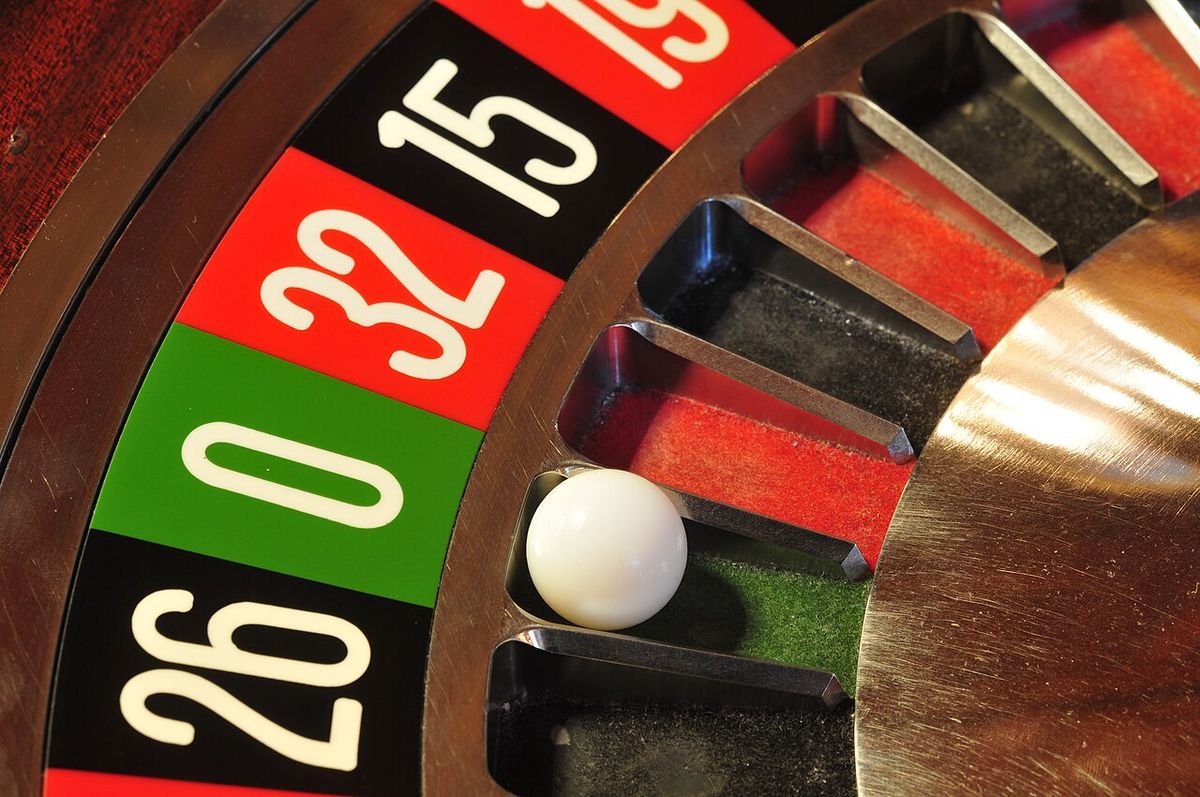
In modern casino play, the Martingale system is a negative progression strategy, meaning bet sizes increase after losses. It is most frequently applied to even-money outside bets in roulette, such as wagering on red or black, odd or even, or high or low numbers. For a player using a base stake of one unit, a loss triggers a bet of two units on the next spin. If that bet loses, the next wager is four units, and this doubling continues. The moment a bet wins, the player returns to the base stake of one unit to begin a new sequence. The system can be adapted to other casino games where bets with roughly even odds are available. Common games where players attempt the Martingale include baccarat, where one might consistently bet on the banker, and blackjack, applying it to standard win/loss outcomes.
Craps also offers even-money propositions like the pass line bet. The strategy's appeal lies in its straightforward, rule-based nature, eliminating guesswork in bet sizing. Its effective application requires a substantial bankroll to withstand potential losing streaks and adherence to table limits, which are universal in both land-based and online casinos across Canada. Online platforms like Jackpot City, Spin Casino, and PlayOJO all enforce maximum bet limits that can interrupt a Martingale progression. This structural limitation is a primary reason the strategy fails in practice despite its logical appeal.
Mathematical Analysis and Long-Term Expectation
Mathematical analysis proves the Martingale system cannot generate a positive expected value in casino games where the probability of losing a single bet is greater than 50%. The expected value for a single round of Martingale betting, which is a sequence of losses followed by a win or bankruptcy, is calculated as B(1 - (2q)^n), where B is the initial bet, q is the probability of loss, and n is the number of losses the bankroll can sustain. Since q is greater than 1/2, the expression (1 - (2q)^n) is always negative for any n greater than zero, confirming an average loss per round. The optional stopping theorem in probability theory formally demonstrates the impossibility of beating a game with negative expected value using any stopping strategy, including the Martingale, when there is a limit on bet size or bankroll. While the chance of a long losing streak may seem intuitively low, the probability of encountering one within a typical playing session is surprisingly high. For instance, during 200 spins of roulette, the probability of experiencing a streak of six consecutive losses is approximately 84%. This mathematical reality remains unchanged regardless of the number of times the system is applied, and it supports the casino's permanent advantage.

Risks, Bankroll Requirements, and Table Limits
The primary risk of the Martingale system is the exponential growth of bet sizes during a losing streak, which can quickly deplete a gambling bankroll. For a player to have under a 10% chance of failing to survive a long loss streak during 5,000 plays, they would need a bankroll large enough to cover 15 consecutive losses, amounting to over 65,500 times their original bet size. Such requirements are financially infeasible for virtually all recreational players. All licensed casinos, both online and physical, impose maximum bet limits on their tables specifically to manage their risk and prevent theoretically infinite betting systems.
These table limits directly counteract the Martingale strategy, as a player may reach the maximum allowed bet before ending a losing streak, preventing them from doubling further to recover losses. Canadian online casinos like Jackpot City, Spin Casino, and PlayOJO all have such limits in place. Responsible gambling tools such as deposit limits, loss limits, and session timers, which are encouraged by provincial regulators, help players manage their spending but also constrain the aggressive capital deployment the Martingale demands. The strategy's failure in practice is guaranteed not by its logic but by the realistic constraints of finite bankrolls and casino rules. Players often underestimate the capital required to safely use the system over any extended period, leading to predictable financial loss.
The Martingale in Popular Canadian Casino Games
Roulette is the game most commonly associated with the Martingale system in Canada, being the country's third most popular casino game after blackjack and poker. Players typically apply it to the even-money outside bets on European or American roulette wheels. The house edge differs significantly between the two types, with European roulette (single zero) at 2.7% and American roulette (double zero) at 5.26%, making the European version slightly less risky for the strategy. In blackjack, players might use Martingale on their main bet, though the presence of splits, doubles, and dealer blackjacks complicates the clean win/loss sequence. Baccarat offers a clear application on the banker bet, which has a near 50% win probability, though a commission on wins slightly alters the payout. While the system can be structurally applied, the inherent house edge in each game remains unchanged.
- Roulette: Applied to red/black, odd/even, high/low bets.
- Blackjack: Used on the base game win/loss outcome, ignoring splits and doubles.
- Baccarat: Commonly applied to the banker bet due to its high frequency.
- Craps: Can be used on pass line or don't pass line bets.
No betting system, including the Martingale, can alter the fundamental odds programmed into a game's design. The strategy merely organizes a player's stakes, and it does not influence the independent outcome of each random event. This is because no amount of information about past bets can be used to predict the results of a future bet with accuracy better than chance. The principle holds true across all games where the strategy is attempted, such as roulette, blackjack, and baccarat. It reinforces that the Martingale is a money management tactic, not a winning formula that can overcome the house edge.

Psychological Appeal and the Representativeness Heuristic
The enduring popularity of the Martingale system stems partly from cognitive biases and its superficial appeal. The strategy offers a simple, actionable plan that creates an illusion of control over random events. Many gamblers mistakenly believe that a long streak of losses is a remote possibility, a cognitive error known as the representativeness heuristic. When asked to imagine a sequence of 200 coin flips, people tend to avoid creating streaks longer than five identical outcomes because such streaks feel unlikely. In reality, the probability of a streak of six or more losses occurring within 200 spins of roulette is very high, around 84%. This disconnect between intuitive perception and mathematical reality leads players to underestimate risk dramatically.
The strategy also ties into the gambler's fallacy, the mistaken belief that past independent events influence future ones, such as thinking a win is 'due' after several losses. The Martingale system implicitly caters to this fallacy by proposing to double down after losses. The system's design guarantees many small wins, which provide positive reinforcement, while the rare catastrophic loss is often rationalized as extraordinary bad luck rather than an inevitable statistical occurrence. This psychological profile makes the Martingale perennially attractive despite its mathematical deficiencies and the clear evidence of its long-term failure. The allure of a simple solution to a complex problem of chance continues to draw new adherents.
Alternative Strategies and Responsible Gambling
An alternative to the classic Martingale is the anti-martingale or reverse martingale strategy, where a player increases bets after wins and decreases them after losses. This approach aims to capitalize on perceived 'hot streaks' while limiting losses during cold ones. However, like its counterpart, it cannot overcome the house edge over time. Other common betting systems include the Paroli (positive progression) and the D'Alembert. None of these systems alter the fundamental odds of the games. The most prudent approach for Canadian adults who choose to gamble is to treat it as paid entertainment with an expected net cost. Responsible gambling involves setting strict financial and time limits before playing.
- Set a loss limit you are prepared to accept before you start playing.
- Establish a win limit at which you will stop and withdraw your winnings.
- Use casino-provided tools like deposit limits, wager limits, and session timers.
- Consider self-exclusion programs if you need a break from gambling.
- Access provincial resources like the Responsible Gambling Council for support.
- Ignore gambling 'experts' selling secrets, as the only winner is the seller.
Players should understand that strategies like the Martingale are methods of managing bet progression rather than methods to secure profit. The primary purpose of betting should be to have fun, and incurring wins and losses is part of the entertainment. Understanding this distinction is key to a realistic and safer gambling experience. Many Canadian online casinos have responsible gambling regulations, including deposit limits and self exclusion programs, to help players. Provincial help lines and resources are also available for those who need assistance with problem gambling behaviours.
Comparison of Roulette Types for Martingale Application
The type of roulette wheel significantly impacts the statistical risk profile when using the Martingale system. The key difference lies in the number of zero pockets, which directly affects the probability of losing an even-money bet. European roulette, with a single zero, offers a lower house edge and a slightly higher probability of winning a red/black bet, making it the theoretically preferable version for employing the strategy. American roulette, with both a single and double zero, increases the house advantage and the risk of a losing streak. This difference, while seemingly small, compounds over many spins and within the exponential structure of the Martingale. A losing streak of a given length is more likely to occur on an American wheel.
Therefore, Canadian players seeking to use the Martingale system are often advised to seek out European roulette games. European roulette has 37 pockets with a single zero, while American roulette has 38 pockets with a zero and a double zero. Online casinos like TonyBet or PlayNow commonly offer the single zero wheel. This choice marginally improves the odds within the confines of the flawed strategy because European roulette has a house edge of 2.7 percent compared to 5.26 percent for American roulette. However, this choice does not make the strategy successful, as the house edge remains firmly in place regardless of the wheel type chosen.
| Roulette Type | Number of Pockets | Zero Pockets | House Edge |
|---|---|---|---|
| European | 37 | Single zero | 2.7% |
| American | 38 | Zero and double zero | 5.26% |
Questions about Martingale
What is the Martingale betting system?
The Martingale is a negative progression betting strategy where a player doubles their wager after every loss. The core idea is that the first win in a sequence will recover all previous losses in that sequence and yield a net profit equal to the original bet. It originated in 18th-century France and is commonly applied to casino games with near-even-money odds, such as betting on red or black in roulette. The system is rule-based and simple to follow, but it does not change the underlying house edge of the game.
Does the Martingale strategy work in roulette?
While the Martingale strategy can produce small, frequent wins in the short term, it does not work as a winning system in the long run. Mathematical analysis shows the expected value remains negative because the probability of losing an even-money bet in roulette is always greater than 50%. Table maximum bets and finite player bankrolls make it impossible to continue doubling indefinitely after a long losing streak. The probability of encountering a devastating streak of losses is much higher than many players intuitively believe.
Can I use the Martingale system on games other than roulette?
Yes, the Martingale system can be structurally applied to many casino games that offer bets with close to even odds. Common applications include consistently betting on the banker in baccarat, applying it to the base win/loss outcome in blackjack, or using it on pass line bets in craps. The strategy's effectiveness is not enhanced in these games, as the fundamental mathematical flaw remains. Each bet is an independent event with a house edge, and no betting progression can alter that underlying reality.
What is the difference between the Martingale and anti-martingale?
The classic Martingale is a negative progression system where bets are doubled after losses. The anti-martingale, or reverse martingale, is a positive progression system where bets are increased after wins and decreased after losses. The anti-martingale aims to capitalize on winning streaks while limiting losses during losing streaks. Neither system can produce a long-term profit against casino games with a house edge. Both are simply methods of managing bet sizing, not methods to gain a mathematical advantage.
Is the Martingale strategy allowed in Canadian online casinos?
Yes, the Martingale strategy is allowed in Canadian online casinos. Casinos do not prohibit players from using popular betting systems. All regulated online casinos like Jackpot City, Spin Casino, and PlayOJO have table maximum bet limits which directly constrain the Martingale system. These platforms also promote responsible gambling by offering tools such as deposit limits, loss limits, and session timers, which players are encouraged to use to manage their bankrolls regardless of the betting strategy they employ.
What is the biggest risk of using the Martingale system?
The biggest risk is the exponential growth of bets during a losing streak, which can rapidly exhaust a player's bankroll and lead to catastrophic losses. For instance, after just six consecutive losses starting with a 1 unit bet, a gambler loses 63 units. The probability of encountering such a streak is higher than many intuitively believe, with an approximately 84% chance of a 6 loss streak occurring during 200 plays on a single zero wheel. Casinos enforce table maximum bet limits, which prevent players from placing the necessary doubled bet after a series of losses, thereby locking in all previous losses. Mathematical analysis proves the expected value per round is negative for any game where the probability of losing a single bet is greater than one half. This combination of high bankroll requirements, table limits, and negative expected value makes the strategy fundamentally risky and unsustainable.
Sources and further reading
- Martingale (Wikipedia)
- Mastering Roulette Strategy: Tips on the Martingale System (livescore.com)
- All the Details About the Martingale Betting System, Online Casino (casino.betmgm.com)
- The Martingale Strategy (playsmart.ca)
Checked by the Nosy Mag desk. Last updated 2026-11-10.