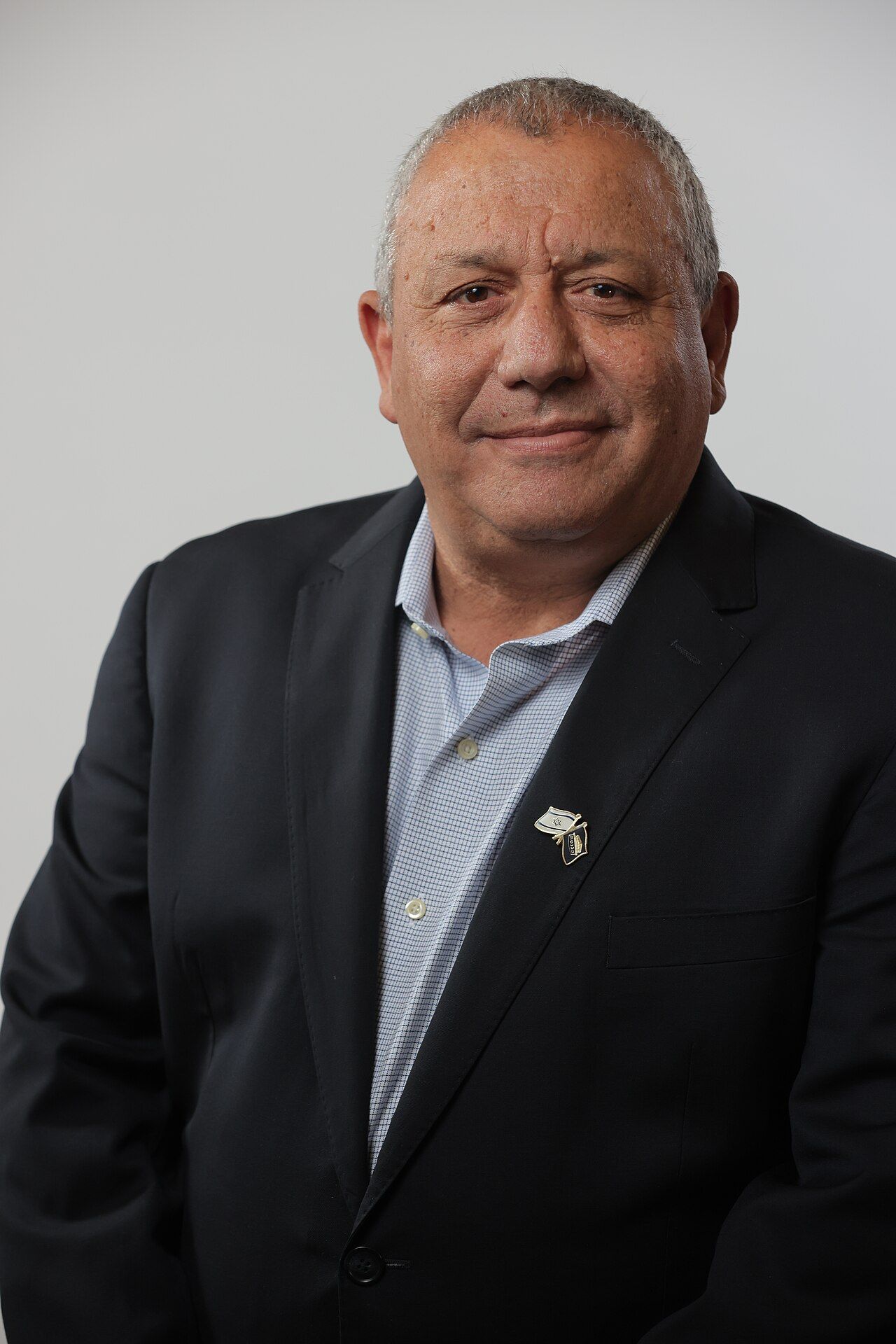
Israeli president tasks Gadi Eisenkot with forming government
The former military chief has up to six weeks to build a coalition after an election left neither bloc with a majority.
JERUSALEM · Israeli President Isaac Herzog has formally tasked opposition leader Gadi Eisenkot with trying to form a new government. The announcement on Saturday gives the former military chief the first opportunity to build a coalition following the Oct. 27 election. Eisenkot, who led the main bloc challenging Prime Minister Benjamin Netanyahu, now has up to six weeks to assemble a parliamentary majority. His nomination came after most major parties recommended him to the president during consultations this week. The task is formidable in a nation deeply divided after more than three years of war triggered by the Hamas-led attacks of Oct. 7, 2023.
Neither Netanyahu's religious-nationalist bloc nor Eisenkot's opposition alliance won enough seats for a majority in the 120-member Knesset. Netanyahu's coalition holds 53 seats, while Eisenkot's bloc of four Jewish-led parties holds 48. This deadlock makes the two Arab-led parties, which won a historic 19 seats, potential kingmakers. An Arab party has only been part of a governing coalition once before in Israel's history. Shortly before Herzog's announcement, Netanyahu released a video calling for a "national unity government" and warning against "hastily swearing in a government with terrorist supporters," a term he uses for the Arab parties.
Eisenkot's Yashar party quickly condemned Netanyahu's statement. In a post on X, the party urged members of Netanyahu's Likud party to disavow their alliance with "radical parties," an apparent reference to far-right factions in the current coalition. The Yashar statement said Eisenkot would only include parties and lawmakers who support its principles. Netanyahu and his allies have consistently portrayed Arab-led parties as a national security threat. Eisenkot has indicated a conditional openness to partnering with them, requiring they recognize Hamas as a terrorist organization that must be destroyed.
READ MORE: NATO rethinks procurement as battlefield tech evolves every six weeks
READ MORE: Trump endorses Netanyahu days before Israeli election
Eisenkot's potential paths to power are narrow and politically fraught. He could attempt to form a minority government reliant on external support from Arab parties, though members of his own bloc have rejected this idea. Another option is a broad unity government with Netanyahu's Likud, but the two leaders have deep differences. These include Netanyahu's opposition to an official inquiry into the Oct. 7 failures and his reliance on religious parties that demand military service exemptions for ultra-Orthodox men. If Eisenkot fails, another candidate can try, and if all efforts fail within about 100 days, the country would face another election.
The 66-year-old Eisenkot, a son of Moroccan immigrants, would be Israel's first Mizrahi prime minister. He entered politics in 2022 after a long military career and briefly served in Netanyahu's wartime cabinet before returning to the opposition. He has publicly criticized Netanyahu's handling of the Gaza war and vowed not to serve under him again. Eisenkot's family has paid a high personal cost during the conflict, with a son and two nephews killed fighting in Gaza. On the campaign trail, he highlighted his security credentials and criticized surging settler violence against Palestinians. Netanyahu will remain as caretaker prime minister until a new government is sworn in. The acting director-general of the Central Elections Committee, Din Livne, stated last week that there is no basis to claims of systematic election interference, which Netanyahu had levelled without evidence. Once the new Knesset is sworn in, Eisenkot's bloc together with the Arab parties could begin passing legislation as they would control a majority of seats, even before a formal government is in place.
With files from CityNews, CBC News and Global News