2025 Canadian federal budget
The 2025 Canadian federal budget, titled "Canada Strong," was the first fiscal plan presented by Prime Minister Mark Carney's Liberal minority government and its finance minister, François-Philippe Champagne. Tabled in the House of Commons on November 4, 2025, and passed on November 17, the budget introduced a fundamental shift in economic strategy, aiming to reduce dependence on foreign trade and bolster domestic resilience. It proposed $141.4 billion in new spending over five years, targeting investments in infrastructure, defence, and productivity while forecasting a deficit of $78.3 billion for the 2025-26 fiscal year. The budget's core themes included significant cuts to the federal civil service, a major increase in military spending, and a new "Buy Canadian" procurement policy designed to redirect public investment into the domestic economy.
Economic and Political Context
The 2025 budget was formulated in a complex economic and political environment following the federal election that returned the Liberals to power as a minority government. Prime Minister Mark Carney, described as fiscally conservative, entered office with stated priorities of increasing defence spending, reducing the size of the public service, and implementing tax cuts. The budget process occurred amidst a significant trade war with the United States, prompting a strategic pivot toward economic self-sufficiency and trade diversification. In a pre-budget speech at the University of Ottawa in October 2025, Carney acknowledged the long-term nature of the economic transformation, stating that it would require sacrifice and time.
The budget also marked the implementation of a new capital budgeting framework, separating operational spending from capital expenditures and revising the parliamentary calendar to feature a fall budget and a spring economic statement. This was the first budget to occur under the 2025 United States trade war with Canada and Mexico, and it used British English spelling conventions rather than Canadian English in its official documents. The government's slogan, "Canada Strong," which was also the Liberal Party's election slogan, framed the budget as a plan to build a more resilient and independent economy in the face of global disruptions. The budget aimed to catalyze investments from provinces, territories, municipalities, Indigenous communities, and the private sector to respond to these global challenges.
Key Fiscal and Economic Measures
Budget 2025 outlined a sweeping set of policy changes designed to reshape federal spending and stimulate private investment. A central fiscal goal was to balance operational spending with revenue within three years, addressing a projected deficit of $78.3 billion for the 2025-26 fiscal year. The budget proposed more than $110 billion in productivity-enhancing investments over five years, headlined by a new "productivity super-deduction" tax break for capital investments, particularly in manufacturing and liquefied natural gas equipment. To fund new initiatives, the government announced a reduction of the federal civil service by approximately 40,000 positions, with the savings redirected to what it termed "nation-building" projects.
The budget also committed to enabling an estimated $1 trillion in total investments from both public and private sources over the next five years, aiming to catalyze spending from provinces, territories, municipalities, Indigenous communities, and the private sector. Major economic interventions included the creation of a $51 billion Build Communities Strong Fund (BCSF) to be distributed over ten years for housing, roads, water services, and healthcare facilities, with $5 billion dedicated to a new Health Infrastructure Fund within it. A $5 billion Strategic Response Fund was established to help businesses retool and access new markets amid global trade disruptions. The budget allocated $214 million for critical mineral related projects and $925.6 million over five years to bolster Canada's artificial intelligence sector, alongside $334.3 million for quantum computing. The budget also proposed to fund Statistics Canada over six years to assess businesses' use of AI services, and other departments like Transport Canada and Justice were slated to utilise AI.
Defence, Immigration and Social Program Changes
The budget contained significant policy shifts in areas of national security, immigration, and social programs. A landmark commitment was a massive $81.8 billion top-up in defence spending over five years, inclusive of a previously announced $9 billion injection, to reach the NATO spending target of 2% of GDP by 2026, with an aspirational goal of 5% by 2035. On immigration, the government proposed a sharp reduction in temporary resident admissions, aiming to cut the number from 673,650 in 2025 to 385,000 in 2026, while keeping permanent immigration levels relatively stable at around 380,000 annually from 2026 onward. The budget also launched a one-year programme to accelerate pathways to permanent residency for 33,000 temporary immigrant workers and included plans to recognize more vocational qualifications and attract foreign researchers to Canada.
Several existing social and environmental programs saw funding reductions or eliminations, including a decrease to the Canada Student Grant (CSG) and cuts to the "2 billion trees" program and the Canada Greener Homes Grant. The budget proposed eliminating the tax on under-utilized housing as well as luxury taxes on jets priced over $100,000 and boats priced over $250,000. Conversely, it allocated $150 million in additional funding to CBC/Radio-Canada and provided funding to investigate Canada's potential participation in the Eurovision Song Contest. The budget also committed $50 million to establish the Inuit Nunangat University in Nunavut and proposed to accelerate the construction of a high-speed rail line as part of its infrastructure agenda, while also introducing a Regional Tariff Response Initiative to support businesses affected by tariffs.
Trade, Climate and Indigenous Provisions
A defining feature of Budget 2025 was its focus on reshaping Canada's trade relationships and industrial policy. The centrepiece was the full implementation of a expansive "Buy Canadian" policy, designed to ensure that up to $70 billion in additional public investment in infrastructure, defence, and other areas supports Canadian-made products and services. This policy was to apply to the work of the new Major Projects Office, Build Canada Homes, the Defence Investment Agency, and the Build Communities Strong Fund. The budget also aimed to double overseas exports within a decade and erected a new trade diversification fund to support businesses facing global trade pressures, alongside specific sectoral supports.
On climate policy, the budget emphasized enhancing carbon capture and storage technologies, arguing this would make an emissions cap for the oil and gas sector unnecessary. It extended the availability of the Carbon Capture, Utilization, and Storage (CCUS) investment tax credit as part of a Climate Competitiveness Strategy targeting net-zero by 2050, and committed to setting a multi-decade industrial carbon pricing trajectory. The budget was notably different from its predecessors in that it did not contain a dedicated Indigenous chapter, though it included some targeted investments such as $10.1 million over three years to support Indigenous participation in major project consultations and the renewal of the First Nations Water and Wastewater Enhanced Program. Advocacy groups criticized the lack of new investments in mental health, addictions treatment, policing, procurement, and education, and the absence of specific funding to advance Truth and Reconciliation, with the Assembly of First Nations stating the budget fell short in meeting urgent and long-term needs.
Parliamentary Passage and Political Reaction
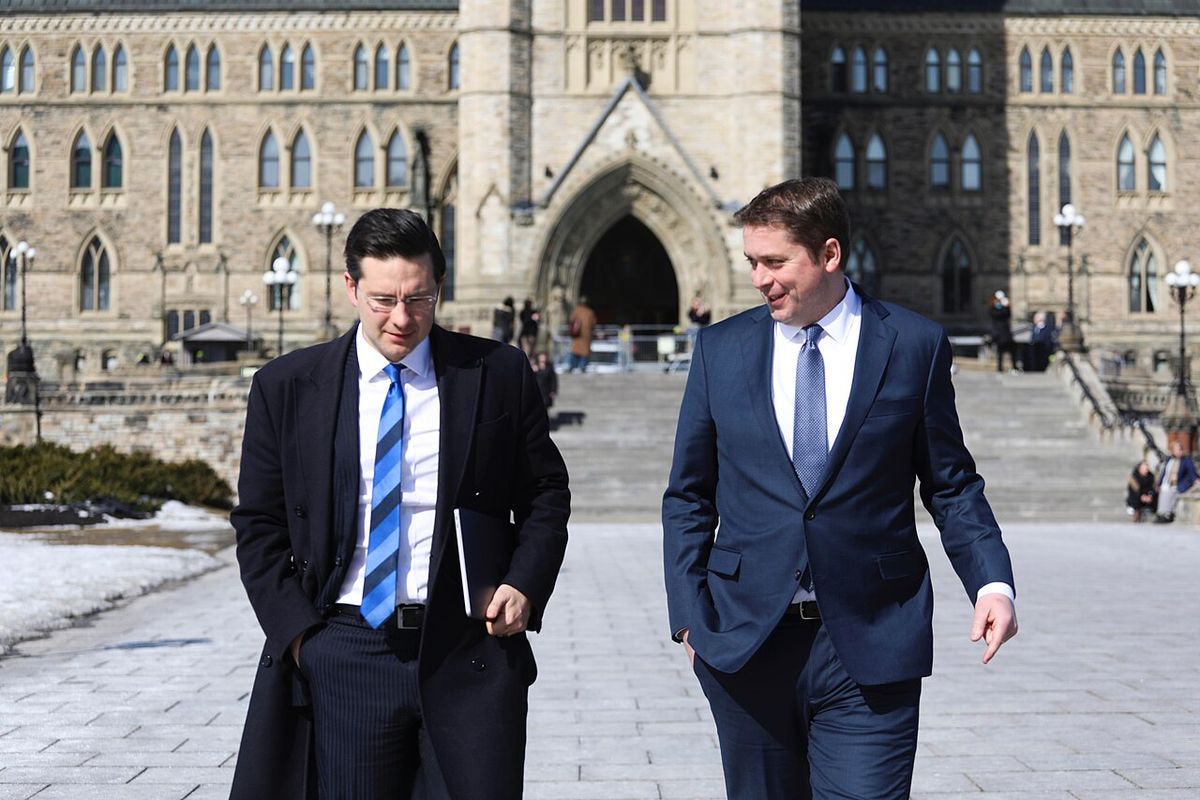
The budget bill faced a contentious path through a divided House of Commons. Conservative Party leader Pierre Poilievre strongly criticized the plan and declared his party would vote against it, while the Bloc Québécois also committed to opposing the budget. The New Democratic Party, under interim leader Don Davies, stated its MPs would consider voting in favour or abstaining, and Green Party Leader Elizabeth May ultimately voted in support despite initial reservations. Following the budget's tabling, Conservative MP Chris d'Entremont crossed the floor to join the Liberal caucus, bringing the government to within two votes of a majority and altering the parliamentary dynamic ahead of the vote.
The final vote on November 17, 2025, saw the budget pass with the support of all Liberal MPs (except the Speaker) and Elizabeth May. Conservative MP Matt Jeneroux, who had announced his intention to resign, voted to abstain, two NDP MPs also abstained, and another Conservative was absent. All other Conservative and NDP MPs, along with the entire Bloc Québécois caucus, voted against the measure. Public opinion polling by Abacus Data after the budget's release found 52% of Canadians believed it was a step in the right direction, while 48% saw it as a step in the wrong direction. Further polling on individual measures found majority support for the "Buy Canadian" policy, reduced temporary immigration, increased military spending, and civil service reductions, but majority opposition to the deficit, increases to the industrial carbon tax, and the elimination of the luxury tax.
Selected Financial Allocations and Projections
The budget document detailed numerous specific financial commitments across various sectors. Budget 2025 commits $141.4 billion in new spending over the next five years. It projects a fiscal deficit of $78.3 billion for the 2025-26 fiscal year. The budget includes a new $51 billion Build Communities Strong Fund to be distributed over ten years for community infrastructure. It also allocates $925.6 million over five years to bolster artificial intelligence and $334.3 million to quantum computing services.
| Initiative or Area | Funding Commitment / Projection |
|---|---|
| Total New Spending | $141.4 billion |
| Defence Spending Increase | $81.8 billion |
| Build Communities Strong Fund | $51 billion |
| Projected Deficit (2025-26) | $78.3 billion |
| Artificial Intelligence Investment | $925.6 million |
| Quantum Computing Investment | $334.3 million |
| CBC/Radio-Canada Funding Boost | $150 million |
| Strategic Response Fund | $5 billion |
| Critical Minerals Projects | $214 million |
These allocations were framed as investments to build long-term economic capacity. The budget also reaffirmed the government's commitment to enhancing the Scientific Research and Experimental Development (SR&ED) tax incentive and earmarked $750 million to support Canadian firms facing early growth-stage funding gaps. The Canada Infrastructure Bank increased its target for investments in Indigenous infrastructure from $1 billion to $3 billion, and the budget allocated $216.6 million per year to make the National School Food Program permanent. Additional funding included $2 billion starting in 2026-27 for Natural Resources Canada to invest in critical minerals projects through equity investments, loan guarantees, and offtake agreements.
Notable Omissions and Criticisms
Beyond its announced measures, Budget 2025 was notable for what it excluded, drawing criticism from various stakeholders. A significant departure from recent practice was the complete absence of a standalone chapter dedicated to Indigenous peoples and reconciliation, which the Assembly of First Nations stated fell short in meeting urgent and long-term needs. While the budget included some funding for Indigenous consultation on major projects and water infrastructure, it offered no new investments in critical areas identified by First Nations leaders, such as mental health and addictions treatment, policing, First Nations procurement, or education. The budget also proposed amendments to federal legislation with wide-ranging effects, including changes to the Competition Act's greenwashing provisions, amendments to the Canada Labour Code affecting federally regulated employers, and updates to financial crimes, trade sanctions, and transfer pricing rules.
Critics from the business community, while welcoming measures like the productivity super-deduction, argued greater focus was needed on broader corporate tax reform and reducing administrative burdens, particularly for small and medium-sized enterprises. The budget's emphasis on carbon capture and storage as an alternative to an oil and gas emissions cap was contentious among environmental groups. The decision to use British English spelling in the official documents was a minor but unusual stylistic choice that attracted some public comment, reflecting the budget's broader theme of marking a distinct break from previous fiscal approaches under the new Carney administration. The budget also introduced the One Canadian Economy Act to enable a more integrated domestic market and proposed legislative measures applicable to insurers and financial institutions.
Questions about 2025 Canadian federal budget
What is the "Buy Canadian" policy in Budget 2025?
The 'Buy Canadian' policy is a procurement strategy designed to ensure that up to $70 billion in additional public investment supports Canadian-made products and services. It specifically applies to defence projects, national interest infrastructure, and general infrastructure projects. This measure is intended to counter global trade disruptions and strengthen economic resilience. The policy uses government contracting as a core tool to achieve these objectives.
How does Budget 2025 affect immigration to Canada?
Budget 2025 proposes to cut temporary resident admissions from 673,650 in 2025 to 385,000 in 2026. Permanent immigration levels will stay relatively stable at around 380,000 annually from 2026 onward. The government will implement a one-year programme to accelerate pathways to permanent residency for 33,000 temporary immigrant workers. It also plans to recognize more vocational qualifications and launch a policy to attract foreign researchers to Canada.
What are the main tax changes in the 2025 federal budget?
The main tax changes include a tax deduction for productivity-related capital investments, with a specific tax break for manufacturing purposes such as liquefied natural gas equipment. The budget proposes to eliminate taxes on under-utilized housing, luxury jets priced over $100,000, and boats priced over $250,000. It also emphasizes enhancing carbon capture and storage technologies. The budget projects that operational spending will be balanced with revenue within three years.
How much is Canada increasing its military spending?
Canada is increasing its military spending to reach the NATO target of 2% of GDP by 2026. The budget also sets an aspirational goal for military spending to reach 5% of GDP by the year 2035. This commitment is part of the broader defence spending measures outlined in the budget. The increase is a key component of the government's plan for national security.
What is the Build Communities Strong Fund?
The Build Communities Strong Fund (BCSF) is a new programme announced in Budget 2025. It will provide $51 billion in funding over ten years for housing, roads, water services, and healthcare facilities. Within this fund, $5 billion is dedicated to a new Health Infrastructure Fund. The BCSF is part of the government's strategy to catalyze investments from various levels of government and the private sector.
What was the reaction of opposition parties to Budget 2025?
The Conservative Party, led by Pierre Poilievre, strongly criticized the budget and voted against it. The Bloc Québécois also opposed the budget. The New Democratic Party's MPs largely voted against it, with two abstaining, while interim leader Don Davies had indicated they would consider support or abstention. Green Party Leader Elizabeth May voted in favour of the budget despite initial reservations. The budget passed with support from all Liberal MPs and May, after Conservative MP Chris d'Entremont crossed the floor to join the Liberal caucus.
Sources and further reading
- 2025 Canadian federal budget (Wikipedia)
- Federal Budget 2025 (afn.ca)
- 2025 Canadian Federal Budget | Global law firm (nortonrosefulbright.com)
- 2025 Federal Budget | OCC (occ.ca)
- Prime Minister Carney outlines Budget 2025 measures to Buy ... (pm.gc.ca)
Checked by the Nosy Mag desk. Last updated 2026-11-03.