Inuit Nunangat
Inuit Nunangat is the homeland of the Inuit in Canada, encompassing roughly 40 percent of the country's landmass and 72 percent of its coastline. This distinct geographical, cultural, and political region comprises four northern regions: the Inuvialuit Settlement Region in the Northwest Territories and Yukon, the territory of Nunavut, Nunavik in northern Quebec, and Nunatsiavut in Newfoundland and Labrador. It is home to the majority of Canada's Inuit population, with 48,695 Inuit residing within its communities as of the 2021 census. The governance and cultural continuity of this vast Arctic homeland are central to Inuit self-determination.
Geography and Regions
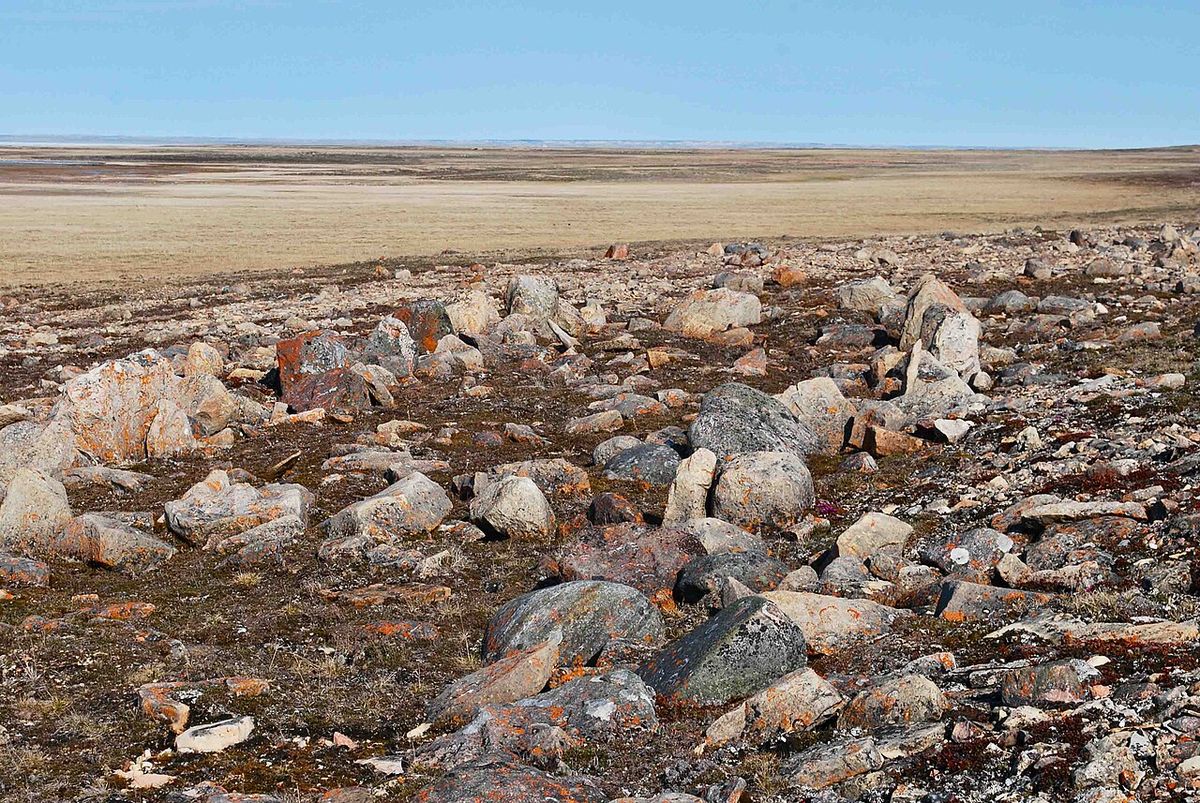
Inuit Nunangat spans the North American Arctic, a region situated mostly above the tree line and characterized by its integral relationship with land, sea, and ice. The homeland is administratively divided into four regions, each with its own distinct history of land claims and self-government. The westernmost region is the Inuvialuit Settlement Region, located in the northwestern Northwest Territories and seasonally extending into northern Yukon. To the east lies the territory of Nunavut, which constitutes the largest portion of Inuit Nunangat by both area and population. Nunavik encompasses the Inuit homeland within northern Quebec, while Nunatsiavut is the Inuit region of northern Labrador in Newfoundland and Labrador. Collectively, these regions represent a continuous cultural and historical area that has been occupied by Inuit since time immemorial.
The climate and environment of Inuit Nunangat are undergoing significant change, with deep impacts on Inuit life and culture. In 2019, Inuit Tapiriit Kanatami released the National Inuit Climate Change Strategy to outline a coordinated Inuit-led response to ecological collapse and its effects. The strategy emphasizes the need for actions that support Inuit resilience and protect the Arctic ecosystems upon which communities depend. The warming climate affects sea ice stability, wildlife migration patterns, and the safety of traditional travel routes, directly challenging food security and cultural practices. Addressing these environmental changes is a paramount concern for all regional governments and organizations within Inuit Nunangat.
History and Governance
Inuit are the most recent Indigenous arrivals on the continent aside from the Métis. Inuit ancestors known as the Thule settled the Arctic, replacing the previous dominant Dorset culture (Tuniit) over the course of around 200 years. This displacement and arrival occurred in the 1100s to 1300s CE. Coming from Siberia where they split from the Aleut and other related peoples about 4,000 years ago, Inuit had reached western Greenland by about 1300 CE, bringing with them transport dogs and various new technologies. Early contact with Europeans was often violent, exemplified by the 1576 expedition of Martin Frobisher, which resulted in the kidnapping and deaths of three Inuit from Baffin Island.
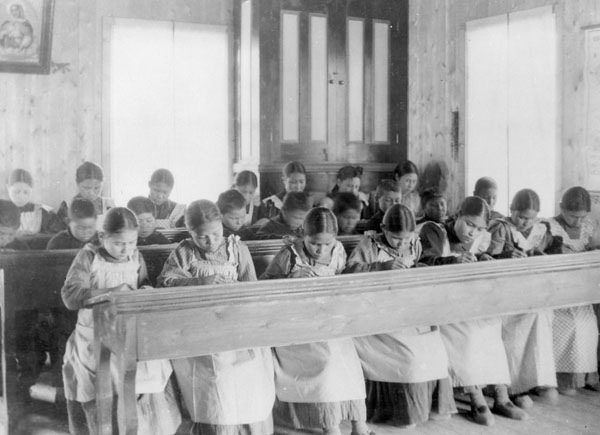
Canadian colonization extended into the Arctic via the lands claimed as Rupert's Land, North-Western Territory and Quebec, later including Newfoundland and Labrador. Rapid spread of diseases, material wealth and Canadian policing saw a rapid decline and collapse of Inuit Nunangat. Since European colonizers had little desire to settle much of Inuit Nunangat's territories, the violence experienced by southern First Nations was comparatively minimal in the north. However, assimilation policies including the wide-scale slaughter of community dogs between 1950 and 1970, the High Arctic relocation, and forced participation within the Canadian Indian residential school system has left Inuit society with language loss and transgenerational trauma. On August 14, 2019, the Minister of Crown-Indigenous Relations, Carolyn Bennett, formally apologized to the Qikiqtani Inuit for the dog slaughter.
The modern era is defined by Inuit efforts to regain self-determination through comprehensive land claims and self-government agreements. The Inuvialuit Final Agreement was settled in 1984, leading to the establishment of the Inuvialuit Regional Corporation. Nunavut was created in 1999 via the Nunavut Act and Nunavut Land Claims Agreement. The Makivik Corporation was established in Nunavik following the 1978 James Bay and Northern Quebec Agreement. Nunatsiavut achieved an autonomous government in 2005 after negotiations that began with a land claim proposal in 1977. At the national level, the Inuit Tapiriit Kanatami (ITK) acts as the representative organization for Inuit in Canada. A significant milestone in Inuit-Crown relations was the creation of the Inuit-Crown Partnership Committee in 2017. At its meeting on April 21, 2022, the committee unanimously endorsed the federal Inuit Nunangat Policy, which formally recognizes the homeland as a distinct geographical, cultural, and political region.
Demographics and Communities
According to the 2021 Canadian census, the total population of Inuit Nunangat was 58,220, an increase of 2.9 percent from 2016. The Indigenous population within the homeland is 50,500, representing 89.24 percent of the total, of which 48,695 people are Inuit. This accounts for 69.02 percent of all Inuit in Canada, with the remaining 30.98 percent living in other parts of the country. The distribution of Inuit across the four regions is not even, with the majority residing in Nunavut. Specifically, 63.38 percent of Inuit in Inuit Nunangat live in Nunavut, 25.87 percent in Nunavik, 6.46 percent in the Inuvialuit Settlement Region, and 4.29 percent in Nunatsiavut. The overall Inuit population in Canada grew by 8.5 percent between 2016 and 2021, from 65,025 to 70,545.
The population is distributed across 53 communities, though this number includes some with zero population. The Inuvialuit Settlement Region contains six communities, including the town of Inuvik, which serves as the regional centre. Nunavut has twenty-five populated communities, divided into three regions: Kitikmeot with its centre in Cambridge Bay, Kivalliq with its centre in Rankin Inlet, and Qikiqtaaluk with its capital in Iqaluit. Nunavik is home to 14 northern villages, governed by the Kativik Regional Government with its administrative capital in Kuujjuaq. Nunatsiavut consists of five towns, with the legislative capital in Hopedale and the administrative capital in Nain. These communities are among the most culturally resilient in North America, with approximately 60 percent of Inuit reporting an ability to converse in an Inuit language.
Languages
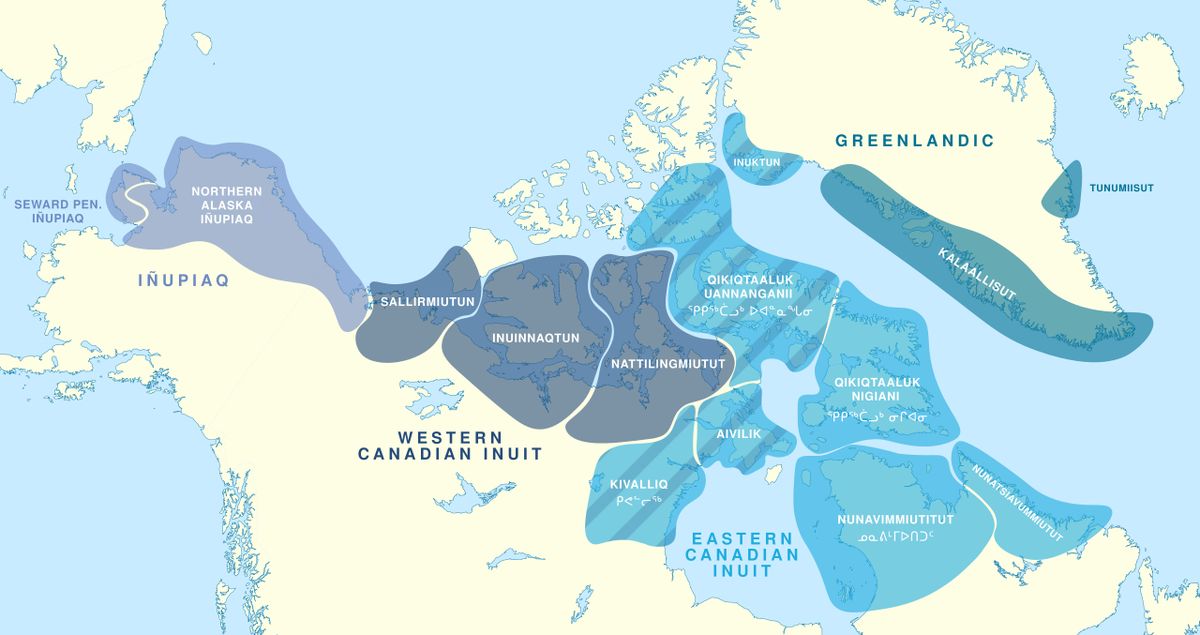
The linguistic character of Inuit Nunangat is rich and diverse, centred on the Inuit language continuum collectively known as Inuktut. This continuum stretches from Alaska to Greenland, with mutual intelligibility often possible between neighbouring dialects. Within Canada, several distinct dialects are spoken, each tied to its region. In the Inuvialuit Settlement Region, the primary language is Inuvialuktun, which includes sub-dialects like Siglitun and Uummarmiutun. In parts of Nunavut and the western Arctic, Inuinnaqtun is spoken, straddling the line between Inuktitut and Inuvialuktun. Inuktitut is the most widely spoken dialect across Nunavut and is written using a unique syllabic script. In Nunavik, the dialect is called Nunavimmiutitut, and in Nunatsiavut, the language is known as Inuttitut or Labradorimiutut.
Beyond spoken languages, Inuit culture also incorporates sign language. Inuit Sign Language, known as Atgangmuurngniq or Uukturausingit, is passed down through generations and is used regardless of an individual's hearing status. It is attested in a few Nunavut communities, though its relationship to Greenlandic Sign Language is not known. The vitality of Inuktut faces challenges due to the legacy of colonial policies, including residential schools, but ongoing revitalization efforts are a priority for Inuit governments and organizations. The preservation and promotion of Inuit languages are seen as fundamental to cultural continuity and self-determination.
Culture and Contemporary Life
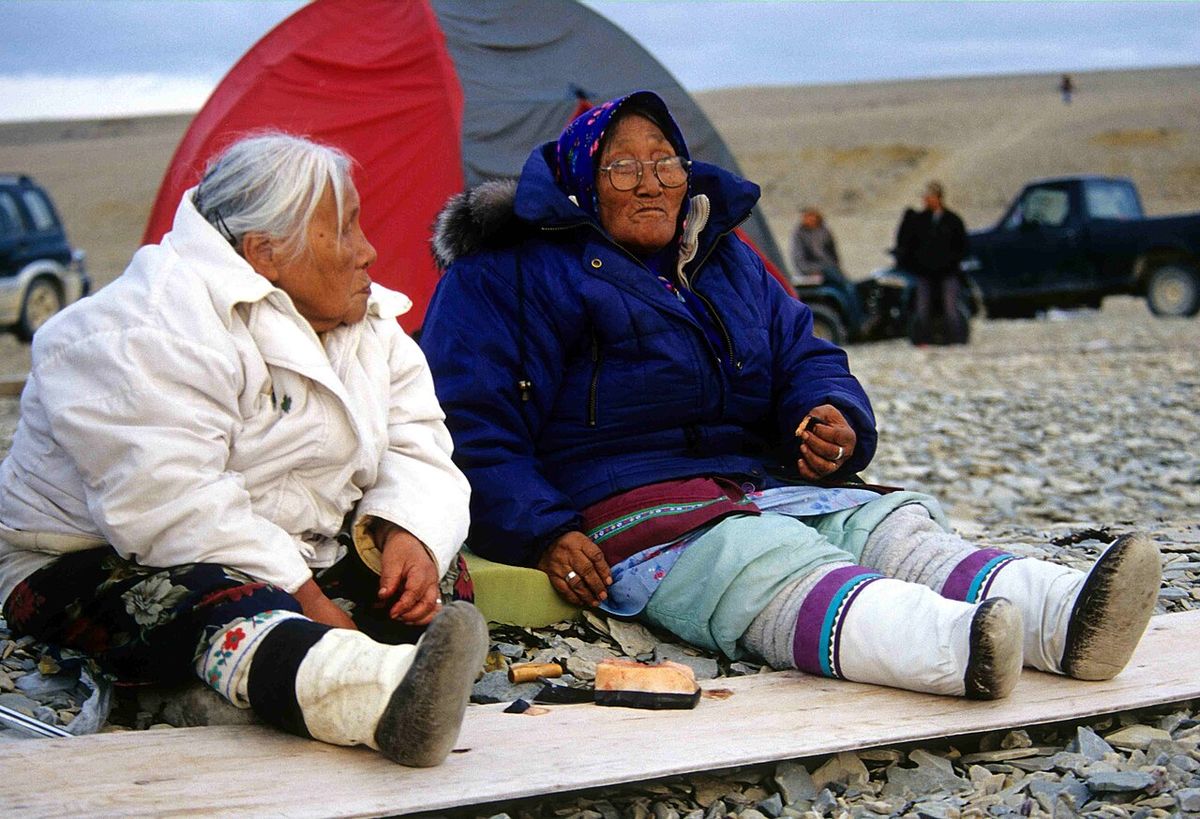
Inuit culture is a dynamic and living tradition that blends ancient practices with modern expression. Traditional subsistence activities, known as harvesting country food, remain central to community life, diet, and cultural identity. Commonly harvested animals include seal, walrus, narwhal, caribou, and Arctic char, while gathered plants include crowberries and cloudberries. Inuit cuisine features unique preparations such as muktuk (whale skin and blubber), igunaq (fermented meat), and akutuq (a dessert made with fat and berries). The connection to the land and its resources is foundational, shaping worldviews, social structures, and legal principles encapsulated in Inuit Qaujimajatuqangit, meaning that which has long been known by Inuit.
Inuit artistic expression is globally renowned, particularly sculpture and printmaking. Soapstone carving, often done with hand tools like axes and files, is a celebrated art form, as is the creation of prints depicting Arctic life. Contemporary Inuit music has gained international acclaim, with artists performing across genres. Notable musicians and bands include throat singer Tanya Tagaq, folk-rock group The Jerry Cans, singer-songwriter Elisapie, and artists like Joshua Haulli and Riit. Festivals such as the annual Alianait Music and Arts Festival in Iqaluit provide important platforms for these artists. Traditional technologies like the qajaq (kayak), umiaq (larger boat), and qamutiik (dog sled) have evolved, with snowmobiles now commonly used for transportation, though dog sledding persists for cultural and recreational purposes.
- Notable Musical Artists: Tanya Tagaq (throat singing), The Jerry Cans, Elisapie, Joshua Haulli, Quantum Tangle, Charlie Panigoniak, Riit, Willie Thrasher, Aasiva, Tumasi Quissa.
- Traditional Foods: Muktuk (whale skin/blubber), Igunaq (fermented meat), Akutuq (a dessert made with fat and berries), Arctic char, Caribou, Seal, Labrador tea.
- Cultural Practices: Throat singing, soapstone carving, printmaking, dog sledding, kayaking, storytelling.
- Key Concepts: Inuit Qaujimajatuqangit (IQ), Country food, Inuktut (language), Sila (environment/weather).
Current Challenges and Federal Action
Inuit Nunangat faces significant and interconnected social and economic challenges rooted in the history of colonization. A severe housing crisis leads to widespread overcrowding and insecurity, which in turn contributes to poor health outcomes and increased violence. Food insecurity remains a pressing issue, addressed in part by the Inuit Nunangat Food Security Strategy. Inuit women, girls, and 2SLGBTQQIA+ people experience disproportionately high rates of violence. In response to the National Inquiry into Missing and Murdered Indigenous Women and Girls, Inuit Tapiriit Kanatami and Pauktuutit jointly published the National Inuit Action Plan, guiding federal and Inuit-led efforts to enhance safety and well-being.
The federal government addresses these issues through distinctions-based funding and partnerships. In the 2025 to 2026 fiscal year, $51.6 million was allocated to new and improved housing across Inuit Nunangat. Funding is also directed through the Urban, Rural and Northern Indigenous Housing Strategy to support Inuit-led shelters and transitional housing. Weekly Inuit Nunangat Policy Implementation Task Group meetings were held throughout 2025 to 2026 to advance the policy's implementation. These actions align with priority areas identified by Inuit, including securing safe housing and infrastructure, enhancing economic security, preserving language and culture, and improving health and wellness services. The focus is on supporting Inuit self-determination and empowering Inuit institutions to design and deliver culturally appropriate solutions.
| Focus Area | Federal Action (2025 to 2026) | Relevant Policy |
|---|---|---|
| Housing | $51.6M for new/improved housing. Support for Inuit-led shelters | National Housing Strategy. Urban, Rural and Northern Indigenous Housing Strategy |
| Policy Coordination | Weekly Inuit Nunangat Policy Implementation Task Group meetings | Inuit Nunangat Policy (endorsed 2022) |
| MMIWG2S+ | Funding and action guided by National Inuit Action Plan | Federal Pathway. Calls for Justice 16.1-16.46 |
| Food Security | Implementation of Inuit Nunangat Food Security Strategy | Inuit Nunangat Food Security Strategy Implementation Plan |
Questions about Inuit Nunangat
What does Inuit Nunangat mean?
Inuit Nunangat is an Inuktitut term meaning Inuit's land. It specifically refers to the Inuit homeland in Canada, which is understood to encompass not just the land but also the water and ice integral to Inuit culture and way of life. The term was formally adopted by Inuit Tapiriit Kanatami in 2009 to replace the older term Nunaat, which excluded waters. It defines a distinct geographical, cultural, and political region that includes four Arctic regions within Canada.
What are the four regions of Inuit Nunangat?
Inuit Nunangat is composed of four regions. The Inuvialuit Settlement Region is in the northwestern Northwest Territories and northern Yukon. Nunavut is a territory created in 1999. Nunavik is the Inuit region within northern Quebec. Nunatsiavut is the autonomous Inuit region in northern Labrador, part of Newfoundland and Labrador. Each region has its own land claim agreement and governance structure, but they are united as the continuous homeland of Inuit in Canada.
How many Inuit live in Inuit Nunangat?
According to the 2021 Canadian census, 48,695 Inuit live within Inuit Nunangat. This represents 69.02 percent of the total Canadian Inuit population of 70,545. The remaining 21,850 Inuit live in other parts of Canada. The total population of Inuit Nunangat, including non-Inuit residents, was 58,220 in 2021. The majority of Inuit in the homeland reside in Nunavut (63.38%), followed by Nunavik (25.87%), the Inuvialuit Settlement Region (6.46%), and Nunatsiavut (4.29%).
What is the Inuit Nunangat Policy?
The Inuit Nunangat Policy is a federal government policy endorsed on April 21, 2022, by the Inuit-Crown Partnership Committee. It formally recognizes Inuit Nunangat as a distinct geographical, cultural, and political region within Canada. The policy is designed to guide how federal programs, services, and funding are delivered within the Inuit homeland, ensuring they are distinctions-based and address the unique priorities of Inuit. An implementation task group met weekly throughout the 2025 to 2026 fiscal year to advance its application across government departments.
What languages are spoken in Inuit Nunangat?
The primary languages are the Inuit language continuum, collectively called Inuktut. This includes several dialects: Inuvialuktun in the Inuvialuit Settlement Region, Inuinnaqtun in western Nunavut, Inuktitut (the most spoken dialect) across much of Nunavut, Nunavimmiutitut in Nunavik, and Inuttitut in Nunatsiavut. English and French are also widely spoken. Inuit Sign Language, known as Atgangmuurngniq, is used in some Nunavut communities and is passed down intergenerationally regardless of hearing ability.
What are the main challenges facing Inuit Nunangat today?
The main challenges include a severe housing crisis, food insecurity, and disproportionately high rates of violence against Inuit women, girls, and 2SLGBTQQIA+ people. The impacts of climate change on the Arctic environment and traditional ways of life are also a paramount concern. These issues are addressed through Inuit-led strategies like the National Inuit Climate Change Strategy released in 2019. Other responses include the Inuit Nunangat Food Security Strategy and the National Inuit Action Plan on Missing and Murdered Indigenous Women and Girls.
Sources and further reading
- Inuit Nunangat (Wikipedia)
- Inuit Nunangat (indigenouspeoplesatlasofcanada.ca)
- About Canadian Inuit (itk.ca)
- 2025 to 2026 Highlight report: Inuit (rcaanc-cirnac.gc.ca)
- Youth Perspectives Across Inuit Nunangat (IRA1-E68) (catalogue.csps-efpc.gc.ca)
Checked by the Nosy Mag desk. Last updated 2026-10-26.