Statistics Canada
Statistics Canada, commonly referred to as StatCan, is the national statistical agency of the Government of Canada. Established in 1971, its mandate is to produce statistics that help governments, businesses, and the public better understand Canada's population, economy, society, and culture. The agency is best known for conducting the nationwide Census of Population every five years, a critical source of data that informs policy, planning, and research across the country. Led by the chief statistician and accountable to Parliament through the Minister of Innovation, Science and Industry, Statistics Canada operates from its headquarters in Ottawa and has been internationally recognized for the quality of its work.
Mandate and operations
Statistics Canada operates under the authority of the Statistics Act, which came into force on 1 May 1971. The agency's core duty is to conduct a comprehensive census of Canada's population every five years and a census of agriculture every ten years. Beyond these major undertakings, StatCan conducts approximately 350 active surveys on virtually all aspects of Canadian life, covering topics from labour force trends and economic indicators to health, justice, and immigration. The data produced supports evidence-based decision-making at all levels of government, aids academic and private sector research, and informs public debate. The agency is led by the chief statistician of Canada, a role held on an interim basis by André Loranger starting 1 April 2024 and permanently from 20 December 2024. StatCan is accountable to Parliament through the Minister of Innovation, Science and Industry, currently Mélanie Joly. The agency has regularly been considered the best statistical organization in the world by The Economist.
Key publications and data products
Statistics Canada disseminates its findings through a wide array of publications and data products, most of which are freely accessible to the public. Its flagship daily publication, The Daily, is an online bulletin that provides the latest statistical releases on social and economic conditions. For in-depth analysis, StatCan publishes numerous reports and a peer-reviewed journal called Survey Methodology. A central component of data accessibility is the agency's provision of aggregate data tables on subjects relevant to Canadian life, which replaced the older Canadian Socio-economic Information Management System (CANSIM). Major ongoing surveys include the Labour Force Survey (LFS) and the Canadian Income Survey (CIS), which combine data to assess income, poverty, and economic wellbeing. Historically, the agency published the Canada Year Book, a comprehensive statistical almanac, from 1967 until its cessation in 2012 due to budgetary constraints and declining demand for print copies.
Statistics Canada's data licensing framework promotes open access. As of 1 February 2012, information published by the agency is automatically covered by the Open License, with exceptions for postal products and Public Use Microdata Files (PUMFs). Researchers using StatCan data are required to provide full credit in their work. The use of PUMFs is governed by the Data Liberation Initiative (DLI) License signed with universities. Historical time series data from CANSIM is also available through commercial third-party data vendors like Haver Analytics, Macrobond Financial, and Thomson Reuters Datastream, extending its reach into financial and economic analysis. By 24 April 2006, electronic publications on the Statistics Canada website were made free of charge, with only a few exceptions.
The Census of Population
The Census of Population is Statistics Canada's most prominent and legally mandated undertaking, required every five years to count every person in Canada. The census collects demographic, social, and economic information that is fundamental for determining representation in Parliament, allocating federal transfer payments, and planning community services. In May 2006, an Internet response option was introduced, and it has since become the primary collection method. The most recent census was held in May 2026. Collection for the 2026 census began in May 2026, and Statistics Canada reported an exceptional national response rate. The data from the 2026 census is scheduled to be released in seven separate data sets throughout 2027, with additional releases to follow.
By law, every household is required to complete the census form. For households that do not respond, Statistics Canada conducts extensive follow-up activities, including phone calls and door-to-door visits by enumerators. For the 2026 census, in-person follow-ups began in June 2026, with enumerators carrying official identification. Respondents can verify an employee's identity by contacting the Census Help Line. The census process also includes provisions for accessibility, with TTY lines available for individuals with hearing or speech impairments. Personal census records are kept confidential for 92 years, after which they may be transferred to Library and Archives Canada for public historical and genealogical research, subject to individual consent provided in the 2006 census and later. This change was enacted through Bill S-18 in 2005, which released personal records from censuses taken between 1911 and 2001.
Controversy and reinstatement of the long-form census
A significant controversy in the agency's history surrounded the 2011 census. In 2010, the federal Conservative government, through Industry Minister Tony Clement, replaced the mandatory long-form census questionnaire with a voluntary National Household Survey (NHS). The government cited privacy concerns and opposition to penalties for non-compliance as reasons for the change. This decision was met with widespread criticism from statisticians, economists, municipal planners, and business groups, who argued that voluntary data would be less reliable, particularly for small populations and neighbourhood-level analysis. The controversy led to the resignation of Chief Statistician Munir Sheikh in July 2010, who stated that a voluntary survey could not replace a mandatory census. Minister Clement initially claimed the change was based on consultations with Statistics Canada but later admitted the shift to a voluntary form was not a recommendation from the agency.
The debate centred on data quality, with many organizations, including the Canadian Chamber of Commerce and the Canadian Economics Association, calling for reinstatement. Critics noted that lower response rates from vulnerable groups like Indigenous peoples and new immigrants would skew results. Edmonton's chief economist argued the NHS was only useful at the city level and created a dearth of neighbourhood data for planning libraries or fire halls. In November 2015, one day after the election of the Liberal government under Justin Trudeau, the mandatory long-form census was reinstated. It was used for the 2016 census and all subsequent censuses. Years later, former minister Tony Clement recanted his support for the elimination, calling it a collective party decision he would have handled differently, and he incorrectly implied that Munir Sheikh had agreed with the cancellation at the time.
Organizational history and challenges
Statistics Canada was created by the Statistics Act on 1 May 1971, replacing the Dominion Bureau of Statistics, which had been formed in 1918. The agency has faced various political and budgetary challenges throughout its history. A major period of austerity occurred in 2012 when the federal budget imposed significant cuts, leading to notifications of potential job elimination for nearly half of StatCan's 5,000 employees. A process determined which positions were eliminated, led to early retirements, or were reconfigured, ultimately reducing the agency's output capacity for a time. The agency has also faced operational challenges, such as a 2011 internal audit that revealed from 2004 to 2011, automated processes had inadvertently released economic data to distributors before the official publication time, a practice that was immediately halted in November 2011.
Despite these challenges, Statistics Canada has maintained its role as a critical national institution. It supports a vast research network through the Canadian Research Data Centre Network (CRDCN), which includes 27 facilities across the country providing secure access to detailed microdata for quantitative social science research. The agency's work in standardizing geographic units for statistical purposes, such as census metropolitan areas and census subdivisions, ensures consistency and comparability of data across all regions of Canada. The CRDCN disseminates research findings to the policy community and the Canadian public, extending the impact of StatCan's data collection.
Recent activities and the 2026 census
The 2026 Census of Population represents a recent major achievement for Statistics Canada, demonstrating high public engagement and operational efficiency. The collection period began in May 2026, and the agency reported a record-high national response rate. This success was attributed to extensive public communication and multiple response channels, including online, paper, and phone. For non-responding households, Statistics Canada deployed thousands of enumerators for in-person follow-up starting in June 2026, all while providing multiple help lines for assistance. Concurrently, follow-up activities for the 2026 Census of Agriculture were conducted via phone and email, with dedicated help lines for respondents with hearing or speech impairments.
The dissemination plan for the 2026 census data is structured and expansive. All topics and content will be released through major data launches scheduled to be completed by December 2027. This data will provide updated insights into Canada's demographic shifts. In other recent statistical work, Statistics Canada reported a 4 percent decrease in full-time international students in public postsecondary institutions in 2024/2025 and a 26 percent decrease in 2025/2026, highlighting its role in tracking timely social trends. The agency continues to produce data visualizations and microdata to make complex information accessible to all Canadians, and it provides tools and resources for educators, businesses, and community supporters.
Standard geographic classification
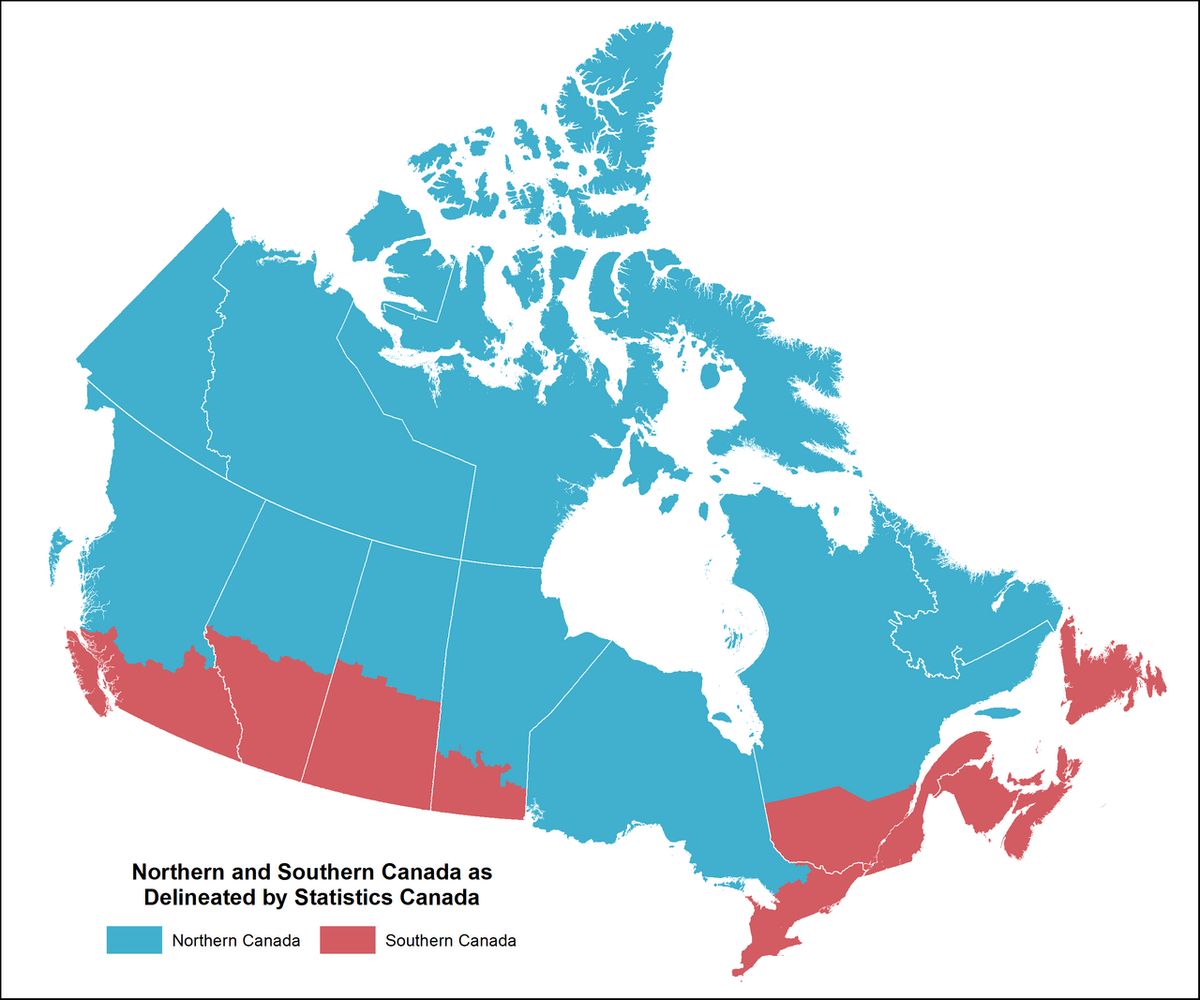
To ensure consistent and meaningful analysis of data across the country, Statistics Canada uses a detailed standard geographic classification system. This hierarchical framework organizes Canada into units for collecting, analyzing, and disseminating statistical information, particularly for the census. The system is designed in consultation with provincial and territorial governments to reflect administrative realities. The primary units range from large areas like provinces and territories down to very local entities such as cities, towns, and Indian reserves. The classification is essential for presenting census results in a way that is useful for municipal planning, academic research, and federal program delivery.
The classification includes several key types of geographic units used for reporting census and other data. Statistics Canada divides Canada into standard geographic units for statistical purposes. These units include provinces or territories, census divisions, and census subdivisions. Census subdivisions are municipalities and municipal equivalents defined in consultation with provincial and territorial governments.
- Province or Territory: The largest sub-national divisions.
- Census Division (CD): Regional municipalities, counties, or regional districts as defined by provinces.
- Census Subdivision (CSD): Municipalities or municipal equivalents, such as cities, towns, villages, Indian reserves, and northern settlements.
- Census Metropolitan Area (CMA) and Census Agglomeration (CA): Urban cores and surrounding commuting zones. A CMA has a core population of at least 100,000, while a CA has a core of at least 10,000.
- Dissemination Area (DA): A small, stable geographic unit composed of one or more neighbouring blocks, used as the standard base for census data dissemination.
- Federal Electoral District (FED): An area represented by a member of the House of Commons.
- Designated Place: A small community or settlement that does not meet the criteria for a CSD but is locally recognized.
This structured system allows Statistics Canada to present data at appropriate geographic levels, enabling detailed local analysis as well as national and regional comparisons. The system includes standard units such as census subdivisions, census metropolitan areas, and economic regions. It is fundamental to the utility of census data for municipal planning, resource allocation, and academic research. The system also includes specialized units like forward sortation areas for postal code analysis and population centres for understanding urban and rural distributions.
Questions about Statistics Canada
What is the purpose of Statistics Canada?
Statistics Canada's primary purpose is to produce statistics that help governments, businesses, and citizens understand Canada's population, economy, society, and culture. It is mandated by law to conduct a national census every five years and a census of agriculture every ten years. The agency also runs about 350 surveys on topics like employment, health, and crime. This data is used for critical decisions on policy, infrastructure, and business planning, making it a foundational institution for evidence-based governance in Canada.
Is completing the census mandatory?
Yes, completing the census is mandatory for every household in Canada under the Statistics Act. The short-form questionnaire, which collects basic demographic information, is required from all households. The more detailed long-form questionnaire, reinstated in 2016, is also mandatory and is distributed to a sample of households. Failure to complete the census can result in penalties, though the primary focus is on achieving a complete count through education and assistance.
Who is the current head of Statistics Canada?
The head of Statistics Canada is the chief statistician of Canada. The current chief statistician is André Loranger. He first assumed the role on an interim basis on 1 April 2024 and was appointed to the position permanently on 20 December 2024. The chief statistician leads the agency's operations and is responsible for maintaining the independence and quality of Canada's official statistics, reporting to Parliament through the Minister of Innovation, Science and Industry.
How can I access Statistics Canada data?
Statistics Canada provides free access to a vast amount of data through its website. Key resources include The Daily bulletin for new releases, a comprehensive data portal with aggregate tables, and public use microdata files for researchers. Most published information is covered by an Open License, allowing for widespread use with appropriate credit. Historical data is also available through third-party vendors like Haver Analytics and Macrobond Financial. For complex or custom data requests, researchers can apply for access through the Canadian Research Data Centre Network.
What was the controversy over the long-form census?
In 2010, the federal government replaced the mandatory long-form census with a voluntary National Household Survey for the 2011 census, citing privacy concerns. This decision was highly controversial, as statisticians, economists, and business groups warned it would compromise data quality, especially for small populations and neighbourhoods. Chief Statistician Munir Sheikh resigned in protest. The voluntary survey resulted in lower response rates and data gaps. The mandatory long-form was reinstated by the new government in 2015 and has been used in every census since, including 2016.
When was the last Canadian census and when is the next one?
The most recent census was conducted in May 2026. Statistics Canada is currently processing the data from that census, and the resulting information will be published in seven separate data sets throughout 2027. By law under the Statistics Act, the agency must conduct a country-wide census of population every five years. Additional data from the 2026 census will be published at a future date which has yet to be determined.
Sources and further reading
- Statistics Canada (Wikipedia)
- Census.gc.ca, Welcome to the 2026 Census (census.gc.ca)
- 2026 Census: Statistics Canada to begin in-person follow-up (ca.finance.yahoo.com)
Checked by the Nosy Mag desk. Last updated 2026-10-27.