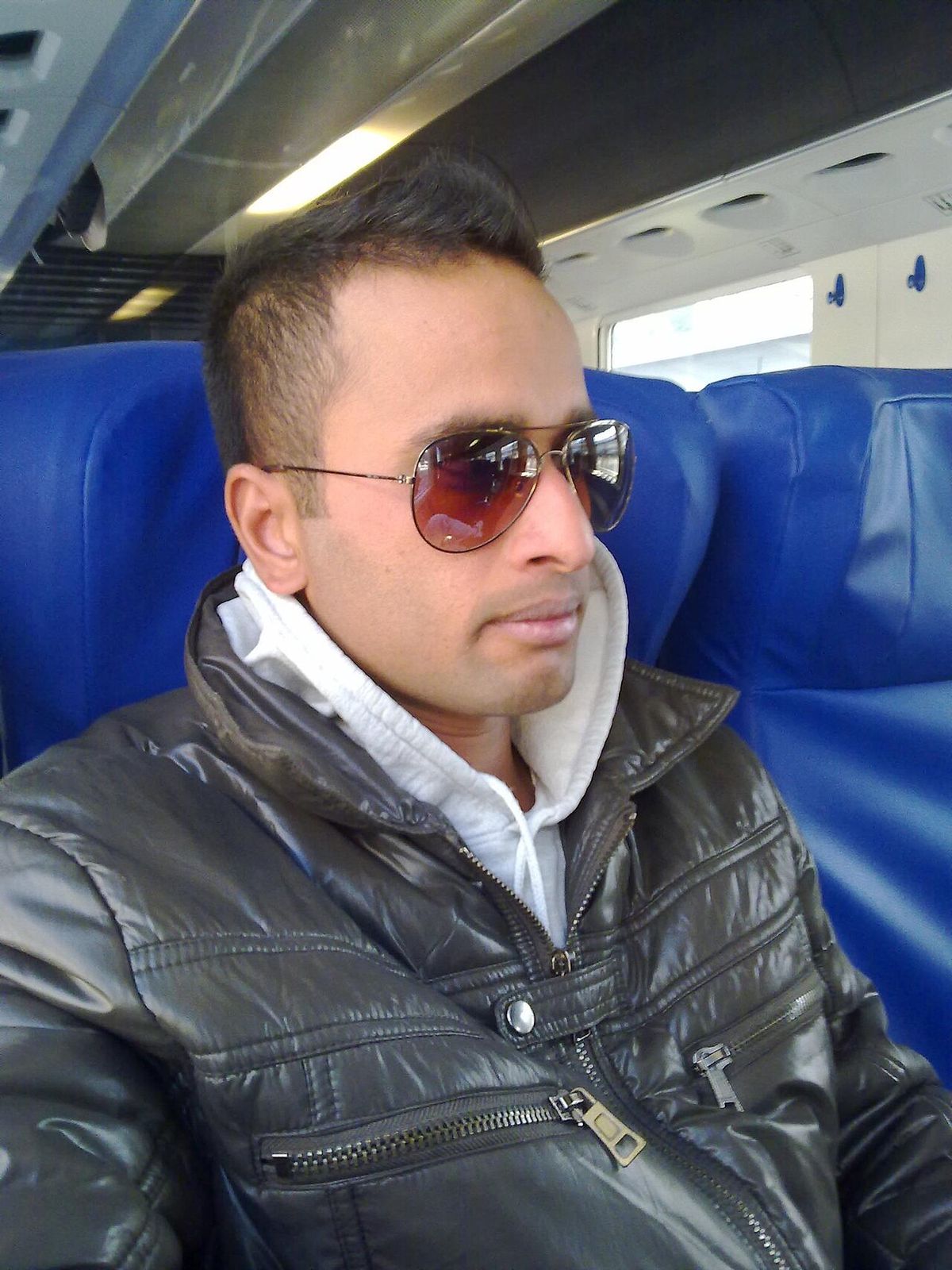
Bindy Johal
Bhupinder "Bindy" Singh Johal was a notorious Indo-Canadian gangster who rose to infamy in Vancouver, British Columbia, during the 1990s. Born on January 14, 1971, he was a self-confessed drug kingpin who led his own faction of the Punjabi Mafia alongside international drug lord Ranjit Cheema. Johal was known for his outspoken nature, blatant disregard for authority, and his violent rivalry with former allies Robbie Kandola and the Dosanjh brothers. His criminal career ended when he was fatally shot in the back of the head at the crowded Palladium nightclub in Vancouver on December 20, 1998.
Early life and criminal beginnings
Bindy Johal was born on January 14, 1971, and raised in South Vancouver, British Columbia, within a Jatt Sikh family. Described as a temperamental problem child by his teachers, he exhibited a lack of respect for authority from a young age. A significant personal crisis occurred when his parents cut his hair following an armed assault in Canada that was a reaction to the assassination of Indira Gandhi in India, an event his mother said triggered a severe depression. Despite performing well academically and even making the honour roll, Johal's violent tendencies surfaced dramatically in 1989 when he brutally assaulted his vice principal at Sir Charles Tupper Secondary School. The assault was so severe the vice principal required emergency hospital care. At his trial, Johal attempted to justify the attack by claiming he was a victim of a racist society, a defence the judge rejected due to a lack of evidence against the vice principal. For this crime, Johal was expelled and sentenced to 60 days in jail.
After moving to Richmond, Johal enrolled at McNair Secondary School but continued his criminal behaviour, being convicted for possession of a dangerous weapon after smashing a car window with a baseball bat. He briefly attended college before dropping out to pursue crime full time. Johal initially joined a Hispanic gang known as Los Diablos, which gradually transformed into the predominantly Indo-Canadian Punjabi Mafia. He built an early reputation as a hitman working for brothers Jimmy and Ron Dosanjh, who were leaders within the organization. Johal also began selling cocaine, establishing the foundation of his drug empire. On March 14, 1991, when Jimmy Dosanjh was arrested for the murder of Colombian drug trafficker Teodoro Salcedo, Johal exploited his absence to seize control of the gang's operations. He expanded into hijacking trucks carrying electronics and automobiles from the Port of Vancouver, selling the goods on the black market. A television documentary from that era estimated his annual income at four million dollars.
The Dosanjh murders and the Gillian Guess trial
Bindy Johal was directly responsible for the murders of his former bosses, gangster brothers Jimmy and Ron Dosanjh, in early 1994. Crown prosecutors alleged that Jimmy Dosanjh had taken out a contract worth over 230,000 dollars to kill Johal. The hitman hired for the job, however, approached Johal instead and agreed to kill Dosanjh for more money. On February 25, 1994, Jimmy Dosanjh was ambushed and killed in a back alley by his own men, whose loyalty had shifted to Johal. After the murder, Johal publicly mocked Dosanjh's reputation, stating he did not think Dosanjh could have hit his way out of a paper bag. Ron Dosanjh, in a television interview, had threatened to shoot Johal between the eyes if he saw him, to which Johal responded with a televised threat of his own. On April 19, 1994, Ron Dosanjh was killed while waiting at a traffic light in his pickup truck when a gunman in a nearby car opened fire with an AK 47 assault rifle, hitting him multiple times in the face.
The violence spilled over to an innocent bystander on April 24, 1994, when Johal's neighbour, Greg Olson, was killed in a case of mistaken identity while walking his dog. The following day, Johal was charged with two counts of first degree murder for the Dosanjh killings alongside several co accused, including Sarbjit Gill, Rajinder Benji, Michael Kim Budai, Sun News Lai, Preet Sarbjit Gill, and Kim Ho Sik. The trial that followed was one of the most expensive in Canadian history due to extensive security requirements. In a stunning twist, one of the active jurors, Gillian Guess, had an affair with co accused Peter Gill during the trial. All defendants, including Johal and Gill, were acquitted. Guess was later convicted of obstruction of justice and sentenced to 18 months in prison, while Gill received a six year sentence for the same crime. The Crown appealed the acquittals, but Johal was murdered before a new trial could begin. Gill was not retried.
Leadership of the Punjabi Mafia and criminal empire
By the mid 1990s, Bindy Johal was a leading figure in the Punjabi Mafia, a loosely affiliated criminal network based in British Columbia. He operated alongside international drug lord Ranjit Cheema and controlled his own faction. According to his former lieutenant, Bal Buttar, Punjabi Mafia hitmen claimed numerous contracts in the province, and the group was responsible for dozens of murders in the 1990s alone, most of which remain unsolved. Johal's primary source of income was drug trafficking, and at his peak he was earning between 500,000 and 900,000 dollars per week. He also engaged in murder for hire and debt collection. Johal formed a dedicated hit squad he named The Elite, which Buttar later stated was responsible for 25 murders over a five year period.
Johal was known for his extreme narcissism, paranoia, and volatile temper. He maintained a cold, purely transactional relationship with his associates, explicitly telling Buttar they were business partners, not friends. His legendary rage led to a 1997 conviction for aggravated assault after he attacked two men in a bar with a broken beer bottle. He also had convictions for obstruction of justice and possession of dangerous weapons. Johal's criminal activities extended to kidnapping, as evidenced by the October 25, 1996, abduction of rival drug dealer Randy Chan. Chan was held for over 50 hours, part of the time in a car trunk, until his brother, gang member Raymond Chan of the Lotus triads, negotiated his release in exchange for a payment of 500,000 dollars to Johal's faction.
Johal cultivated a public image as a swaggering, unapologetic gangster, even issuing threats to rivals during television interviews. This bravado, combined with his perceived success against the system, made him a folk hero to some young Indo Canadian men who felt marginalized by mainstream society. They admired his defiance, wealth, and flashy lifestyle, seeing in him a model for achieving power and respect. One anonymous gangster told an academic that Johal's legend spread widely among young immigrants in Canada and the United States as a symbol of building self esteem outside societal norms. The Punjabi Mafia has been linked to other criminal organizations like the Independent Soldiers, Red Scorpions, Lotus Triads, Hells Angels, and the United Nations gang in Canada.
A pattern of violence and paranoia
In the final years of his life, Bindy Johal's paranoia and violent impulses escalated. His hit squad, which he named The Elite, was responsible for several murders. For instance, he ordered the murder of Gorinder Singh Khun Khun, a former high school friend, due to paranoia that Khun Khun was involved in a previous murder. Johal also had The Elite kill Vinuse News MacKenzie to eliminate a romantic rival. Johal personally shot and killed a gang member named Derek Chand Shankar after Shankar insulted him. Another associate, Roman Mann, was murdered after expressing a wish to leave the gang.
- January 19, 1997: Amarjit Singh Dheil, an associate of the Dosanjh brothers, was shot dead while leaving the Marpole Oakridge Community Centre after a hockey game. Johal wanted all Dosanjh associates killed to prevent revenge attacks.
- October 21, 1997: Gorinder Singh Khun Khun, a high school acquaintance Johal considered a friend, was killed by The Elite as he left his home. Johal had become paranoid, wrongly believing Khun Khun was involved in the mistaken identity murder of his neighbour, Greg Olson.
- July 1, 1998: Vinuse News MacKenzie was murdered by Johal's squad. The motive was purely personal, to eliminate a romantic rival for a woman's affections.
- September 19, 1998: Gang member Derek Chand Shankar insulted Johal, calling him an idiot and a baby. Later that night, Johal located Shankar, who was drunk and asleep in a truck, and had him driven to the Queensborough Bridge in New Westminster where Johal shot him.
- November 29, 1998: Associate Roman Danny Mann expressed a desire to leave the gang. Johal punched him in fury, and later that night Mann's body was found in a Burnaby industrial lot with a bullet in his head. Johal told Bal Buttar to blame the Hells Angels.
This pattern of internal purges and arbitrary killings created an atmosphere of intense fear and distrust within Johal's own circle. His willingness to kill close associates, even his own cousin according to Buttar, demonstrated a deep ruthlessness that ultimately contributed to his downfall. The constant violence solidified his reputation but also made him a target for those who feared they would be next. Buttar was shocked when Johal said he wanted his own cousin killed, revealing the depth of his paranoia and cold blooded nature.
Assassination at the Palladium nightclub
Bindy Johal's violent life ended on the dance floor of the Palladium nightclub in Vancouver in the early morning hours of Sunday, December 20, 1998. At approximately 4:30 a.m., an assailant shot Johal in the back of the head. He was rushed to Vancouver General Hospital but died four hours later. The crowded club provided no clear witnesses who could describe the killer, and the murder remains officially unsolved. His death occurred just two months before he was scheduled to stand trial for the kidnapping of Randy Chan, a case in which he faced a potential ten year sentence if convicted.
The truth behind the assassination emerged years later from his former lieutenant, Bal Buttar. In 2004, before his own death, Buttar confessed to a reporter that he had ordered Johal's murder. Buttar stated he acted out of fear, believing Johal would eventually have him killed. This confession aligned with the pattern of Johal eliminating his own associates. Buttar, who was left blind and quadriplegic after a shooting in 2001, was never charged in connection with Johal's death due to his medical condition. He died in November 2011. In the months leading up to Johal's murder, at least three of his associates had also been killed, with each slaying allegedly connected to Johal himself, according to Buttar's statements.
Lasting impact and cultural legacy
Bindy Johal's legacy is complex and enduring. In the decades since his death, gang violence within segments of the Indo Canadian community in British Columbia has continued. Many analysts and community members trace the roots of this ongoing violence back to Johal's era and his glamorized, defiant model of gangsterism. To some disillusioned youth, he remained a folk hero who symbolized resistance and success outside conventional societal structures. For the broader community and law enforcement, however, he is remembered as a terrifying figure whose actions unleashed a cycle of brutality.
His story entered popular culture most notably with Deepa Mehta's 2015 film Beeba Boys, a fictionalized work inspired by real crimes including those committed by Johal. The film attracted criticism for glamorizing the gangster lifestyle, with observers noting that the reality of Johal's world was far grittier. His life story is frequently cited in discussions about immigrant alienation, the challenges of integration, and the dangerous allure of organized crime for young men seeking identity and power. As Kash Heed, a former Vancouver police commander, noted, it was disappointing that someone as intelligent as Johal chose crime, and that those who seek to emulate him often see only the benefits and not the mortal dangers.
Questions about Bindy Johal
Who was Bindy Johal?
Bindy Johal was a notorious Indo-Canadian gangster who operated in Vancouver, British Columbia, during the 1990s. His full name was Bhupinder Singh Johal, and he was born on January 14, 1971. He was a self-confessed drug kingpin and a leader within the Punjabi Mafia, controlling his own faction. Johal was known for his brazen public threats and was acquitted in a high-profile double murder trial before being assassinated in a Vancouver nightclub in 1998.
How did Bindy Johal die?
Bindy Johal was shot in the back of the head while dancing at the Palladium nightclub in Vancouver at approximately 4:30 a.m. on December 20, 1998. He died four hours later at Vancouver General Hospital. The murder remains officially unsolved. Years later, his former associate Bal Buttar confessed to ordering the hit, fearing Johal would have him killed.
What was the Gillian Guess scandal?
The Gillian Guess scandal involved a major obstruction of justice during Johal's 1994 double murder trial. Gillian Guess, an active juror on the case, had an affair with one of Johal's co defendants, Peter Gill, while the trial was ongoing. Following the acquittal of all defendants, Guess was convicted of obstruction of justice and sentenced to 18 months in prison. Gill was also convicted for the same crime and received a six year sentence.
What was 'The Elite' hit squad?
The Elite was a five-man hit squad assembled and named by Bindy Johal. According to his former lieutenant Bal Buttar, this squad was responsible for approximately 25 contract murders over a five-year period in the 1990s. The squad carried out killings for Johal for various reasons, including eliminating rivals like Gorinder Singh Khun Khun and Vinuse News MacKenzie. It also purged associates Johal suspected of disloyalty, such as Derek Chand Shankar, who was killed in 1998.
Why is Bindy Johal considered a folk hero by some?
Bindy Johal became a folk hero to some young men in the immigrant community who felt marginalized and believed Canadian society did not give them enough chance to succeed. He was admired for his defiance of authority, his wealth from criminal activities, and his flashy lifestyle of fancy cars and female attention. Many young men who later joined organized crime cited Johal's example as their inspiration, seeing him as a symbol of building self-esteem and achieving success outside conventional societal norms. His legend spread among Indo-Canadian communities in cities like Toronto, Montreal, New York, and San Francisco during the 1990s.
What is the connection between Bindy Johal and ongoing gang violence in BC?
The Punjabi Mafia gang, which Bindy Johal was part of, has been active in Vancouver since the early 1990s and remains notorious. The gang has been linked to other criminal organizations like the Independent Soldiers, Red Scorpions, Lotus Triads, and Hells Angels. Johal's gang was responsible for several murders in the 1990s, including those of the Dosanjh brothers. His defiant, glamorized image is often cited as an inspiration for subsequent generations involved in the region's ongoing gang violence.
Sources and further reading
- Bindy Johal (Wikipedia)
- Bindy Johal: The Notorious Canadian Gangster, Brown History (brownhistory.substack.com)
- The Punjabi Mafia and the Indi… ‑ The Underworld Podcast (podcasts.apple.com)
Checked by the Nosy Mag desk. Last updated 2026-10-21.