Slot RTP and volatility
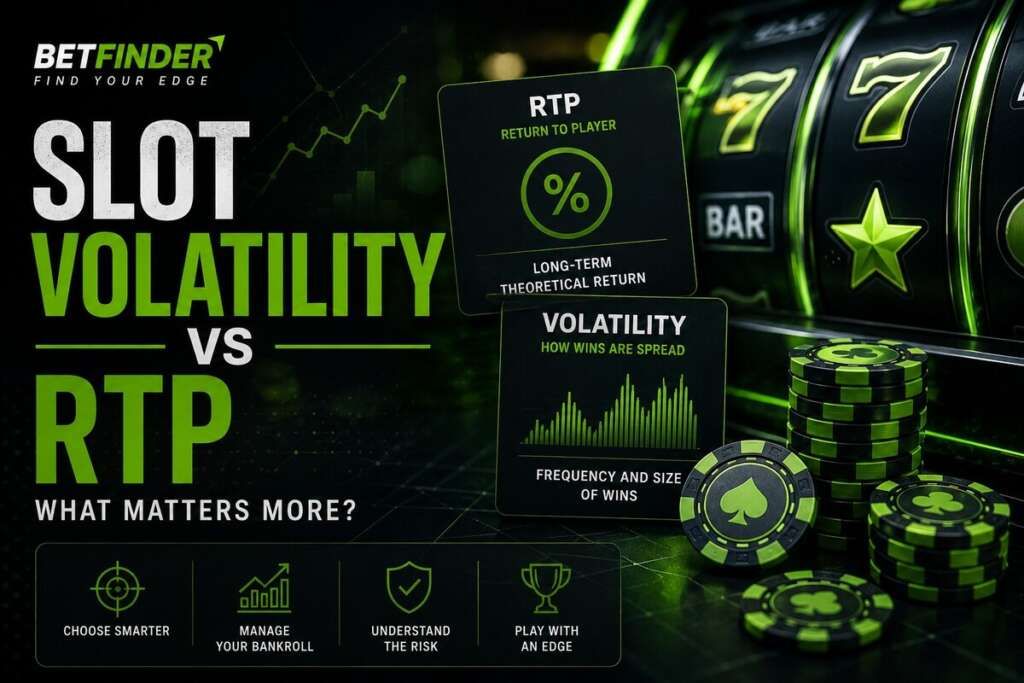
Return to Player (RTP) and volatility are two fundamental mathematical concepts that describe the payout behaviour of slot machines and other casino games. For Canadian players, understanding these statistics is crucial for making informed decisions about bankroll management and game selection, as they directly influence the frequency and size of potential wins. RTP represents the theoretical long-term percentage of wagered money a game is programmed to return to players, while volatility, or variance, indicates the risk level and payout pattern of a game. These metrics are independently tested and certified for games offered by regulated operators in provinces like Ontario, providing a layer of consumer protection for adults who choose to gamble.
Defining Return to Player (RTP)
Return to Player, or RTP, is a percentage that indicates the average amount of wagered money a specific casino game will pay back to players over an extended period, typically calculated across millions of simulated game rounds. For example, a slot with a published RTP of 96% is expected to return an average of $96 for every $100 wagered by all players over the long run. It is critical to understand that RTP is a theoretical average and does not predict individual session outcomes, as short-term results are dominated by random variance. The calculation for actual observed RTP involves dividing the total amount won by players by the total amount wagered on the game, then multiplying by 100. This figure is part of a game's certified mathematical model, which is audited by independent testing agencies to ensure fairness and compliance with regulatory standards in jurisdictions like Ontario.
The average RTP for online slots is approximately 96%, but this varies significantly between individual games. Some slots, often classic or non-progressive titles, can have an RTP as high as 99%, offering players a theoretically higher long-term return. Conversely, some games, particularly certain progressive jackpot slots, may have a base game RTP below 90%, with the jackpot prize contributing to the overall theoretical return. Canadian players can typically find a game's RTP displayed on the casino game page, within the game's help files or paytable information, or through independent online reviews and the game developer's official website. Understanding this percentage helps players evaluate the inherent house edge and make more informed choices about where to allocate their gambling budget.

Understanding Slot Volatility
Slot volatility, also commonly referred to as variance, is a measure of the risk associated with a game's payout structure, describing how often and how large wins tend to be. This metric is independent of RTP and fundamentally shapes the player experience, determining whether a game provides frequent small wins or infrequent large payouts. Volatility is typically categorized into three broad levels: low, medium, and high. A low volatility slot tends to award smaller wins more regularly, leading to slower bankroll depletion and extended play sessions. A high volatility slot features less frequent wins, but those wins have the potential to be significantly larger, resulting in more pronounced swings in a player's bankroll.
Medium volatility slots aim to strike a balance between these two extremes, offering a mix of decently sized wins at a reasonable frequency, which aligns with the gameplay preference of many Canadian players. The volatility of a slot is determined by the mathematical distribution of its possible outcomes, which game providers then simplify into consumer-facing categories. Players can often find volatility information in the same locations as RTP data: on the casino game page, in the help section, or through third-party reviews. Choosing a volatility level is a personal decision that should align with a player's bankroll, risk tolerance, and desired gameplay style, as it has a more immediate and tangible effect on a single session than the long-term theoretical RTP.
The Relationship Between RTP and Volatility
While RTP and volatility are distinct concepts, they interact to define a slot game's overall behaviour and appeal to different player demographics. A critical point for Canadian players to understand is that a slot can have a very high RTP and still be highly volatile, or a lower RTP and be low volatility. The RTP percentage describes the total amount returned over time, while volatility describes the pattern of those returns. For instance, two slots might both have a 96% RTP, but one could be low volatility, paying out small amounts frequently, and the other could be high volatility, paying out large amounts rarely. This independence means that selecting a game based solely on a high RTP does not guarantee a certain type of gameplay experience.
Market analysis suggests that player preferences for these metrics can vary by region. Data indicates that Canadian players, on average, show a leaning toward medium volatility slots with RTPs in the 96% to 97% range, favouring a balanced approach between win frequency and payout size. This contrasts with markets in Latin America and Asia, where high volatility games are often more popular. Game developers use RTP and volatility as key criteria when designing slots, attempting to find an appealing balance between the frequency and size of prizes to attract their target audience. Understanding this relationship allows players to select games that not only offer good theoretical value but also match their personal tolerance for risk and their goals for a gaming session.

How RTP and Volatility Are Audited and Displayed
The integrity of RTP and volatility figures is upheld through independent testing and certification by accredited agencies before a game can be offered by licensed operators. In Canada, particularly in the regulated Ontario market overseen by iGaming Ontario and the AGCO, games must be certified by testing laboratories such as eCOGRA, iTech Labs, or Technical Systems Testing (TST). These agencies run simulations over millions of game rounds to verify that the game's random number generator (RNG) produces outcomes that align with the published theoretical RTP and that the game operates fairly. Reputable online casinos will often display audit certificates or badges from these testing agencies on their websites as a mark of trust and transparency. Players are advised to verify this information, especially when playing on platforms not regulated by a Canadian provincial authority.
If a casino does not publish independent audit information or make game RTP easily accessible, players should treat the operator with caution. The displayed RTP is usually set at the game provider level, meaning the same slot title will generally have the same RTP across different casinos, though some operators may commission exclusive versions with altered parameters. Players should always check the game's help section or paytable for the most accurate and legally required disclosure of its RTP, as this is where the provider's certified information is displayed. The process for finding a game's RTP and volatility involves several standard steps that players can follow.
- First, look for an information or 'i' button on the casino game lobby page for the specific slot.
- Second, open the game and access its paytable or help menu, usually via a settings or menu icon.
- Third, search within that information for terms like 'Return to Player', 'RTP', 'Theoretical RTP', or 'Variance'.
- Fourth, if the data is not in the game, consult independent casino review sites that compile game statistics.
- Fifth, visit the official website of the game's developer, such as NetEnt or Play'n GO, for technical documentation.
- Finally, for games on regulated Ontario sites, use the responsible gambling tools that often link to game fairness reports.
Practical Game Examples and Comparisons
Examining specific games helps illustrate how RTP and volatility manifest in real gameplay for Canadian players. Popular titles often searched for in Canada demonstrate a wide range of combinations. For instance, some classic video poker games and certain non-progressive slots are known for offering RTPs near or above 99%, though they may come with specific betting requirements to achieve that maximum return. Well-known medium volatility slots like Book of Dead offer a balance that appeals to a broad audience. High volatility progressive jackpot slots, such as Mega Moolah, typically have a lower base game RTP but offer the potential for life-changing jackpots, which contributes to the overall theoretical return. The following table provides a comparative overview of general RTP and volatility ranges for common game types, based on data available from game providers and independent reviews.
| Game Type / Category | Typical RTP Range | Common Volatility Level |
|---|---|---|
| Blackjack (with optimal strategy) | Around 99.5% | Low (skill-dependent) |
| European Roulette | 97.3% | Medium |
| Video Poker (e.g., Jacks or Better) | 99%+ | Medium to High |
| High RTP Non-Progressive Slots | 96%-99% | Varies |
When selecting a game, players should consider their bankroll size alongside RTP and volatility. A player with a smaller bankroll may prefer low or medium volatility games to extend their playtime, as these games provide steadier small wins. A player seeking large jackpots and who is comfortable with significant swings may opt for high volatility titles, which feature bigger swings. High volatility means bigger swings and slower bankroll churn, while low volatility gives steadier small wins. The key is to match the game's characteristics with personal financial limits and entertainment goals, planning bet sizing accordingly.
Regulatory Context and Player Resources in Canada
The legal landscape for online gambling in Canada is a patchwork of provincial regulations and federally permissible activity. In this regulated environment, all games must meet strict technical standards, including certified RTP and fair RNG operation. Other provinces, such as British Columbia and Quebec, offer online gambling through their provincial lottery corporations (e.g., PlayNow and Espacejeux), which also adhere to high standards of game integrity. Many Canadian players also access offshore online casinos that hold international licenses from jurisdictions like Curaçao or the Kahnawake Gaming Commission.
While these sites may offer attractive game libraries, the onus is on the player to verify the operator's reputation and the fairness of its games. Responsible gambling is a critical component, and all legal gambling in Canada is restricted to adults. Provincial help lines and resources are available for individuals who may experience issues with gambling. Players should always ensure they are gambling with funds they can afford to lose and view it strictly as a form of entertainment, not a source of income. The advantages and disadvantages of different volatility levels can guide players toward games that suit their style.
- Low Volatility Slots: Provide frequent, smaller wins that help extend bankroll and playtime, ideal for casual play or smaller budgets.
- Medium Volatility Slots: Offer a balance of decent win frequency and payout size, appealing to a broad range of players seeking both entertainment and winning potential.
- High Volatility Slots: Deliver infrequent but potentially very large wins, suitable for players with larger bankrolls who are comfortable with significant swings and seek jackpot prizes.
- Jackpot Slots (often High Volatility): Feature a lower base game RTP with the jackpot prize contributing to the overall return, targeting players chasing life-changing payouts.
Questions about Slot RTP and volatility
What does RTP mean in casino games?
RTP stands for Return to Player. It is a percentage that indicates the theoretical average amount of wagered money a specific casino game will pay back to players over a very long period, typically millions of game rounds. For example, a slot with a 96% RTP is expected to return an average of $96 for every $100 wagered. This is a long-term statistical average and does not predict the outcome of any single gaming session for an individual player.
What is the difference between slot RTP and volatility?
RTP and volatility are two independent metrics that describe different aspects of a slot machine. RTP is the theoretical long-term percentage of money returned to players. Volatility, also called variance, describes the risk and payout pattern of the game, how often and how large wins tend to be. A game can have a high RTP but also high volatility, meaning it pays a lot over time but through infrequent, large wins. Conversely, a low RTP game could be low volatility, offering frequent but small payouts.
Where can I find the highest RTP slots in Canada?
The highest RTP slots, sometimes reaching 99%, are often classic video poker games or specific non-progressive slot titles. To find them, Canadian players should check the game's information or paytable within the online casino, as licensed operators are required to disclose the RTP. Reviews from independent casino affiliate sites and game developer websites also list this information. When playing on regulated Ontario sites via iGaming Ontario, all games have certified RTPs that can be verified.
Are low volatility slots better for beginners?
Low volatility slots are often recommended for beginners or players with smaller bankrolls. They provide more frequent, albeit smaller, wins which helps extend playing time. This pattern provides a steadier stream of entertainment with less dramatic swings in a player's balance. It allows new players to experience wins more regularly as they learn the game mechanics. This approach can be more engaging without a bankroll depleting too quickly.
How is slot RTP calculated and verified?
A slot's theoretical RTP is calculated by the game developer as part of its mathematical model, determining the probability of every possible outcome. This model is then tested and certified by independent auditing agencies like eCOGRA, iTech Labs, or TST. These agencies run the game's software through millions of simulated spins to verify that the actual return aligns with the published percentage and that the Random Number Generator (RNG) is truly random and fair. Regulated casinos must use these certified games.
Does a higher RTP mean I will win more money?
A higher RTP means that, theoretically, the game returns a greater percentage of wagered money to players over an extremely long period involving all players. It does not guarantee that an individual will win more money in a single session or even over many sessions. Short-term results are governed by randomness and volatility. Choosing a higher RTP game simply means you are playing a game with a lower theoretical house edge, which can be a better long-term value proposition for your bankroll, but it does not assure personal profits.
Sources and further reading
- Understanding Slot RTP and Volatility, BetMGM Casino (betmgm.ca)
- RTP Comparison of Popular Slots for Canadian Players, The Kitchen Guys (sdkitchenguys.com)
- Medium Volatility Slots 2026 - Best Medium Variance (casinocanada.com)
- Slot Machine RTP Explained: Mathematical Guide for Canadians (michaelthompsongaming.com)
- Canadá (mundo.rtp.pt)
- How to watch RTP Play in Canada [October 2026] (purevpn.com)
Checked by the Nosy Mag desk. Last updated 2026-11-11.