Structure of the Canadian federal government
The structure of the Canadian federal government is the constitutional framework that organizes the institutions responsible for governing the country. It is divided into three distinct branches: the legislative branch, which makes laws. The executive branch, which implements them. And the judicial branch, which interprets them. This separation of powers is designed to provide checks and balances within the system of responsible government. The structure encompasses roughly 130 departments and agencies, employing nearly 300,000 public servants who form the Public Service of Canada.
The Crown and the Executive Branch
The executive branch of the Canadian government derives its authority from the Crown, embodied by the King of Canada and represented federally by the Governor General. The Governor General performs essential constitutional duties such as summoning and dissolving Parliament, giving royal assent to bills, and appointing key officials on the advice of the Prime Minister. Supporting this vice-regal office are the Canadian Secretary to the King and the Secretary to the Governor General, while the Canadian Heraldic Authority operates under the Governor General's authority to grant coats of arms. The core of the executive's political direction is the King's Privy Council for Canada, a body that includes all current and former ministers, though its active work is conducted by the Cabinet and its committees.
The Cabinet, chaired by the Prime Minister, is the committee of ministers that sets government policy and priorities. To manage its workload, the Cabinet operates through a system of committees, each with a specific mandate. The legally established Treasury Board is a key committee. The day-to-day administration of government is carried out by the Public Service of Canada, whose employees are agents of the Crown. Public servants are organized into ministerial departments led by cabinet ministers, such as Global Affairs Canada or Finance Canada. Central agencies like the Privy Council Office, the Treasury Board Secretariat, and the Prime Minister's Office provide coordination and advice across government. The Public Service Commission of Canada oversees staffing and ensures non-partisanship.
Other bodies operate with greater independence from direct ministerial control. Separate agencies, such as the Canada Revenue Agency, operate at arm's length from ministerial departments but still report to Parliament through a minister. Independent agencies and offices include the Canadian Judicial Council, the National Judicial Institute, the National Security and Intelligence Review Agency, and the Office of the Commissioner for Federal Judicial Affairs. Independent review bodies include the Federal Public Sector Labour Relations and Employment Board, the Public Servants Disclosure Protection Tribunal, the Canadian Human Rights Commission, and the Canadian Human Rights Tribunal.
The Legislative Branch: Parliament
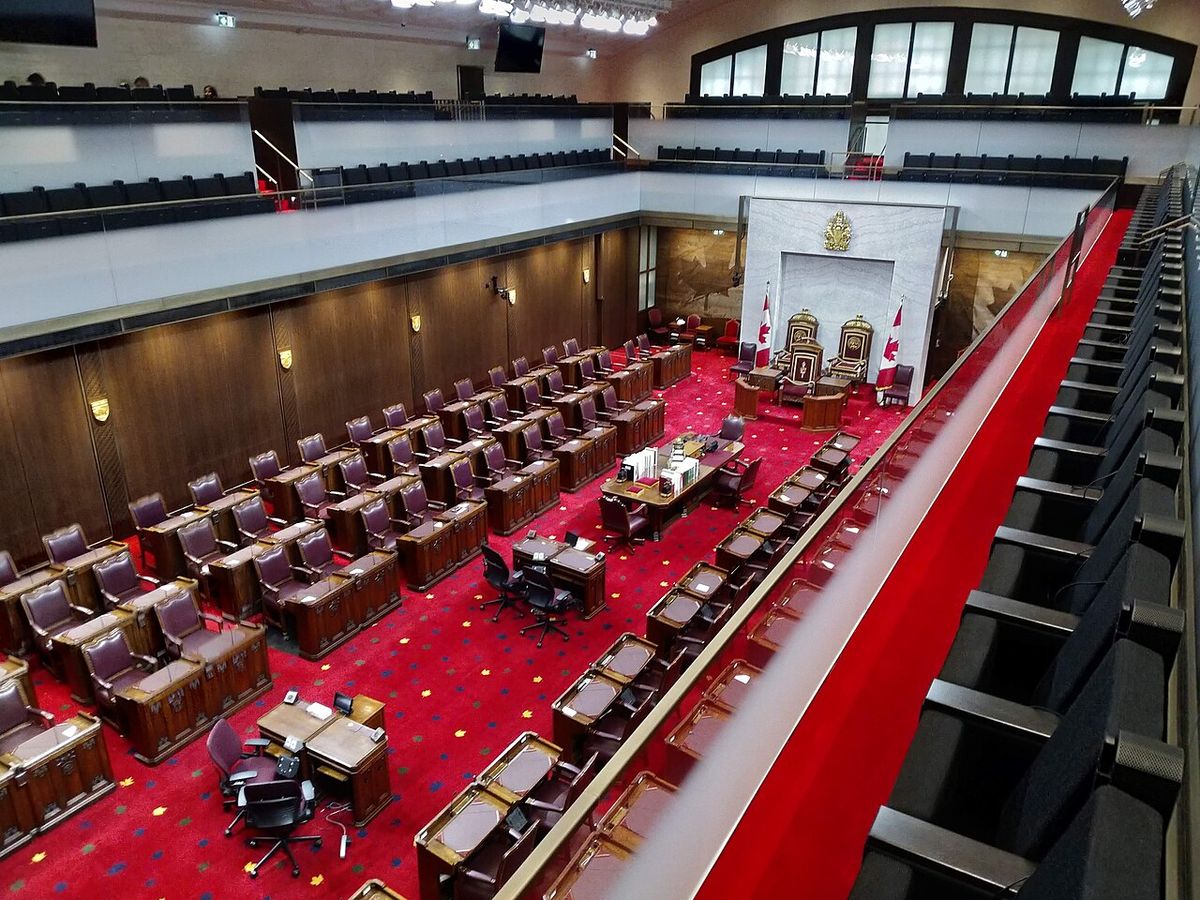
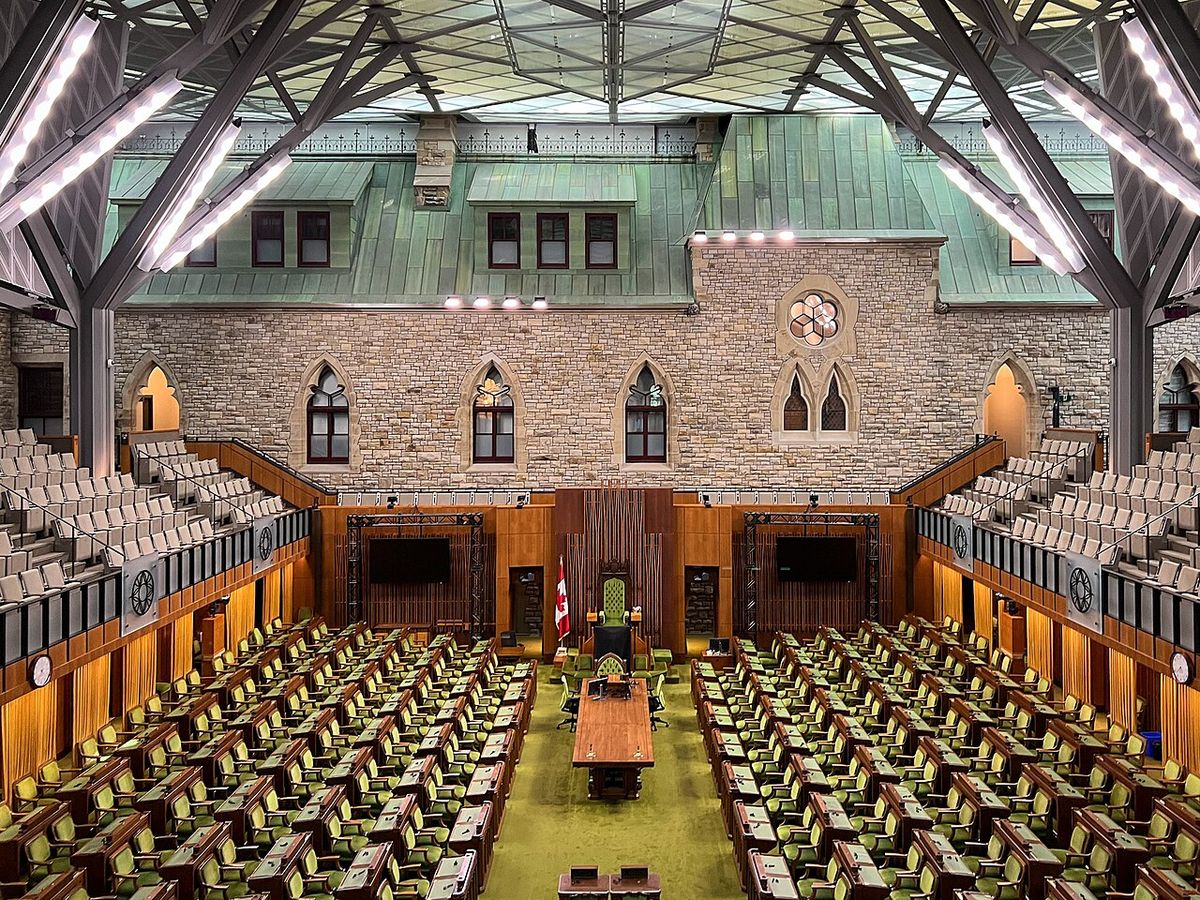
The Parliament of Canada is the federal legislature, consisting of the Sovereign, the Senate, and the House of Commons. Its primary function is to make laws, authorize government spending, and hold the executive branch to account. The Senate, or upper house, is composed of senators appointed by the Governor General on the Prime Minister's advice to represent regions. The House of Commons, or lower house, is made up of Members of Parliament elected by Canadian voters. Both chambers must pass a bill in identical form before it can receive royal assent and become law. The government must maintain the confidence of the elected House of Commons to remain in power, a fundamental principle of responsible government.
Each chamber has its own leadership and administrative structure. The Senate is presided over by the Speaker of the Senate, supported by the Clerk of the Senate and the Usher of the Black Rod. The House of Commons is presided over by the Speaker of the House of Commons, elected by MPs, and supported by the Clerk of the House and the Sergeant-at-Arms. Both chambers conduct detailed work through standing committees, which study legislation, scrutinize government spending, and investigate issues within their mandates.
The Senate of Canada has several key standing committees that review legislation and examine issues. These committees include Aboriginal Peoples, Agriculture and Forestry, and Banking, Trade, and Commerce. Other important committees are Energy, the Environment and Natural Resources, Foreign Affairs and International Trade, and National Security and Defence. Additional standing committees focus on Legal and Constitutional Affairs, National Finance, and Social Affairs, Science and Technology. The Senate also has committees on Ethics and Conflict of Interest for Senators, Fisheries and Oceans, Human Rights, Internal Economy, Budgets, and Administration, Official Languages, Rules, Procedure and the Rights of Parliament, Selection Committee, and Transport and Communication.
- Aboriginal Peoples
- Agriculture and Forestry
- Banking, Trade, and Commerce
- Ethics and Conflict of Interest for Senators
- Energy, the Environment and Natural Resources
- Fisheries and Oceans
- Foreign Affairs and International Trade
- Human Rights
- Internal Economy, Budgets, and Administration
- Legal and Constitutional Affairs
- National Finance
- National Security and Defence
- Official Languages
- Rules, Procedure and the Rights of Parliament
- Selection Committee
- Social Affairs, Science and Technology
- Transport and Communication
The House of Commons of Canada operates with numerous key standing committees. These committees include Access to Information, Privacy and Ethics, Agriculture and Agri-Food, and Canadian Heritage. Other significant committees are Citizenship and Immigration, Environment and Sustainable Development, Finance, and Fisheries and Oceans. Committees also focus on Foreign Affairs and International Development, Government Operations and Estimates, Health, and Human Resources, Skills and Social Development and the Status of Persons with Disabilities. Additional House committees are Indigenous and Northern Affairs, Industry, Science and Technology, International Trade, Justice and Human Rights, National Defence, Natural Resources, Official Languages, Procedure and House Affairs, Public Accounts, Public Safety and National Security, Status of Women, Transport, Infrastructure and Communities, and Veterans Affairs.
- Access to Information, Privacy and Ethics
- Agriculture and Agri-Food
- Canadian Heritage
- Citizenship and Immigration
- Environment and Sustainable Development
- Finance
- Fisheries and Oceans
- Foreign Affairs and International Development
- Government Operations and Estimates
- Health
- Human Resources, Skills and Social Development and the Status of Persons with Disabilities
- Indigenous and Northern Affairs
- Industry, Science and Technology
- International Trade
- Justice and Human Rights
- National Defence
- Natural Resources
- Official Languages
- Procedure and House Affairs
- Public Accounts
- Public Safety and National Security
- Status of Women
- Transport, Infrastructure and Communities
- Veterans Affairs
Parliament benefits from several independent Officers of Parliament who provide oversight and scrutiny. These officers include the Auditor General of Canada and the Parliamentary Budget Officer. Other key officers are the Information Commissioner of Canada, the Privacy Commissioner of Canada, and the Conflict of Interest and Ethics Commissioner of Canada. The list also includes the Commissioner of Lobbying of Canada, the Intelligence Commissioner of Canada, the Chief Electoral Officer of Elections Canada, and the Public Sector Integrity Commissioner of Canada. The Parliamentary Protective Service is an agency that provides security for the parliamentary precinct. The National Security and Intelligence Committee of Parliamentarians is a review body.
The Judicial Branch
The judicial branch interprets and applies the law independently of the legislative and executive branches. The Supreme Court of Canada sits at the apex of the Canadian judicial system, serving as the final court of appeal for both civil and criminal cases. It consists of nine justices, including the Chief Justice, who are appointed by the Governor General on the advice of the Prime Minister. The Supreme Court's decisions are binding on all other courts in Canada and it is central to interpreting the Constitution, including the Canadian Charter of Rights and Freedoms. Below the Supreme Court are the federal courts, which have jurisdiction over matters specified in federal law.
The Federal Court of Appeal hears appeals from the Federal Court and the Tax Court. The Federal Court itself has broad jurisdiction over areas like intellectual property, immigration, and maritime law, and reviews the decisions of federal administrative tribunals. The Tax Court of Canada deals with disputes between taxpayers and the federal government regarding income tax, GST, and other federal levies. The Court Martial Appeal Court of Canada hears appeals from military courts. The administration of the federal judiciary is supported by the Office of the Commissioner for Federal Judicial Affairs, while the Canadian Judicial Council and the National Judicial Institute are responsible for judicial conduct and education.
Departments, Agencies and Crown Corporations
The federal government delivers programs and services through a complex array of organizations beyond the core ministerial departments. These entities are categorized based on their relationship with ministers and their operational independence. Ministerial departments, such as Global Affairs Canada or Finance Canada, are directly led by a cabinet minister and are part of the core public service. The 2025-26 departmental plan for Global Affairs Canada, for instance, outlines its work to promote Canada's interests through diplomacy, international trade, and development assistance, with priorities including renewing the Canada-U.S. relationship and implementing a new Arctic Foreign Policy. Separate agencies, like the Canada Revenue Agency or the Parks Canada Agency, operate at arm's length from ministerial departments but still report to Parliament through a minister.
Crown corporations, such as the Canada Mortgage and Housing Corporation or the Canadian Broadcasting Corporation, are owned by the Crown but operate with even greater commercial and operational independence. There are also numerous administrative tribunals, like the Canadian Human Rights Tribunal or the Federal Public Sector Labour Relations and Employment Board, which make quasi-judicial decisions in specialized areas of law. Oversight bodies, including the National Security and Intelligence Review Agency and the National Security and Intelligence Committee of Parliamentarians, provide scrutiny of national security activities. This diverse structure allows the government to operate in areas requiring specialized expertise, commercial flexibility, or a degree of independence from direct political control. Other non-departmental organizations include Special Operating Agencies, which are departmental organizations.
Central Agencies and Coordination
Central agencies play a critical role in coordinating government-wide policy, expenditure management, and strategic priorities. The Privy Council Office (PCO) is the prime minister's department and the secretariat for the Cabinet. It provides non-partisan advice on policy, machinery of government, and appointments, and houses the Intergovernmental Affairs Secretariat. The Treasury Board of Canada Secretariat (TBS) acts as the government's management board, overseeing federal spending, human resources, procurement, and information technology across the public service. It is responsible for initiatives like the 2023 to 2026 Data Strategy for the Federal Public Service and efforts to accelerate digitization and the use of artificial intelligence.
The Department of Finance Canada is the government's primary source of analysis and advice on economic, fiscal, and tax policy. It prepares the federal budget, which in 2025 was titled 'Canada Strong' and signalled a shift in focus toward economic growth, national defence, and sovereignty. The Prime Minister's Office (PMO) provides partisan political advice and support to the prime minister. The Office of the Leader of the Government in the House of Commons manages the government's legislative agenda in Parliament. The Canada School of Public Service is also part of the central support structure. Together, these agencies ensure coherence and direction across the sprawling federal apparatus, enabling the implementation of the government's agenda as outlined in documents like the 2025 budget and departmental plans.
Modernization and Current Priorities
The structure of the federal government is not static and evolves in response to new challenges and priorities. A significant theme in recent years has been modernization of the public service and its operations. The Treasury Board Secretariat is leading efforts to digitize services, apply artificial intelligence, and improve service delivery to Canadians. Departments like Global Affairs Canada are undergoing transformation initiatives to modernize their work and diplomatic networks to be more agile in a complex world. The 2025 federal budget reflected a strategic pivot, with the government stating a singular focus on economic growth and national defence, even at the cost of higher deficits, marking a shift from previous environmental and social priorities.
Research and innovation have also been highlighted as key to Canada's future sovereignty and competitiveness. The 2025 budget included a $1.7 billion investment in research talent through programs like the Canada Impact+ Research Chairs, with funding horizons of up to eight years and renewals possible. This initiative covers 100% of infrastructure costs and targets areas such as clean technology, defence, Arctic research, quantum science, and artificial intelligence. The government's priorities for 2026 include strengthening economic and political sovereignty, with departments aligning their plans accordingly, such as preparations for the 2026 Census of Population. These shifts demonstrate how the machinery of government adapts to implement the elected government's policy agenda, with the public service tasked to move fast, build new programs, and manage scale simultaneously.
Questions about Structure of the Canadian federal government
What are the three branches of the Canadian federal government?
The Canadian federal government is divided into three branches: the legislative, executive, and judicial. The legislative branch, or Parliament, makes laws and is composed of the King, the Senate, and the House of Commons. The executive branch implements laws and includes the King, the Governor General, the Prime Minister, the Cabinet, and the public service. The judicial branch interprets laws independently and is headed by the Supreme Court of Canada, along with other federal courts like the Federal Court and the Tax Court.
What is the difference between Parliament and the Government?
In Canada, 'Parliament' refers to the entire legislative institution, which includes the House of Commons, the Senate, and the Crown. Its role is to make laws, approve taxes and spending, and hold the government accountable. The 'Government' refers specifically to the executive branch, led by the Prime Minister and Cabinet, which is the political administration that sets policy, runs departments, and implements laws. The government must maintain the confidence of the elected House of Commons to stay in power.
What is the role of the Governor General?
The Governor General is the King's representative in Canada and performs the duties of the head of state at the federal level. Constitutional responsibilities include summoning and dissolving Parliament, reading the Speech from the Throne, giving royal assent to bills passed by Parliament, and appointing the Prime Minister and other key officials on the Prime Minister's advice. The Governor General also serves as Commander-in-Chief of the Canadian Armed Forces and fulfills ceremonial duties. The office is supported by the Secretary to the Governor General and the Canadian Secretary to the King.
What are Cabinet committees and what do they do?
Cabinet committees are smaller groups of ministers that handle detailed discussion and decision-making. The Treasury Board is a legally established Cabinet committee that acts as the government's management board. Other committees are established by the Prime Minister to address specific policy areas and government operations. These committees review proposals, make recommendations to the full Cabinet, and help manage the government's agenda and parliamentary affairs.
What is the Public Service of Canada?
The Public Service of Canada is the administrative body of the federal government, comprising nearly 300,000 employees who work in roughly 130 departments and agencies. Public servants are non-partisan agents of the Crown who implement government policies, deliver programs and services, and provide advice to ministers. They are organized into ministerial departments, separate agencies, Crown corporations, and tribunals. Key central agencies that support and oversee the public service include the Treasury Board Secretariat, the Privy Council Office, and the Public Service Commission.
What are Officers of Parliament?
Officers of Parliament are independent, non-partisan officials appointed to provide oversight. They report directly to Parliament rather than to a minister. Key Officers include the Auditor General of Canada and the Parliamentary Budget Officer. Other officers are the Information Commissioner of Canada, the Privacy Commissioner of Canada, and the Conflict of Interest and Ethics Commissioner of Canada. The Commissioner of Lobbying of Canada, the Intelligence Commissioner of Canada, the Chief Electoral Officer of Elections Canada, and the Public Sector Integrity Commissioner of Canada are also Officers of Parliament.
Sources and further reading
- Structure of the Canadian federal government (Wikipedia)
- Canada's Government Structure Posters (historicacanada.ca)
- Global Affairs Canada's 2025-26 Departmental plan (international.canada.ca)
- Cabinet Committee Mandate and Membership (pm.gc.ca)
Checked by the Nosy Mag desk. Last updated 2026-11-03.