Senate of Canada
The Senate of Canada is the upper house of the Parliament of Canada. It provides a chamber of sober second thought on legislation originating in the elected House of Commons. It is composed of 105 members appointed by the governor general on the advice of the prime minister. Its primary constitutional roles include reviewing legislation, representing regional interests, and conducting in-depth studies of public policy. While it shares legislative power with the Commons, political convention has established the lower house as the dominant chamber, with the government responsible solely to it. The Senate's structure, with seats allocated to four geographic divisions, is designed to balance regional representation, though its appointed nature and reform have been subjects of ongoing national debate.
Constitutional Role and Powers
The Senate forms one of the three components of Parliament, alongside the Crown and the House of Commons. Its core constitutional function is to provide legislative review, with the approval of both houses required for most bills to become law. This grants the Senate the power to reject or amend bills passed by the Commons, a power modelled on the British House of Lords. In practice, the Senate rarely exercises its veto power outright, more commonly proposing amendments to legislation. The Senate's role as a revising chamber was famously described by Sir John A. Macdonald as providing sober second thought to curb potential democratic excesses from the elected lower house. The government, led by the prime minister and Cabinet, is responsible solely to the House of Commons and relies on its confidence to remain in office, which establishes the Commons as the politically dominant chamber. While most government bills are introduced in the Commons, the Senate can and does initiate its own public bills, particularly on complex matters of policy that benefit from detailed study.
Historically, the Senate's rejection of Commons bills has been rare but significant. Notable instances include the defeat of the Naval Aid Bill in 1912 and the 1991 tie vote that defeated a bill to criminalize abortion. In 1988, the Senate's refusal to allow a vote on legislation implementing the Canada-United States Free Trade Agreement forced an election on the issue. The Senate also possesses a qualified veto over certain types of constitutional amendments under rules established in 1982. Beyond legislation, the Senate conducts extensive committee studies on national issues, hearing from experts and Canadians across the country, which often informs public debate and government policy. These investigations are a key part of its work, separate from the legislative process, allowing for deep dives into complex social, economic, and regional matters.
Historical Development
The Senate was created by the Constitution Act, 1867, which united the Province of Canada as two separate provinces Quebec and Ontario, Nova Scotia and New Brunswick into the Dominion of Canada. Its structure was a deliberate compromise within the Westminster parliamentary system, designed to provide regional balance against representation by population in the Commons. The original constitutional framework set the number of senators, outlined appointment procedures, and established property and residency qualifications. For nearly a century, Senate appointments were for life, a practice that changed in 1965 with the introduction of a mandatory retirement age of 75.
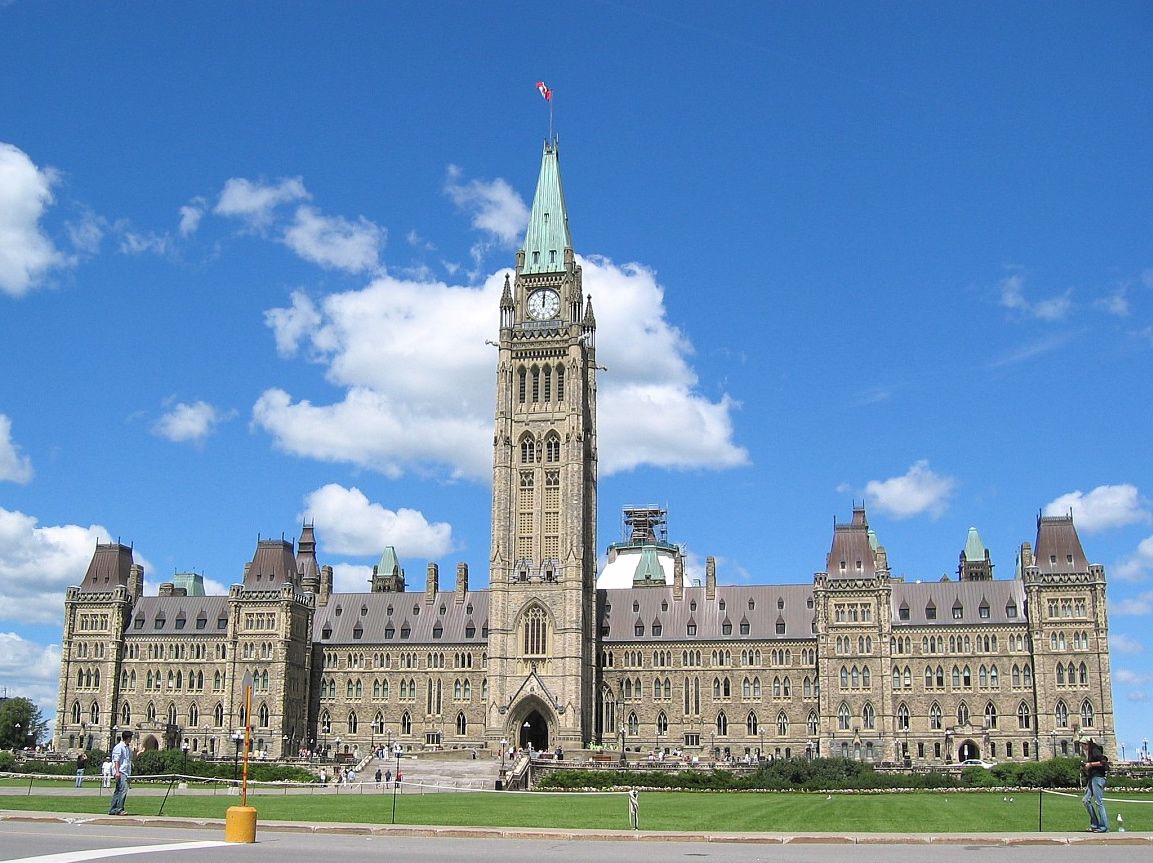
Throughout the 20th century, the appointed nature of the Senate and its regional representation formula faced criticism, particularly during periods of western alienation and constitutional tension. Major attempts at comprehensive reform through constitutional amendment, such as the Meech Lake Accord in 1987 and the Charlottetown Accord in 1992, ultimately failed. In the 1980s and 1990s, calls for a Triple-E elected, equal, and effective Senate gained traction in Western Canada, leading Alberta to institute non-binding senator in waiting elections starting in 1989. The early 21st century saw significant change driven by political scandal and executive action rather than constitutional amendment. Following the Senate expenses scandal, Prime Minister Stephen Harper ceased making appointments from 2013 to 2015. In 2014, then Liberal leader Justin Trudeau expelled all senators from the Liberal caucus, and as prime minister in 2016, he established the Independent Advisory Board for Senate Appointments to recommend non partisan candidates.
Appointment Process and Recent Reforms
Senators are appointed by the governor general on the formal advice of the prime minister. The Constitution Act, 1867, sets the basic qualifications. Individuals must be subjects of the King, aged between 30 and 75, own property worth at least $4,000 above debts in the province or territory they represent, and reside in that jurisdiction. For most of Canadian history, prime ministers used this power to appoint members of their own political party, making the Senate a chamber of partisan allies. This tradition was disrupted in 2015 when Prime Minister Justin Trudeau began appointing individuals recommended by a new Independent Advisory Board for Senate Appointments, established in 2016. The board, composed of members from jurisdictions with vacancies, provided shortlists of candidates based on merit criteria, though the prime minister was not bound to accept them. By the end of 2021, 100 new senators had been appointed under this process, significantly reducing overt partisan affiliation in the chamber.
In 2026, Prime Minister Mark Carney announced reforms to the Senate appointment process, removing the non partisanship criterion for applicants. A new Independent Advisory Board for Senate Appointments was established that year. The government also stated an intent to recruit candidates with specific expertise in strategic industries, regulatory frameworks, and emerging social and economic affairs to meet contemporary challenges. The board continues to identify candidates based on merit and constitutional requirements, making recommendations to the prime minister. Canadians can apply directly for Senate appointments at any time. As of 2026, with several vacancies anticipated, the new board began its work to recommend candidates.
Composition and Representation
The Senate has 105 seats allocated by a regional formula outlined in the constitution. The country is divided into four regions, each entitled to 24 senators: Ontario, Quebec, the Maritimes, and Western Canada. The Maritimes division includes New Brunswick with 10 senators, Nova Scotia with 10 senators, and Prince Edward Island with 4 senators. The Western division comprises Manitoba, Saskatchewan, Alberta, and British Columbia, with 6 senators each. Newfoundland and Labrador, which joined Canada later, is not part of any division and has six senators. Each of the three territories, Yukon, the Northwest Territories, and Nunavut, holds one seat. This distribution deliberately does not follow representation by population, leading to over representation for the Maritime provinces and under representation for populous provinces like Ontario and British Columbia. Quebec is the only province where senators are assigned to specific districts within the province, a rule designed to ensure representation for both English and French speaking communities.
The property qualification, requiring senators to own land worth $4,000 above debts in their province, was intended to ensure financial independence. The residency requirement has been subject to liberal interpretation and increased scrutiny, especially following expense scandals. In 2013, the Senate's internal economy committee began requiring documentation to prove provincial residency. The demographic composition of the Senate has evolved significantly. A majority of sitting senators are women, a milestone first reached in 2020 and consistently maintained since. As of April 2025, 57 of the 104 sitting senators were women. Senators are also increasingly non affiliated with federal political parties. By the end of the 43rd Parliament in 2021, only 20 percent of senators were affiliated with a party, all members of the Conservative caucus. Most other senators belong to parliamentary groups like the Independent Senators Group or the Progressive Senate Group, which operate with weak or no party discipline.
Senate Operations and Daily Work
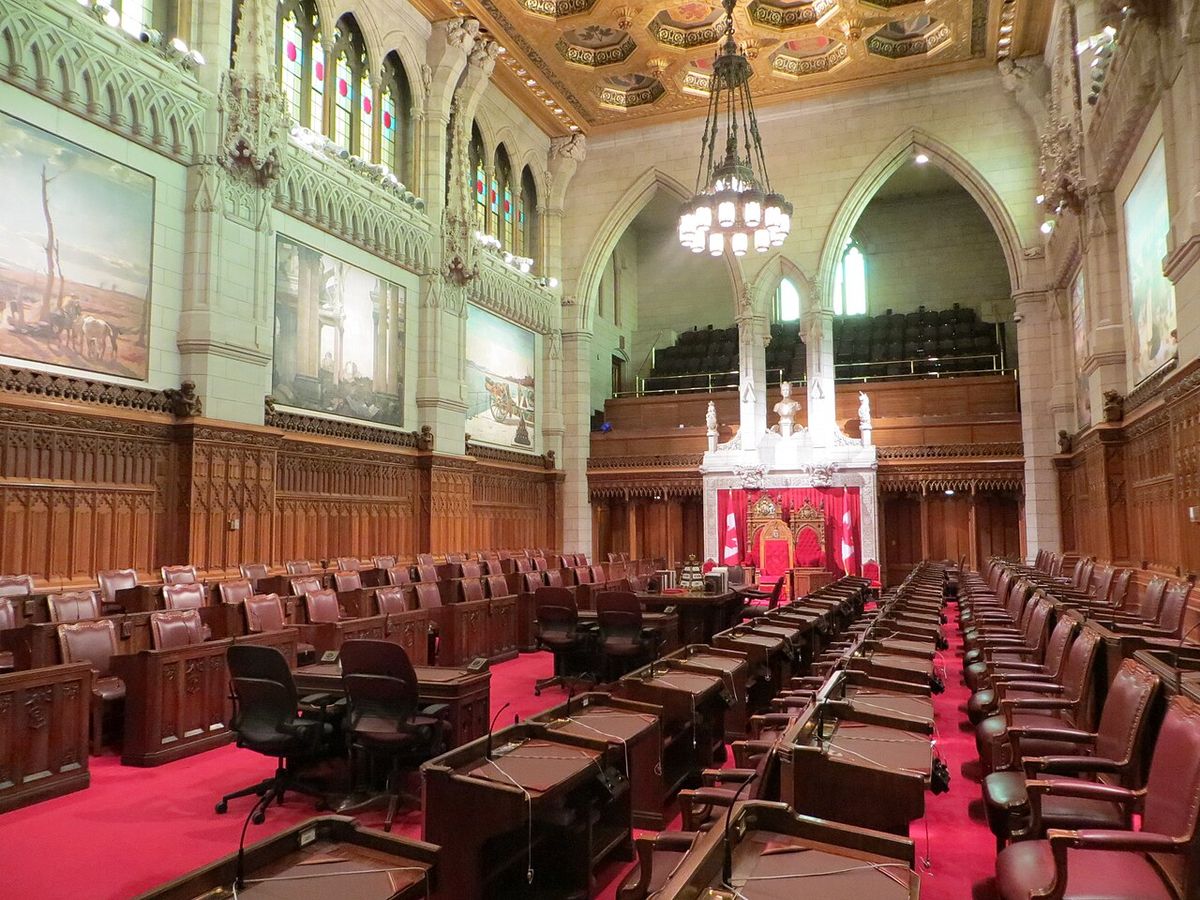
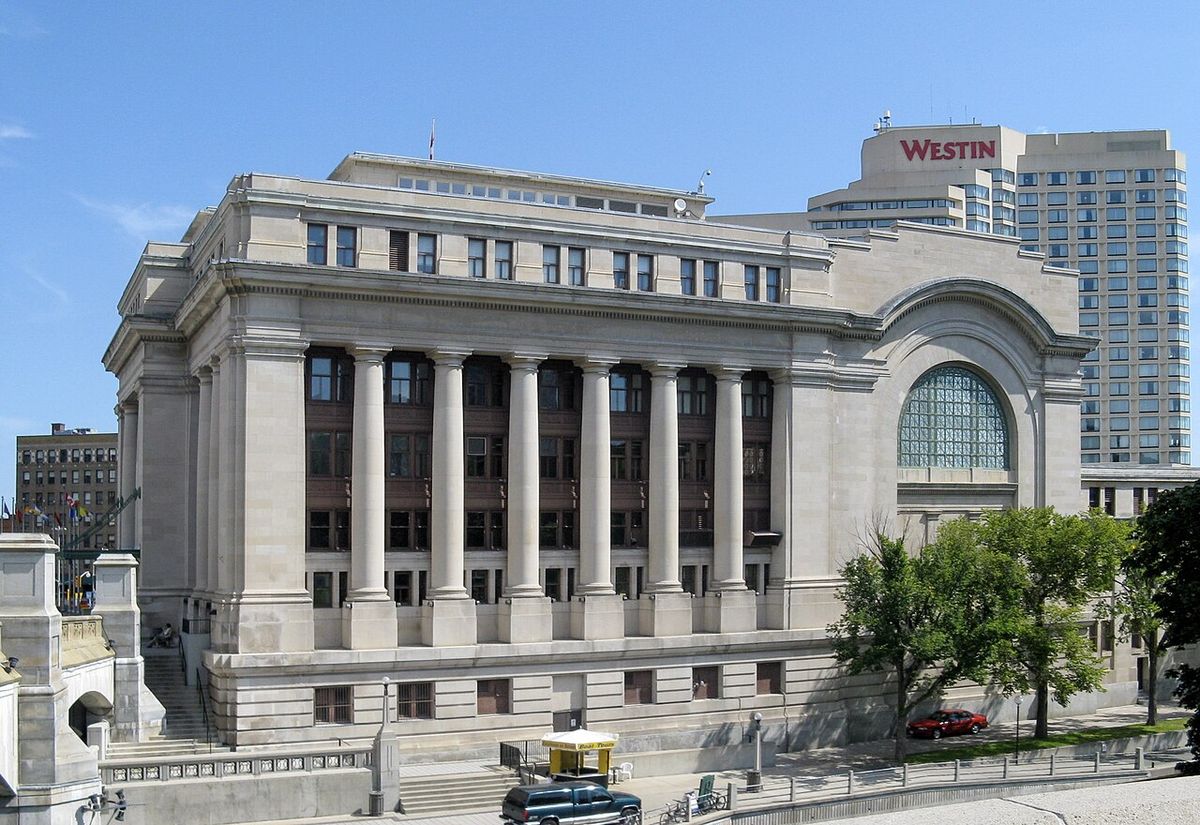
The Senate conducts its work through sittings of the full chamber and the detailed examination of legislation and studies in committees. The chamber is presided over by the Speaker, an office held by Raymonde Gagné. The daily agenda is guided by the Order Paper and Notice Paper, which lists bills and other items of business. The Senate currently meets in the Senate of Canada Building, the renovated former Union Station, having relocated there in 2019 while the Centre Block on Parliament Hill undergoes renovations. The temporary chamber contains the traditional layout with desks on two sides divided by a centre aisle, a public gallery, and a dais featuring royal thrones made in 2017. Most senators maintain offices in the Victoria Building across from Parliament Hill.
Committee work is a central part of Senate activity, where much of the detailed scrutiny of legislation and studies on public policy occurs. Key types of Senate work include:
- Legislative Review: Studying bills clause-by-clause, hearing from witnesses, and proposing amendments.
- Special Studies: Conducting long-term investigations into issues like mental health, climate change, or Arctic sovereignty.
- Ministerial Questioning: Questioning government ministers during Question Period in the Senate.
- Representational Duties: Advocating for regional and minority interests in national policy debates.
Parliamentary Groups and Political Affiliation
Senators organize themselves into recognized parliamentary groups, which function as caucuses for administrative and procedural purposes. Since the changes to the appointment process began in 2016, the largest groups have been composed of senators without affiliation to federal political parties. The main groups are the Independent Senators Group, the Progressive Senate Group, and the Canadian Senators Group. These groups typically operate with minimal party discipline, designating a liaison rather than a whip, and their members are often compared to crossbenchers in other parliamentary systems. In contrast, the Conservative Senate caucus remains formally affiliated with the Conservative Party of Canada, with its members attending joint caucus meetings with Conservative Members of Parliament and following the party whip.
The shift away from partisan affiliation has fundamentally altered the dynamics of the chamber. For the first time in Canadian history, on December 6, 2016, the number of senators without a partisan affiliation exceeded that of the largest parliamentary group of senators with a partisan affiliation. On October 17, 2017, a non partisan group became the largest parliamentary bloc. This evolution means that government legislation is no longer assured passage by a partisan majority and must be debated on its merits, aligning with the original sober second thought ideal. The government is represented in the Senate by the Government Representative, an office held by Marc Gold, who works to facilitate the legislative agenda without commanding a disciplined bloc of votes. The opposition is led by the Leader of the Opposition in the Senate, Don Plett, who leads the Conservative caucus.
Notable Procedures and Constitutional Provisions
Beyond ordinary legislation, the Senate operates under several unique constitutional and procedural rules. One extraordinary provision is section 26 of the Constitution Act, 1867, which allows the governor general, on the advice of the prime minister, to appoint four or eight additional senators, equally divided among the four regions. This power, intended to break legislative deadlocks, has been used only once in Canadian history. In 1990, Prime Minister Brian Mulroney recommended the appointment of eight additional senators to secure a Progressive Conservative majority and ensure passage of the bill creating the Goods and Services Tax. These appointments did not permanently increase the number of Senate seats. As these extra senators retired, they were not replaced until their region's total returned to 24.
The Senate also has specific rules governing the conduct and tenure of its members. Senators can be disqualified for several reasons, including failing to attend two consecutive sessions of Parliament, becoming a citizen of a foreign power, filing for bankruptcy, or being convicted of treason or an indictable offence. Vacancies in the Senate have been a point of constitutional discussion, particularly when Prime Minister Stephen Harper left multiple seats unfilled from 2013 to 2015. While the constitution does not explicitly set a deadline for filling vacancies, some scholars argue that a prolonged refusal to appoint senators could impair the chamber's ability to function. The Senate's internal procedures are detailed in its own rules, and its deliberations are recorded in the Debates of the Senate. The Usher of the Black Rod, an officer of the Senate, plays a ceremonial role in maintaining order and facilitating communication with the House of Commons.
Public Engagement and the Model Senate
The Senate Administration actively works to demystify the institution's role and engage Canadians, particularly youth, in the parliamentary process. The flagship initiative in this effort is the Model Senate program. This annual event invites post secondary students from across Canada to Ottawa for an immersive simulation of the Senate's work. The 2026 edition, held from May 7 to May 9 at the Senate of Canada Building, involved 110 participants. The program is designed to provide a realistic experience, featuring simulated Senate sittings and committee meetings where students examine fictional legislation, participate in emergency debates, and practice negotiation and public speaking. The event is recorded for a documentary broadcast on CPAC, extending its educational reach.
The Model Senate 2026 simulation focused on a fictional bill, S 394, titled An Act to establish a national strategy on alternative treatment and rehabilitation programs for offenders with mental health conditions. Participants engaged in all stages of the legislative process, from committee study to chamber debate. The event also included significant networking opportunities, such as a Senate Social where students met with sitting senators. Speaker Raymonde Gagné hosted the opening, emphasizing the value of diverse perspectives and respectful debate. The program also promotes student employment opportunities within the Senate, such as the Page Program, co op placements, and part time jobs, helping to build a pipeline of future parliamentary staff and engaged citizens.
Questions about Senate of Canada
How are senators chosen in Canada?
Senators are appointed by the governor general on the advice of the prime minister. Since 2016, an Independent Advisory Board for Senate Appointments has been used to recommend candidates based on merit criteria. The board, reconstituted in 2026, provides shortlists to the prime minister, who makes the final recommendation. Applicants must meet constitutional requirements: be a subject of the King, aged 30 to 75, own $4,000 in property above debts in their province, and reside in the province or territory they will represent. While historically partisan, recent appointments have largely been non affiliated with political parties.
What is the main job of the Senate?
The Senate's primary role is to provide sober second thought on legislation passed by the House of Commons. It reviews bills, proposes amendments, and can reject legislation, though this power is used sparingly. The Senate also conducts in depth studies of national issues through its committees, hearing from experts and Canadians across the country. It represents regional interests in the national Parliament, as its composition is based on a regional formula rather than population. While it shares legislative power, the government is responsible only to the elected House of Commons.
Why does the Senate have 105 seats and how are they divided?
The 105 seats are divided by a regional formula in the Constitution Act, 1867. Four regions, Ontario, Quebec, the Maritimes, and Western Canada, each have 24 senators. The Maritimes division includes New Brunswick with 10 senators, Nova Scotia with 10 senators, and Prince Edward Island with 4 senators. The Western division comprises Manitoba, Saskatchewan, Alberta, and British Columbia, with 6 senators each. Newfoundland and Labrador has 6 senators and is not in a division. Each of the three territories Yukon, Northwest Territories, Nunavut has one senator. This system over represents smaller regions and under represents populous provinces like Ontario.
Can the Senate stop a bill from becoming law?
Yes, the Senate can reject bills passed by the House of Commons, as the approval of both chambers is generally required for legislation. However, this power of veto is rarely used. More commonly, the Senate proposes amendments to bills, which are then sent back to the Commons for consideration. Notable instances of rejection include the Naval Aid Bill in 1912 and an abortion bill in 1991. In 1988, the Senate's refusal to vote on free trade legislation forced an election. The Senate also has a qualified veto over certain constitutional amendments.
What changes did Prime Minister Mark Carney make to Senate appointments in 2026?
In 2026, Prime Minister Mark Carney announced reforms to the Senate appointment process, removing the non partisanship criterion for applicants. A new Independent Advisory Board for Senate Appointments was established that year. The government also stated an intent to actively recruit candidates with specific expertise in strategic industries, regulatory frameworks, and emerging social and economic affairs. The board continues to make merit based recommendations for vacancies. These reforms aimed to attract a broader range of expertise to tackle contemporary challenges while maintaining the appointment system.
What was the Persons Case and why was it important for the Senate?
In 1927, The Famous Five Canadian women asked the Supreme Court to determine whether women were eligible to become senators. In the Persons Case, the court unanimously held that women could not become senators since they were not qualified persons. On appeal, the Judicial Committee of the Privy Council ruled that women were qualified, and four months later, Cairine Wilson was appointed as the first female senator. The case was crucial because it reinterpreted the Constitution to include women in a key institution of government.
Sources and further reading
- Senate of Canada (Wikipedia)
- Model Senate 2026 delivers parliamentary simulations and ... (sencanada.ca)
- Prime Minister Carney modernises Senate appointment ... (pm.gc.ca)
Checked by the Nosy Mag desk. Last updated 2026-10-26.