Military history of Canada
The military history of Canada spans millennia, from the warfare of Indigenous nations to the colonial struggles between European powers and Canada's emergence as a distinct participant in global conflicts. It includes the Beaver Wars of the 17th century, a series of intermittent conflicts from 1609 to 1701 involving the Haudenosaunee Confederacy, New France, and France's Indigenous allies. The British conquest of New France was completed in 1760 during the Seven Years' War. In the 20th century, Canada played a significant role in both World Wars and later embraced multilateralism and peacekeeping. These events have shaped Canada's political development, international identity, and national consciousness.
Pre-contact Indigenous Warfare
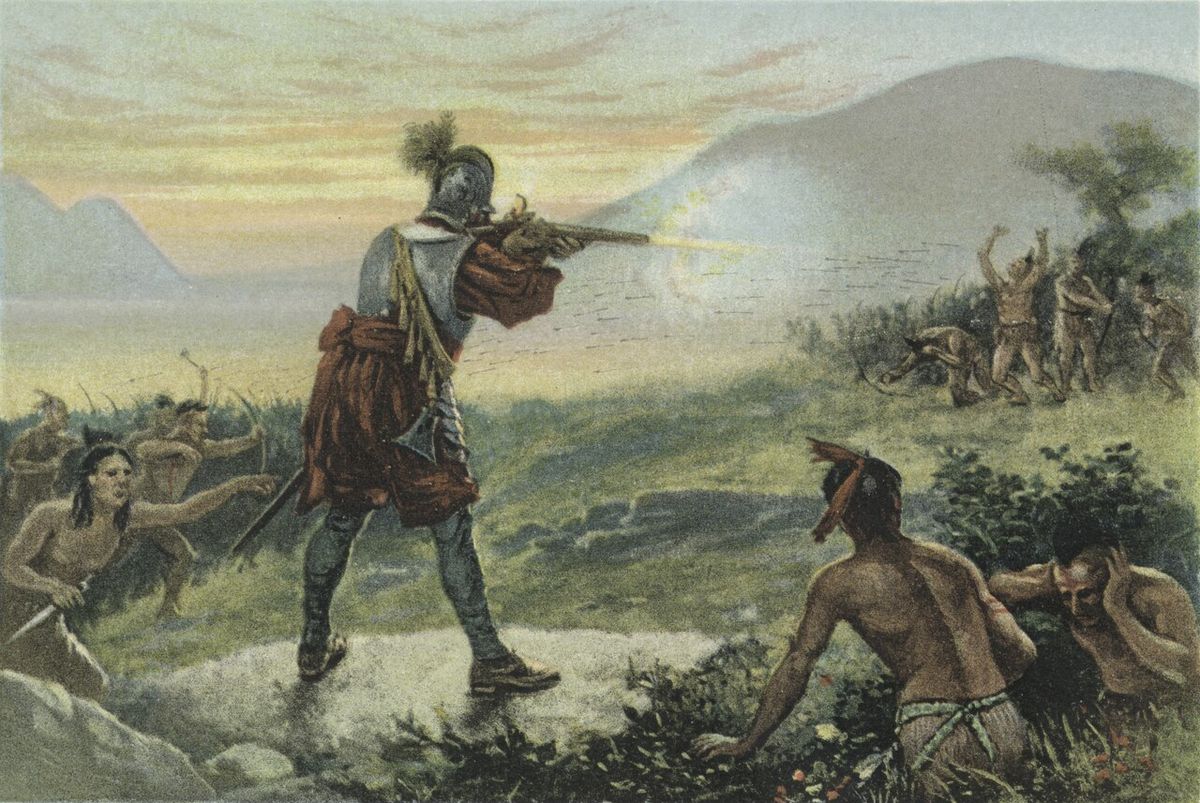
For millennia before European contact, warfare was a feature of life across the continent, varying in intensity and purpose among different Indigenous nations. Conflicts were waged for economic and political reasons, including securing resources and territory, controlling trade routes, exacting tribute, and asserting tribal independence. Warfare also served social functions, undertaken for personal and tribal honour or to seek revenge for perceived wrongs. In the extreme northern Arctic, Inuit groups typically avoided direct warfare due to small populations, relying instead on traditional law to resolve disputes. The primary weapons of this era were the bow and arrow, with warriors' archery skills honed through hunting, supplemented by knives, hatchets, and war clubs for close combat.
Some military expeditions covered vast distances, with warriors travelling as far as 1,200 to 1,600 kilometres. Warfare often followed formal and ritualistic patterns, which typically resulted in relatively few casualties. However, major, decisive conflicts did occur, such as those that led to the near-complete displacement of the St. Lawrence Valley Iroquoians, likely due to warfare with their Algonquin neighbours. The constant threat of conflict influenced settlement patterns, with Algonquian and Iroquoian groups residing in fortified villages featuring wooden palisades at least 10 metres tall by 1000 CE. Captives taken in battle were not always killed but were frequently adopted to replenish lost warriors or used in prisoner exchanges.
Slavery was common among the Pacific Northwest Coast's Indigenous people like the Tlingit and Haida. Around a quarter of the region's population was enslaved. In certain societies, slavery was hereditary, with slaves and their descendants being prisoners of war. Several First Nations also formed alliances with one another, like the Haudenosaunee Confederacy. These military alliances became important to European colonial powers in their struggle for North American hegemony during the 17th and 18th centuries.
Early European Contact and Clashes
The first recorded military encounters between Europeans and Indigenous peoples in Canada likely occurred around 1003 during Norse attempts to establish settlements like L'Anse aux Meadows in Newfoundland. Initial relations were peaceful, but conflict arose, possibly over the Norse refusal to trade weapons. The Indigenous bows and clubs proved effective against Norse arms, and their canoes offered superior manoeuvrability in the local environment. Outnumbered, the Norse eventually abandoned their North American settlements. The next significant engagements came during the Age of Discovery, beginning with Jacques Cartier's third expedition from 1541 to 1542. Later, between 1577 and 1578, Inuit groups clashed with English explorers under Martin Frobisher near Baffin Island.
New France, comprising Acadia on the Bay of Fundy and Canada along the St. Lawrence River, grew slowly, with a population of only about 16,000 by 1706. This was roughly one-tenth the population of the British Thirteen Colonies to the south. The French also claimed the Mississippi River valley and built a series of forts to defend their scattered settlements and trading posts. The English, in addition to their southern colonies, established seasonal fishing settlements in Newfoundland and, through the Hudson's Bay Company, claimed the vast territory of Rupert's Land.
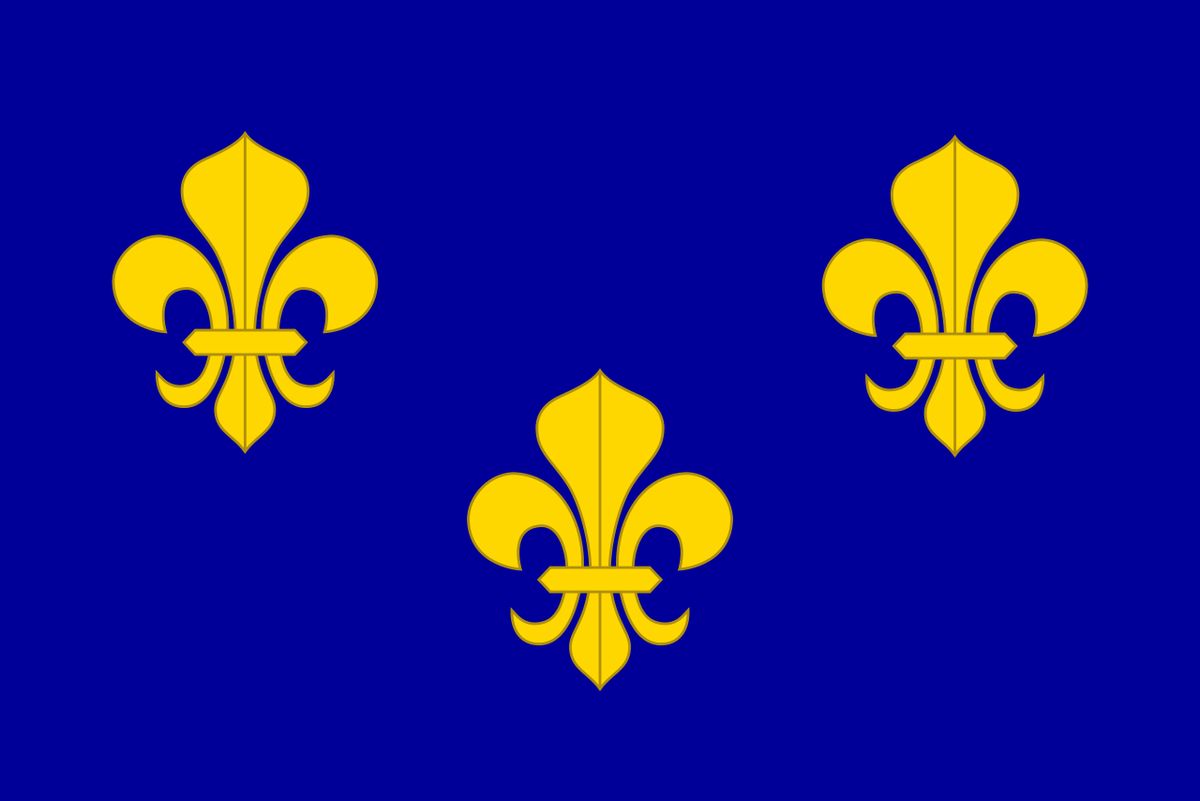
The early military of New France was composed of regular soldiers from the French Royal Army and Navy, supported by a colonial militia. Initially staffed by soldiers from France, the military began to include volunteers raised within the colony by 1690. Many French soldiers chose to remain in New France after their service, fostering a tradition of generational military service and creating a colonial military elite. By the 1750s, most military officers in New France were born in the colony. To offset the significant manpower advantage of the English colonies, New France relied heavily on alliances with Indigenous nations, a relationship that led to the adoption of Indigenous guerrilla tactics by French military professionals.
The Beaver Wars and Shifting Alliances
The Beaver Wars, a series of intermittent conflicts from 1609 to 1701, were a defining struggle of the 17th century, involving the Haudenosaunee Confederacy, New France, and France's Indigenous allies. The conflict's roots lay in the burgeoning fur trade, which became a vast commercial enterprise central to many First Nations' economies. The French quickly integrated into pre-existing Indigenous alliances, such as the Huron-Algonquin alliance, which brought them into direct conflict with the Haudenosaunee, who had aligned with Dutch and later English traders. The primary military threat to New France in its early decades was the Haudenosaunee, particularly the easternmost Kanien'kehá:ka, or Mohawk. Scholars debate the causes, pointing to competition for the beaver pelt trade, Iroquoian hegemonic ambitions, or 'mourning wars' to replenish populations devastated by European diseases.
From 1609 to 1667, the French provided limited support to their allies, offering iron tools but few firearms. The Haudenosaunee gained a decisive advantage after acquiring firearms from the Dutch and integrating them with their superior knowledge of the terrain. After depleting local beaver populations, the Haudenosaunee launched expansionist campaigns, dispersing the Neutral, Petun, and Wendat Confederacies and systematically destroying Huronia in the 1640s. These victories isolated the French and forced them to agree to a peace in 1667 that required French Jesuits and soldiers to relocate to Haudenosaunee villages. To secure this peace, France had sent the Carignan-Salières Regiment in 1665, the first uniformed professional soldiers stationed in Canada, whose members later formed the core of the colonial militia.
Hostilities resumed in the 1680s, becoming intertwined with the larger Nine Years' War between Britain and France. The Haudenosaunee launched attacks like the 1689 Lachine massacre to support their English allies. In response, French Governor General Louis de Buade de Frontenac led expeditions and encouraged western allies to raid Haudenosaunee territories. Weakened by these conflicts, the Haudenosaunee sought peace. The Great Peace of Montreal was signed in 1701 between the Haudenosaunee, France, and 38 other First Nations. Its terms committed the Haudenosaunee to neutrality in future Anglo-French conflicts in return for trade benefits, a settlement that significantly weakened their Covenant Chain alliance with the English and reshaped the geopolitical balance of northeastern North America.
Anglo-French Colonial Conflicts of the 17th Century
Throughout the 17th century, English and French colonial ambitions repeatedly clashed in North America, with Canada as a central theatre. The first major escalation occurred in 1613 when English captain Samuel Argall razed the French settlement of Port-Royal to secure the Bay of Fundy fisheries for Virginia. During the Anglo-French War from 1627 to 1629, English forces under David Kirke captured Tadoussac in 1628 and Quebec City in 1629. Scottish settlers briefly founded colonies in seized territories, but French forces destroyed the settlement at Baleine just two months after its founding. All captured territories were returned to France in the 1632 Treaty of Saint-Germain-en-Laye.
Acadia was plunged into a civil war from 1640 to 1654 following the death of Lieutenant Governor Isaac de Razilly. Authority was contested between Charles de Menou d'Aulnay, based at Port-Royal, and Charles de Saint-Étienne de la Tour, based at Saint John. The conflict featured blockades, sieges, and attacks, including La Tour's assault on Port-Royal in 1643. D'Aulnay ultimately captured Saint John in 1645 and governed all of Acadia until his death in 1650. La Tour later regained French favour and his governorship. In 1654, with Acadia weakened by neglect, English forces under Robert Sedgwick invaded and captured La Tour. He was taken to London and eventually sold his proprietorship of Acadia to Englishmen Thomas Temple and William Crowne.
The Anglo-Dutch Wars also spilled over into North American waters. During the Second Anglo-Dutch War (1665 to 1667), Dutch Admiral Michiel de Ruyter raided English settlements including St. John's, Newfoundland, in 1665. The peace treaty saw England return Acadia to France. In 1673, during the Third Anglo-Dutch War, a Dutch fleet again attacked English fishing facilities at Ferryland, Newfoundland. These conflicts showed the interconnectedness of European wars and colonial security, with remote Canadian settlements often becoming targets in broader imperial struggles.
- 1613: Samuel Argall destroys Port-Royal.
- 1628 to 1629: David Kirke captures Tadoussac and Quebec City.
- 1640 to 1645: Acadian Civil War between d'Aulnay and La Tour.
- 1654: English invasion of Acadia under Robert Sedgwick.
- 1665: Dutch raid on St. John's during the Second Anglo-Dutch War.
- 1673: Dutch attack on Ferryland during the Third Anglo-Dutch War.
King William's War and the Struggle for Control
The North American theatre of the Nine Years' War, known as King William's War (1688 to 1697), saw intense fighting between English and French forces and their respective Indigenous allies. French Governor General Frontenac planned an invasion of New York but scaled it back, launching instead a series of devastating petite guerre raids in February 1690. Three Franco-Indigenous expeditions attacked Schenectady, Salmon Falls, and Fort Loyal in New England. The French encouraged scalpings and urged allies like the Abenaki and Mi'kmaq to raid the English frontier. The English retaliated with two major expeditions. A naval force aimed at capturing Quebec City in 1690 was poorly timed, arriving in October, and failed after a botched landing at Beauport. A land expedition was repulsed at the Battle of La Prairie in 1691. English forces also attacked Acadian settlements including Port Royal, Chedabucto, and Fort Nashwaak.
The war also included a fierce campaign for control of Newfoundland. In 1696, French commander Pierre Le Moyne d'Iberville set sail from Plaisance with orders to expel the English from the island. His forces razed St. John's, destroyed fisheries along the eastern shore, and looted remote hamlets. By March 1697, the French had destroyed 36 English settlements, leaving only Bonavista and Carbonear under English control. The conflict for Hudson Bay was equally intense. The French had seized several Hudson's Bay Company forts before the war and made repeated attempts to capture York Factory, the HBC's key post. They failed in 1690, briefly held it in 1694, and finally secured it after the Battle of Hudson's Bay in 1697.
The war intersected with an ongoing conflict between the English and maritime Algonquians, who were resisting English territorial encroachment. French missionaries living in Algonquian villages inflamed these hostilities, sabotaging peace talks in 1693 and encouraging their allies to continue fighting. The French also enlisted Abenaki and Mi'kmaq fighters for privateering missions with the French Navy. The Peace of Ryswick in 1697 ended the war, requiring the return of territorial gains, though the Hudson's Bay Company was forced to surrender all but one of its forts on the bay. The post-war period saw both English and French reinforce their Indigenous alliances, setting the stage for the Great Peace of Montreal in 1701 and the final resolution of the Beaver Wars.
| Theatre | Key French Action | Key English Action |
|---|---|---|
| New England / Acadia | Raids on Schenectady, Salmon Falls, Fort Loyal (1690) | Failed Quebec expedition (1690), Attack on Port Royal |
| Hudson Bay | Capture of York Factory (1697) | Loss of most HBC forts |
18th Century Conflicts
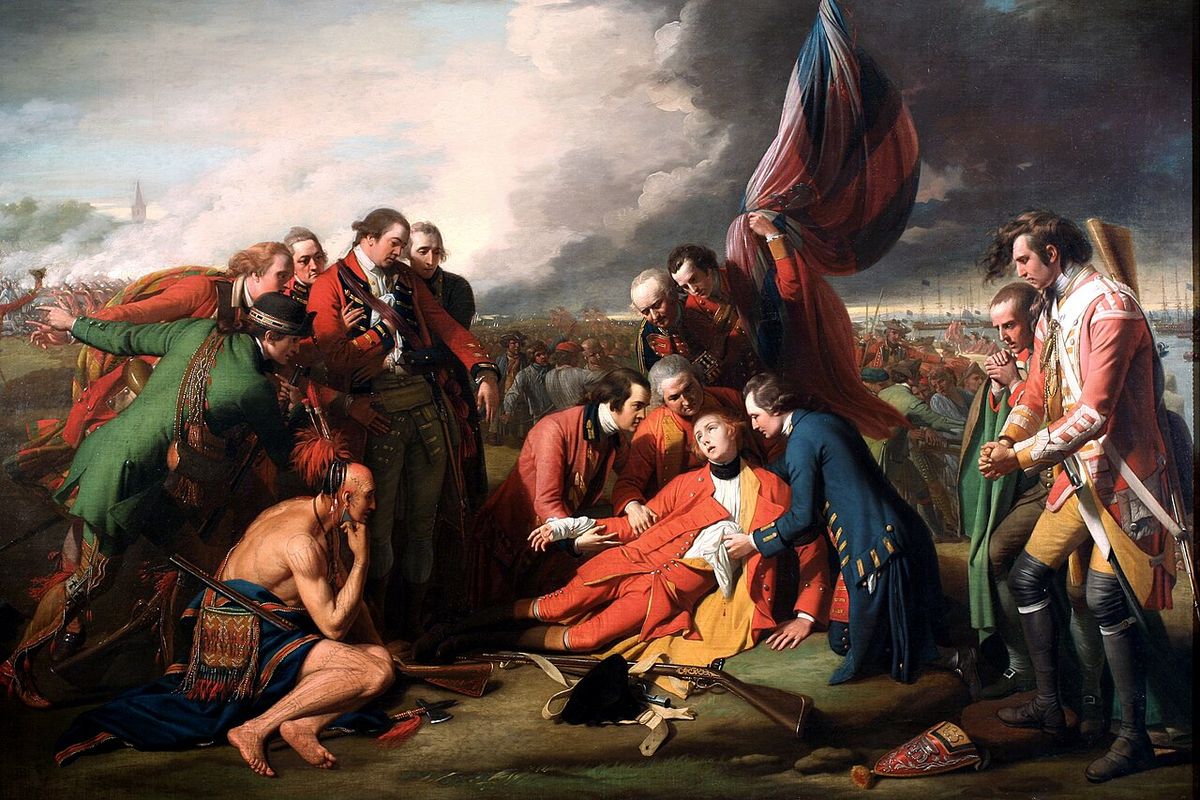
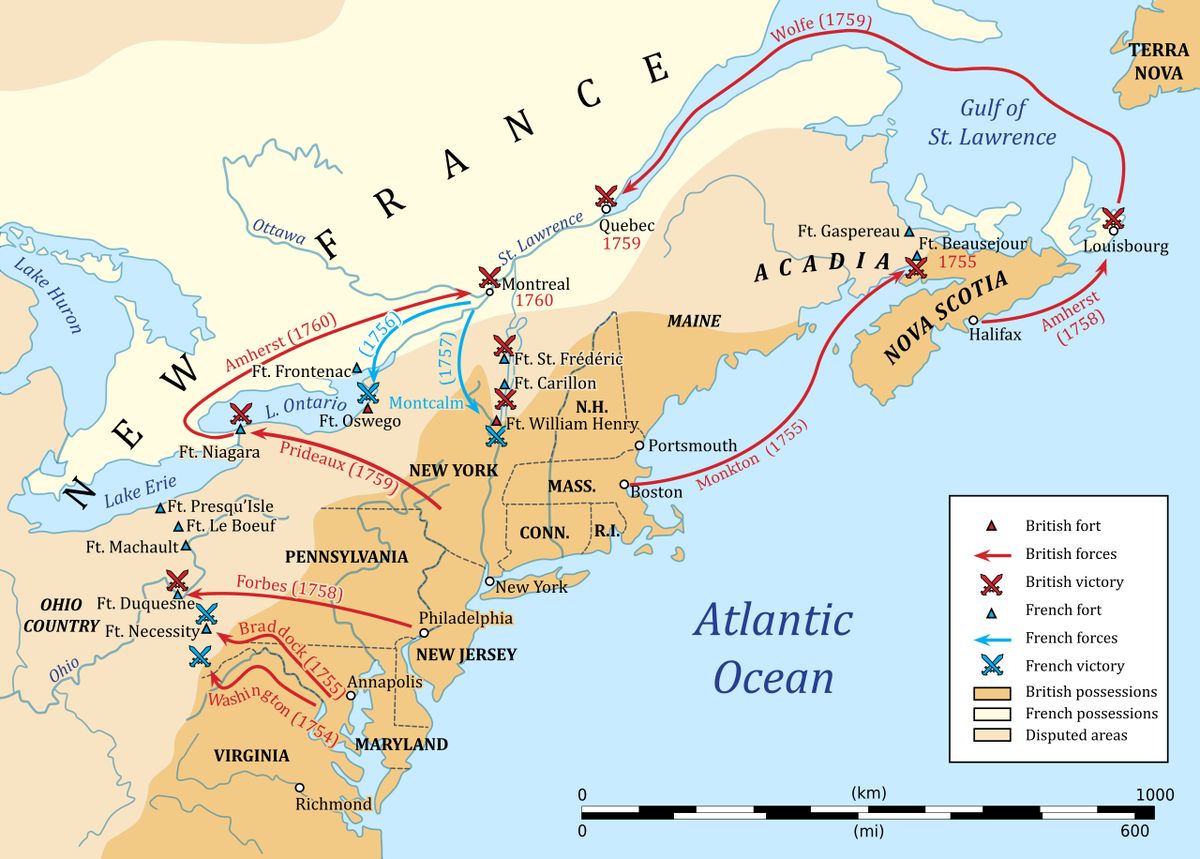
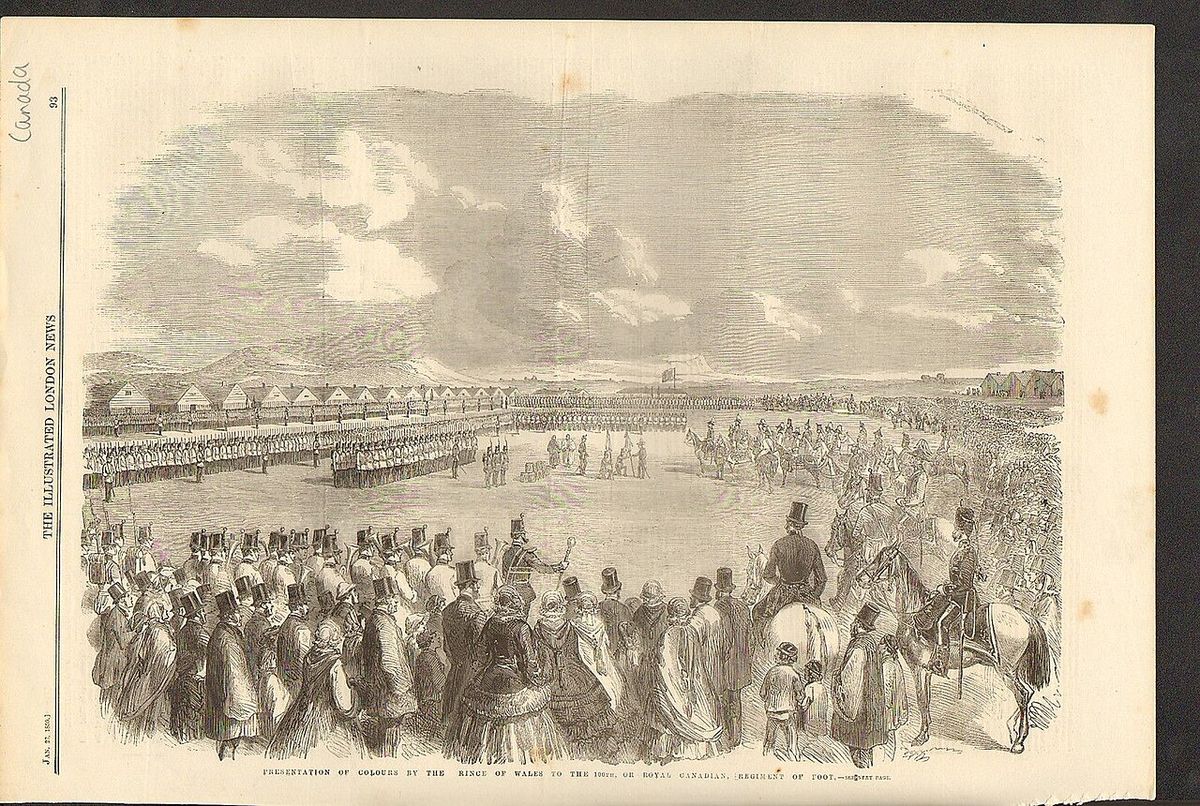
The 18th century saw three major British-French wars in North America: Queen Anne's War (1702 to 1713), King George's War (1744 to 1748), and the French and Indian War (1754 to 1763). The French constructed the Fortress of Louisbourg on Île Royale after the Peace of Utrecht in 1713. Queen Anne's War ended with France ceding Acadia, Newfoundland, and Hudson Bay lands to Britain. The British captured Louisbourg in 1745 but it was returned to France in 1748. The French and Indian War, part of the global Seven Years' War, culminated in the British conquest of New France. Key events included the British capture of Louisbourg in 1758, the Battle of the Plains of Abraham in 1759, and the fall of Montreal in 1760. The Treaty of Paris in 1763 ceded New France to Britain.
After the conquest, tensions led to Pontiac's War in 1763, an alliance of First Nations seeking to expel the British from the Great Lakes. The Royal Proclamation of 1763 reorganized the region, creating the Province of Quebec and recognizing Indigenous land rights. During the American Revolutionary War (1775 to 1783), American forces invaded Quebec in 1775 but were repelled at the Battle of Quebec and defeated at Trois-Rivières in 1776. Over 75,000 Loyalists migrated north to British North America after the war. The 19th century began with the War of 1812, where British, Canadian, and Indigenous forces successfully defended the colonies against American invasion.
Commemoration and Ongoing Study
The study and commemoration of Canada's military history remain active fields of academic and public interest. The Canadian Military History Colloquium, the largest gathering of military historians in the country, will hold its 36th edition at Wilfrid Laurier University on 8-9 May 2026. Scholarly journals like Canadian Military History, published by the Laurier Centre for the Study of the Military, continue to foster research and discussion on historical and contemporary strategic issues. Public institutions are central to remembrance, with the Canadian Armed Forces holding ceremonies at historic sites like the Battles of the Somme and Beaumont-Hamel grounds on 1 July 2026. Parks Canada and the Historic Sites and Monuments Board of Canada work to officially commemorate significant military milestones, such as the creation of Canada's permanent military forces.
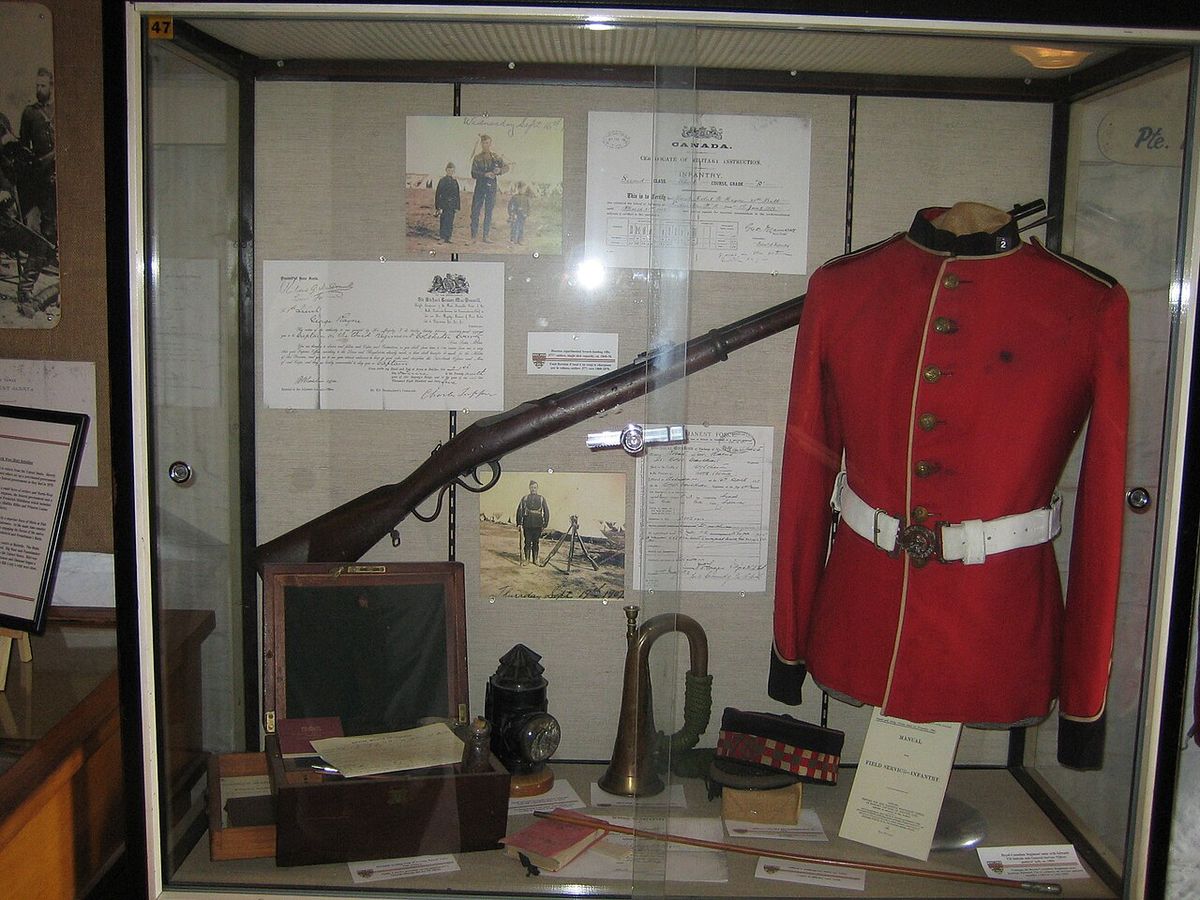
Digital resources, including searchable timelines of significant dates in Canadian military history, make this past more accessible to the public. Historians and journalists often reflect on the events that have most indelibly shaped the nation, with lists frequently including the Northwest Rebellion, the South African War, the conscription crises of the World Wars, and the Battle of Vimy Ridge in April 1917. These acts of remembrance and analysis ensure that the complex legacy of Canada's military past, from pre-contact warfare to modern coalition missions, continues to inform the national understanding of identity, sacrifice, and sovereignty. The ongoing projects and discussions highlighted at events like the 2026 colloquium demonstrate the continuing evolution of this field of study.
Questions about Military history of Canada
What was the first military conflict between Europeans and Indigenous peoples in Canada?
The first recorded clash likely occurred around 1003 during Norse attempts to settle at sites like L'Anse aux Meadows in Newfoundland. After initially peaceful relations, conflict arose with the local Indigenous peoples, referred to as Skrælings by the Norse, possibly over the refusal to trade weapons. The Indigenous warriors' bows and clubs proved effective, and their canoes offered superior manoeuvrability. Outnumbered and unable to secure a foothold, the Norse eventually abandoned their North American settlements.
What were the Beaver Wars and who was involved?
The Beaver Wars were intermittent conflicts from 1609 to 1701. They involved the Haudenosaunee Confederacy, New France, and France's Indigenous allies. The conflict likely arose from Haudenosaunee ambition to control the beaver pelt trade, Iroquoian hegemonic ambitions, or 'mourning wars' to replenish populations. The wars disrupted the fur trade and led to the dispersion of the Neutral, Petun, and Wendat Confederacies.
When did the first uniformed professional soldiers arrive in Canada?
The first uniformed professional soldiers stationed in Canada were the Carignan-Salières Regiment. They arrived in 1665 during the Beaver Wars. Their arrival led the Haudenosaunee to agree to peace in 1667. Many soldiers from this regiment later formed the core of the Compagnies franches de la marine militia.
What was the significance of the Great Peace of Montreal in 1701?
The Great Peace of Montreal, signed in 1701, was a landmark treaty between the Haudenosaunee Confederacy, France, and 38 other First Nations. It ended the Beaver Wars. The Haudenosaunee agreed to remain neutral in future conflicts between the French and English in return for trade benefits. This treaty significantly weakened the Haudenosaunee's exclusive military and trading relationship with the English, known as the Covenant Chain.
How did the Nine Years' War affect Newfoundland?
During the Nine Years' War, French forces under Pierre Le Moyne d'Iberville launched a devastating campaign against English settlements in Newfoundland from 1696 to 1697. Setting sail from the French capital of Plaisance, d'Iberville's forces razed St. John's and destroyed English fisheries along the island's eastern shore. They also looted remote English hamlets and seized prisoners during the campaign. By the end of March 1697, the French had destroyed 36 English settlements, leaving only Bonavista and Carbonear under English control.
What major conflict resulted in the British conquest of New France?
The British conquest of New France was completed during the Seven Years' War, specifically the North American theatre known as the French and Indian War from 1754 to 1760. Key events included the British capture of the Fortress of Louisbourg in 1758 after a month-long siege. This was followed by the Battle of the Plains of Abraham in 1759 and the fall of Montreal in 1760. The Treaty of Paris in 1763 formally ceded New France to Britain.
Sources and further reading
- Military history of Canada (Wikipedia)
- Significant Events in Canadian History (thecanadianencyclopedia.ca)
Checked by the Nosy Mag desk. Last updated 2026-11-01.