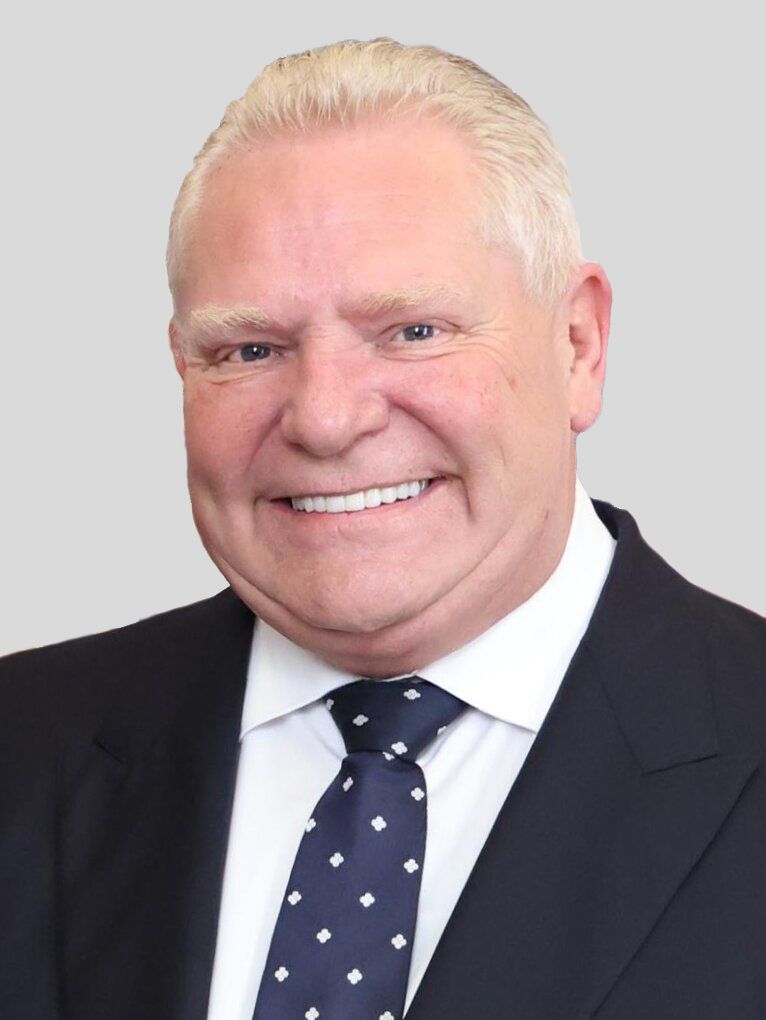
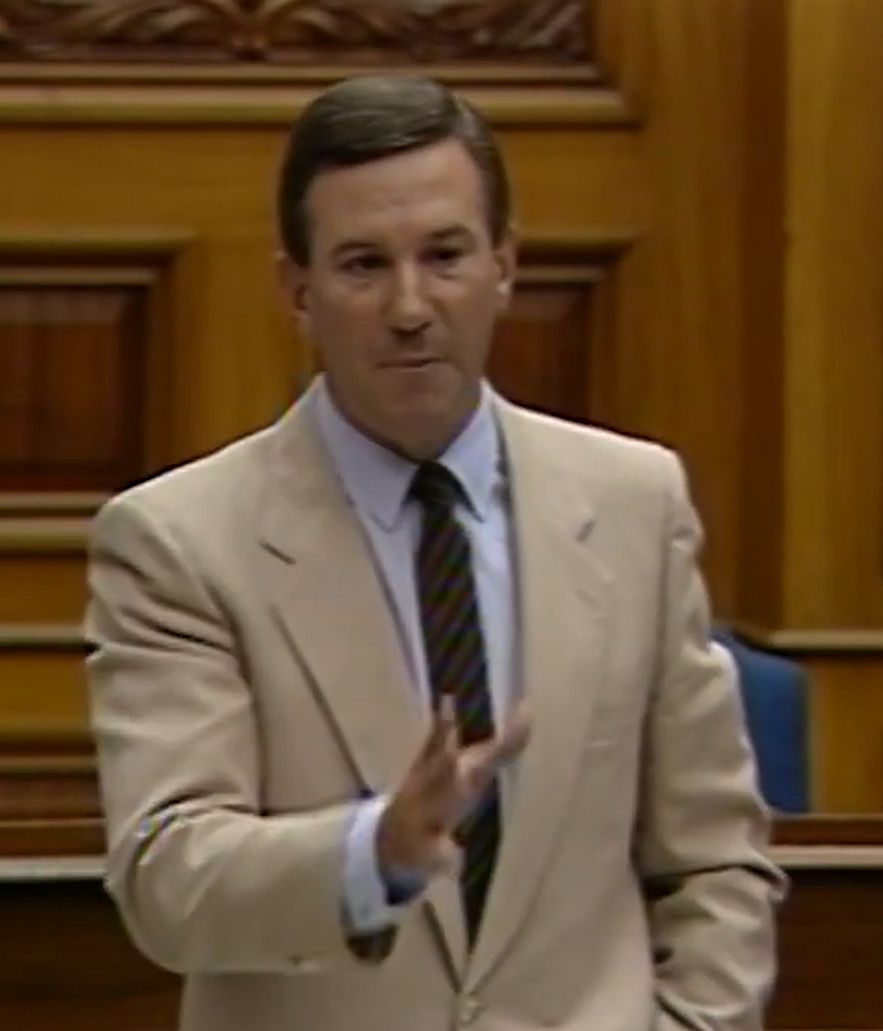
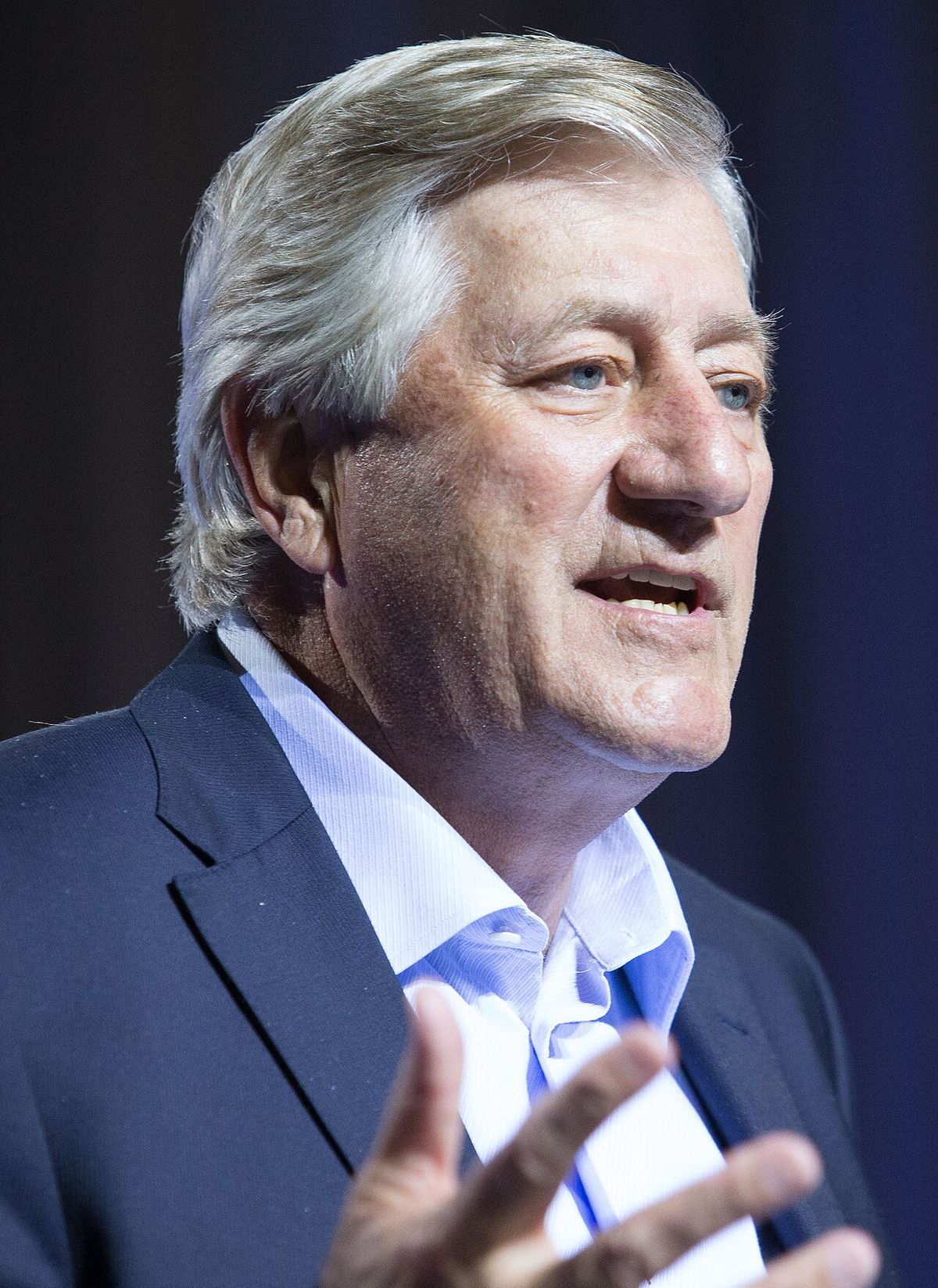
Mike Harris
Michael Deane Harris, known as Mike Harris, is a retired Canadian politician who served as the 22nd premier of Ontario from 1995 to 2002. As leader of the Progressive Conservative Party of Ontario, he engineered a decisive political shift to the right with his "Common Sense Revolution," a program of fiscal conservatism that defined his premiership. His government's policies, including significant tax cuts, spending reductions, and the controversial amalgamation of Toronto, reshaped the province's political and economic scene. Harris remains a consequential and polarizing figure in modern Ontario history.
Early Life and Career
Mike Harris was born in Toronto on January 23, 1945, the son of Hope Gooding and Sidney Deane Harris. He grew up in North Bay, where his father operated the Wasi Falls Resort fishing camp. Harris briefly attended Waterloo Lutheran University, now Wilfrid Laurier University, but left after one year. At age 21, he moved to Sainte-Adèle, Quebec, for two years to work as a ski instructor following his father's purchase of a ski hill. After his first marriage ended, Harris enrolled at Laurentian University and North Bay Teacher's College, where he earned his teaching certificate. He worked as an elementary school teacher at W. J. Fricker Public School in North Bay, teaching grade seven and eight mathematics in a large open-concept class of 120 students. He continued to work as a weekend ski instructor at Nipissing Ridge and at his father's fishing camp in the summers before eventually leaving teaching as the ski resort business grew. After his father sold the ski operation, Harris was hired to manage North Bay's Pinewood Golf Club.
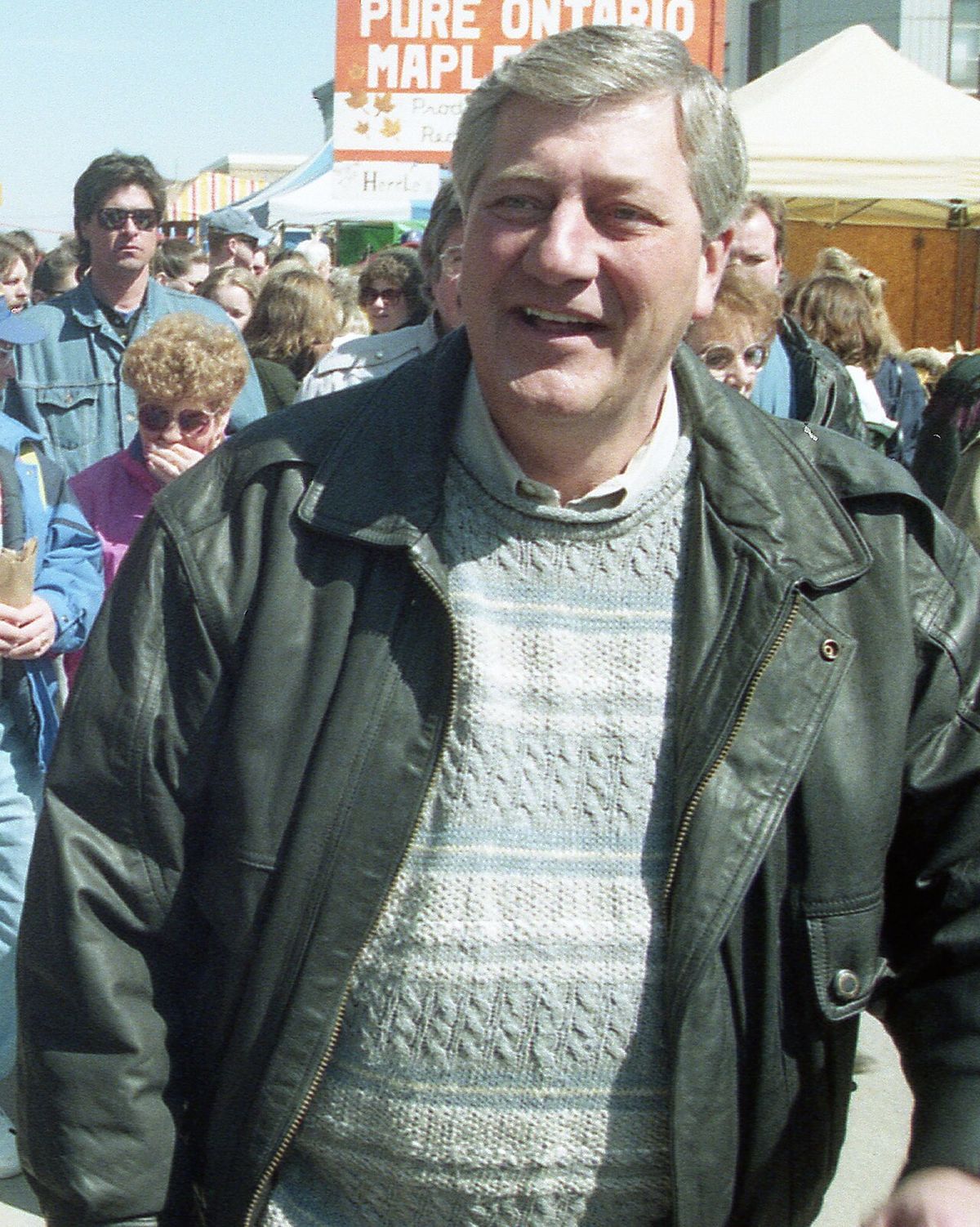
Entry into Provincial Politics
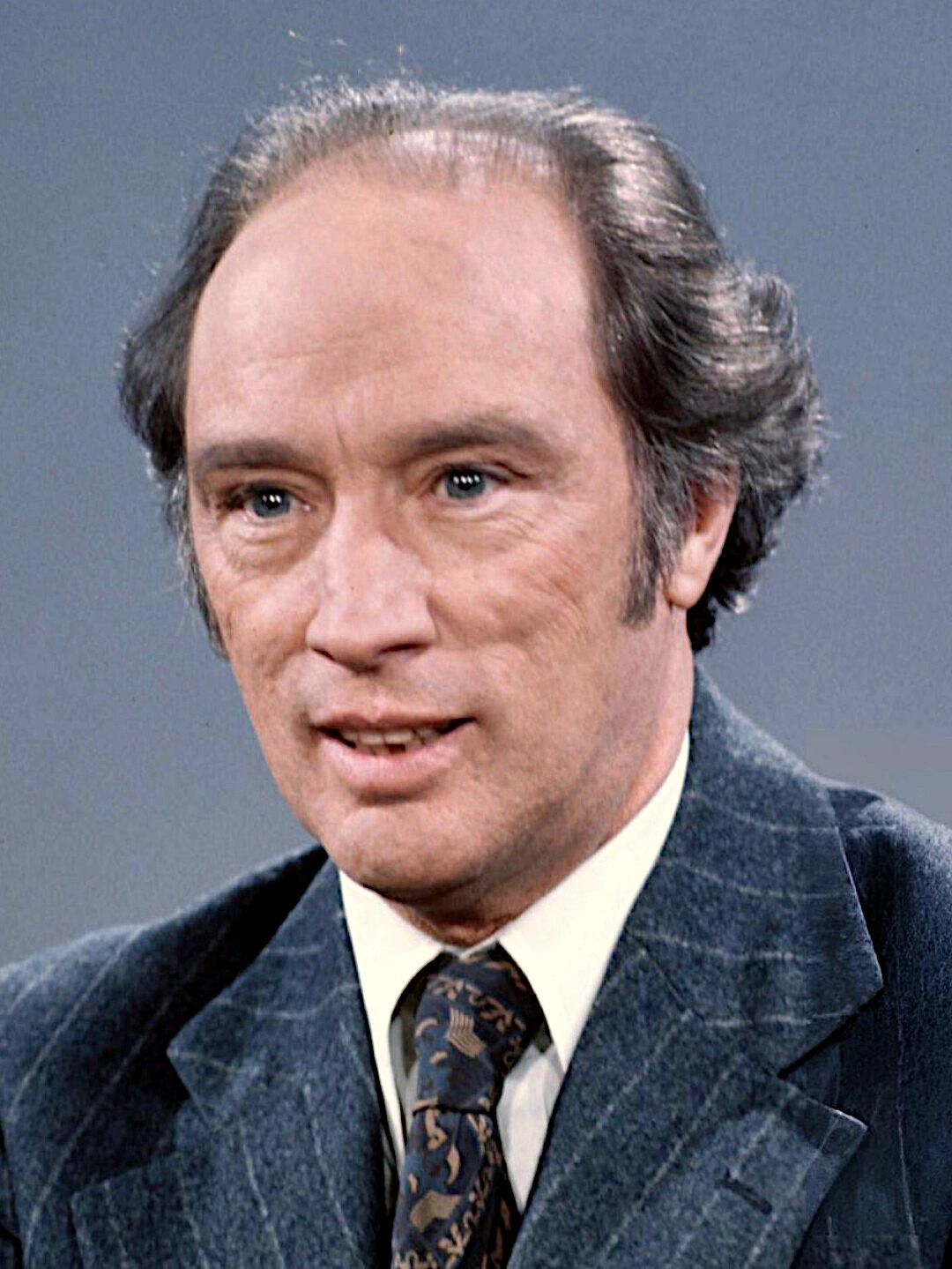
Harris entered public office in 1974 when he was elected as a school board trustee. He successfully entered provincial politics in the 1981 election, defeating incumbent Liberal MPP Mike Bolan to become the Member of Provincial Parliament for Nipissing. Harris later indicated his motivation for entering politics was opposition to the policies of Prime Minister Pierre Trudeau. He served as a backbencher in Premier Bill Davis's Progressive Conservative government from 1981 to 1985. Harris supported Frank Miller's successful bid to succeed Davis as party leader in 1985, helping prepare Miller for debates by playing the role of rival candidate Dennis Timbrell. When Miller became premier in February 1985, he appointed Harris as the minister of natural resources. The Tories were reduced to a minority government in the 1985 election, though Harris was easily re-elected. He retained the natural resources portfolio and was also named minister of energy on May 17, 1985. The Miller government soon fell on a motion of no confidence, leading to a Liberal-NDP accord that consigned the PCs to opposition after 42 years in power. After Miller resigned, Larry Grossman led the party to a disastrous result in the 1987 election and resigned. Harris was again re-elected in Nipissing during this period of party turmoil.
Party Leadership and the 1995 Victory
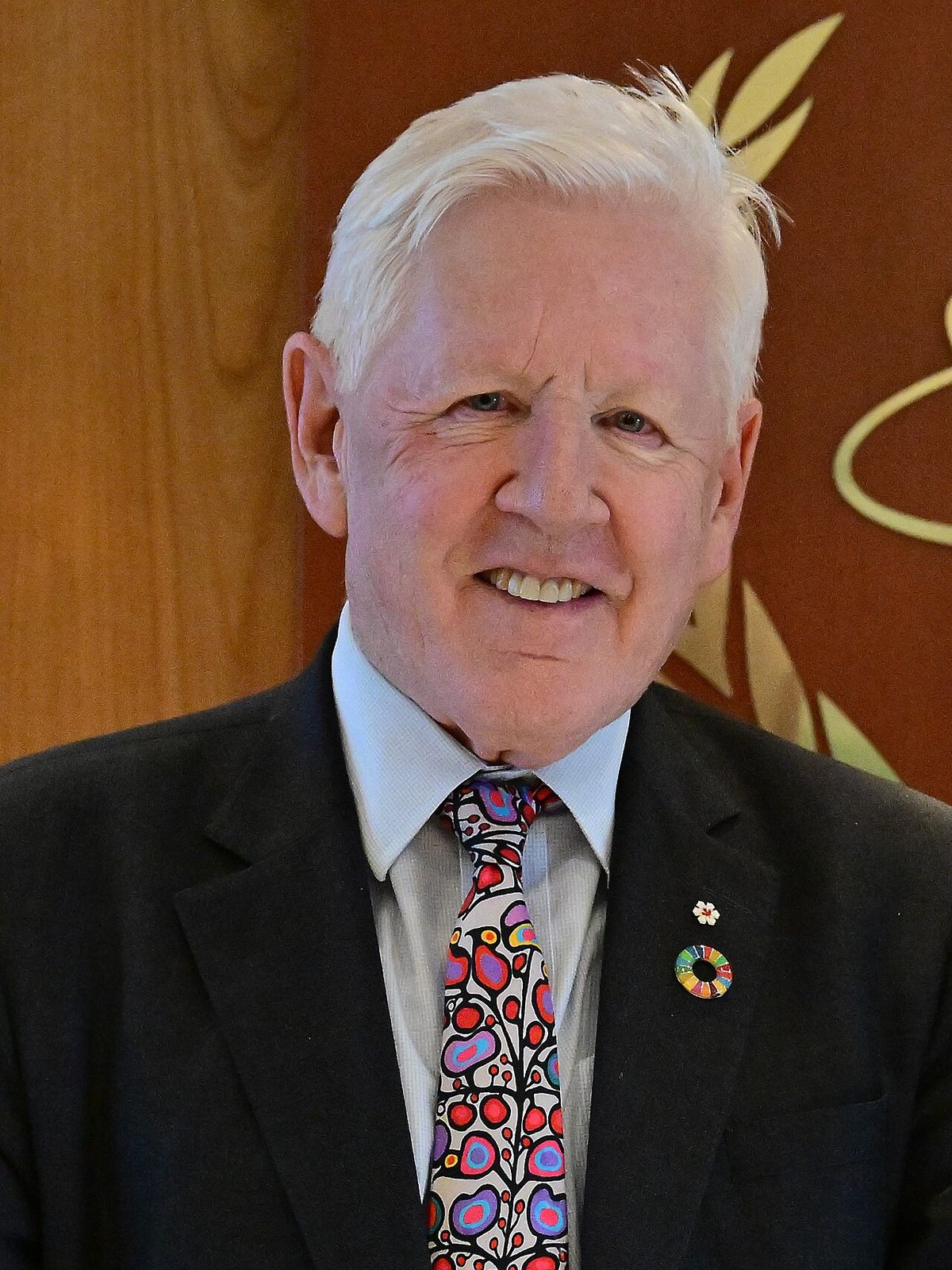
Following Larry Grossman's resignation, Harris was chosen as the PC Party's house leader and became its dominant voice in the legislature by 1989. He entered the 1990 leadership race and defeated Dianne Cunningham to become the party's official leader. A provincial election was called soon after his victory. Harris rallied the party's core supporters with pledges of tax cuts and spending reductions, and due to his teaching background, received personal endorsements from several local members of the Ontario Secondary School Teachers' Federation. The 1990 election was won by Bob Rae's NDP, though the Conservatives increased their seat total from 17 to 20. On May 3, 1994, Harris unveiled the "Common Sense Revolution" platform, which called for significant spending and tax cuts and the elimination of the province's $11 billion deficit. By the 1995 election, the Rae government was deeply unpopular. Although Lyn McLeod's Liberals initially led in polls, a series of policy reversals and an uninspiring campaign eroded their support. Harris's direct performance in the televised leaders' debate, where he spoke to the camera about his platform, is widely considered the election's turning point. His opposition to Rae's affirmative action measures also helped him capture some unionized-worker support. The PCs won a large majority government, vaulting from 20 to 82 seats in the 130-seat legislature. Many of these seats came from the suburban '905' belt around Toronto and traditional NDP ridings like Cambridge and Oshawa.
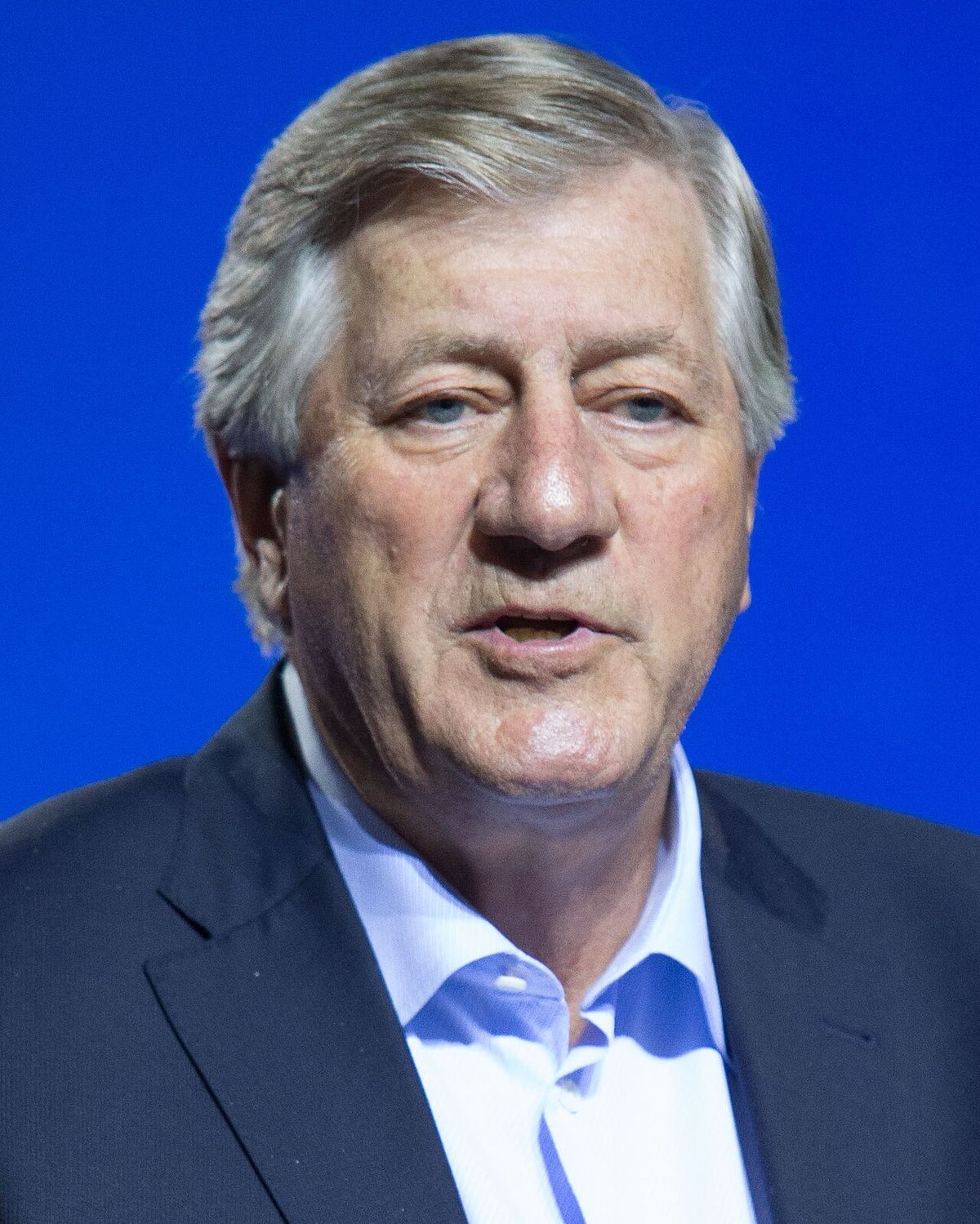
Premiership and the Common Sense Revolution
Upon taking office in 1995, the Harris government immediately began implementing its reform agenda to cut the provincial deficit. One of its first major acts was to cut social assistance rates by 21.6 percent, arguing the program was a disincentive to work, and it introduced the "Ontario Works" workfare program. Provincial income taxes were cut by 30 percent to pre-1990 levels, though a Fair Share Health Levy was charged to high-income earners. The government announced layoffs for several hundred nurses and implemented hospital closures and amalgamations on the advice of a restructuring commission. Harris compared laid-off hospital workers to those who lost jobs after the hula hoop fad died. The government cancelled major infrastructure projects, including funding for Toronto's Eglinton West subway line, and ended the province's 50 percent cost-sharing arrangement for municipal transit. It also cut health spending in response to reduced federal transfer payments while introducing Telehealth Ontario. A central plank of the revolution was privatization, though the planned sales of Ontario Hydro and the LCBO did not proceed due to public opposition. Ontario Hydro was split into five successor companies, and in 1999, Highway 407 was leased to a private consortium. The government reduced the number of MPPs from 130 to 103 by aligning riding boundaries with federal districts. It also passed the Savings and Restructuring Act, which oversaw extensive municipal mergers, reducing the number of municipalities from 815 to 447 between 1996 and 2002. The most notable amalgamation merged Metro Toronto's cities into a single "megacity," a move not part of the pre-election platform. Financial responsibility for some social programs was also downloaded to municipalities. In 1996, the government passed the Public Sector Salary Disclosure Act, creating annual "Sunshine lists" of public sector employees earning over $100,000.
Key Policy Areas and Controversies
Education Reform: The Harris government introduced sweeping education reforms. It eliminated the fifth year of high school, known as OAC, creating a "double cohort" of graduates in 2003. It passed Bill 160, the Education Quality Improvement Act, which mandated a standardized curriculum and province-wide testing, including Grade 3 and 6 EQAO tests and a Grade 10 literacy test. High school students were required to complete 40 hours of community service to graduate. In 1999, the government introduced a policy of regular "teacher testing" and removed principals and vice-principals from the teachers' federation. These changes contributed to the 1997 Ontario teachers' strike, the largest in the province's history.
Ipperwash Crisis: Shortly after Harris was sworn in, his government faced the Ipperwash crisis in 1995. Members of the Stoney Point Ojibway band occupied Ipperwash Provincial Park to protest land claims. During a confrontation with the Ontario Provincial Police, Acting Sergeant Kenneth Deane fired on demonstrators, killing protester Dudley George. A public inquiry later found that Harris's comments and desire for a quick resolution narrowed the government's response and contributed to the crisis.
Walkerton Tragedy: In May 2000, the town water supply of Walkerton became infected by E. coli, resulting in seven deaths and hundreds of illnesses. Provincial water testing had been privatized in October 1996 by Harris's first government. A public inquiry headed by Justice Dennis O'Connor found that the local official responsible for water quality, Stan Koebel, had falsified records and failed to test water quality regularly. The inquiry also concluded that government cuts to the Ministry of the Environment and the privatization of water testing were contributing factors.
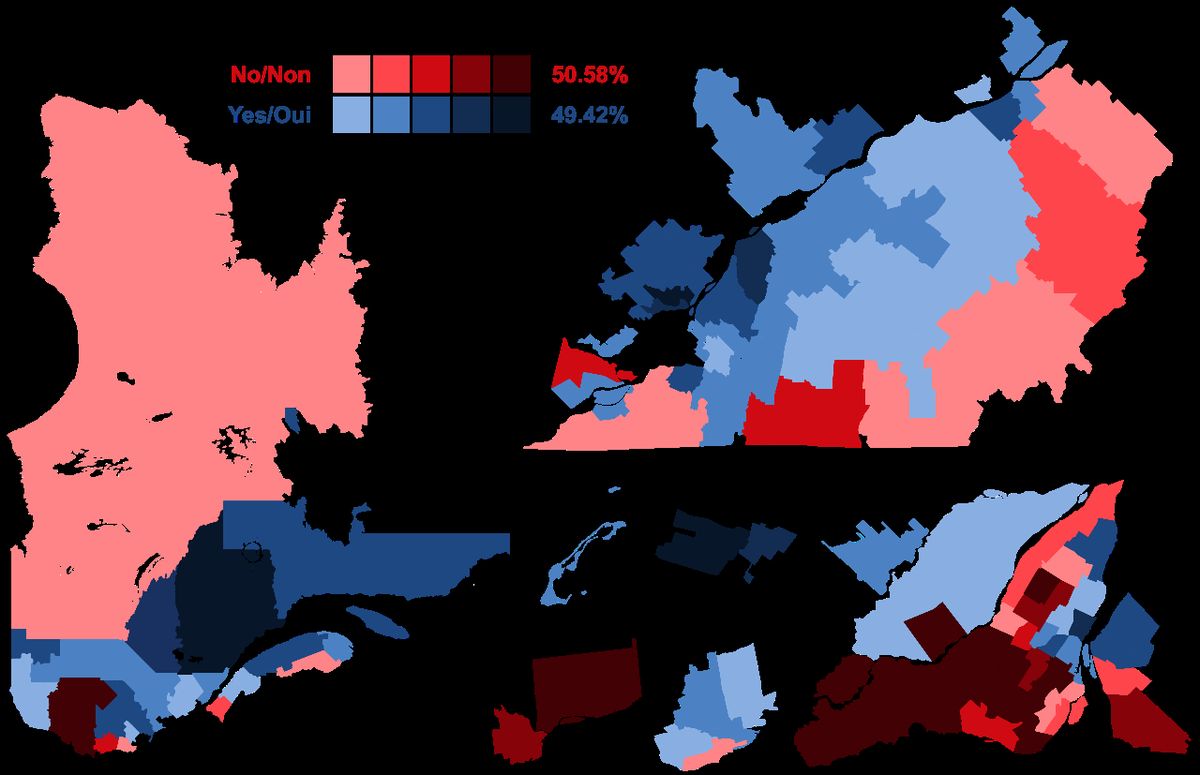
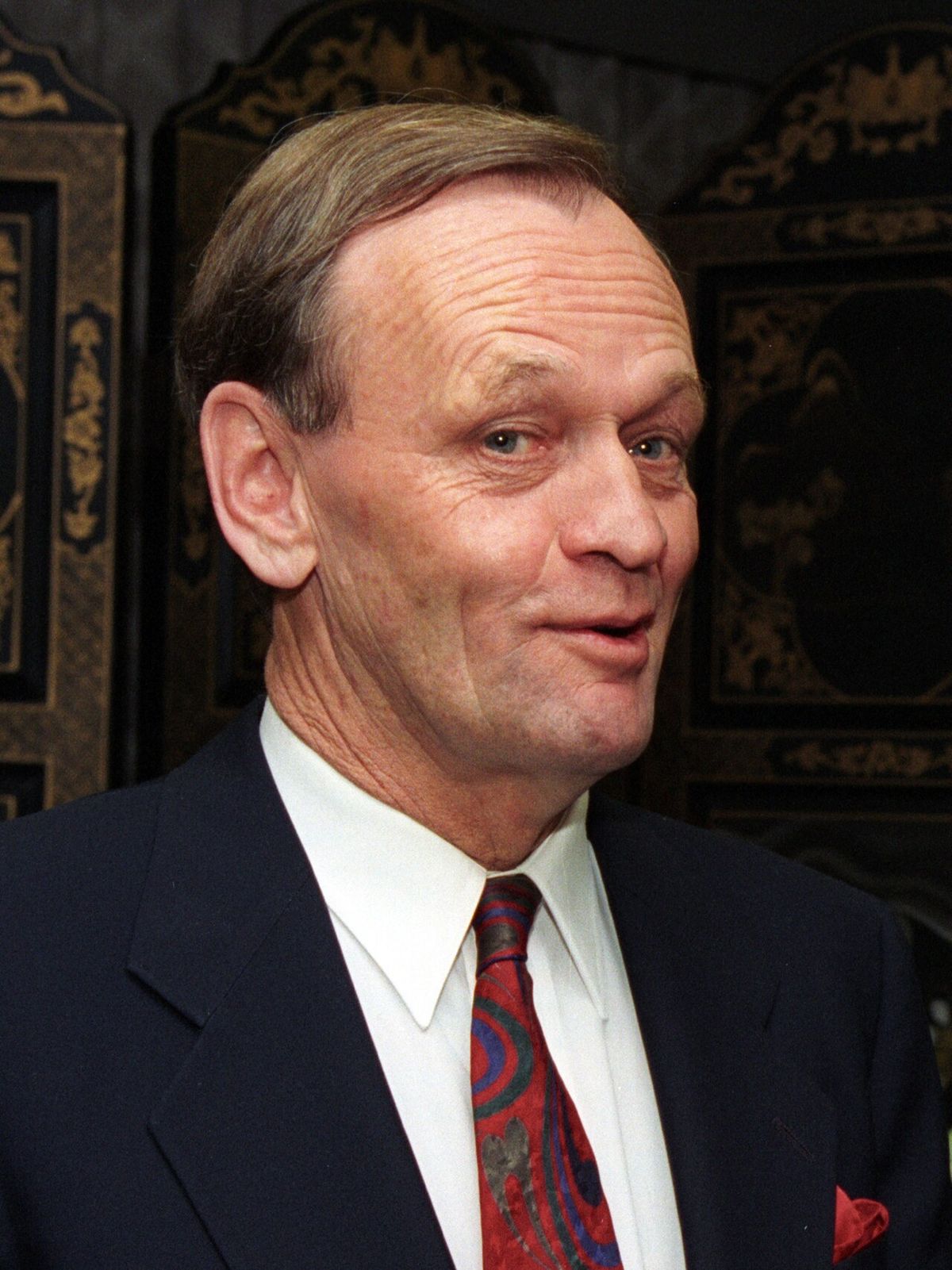
Other Policies and Events: The Harris government reduced Ontario's welfare rolls by an estimated 500,000 people, a move critics linked to rising homelessness. It rewrote labour laws to require secret ballot votes for unionization and repealed the NDP's ban on replacement workers during strikes. In 1999, the government balanced the provincial budget, with revenues rising from $48 billion in 1995 to $64 billion by 2001. That same year, it announced Ontario's Living Legacy, adding 378 new parks and protected areas. In his final years, Harris's government introduced a tax credit for parents who sent children to private schools. During the 1995 Quebec referendum campaign, Harris was appointed a federal negotiator by Prime Minister Jean Chrétien, and he affirmed that a separate Quebec would be a foreign country.
Second Term and Retirement
Harris led the Progressive Conservatives to a second majority government in the 1999 provincial election, again relying heavily on support from suburban areas around Toronto. His second term was marked by the balanced budget in 1999 and the ongoing fallout from the Walkerton tragedy. In June 2000, the Ontario Coalition Against Poverty led a protest at Queen's Park against government policies, which turned violent with some protesters throwing projectiles like Molotov cocktails, bricks, and bottles. In 2002, Harris retired as premier and PC leader and was succeeded by Ernie Eves in both capacities. After leaving office, Harris joined the Toronto law firm Goodmans LLP as an advisor until 2010. He also became a senior fellow at the conservative Fraser Institute think tank.
Family and Later Political Involvement
Mike Harris is married to Laura, and they have five children together. One of his sons, Mike Harris Jr., was elected as the MPP for Kitchener, Conestoga in the 2018 provincial election. Harris Jr. served in several opposition critic roles and has been involved in local issues such as the Highway 7 expansion and GO train service. He was awarded the Rarity award by the Canadian Organization of Rare Disorders in 2018 for his advocacy on rare diseases. After politics, Mike Harris served on the board of directors for Magna International from 2003 to 2012 and as Chair of the Board for Chartwell Retirement Residences from 2003 to 2022. In 2010, he received an honorary doctorate from Nipissing University, and in 2020 he was appointed a Member of the Order of Ontario.
Electoral Record
| Election | Leader | Seats Won | Result |
|---|---|---|---|
| 1990 | Mike Harris | 20 / 130 | Third Place |
| 1995 | Mike Harris | 82 / 130 | Majority Government |
| 1999 | Mike Harris | Majority Government | Majority Government |
Harris entered provincial politics in the 1981 election, defeating the incumbent Liberal MPP in Nipissing. He was personally re-elected in Nipissing without difficulty in the 1985 and 1987 elections. As party leader, he led the PCs from 20 seats in 1990 to 82 seats and a large majority government in the 1995 election. This victory involved winning seats in the suburban belt surrounding Metro Toronto and in long-time NDP strongholds such as Cambridge and Oshawa. In the 1999 election, the number of seats in the legislature had been reduced to 103, and the PCs won a second majority government.
Questions about Mike Harris
What was Mike Harris's Common Sense Revolution?
The Common Sense Revolution was the political platform unveiled by Mike Harris in 1994 that formed the basis of his government's agenda after the 1995 election. It was a program of fiscally conservative policies emphasizing significant tax cuts, reduction of public spending, and elimination of the provincial deficit. Key measures included a 30 percent cut to personal income taxes, cuts to social assistance rates, the introduction of workfare, and the privatization of some government assets like Highway 407. The platform represented a decisive shift of the Ontario Progressive Conservative Party to the right.
What happened during the Walkerton water crisis?
In May 2000, the municipal water supply in Walkerton, Ontario, became contaminated with E. coli bacteria, leading to seven deaths and hundreds of illnesses. A public inquiry by Justice Dennis O'Connor found that the local water official had falsified records and failed to conduct proper testing. The inquiry also concluded that the Harris government's 1996 privatization of water testing laboratories and cuts to the Ministry of the Environment were contributing factors that compromised water safety oversight. The tragedy became a major controversy for the Harris government.
How did Mike Harris change education in Ontario?
The Harris government implemented several major education reforms. It eliminated the fifth year of high school, known as OAC, which created a double graduating class in 2003. It introduced Bill 160, which mandated a standardized curriculum and province-wide testing for students in grades 3, 6, and 10. The government also required high school students to complete 40 hours of community service to graduate. It introduced a policy of regular "teacher testing" and removed principals and vice-principals from the teachers' federation. These changes contributed to the 1997 Ontario teachers' strike.
What was the 'megacity' amalgamation?
The Harris government passed Bill 26, the Savings and Restructuring Act, which undertook an extensive program of municipal mergers. In the largest of these moves, the individual cities that made up Metro Toronto were merged into a single city, often called the "megacity". This amalgamation was not part of the PC Party's pre-election policy platform. The Conservatives argued the move would eliminate duplication of services and increase efficiency, but opposition parties were strongly opposed.
Is Mike Harris related to the current MPP Mike Harris?
Yes. Mike Harris Jr., born in 1985, is the son of former premier Mike Harris. He was elected as the Member of Provincial Parliament for Kitchener, Conestoga in the 2018 provincial election. He has served in opposition critic roles and has been involved in local advocacy for issues like the Highway 7 expansion and GO train service. He is a distinct individual from his father, the former premier.
What did Mike Harris do after leaving politics?
After retiring as premier and PC leader in 2002, Mike Harris joined the Toronto law firm Goodmans LLP as an advisor until 2010. He became a senior fellow at the conservative Fraser Institute think tank. He served on the board of directors for Magna International from 2003 to 2012 and was Chair of the Board for Chartwell Retirement Residences from 2003 to 2022. In 2010, he received an honorary doctorate from Nipissing University, and in 2020 he was appointed a Member of the Order of Ontario.
Sources and further reading
- Mike Harris (Wikipedia)
- Mike Harris, MPP | Kitchener, Conestoga (mikeharrismpp.ca)
Checked by the Nosy Mag desk. Last updated 2026-10-30.