History of women in Canada
The history of women in Canada is the study of the historical experiences, contributions, and legal status of women living in what is now Canada. From the roles of Indigenous women in early contact and trade to the struggles for political and legal equality in the 20th century, women have been central to the nation's social, economic, and cultural development. Their history is marked by systemic discrimination, resilient labour, and powerful social movements, including suffrage and second-wave feminism. Today, this history is formally recognized each October during Women's History Month, established by the Government of Canada in 1992.
Early Colonial and Settler Experiences
The historical experiences of women in colonial Canada varied greatly by culture and region. In the 1660s, about 800 young French women known as the King's Daughters were sent to New France. They quickly found husbands among the predominantly male settlers. As farm wives with very good nutrition and high birth rates, they played a major role in establishing family life and enabling rapid demographic growth. They had about 30 percent more children than comparable women who remained in France. Beyond household duties, some women in New France participated directly in the fur trade, working alongside husbands or fathers as merchants and clerks, while widows sometimes took over their spouses' business roles. In the Maritimes and other English colonies, European women were actively encouraged to immigrate to expand the population. By the 19th century, middle class women, particularly in the Maritime provinces, began transforming domestic spaces into comfortable, decorated retreats, asserting control over their separate sphere of the home.
Indigenous women's roles were deeply affected by contact with Europeans. Their marriages to European fur traders often served as important diplomatic and economic links between communities. However, their traditional roles and authority were frequently challenged by the arrival of Christian missionaries and colonial policies. Scholarly studies of Indigenous women's specific histories have been relatively few. In the 20th century, Native Homemakers' Clubs became important vehicles for education, activism, and agency for First Nations women. They were first organized in Saskatchewan in 1937 and numbered 185 by 1955.
Religion, Education, and Social Control
In Quebec, Roman Catholic nuns created a significant domain of female authority and service outside the home. These orders specialized in charitable works, operating hospitals, orphanages, homes for unwed mothers, and schools. By 1917, 32 different teaching orders in Quebec operated 586 boarding schools for girls, filling a critical gap as public education for girls did not extend beyond elementary school. The number of nuns grew dramatically, from 6,600 in 1901 to 26,000 in 1941, representing about two to three percent of Quebec's young women. The Quiet Revolution of the 1960s and the reforms of Vatican II led to a dramatic decline, as many nuns left their orders and the provincial government took over their traditional social service roles.
The Catholic Church's strong influence in Quebec also shaped family law and social norms for centuries. The province was slow to grant civil rights to married women, who were legally listed alongside minors and interdicted persons as incapable of contracting until 1954. Major reforms began in the 1960s and 1970s, including the removal of a wife's obligation to obey her husband in 1964 and the establishment of equal parental authority in 1977. The current Civil Code of Quebec, in effect since 1994, is based on gender equality. Quebec's historically conservative marriage laws and resistance to divorce, which required a private act of Parliament until 1968, have been cited as factors contributing to the province's high rates of cohabitation. Since 1995, the majority of births in Quebec are outside of marriage, with 63 percent of births outside marriage by 2015.
The Struggle for Legal and Political Rights
Women's political rights in Canada were achieved incrementally and unevenly across provinces and communities. Most Canadian women were granted the right to vote in federal elections in 1918, following advocacy tied to their contributions during the First World War. However, this right was not universal. First Nations women, along with men, were denied the federal franchise until the Canada Elections Act was amended in 1960. At the provincial level, rights also varied. Manitoba was the first province to extend full woman's suffrage in 1916. The women of Quebec did not obtain full suffrage until 1940. New Brunswick granted women the right to vote in 1919 but withheld the right to hold political office until 1934.
Advancement in employment law also proceeded slowly. Ontario passed the Female Employees Fair Remuneration Act in 1951, requiring equal pay for women who did the same work as men, following lobbying by women, unions, and the Co operative Commonwealth Federation. However, enforcement was narrow, and broader prohibitions against sex discrimination in hiring and promotion were not achieved until later. Human rights activists in the mid 20th century often did not prioritize gender issues, largely subscribing to the ideology of the family wage that presumed a male breadwinner supporting a full time housewife. This mindset delayed comprehensive anti discrimination legislation covering gender for decades. The first woman elected to the House of Commons was Agnes Macphail in 1921.
Women and Work
Women have always been a part of Canada's labour force, though their roles were often constrained and undervalued. In the early 19th century, employed women in cities worked chiefly as domestic servants, unskilled workers, teachers, or in roles like dressmaking and innkeeping. The great majority of women lived in rural areas, working at home or as domestic servants until marriage. From the late 19th century to 1930, some 250,000 women immigrated from Europe, many entering domestic service to meet middle class demand. In the Prairie provinces, women's labour was critical to homestead survival. Their responsibilities included preparing food, making clothes, raising children, tending gardens, and helping with harvests, all proving decisive in meeting the challenges of the harsh environment.
Women slowly entered professions in the late 19th and early 20th centuries. Nursing became well established, and women made inroads into teaching, journalism, and social work. Emily Stowe became the first female doctor to practise in Canada in 1880. Her daughter, Augusta Stowe Gullen, was the first woman to graduate from a Canadian medical school in 1883. Despite these advances, women remained largely outsiders to the male dominated medical profession. Midwifery, traditionally practised by women, was restricted and nearly died out by 1900. In other fields, women faced significant barriers. Bessie Hall of Nova Scotia trained as a navigator in the 1870s but could not become an officer, while Molly Kool of New Brunswick broke maritime barriers by becoming the first woman in the western world to earn a captain's licence in 1938.
- Domestic Service: Primary employment for urban working class women and female immigrants until marriage.
- Fur Trade: Some women in New France worked as merchants, clerks, and provisioners alongside family.
- Homesteading: Women's adaptable labour was critical to family farm survival on the Prairies.
- Teaching and Nursing: Among the first professional fields open to women in significant numbers.
- Maritime: Molly Kool earned her captain's licence in 1938, a first for the western world.
Modern Movements and Contemporary Commemoration
The second wave feminist movement from the 1960s onwards propelled significant social and legal changes, challenging systemic discrimination in all areas of life. This activism addressed issues such as reproductive rights, workplace equality, and gender based violence. The movement also spurred the academic study of women's history, with historians increasingly focusing on gender relations, unpaid labour, and the experiences of ordinary women. In Quebec, the feminist movement combined with the Quiet Revolution to accelerate reforms in family law. Nationally, activism continued through labour movements and legal battles. The Canadian Committee on Women's History was founded in 1975.
Today, women's history is formally recognized and celebrated in Canada through designated periods and events. Women's History Month is observed every October, established by the federal government in 1992. It includes International Day of the Girl on October 11 and Persons Day on October 18. While the United States celebrates in March, Canada's October focus allows for a dedicated reflection on historical contributions. International Women's Day on March 8 remains a major global and national event for celebrating achievements and advocating for gender parity. The Annual Monique Bégin Lecture at the University of Ottawa continues this tradition of education and advocacy.
Education and Statistical Landscape
The educational attainment of women in Canada has increased dramatically over the past century. By 2021, according to Statistics Canada, 113,870 women in Canada held a doctorate degree, representing about two in every five people with a doctorate. Of these women with doctorates, 44.8 percent were immigrants, highlighting the significant contribution of immigrant women to Canada's highly educated workforce. This data reflects broader trends of women's increasing participation in higher education and professional fields. The first woman university graduate in Canada was Grace Annie Lockhart at Mount Allison University in 1875. The challenges of researching and teaching women's history persist, including gaps in historical records and previously male dominated narratives. Scholars and institutions continue to work on uncovering and sharing women's diverse experiences through new methodologies and sources. Contemporary discussions about women's work and equality address ongoing inequities. Topics include the gender pay gap, the impact of the care economy on women's labour, barriers faced by women with diverse identities, and the future of women in fields shaped by artificial intelligence and technology. These forums bring together activists, scholars, and leaders to strategize on achieving equitable and barrier free workplaces for all women.
Notable Pioneers and Advocates
Canadian history is marked by women who broke barriers and fought for change. Emily Stowe not only became the first woman to practise medicine in Canada but also was a leading suffragist. Her daughter, Augusta Stowe Gullen, continued this legacy as a physician and activist. In the area of law and personhood, the Famous Five fought the successful legal case that recognized women as persons eligible for the Senate. In Indigenous rights, Mary Two Axe Earley was a pioneer of the women's movement, challenging discriminatory provisions of the Indian Act. Molly Kool's achievement as a sea captain in 1938 opened a traditionally male field. In politics, figures like Monique Bégin, Canada's first female Minister of National Health and Welfare, left a legacy, honoured today through an annual lecture in her name. The first women elected in the British Empire were two Alberta women, Louise McKinney and Roberta MacAdams, elected in 1917.
Questions about History of women in Canada
When is Women's History Month in Canada?
Women's History Month is celebrated in Canada throughout the entire month of October. It was officially designated by the Government of Canada in 1992. The month includes important commemorative days such as International Day of the Girl on October 11. It also includes Persons Day on October 18, which marks the anniversary of the 1929 Persons Case legal victory.
When did women get the right to vote in Canada?
Most Canadian women were granted the right to vote in federal elections in 1918. At the provincial level, Manitoba was first to grant women's suffrage in 1916. Quebec was the last province to grant full suffrage to women, doing so in 1940. First Nations women were denied the federal franchise until amendments to the Canada Elections Act in 1960.
What was the role of Catholic nuns in Quebec's history?
Roman Catholic nuns in Quebec founded independent religious orders that ran hospitals, orphanages, schools, and homes for unwed mothers. By 1917, teaching orders operated 586 boarding schools for girls. The number of nuns grew from 6,600 in 1901 to 26,000 in 1941. Their role diminished after the Quiet Revolution of the 1960s.
Who was Molly Kool?
Molly Kool was a maritime pioneer from Alma, New Brunswick. In 1938, she became the first woman in the western world to earn her captain's licence, officially known as a coastal master's certificate. She pursued work in the heavily male dominated field of seafaring. Her achievement broke significant professional barriers against women at sea.
Who was the first female doctor in Canada?
Emily Stowe was the first woman licensed to practise medicine in Canada in 1880. Her daughter, Augusta Stowe-Gullen, became the first woman to graduate from a Canadian medical school in 1883. Another early graduate, Elizabeth Scott Matheson, finished in 1898 but was refused her licence by the Northwest Territories College of Physicians and Surgeons until 1904. These women were pioneers in a male-dominated medical profession.
What is the Persons Case and why is it important?
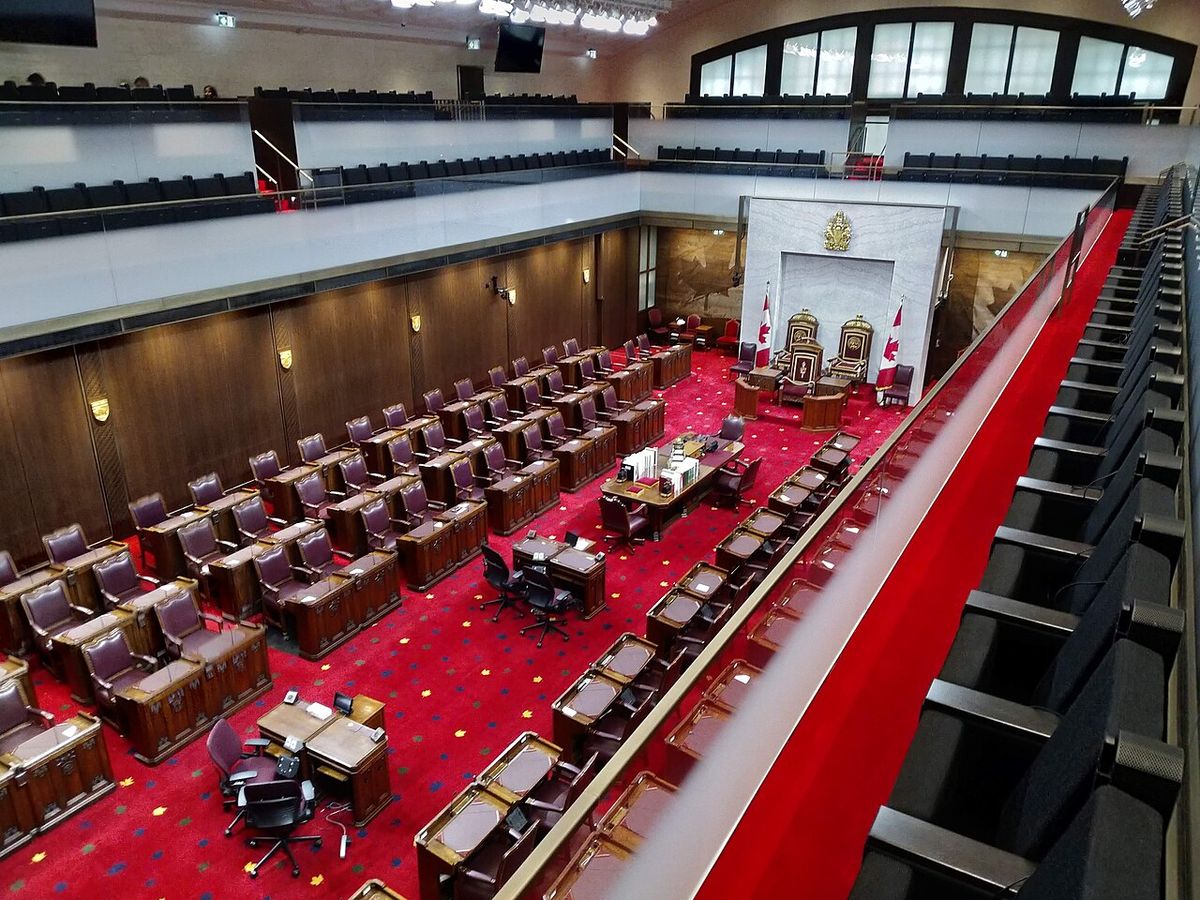
The Persons Case was a 1929 legal victory that established women were considered 'persons' under the law. This made them eligible for appointment to the Senate of Canada. The case was brought by five Alberta women activists known as the Famous Five. This achievement is a key part of women's political history in Canada and is commemorated on Persons Day each October 18.
Sources and further reading
- History of women in Canada (Wikipedia)
- Women's History Month (amapceo.on.ca)
- International Women's Day 2026 in Canada: History & Events (remitly.com)
- A timeline of women in Canada's history (www150.statcan.gc.ca)
Checked by the Nosy Mag desk. Last updated 2026-10-31.