North Atlantic right whale population declines again as U.S. weakens protections
The species faces entanglement and ship strikes, with U.S. Congress blocking new fishing rules and reviewing speed limits.
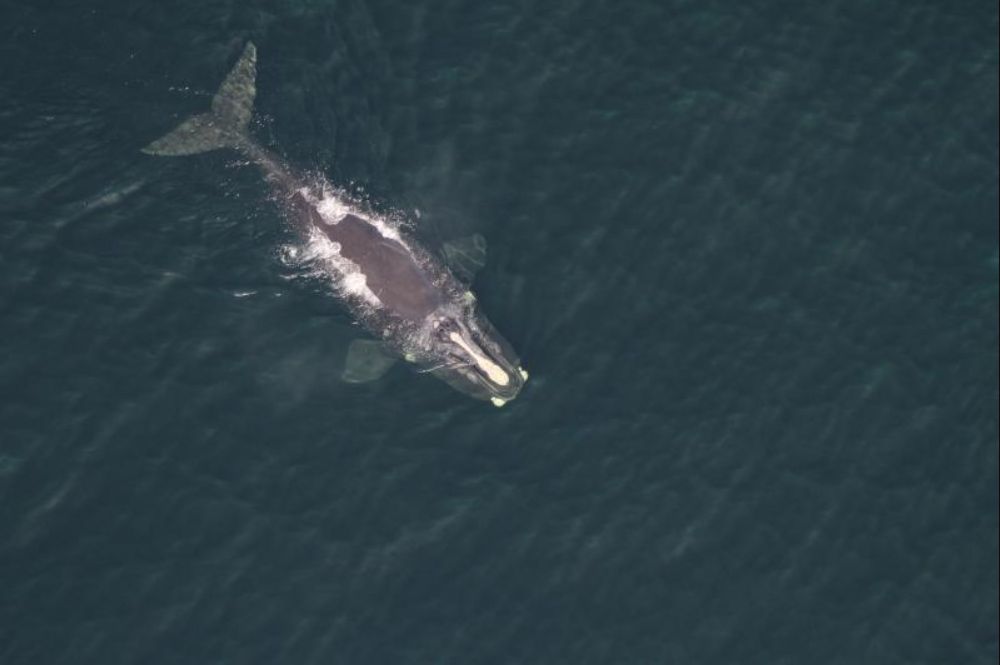
HALIFAX · The North Atlantic right whale population has fallen to about 382 animals, ending four years of fragile growth. The latest estimate, released Monday by the North Atlantic Right Whale Consortium, shows a decline of seven whales from the previous year. The species is now 20 per cent below its most recent peak of 483 animals in 2011. Scientists warn the critically endangered population cannot afford another steep decline.
Entanglements in fishing gear and vessel strikes remain the leading threats to the whales, which migrate between Canadian and U.S. waters. Climate change, which has shifted the whales' feeding grounds, and ocean noise add to the pressure. "This population cannot afford another slide like that," said Heather Pettis of the New England Aquarium, who chairs the consortium. Recovery depends on both countries, Pettis said, but their approaches are diverging.
In the United States, Congress has barred new rules for lobster and crab fisheries to prevent entanglement through 2028. The House of Representatives has passed a bill to extend that pause to 2035, which is still awaiting Senate approval. "The last thing we need is a delay," Pettis said. The National Oceanic and Atmospheric Administration is also considering "deregulatory action" on its rule requiring large vessels to slow in seasonal right whale zones along the U.S. East Coast.
READ MORE: Trump blames Biden, urges Congress to fund air traffic control after ground stop
READ MORE: U.S. flight ground stop lifted but travel chaos lingers across North America
NOAA Fisheries spokesperson John Chu said the 2008 speed rule remains in effect while the agency reviews public comments on options such as swapping speed limits for whale-detection technology. Pettis said the new technology, while promising, is not ready to replace the vessel speed rule. Another federal rule, which took effect Sept. 14, narrows the definition of "harm" under the Endangered Species Act. Pettis called the change "cause for alarm," though the whales are still covered by the Marine Mammal Protection Act.
Canada, by contrast, has been "much more nimble," Pettis said. With the U.S. pulling back, Ottawa needs to "hold or step up our efforts," said Sean Brillant, senior conservation biologist at the Canadian Wildlife Federation. Canada first brought in fishing closures and vessel speed limits after a wave of deaths in the Gulf of St. Lawrence in 2017. "All we've done at best was end the nosedive," Brillant said. "This species is still on a knife's edge."
Fisheries and Oceans Canada rolled out its Whalesafe Fishing Gear Strategy in February, which aims to keep fishing areas open when right whales are present. It allows harvesters to use on-demand, or "ropeless," gear that keeps buoy lines on the sea floor until traps are hauled in. "Canadian harvesters and industry have been the real leaders in testing it," said Alexis Van Bemmel, acting manager of the whales team in DFO's national programs branch. After closures near North Lake, P.E.I., and Chéticamp, N.S., this year, the Canadian Wildlife Federation's gear-lending program trained about 85 harvesters and deckhands.
Lost fishing gear already at sea remains a problem. A four-year-old male named Division, found dead off North Carolina in January, was entangled in rope from a snow crab fishing area in the southern Gulf of St. Lawrence that had not been fished in five years. Canada's gear-marking rules allowed the department to trace it, said Marina Petrovic, DFO's acting director of national programs. Since 2019, DFO's ghost gear program has removed more than 2,620 tonnes of lost fishing gear and more than 1,040 kilometres of rope.
The 2025-26 season saw 24 calves born, the fourth-highest on record. The last calf was spotted with its mother, Silt, off Anticosti Island, Que., in September. But the number of reproductive females held at 73, when it should be climbing, Pettis said. Two whale mortalities have been documented in 2026, one from entanglement and another from an undetermined cause. There have also been eight documented cases of human-caused injuries this year: seven entanglements and one vessel strike.
Phillip Hamilton of the New England Aquarium said imagining a whale entangled is painful. "Imagine if you were wrapped in rope that moved as you moved … literally sawing into your body," he said. Last week, the first calf of the 2026-27 season was spotted off St. Augustine, Fla., with Curlew, a first-time mother. "Clearly this species is doing everything it can to survive," Brillant said. "And we need to match its efforts."
With files from The Globe and Mail, CBC News and Toronto Star