Minister of Finance
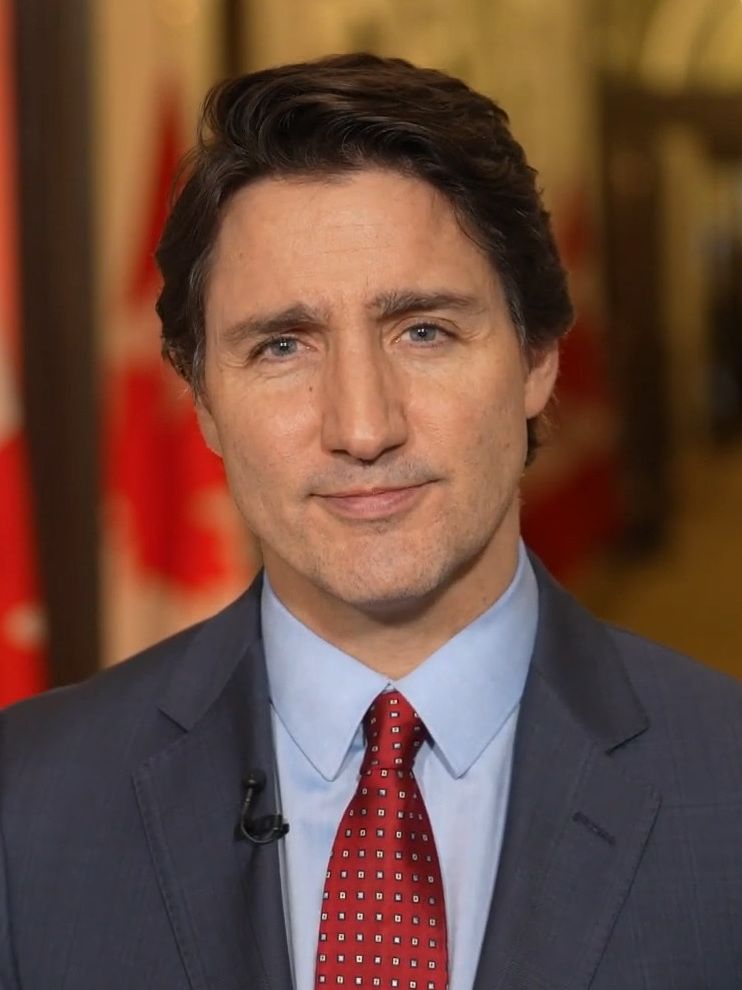
The Minister of Finance is a senior minister of the Crown in the Canadian Cabinet, responsible for overseeing the Department of Finance and presenting the federal government's annual budget. This portfolio is considered one of the most important in Cabinet, with duties encompassing economic policy, fiscal management, and oversight of key national financial institutions. The minister serves as the head of the Department of Finance and holds permanent membership on the Treasury Board of Canada. As of March 14, 2025, the 42nd and current Minister of Finance is François-Philippe Champagne, serving within the 30th Canadian Ministry led by Prime Minister Mark Carney.
Role and Responsibilities
The Minister of Finance holds a central role in the Canadian government, providing leadership on the nation's economic and fiscal direction. The minister is responsible for overseeing the Department of Finance, which provides key fiscal, taxation, and economic policy advice to the minister, Cabinet, and the Prime Minister. A core duty is the annual preparation and presentation of the federal budget, a document that outlines the government's spending plans and economic forecasts for the coming year. The minister also tables other significant public reports, including the Spring Economic Update and pre-budget consultation documents, which frame the government's fiscal narrative.
Beyond budget preparation, the minister is responsible for a wide array of national financial institutions and regulatory bodies. This includes serving as the minister responsible for the Bank of Canada, the Canada Deposit Insurance Corporation, and the Office of the Superintendent of Financial Institutions. The minister also acts as the governor for Canada at the International Monetary Fund, representing the country's interests in global financial discussions. The role involves ensuring efficient regulation of the financial services sector, which includes insurance, pension plans, and capital markets, to maintain economic stability. A key objective is to support a fair, efficient, and competitive tax system while working with federal and municipal counterparts on intergovernmental fiscal arrangements. The minister also plays a permanent role on the Treasury Board of Canada, contributing to government-wide expenditure management and oversight.

Department of Finance Structure
The Department of Finance Canada is the primary organization supporting the minister, staffed by public servants who provide analysis and develop policy. The department is led by a deputy minister, who is the senior public servant responsible for the department's day-to-day operations and administration. Within the department, several associate deputy ministers manage specific branches. The structure is designed to deliver expert advice across the core lines of business, including economic forecasting, tax policy, and financial sector regulation.
The ministry's operations are divided into several key functional areas. One area focuses on fiscal and economic policy, producing reports like the Long-Term Report on the Economy. Another major area is tax administration, which involves maintaining tax statutes, ensuring compliance, and working to reduce the burden on compliant taxpayers. The ministry also houses operational and regulatory agencies that generate revenue or provide direct services. These agencies contribute significantly to the government's consolidated revenues.
The department employs a modern, risk-based approach to its regulatory and compliance functions. This includes targeted audits in high-risk areas to protect provincial revenues and ensure the integrity of the tax system. The ministry is also tasked with optimizing service delivery through digital transformation, increasing access to online services to improve the client experience for citizens and businesses. Internally, the department works collaboratively with its agencies on modernization efforts and represents federal interests in negotiations over fiscal transfers and economic agreements.
Current Minister and Recent Initiatives
The Honourable François-Philippe Champagne was appointed as the Minister of Finance on March 14, 2025. He assumed the role as part of Prime Minister Mark Carney's new government, the 30th Canadian Ministry. Minister Champagne had previously held several other senior cabinet portfolios, bringing extensive experience to one of the government's most challenging posts. His appointment came at a time of economic transition, with the government focusing on building a stronger, more resilient Canadian economy for the future.
Since taking office, Minister Champagne has been active in launching key government economic initiatives. In April 2026, he launched the annual pre-budget consultations, a process that gathers input from stakeholders and citizens ahead of the federal budget. He also tabled the Spring Economic Update 2026 on April 28, 2026, providing a mid-year snapshot of the nation's fiscal health and economic projections. These documents are critical for transparency and for setting the government's policy agenda, outlining how it plans to manage resources and stimulate growth.
One of the landmark initiatives unveiled under Minister Champagne's tenure is the Canada Strong Fund. He announced this new fund in Montréal on April 27, 2026, as part of the government's broader plan to build Canada's economic capacity. The fund represents a significant investment in national infrastructure and strategic growth sectors. Minister Champagne regularly engages with the public and the House of Commons, as seen in his address following the tabling of the 2026 spring economic update, where he outlined the government's fiscal strategy and priorities.

Provincial Finance Ministries
While the federal Minister of Finance sets national policy, each Canadian province and territory has its own finance ministry responsible for regional economic management. These provincial ministries mirror many federal functions, including preparing the provincial budget, administering tax systems, and managing public debt. For example, the Ministry of Finance in British Columbia is led by the Honourable Josie Osborne, supported by a parliamentary secretary and a team of deputy ministers. Provincial finance ministries produce their own annual plans and reports. The Ontario Ministry of Finance, for instance, published its plans for 2025 to 2026 and reported on the outcomes of programs delivered in 2024 to 2025. Its core activities are undertaken across five business lines: economic and fiscal policy, tax policy and administration, financial services regulation, agency oversight, and intergovernmental fiscal relations. The ministry supports a strong economic and investment climate for the province while aiming to reduce the debt burden over time.
Key responsibilities of provincial ministries include preparing the provincial budget and a mid-year fiscal update, administering provincial tax statutes and conducting compliance activities, and managing the province's debt and borrowing through entities like the Ontario Financing Authority. They also oversee operational agencies that generate revenue, such as liquor and cannabis retail corporations, and regulate the provincial financial services sector, including credit unions and pension plans. They advise on intergovernmental fiscal arrangements and federal-provincial transfers and report on economic indicators, such as growth in the financial services sector. These ministries play an integral role in subnational economic management.
Key Institutions and Oversight
The federal Minister of Finance is the minister responsible for several critical independent agencies that are essential to Canada's financial system. The Bank of Canada, the nation's central bank, is foremost among these, responsible for monetary policy, currency issuance, and promoting financial stability. The Canada Deposit Insurance Corporation protects depositors in member institutions up to a specified limit, contributing to public confidence in the banking system. The Office of the Superintendent of Financial Institutions regulates and supervises federally regulated financial institutions and private pension plans to ensure their soundness.
Other significant entities under the minister's purview include the Canada Pension Plan Investment Board, which manages the funds of the Canada Pension Plan. The Financial Transactions and Reports Analysis Centre of Canada, known as FINTRAC, is the national financial intelligence unit, detecting and preventing money laundering and terrorist financing. The minister also serves as the responsible minister for the Canadian International Trade Tribunal, which provides rulings on trade matters, and the Canada Development Investment Corporation, a federal Crown corporation that manages government holdings. These agencies form a network that supports the minister's mandate for economic security and regulatory oversight.
The minister's role extends to international financial governance through Canada's Mission to the International Monetary Fund. In this capacity, the minister serves as Canada's governor at the IMF, casting votes on behalf of the country on matters of global economic importance. This position requires the minister to engage with international counterparts to advocate for Canadian interests and contribute to the stability of the international monetary system. Domestically, the minister's permanent seat on the Treasury Board ensures finance considerations are integral to government-wide operational and expenditure decisions, linking fiscal policy directly with government spending.
Budget Process and Economic Reporting
The annual federal budget is the centrepiece of the Minister of Finance's responsibilities, following a detailed process of development and consultation. The cycle typically begins with pre-budget consultations, launched by the minister to solicit input from businesses, organizations, and citizens. For the 2026 budget, Minister Champagne launched these consultations with a roundtable event in Ottawa. The consultations inform the government's priorities and help shape the policy measures that will be included in the final budget document, ensuring it reflects a range of economic perspectives.
Following consultations, the Department of Finance develops the budget based on economic forecasts and fiscal projections. The minister then presents the budget in the House of Commons, detailing the government's taxation and spending plans for the upcoming fiscal year. In addition to the main budget, the minister is responsible for tabling other regular economic reports. The Spring Economic Update, tabled on April 28, 2026, provides a mid-year review of the economy and the government's fiscal position, allowing for course corrections if necessary and maintaining accountability to Parliament.
The ministry produces a variety of other reports to ensure transparency and inform public debate. These reports include quarterly financial updates and annual economic accounts that track the performance of the economy. At the provincial level, ministries publish similar documents, such as Ontario's Taxation Transparency Report and Long-Term Report on the Economy. These documents are essential tools for legislators, investors, and the public to assess the government's economic management and long-term fiscal sustainability, providing a clear record of policy outcomes and financial health.
Associate Minister of Finance
The position of Associate Minister of Finance was a Cabinet portfolio introduced in the 29th Canadian ministry under Prime Minister Justin Trudeau. The associate minister was responsible for specific files within the Department of Finance as assigned by the Minister of Finance, helping to manage the broad scope of the ministry's work. This role allowed for a division of labour on complex issues such as tax policy, financial sector regulation, or intergovernmental affairs. The associate minister worked under the direction of the senior minister but held the authority of a full cabinet member, providing additional leadership capacity within the economic portfolio.
The creation of this position reflected the growing complexity of economic policy and the need for focused ministerial attention on specific areas. It provided additional capacity for the government to advance its fiscal agenda and engage with stakeholders on specialized topics. The role was not a permanent fixture of the Cabinet but was established as needed based on the priorities of the government of the day. Its existence in the 29th ministry demonstrated the Trudeau government's emphasis on having dedicated leadership for key segments of the finance portfolio. There is no indication that an associate minister of finance has been appointed in the 30th Ministry under Prime Minister Mark Carney.
Recent Fiscal Events and Data
The period from 2025 to 2026 has been active for finance ministries across Canada, marked by budget presentations and new policy launches. At the federal level, Minister Champagne has been at the forefront of major announcements, including the Canada Strong Fund. Provincial governments have also been active, with Manitoba Finance Minister Adrien Sala presenting the 2026 provincial budget in the legislature. These events highlight the continuous cycle of fiscal planning and reporting that defines the work of finance ministries, which must balance long-term strategy with annual budgetary requirements.
| Event | Date | Jurisdiction/Official |
|---|---|---|
| François-Philippe Champagne appointed Minister of Finance | March 14, 2025 | Federal |
| Launch of 2026 pre-budget consultations | April 2026 | Federal (Minister Champagne) |
| Unveiling of the Canada Strong Fund | April 27, 2026 | Federal (Minister Champagne in Montréal) |
| Tabling of Spring Economic Update 2026 | April 28, 2026 | Federal (Minister Champagne) |
| Presentation of Manitoba's 2026 budget | June 2026 | Provincial (Minister Adrien Sala) |
| Publication of Ontario's 2025 to 2026 plans | 2025 | Provincial (Ontario Ministry of Finance) |
These events are supported by the ongoing analytical work of finance departments, which monitor economic indicators to guide policy. For example, Ontario tracks growth in its financial services and insurance sectors as an indicator of overall economic health. The province also monitors its debt repayment ability and the effectiveness of its tax compliance programs. These metrics are crucial for assessing whether ministry objectives, such as reducing the burden on compliant taxpayers or ensuring the integrity of revenues, are being met effectively and for informing future budget decisions.
Questions about Minister of Finance
Who is the current Minister of Finance of Canada?
The current Minister of Finance of Canada is The Honourable François-Philippe Champagne. He was appointed to the role on March 14, 2025, as a member of the new 30th Canadian Ministry led by Prime Minister Mark Carney. Champagne is the 42nd person to hold this Cabinet position. The minister is responsible for overseeing the Department of Finance and presenting the federal budget.
What are the main responsibilities of the Minister of Finance?
The minister of finance is responsible for overseeing the Department of Finance and presenting the federal government's budget each year. The minister is the head of the Department of Finance and is responsible for the Bank of Canada, the Canada Deposit Insurance Corporation, and the Office of the Superintendent of Financial Institutions. The minister serves as Canada's governor at the International Monetary Fund and is a permanent member of the Treasury Board of Canada. Other responsibilities include the Canada Development Investment Corporation, the Canada Pension Plan Investment Board, the Canadian International Trade Tribunal, and the Financial Transactions and Reports Analysis Centre of Canada.
What is the Canada Strong Fund announced in 2026?
The Canada Strong Fund is a landmark new initiative unveiled by Finance Minister François-Philippe Champagne on April 27, 2026, in Montréal. It is a central part of the federal government's plan to build Canada's economic capacity and resilience. The fund represents a significant investment in national infrastructure and strategic growth sectors. Details of the fund were announced as part of the government's broader economic strategy.
Do provinces have their own Ministers of Finance?
Yes, each Canadian province and territory has its own finance ministry and minister responsible for regional economic policy. For example, the Minister of Finance for British Columbia is the Honourable Josie Osborne, and Manitoba's Finance Minister is Adrien Sala. These provincial ministers prepare their own budgets, administer provincial taxes, and manage regional debt. Their roles are separate from the federal Minister of Finance in the Canadian Cabinet.
What was the Associate Minister of Finance?
The Associate Minister of Finance was a Cabinet portfolio introduced in the 29th Canadian ministry under Prime Minister Justin Trudeau. This minister was assigned specific files within the Department of Finance by the senior Minister of Finance. The role was created to help manage the portfolio's wide-ranging responsibilities. It is not currently active in the 30th Ministry under Prime Minister Mark Carney.
When was the 2026 Spring Economic Update released?
The Spring Economic Update for 2026 was tabled by Finance Minister François-Philippe Champagne on Tuesday, April 28, 2026. This document provides a mid-year review of the nation's economic and fiscal situation. It updates the projections and policies originally outlined in the annual federal budget. The update is a key responsibility of the Minister of Finance.
Sources: Wikipedia and current public reporting, checked by the Nosy Mag desk. Last updated 2026-10-28.