Inuit
Inuit are an Indigenous people whose homeland, Inuit Nunangat, spans the Arctic and Subarctic regions of Canada, Greenland, Alaska, and Russia. Numbering approximately 160,000 across the circumpolar world, they are represented in Canada by Inuit Tapiriit Kanatami, which advocates for over 65,000 Inuit living in 53 communities. Their history, from the Thule culture ancestors to contemporary political activism, is a story of cultural endurance, adaptation to a harsh environment, and a sustained struggle for self-determination. Today, Inuit are central to Canada's identity and are actively shaping policies on issues ranging from housing and health to sovereignty and climate change in the North.
Origins and Pre-Contact History
Inuit are the descendants of the Thule people, who emerged from the Bering Strait and western Alaska around 1000 CE. The Thule possessed technological advantages, including the use of dogs for transport and larger weapons, which facilitated their rapid eastward expansion across the Arctic. They displaced the earlier Dorset culture, known in Inuktitut as the Tuniit, whom Inuit oral history sometimes describes as giants or, less frequently, as dwarfs. Researchers believe the Thule adaptation of dog sleds and superior hunting technology gave them a decisive edge over the Dorset. By 1100 CE, Thule migrants had reached and settled in both west and east Greenland. The Dorset culture is believed to have largely disappeared as a distinct people by about 1400 or 1500, though the Sadlermiut of Southampton Island were considered possible remnants until their community was devastated by disease in the winter of 1902 to 1903. Genetic studies on this question have yielded conflicting results, with some suggesting continuity and others finding no link between the Sadlermiut and earlier Dorset populations. Inuit traditionally lived almost exclusively north of the Arctic tree line, with their most southern communities in Labrador at Rigolet (Nunatsiavut) and L'anse au Clair (NunatuKavut). Their societies engaged in trade and occasional warfare with neighbouring Indigenous groups to the south, including the Cree, Innu, and Arctic Athabascans, but did not make large-scale territorial expansions into those regions due to these established boundaries.
Early Contact with Europeans
The first documented contact between Inuit and Europeans occurred with Norse settlers in Greenland, referenced in sagas as meetings with skrælingar, a blanket term for Indigenous peoples. After the Norse colonies vanished, there was a period of little contact until the mid-16th century, when Basque whalers established seasonal stations on the Labrador coast, such as at Red Bay. Inuit sometimes raided these stations in winter to acquire iron tools, adapting them to their own uses without necessarily interfering with whaling operations. The 1576 expedition of Martin Frobisher marked a more direct and recorded encounter in Frobisher Bay, Baffin Island. Five of Frobisher's men were left ashore and, according to Inuit oral tradition, lived among them for years before dying in an escape attempt. In an effort to find them, Frobisher captured three Inuit and brought them to England, possibly the first Inuit to visit Europe. Throughout the 17th and 18th centuries, relations with whalers and fishers along the coasts were often based on mutual trade interest, though sporadic conflict occurred. The arrival of Moravian missionaries in Labrador in the late 18th century, supported by British authorities tired of raids, introduced a more stable period of contact. The missionaries provided goods like iron and beads, whose value to Inuit was enormous but cost little to Europeans, thereby reducing the incentive for conflict. These early exchanges, however, introduced new infectious diseases that caused mass death and profound social disruption among Inuit populations who had no acquired immunity.
Colonial Encounters and Displacement in the 19th and Early 20th Centuries
The 19th century saw increased interaction through the Hudson's Bay Company, which opened posts like Great Whale River (present-day Kuujjuarapik) in 1820, and through exploratory expeditions. The 1821-23 Northwest Passage expedition led by William Edward Parry provided the first well-documented, sympathetic account of Inuit economic, social, and religious life after overwintering at Igloolik. Parry's writings and those of George Francis Lyon, published in 1824, were widely read in Europe. Unlike many southern Indigenous peoples, Inuit occupied lands not initially coveted by settlers, which were viewed by southerners as a hostile hinterland. The early 20th century brought more consistent contact from a few traders, missionaries, and the North-West Mounted Police. Canadian criminal law and Protestant moral codes were enforced, often confusing individuals like Kikkik who did not understand the alien society's rules. The 1939 Supreme Court decision in Re Eskimos ruled that Inuit were under federal jurisdiction as "Indians," a legal categorization with significant administrative consequences. The strategic importance of the Arctic grew during the Second World War and the Cold War, leading to the construction of air bases and the Distant Early Warning Line. This brought more intensive contact, including the introduction of formal public education, which some traditionalists felt promoted foreign values disdainful of Inuit culture.
The High Arctic Relocation and Forced Settlement
The most disruptive government actions were the forced relocations and settlements of the 1950s and 1960s. In 1953, Prime Minister Louis St. Laurent admitted Canada had administered the north in an 'almost continuing absence of mind.' That same year, the government initiated the High Arctic relocation, moving 17 families from Port Harrison (Inukjuak, Quebec) to Resolute and Grise Fiord. They were dropped off in early September when winter had begun, on barren land vastly different from their home, and were told they could return in two years if conditions were poor. Instead, more families were relocated there later, and the original group waited thirty years before being able to visit Inukjuak. The government's stated reasons included protecting sovereignty, alleviating over-hunting, and solving the 'Eskimo problem' through assimilation. The government acknowledged the abuses of this policy in 2005. Concurrently, the government began establishing about forty permanent administrative centres to provide services, encouraging Inuit to congregate there. Access to modern medicine raised birth rates and lowered death rates, creating a population boom that made traditional subsistence hunting more difficult. By the mid-1960s, driven by missionaries, the prospect of jobs, government services, hunger, and police pressure, most Canadian Inuit lived year-round in permanent settlements, transforming from a self-sufficient nomadic people into a settled population increasingly dependent on the southern economy.
Political Awakening, Land Claims, and Self-Determination
A major cultural and political shift began in the 1960s with the establishment of centralized high schools in places like Aklavik, Iqaluit, and Kuujjuaq. These schools brought together young Inuit from across the Arctic for the first time, exposing them to the civil rights rhetoric of the era and fostering a new generation of activists. This awakening led to the formation of political organizations, starting with the Inuit Tapirisat of Canada (now Inuit Tapiriit Kanatami) in 1971, an outgrowth of the earlier Indian and Eskimo Association. Region-specific bodies followed rapidly, including the Committee for the Original People's Entitlement (representing Inuvialuit), the Northern Quebec Inuit Association (now Makivik Corporation), and the Labrador Inuit Association. The landmark James Bay and Northern Quebec Agreement in 1975 set a precedent as the first modern comprehensive land claim, providing Quebec Inuit with a large cash settlement, land rights, and the administrative autonomy that created the region of Nunavik. The 1982 Constitution Act formally recognized Inuit as Aboriginal peoples in Canada. The disputed Southern Labrador Inuit of NunatuKavut began organizing separately in the mid-1980s and continue to pursue their land claim.
Contemporary Inuit Nunangat: Governance and Demographics
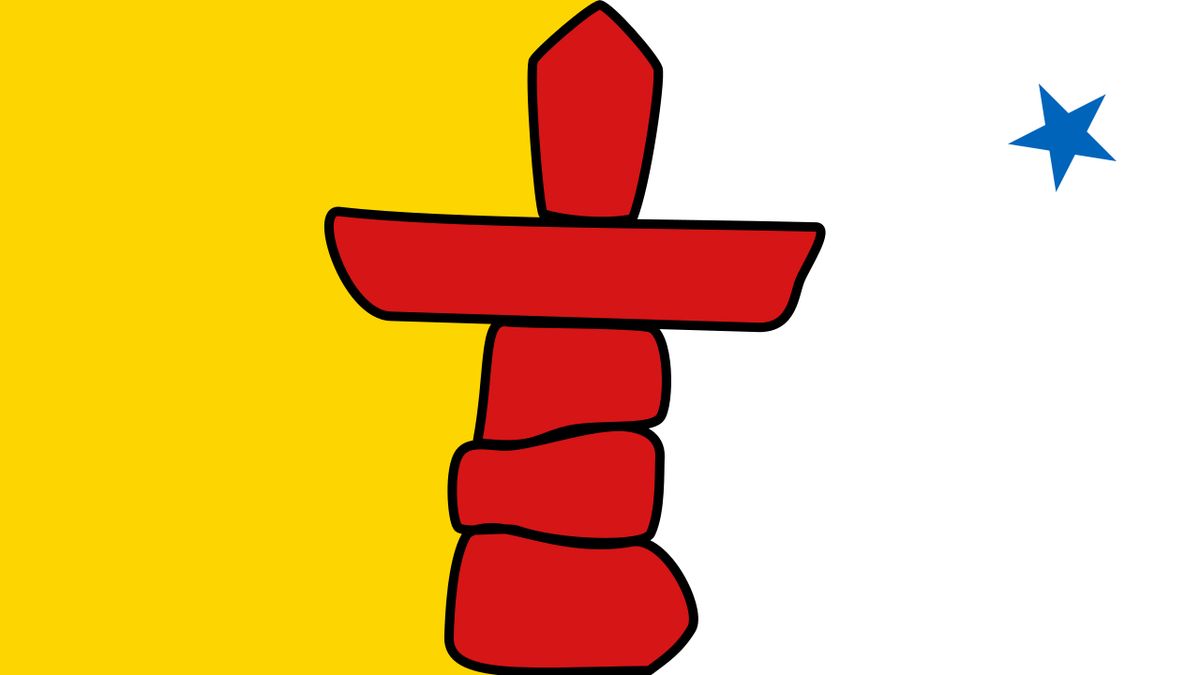
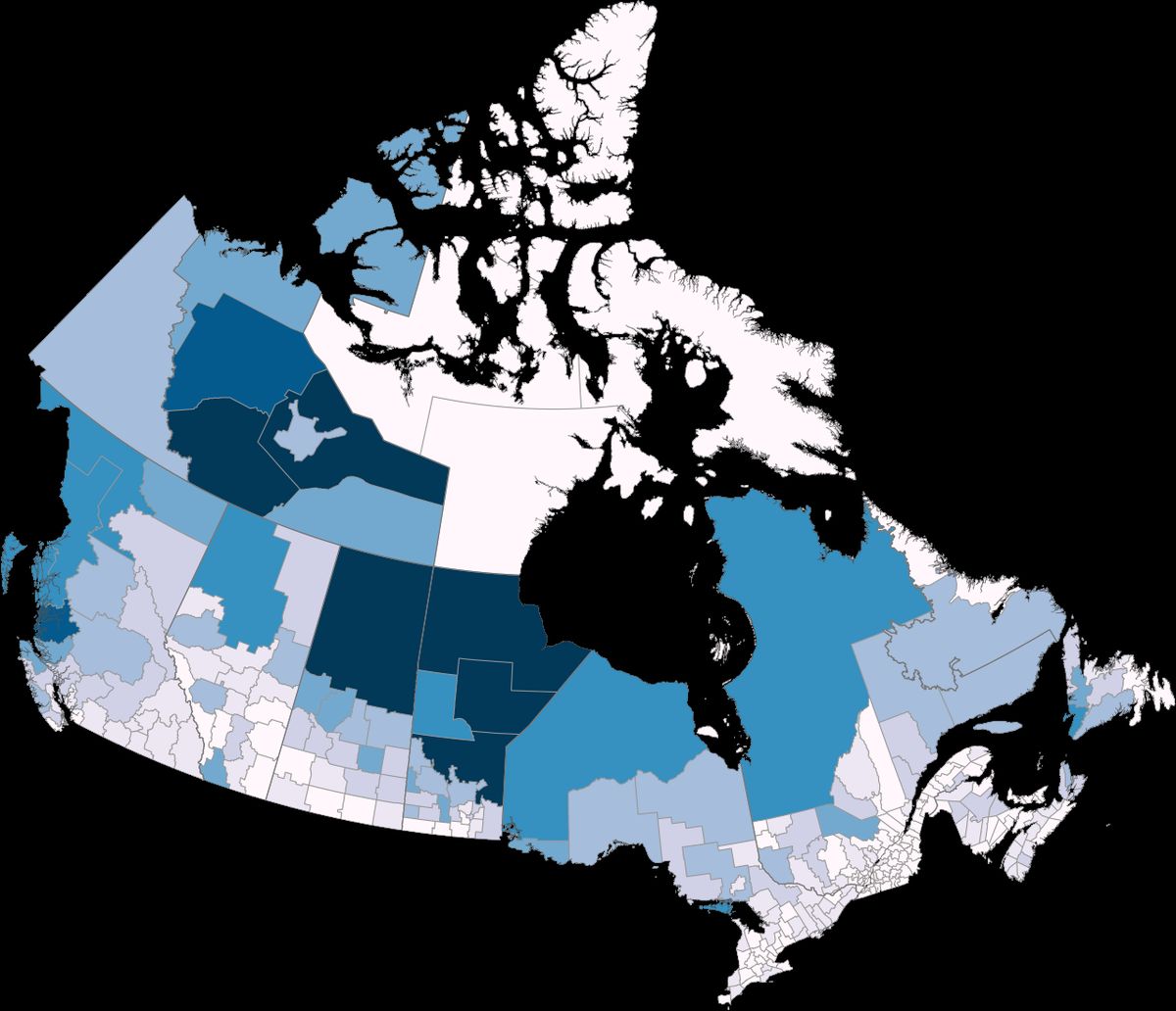
Today, the Inuit homeland in Canada is known as Inuit Nunangat, encompassing four regions: the Inuvialuit Settlement Region in the Northwest Territories, Nunavut, Nunavik in northern Quebec, and Nunatsiavut in northern Labrador. This vast area constitutes roughly 40 percent of Canada's land mass and 72 percent of its coastline, inhabited for over 5,000 years. Inuit Tapiriit Kanatami serves as the national representational organization for the over 65,000 Inuit living in 53 communities across this homeland. Governance is exercised through a mix of public government, as in Nunavut, and regional Inuit-specific governments and corporations established under land claims, such as the Nunatsiavut Government and Makivik Corporation. The Inuit population in Canada was estimated at 67,000 in 2016 and, depending on the projection scenario, could reach between 92,000 and 101,000 by 2041, indicating a young and growing demographic. Key contemporary challenges include addressing severe and persistent housing overcrowding, improving health and educational outcomes, preserving language and culture, and fostering economic development in a region with limited infrastructure.
Culture, Language, and Evolving Identity
Inuit culture is deeply rooted in a relationship with the Arctic environment, developed over millennia of adaptation. Traditional knowledge, passed down through the oral tradition, encompasses sophisticated understanding of ice, weather, wildlife, and survival. The Inuit languages are part of the Eskaleut language family, also known as Inuit-Yupik-Unangan, with dialects such as Inuktitut and Inuinnaqtun remaining vital, though under pressure. Cultural practices including storytelling, throat singing, carving, and sewing are actively maintained and revitalized. The term 'Eskimo,' historically used by outsiders, is now widely considered offensive and colonial by many, with 'Inuit' (singular: Inuk) being the preferred autonym in Canada and Greenland for the sub-group that includes Iñupiat, Inuvialuit, and Greenlandic Inuit. It is important to note that the related Yupik and Aleut (Unangan) peoples of Alaska and Siberia, who share linguistic roots, generally do not identify as Inuit. The continuity of Inuit identity, despite the profound disruptions of colonialism, testifies to the resilience of their social coherence and cultural integrity across a vast territory. Inuit emphasize that their history is not confined to the past but is a living narrative used to instruct the young and inform their place in the modern world.
Current Federal Engagement and Distinctions-Based Priorities
Inuit organizations are actively shaping national policy through research, advocacy, and direct partnership with the federal government. This distinctions-based approach acknowledges that Inuit-specific solutions are required. Key priorities are outlined in documents like the National Inuit Action Plan on Missing and Murdered Inuit Women, Girls and 2SLGBTQQIA+ People, jointly published by Inuit Tapiriit Kanatami and Pauktuutit. Federal reports, such as the 2025 to 2026 Inuit Highlight Report, track progress on Inuit-specific Calls for Justice, focusing on safety, economic security, self-determination, and health and wellbeing. The report outlines federal action across four priority areas reflecting Inuit-identified needs. Recent federal initiatives include targeted homelessness funding, with $9.2 million allocated to five Inuit projects in 2025 to 2026 under Reaching Home: Canada's Homelessness Strategy. Broader efforts address systemic issues like the need for culturally safe services, economic insecurity, and harms to language and cultural continuity. Inuit political representation has also grown, with Leona Aglukkaq becoming the first Inuk to hold a senior federal cabinet position as Minister of Health in 2008, though others like Jack Anawak and Nancy Karetak-Lindell had previously served as parliamentary secretaries. This ongoing engagement aims to advance the vision of a Canada where Inuit prosper through unity and self-determination.
Questions about Inuit
What does the term Inuit Nunangat mean?
Inuit Nunangat is the Inuktitut term for the Inuit homeland in Canada. It encompasses the land, water, and ice of four regions: the Inuvialuit Settlement Region in the Northwest Territories, the territory of Nunavut, Nunavik in northern Quebec, and Nunatsiavut in northern Labrador. This vast area makes up approximately 40 percent of Canada's land area and 72 percent of its coastline. It is not just a geographic description but represents the cultural and historical territory that Inuit have occupied since time immemorial. The concept is central to Inuit self-understanding and political advocacy.
How many Inuit are there in Canada and worldwide?
Inuit Tapiriit Kanatami represents over 65,000 Inuit in Canada, who live in 53 communities spread across Inuit Nunangat. The total circumpolar Inuit population, including those in Greenland, Alaska, and Chukotka, Russia, is approximately 160,000. Demographic projections suggest the Inuit population in Canada could grow significantly, from an estimated 67,000 in 2016 to between 92,000 and 101,000 by the year 2041. This growth underscores the importance of planning for housing, education, and health services in Inuit communities.
Is the term 'Eskimo' still acceptable to use?
The term 'Eskimo' is considered offensive and outdated by many Inuit. It is a colonial umbrella term imposed by outsiders and does not reflect how Inuit refer to themselves. The preferred and correct term is 'Inuit' (singular: Inuk) for the people of Canada and Greenland. It is also important to note that the related Yupik and Aleut peoples of Alaska and Siberia generally do not identify as Inuit, making the broader term inaccurate as well as offensive. The word has controversial origins and is associated with a history of forced labelling.
What was the High Arctic relocation and why did it happen?
The High Arctic relocation was a series of forced displacements orchestrated by the Canadian government in the 1950s. In one of the most noted events, 17 Inuit families from Inukjuak, Quebec, were moved to Resolute and Grise Fiord in the High Arctic. They were dropped off in early winter, promised a return in two years if conditions were poor, but were left there for decades. The government's stated reasons included protecting Arctic sovereignty, alleviating perceived over-hunting, and attempting to assimilate Inuit by moving them to barren locations. The government acknowledged the abuses and hardships caused by this policy in 2005.
What is the significance of the James Bay and Northern Quebec Agreement?
The James Bay and Northern Quebec Agreement, signed in 1975, was the first modern comprehensive land claims settlement in Canada. It provided Quebec Inuit (Nunavimmiut) with financial compensation, defined land rights, and established a framework for self-administration in the region of Nunavik. This agreement set a crucial precedent for subsequent Inuit land claims, demonstrating a model for negotiating autonomy, resource rights, and compensation. It directly led to the creation of institutions like the Makivik Corporation and inspired the land claims processes that created Nunavut and Nunatsiavut.
How are Inuit addressing the crisis of missing and murdered Indigenous women and girls?
Inuit are addressing this crisis through distinct, Inuit-led action plans. Inuit Tapiriit Kanatami and Pauktuutit jointly published the National Inuit Action Plan on Missing and Murdered Inuit Women, Girls and 2SLGBTQQIA+ People. This plan guides the federal government's distinctions-based response, as tracked in reports like the 2025 to 2026 Inuit Highlight Report. Priorities include ensuring access to safe, affordable, and culturally appropriate housing, increasing economic security, preserving language and culture, and improving health and wellness services. The federal government recognizes that addressing unique challenges like overcrowding and limited access to shelters is urgent for advancing safety and self-determination for Inuit women, girls, and LGBTQI+ people.
Sources: Wikipedia and current public reporting, checked by the Nosy Mag desk. Last updated 2026-10-18.