Iqaluit
Iqaluit is the capital of the Canadian territory of Nunavut and the northernmost city in Canada. Located on the southeastern coast of Baffin Island, it serves as the administrative, transportation, and cultural centre for the eastern Arctic. The city, whose Inuktitut name means 'place of many fish', was selected as the territorial capital in a 1995 plebiscite and officially became a city in 2001. Iqaluit is a focal point for Inuit culture and governance, hosting the territory's legislative assembly, yet it remains a remote community heavily dependent on air and seasonal sea links for supplies.
History and Development
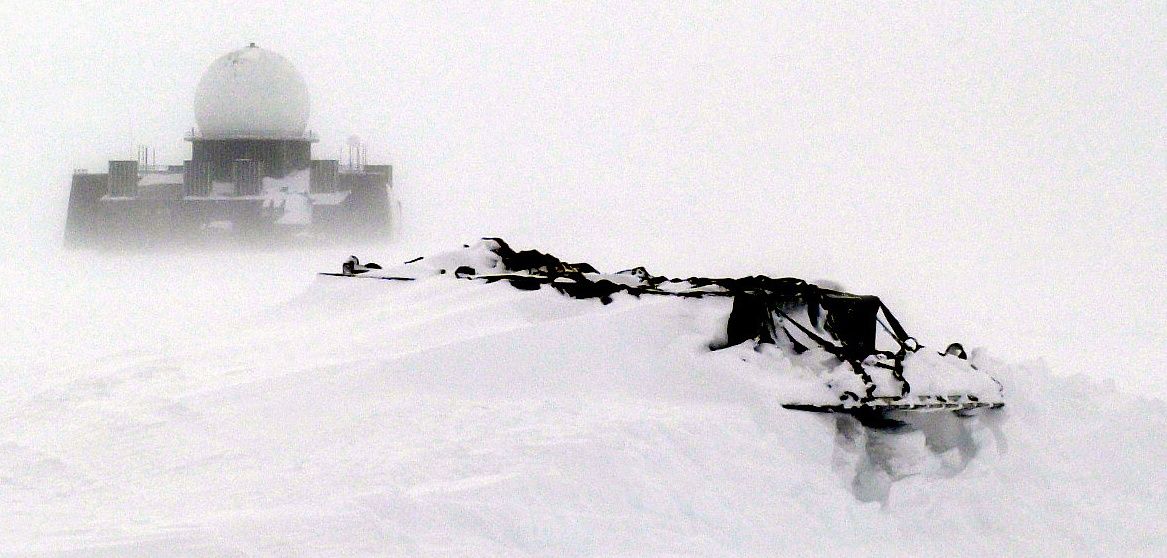
The area around Iqaluit has been a traditional fishing and gathering site for Inuit and their predecessors for thousands of years. The modern community's origins are tied to the Second World War, when the United States Army Air Forces established Frobisher Bay Air Base there in 1942 on land leased from Canada. The site, chosen with the help of Inuk guide Nakasuk, served as a critical refuelling stop for aircraft being ferried to Europe and was known as Crystal Two. After the war, the Hudson's Bay Company relocated its south Baffin operations to the nearby valley of Apex to utilize the airfield. The community's population grew rapidly in the mid-1950s during the construction of the Distant Early Warning Line, which brought hundreds of construction workers, military personnel, and Inuit seeking jobs and services.
Following the departure of the American military in 1963, the settlement continued as a Canadian government administrative centre for the eastern Arctic. Local governance began with the first community council elections in 1964. The settlement was recognized as a village in 1974 and designated as a town in 1980. Bryan Pearson was elected as the first mayor in 1979. A significant symbolic change occurred on 1 January 1987, when the municipality officially shed its colonial name, Frobisher Bay, and restored its original Inuktitut name, Iqaluit. The city's future was cemented on 11 December 1995, when residents of the soon-to-be-created territory selected Iqaluit over Rankin Inlet to serve as the capital of Nunavut, which was established on 1 April 1999.
Since becoming the capital, Iqaluit has hosted events of national and international significance. Canada designated the city to host the G7 finance ministers' meeting on 5-6 February 2010, an event that required substantial investment in local infrastructure. On 29 July 2022, Pope Francis visited Iqaluit to meet with former residential school alumni, marking the first papal visit to Nunavut. A deep-sea port opened in Iqaluit in July 2023 after five years of construction.
Geography and Climate
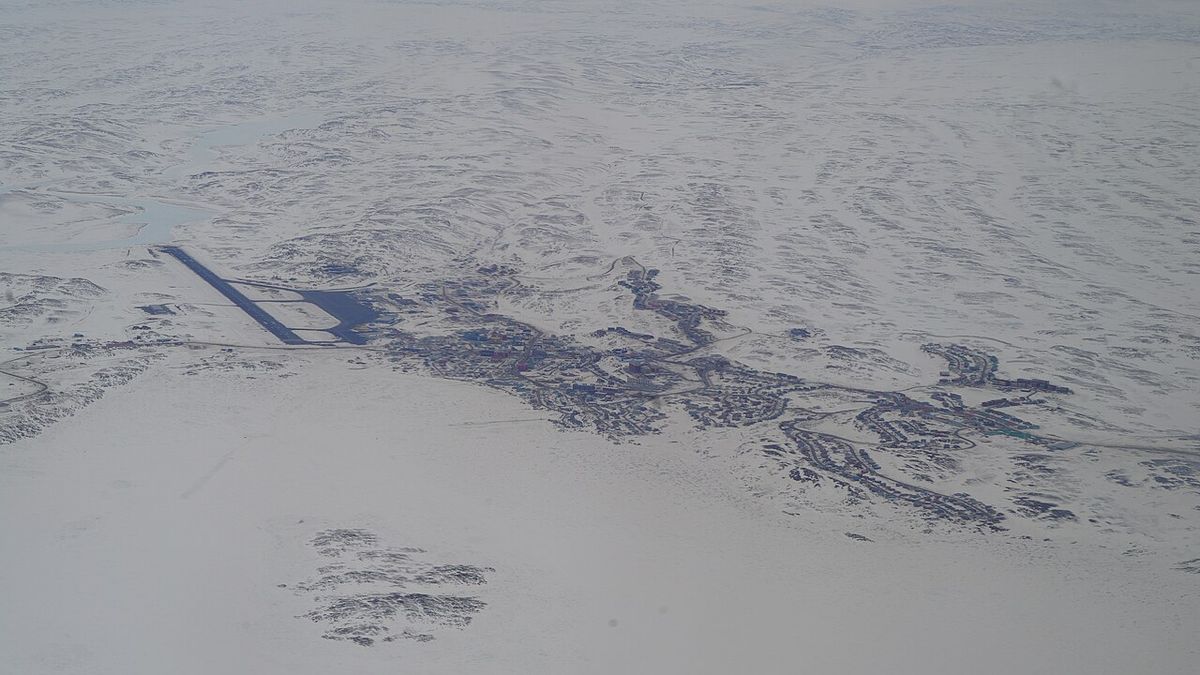
Iqaluit is situated in the Everett Mountains rising from Koojesse Inlet, which is part of the larger Frobisher Bay on Baffin Island's southeast coast. Its coordinates at 63 degrees north latitude make it the northernmost city in Canada, positioned well to the east of Nunavut's mainland and northeast of Hudson Bay. The city experiences a severe tundra climate characterized by long, bitterly cold winters and short, cool summers. Average monthly temperatures remain below freezing for eight months of the year, heavily influenced by the cold Baffin Island Current.
Despite its northern location, Iqaluit is actually south of the Arctic Circle. The city receives just over 400 millimetres of precipitation annually, which is relatively high for the Arctic Archipelago, with the summer being the wettest season. Winter temperatures are comparable to other northern continental locations like Yellowknife, but summer temperatures are significantly cooler due to the maritime influence. The record low temperature is -45.6 °C, recorded on 10 February 1967, while the record high is 26.8 °C, reached on 21 July 2008. The local environment is north of the natural tree line, though some protected, imported black spruce and low-lying shrubs like Arctic willow can be found.
The climate in Iqaluit is demonstrably changing. Data shows a warming trend, with the mean annual temperature rising from -9.0 °C in 1979 to -6.8 °C in 2023. An analysis of temperature anomalies reveals that in the 23-year period from 1979, 14 years were cooler than average and 9 were warmer. In the subsequent 23-year period leading to 2023, only 3 years were cooler than average, while 20 years displayed positive temperature anomalies, indicating a pronounced shift towards warmer conditions.
Cityscape and Landmarks
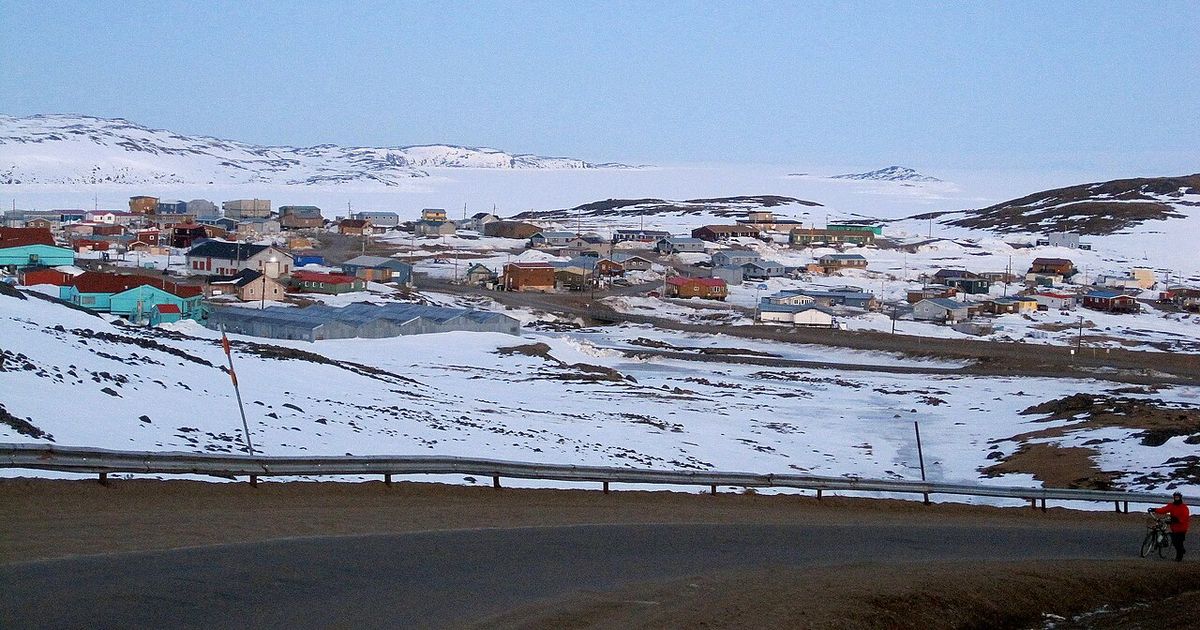
Iqaluit's architecture is largely functional, designed for harsh conditions, cost efficiency, and heat retention. The cityscape includes structures from 1950s military barracks to 1970s modernist buildings like the original Nakasuk School and the steel-reinforced concrete high-rise complex. The suburb of Apex, located about 5 kilometres southeast of the city centre, retains several restored historical buildings, including former Hudson's Bay Company structures that now house an art gallery. The most architecturally distinctive building is St. Jude's Anglican Cathedral, the seat of the Anglican Diocese of The Arctic, which is built in the shape of an igloo.
The original St. Jude's Cathedral, built in 1972, was severely damaged by arson on 5 November 2005 and demolished on 1 June 2006. Its replacement, often called the Igloo Cathedral, was completed in December 2010 and officially opened on 3 June 2012. Another key landmark is the Nunavut Legislative Assembly Building, notable for its interior adorned with significant Inuit artwork. Plans are underway to develop a new legislative building outside the city on the Apex Road. Inuksuk High School, with its distinctive cloverleaf shape, overlooks the city from a ridge. The city is also the location of the Nunatta Sunakkutaangit Museum, which houses a large collection of Inuit and Arctic objects in a restored Hudson's Bay Company building.
The city offers several cultural and recreational sites. Just west of the city is the Sylvia Grinnell Territorial Park, featuring a visitor centre overlooking waterfalls, tidal flats, and traditional fishing sites along the Sylvia Grinnell River. Other nearby parks include Qaummaarviit Territorial Park, an island site with ancient Inuit sod house remains, and Katannilik Territorial Park Reserve, which links to Kimmirut via traditional overland routes. The Arctic Winter Games Arena was constructed in Iqaluit for the 2002 Arctic Winter Games, which the city co-hosted with Nuuk, Greenland.
- St. Jude's Anglican Cathedral (Igloo Cathedral): Opened 3 June 2012, a white igloo-shaped landmark.
- Nunavut Legislative Assembly Building: Colourful interior featuring premier Inuit art.
- Nunatta Sunakkutaangit Museum: Housed in a restored HBC building, containing Inuit artifacts.
- Sylvia Grinnell Territorial Park: Park west of the city with a river valley and waterfalls.
- Inuksuk High School: Distinctive blue and white cloverleaf-shaped school.
- Arctic Winter Games Arena: Built for the 2002 Arctic Winter Games, co-hosted with Nuuk, Greenland.
Demographics and Society
According to the 2021 Canadian census, Iqaluit had a population of 7,429, a decrease of 4.0 per cent from the 2016 count of 7,740. The population centre had 6,991 people. With a land area of 51.58 square kilometres, the population density was 144.0 people per square kilometre. Inhabitants are known as Iqalummiut. The city has the lowest population of any Canadian capital but contains the highest number and percentage of Inuit residents among Canadian cities with over 5,000 people, with 3,900 Inuit comprising 59.1 per cent of the population as of 2016. The population is notably young, with a median age of 30.1 years, over a decade younger than the national median of 40.6 years.
The census reported that 750 immigrants, comprising 10.3 per cent of the population, were born outside Canada. The top countries of origin were the Philippines (26.0 per cent of immigrants), Cameroon, the United Kingdom, Nigeria, Zimbabwe, the United States, India, Pakistan, China, Jamaica, and Ethiopia. Household economics show a higher cost of living, with the median dwelling value at $376,639, well above the national median. The median after-tax household income is $98,921, nearly double the national rate. The average household size is 2.8 people.
Educational attainment for residents over 25 is relatively high, with 75.7 per cent having a high school diploma or higher and 59.8 per cent having a post-secondary certificate, diploma, or degree. Conversely, 24.3 per cent have no certificate, diploma, or degree. The city's religious composition is predominantly Christian (54.4 per cent), with a significant proportion reporting no religious affiliation (41.9 per cent). Smaller communities include Muslims (1.2 per cent), adherents of Indigenous spirituality (0.7 per cent), Hindus (0.4 per cent), Jews (0.3 per cent), and Buddhists (0.1 per cent).
Language and Culture
Iqaluit is a multilingual city with no single majority mother tongue. The 2021 census reported that 49.1 per cent of residents claimed English as their first language, while 30.0 per cent reported Inuktitut. A further 5.9 per cent reported French as their mother tongue. English is nearly universally spoken, with 97.2 per cent proficiency, whereas 53.1 per cent can speak Inuktitut. Language training initiatives, such as those at the Pirurvik Centre, focus on training instructors to teach Inuktitut in various community dialects.
The city is a hub for Inuit cultural expression and hosts several annual festivals. Toonik Tyme is a volunteer-run spring festival that blends traditional Inuit activities with modern events. The Alianait Music and Arts Festival is held around 21 June each year, attracting Canadian and international artists like Joshua Haulli, Quantum Tangle, Washboard Hank, and Namgar. These events celebrate the arts scene and the enduring traditions of the North.
Cultural institutions are central to preserving and promoting heritage. The Nunatta Sunakkutaangit Museum is a key repository of material culture, and the legislative building contains a major collection of contemporary Inuit art. The unique architecture of St. Jude's Cathedral reflects the integration of traditional forms into community life. The city is also home to the Nunavut Arctic College's Nunatta Campus and the Akitsiraq Law School.
Economy, Transportation and Isolation
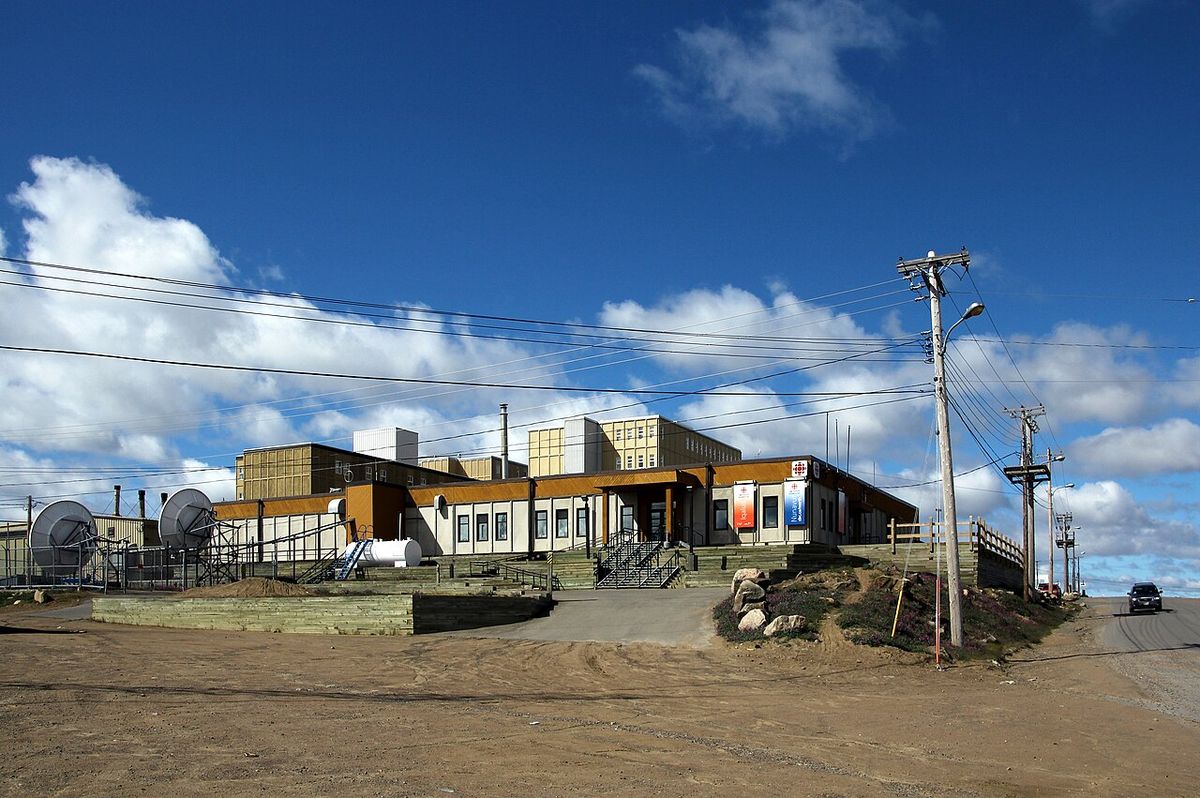
Iqaluit's economy is dominated by public administration, as the seat of the territorial government, and related services. The city functions as the primary transportation and logistics hub for the Qikiqtaaluk Region, with all goods arriving by air or by sea during the brief summer shipping season. This isolation leads to a high cost of living, as nearly all food, fuel, and construction materials must be imported. There are no road or rail connections to southern Canada, making air travel via Iqaluit Airport the year-round lifeline for people and critical supplies.
The airport itself has a history dating back to its origins as the wartime Crystal Two airstrip. Seasonal marine transport is handled through the deep-water port, which opened in July 2023 and is ice-free for approximately three to four months each year. This logistical constraint means the city must stockpile essential goods during the shipping window to last through the winter. The high costs associated with this supply chain are reflected in consumer prices and housing costs within the city.
Major projects and events have periodically stimulated the local economy and infrastructure. The construction of the DEW line in the 1950s was an early boom. Hosting the 2002 Arctic Winter Games led to the construction of the Arctic Winter Games Arena. The 2010 G7 finance ministers' meeting required significant upgrades to telecommunications and hospitality infrastructure. Despite these developments, economic growth remains tightly bound to public sector spending and the inherent challenges of Arctic geography. The city has a local road system only stretching from Apex to the Sylvia Grinnell Territorial Park, and there is no public highway connection.
Public Holidays in Nunavut
Residents of Iqaluit observe the statutory holidays of Nunavut, which include nationwide Canadian holidays and territory-specific days. The national holidays observed across Canada include New Year's Day, Good Friday, Canada Day, Labour Day, National Day for Truth and Reconciliation, Thanksgiving, Remembrance Day, Christmas Day, and Boxing Day. In Nunavut, these are supplemented by holidays that reflect the territory's unique history and culture, such as Nunavut Day. The list of holidays is important for planning government services, school closures, and business hours in the capital.
A key territorial holiday is Nunavut Day, celebrated on 9 July, which commemorates the passing of the Nunavut Act and the Nunavut Land Claims Agreement Act in 1993. Victoria Day, observed on the third Monday in May, is also a statutory holiday in the territory. The National Day for Truth and Reconciliation on 30 September is recognized as a statutory holiday in Nunavut. The Civic Holiday, observed on the first Monday in August, is a working holiday in many jurisdictions but is widely observed as a day off in Nunavut.
| Holiday | 2026 Date | Notes |
|---|---|---|
| New Year's Day | Thursday, 1 January | National holiday |
| Good Friday | Friday, 3 April | National holiday |
| Easter Monday | Monday, 6 April | Observed in Nunavut |
| Victoria Day | Monday, 18 May | Statutory holiday in Nunavut |
| Canada Day | Wednesday, 1 July | National holiday |
| Nunavut Day | Thursday, 9 July | Territorial holiday |
| Civic Holiday | Monday, 3 August | Widely observed in Nunavut |
| Labour Day | Monday, 7 September | National holiday |
| National Day for Truth and Reconciliation | Wednesday, 30 September | Statutory holiday in Nunavut |
| Thanksgiving | Monday, 12 October | National holiday |
| Remembrance Day | Wednesday, 11 November | National holiday |
| Christmas Day | Friday, 25 December | National holiday |
| Boxing Day | Saturday, 26 December | Observed |
Timeline of Key Events
The history of Iqaluit begins with its use as a traditional fishing location by Inuit and their predecessors for thousands of years. In 1942, the United States built the Frobisher Bay Air Base there, which was part of the Crimson Route and is now Iqaluit Airport. The community grew during the 1950s construction of the Distant Early Warning Line and became an administrative centre for the eastern Arctic. Its name was officially changed from Frobisher Bay to Iqaluit in 1987, and it was selected as the capital of Nunavut in a 1995 plebiscite before the territory's establishment in 1999.
- 1576: English explorer Martin Frobisher sails into Frobisher Bay, holding the first Anglican service in North America there.
- 1942: The United States Army Air Forces establishes Frobisher Bay Air Base, marking the community's modern founding.
- 1949: The Hudson's Bay Company moves its trading post to Apex to use the airfield.
- 1955: Frobisher Bay becomes the centre for DEW Line construction, attracting Inuit and non-Inuit settlers.
- 1964: The first community council is formed.
- 1974: Frobisher Bay gains village status.
- 1979: Bryan Pearson is elected as the first mayor.
- 1980: Frobisher Bay designated as a town.
- 1987: Frobisher Bay is officially renamed Iqaluit on 1 January.
- 1993: The Nunavut Land Claims Agreement is signed in Iqaluit.
- 1995: Residents select Iqaluit as the capital of the new territory of Nunavut on 11 December.
- 1999: The Territory of Nunavut is established on 1 April.
- 2001: Iqaluit is officially chartered as a city on 19 April.
- 2002: Iqaluit co-hosts the Arctic Winter Games with Nuuk, Greenland.
- 2010: Iqaluit hosts the G7 finance ministers' meeting on 5-6 February.
- 2022: Pope Francis visits Iqaluit on 29 July, the first papal visit to Nunavut.
- 2023: A deep-sea port opens in Iqaluit in July.
Questions about Iqaluit
What does the name Iqaluit mean?
Iqaluit is an Inuktitut word meaning 'place of many fish'. This name reflects the area's long history as a traditional fishing location used by Inuit for thousands of years. The city was officially known as Frobisher Bay from 1942 until 1 January 1987. On that date, the original Inuktitut name was restored for the municipality.
Why was Iqaluit chosen as the capital of Nunavut?
Iqaluit was chosen as the capital of Nunavut because residents selected it in a plebiscite on 11 December 1995. In that vote, it was chosen over Rankin Inlet to serve as the future capital of the new territory. By that time, Iqaluit was already a significant administrative and logistical centre for the eastern Arctic, with established government services. The founding of Inuksuk High School in 1971 had also confirmed the government's commitment to the community as an administrative centre.
How do you get to Iqaluit?
Iqaluit is accessible only by air year-round and by sea during the summer months. Iqaluit Airport is the main air gateway, with regular flights from Ottawa, Montreal, and other northern communities. There are no roads or railways connecting Iqaluit to southern Canada. A deep-water port allows cargo ships to deliver supplies during the ice-free season.
What is the population of Iqaluit?
According to the 2021 Canadian census, the population of Iqaluit was 7,429, a decrease of 4.0 per cent from 2016. The population centre had 6,991 people. It is the smallest capital city in Canada by population. The city has a young demographic, with a median age of 30.1 years. As of 2016, it had 3,900 Inuit residents, comprising 59.1 per cent of the population.
What is the climate like in Iqaluit?
Iqaluit has a tundra climate with long, very cold winters and short, cool summers. Average temperatures are below freezing for eight months of the year. The city receives just over 400 millimetres of precipitation annually. The record low is -45.6 °C, and the record high is 26.8 °C. Data shows a clear warming trend, with the mean annual temperature rising from -9.0 °C in 1979 to -6.8 °C in 2023.
What are the main languages spoken in Iqaluit?
The main languages spoken in Iqaluit are English and Inuktitut, with no single majority mother tongue. According to the 2021 census, 49.1 per cent of residents reported English as their first language, and 30.0 per cent reported Inuktitut. English is spoken by 97.2 per cent of the population, while 53.1 per cent can speak Inuktitut. French was the mother tongue for 5.9 per cent of residents, which is the same percentage as those who can speak the language.
Sources: Wikipedia and current public reporting, checked by the Nosy Mag desk. Last updated 2026-10-27.