Nunatsiavut
Nunatsiavut is an autonomous Inuit region in northern Labrador, within the province of Newfoundland and Labrador. Established on December 1, 2005, through the landmark Labrador Inuit Land Claims Agreement, it is the first Inuit region in Canada to achieve self-government. The name Nunatsiavut, meaning "Our Beautiful Land" in Inuttitut, reflects the cultural and environmental connection of the Labradorimiut (Labrador Inuit) to their territory. The Government of Nunatsiavut holds jurisdictional authority over key areas including health, education, culture, and justice for its beneficiaries.
Path to Self-Governance and the Land Claims Agreement
The journey to self-government for the Labrador Inuit began with the formation of the Labrador Inuit Association (LIA) in 1973. The LIA filed a formal land claim with the provincial and federal governments in 1977, initiating negotiations that would span nearly three decades. An agreement in principle was reached in 2001, leading to a ratification vote on May 26, 2004, where over 75 percent of eligible Labrador Inuit voters approved the final agreement. The Labrador Inuit Land Claims Agreement was signed on January 22, 2005, and received Royal Assent in the Parliament of Canada on June 23, 2005, becoming a constitutionally protected treaty under Section 35 of the Constitution Act, 1982.
This comprehensive agreement was groundbreaking as it included self-government provisions within the land claim itself. It provided for the establishment of the Government of Nunatsiavut, which officially came into being on December 1, 2005, when the Labrador Inuit Constitution was adopted and the first interim cabinet was sworn in. The agreement settled claims over 72,520 square kilometres of land in northern Labrador and included 44,030 square kilometres of sea rights. Within this area, the Inuit were granted ownership of 15,800 square kilometres designated as Labrador Inuit Lands, along with special rights related to traditional land use across the entire claim area.
The financial components of the settlement included a $130 million compensation package from the federal government for the forced relocations of Inuit in the 1950s and $120 million to establish self-government. The agreement also secured royalty payments from the provincial government for resource extraction and included land, mineral, and marine rights. A key environmental outcome was the establishment of the Torngat Mountains National Park in the northern part of the land claim area. The first election for the new government was held in October 2006, marking the full transition to a democratically elected Inuit-led administration.
Structure of the Nunatsiavut Government
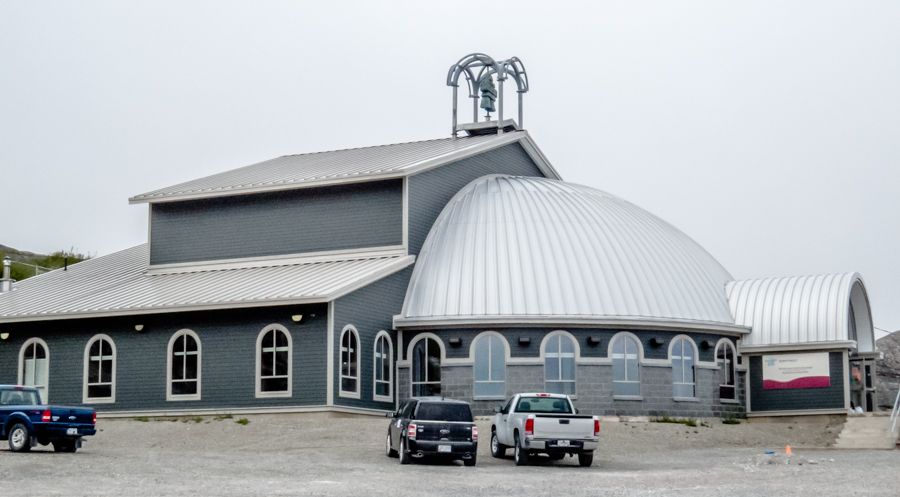
The Government of Nunatsiavut operates as a consensus government within Canada's parliamentary system, with a structure designed to separate political and operational powers. The legislature is the Nunatsiavut Assembly, which meets in the legislative capital of Hopedale. The Assembly is composed of a minimum of 16 members, including a President, ten Ordinary Members elected from specific constituencies, the Angajukĸâk (mayor) of each of the five Inuit Community Governments, and the Chairs of the Inuit Community Corporations. There are currently two Inuit Community Corporations, NunaKatiget Inuit Community Corporation and Sivunivut Inuit Community Corporation, and 18 members in the Assembly.
The President chairs the Nunatsiavut Executive Council, which functions as the cabinet. From the Assembly, a member is elected to act as First Minister, who then appoints the Executive Council. This council is responsible for implementing laws, developing policy, preparing legislation, and overseeing government administration, and it is accountable to the Assembly. The operational heart of the government is based in the administrative capital of Nain, where the Nunatsiavut Secretariat and government departments are headquartered. The key departments of the government are:
- Department of Finance, Human Resources and Information Technology
- Department of Education and Economic Development
- Department of Culture, Recreation and Tourism
- Department of Health & Social Development
- Department of Lands and Natural Resources
- Department of Nunatsiavut Affairs
- Nunatsiavut Secretariat
At the community level, governance is delivered through five Inuit Community Governments in Nain, Hopedale, Postville, Makkovik, and Rigolet. Each Inuit Community Government consists of a municipal council elected from and by both Inuit and non-Inuit residents. The council is led by an Angajukĸâk, who acts as the chief executive officer and mayor and who must be Inuk. Large settlements of Labrador Inuit outside the settlement area are represented by Inuit Community Corporations. The chairperson of each Inuit Community Corporation represents their community in the Nunatsiavut Assembly.
Geography and Communities
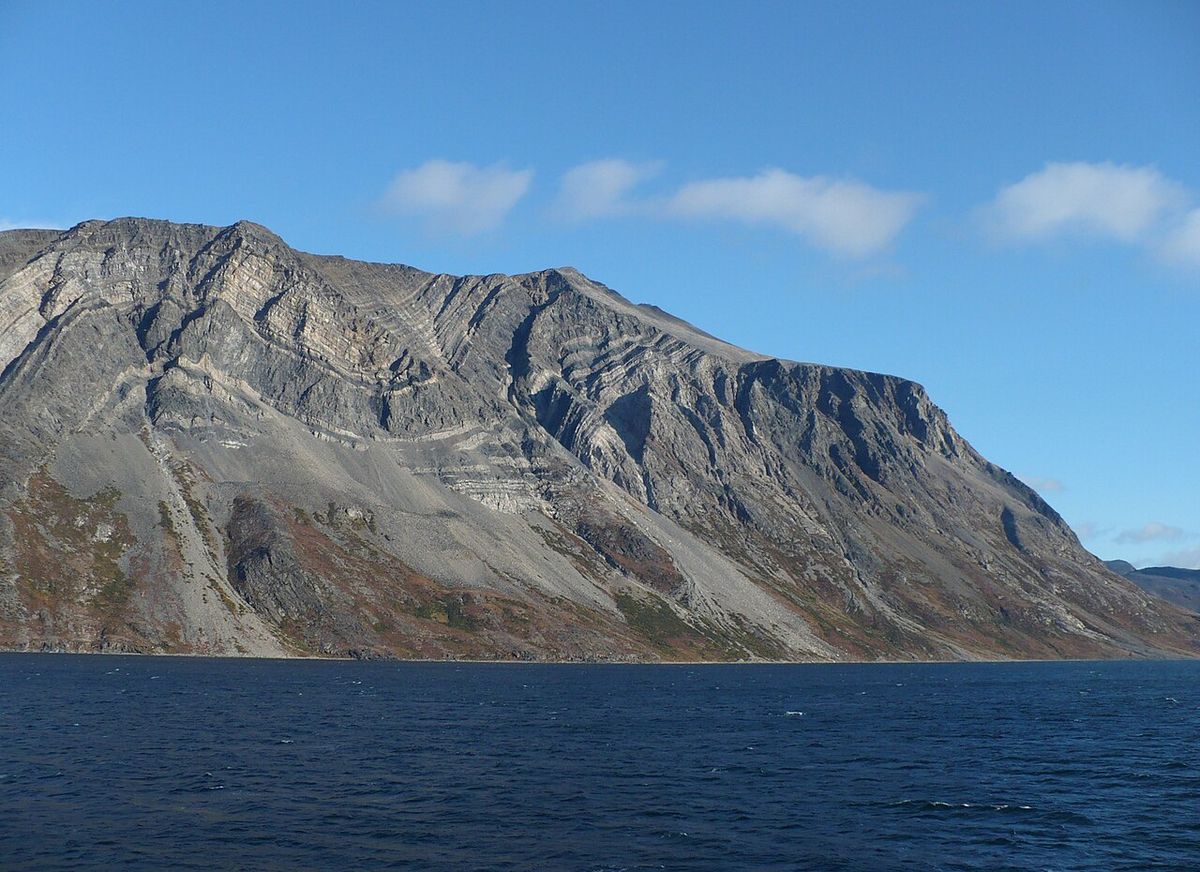
Nunatsiavut is the southernmost recognized Inuit territory in Canada, encompassing a vast and rugged portion of the Labrador coast. Its land claim stretches from south of Davis Inlet in the north to the area surrounding Hamilton Inlet in the south, with the Mulligan and Notakwanon rivers forming parts of its boundaries. The territory is divided into two primary geographic regions. The southern portion includes the communities of Rigolet, Makkovik, Postville, and Hopedale, which had a combined population of 1,433 according to the 2016 census. The northern portion is centred around Nain, the largest community and administrative centre, and includes the remote Torngat Mountains National Park.
The five primary Inuit communities are all coastal and are not connected by road to the rest of Labrador or Canada. Transportation between them relies on seasonal ferry service, now provided by the MV Kamutik W, which replaced the MV Northern Ranger in 2019, and on air travel served by Air Borealis. The region is located near other Indigenous communities, including the Innu communities of Natuashish and Sheshatshiu, as well as the larger centres of Happy Valley-Goose Bay and North West River. The territory's geography has historically supported a maritime Inuit culture based on harvesting the resources of the land and sea.
Demographics and Culture
According to the 2021 Canadian census, the population of the Nunatsiavut region (Statistics Canada's Division No. 11) was 2,323, a decrease from 2,558 in 2016. The population density is extremely low, at approximately 0.03 people per square kilometre. Ethnically, the region is overwhelmingly Indigenous, with 93.7 percent of residents reporting Indigenous ancestry in 2021. Of these, 2,095 individuals, or 90.5 percent of the total population, identified specifically as Inuit. The Nunatsiavut government enrols beneficiaries under two designations: Inuit and Kablunângajuit.
The Kablunângajuit are individuals of mixed Inuit and non-Inuit descent, or non-Inuit who settled in the region before 1940, often descendants of fur traders from Quebec, Scotland, and Norway. The term means "person who resembles a white person." As beneficiaries, they hold the same privileges as Inuit beneficiaries, and they are typically counted as Inuit in national census data. Religiously, the 2016 census indicated that 92.9 percent of residents identified as Christian, with 13.0 percent Anglican and 67.2 percent identifying as "Other Christian and Christian-related traditions," most likely Moravian. The preservation and revitalization of the Inuit language, Inuttitut (also called Inuttut), is a central cultural priority for the government.
Economy and Social Development
The economy of Nunatsiavut is shaped by its remote location, with traditional activities, public administration, and resource development playing key roles. The 2021 census reported an employment rate of 44.2 percent, an increase from 40.9 percent in 2016, and an unemployment rate of 19.3 percent, down from 29.9 percent five years prior. A major employer and economic driver is the Voisey's Bay nickel mine, located approximately 35 kilometres southwest of Nain. The mine provides significant royalty payments to the Nunatsiavut government as part of the land claims agreement, contributing to self-government revenues.
Social development remains a critical focus, particularly in areas like child welfare and housing. In 2019, an independent review titled A Long Wait for Change, completed at the Nunatsiavut government's request, found 150 Inuit children in the care of the provincial Department of Children, Seniors, and Social Development. The report made 33 recommendations, including supporting a transition to an Inuit-led child welfare system. On June 18, 2021, Nunatsiavut formally began the process of seeking devolution of child protection services from the province, with the goal of concluding negotiations within three years. The Nunatsiavut Housing Commission addresses ongoing housing needs in the five communities.
Recent Developments and Ongoing Priorities
The Nunatsiavut government continues to advance its jurisdiction and the well-being of its people. Recent initiatives include the pursuit of greater control over child welfare and the development of local renewable energy projects. The government also actively promotes language revitalization through tools like a dedicated Inuttitut language app and phrasebook designed for everyday use. Nunatsiavut maintains a firm position regarding the recognition of other groups in Labrador. It has consistently opposed the land claim and the bid for Section 35 rights by the NunatuKavut Community Council. The government also addresses overlapping claims, such as the historical claim by Makivik Corporation in Quebec to a portion of the coast, which was accepted in 1993. Internally, the government focuses on implementing the principles of the Labrador Inuit Constitution, fostering economic development, and ensuring the preservation of the Inuit culture, language, and environment for future generations.
Notable Figures from Nunatsiavut
Nunatsiavut has been home to many influential Inuit leaders and figures. The current President, Johannes Lampe, has held the office since 2016. His predecessor, Sarah Leo, served as the second President from 2012 to 2016. At the national level, Natan Obed, President of the Inuit Tapiriit Kanatami, is a prominent advocate for Inuit rights across Canada. Historical figures include Mikak, one of the first Inuit to travel to and return from Europe in the mid-1700s, and John Shiwak, a celebrated Inuit soldier who served in the First World War.
- Abraham Ulrikab, a former resident of Hebron whose diaries provide a crucial historical record.
- Caubvick, an Inuk woman for whom Mount Caubvick, the highest point in Labrador, is named.
- Randy Edmunds, Member of the House of Assembly for Torngat Mountains from 2011 to 2019.
- Keith Russell, Member of the House of Assembly for Lake Melville elected in 2025.
- Marlene Winters-Wheeler, speaker of the Nunatsiavut Assembly.
Key Historical and Government Milestones
- 1760s: Moravian missionaries become the first Europeans to establish a sustained presence north of Hamilton Inlet.
- 1973: The Labrador Inuit Association (LIA) is formed to advance Inuit rights and culture.
- 1977: The LIA files its initial land claim with the provincial and federal governments.
- May 26, 2004: Labrador Inuit voters ratify the land claims agreement.
- June 23, 2005: The Labrador Inuit Land Claims Agreement receives Royal Assent in Parliament.
- December 1, 2005: The Government of Nunatsiavut is formally established and the Labrador Inuit Constitution is adopted.
- October 2006: Nunatsiavut holds its first general election.
- 2012: The Nunatsiavut Assembly Building opens in Hopedale as the permanent legislative home.
- June 18, 2021: Nunatsiavut begins the formal process to seek devolution of child protection services from the province.
Questions about Nunatsiavut
What does the name Nunatsiavut mean?
Nunatsiavut means "Our Beautiful Land" in the Inuttitut language. This name was formally ratified by the Labrador Inuit Constitution and passed by the Labrador Inuit Association in 2002. The name reflects the deep connection the Labrador Inuit have with their traditional territory. Its use was officially established as part of the movement towards self-governance.
When was the Nunatsiavut government established?
The Government of Nunatsiavut was formally established on December 1, 2005. On that date, the Labrador Inuit Constitution was adopted and the first interim cabinet was sworn in. This marked the official transfer of power from the provincial government for matters like health and education. The first election for the nine-member government was then held in October 2006.
Who is the current President of Nunatsiavut?
The current President of Nunatsiavut is Johannes Lampe. He assumed office in 2016 and chairs the Nunatsiavut Executive Council. As President, Lampe provides leadership for the autonomous region and represents Labrador Inuit interests. He was preceded in office by Sarah Leo, who served from 2012 to 2016.
What are the main communities in Nunatsiavut?
The five main Inuit communities in Nunatsiavut are Nain, Hopedale, Rigolet, Makkovik, and Postville. Nain is the largest community and serves as the administrative centre, housing the government head office. Hopedale is the legislative capital where the Nunatsiavut Assembly meets in its dedicated building. The southern portion containing Rigolet, Makkovik, Postville, and Hopedale had a population of 1,433 as of 2016.
What powers does the Nunatsiavut government have?
The Government of Nunatsiavut has jurisdictional authority over health, education, and justice in its land claim area. It can make laws relating to cultural affairs, education, and health for its people. The government also owns 15,800 square kilometres of designated Labrador Inuit Lands. It holds special rights related to traditional land use across a larger settlement area of 72,520 square kilometres.
What is the Kablunângajuit designation?
The Kablunângajuit designation applies to beneficiaries of mixed Inuit and non-Inuit descent, or non-Inuit who settled in the region before 1940. These individuals are enrolled with the same rights and privileges as Inuit under the land claims agreement. The term Kablunângajuk means "person who resembles a white person. Their ancestors were often fur traders from places like Quebec or Scotland who married Inuit.
Sources and further reading
- Nunatsiavut (Wikipedia)
- Nunatsiavut (indigenouspeoplesatlasofcanada.ca)
- Nunatsiavut Government: Home (nunatsiavut.com)
Checked by the Nosy Mag desk. Last updated 2026-10-25.