History of Manitoba
The history of Manitoba covers thousands of years, from the arrival of Paleo-Indians to its emergence as a modern Canadian province. Its story is defined by the cultures of First Nations and Métis peoples, European exploration and the fur trade, and its contentious entry into Confederation. The province's development was shaped by the Red River Colony, the Red River Rebellion, and the subsequent numbered treaties. Manitoba's evolution from a small postage stamp province to its current size reflects its growing importance, with its economy transitioning from a reliance on agriculture to a more diversified base.
Early Indigenous Presence and European Contact
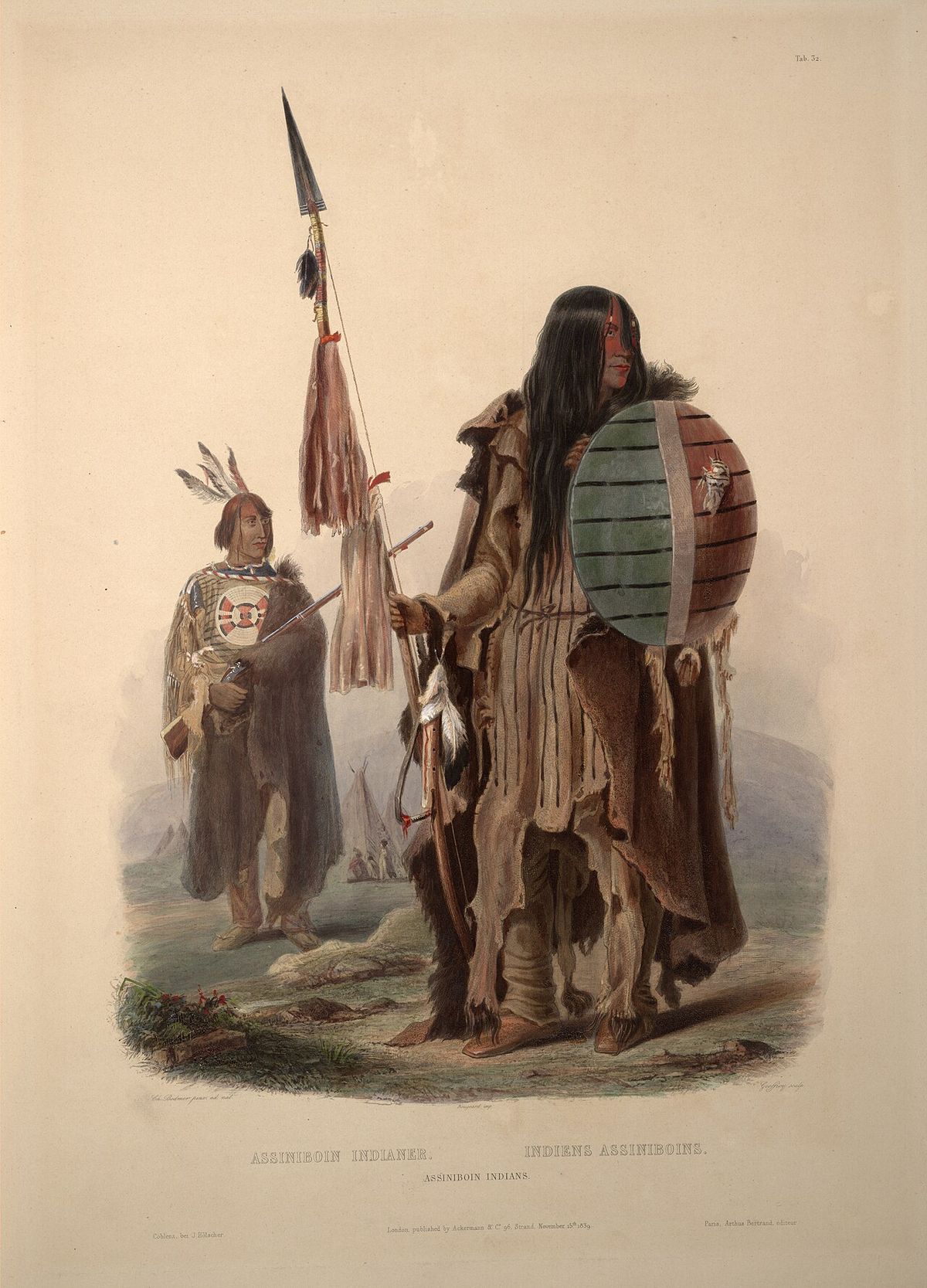
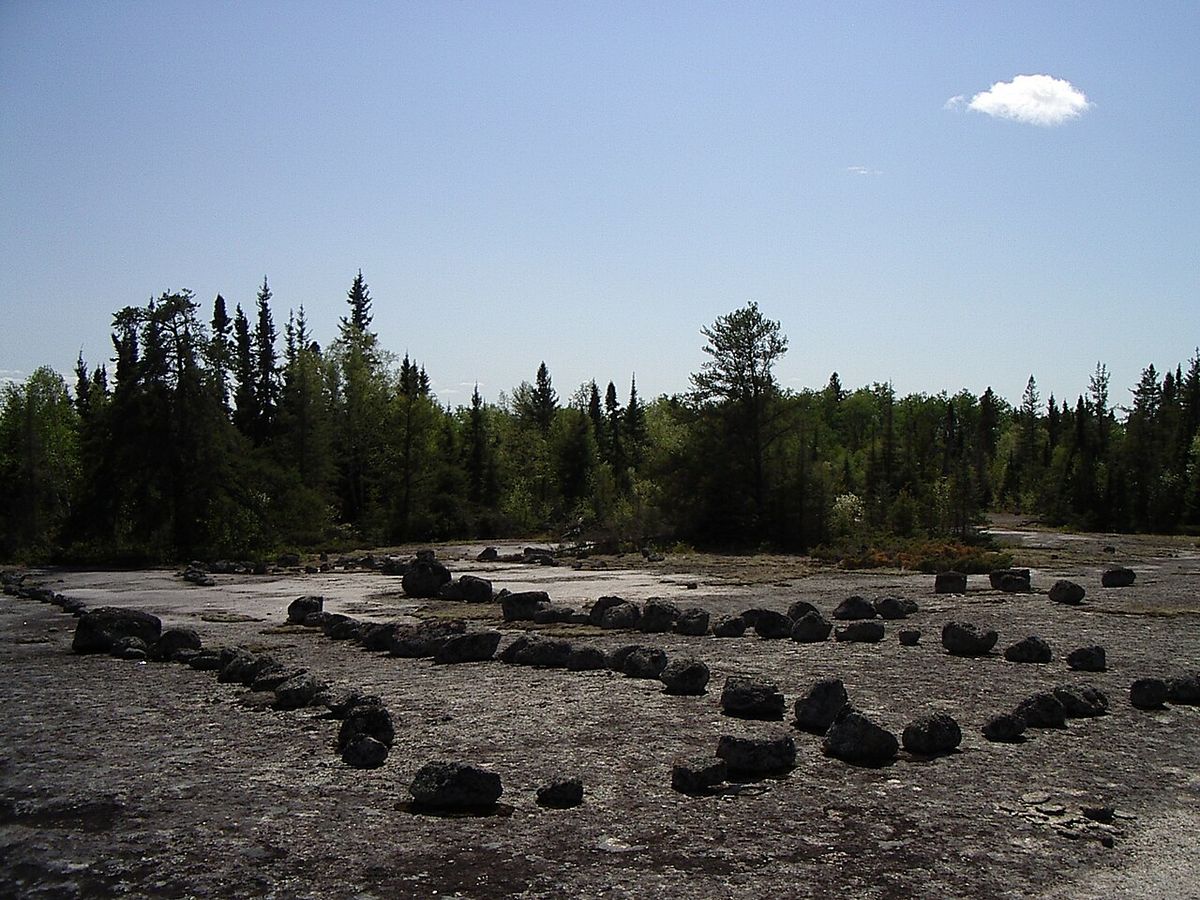
The land now known as Manitoba has been inhabited for approximately 10,000 years, since the retreat of the last ice age glaciers. The first exposed land in the southwest was the Turtle Mountain area. Early Paleo-Indians left behind pottery shards, spear and arrow heads, and signs of agriculture along the Red River near Lockport where corn and other seed crops were planted. Over millennia, settlements of Ojibwa, Cree, Dene, Sioux, Mandan, and Assiniboine peoples were established, connected by an extensive trading network on both land and water. The Whiteshell Provincial Park region along the Winnipeg River, with its ancient petroforms and pictographs, served as a significant trading and cultural centre for over two thousand years. Artifacts like cowry shells and copper found there are proof of trade routes that stretched to the oceans and to major southern civilizations along the Mississippi River. In Northern Manitoba there are areas that were mined for quartz to make arrow heads.
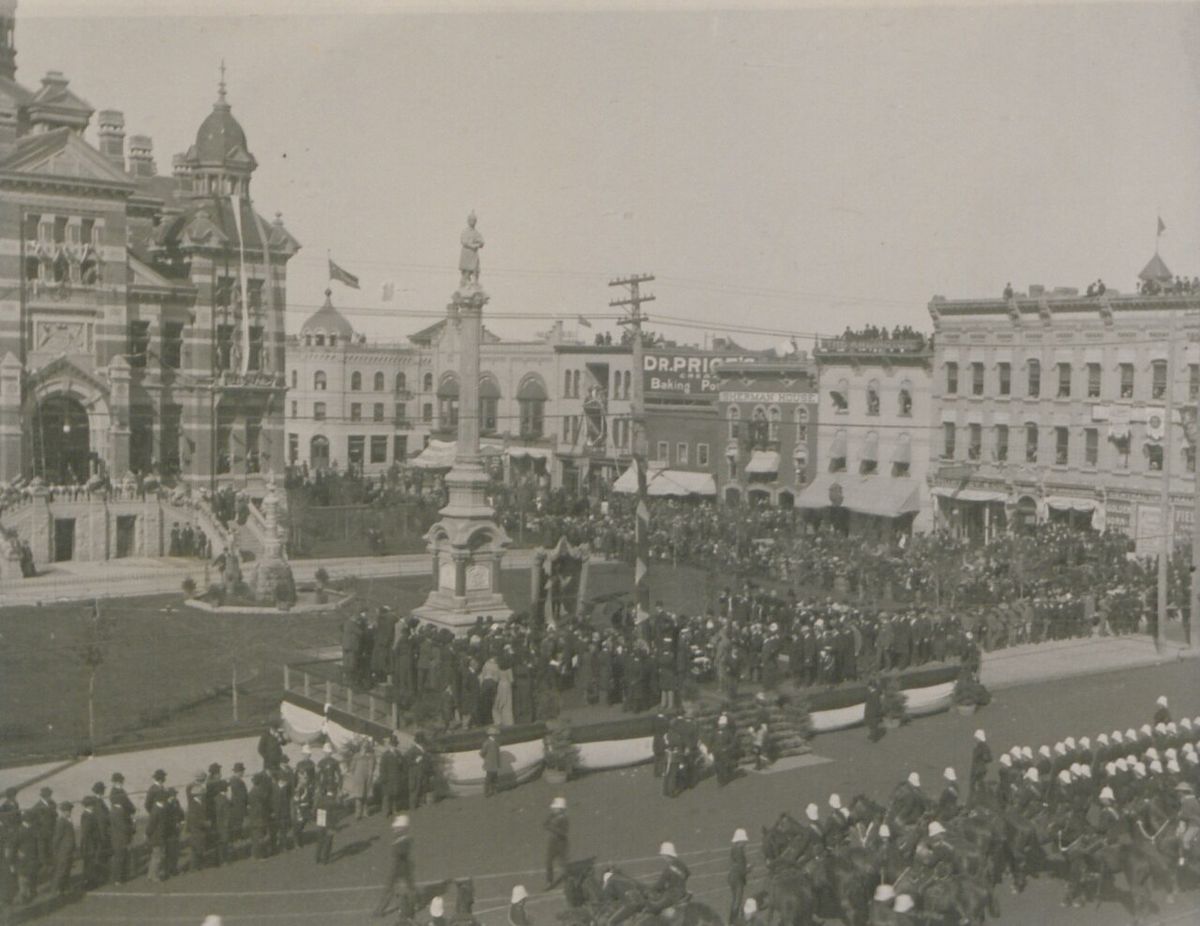
European exploration of the region began in the early 17th century, driven by the search for the Northwest Passage. Henry Hudson sailed into Hudson Bay in 1611. Sir Thomas Button reached the mouth of the Nelson River in 1612, naming it and overwintering there. Henry Kelsey was the first European to travel from Hudson Bay to the prairies in the late 17th century, reporting on buffalo and grizzly bears. The French explorer Pierre Gaultier de Varennes, sieur de La Vérendrye, visited the Red River Valley in the 1730s, reaching the Forks of the Red and Assiniboine Rivers. This period of contact was dominated by the fur trade. The Hudson's Bay Company was granted a commercial monopoly over the entire Hudson Bay watershed, named Rupert's Land, in 1670. The Montreal-based North West Company emerged as a fierce competitor after the British conquest of New France in 1763. The name Manitoba likely comes from Cree or Ojibwe and means 'strait of the Manitou (spirit)'.
The Fur Trade Era and the Red River Colony
Following British victory in the Seven Years' War in 1763, French claims to the region ended. The Hudson's Bay Company controlled Rupert's Land, which incorporated the entire Hudson Bay watershed. Most rivers in Manitoba eventually flow north into Hudson Bay. The competitive fur trade intensified, with forts established by both the HBC and the North West Company. York Factory was founded in 1684 as a key HBC post. A significant shift occurred in 1811 when Thomas Douglas, Lord Selkirk, secured a land grant from the HBC to establish an agricultural settlement for displaced Scottish Highlanders. The Red River Colony was founded in 1812 at Point Douglas, north of present-day Winnipeg, with the first Selkirk settlers overwintering at Fort Daer in Pembina.
Its establishment directly conflicted with the existing Métis population and the fur trade economy, which relied on buffalo pemmican. The tensions culminated in the Battle of Seven Oaks in 1816, where one Métis and 21 HBC men, including the governor, were killed. In 1817, seeking to ease conflict, Lord Selkirk signed the Peguis Selkirk Treaty, a land-sharing agreement with Chief Peguis and four other Saulteaux and Cree chiefs. The period also saw Lord Selkirk help bring the first Roman Catholic missionaries, including Father Provencher, to the settlement in 1818. Meanwhile, the border with the United States was formalized at the 49th parallel by the Treaty of 1818, defining Manitoba's southern limit and transferring areas south of the parallel to the United States. Thomas Spence first suggested the name 'Republic of Manitobah' for an area south of Lake Manitoba.
Creation and Expansion of the Province
In 1870, the British government transferred Rupert's Land to Canada through the Deed of Surrender, forming the North-West Territories. Fearing the loss of their land and culture, the Métis of the Red River Valley launched the Red River Rebellion under Louis Riel and established a provisional government. This government negotiated the terms of the Manitoba Act, which created the Province of Manitoba and provided for its entry into Confederation on 15 July 1870 as the first province created from the North-West Territories. The original province was a small square often called the postage stamp province, bounded by the 49th parallel to the south, 96° longitude to the east, 99° longitude to the west, and 50°30' north. Louis Riel was pursued by British army officer Garnet Wolseley and fled into exile.
The new provincial government controlled by Anglo Canadians largely ignored land guarantees made to the Métis, prompting many to migrate west to what would become Saskatchewan and Alberta. Manitoba's borders were expanded in 1881, taking land from the North-West Territories and the District of Keewatin, though a dispute with Ontario over a large portion of the Keewatin land was awarded to Ontario in 1889. The province reached its current size in 1912, absorbing land from the Northwest Territories to reach 60°N, uniform with the northern reach of its western neighbours Saskatchewan, Alberta, and British Columbia. This period also saw the establishment of distinct ethnic settlements, including the East and West Reserves for Russian Mennonites in 1874 and 1876, and the Icelandic settlement at Gimli, known as New Iceland, in 1875, which was the largest settlement of Icelanders outside of Iceland.
- 1870: Manitoba Act creates the province.
- 1871, August 3: Treaty No. 1 is signed at Lower Fort Garry, beginning the Numbered Treaties process.
- 1881: First major expansion of provincial borders.
- 1889: Ontario wins disputed Keewatin territory.
- 1912: Borders expanded north to 60°N, achieving present size.
Numbered Treaties were signed in the late 19th and early 20th centuries with the chiefs of various First Nations. These treaties made specific promises of land for every family. As a result, a reserve system was established under the jurisdiction of the Government of Canada. The prescribed amount of land promised to the native peoples was not always given. This led to efforts by aboriginal groups to assert rights to the land through aboriginal land claims, many of which are still ongoing. The government expected Manitoba's population to reach 3 million quickly after the legislature was built.
Social Conflict and Political Development
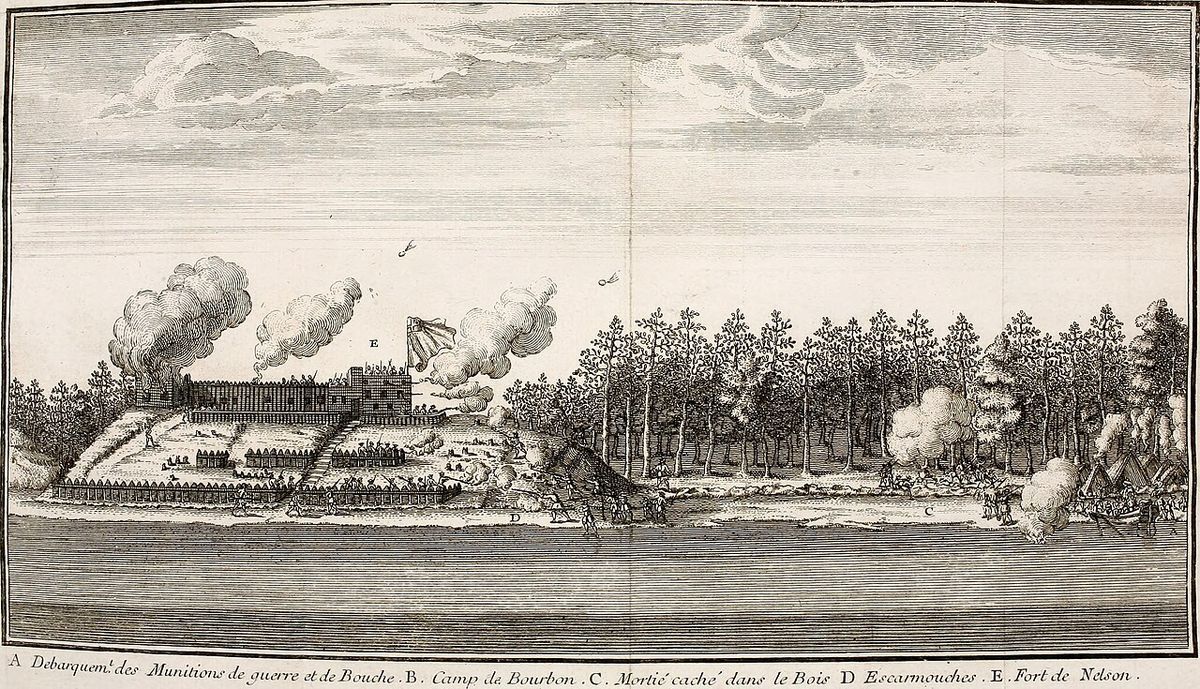
The late 19th century was marked by significant cultural and political strife. The Manitoba Schools Question became a national crisis after the provincial legislature passed a law in 1890 removing funding for French Catholic schools. This violated guarantees of a state-supported separate school system in the original constitution of Manitoba. The French Catholic minority asked the federal government for support. The federal Conservatives proposed remedial legislation to override Manitoba, but they were blocked by the Liberals, led by Wilfrid Laurier. The Manitoba Schools issue became an issue in the 1896 Canadian federal election, where it worked against the Conservatives and helped elect the Liberals. As Prime Minister, Laurier implemented a compromise stating that Catholics in Manitoba could have their own religious instruction for 30 minutes at the end of the day if there were enough students to warrant it, implemented on a school-by-school basis.
The early 20th century saw Winnipeg emerge as the third-largest city in Canada, a boomtown with outside investment and immigration. When the Manitoba Legislature was built, it was expected the province would soon have a population of 3 million. Growth cooled after the First World War. This period was accompanied by severe social tensions, culminating in the Winnipeg General Strike of 1919 which shut down most activity for six weeks, starting May 15. The strike collapsed on June 25, 1919, and its aftermath saw eight leaders go on trial, with most convicted on charges of seditious conspiracy, illegal combinations, and seditious libel. Four were aliens deported under the Canadian Immigration Act, which weakened organized labour. In the 1917 federal election during the conscription crisis, the Union party carried all but one seat in Manitoba. The 1920 provincial election resulted in no majority. New elections in 1922 saw the United Farmers of Manitoba win 30 of 57 seats.
Twentieth Century Challenges and Infrastructure
Manitoba's economy was historically based on farming, grains, cattle, and hay, but the 20th century drove diversification and major infrastructure development. The Great Depression from 1929 hit especially hard in Western Canada, with the collapse of the world market combined with a steep drop in agricultural production due to drought. This period also saw the founding of the Manitoba Co-operative Commonwealth Federation, the forerunner to the New Democratic Party of Manitoba, in 1932. During the Second World War, Canada entered the conflict in 1939. Manitoba played a major role in the British Commonwealth Air Training Plan, with Winnipeg as one of the major commands and air training schools throughout the province. The 1942 Victory Loan campaign organized If Day, a simulated Nazi invasion and occupation of Manitoba that raised over 65 million dollars for the war effort. Several Manitoba-based regiments were deployed overseas, including Princess Patricia's Canadian Light Infantry.
Frustration with shipping grain through eastern ports led Manitoba farmers to lobby for their own grain port on Hudson Bay, which led to the creation of the Hudson Bay Railway. Construction began in stages north from The Pas after a railway bridge was built over the Saskatchewan River in 1910 to 1911 by the Canadian Northern Railway. After initial surveys considered both Churchill and Port Nelson, it was decided to proceed to Port Nelson in 1912, but harbour construction there ran into engineering and cost problems and was abandoned during the First World War. Following the CNoR bankruptcy in 1918 and the creation of the Canadian National Railways, the federal government undertook to complete the railway to Churchill, using the research ship CSS Acadia to survey for a port. The railway and port were opened to shipping in 1929. Another critical infrastructure project was spurred by the catastrophic 1950 Red River Flood, which inundated Winnipeg and had to be partially evacuated. The damage led Premier Duff Roblin to advocate for the construction of the Red River Floodway, which was completed in 1968 after six years of excavation, with permanent dikes erected in eight towns south of Winnipeg.
| Project | Purpose | Key Details | Completion |
|---|---|---|---|
| Hudson Bay Railway & Port of Churchill | Provide grain shipping route to Hudson Bay | Built in stages from The Pas. Shifted from Port Nelson to Churchill. Surveyed by CSS Acadia. Political and engineering challenges delayed it. | 1929 |
| Red River Floodway | Protect Winnipeg from Red River flooding | Excavated over six years following 1950 flood. Includes dikes in eight towns and diversion dams in Winnipeg. | 1968 |
The Modern Era and Historical Recognition
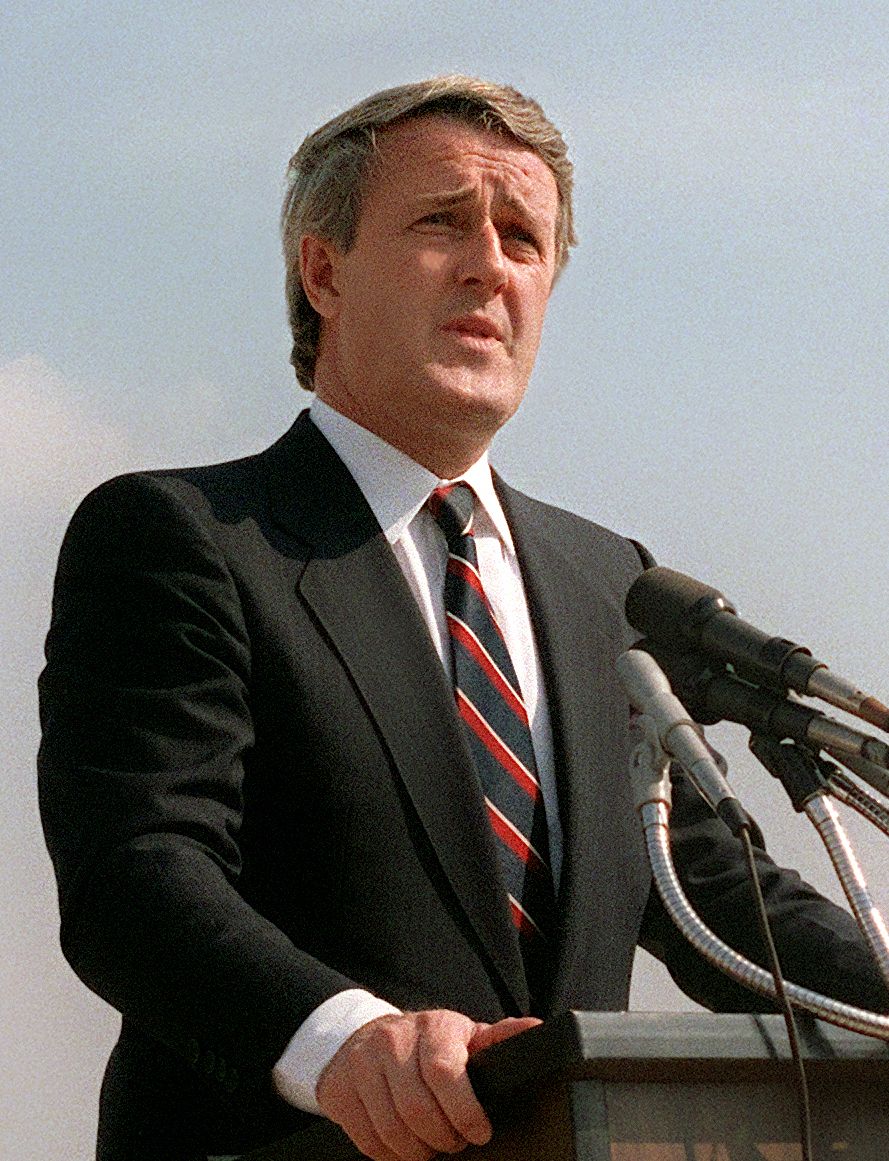
The latter half of the 20th century saw Manitoba continue to evolve and celebrate its history. The province celebrated the centennial of its entry into Confederation in 1970, with Princess Anne and Prince Charles, Prince of Wales, presiding over the official celebrations. The economy diversified further due to urbanization, moving beyond its agricultural base. Constitutional debates touched the province, as in 1990 when Prime Minister Brian Mulroney attempted to pass the Meech Lake Accord, a series of constitutional amendments to persuade Quebec to endorse the Canada Act 1982. Unanimous support in the legislature was needed to bypass public consultation. Manitoba politician Elijah Harper, a Cree, opposed because he did not believe First Nations had been adequately involved in the Accord's process, and thus the Accord failed. In 1997, the 'Flood of the Century' caused over 400 million dollars in damages in Manitoba, but the floodway prevented Winnipeg from flooding.
Historical recognition and reconciliation efforts have gained prominence in recent decades. In 2021, the Manitoba legislature passed The Emancipation Day Act, introduced by MLA Jamie Moses, officially designating August 1 as Emancipation Day across the province to honour the anniversary of the 1833 Slavery Abolition Act. This legislation highlights the history and contributions of Black communities in Manitoba. The preservation and study of Manitoba's history is championed by the Manitoba Historical Society, founded in 1879 as the oldest organization in Western Canada dedicated to preserving Manitoba history. The MHS publishes the journal Prairie History three times a year, maintains a comprehensive website with an interactive map, and advocates for preserving the province's built heritage. The society also presents field trips, hosts films and lectures, and organizes multicultural events. Manitoba voters are divided along numerous cleavages, such as rural and urban, and north and south. The New Democratic Party has a base in Northern Manitoba and north Winnipeg, while the Progressive Conservatives' base is in the wealthier, southern regions.
- 1970: Manitoba celebrates its centennial.
- 1990: Meech Lake Accord fails due to Elijah Harper's opposition.
- 1997: Flood of the Century causes extensive damage but floodway protects Winnipeg.
- 2021: Emancipation Day Act passed provincially, designating August 1.
Questions about History of Manitoba
When did Manitoba become a province and why?
Manitoba became Canada's fifth province on 15 July 1870, following the passage of the Manitoba Act. This was the direct result of the Red River Rebellion, where the Métis, led by Louis Riel, established a provisional government to negotiate terms with Canada after the transfer of Rupert's Land through the Deed of Surrender. The act created the first province from the North-West Territories, though many of its land guarantees for the Métis were later ignored.
What was the original size of Manitoba?
The original Province of Manitoba, established in 1870, was a small square often called the postage stamp province. It was only 1/18 of its current size, bounded by the 49th parallel to the south, 96° longitude to the east, 99° longitude to the west, and 50°30' north. Its borders were expanded in 1881, taking land from the North-West Territories and the District of Keewatin, and again in 1912 to reach 60°N.
What was the Winnipeg General Strike?
The Winnipeg General Strike was a major labour action that began on 15 May 1919 and lasted for six weeks, shutting down most of the city. Workers struck for better wages, collective bargaining rights, and to test the instrument of the general strike. The strike collapsed on 25 June 1919. In the aftermath, eight leaders were tried, with most convicted on charges of seditious conspiracy. Four were deported under the Canadian Immigration Act.
What is the significance of the Red River Floodway?
The Red River Floodway is a massive artificial channel built to protect Winnipeg from flooding of the Red River. Its construction was championed by Premier Duff Roblin after the devastating 1950 Red River Flood, which reached its highest level since 1861. Excavated over six years, the floodway was completed in 1968. It works by diverting floodwaters around the city, and includes a system of dikes and diversion dams.
What are the Numbered Treaties in Manitoba?
The Numbered Treaties are a series of agreements signed between the Crown and various First Nations in the late 19th and early 20th centuries. In Manitoba, Treaty No. 1 was signed on 3 August 1871 at Lower Fort Garry. These treaties were intended to settle aboriginal title in the North-West and clear land for settlers by making specific promises of land, leading to the establishment of a reserve system under federal jurisdiction.
Sources and further reading
- History of Manitoba (Wikipedia)
- MHS Archives: Manitoba Time Line (mhs.mb.ca)
- Manitoba Historical Society: Home (mhs.ca)
- Celebrate Emancipation Day with Black History Manitoba ... (humanrights.ca)
- The Manitoba Historical Society (eventbrite.ca)
Checked by the Nosy Mag desk. Last updated 2026-10-23.