Assiniboine
The Assiniboine, also known as the Nakoda Oyadebi, are a First Nations people of the Northern Plains whose traditional territory spans what is now southern Saskatchewan, Alberta, and Manitoba in Canada, and northern Montana and North Dakota in the United States. Historically a powerful horse and bison-hunting culture, the Assiniboine were central partners in the North American fur trade and a major part of the Iron Confederacy. Today, Assiniboine communities are primarily located in Saskatchewan, with a significant population also living off-reserve, maintaining their distinct Nakoda language and cultural practices.
Names and Language
The people known in English as the Assiniboine refer to themselves as Nakoda, also spelled Nakota or Nakona, an endonym meaning "the people." The name Assiniboine was adopted into English from French colonists, who transliterated the term from the Ojibwe language. The Ojibwe name is Asiniibwaan, which translates to "Stone Sioux." In Cree, they are called asinîpwâta, a compound of asiniy (rock, stone) and pwâta (enemy, Sioux). The Assiniboine language is a Mississippi Valley Siouan language, part of the Western Siouan language family. As of the early 21st century, the Assiniboine language is considered endangered, with only about 150 fluent speakers, most of whom are over the age of 40. The majority of Assiniboine people today speak English as their primary language. The 2000 United States census showed 3,946 tribal citizens living in the country. The language is closely linked to that of the Stoney First Nations of Alberta, though the Stoney speak varieties of Nakota that are not mutually intelligible with Assiniboine.
Early History, Origins and Expansion
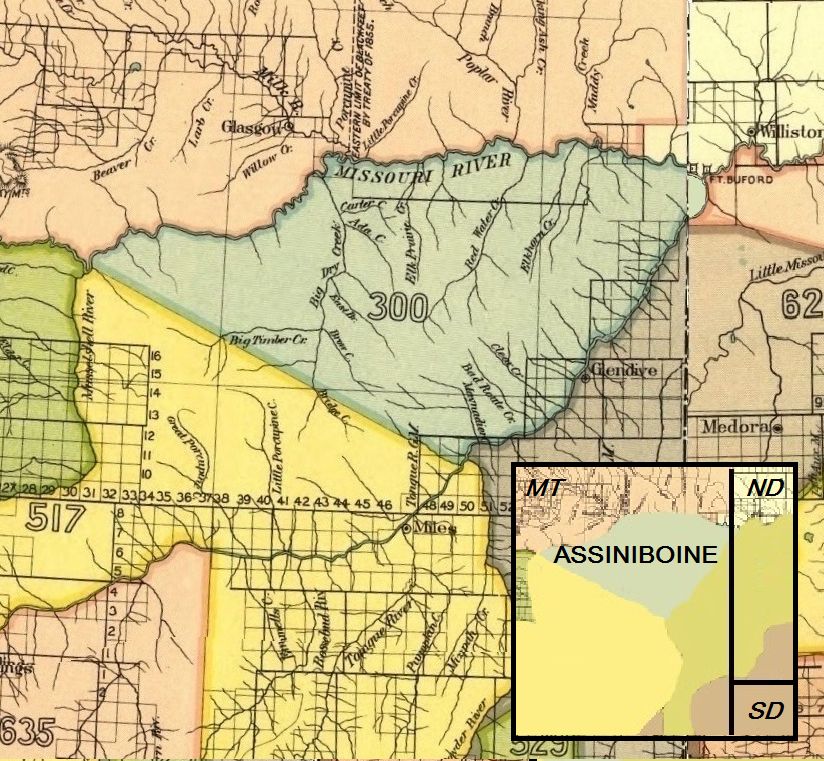
The Assiniboine share a common ancestry with the Sioux nation, specifically the Dakota, Lakota, and Nakota peoples, having split from them sometime prior to 1640. Linguistic analysis indicates the Assiniboine, along with the Stoney, form a group coordinate with the Santee, Lakota, and Yankton-Yanktonai divisions of the Sioux. On the plains, the Assiniboine acquired horses through raiding and trading with neighbouring tribes like the Crow and the Sioux to their south. This adoption of the horse created a powerful horse and warrior culture, enabling them to hunt the vast bison herds efficiently and expand their territory dramatically. At the height of their power in the 18th and early 19th centuries, the Assiniboine dominated a vast territory ranging from the North Saskatchewan River in the north to the Missouri River in the south. This territory included portions of modern-day Saskatchewan, Alberta, and Manitoba in Canada, and North Dakota and Montana in the United States.
The Fur Trade, European Contact and Epidemics
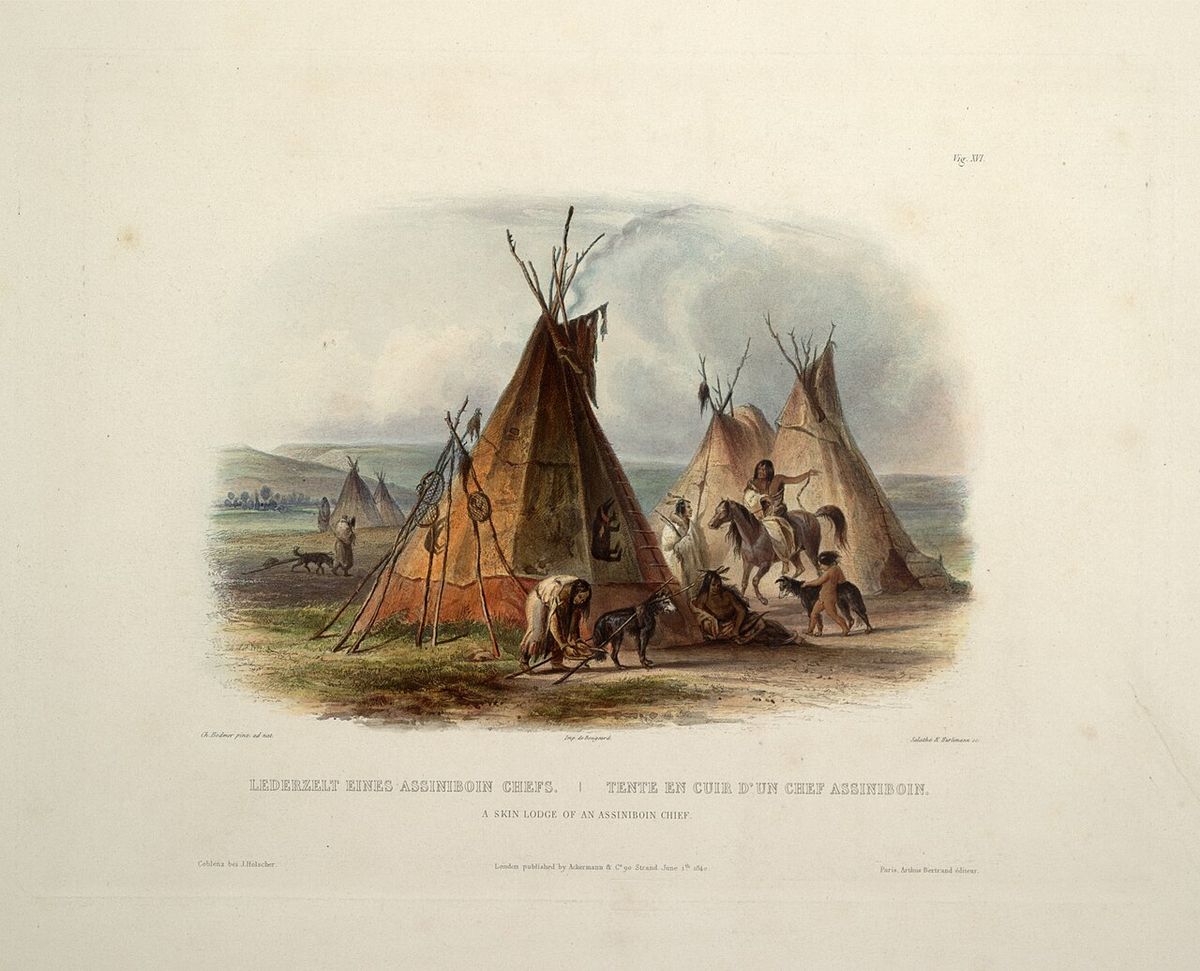
The first person of European descent to describe the Assiniboine was Henry Kelsey, an employee of the Hudson's Bay Company, in the 1690s. Later explorers and traders like Jean Baptiste de La Vérendrye and his sons in the 1730s, Anthony Henday in 1754-55, and Alexander Henry the younger in the 1800s confirmed their extensive reach across the northern plains. The Assiniboine became crucial intermediaries in the fur trade, acting as reliable partners and middlemen for both the British Hudson's Bay Company and the North West Company. South of the border, they traded with the American Fur Company and the Rocky Mountain Fur Company. They traded beaver pelts and bison hides for European goods such as guns, ammunition, metal tomahawks and pots, wool blankets and clothing, and glass beads. This increased contact had devastating consequences, as the Assiniboine, like other Indigenous nations, had no immunity to Eurasian infectious diseases. They suffered severe epidemics, most notably smallpox, which caused a catastrophic population decline from an estimated 10,000 people in the late 18th century to around 2,600 by 1890. While the Lewis and Clark Expedition of 1804 to 1806 heard of the Assiniboine while on the Missouri River, they did not make direct contact. European and American artists, including Karl Bodmer, Paul Kane, and George Catlin, later traveled with traders and expeditions to paint the Assiniboine from life.

The Iron Confederacy and Intertribal Relations
From before 1692 until the late 19th century, the Assiniboine were a major part of the Iron Confederacy, known as Nēhiyaw-Pwat in Plains Cree. This alliance was primarily an economic and military partnership centred on the fur trade and mutual shelter. Key members of the confederacy included the Assiniboine, the Cree (šahíya), the Stoney (téhą nakóda), the Woodland Cree, Saulteaux (iʾášijabina), and Métis (sakná), along with individual Iroquois who traveled west with the fur traders. Loosely associated Plateau tribes for bison hunting access included the Bitterroot Salish, Kutenai, Sekani, Secwépemc, and Nez Perce (pasú oȟnóga). The confederacy became the dominant force on the northern plains, posing a major threat to nations not associated with it, such as the Shoshone (snohéna wįcášta) and Crow (kąǧí tóga). Their most powerful enemy, however, was their former trading partner, the Blackfoot Confederacy (sihásaba), while the kindred Sioux (įhą́ktuwą) and their allies the Arapaho (maȟpíyato) and Cheyenne (šahíyena) were also enemies. The confederacy's dominance waned with the decline of the fur trade and the overhunting of the bison by Canadian and American hunters. It engaged in military action with Canada during the North-West Rebellion of 1885, where some Assiniboine scouts aided the North-West Mounted Police against Cree participants. A notable intertribal incident occurred in 1857 when a Sioux war party including Sitting Bull attacked an Assiniboine camp. Sitting Bull spared an 11-year-old Assiniboine boy who showed bravery, adopting him as a brother and later naming him Jumping Bull, who died defending Sitting Bull at Standing Rock in 1890.
Traditional Culture, Social and Political Structures
The traditional Assiniboine lifestyle was semi-nomadic, centred on following and hunting the vast herds of plains bison during the warmer months. The Assiniboine were noted for their expertise in constructing bison pounds, or paddocks, to trap and kill bison, and used dogs to haul travois before acquiring horses. Women, as life-givers, held primary responsibility for the survival and welfare of the families, which included gathering and cultivating plants, processing and preserving meat and hides, making all clothing and instruments, and treating illnesses with plants and herbs. Men hunted, traded, and made war on horseback using bow and arrows, and the tribe was renowned for its excellent horsemanship, with girls also encouraged to learn to ride, hunt, and fight. The Assiniboine political and social structures were based on an extended family system and organized into bands, each led by a chief (Hųgá) and an advisory band council of Hungabi (little chiefs). The Assiniboine Nation, or Nakoda Oyadebi, was historically divided into up to 40 separate Dagugichiyabi (bands). Other important leadership roles included the war chief (įtą́cą), who led warriors in battle, the medicine man (Wócegiye įtącą), who acted as religious leader and healer, the camp crier (Hogíyesʼa) for announcements, and the camp police (Agícida) for maintaining order. Bands were again divided into several Tiʼóšpaye (local groups) of extended families, with the smallest unit being the Tiwáhe (nuclear family), which usually lived in one or two tipis. As a patrilineal tribe, hereditary leadership passed through the male line, and children belonged to the father and his clan.
Key traditional bands and subgroups included the following. The Canhewincasta band was also known as the Wooded-Mountain People or Wood Mountain People. They lived around the area of today's Wood Mountain and the adjoining Big Muddy Badlands in southern Saskatchewan and northern Montana. This band was closely allied with the Insaombi band of the Cypress Hills Assiniboine.
- Aegitina ('Camp Moves to the Kill')
- Bizebina, Bízebina ('Gophers' or 'Gopher People')
- Cepahubi ('Large Organs')
- Canhdada, Cantidada ('Moldy People'), lived along the North Saskatchewan River around Battleford.
- Canhewincasta ('Wooded-Mountain People'), from the Wood Mountain and Big Muddy area.
- Cantonga or Swampy Ground Assiniboine, later known as Wood Stoney, traded near Fort Edmonton.
- Hudesabina ('Red Bottom'), split from the Wadopabina in 1844, now part of Fort Peck.
- Hebina ('Rock Mountain People'), or Thickwood Assiniboine, who became the Mountain Stoney.
- Insaombi ('The Ones Who Stay Alone'), the Cypress Hills Assiniboine.
- Wadopabina ('Canoe Paddlers'), now part of Fort Peck.
The bands of chiefs Manitupotis, also known as Little Soldier, and Hunkajuka, also known as Little Chief, were victimized in the Cypress Hills Massacre on June 1, 1873. Together these bands comprised about 300 people with about 50 warriors. At least 20 Assiniboine were killed by American wolf hunters who were seeking revenge for horse stealing they attributed to Cree people in Montana. This massacre was a key event that helped spur the creation of the North-West Mounted Police.
Spirituality, Mythology and Worldview
Assiniboine spirituality centred on the Great Spirit, with the Sun god and Thunder god considered its most important manifestations. The Sun Dance, held in early summer after the spring bison hunt, was a sacred ceremony where men and women honoured the Great Spirit through praying, singing, drumming, dancing, and fasting, concluding with a feast. Young men would undertake vision quests to sacred grounds to connect with guardian spirits and practice sacred songs or rituals for personal guidance. The figure of Iktome from the Assiniboine creation myth is one of the most famous creator-trickster characters in Native American mythology. In this earth-diver style myth, resembling stories of the Anishinaabe and Ojibwe, Iktome sends animals to find land beneath the primeval sea, with only the muskrat succeeding, surfacing dead with earth in its hands. Iktome uses this earth to create land, kills a frog who challenges his plan for an endless winter, and eventually shortens winter to seven months. He also creates horses and humans out of dirt and teaches the Assiniboine how to steal horses, with the presence of horses in the myth being a later addition post-European contact.
Contemporary Communities, Education and Initiatives
Today, Assiniboine communities in Canada are largely located in Saskatchewan, with others in Alberta and the northern United States like the Fort Peck Assiniboine & Sioux Tribes and the Fort Belknap Indian Community in Montana. Many live on reserves, often shared with Cree, Saulteaux, and Nakota peoples, while a significant number live off-reserve. In Manitoba, the Assiniboine survive as individuals and hold no separate communal reserves. Contemporary initiatives actively promote Assiniboine culture, language revitalization, and education within a modern context. Institutions like Assiniboine College in Manitoba have made formal commitments to reconciliation and Indigenization. The college's Indigenous Affairs team offers a wide range of support and services. In 2026, Indigenous graduates represented 19 percent of the college's domestic graduating class. Cultural recognition is also evident in public spaces like the Assiniboine Park Conservancy, which hosts a Sacred Fire in its Indigenous Peoples Garden on the National Day for Truth and Reconciliation. In 2026, this event included an Indigenous educator sharing tobacco teachings, and the Conservancy made a minimum donation of $10,000 divided between the Orange Shirt Society, Ndinawemaaganag Endaawaad, and Indigenous Tourism Manitoba.
Population, Demographics and Historical Impact
The Assiniboine population has fluctuated dramatically due to historical epidemics, the fur trade, and the collapse of the bison economy. The severe population decline in the 19th century shows the devastating effect of introduced diseases, which were a direct consequence of their integration into the transatlantic fur trade network. Modern demographic trends show a growing population engaged in post-secondary education and cultural revitalization efforts. The Assiniboine signed the Treaty of Fort Laramie in 1851, and their historical role as scouts for the North-West Mounted Police during the 1885 North-West Rebellion illustrates their complex relationships with evolving Canadian authorities. Their legacy continues through the ongoing work of Assiniboine bands, educational institutions, and cultural organizations in both Canada and the United States.
| Period | Population Estimate | Context and Notes |
|---|---|---|
| Late 18th Century | Around 10,000 | Prior to major smallpox epidemics, at height of power. |
| 1890 | Around 2,600 | After decades of disease and resource loss, post-treaties. |
| 2000 U.S. Census | 3,946 tribal citizens | Individuals living in the United States. |
| Early 21st Century | About 150 fluent speakers | Nakoda language speakers, most over age 40. |
| 2026 (Educational) | 19% of graduating class | Indigenous graduates at Assiniboine College. |
Questions about Assiniboine
What does the name Assiniboine mean and what do they call themselves?
The name Assiniboine comes from the Ojibwe term Asiniibwaan, which translates to "Stone Sioux. The Assiniboine's own name for themselves is Nakoda, also spelled Nakota or Nakona, meaning "the people. The name was adopted into English via French traders who heard it from their Ojibwe allies.
Where is the traditional territory of the Assiniboine and where do they live today?
At the height of their power, the Assiniboine dominated territory from the North Saskatchewan River in the north to the Missouri River in the south, including parts of Saskatchewan, Alberta, Manitoba, North Dakota, and Montana. Today, they are a First Nation in Canada, primarily in Saskatchewan, and a Native American people in the United States, primarily in northern Montana.
What is the status of the Assiniboine language?
The Assiniboine language is a Mississippi Valley Siouan language. As of the early 21st century, about 150 people speak the language and most speakers are more than 40 years old. The majority of the Assiniboine people today speak English as their primary language.
What was the Iron Confederacy and who were its members?
The Iron Confederacy, or Nēhiyaw-Pwat, was a major political, economic, and military alliance of northern Plains nations from before 1692 until the late 19th century. The Assiniboine were central members alongside the Cree, Stoney, Saulteaux (Ojibwe), and Métis. Loosely associated members included Plateau tribes like the Kutenai and Secwépemc.
How did European contact affect the Assiniboine population?
European contact introduced Eurasian infectious diseases like smallpox to which the Assiniboine had no immunity. Their population crashed from around 10,000 people in the late 18th century to around 2,600 by 1890.
How are contemporary Assiniboine organizations involved in reconciliation?
Contemporary organizations are involved in reconciliation through education and public commemoration. Assiniboine College commits to Indigenization and offers support services for Indigenous students. The Assiniboine Park Conservancy hosts a Sacred Fire and makes donations to Indigenous-led organizations on the National Day for Truth and Reconciliation.
Sources and further reading
- Assiniboine (Wikipedia)
- Indigenous Affairs (assiniboine.net)
- National Day for Truth and Reconciliation (assiniboinepark.ca)
- Assiniboine (thecanadianencyclopedia.ca)
Checked by the Nosy Mag desk. Last updated 2026-10-23.