Goods and services tax
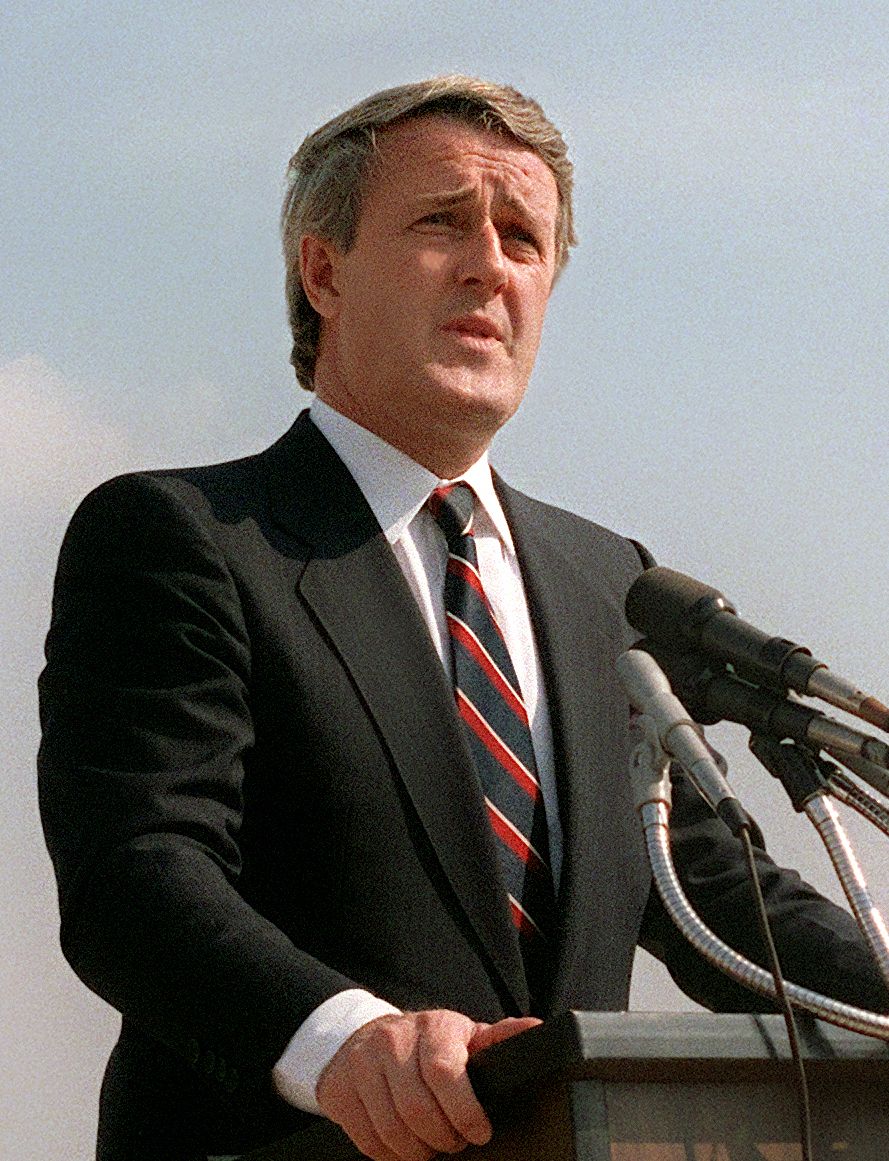
The Goods and Services Tax (GST) is a federal value-added tax levied on most goods and services sold or supplied in Canada. Introduced on January 1, 1991, by Prime Minister Brian Mulroney's Progressive Conservative government, it replaced the previous 13.5% Manufacturers' Sales Tax (MST). The current GST rate is 5%, having been reduced in two stages by the Conservative government of Stephen Harper in 2006 and 2008. The tax is administered by the Canada Revenue Agency (CRA) and is a major source of federal revenue, accounting for 11.2% of total federal government revenue in the 2023 to 2024 fiscal year.
Tax Structure and Administration
The GST is a multi-stage value-added tax designed to be borne by the final consumer. It is levied on supplies of goods or services purchased in Canada, with businesses acting as collection agents for the government. Registered businesses charge GST on their taxable sales, known as output tax. These businesses can claim input tax credits for the GST they pay on goods and services purchased for use in their commercial activities. When remitting GST to the CRA, businesses deduct these input credits from the output tax they have collected, remitting only the net difference. This system prevents tax cascading, where a tax is applied multiple times on the same product as it moves through the production chain. The legal framework for the GST is contained in Part IX of the Excise Tax Act, which defines taxable supplies, exemptions, and administrative procedures. The CRA is responsible for all aspects of administration, including registration, collection, audit, and enforcement. This structure means the tax is effectively neutral for businesses involved in the production and distribution chain, with the full economic burden ultimately falling on the final consumer who cannot claim input credits.
Taxable, Zero-Rated, and Exempt Supplies
Not all goods and services are subject to the full 5% GST. The Excise Tax Act categorizes supplies into three groups: taxable, zero-rated, and exempt. Taxable supplies are subject to the standard 5% GST rate or the applicable Harmonized Sales Tax (HST) rate in participating provinces. Most goods and services fall into this category. Zero-rated supplies are taxed at a rate of 0%, meaning no GST is charged to the consumer. However, unlike exempt supplies, businesses making zero-rated sales can still recover the GST they paid on related inputs through input tax credits. Common zero-rated items include basic groceries, prescription drugs, certain medical devices, and exports of goods and services. Print books and scholarly journals are also zero-rated, though their digital counterparts, such as ebooks and online periodicals, are generally taxable. Exempt supplies are entirely outside the GST/HST system. No tax is charged on the sale, but the supplier is also not entitled to recover any GST paid on inputs used to make the exempt supply. This can create an embedded tax cost for providers of exempt services. Major categories of exempt supplies include long-term residential rents, most health and dental care services, educational services provided by recognized institutions, day-care services, music lessons, legal aid services, and most financial services. The distinction between zero-rated and exempt status has significant financial implications for businesses, as it determines their ability to recover input taxes.
Historical Introduction and Political Controversy
The GST was proposed in 1989 by Finance Minister Michael Wilson as a national sales tax to replace the 13.5% Manufacturers' Sales Tax (MST). The government argued the MST, applied at the wholesale level, was hidden from consumers and hurt the manufacturing sector's international competitiveness. The proposal immediately sparked intense political controversy and widespread public disapproval. The Liberal-dominated Senate refused to pass the tax into law. Prime Minister Brian Mulroney used a constitutional provision to appoint eight additional senators, giving his party a majority. The Opposition launched a filibuster to delay the legislation. Despite the rate being lowered to 7% before enactment, the tax remained deeply unpopular when it came into force on January 1, 1991. The controversy contributed to the electoral collapse of the Progressive Conservative Party in the 1993 election, where it was reduced to just two seats. The Liberal Party, led by Jean Chrétien, had campaigned in 1993 on a promise to repeal the GST. Once in power, the Chrétien government abandoned outright repeal. Instead, it pursued a policy of harmonizing the federal GST with provincial sales taxes into a single Harmonized Sales Tax (HST). This reversal caused significant internal party strife. Liberal MP John Nunziata voted against the government's first budget and was expelled from the party caucus. Heritage Minister Sheila Copps, who had personally promised to oppose the tax, resigned and sought re-election, which she won.
Provincial Harmonization and Sales Tax Landscape
The application of sales tax in Canada is a patchwork system due to provincial jurisdiction over retail taxation. In some provinces, the federal GST and provincial sales tax (PST) remain separate. In others, they have been combined into a Harmonized Sales Tax (HST), which is administered collectively by the CRA. The HST is applied as a single, blended rate at the point of sale, with the CRA remitting the provincial portion to the participating government. The current provincial landscape is defined by the following systems.
- Harmonized Sales Tax (HST) Provinces: Nova Scotia, New Brunswick, Newfoundland and Labrador, Ontario, and Prince Edward Island. The HST rate is 15% in the Atlantic provinces, 13% in Ontario, and 14% in Prince Edward Island.
- Separate GST and PST Provinces: British Columbia, Manitoba, and Saskatchewan. These provinces maintain their own provincial sales tax regimes separate from the federal GST administration.
- GST-Only Jurisdictions: Alberta and the three territories (Yukon, Northwest Territories, Nunavut) levy only the 5% GST, with no provincial or territorial sales tax.
- Quebec's Unique System: Quebec administers both the federal GST and its own Quebec Sales Tax (QST) itself, though the taxes remain legally distinct.
British Columbia harmonized the GST with its provincial sales tax effective July 1, 2010. The British Columbia HST was defeated in an August 2011 mail-in referendum by a 55% majority vote. It was subsequently converted back to the old GST and PST system effective April 1, 2013. In Ontario, the HST totals 13%, but many pre-HST exemptions remain affecting only the provincial portion. This means some items are not subject to the provincial portion of HST and are only taxed at the federal 5% GST rate. To accommodate these exemptions, many retailers simply display each tax individually as HST 1 and HST 2, which causes some confusion for consumers.
Rate Reductions and Recent Administrative Changes
The GST rate has been reduced twice since its introduction. During the 2006 federal election campaign, Conservative leader Stephen Harper pledged to lower the GST. After forming a minority government, his government reduced the tax from 7% to 6% effective July 1, 2006. A second reduction to the current rate of 5% took effect on January 1, 2008, enacted through Bill C-28, which received Royal Assent on December 14, 2007. These cuts were estimated to decrease annual federal revenues by approximately $6 billion and were criticized by opponents for disproportionately benefiting higher spenders. The rate has remained at 5% since 2008. Significant administrative changes continue to evolve. In a major policy shift announced in December 2025, the CRA reversed its longstanding position on the GST/HST treatment of mutual fund trailing commissions. The agency stated that, effective July 1, 2026, these commissions paid by fund managers to dealers and agents will generally be subject to GST/HST, treating them as taxable asset management services. This reversal from a prior exempt status will require many financial dealers and advisors to register for GST/HST and adjust their compliance systems. The CRA cited evolving industry practices and a desire to simplify tax administration as reasons for the change. The GST/HST credit, a tax-free payment to help low- and modest-income individuals and families offset the tax they pay, was replaced. As of July 2026, this benefit was renamed the Canada Groceries and Essentials Benefit (CGEB), with quarterly payments following the previous credit's schedule and a one-time top-up payment having been issued in June 2025.
Registration Requirements and Compliance
Businesses operating in Canada have specific obligations regarding GST/HST registration. A business must register for a GST/HST account if it is not a small supplier and it provides taxable supplies in Canada. The small supplier threshold is total worldwide taxable revenues exceeding $30,000 over four consecutive calendar quarters. Once this threshold is crossed, registration is mandatory. Businesses that provide only exempt supplies are generally not permitted to register. Voluntary registration is allowed for small suppliers and certain other entities, which can be beneficial as it allows them to claim input tax credits on their business expenses. Non-resident businesses selling to Canadian customers also have registration obligations if their taxable sales into Canada exceed the $30,000 threshold. A simplified registration and remittance system exists for non-resident digital service providers. Registered businesses must collect tax on taxable supplies, file regular GST/HST returns, and remit any net tax owing to the CRA. Filing frequency (annually, quarterly, or monthly) is typically based on the business's annual taxable revenue. Compliance involves meticulous record-keeping to support input tax credit claims and charged output tax. Failure to comply can result in penalties and interest. The CRA actively administers the system through audits and reviews, as illustrated by its changing interpretive positions on complex areas like financial services. Businesses must stay informed of legislative amendments, such as those in Bills C-31, C-30, C-15, and C-4 enacted in 2026, which can alter the Excise Tax Act and related regulations.
Economic Role and Consumer Impact
The GST serves as a stable and significant source of revenue for the federal government, designed to be economically efficient by taxing final consumption rather than business inputs. By replacing the MST, it aimed to remove a tax bias against Canadian exports and capital investment, as the MST was embedded in the cost of manufactured goods but not refunded on exports. Proponents argue this made Canadian industry more competitive internationally. The tax's value-added structure minimizes economic distortion compared to a cascading sales tax. However, as a consumption tax, it is considered regressive, taking a larger percentage of income from lower-income households who spend a higher proportion of their earnings. This concern is partially addressed through offsetting measures like the Canada Groceries and Essentials Benefit. For consumers, a notable feature of the GST is that it is almost always excluded from posted or advertised prices due to constitutional divisions of power. Jurisdiction over price posting lies with the provinces, which have chosen not to require prices to include the tax. Therefore, consumers typically see pre-tax prices at retail, with the GST (and any PST or HST) added at the cash register, except in rare cases like fuel pump prices. This visibility has contributed to the tax's political salience. The tax influences consumer behaviour on specific items, such as encouraging the purchase of zero-rated basic groceries over taxable prepared foods, and creates administrative distinctions between similar products, like print books versus ebooks.
List of GST/HST Rates by Province and Territory
| Province/Territory | Tax System | Total Tax Rate | Notes |
|---|---|---|---|
| Alberta | GST only | 5% | No provincial sales tax. |
| British Columbia | GST + PST | 5% GST + 7% PST | Repealed HST in 2013. |
| Manitoba | GST + PST | 5% GST + 7% PST | Separate provincial tax. |
| New Brunswick | HST | 15% | Harmonized in 1997. |
| Newfoundland and Labrador | HST | 15% | Harmonized in 1997. |
| Nova Scotia | HST | 15% | Harmonized in 1997. |
| Ontario | HST | 13% | Harmonized in 2010. |
| Prince Edward Island | HST | 14% | Harmonized in 2013. |
| Quebec | GST + QST | 5% GST + QST | Quebec administers both taxes. QST rate not specified in source. |
| Saskatchewan | GST + PST | 5% GST + 6% PST | Separate provincial tax. |
| Yukon | GST only | 5% | No territorial sales tax. |
| Northwest Territories | GST only | 5% | No territorial sales tax. |
| Nunavut | GST only | 5% | No territorial sales tax. |
Questions about Goods and services tax
What is the current GST rate in Canada?
The current federal Goods and Services Tax rate in Canada is 5 percent. This rate took effect on January 1, 2008. The GST was originally introduced at a rate of 7 percent in 1991. It has been lowered twice since its introduction.
What is the difference between HST and GST?
The GST is the federal 5 percent value-added tax applied across Canada. The Harmonized Sales Tax is a single blended sales tax that combines the federal GST with a provincial sales tax in participating provinces. The HST is administered by the Canada Revenue Agency, which then remits the provincial portion to the respective government. Provinces using the HST include Nova Scotia, New Brunswick, Newfoundland and Labrador, Ontario, and Prince Edward Island.
What items are exempt from GST/HST?
Exempt supplies are not subject to GST and suppliers do not charge tax on them. Suppliers that make exempt supplies are not entitled to recover GST paid on inputs acquired for making the exempt good or service. Major exempt items include long term residential rents, health and dental care, and educational services. Other exempt items are day-care services, music lessons, legal aid services, and financial services.
Do I need to register for a GST/HST number?
You must register for a GST/HST account if you provide taxable supplies in Canada and are not a small supplier. The small supplier threshold is having total worldwide taxable revenues of more than 30,000 dollars over four consecutive calendar quarters. Once your revenues exceed this limit, you must register within 29 days. Businesses can claim input tax credits for GST paid on purchases used in their commercial activities.
What happened to the GST/HST credit?
The GST/HST credit was replaced by the Canada Groceries and Essentials Benefit as of July 2026. The new benefit follows the same quarterly payment schedule that the previous credit used. A one-time top-up payment was issued in June 2025. The GST credit was a rebate for individuals with low incomes, calculated in conjunction with their income tax.
What was the recent change regarding mutual fund trailing commissions?
In December 2025, the Canada Revenue Agency announced that mutual fund trailing commissions will generally become subject to GST/HST effective July 1, 2026. This reverses a prior administrative position that treated them as an exempt financial service. The new position views these commissions as payment for taxable asset management services. This change aligns with the treatment of similar financial service fees.
What was the original Manufacturers' Sales Tax rate?
The Manufacturers' Sales Tax that the GST replaced had a rate of 13.5 percent. It was a hidden tax applied at the wholesale level on manufactured goods. The federal government introduced the GST to replace this tax on January 1, 1991. The MST was considered to be hindering the manufacturing sector's ability to export competitively.
Sources and further reading
- Goods and services tax (Wikipedia)
- Canada Revenue Agency reverses longstanding position ... (taxnews.ey.com)
- Canada GST/HST Rates & Compliance for 2026 - Numeral (numeral.com)
- Practitioner's Goods and Services Tax Annotated with ... (store.thomsonreuters.ca)
- GST/HST Tax Break Canada (batemanmackay.com)
Checked by the Nosy Mag desk. Last updated 2026-11-03.