Fair dealing in Canadian copyright law
Fair dealing is a statutory exception to copyright infringement in Canadian law, also recognized as a user's right essential for balancing the interests of copyright owners and the public. It permits the use of copyrighted works without permission or payment for specific purposes such as research, private study, education, parody, satire, criticism, review, and news reporting, provided the use is considered fair. Established through key Supreme Court of Canada decisions and amendments to the Copyright Act, fair dealing is a foundational element of Canada's copyright framework. It is particularly vital in educational and research contexts, enabling access to materials that support learning, scholarship, and innovation across the country.
Historical Development and Legal Foundation
The concept of fair dealing has its roots in English common law, evolving from the doctrine of fair abridgment established in the 18th century to address the impracticality of granting copyright holders complete monopolistic control. The Copyright Act of Canada, first passed in 1921, introduced fair dealing by duplicating provisions from the U.K. Copyright Act of 1911. The statutory framework has been amended three times, first by the North American Free Trade Agreement Implementation Act in 1993, then by An Act to Amend the Copyright Act in 1997, and most significantly by the Copyright Modernization Act in 2012. The 2012 amendments explicitly added education, parody, and satire to the list of permissible fair dealing purposes, which already included research, private study, criticism, review, and news reporting. The Supreme Court of Canada has repeatedly affirmed that fair dealing is not merely a defence to infringement but an integral user's right within the Copyright Act, requiring a large and liberal interpretation to maintain balance between owner rights and user interests. This judicial stance was solidified in the landmark 2004 case CCH Canadian Ltd. v. Law Society of Upper Canada, which set the modern framework for analyzing fair dealing in Canada.
The Permissible Purposes for Fair Dealing
Sections 29, 29.1, and 29.2 of the Copyright Act enumerate the specific purposes for which a dealing may qualify. The Supreme Court of Canada has instructed that these purposes must be given a large and liberal interpretation. For a dealing to be considered under the exception, the user's primary purpose must align with one of these listed categories. Dealings for mixed purposes are permissible, provided the claimed purpose is not a mere disguise for an alternative, non-listed objective. The purpose is assessed objectively based on the user's intent at the time of the dealing. The permissible purposes are defined with considerable breadth by Canadian courts. Research involves investigating or closely studying a subject, including activities like a lawyer reading legal texts to advise clients or a consumer listening to 30-second music previews to decide on a purchase. Private study encompasses applying oneself to acquire knowledge, and the Supreme Court has ruled this includes a teacher's work to assist a student's study. Criticism or review involves analyzing and judging the merit or quality of a work, and the dealing can be fair even if the critique is defamatory, with fairness relating to the extent of copying rather than its content. News reporting includes investigative journalism across any medium such as print, audio, or video. For criticism, review, or news reporting, the Act mandates that the source, and the author's name if given, must be mentioned to avoid infringement.
- Research: Investigating or closely studying a subject.
- Private Study: Applying oneself to acquire knowledge, including teacher-assisted student work.
- Criticism or Review: Analyzing and judging merit or quality (requires attribution).
- News Reporting: Reporting news through any medium (requires attribution).
- Education: Added in 2012, covering instructional activities.
- Parody: Added in 2012, imitating a work for comic effect or ridicule.
- Satire: Added in 2012, using humour, irony, or exaggeration to criticize.
The Six-Factor Test for Fairness
Once a dealing is for a permissible purpose, it must also be 'fair'. The Copyright Act does not define fairness, leaving it as a question of fact for the courts. In the CCH case, the Supreme Court of Canada established a non-exhaustive, six-factor test to guide the fairness analysis. These factors are not applied mechanically but are considered together to form an overall impression. The first factor is the purpose of the dealing. While commercial purposes do not automatically disqualify a dealing, research for charitable purposes may be seen as fairer than research for commercial gain. The copier's purpose is also relevant at this stage to ensure it is not merely camouflaging a different objective. The second factor is the character of the dealing. This examines the manner of the dealing, such as whether multiple copies were made and widely distributed or if a single copy was destroyed after use. Established custom or practice in a particular field can inform this assessment. The third factor is the amount of the dealing. Only a reasonably necessary amount should be copied, but this is interpreted broadly. Copying an entire work, such as a full academic article or a photograph, can be fair if necessary for the allowable purpose. The Copyright Board of Canada has noted that copying more than 10 percent of a work tends to make the dealing unfair, but this is not a rigid rule.
The fourth factor considers alternatives to the dealing. The court may examine if a non-copyrighted equivalent could have been used instead to achieve the same purpose. Crucially, the Supreme Court has ruled that the availability of a licence from the copyright owner is irrelevant to this analysis, as fair dealing is a right, not merely a fallback when a licence is unavailable. The fifth factor is the nature of the work. This includes whether the work was published or confidential. Canadian jurisprudence, notably in CCH, has taken a distinctive approach, suggesting that dealing with an unpublished work may favour fairness if it leads to wider public dissemination, contrasting with the stance in the United States and United Kingdom. The final factor is the effect of the dealing on the work. If the dealing competes with or acts as a market substitute for the original work, it is less likely to be considered fair. This factor assesses the potential impact on the market for the copyrighted work.
Landmark Supreme Court Decisions
The Supreme Court of Canada has played a definitive role in shaping the doctrine of fair dealing through several landmark rulings. The 2004 decision in CCH Canadian Ltd. v. Law Society of Upper Canada is the central case, establishing fair dealing as a user's right and outlining the six-factor fairness test. The Court held that 'research' must be interpreted broadly and that this liberal approach applies to all fair dealing purposes. In 2012, the Court issued five significant copyright decisions, two of which directly clarified fair dealing. In Alberta (Education) v. Canadian Copyright Licensing Agency (Access Copyright), the Court ruled that teachers copying short excerpts for classroom instruction could qualify as fair dealing for the purpose of private study, as the teacher's actions facilitate the student's study. This decision reinforced that the copier's purpose can be symbiotic with the ultimate user's purpose. In SOCAN v. Bell Canada et al., the Court found that streaming 30-second previews of songs online for consumers to evaluate before purchase constituted fair dealing for the purpose of research. These 2012 decisions were issued after the introduction of the Copyright Modernization Act, 2012, in the House of Commons in September 2011, indicating the Court's awareness of the evolving legislative landscape. Collectively, these rulings have cemented a balanced, user-rights-oriented approach to copyright in Canada.
Fair Dealing in Education and Current Debates
Fair dealing is of paramount importance in the Canadian education sector, allowing students, teachers, and educational institutions to use copyrighted materials for learning and teaching without requiring permission or payment in many circumstances. Universities Canada has developed Fair Dealing Guidelines adopted by many institutions, such as the University of Guelph, to provide practical guidance on copying within reasonable limits. An annual event, Fair Dealing Week, is dedicated to raising awareness about this user's right and will next be held from February 23 to 27, 2026. Despite its established legal foundation, fair dealing remains a subject of intense debate. Copyright lobby groups, including collectives like Access Copyright, have lobbied the government to restrict fair dealing for educational institutions, particularly where licences are available. They argue that the addition of 'education' as a purpose in 2012 led to reduced licensing revenues. However, analyses counter that the 2012 reform largely codified existing law, as the Supreme Court had already interpreted 'private study' to include teacher-assisted activities. Critics of the lobbying efforts point to the dramatic shift from physical course packs to digital licensing, with universities spending hundreds of millions of dollars on licensed digital access, and the growth of open access materials that do not require payment. The central legal principle, affirmed repeatedly by the courts, is that the availability of a licence does not negate the user's right to fair dealing. In a 2017 Federal Court case, York University's fair dealing guidelines were initially found not to be fair, but the university ultimately won its appeal on a separate issue, with the Supreme Court later siding with the university and rejecting the lower courts' analysis for focusing exclusively on an institutional perspective.
Procedural Aspects and Burden of Proof
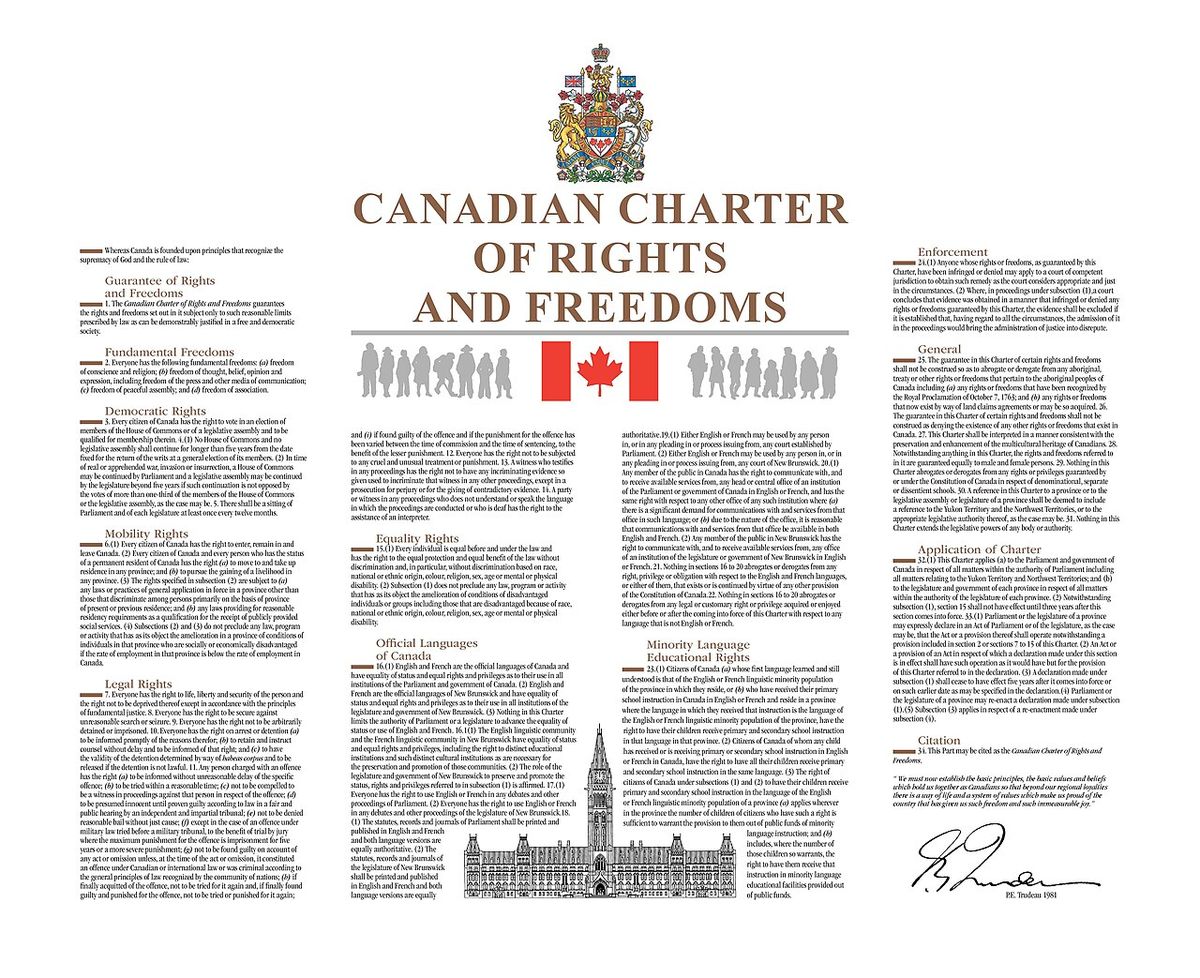
In any copyright infringement lawsuit, the procedural framework places specific burdens on the parties. The plaintiff (typically the copyright owner) must first establish that an infringement has occurred by proving ownership of copyright and that the defendant has copied a substantial part of the work. Only after infringement is established does the burden shift to the defendant to prove that their dealing qualifies under the fair dealing exception. The defendant must demonstrate that their use was for one of the enumerated purposes in the Copyright Act and that it was fair according to the factors set out by the Supreme Court. Despite this procedural burden, Canadian jurisprudence is clear that fair dealing is a right, not merely an excusable infringement. This distinction is critical because it guides courts to interpret the exception liberally, in line with its role in balancing the Copyright Act and supporting freedom of expression as protected by the Canadian Charter of Rights and Freedoms. The analysis is inherently fact-specific, requiring courts to examine all circumstances of the particular case to determine whether the dealing was fair.
Comparison with International Approaches
Canada's fair dealing system shares similarities with but also has key differences from exceptions in other jurisdictions. It is often compared to the American doctrine of 'fair use', which employs a similar multi-factor balancing test but is not limited to a closed list of purposes. Canadian fair dealing is purpose-based, requiring the use to fall within the statutory categories, though these are interpreted liberally. A notable divergence is in the treatment of unpublished works. In the United States and United Kingdom, dealing with an unpublished work typically weighs against a finding of fairness to protect the author's right of first publication. In contrast, the Supreme Court of Canada in CCH suggested that copying an unpublished work could favour fairness if it promotes wider dissemination, aligning with the goal of copyright to spread knowledge. This interpretation highlights the Canadian court's preference for user interests in certain contexts. The 2012 reforms stopped short of adopting a fully open 'fair use' model, maintaining the enumerated purposes but adding key categories like education, parody, and satire to provide greater clarity and flexibility. The United Kingdom's fair dealing provisions are found in sections 29 and 30 of the Copyright, Designs and Patents Act 1988 and require the dealing to be for non-commercial research or private study, criticism or review, or reporting of news events.
Questions about Fair dealing in Canadian copyright law
What are the main purposes allowed under fair dealing?
The Copyright Act lists several permissible purposes across three sections. Section 29 covers fair dealing for research, private study, education, parody, or satire. Section 29.1 covers criticism or review, requiring the user to mention the source and the author's name if available. Section 29.2 covers news reporting, with the same attribution requirement. The Supreme Court of Canada has ruled that all these purposes must be given a large and liberal interpretation. For example, 'research' includes a consumer previewing a song clip online, and 'private study' includes a teacher copying materials to assist a student.
How do courts determine if a dealing is 'fair'?
Courts use a non-exhaustive, six-factor test established by the Supreme Court of Canada in the 2004 CCH case. The factors are: the purpose of the dealing. The character of the dealing (e.g., how copies were distributed). The amount of the dealing. Alternatives to the dealing. The nature of the work (e.g., published or unpublished). And the effect of the dealing on the market for the original work. These factors are weighed together, and no single factor is decisive. The test is flexible and fact-specific, designed to assess the overall fairness of the use in context.
Can I copy an entire work under fair dealing?
Yes, in some circumstances, copying an entire work can be considered fair. The Supreme Court has stated that for purposes like research or private study, it may be essential to copy an entire academic article or judicial decision. Similarly, copying an entire photograph is often necessary to deal with it meaningfully. The key question is whether the amount copied is reasonably necessary to achieve the allowable purpose. However, the Copyright Board of Canada has noted that copying more than 10 percent of a work tends to make the dealing unfair, though this is a guideline, not a strict legal limit.
Does fair dealing apply if a licence to use the work is available?
Yes, the availability of a licence is legally irrelevant to whether a use qualifies as fair dealing. The Supreme Court of Canada has explicitly ruled that fair dealing is a user's right, not merely a defence when a licence is unavailable. Allowing copyright owners to point to a refused licence as proof of unfairness would improperly extend their monopoly. The analysis focuses on the purpose and fairness factors, not on whether the user could have paid for a licence. This principle is central to maintaining the balance between owner and user rights in the Copyright Act.
What is Fair Dealing Week and why is it important?
Fair Dealing Week is an annual event dedicated to raising public awareness about the fair dealing exception in Canada's Copyright Act. It highlights the importance of this user's right for education, research, creativity, and free expression. In 2026, it will be held from February 23 to 27. The week involves events and information sessions across the country, often hosted by universities and libraries. It is particularly important in the context of ongoing debates about copyright, as it provides an opportunity to educate Canadians about their legal rights and to counter misleading claims about the impact of fair dealing on creators and markets.
How does the Copyright Modernization Act of 2012 affect technological locks?
The Copyright Modernization Act of 2012 implemented the World Intellectual Property Organization Copyright Treaty, prohibiting the circumvention of technological locks used by copyright owners to protect their works. Section 47 of the Act contains this prohibition, and section 48 provides for criminal sanctions. While the Act allows the Governor in Council to make regulations suspending this prohibition if it adversely affects fair dealing, the government has stated that fair dealing defences do not apply to circumventing these locks. This means that otherwise lawful fair dealing with a work can be prohibited if the work is protected by a technological lock.
Sources and further reading
- Fair dealing in Canadian copyright law (Wikipedia)
- Copyright Act ( RSC, 1985, c. C-42) - Justice Canada (laws-lois.justice.gc.ca)
- What is fair dealing and how does it relate to copyright? (lib.sfu.ca)
- Fair Dealing Week 2026 | University of Guelph Library (lib.uoguelph.ca)
- Canadian Copyright, Fair Dealing and Education, Part One (michaelgeist.ca)
Checked by the Nosy Mag desk. Last updated 2026-11-03.