Erin O'Toole
Erin Michael O'Toole is a Canadian lawyer, former military officer, and politician who served as the leader of the Conservative Party of Canada and leader of the Official Opposition from 2020 to 2022. He represented the Ontario riding of Durham as a member of Parliament from 2012 until his resignation in 2023. A veteran of the Canadian Armed Forces and a corporate lawyer before entering politics, O'Toole's career has been defined by his advocacy for veterans, his leadership of the Conservative Party through a period of internal tension, and his subsequent role as a commentator on public policy and national security. His political journey, from cabinet minister to party leader and his eventual ousting, reflects the ongoing debates within Canadian conservatism.
Early Life and Military Career
Erin Michael O'Toole was born on January 22, 1973, in Montreal, Quebec, the son of John O'Toole, who later served as a Progressive Conservative MPP for Durham from 1995 to 2014, and Mollie Hall, who was born in London, England, and came to Canada after the Second World War. After his mother's death when he was nine, the family moved to Port Perry, Ontario, where he attended elementary school, and later to Bowmanville, where he graduated from Bowmanville High School. In 1991, O'Toole joined the Canadian Armed Forces and enrolled at the Royal Military College of Canada in Kingston, graduating in 1995 with an honours Bachelor of Arts degree in history and political science. Commissioned as an officer in Air Command, his early postings included search and rescue operations at CFB Trenton in Ontario and navigator training at 17 Wing in Winnipeg, Manitoba.
O'Toole was later posted to 12 Wing Shearwater in Nova Scotia in 1997, where he served as a tactical navigator on CH-124 Sea King helicopters with 423 Squadron, conducting maritime surveillance, search and rescue, and naval support missions. Promoted to the rank of captain, he was awarded the Sikorsky Helicopter Rescue Award for his role in rescuing an injured fisherman at sea. He completed his active service in 2000, transferring to the reserves while pursuing a law degree, and worked as a training officer running flight simulators during this period. He was awarded the Canadian Forces' Decoration for his 12 years of service to Canada, which included his time in both the regular forces and the reserves.
Legal Career and Entry into Politics
O'Toole earned his law degree from Dalhousie University's Schulich School of Law in 2003. He returned to Ontario to article and practice at the Toronto business law firm Stikeman Elliott, focusing on product liability, insolvency, competition law, and general commercial law. From 2006 to 2011, he served as Canadian in-house counsel for Procter & Gamble, providing commercial and regulatory law advice for brands like Gillette, acting as counsel on legislative issues, and investigating counterfeiting operations. In 2011, he joined the law firm Heenan Blaikie, where he was a registered lobbyist for Facebook, Inc. O'Toole entered federal politics in May 2012, winning the Conservative nomination for the Durham riding following the resignation of longtime MP Bev Oda. He was elected in the November 26, 2012, by-election and was subsequently appointed parliamentary secretary to the minister of international trade, Ed Fast, in September 2013 by Prime Minister Stephen Harper.
In 2014, O'Toole partnered with Senator Roméo Dallaire to host the first Samuel Sharpe Memorial Breakfast, an event honouring the former soldier and MP who died by suicide in 1918. The breakfast was created to bring issues of veterans' mental health and operational stress injuries to the forefront and to improve access to treatment. In May 2018, O'Toole introduced a motion to install a plaque commemorating Sharpe on Parliament Hill, which passed unanimously in the House of Commons. This early work demonstrated his ongoing commitment to veterans' issues, which would become central to his first cabinet role the following year.
Cabinet Role and First Leadership Bid
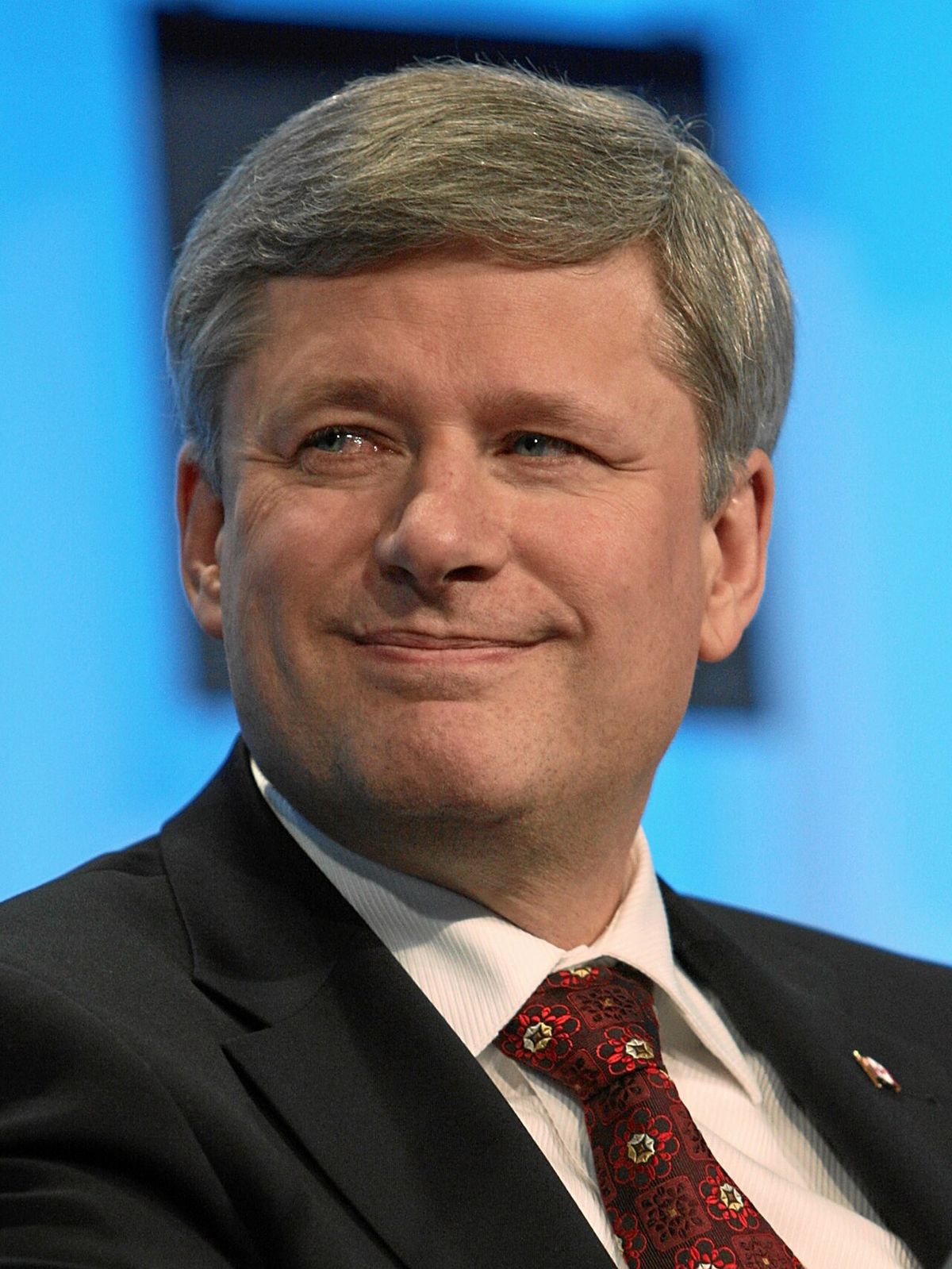
On January 5, 2015, Prime Minister Stephen Harper appointed O'Toole as minister of veterans affairs, replacing Julian Fantino. His tenure focused on repairing strained relations with veterans and addressing complaints about service delivery that had arisen under his predecessor. He convinced veterans who had launched a lawsuit against the government over the 2006 overhaul of veteran benefits, which they argued was discriminatory, to pause litigation and enter settlement negotiations. In the 2015 federal election, O'Toole was re-elected in Durham with 45 percent of the vote, defeating Liberal candidate Corinna Traill who received 36 percent. After the Conservative defeat, he sought the party's interim leadership but was defeated by Rona Ambrose, who subsequently named him the Official Opposition critic for public safety.
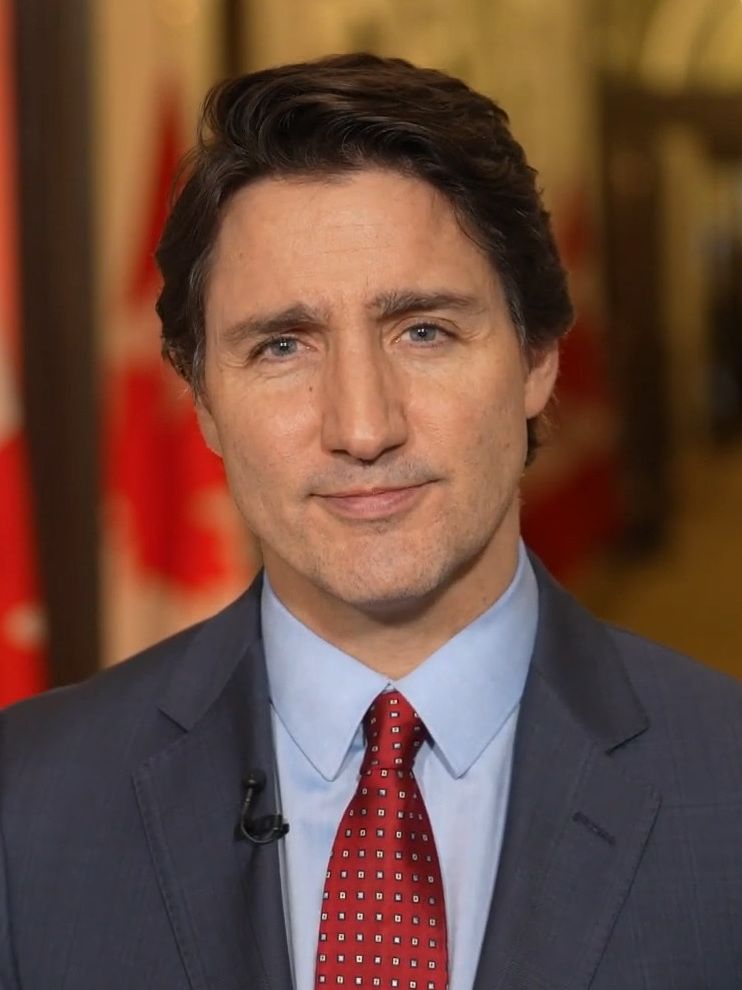
O'Toole then launched a campaign for the permanent party leadership on October 14, 2016. His 2017 leadership campaign was noted for its positive tone and avoidance of personal attacks on rivals, arguing that optimism should not be owned by Prime Minister Justin Trudeau. He received endorsements from 31 MPs, 12 former MPs, and 17 provincial politicians. In the ranked ballot election, O'Toole finished in third place behind Maxime Bernier and the eventual winner, Andrew Scheer. Following the leadership race, Scheer appointed O'Toole as the official opposition critic for foreign affairs in August 2017, a role he held through the 2019 election. In 2018, he briefly considered entering the Ontario Progressive Conservative leadership race after Patrick Brown's resignation but ultimately passed, instead supporting Christine Elliott.
Winning the Party Leadership
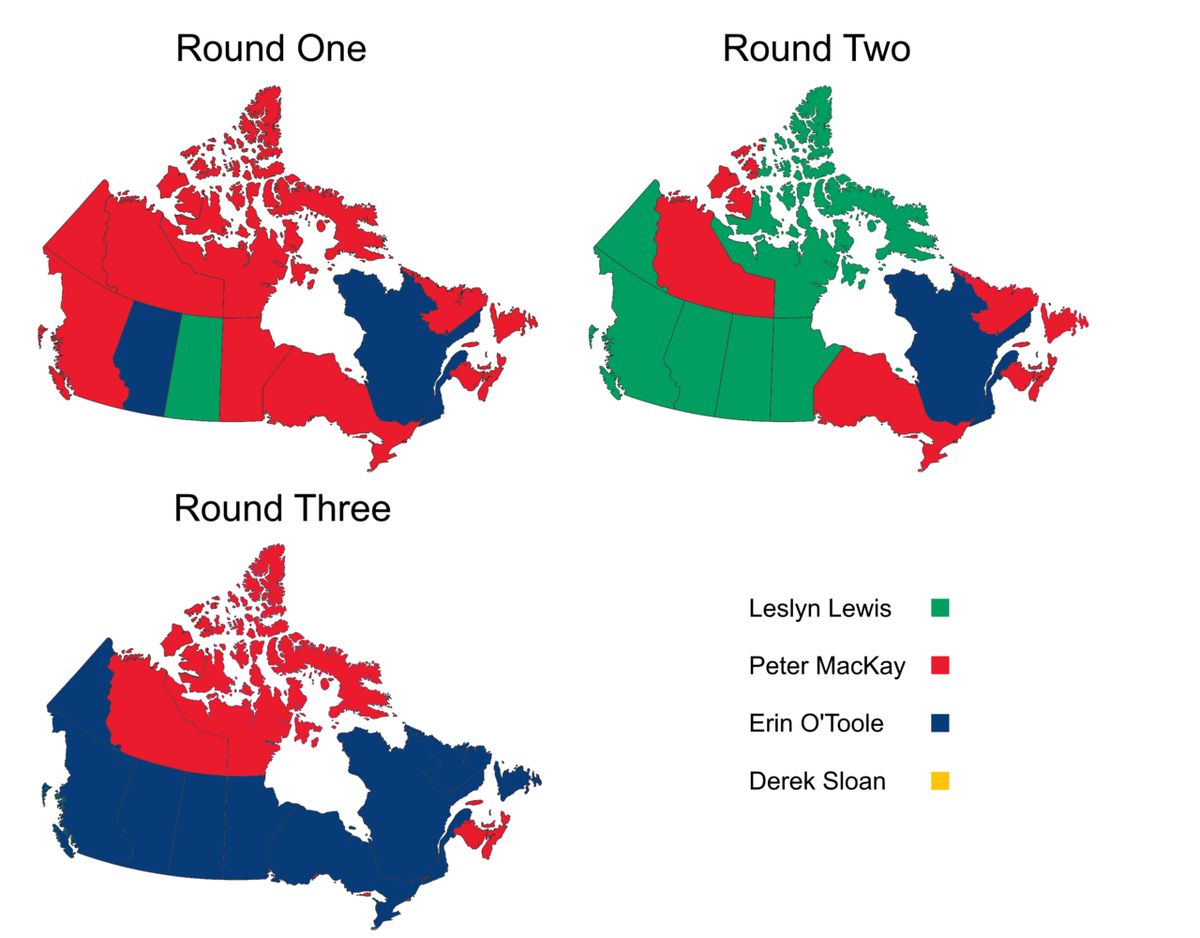
After Andrew Scheer announced his resignation in December 2019 following revelations about his use of party funds for his children's private schooling, O'Toole launched his second bid for the Conservative leadership in late January 2020. He positioned himself as a "true blue" conservative, implying rivals like Peter MacKay were less conservative, a strategy aided by the decision of Pierre Poilievre, a figure popular with the party's right, not to run. O'Toole's campaign adopted a sharper, angrier tone than in 2017, which he attributed to his increasing worry about the country after five years under Trudeau. A key controversy involved allegations that MacKay's campaign had obtained stolen internal data from O'Toole's team, an act later admitted by a former intern in MP Greg McLean's office.
His victory was bolstered by strategic outreach to socially conservative voters who supported candidates Derek Sloan and Leslyn Lewis, encouraging them to rank him as their second or third choice. Analysis showed he performed better in Conservative- and Bloc Québécois-held ridings, in rural areas, and in areas with fewer visible minorities, but poorly in the Greater Toronto Area despite representing a riding on its eastern edge. People's Party leader Maxime Bernier criticized him as not a real conservative, remarks dismissed by leadership rival Derek Sloan. Upon becoming leader, O'Toole stated his priority was managing the COVID-19 pandemic and finding jobs for the unemployed rather than triggering an immediate election, a position he reaffirmed in December 2020. He appointed Candice Bergen as his deputy leader on September 2, 2020, and unveiled a new shadow cabinet the following week, with most roles changing from the Scheer era.
Leadership and the 2021 Election
As leader, O'Toole worked to broaden the party's appeal, emphasizing his working-class roots in Bowmanville where he watched auto workers lose their jobs, and expressing support for unions, though union leaders remained skeptical given his previous parliamentary voting record and pre-2015 work on free trade. He softened his rhetoric from the "true blue" leadership campaign, adopting a more moderate stance to counter accusations of courting the far-right and to attract swing voters. This shift drew criticism from within the party's right flank, particularly over his reversal on opposing the federal carbon tax, for which he proposed a 'low carbon savings account' alternative, and his softened position on an assault weapons ban. O'Toole acknowledged this criticism but argued the party must have "the courage to change" to win, stating he needed to balance all parts of the conservative base with gaining the trust of swing voters who decide elections.
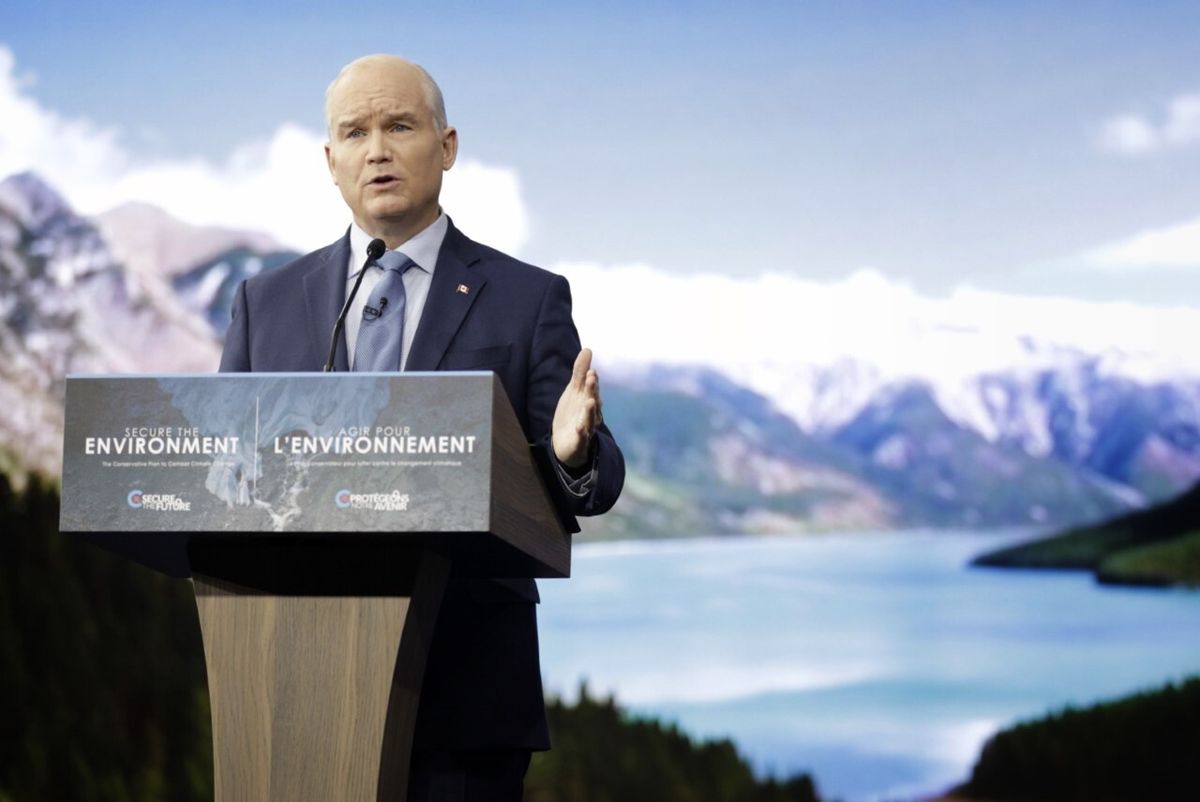
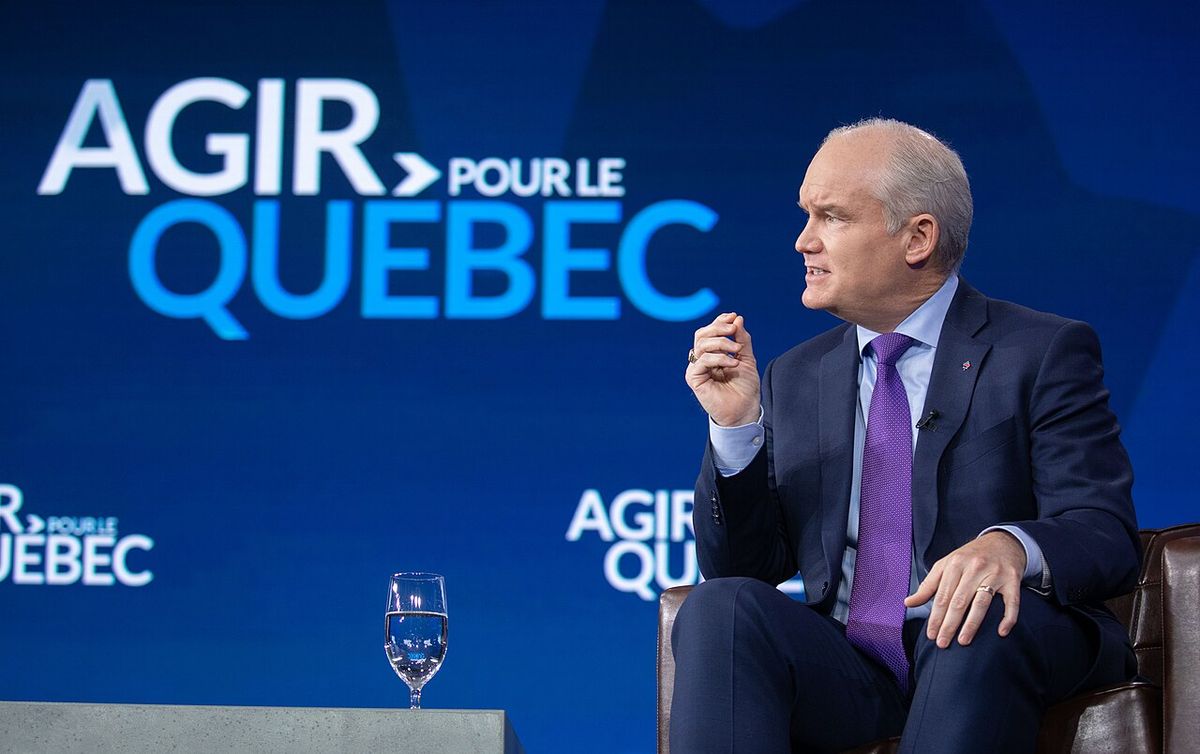
During the pandemic, he criticized the Trudeau government for not approving rapid and at-home testing options quickly enough and later for its vaccine procurement and rollout, stating Canada focused on Pfizer and Moderna only after a partnership with a Chinese company failed. He called for more transparency on the vaccine rollout plan and praised Alberta's pandemic response for allowing testing at pharmacies. In response to the WE Charity scandal, he proposed creating an anti-corruption committee, though the motion was defeated after Trudeau declared it a confidence vote, leading O'Toole to propose the health committee handle the matter instead. For the 2021 election, O'Toole released a 160-page platform titled "Secure the Future" in English and "Agir Pour L'Avenir" in French, focusing on economic recovery, jobs, and a statement that "It's time for Conservatives to take inequality seriously." In the final days, he appealed to People's Party of Canada voters not to split the conservative vote, warning it could allow a Trudeau victory.
The Conservatives won the popular vote but failed to gain seats in the 2021 federal election. O'Toole retained his Durham seat with 46 percent of the vote. He pledged to remain as leader on election night. The election result intensified internal party divisions over his leadership and strategy. This set the stage for the caucus revolt that would occur within months.
Removal as Leader and Final Years in Parliament
Post-election, discontent within the Conservative caucus grew over O'Toole's policy reversals and the election outcome. On November 15, 2021, Senator Denise Batters called for an early leadership review via a referendum, saying O'Toole "flip-flopped on policies core to our party" including carbon tax, firearm regulations, and abortion. Conservative Party president Robert Batherson ruled the referendum "not in order." O'Toole responded by removing Batters from the caucus two days later, stating anyone "who's not putting the team and the country first, will not be part of this team." The pressure culminated on January 31, 2022, when MP Bob Benzen submitted a letter signed by 35 caucus members to caucus chair Scott Reid calling for a leadership review, criticizing O'Toole's reversal on repealing the carbon tax and assault weapons ban.
On February 2, 2022, Conservative MPs held a secret ballot vote under the Reform Act provisions, resulting in O'Toole's removal as leader by a vote of 73 to 45. The vote forced his immediate ouster, and the party named Candice Bergen as interim leader. O'Toole remained as MP for Durham. In a 2022 interview on the UnCommons podcast with Liberal MP Nathaniel Erskine-Smith, he expressed his belief that Chinese interference could have cost the Conservatives up to "eight or nine seats" in the 2021 election. In May 2023, the Canadian Security Intelligence Service informed him he remained a target of the Chinese government due to his past criticisms of the Chinese Communist Party. On March 31, 2023, O'Toole announced he would not seek re-election and would resign at the end of the spring parliamentary session. In his final speech to the House of Commons on June 12, 2023, O'Toole spoke out against political polarization and the influence social media has on it. He was succeeded as member of parliament in the federal riding of Durham by Conservative Jamil Jivani in March 2024. O'Toole's departure marked the end of his parliamentary career.
Post-Political Career and Advisory Roles
Following his departure from politics, O'Toole transitioned to the private sector and policy commentary. In June 2023, he became the president and managing director of ADIT North America, the Canadian and Mexican branch of a French-based global risk advisory firm specializing in business intelligence, international trade, due diligence, security, and compliance. He also serves as a distinguished fellow at the Hudson Institute, a Washington, D.C.-based think tank, where he contributes to discussions on geopolitics and North American cooperation, including participating in events on continental economic cooperation and security. O'Toole has authored public essays and commentary focused on political polarization, the erosion of trust in institutions, and rebuilding the foundation of democracy, noting his decade of service at the highest levels of Canadian politics gives him a unique perspective.
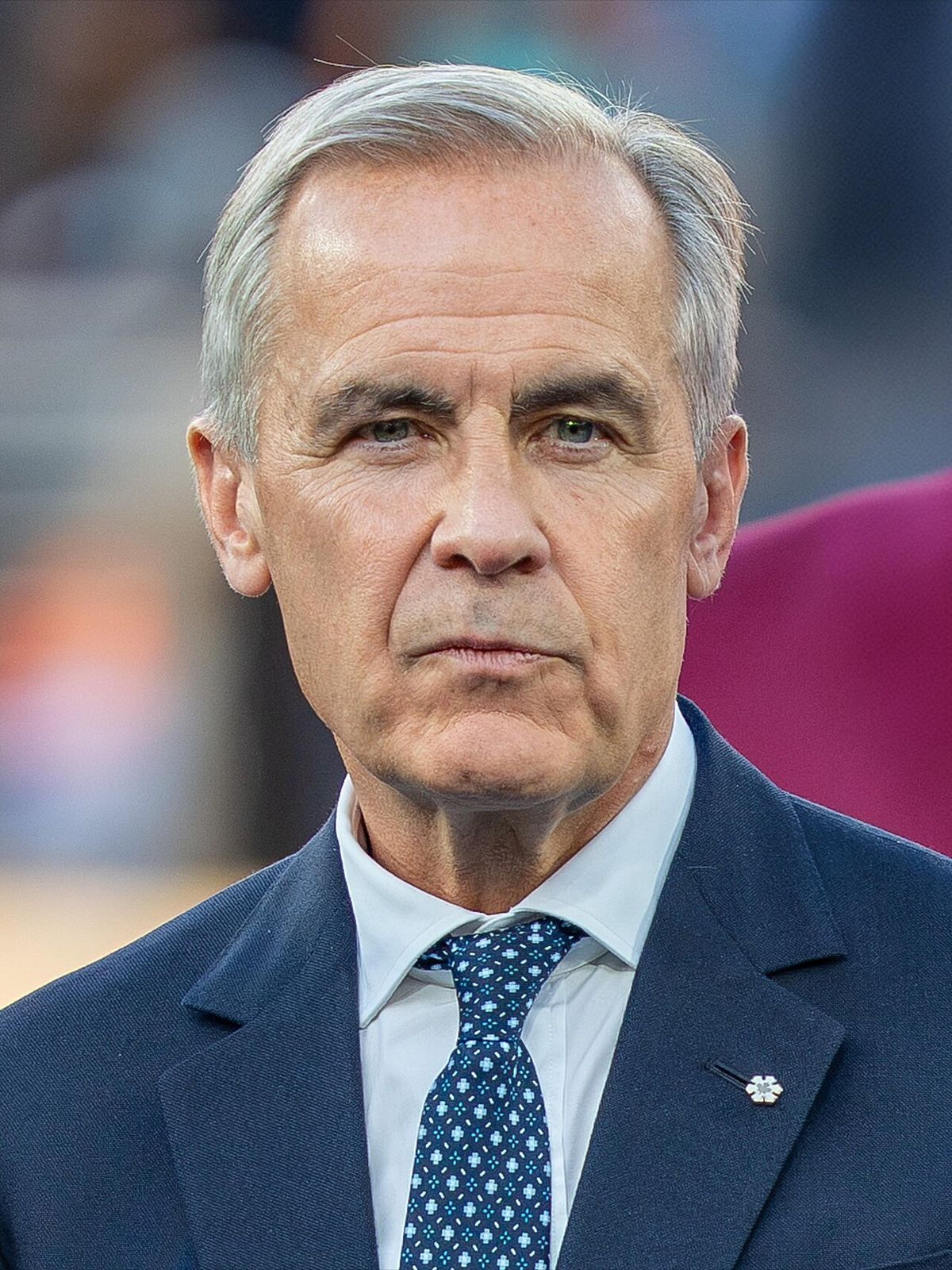
In these writings, he has analyzed the causes of polarization, citing social media algorithms, decades of globalization driving inequality, declining social cohesion, rising feelings of isolation, and the lingering effects of the pandemic. His advice, directed at both politicians and citizens, emphasizes reducing polarization and repairing societal trust, arguing that citizens have a duty to try to reduce polarization. In April 2026, Prime Minister Mark Carney appointed O'Toole to an advisory committee tasked with aiding negotiations related to the Canada-United States-Mexico Agreement (CUSMA). This appointment places him alongside other former politicians, business, and labour leaders to provide counsel on continental economic relations, demonstrating his continued involvement in matters of national policy and his expertise in international trade from his time as parliamentary secretary.
- President & Managing Director, ADIT North America (June 2023 to present)
- Distinguished Fellow, Hudson Institute (2023 to present)
- Member, Advisory Committee for Canada-U.S. Economic Relations (Appointed April 2026)
- Author of public commentary on democracy and polarization (2025 to 2026)
- Host of "The Blue Skies" political podcast exploring issues with thought leaders
Political Positions and Legacy
Throughout his career, O'Toole has been characterized as a moderate within the Conservative Party, advocating for a broader, more inclusive conservatism while denouncing far-right elements as not belonging in the party. His domestic policy positions evolved significantly, particularly between his 2020 leadership campaign and his 2021 election platform. He initially campaigned as a "true blue" conservative but later embraced a carbon pricing plan he called a "low carbon savings account" and did not commit to repealing the federal assault weapons ban. He argued for simplifying the tax system, stating complexity benefits the wealthy who can find loopholes, and supported modifying Canada's equalization and fiscal stabilization systems, which he argued were unfair to Alberta.
O'Toole proposed a full review of government spending and a "pay-as-you-go" model where all new spending must be matched by an equivalent reduction elsewhere. He opposed a national childcare program, proposing instead to replace it with tax credits for parents to provide more choice, and similarly opposed a national pharmacare program, arguing it would replace billions already spent by private insurers. He supported an incentive to reduce Employment Insurance premiums for small and medium-sized businesses hiring new employees. On media, he supported reviewing the mandate for CBC's English digital and television operations, possibly converting it to a PBS-style public interest model to stop it from competing with the private sector, which he argued would make a $600-million print media bailout package unnecessary. He stated he would not modify CBC Radio or its French language operations, stating they maintain their original purpose.
In foreign policy, he was a vocal advocate for a CANZUK free movement and trade agreement among Canada, Australia, New Zealand, and the United Kingdom. He maintained a consistently hard-line stance against the Chinese government, which continued beyond his political career and made him a target. His legacy is one of a leader who attempted a deliberate and public modernization and moderation of his party's image, an effort that included policy shifts and rhetorical changes aimed at attracting working-class and suburban voters. This project ultimately led to his removal by a caucus resistant to that shift, highlighting the enduring tensions within the Conservative coalition between its populist, ideological wings and its pragmatic, electoralist centre. In his post-political writings, he frames this challenge as part of a wider societal struggle with polarization and trust, suggesting the need for a correction to the social contract itself.
Questions about Erin O'Toole
What did Erin O'Toole do before entering politics?
Before politics, Erin O'Toole served for 12 years in the Canadian Armed Forces, achieving the rank of captain in the Royal Canadian Air Force. He flew as a tactical navigator on Sea King helicopters with 423 Squadron, conducting maritime surveillance and search and rescue, and received the Sikorsky Helicopter Rescue Award. After leaving active service in 2000, he earned a law degree from Dalhousie University in 2003. He worked as a corporate lawyer at Stikeman Elliott in Toronto, then served as Canadian in-house counsel for Procter & Gamble from 2006 to 2011, and was a lawyer and registered lobbyist for Facebook at the firm Heenan Blaikie in 2011.
Why was Erin O'Toole removed as Conservative leader?
Erin O'Toole was removed as leader of the Conservative Party on February 2, 2022, following a secret ballot vote by the party's caucus initiated under the Reform Act. The vote was triggered by a letter from 35 MPs calling for a leadership review, citing his policy reversals on issues like the federal carbon tax and assault weapons ban, which they felt betrayed his "true blue" campaign platform. Many in caucus also blamed him for failing to gain seats in the 2021 election despite winning the popular vote. The final vote was 73 in favour of removal to 45 against, forcing his immediate ouster and the appointment of Candice Bergen as interim leader.
What is Erin O'Toole doing now after politics?
Since leaving politics in 2023, Erin O'Toole is the president and managing director of ADIT North America, a globally integrated risk advisory firm specializing in strategic intelligence, international trade, due diligence, security, and compliance in Canada and Mexico. He is also a distinguished fellow at the Hudson Institute in Washington, D.C., where he contributes to geopolitical and policy discussions. In April 2026, Prime Minister Mark Carney appointed him to an advisory committee to aid with CUSMA negotiations. He also writes public commentary on polarization and democracy and hosts a political podcast called "The Blue Skies."
Did Erin O'Toole win the popular vote in the 2021 election?
Yes, the Conservative Party under Erin O'Toole won the popular vote in the 2021 federal election. However, the party failed to gain seats and the Liberal Party under Justin Trudeau formed another minority government. O'Toole retained his own seat in the riding of Durham. He received 46 percent of the vote in Durham during that election.
What was O'Toole's role in the Harper government?
Erin O'Toole served as the minister of veterans affairs in Prime Minister Stephen Harper's cabinet from January 5 to November 4, 2015. Appointed after the controversial tenure of Julian Fantino, O'Toole prioritized repairing the department's relationship with veterans and improving service standards and mental health support. He convinced veterans involved in a lawsuit over the 2006 overhaul of veteran benefits, which they argued was discriminatory, to pause litigation and enter settlement negotiations. Prior to this cabinet role, he served as the parliamentary secretary to the minister of international trade, Ed Fast, from 2013 to 2015.
What is Erin O'Toole's stance on China and foreign policy?
Erin O'Toole maintained a hard-line approach towards the Chinese government throughout his political career, advocating for a tougher stance on human rights abuses and economic practices. As party leader, he was a prominent advocate for a CANZUK agreement between Canada, Australia, New Zealand, and the UK. After the 2021 election, he publicly stated his belief that Chinese interference could have cost the Conservatives up to eight or nine seats. In May 2023, he was informed by the Canadian Security Intelligence Service that he remained a personal target of the Chinese government due to his past criticisms of the Chinese Communist Party, a risk stemming from his time as a prominent critic and shadow minister for foreign affairs.
Sources and further reading
- Erin O'Toole (Wikipedia)
- Advice to Canadians for 2026 - by Erin O'Toole (erinotoole.substack.com)
- Erin O'Toole (erinotoole.ca)
- Friendly Advice for Pierre Poilievre, from a Former ... (thewalrus.ca)
- Erin O'Toole (hudson.org)
Checked by the Nosy Mag desk. Last updated 2026-10-25.