Indian reserve
An Indian reserve, also known as a First Nations reserve, is a tract of land in Canada set apart by the federal Crown for the use and benefit of a specific First Nation band, as defined by the Indian Act. These lands are distinct from broader Indigenous claims to ancestral territory under Aboriginal title. Canada has designated 3,394 reserves for over 600 First Nations. They are home to a significant portion of the Status Indian population, though many are small, remote, and have no permanent residents. The governance, legal status, and socio-economic conditions of reserves are foundational to understanding contemporary Indigenous issues in Canada.
Definition and Legal Framework
The Indian Act of 1876 provides the legal definition of an Indian reserve as a tract of land where the legal title is vested in the Crown and which has been set apart for the use and benefit of a band. Legislative jurisdiction over Indians and lands reserved for Indians was assigned to the Parliament of Canada through Section 91(24) of the Constitution Act, 1867. This federal authority is exclusive, meaning provinces do not have direct legislative power over reserves. The Indian Act gives the Minister of Crown-Indigenous Relations and Northern Affairs the right to determine whether the use of reserve lands is for the benefit of the band. Title to land within a reserve can only be transferred to the band itself or to individual band members, and this land is generally protected from seizure. The personal property of a band or a band member living on a reserve is also largely exempt from legal processes like seizure or mortgage by entities other than an Indian or a band. While the Act was intended to protect Indian holdings, these limitations make it difficult for reserves and their residents to obtain conventional financing for development, construction, or renovation.
Demographics and Geographic Distribution
Canada has designated 3,394 reserves for over 600 First Nations. By 2020, reserves provided shelter for approximately half of all registered band members. At the 2021 census, there were over 3,200 reserves across the country, with 992 of these counted as census subdivisions for statistical purposes. Reserves vary enormously in size and population, from large communities like Blood 148 of the Kainai Nation, with a population of 4,572 in 2021, to completely uninhabited lands like Blood 148A. They are typically small, remote, and non-contiguous, a fact that has led to the abandonment or seasonal use of many. Some reserves originally established in rural areas have become surrounded by urban development, with examples found in major cities like Montreal, Vancouver, and Calgary. Statistics Canada counts only those reserves which are populated or potentially populated as subdivisions for the national census, and between 2016 and 2021, 73 new reserve subdivisions were added while 28 were removed.
Historical Development and Treaties
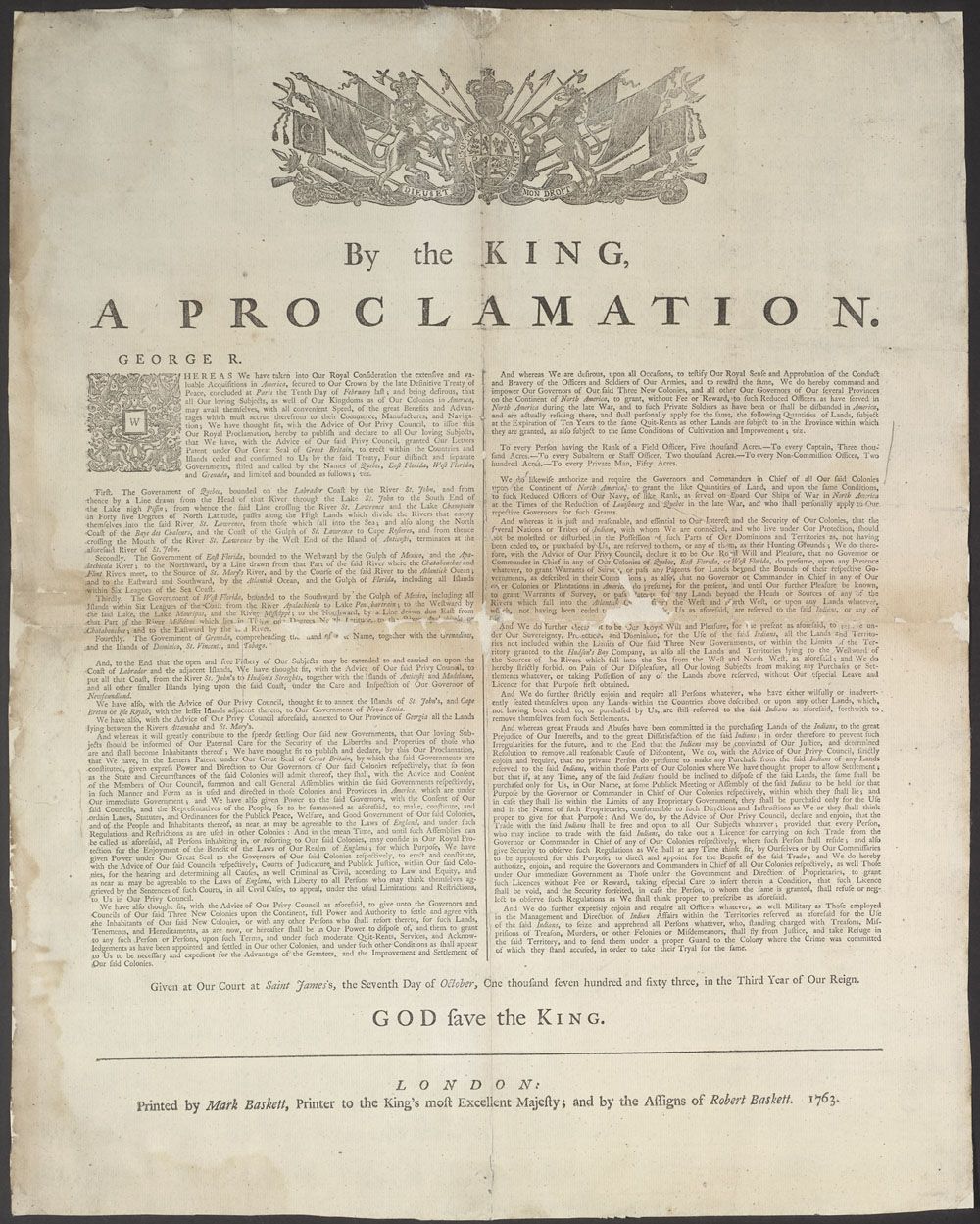
The establishment of reserves is deeply intertwined with the history of treaties between Indigenous nations and the Crown. After the Royal Proclamation of 1763 and before Confederation, early agreements like the Upper Canada Treaties (1764 to 1862) and the Douglas Treaties (1850 to 1854) in British Columbia sometimes addressed reserve lands, hunting, fishing, and trapping rights. Governor James Douglas worked to establish many reserves on the British Columbia mainland, though most were overturned by successor colonial governments after the province joined Confederation in 1871. The promise to negotiate for the extinguishment of Aboriginal title and to set aside reserves was a key commitment made by Canada when it acquired Rupert's Land in 1870. This led directly to the era of the Numbered Treaties, signed between 1871 and 1921, through which the Canadian government gained vast areas of land in Northwestern Ontario, the Prairies, and Northern Canada in exchange for promises including reserves. Treaty 1, established on 3 August 1871 with First Nations in southeastern Manitoba, is an example, with signatories including the Brokenhead Ojibway, Fort Alexander (Sagkeeng), Long Plain, Peguis, Roseau River Anishinabe, Sandy Bay, and Swan Lake First Nations. Not all reserves were created by treaty, however, as exemplified by the Wikwemikong Unceded Reserve on Manitoulin Island, which is subject to the Indian Act despite its lands never being ceded by treaty.
Governance and Administration
Band governments, operating under the framework of the Indian Act, administer reserves. A band is the basic unit of government for those subject to the Act. A single band may govern more than one reserve, such as the Beaver First Nation which administers Boyer 164 and Child Lake 164A, or the Membertou First Nation which administers Caribou Marsh 29, Sydney 28A, and Membertou 28B. Conversely, some reserves are shared by multiple bands for specific purposes like fishing camps or educational facilities. For instance, Pekw'Xe:yles on the Fraser River is used by 21 different bands, and Grass Indian Reserve No. 15 in Chilliwack is shared by nine bands of the Stó꞉lō peoples. Most reserves are self-governed within the limits prescribed by the Indian Act, with band councils typically consisting of an elected chief and councillors responsible for local services like education, water, and roads. Councils are elected for two- or three-year terms under the Indian Act or band custom. Modern treaty settlements have altered the governance model for some reserves, incorporating them as municipalities or government districts. The Nisga'a Treaty, for example, relieved Nisga'a reserves like Gitlaxt'aamiks of their status under the Indian Act, and the shíshálh Nation's reserves are now Indian government districts.
- Band Council: The governing body for a band, usually with an elected chief and councillors, carrying out community business and services.
- Assembly of First Nations (AFN): The national advocacy organization representing First Nation citizens, established in 1982.
- Custom Electoral System: Some bands, like Buctouche First Nation in New Brunswick, use their own custom systems for leadership selection.
- First Nations Elections Act: Provides a legislative framework for elections in many communities, with terms often lasting four years.
- Hereditary Chiefs: Some First Nations are also represented by hereditary chiefs, alongside or separate from elected councils, reflecting traditional governance structures.
Economic Realities, Housing, and Taxation
The legal protections of the Indian Act, while intended to safeguard collective land holdings, create significant barriers to economic development by making it difficult for bands and residents to obtain conventional financing for housing or business ventures. To answer this need, the Canada Mortgage and Housing Corporation created an on-reserve housing loan program where band members can enter into trust agreements and lenders can receive loans to build or repair houses. In other programs, loans to residents of reserves are guaranteed by the federal government. Few reserves have inherent economic advantages such as resource revenues, and any such revenues are held in trust by the federal Minister of Crown-Indigenous Relations and Northern Affairs. Reserve lands and the personal property of bands and resident band members are exempt from all forms of taxation, except local taxes levied by the band council. This exemption has enabled some band members operating proprietorships or partnerships to sell heavily taxed goods, like cigarettes, at lower prices on-reserve. Corporations owned by members of First Nations, however, are not automatically exempt from taxation. Provinces and municipalities can expropriate reserve land only if specifically authorized by a provincial or federal law, which is a rare occurrence.
Land Claims, Modern Treaties, and Environmental Policy
Reserves are critical in public policy, especially concerning natural resource development on or near their lands, and are distinct from comprehensive land claims areas which encompass a First Nation's much larger traditional territory. Since the 1970s, there has been growing recognition of constitutionally protected Aboriginal and treaty rights under Section 35 of the Constitution Act, 1982. By 2002, First Nations had finalized 14 comprehensive land claims and self-government agreements, with many others in negotiation. These modern treaties, which hold constitutional status, address self-government, land ownership, and resource sharing. Environmental protection is another key area, with the Canadian Environmental Protection Act, 1999 placing Aboriginal participation on par with federal and provincial ministers on the National Advisory Committee. The Act defines 'Aboriginal land' to include reserves, surrendered lands, and any other lands set apart for a band under the Indian Act. Under the Act, the National Pollutant Release Inventory was initiated, providing data used by First Nation administrations to monitor pollution, which revealed severe impacts in communities like the Aamjiwnaang First Nation in Sarnia, Ontario, described as 'ground zero for Ontario's heaviest load of air pollution.'
Crisis of Water Quality and Infrastructure
A persistent and severe issue is the state of water infrastructure on many reserves, with boil-water advisories representing a chronic public health crisis. By 21 December 2017, there were 67 long-term boil-water advisories in effect for longer than a year on federally managed public water systems, with another 18 communities having water issues for between two and 12 months. In 2015, Health Canada and the First Nations Health Authority statistics reported 162 drinking water advisories in 118 First Nation communities. Notable cases include the Neskantaga First Nation, which reported a 20-year advisory in October 2015, calling it the longest running in Canada, and Shoal Lake 40 First Nation, which was under an 18-year advisory. Other communities have faced acute crises, such as Kashechewan First Nation in October 2005, where high E. coli levels led to a costly evacuation of hundreds and cost approximately $16 million. The Ḵwiḵwa̱sut'inux̱w Ha̱xwa'mis First Nation on Vancouver Island had a boil-water advisory beginning in 1997. By 2006, nearly 100 Indian reserves had boil-water advisories and many others had substandard water.
Examples of First Nations and Reserves Across Canada
First Nations and their reserves are diverse in location, size, governance, and population. The Algonquins of Pikwàkanagàn First Nation in Ontario is home to approximately 450 on-reserve members on a 1,800-acre reserve near Golden Lake, with nearly 3,800 total registered members and a traditional territory spanning 9 million acres. In British Columbia, the Columbia Lake Indian Band, also known as the ?Akisq'nuk First Nation, is located on the west bank of the Kootenay River and is a member of various tribal councils. New Brunswick is home to communities like Kingsclear First Nation and Buctouche First Nation. The national advocacy body, the Assembly of First Nations, represents citizens from these and hundreds of other communities. The following table provides a broader snapshot of selected First Nations and their administrative details, illustrating the variety within the reserve system.
| First Nation | Province | Notable Reserve or Detail | Governance / Affiliation Note |
|---|---|---|---|
| Algonquins of Pikwàkanagàn | Ontario | ~450 on-reserve members. 1,800-acre reserve | Part of 9-million-acre unceded territory |
| Kainai Nation (Blood) | Alberta | Blood 148 (Pop. 4,572 in 2021). Blood 148A (uninhabited) | Example of a band with multiple reserves |
| Beaver First Nation | Alberta | Administers Boyer 164 and Child Lake 164A | Example of one band governing multiple reserves |
| Buctouche First Nation | New Brunswick | 9 Reserve Road | Custom electoral system |
| Kingsclear First Nation | New Brunswick | 77 French Village Road | Council under First Nations Elections Act |
| ?Akisq'nuk First Nation | British Columbia | Columbia Lake Indian Band | Member of various tribal councils |
| Nisga'a Nation | British Columbia | Gitlaxt'aamiks (formerly a reserve) | Status changed to village government by Nisga'a Treaty |
| Membertou First Nation | Nova Scotia | Administers Caribou Marsh 29, Sydney 28A, Membertou 28B | Example of a band with three reserves |
| shíshálh Nation | British Columbia | Multiple reserves | Now governed as Indian government districts |
Questions about Indian reserve
Do all First Nations people live on reserves?
No, a significant portion of First Nations people live off-reserve. As of 2020, reserves provided shelter for approximately half of all registered band members. Many First Nations citizens live in urban centres or other rural areas. The Assembly of First Nations represents citizens living in First Nation communities and in cities and towns across the country.
What is a boil-water advisory and why are they common on reserves?
A boil-water advisory is a public health directive for a water system where water is unsafe to drink without boiling. They are common on many reserves due to aging and inadequate infrastructure. In 2015, there were 162 drinking water advisories in 118 First Nation communities. By 2006, nearly 100 Indian reserves had boil-water advisories and many others had substandard water.
Can provinces tax property on reserves?
Generally, no. Reserve lands and the personal property of bands and band members living on a reserve are exempt from all forms of taxation, except for local taxes levied by the band council itself. This exemption stems from the Crown's underlying title to the land. However, corporations owned by First Nations members are not automatically exempt from taxation.
What is a modern treaty and how does it affect reserves?
A modern treaty is a comprehensive land claim and self-government agreement that holds constitutional status under section 35 of the Constitution Act, 1982. These agreements can change the governance and land status of reserves. For example, the Nisga'a Treaty relieved Nisga'a reserves of their status under the Indian Act, incorporating them as villages. Similarly, the shíshálh Nation's reserves are now Indian government districts.
What is the difference between a reserve and Aboriginal title?
A reserve is a tract of land, the legal title to which is vested in the Crown, that has been set apart for the use and benefit of a band as defined by the Indian Act. Aboriginal title refers to Indigenous peoples' inherent claims to ancestral lands based on traditional use and occupancy that predate Canadian sovereignty. Reserves are created after a contract with the Crown, such as through historical treaties like the Numbered Treaties signed between 1871 and 1921. These are distinct concepts, as reserves are specific parcels set aside by the government, while Aboriginal title represents a broader legal claim to traditional territories.
How many Indian reserves are there in Canada?
Canada has designated 3,394 reserves for over 600 First Nations. At the 2021 Canadian census, there were over 3,200 reserves across the country. Of these, 992 were classified as census subdivisions, meaning they were populated or potentially populated for statistical purposes. This number included 73 reserves added and 28 removed since the 2016 census.
Sources and further reading
- Indian reserve (Wikipedia)
- First Nations A-Z Listing, Province of British Columbia (www2.gov.bc.ca)
- First Nations communities, gnb.ca (gnb.ca)
- Frequently Asked Questions (indigenouspeoplesatlasofcanada.ca)
- Home | Algonquins of Pikwàkanagàn First Nation (algonquinsofpikwakanagan.com)
Checked by the Nosy Mag desk. Last updated 2026-10-27.