Cree
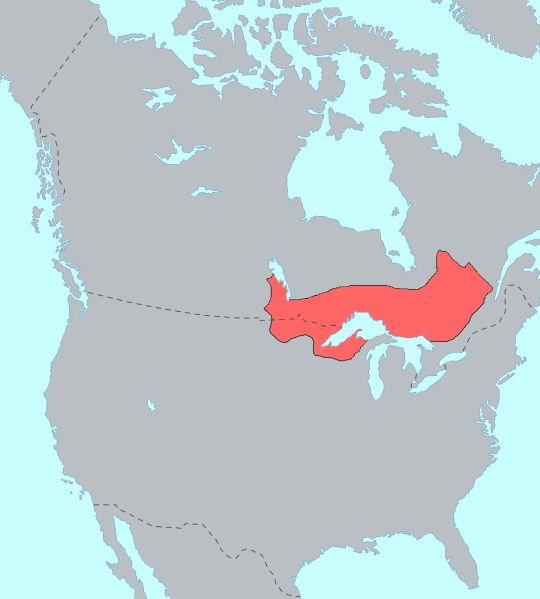
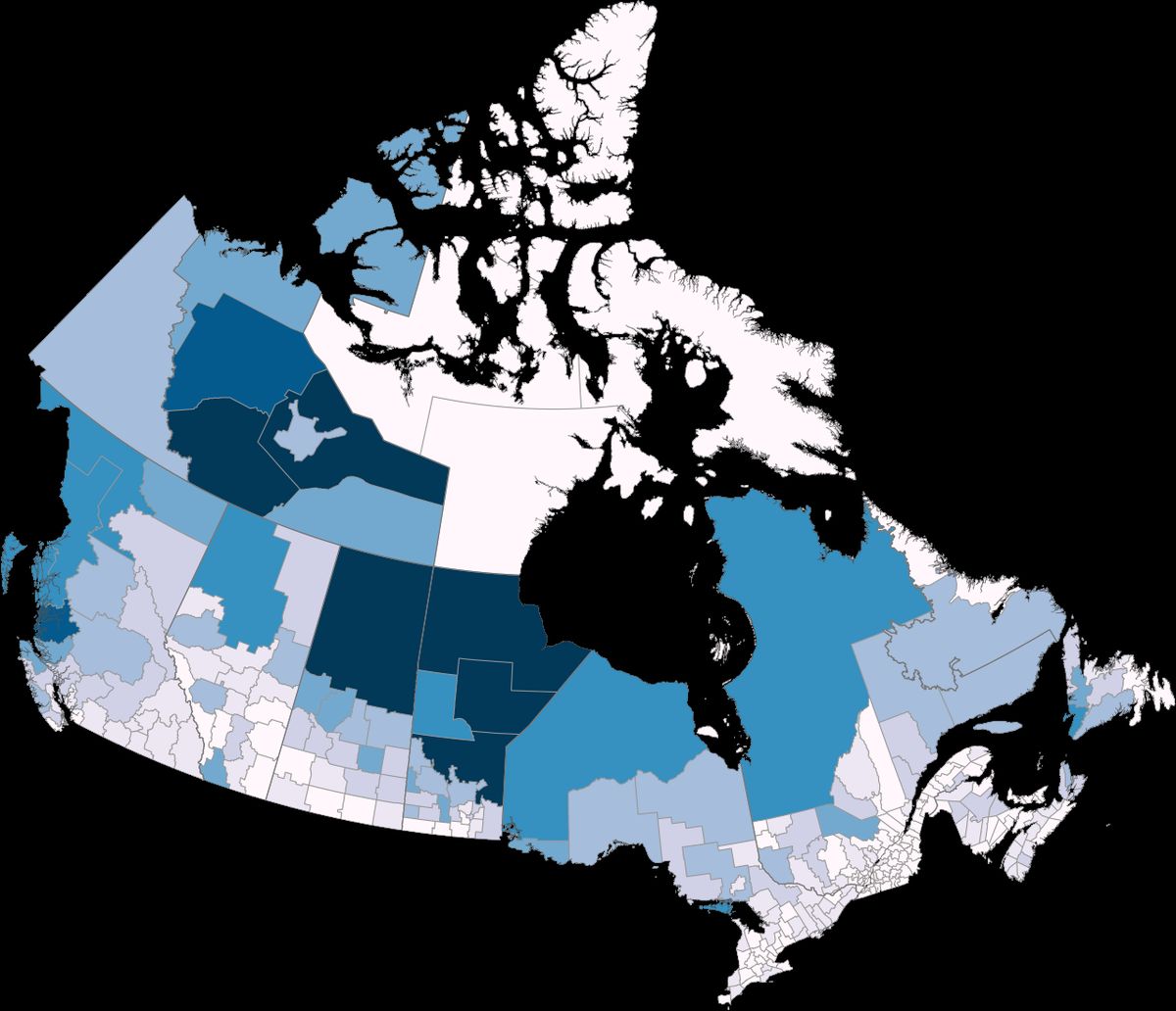
The Cree are one of the largest and most widely distributed First Nations in Canada, with a population exceeding 350,000 people. Their traditional homelands span from northern Quebec and Ontario across the Canadian Prairies into British Columbia and the Northwest Territories. The Cree are not a single monolithic group but a macro-community of related peoples, including Plains Cree, Woodland Cree, Swampy Cree, Moose Cree, and East Cree, each with distinct dialects and cultural adaptations. Their history is deeply intertwined with the North American fur trade and treaty-making with the Crown, and today they are active in asserting rights, revitalizing language, and governing their lands and communities.
Etymology and Self-Designation
The name 'Cree' entered English from the French 'Cris', a shortening of 'Christinaux'. This French term itself was derived from the Ojibwe word 'Kinistino', which the Ojibweg used for communities they encountered north and west of Lake Superior. The French subsequently applied it broadly to various peoples in Canada. The Cree and closely related nations use one of two primary terms to refer to themselves, both stemming from Proto-Algonquian roots. One form combines the roots for 'balance' and 'action', resulting in words like nêhiyaw (Plains Cree) or Nehirowisiw (Atikamekw), generally meaning 'Indigenous person' or 'one who is in balance with nature'. The other form comes from the root meaning 'human', seen in words like ililîw (Moose Cree), Iiyiyuu (East Cree), and Innu. These autonyms are preferred, while 'Cree' is typically used in English or French conversation. Due to the many dialects, there is no single modern collective autonym that unites all Cree peoples, reflecting the diversity within the larger ethnic group.
Major Subgroups and Geography
The Cree are broadly divided into several groups based on dialect and region, reflecting adaptations to diverse environments across their vast territory. The Plains Cree, numbering about 34,000, live in Manitoba, Saskatchewan, Alberta, and Montana, having adopted a bison-hunting culture on the Great Plains. The Woodland Cree and Rocky Cree inhabit the boreal forests of northern Alberta, Manitoba, and Saskatchewan. The Swampy Cree live in northern Manitoba, along the Hudson Bay coast, and into parts of Ontario and Saskatchewan, with about 4,500 speakers of their dialect. The Moose Cree are centred around Moose Factory Island at the southern end of James Bay in Ontario. The East Cree, approximately 18,000 people, live predominantly in Eeyou Istchee in northern Quebec. Closely related but distinct nations include the Atikamekw of central Quebec, with a population around 8,000 and a language spoken by about 95% of its people. The Innu and Naskapi, with a combined population of about 18,000, live in eastern Quebec and Labrador, with the Naskapi maintaining more nomadic traditions linked to caribou hunting.
Historical Social and Political Organization
Traditionally, Cree social organization was flexible and based on the needs of hunting and gathering. The basic unit was the lodge, consisting of perhaps eight to a dozen people from related families living together in a wigwam or tipi. Several lodges formed a band, which moved and hunted together as a cooperative group. Bands could form and dissolve with relative ease, and safety was found in numbers, making exile a severe punishment. Decisions were made by consensus, and bands maintained strong regional ties through intermarriage and seasonal gatherings for communal hunts and socializing. There was no overarching formal political structure beyond these regional alliances. In times of conflict, a band would nominate a temporary military commander called an okimahkan, or war chief, an office distinct from the peace chief who acted more as a diplomat. The Cree who moved onto the plains, the Plains Cree, formed a powerful alliance known as the Iron Confederacy with the Assiniboine, Métis, and Saulteaux, becoming a dominant force in the northern plains fur trade from the 1730s to the 1870s. This confederacy was a major political and economic network on the northern plains.
Language and Dialect Continuum
The Cree language, part of the Algonquian family, is the most widely spoken Indigenous language in Canada, with about 96,000 people reporting it as their mother tongue and about 65,000 using it most often at home. It is best described as a dialect continuum, known broadly as Cree-Montagnais-Naskapi, where neighbouring dialects are mutually intelligible but speakers from distant regions may have difficulty understanding each other. A major linguistic division exists between eastern and western groups, notably in the palatalization of the 'k' sound before front vowels to either 'ts' or 'ch'. Dialects also vary in their realization of the Proto-Algonquian phoneme *l, which can be pronounced as l, r, y, n, or th. Western dialects have lost the distinction between the sounds 's' and 'sh', merging them to 's'. The language is typologically diverse, employing both prefixes and suffixes, prepositions and postpositions, and demonstratives can appear both before and after nouns. American linguist Victor Golla counts Cree among 55 North American languages with over 1,000 speakers that are still being acquired by children. Official status for Cree exists in the Northwest Territories alongside eight other Aboriginal languages.
Treaty Relations and Contemporary Governance
The Cree are party to a variety of treaties with the Canadian state, defining relationships, rights, and land ownership. The Numbered Treaties, particularly Treaties 1 through 11, cover much of the Cree homeland across the Prairies and into the Northwest Territories. For instance, the Enoch Cree Nation and Montreal Lake Cree Nation are proud members of Treaty 6, signed in 1876 between August 23 and 29 and on September 9 by Commissioner Alexander Morris with the Plains and Wood Cree. Today, Cree nations exercise increasing self-governance. The Montreal Lake Cree Nation has developed its own Land Code to govern and manage its reserve lands and resources under its own rules, with a ratification vote held on the final code. Many nations, like the Bigstone Cree Nation in Alberta, actively work to protect the spirit and intent of their treaties, such as Treaty 8, for future generations. There have been attempts to create a national political organization representing all Cree peoples, with gatherings noted as far back as 1994 at the Opaskwayak Cree Nation reserve.
Communities and Modern Identity
There are over 135 registered Cree bands in Canada, with reserve lands constituting the largest total area held by any First Nations group in the country. Prominent communities include the Lac La Ronge Indian Band in Saskatchewan, the largest Cree band and the second largest First Nations band in Canada after the Six Nations of the Grand River. The Enoch Cree Nation in central Alberta describes itself as a progressive First Nation on Treaty 6 Territory, guided by values such as perseverance and knowledge. Identity among Cree peoples has historically been inclusive, with mixed heritage and multilingualism being the norm, especially in the west through the Iron Confederacy where mixed bands of Cree, Saulteaux, Métis, and Assiniboine were common. In recent decades, there has been a tendency for some bands to simplify public identity, often emphasizing 'Plains Cree' heritage. Scholar Neal McLeod suggests this may be due to the dominant culture's focus on Plains Indian culture and the greater written standardization of Plains Cree dialects. In the United States, Cree people primarily live in Montana, notably as part of the Chippewa Cree Tribe on the Rocky Boy's Indian Reservation, which they share with the Pembina Band of Chippewa Indians.
Contemporary Cree nations are active communities focused on cultural preservation and future prosperity. The Montreal Lake Cree Nation emphasizes its unique historical cultural heritage and common political consciousness, striving to maintain social, economic, and political bases for its people including rights to land and resources. These efforts include land governance, economic development, and community events that strengthen collective identity. The Enoch Cree Nation seeks to preserve and promote culture, language, history, and spirituality while advancing economic, education, health, and social well-being. Community events like the Bigstone Cree Nation's Wabasca Treaty Days in August 2026 and the Moose Cree First Nation's farmers markets are examples of ongoing cultural and communal life.
First Contact, Displacement and the Fur Trade
The first recorded contact between Cree peoples and Europeans in Manitoba occurred in 1682 at the mouth of the Nelson and Hayes rivers by a Hudson's Bay Company party travelling about 100 miles inland. In the south, explorer Pierre Gaultier de Varennes, sieur de La Vérendrye, met with an assembled group of 200 Cree warriors near present-day Fort Frances, Ontario, in 1732, who were prepared for conflict with the Dakota. The acquisition of firearms from trading posts like the HBC fundamentally altered Cree society and territorial expansion. Armed with new technology, many Cree bands moved westward onto the plains, acting as crucial intermediaries and traders in the burgeoning North American fur trade network. This westward movement was part of a documented migration over time, strongly associated with their roles as hunters and traders. Later, between 1905 and the 1930s, the Canadian government displaced Cree and Ojibwa peoples from a large area north of Winnipeg, illustrating the ongoing pressures of colonial settlement on their territories. The Cree, along with other tribes, were removed from this region during that period.
Detailed Community Profiles
Beyond the major subgroups, specific Cree and related communities illustrate the diversity of the people. The Naskapi Nation of Kawawachikamach is located in a village northeast of Schefferville, Quebec, while the Mushuau Innu First Nation is in Natuashish, Newfoundland and Labrador. The Innu are further divided into eastern and western groups. Eastern Innu communities include Innus of Ekuanitshit at Mingan, Innu Takuaikan Uashat Mak Mani-Utenam based in Sept-Îles, and the Sheshatshiu Innu First Nation in Labrador. Western Innu communities include the Pekuakamiulnuatsh First Nation at Mashteuiatsh on Lac Saint-Jean and the Pessamit Innu Band on the north shore of the St. Lawrence River. The Atikamekw are governed by the Conseil de la Nation Atikamekw. Among the Cree, the Ermineskin Cree Nation is one member of the Four Nations of Maskwacis in Alberta. The Beaver Lake Cree Nation in Alberta emphasizes its homeland as a spiritual, physical, and economic base held in honour of ancestors and future generations. The Nisichawayasihk Cree Nation is based in Nelson House, Manitoba, about 800 kilometres north of Winnipeg.
Questions about Cree
What is the difference between Cree, Métis, and Oji-Cree?
The Cree are an Indigenous First Nation with distinct languages and cultures. The Métis are a distinct Indigenous people of mixed ancestry, historically often Cree and European (French, English, or Scottish) fur traders, and defined by the Métis National Council as having historic Métis Nation ancestry. The Oji-Cree (also called Severn Anishinaabe) are a First Nation of mixed Cree and Ojibwe heritage who speak a language blending both Algonquian roots. While closely related and historically allied through groups like the Iron Confederacy, these are three separate and recognized Indigenous groups within Canada.
Is the Cree language still spoken?
Yes, the Cree language is the most widely spoken Indigenous language in Canada, with approximately 96,000 people reporting it as their mother tongue and about 65,000 using it most often at home. It is a dialect continuum, meaning there are many regional variations, but it remains vital. It is one of the few North American Indigenous languages with over 1,000 speakers still being actively acquired by children. The language has official status in the Northwest Territories alongside eight other Aboriginal languages, French, and English.
Where do the Cree live in Canada?
Cree traditional territory is vast, covering a majority of eastern and central Canada. Major subgroups live in specific regions: the Plains Cree in the Prairies and Montana, Woodland and Swampy Cree in the boreal forests of Manitoba, Saskatchewan, and Ontario, the Moose Cree near James Bay in Ontario, and the East Cree in northern Quebec. There are over 135 Cree bands with reserve lands across these provinces and into British Columbia and the Northwest Territories. Specific communities include Nelson House in Manitoba and Wabasca in Alberta.
Who are the Innu and Atikamekw in relation to the Cree?
The Innu (formerly called Montagnais) and the Atikamekw are Indigenous nations closely related to the Cree, sharing linguistic and cultural roots. They are often grouped linguistically under Cree-Montagnais-Naskapi. However, they are distinct peoples with their own identities, territories, and political organizations. The Atikamekw homeland is Nitaskinan in central Quebec, and about 95% of their population speaks the Nehiromowin language. The Innu live in Nitassinan, which comprises parts of eastern Quebec and Labrador, with some Naskapi within that group maintaining nomadic caribou-hunting traditions.
What are some traditional Cree terms for themselves?
Cree peoples use different terms based on Proto Algonquian roots. Many, like the Plains Cree, use forms of nêhiyaw, meaning 'Indigenous person'. Others, like the Moose Cree and East Cree, use forms like ililîw and Iiyiyuu, derived from the root meaning 'human'. These terms vary by dialect and nation.
Sources: Wikipedia and current public reporting, checked by the Nosy Mag desk. Last updated 2026-10-18.