North-West Rebellion
The North-West Rebellion, also known as the North-West Resistance, was a violent armed conflict in the spring of 1885 between the Canadian government and Métis militants, alongside associated uprisings by Cree and Assiniboine First Nations. Centred in the District of Saskatchewan in what is now Alberta and Saskatchewan, the rebellion was the culmination of years of unresolved grievances over land rights, political representation, and the dire economic conditions facing Indigenous peoples on the prairies. Led by Métis leader Louis Riel and military commander Gabriel Dumont, the rebels achieved early victories but were ultimately overwhelmed by a larger, better-equipped government force. The rebellion's suppression led to the hanging of Riel, the imprisonment of First Nations chiefs, and a significant impact on Métis and Indigenous communities and on Canadian national identity.
Roots of Discontent and Grievances
The seeds of the 1885 conflict were sown in the 1870s following the Red River Rebellion, as many Métis migrated westward to the South Saskatchewan River valley. There, they established Southbranch settlements like Batoche, St. Laurent, and Duck Lake, laying out their farms in the traditional river lot system. The federal government's imposition of the square township Dominion Land Survey from 1882 onward threatened these existing landholdings, as surveyors often ignored the narrow river lots. In one stark example, the entire St. Louis settlement, including its church and school, was sold by the Crown to the Prince Albert Colonization Company, leaving 36 families facing dispossession. Concurrently, First Nations, particularly the Plains Cree, faced catastrophe with the near-extinction of the bison herds, which devastated their primary food source and economy. Despite signing treaties, many bands found government promises of rations and support were inconsistently or inadequately fulfilled, leading to widespread hunger and frustration. The Métis sent numerous petitions to Ottawa, with one in the summer of 1884 delivered by Bishop Grandin demanding provincial status for the North-West Territories, secure land title, and recognition of Louis Riel's leadership. The federal government's vague and dismissive response, including a January 1885 refusal to negotiate with Riel directly, convinced many Métis that peaceful appeals were futile and that more direct action was necessary.
Formation of the Provisional Government
In 1884, a Métis delegation travelled to Montana to invite Louis Riel to return and advocate for their cause. Riel arrived and helped draft a final, urgent petition in December 1884, which reiterated demands for land title, responsible government, and his own official recognition. The government's January 1885 reply, stating it would not negotiate with Riel, was seen as the final provocation. On March 18, 1885, at Batoche, Métis leaders formally established the Provisional Government of Saskatchewan. Pierre Parenteau Sr. was named chairman, French-Canadian Philippe Garnot served as secretary, and Gabriel Dumont was appointed adjutant-general and military leader. Louis Riel also created a 20-member council called the Exovedate, a term he coined from Latin meaning 'out of the flock'. This body passed a 10-point Revolutionary Bill of Rights asserting Métis rights to their farms. The provisional government believed it could pressure Ottawa as it had in 1869, but the context had changed dramatically with the completion of the Canadian Pacific Railway and the presence of the North-West Mounted Police.
The Outbreak of Armed Conflict
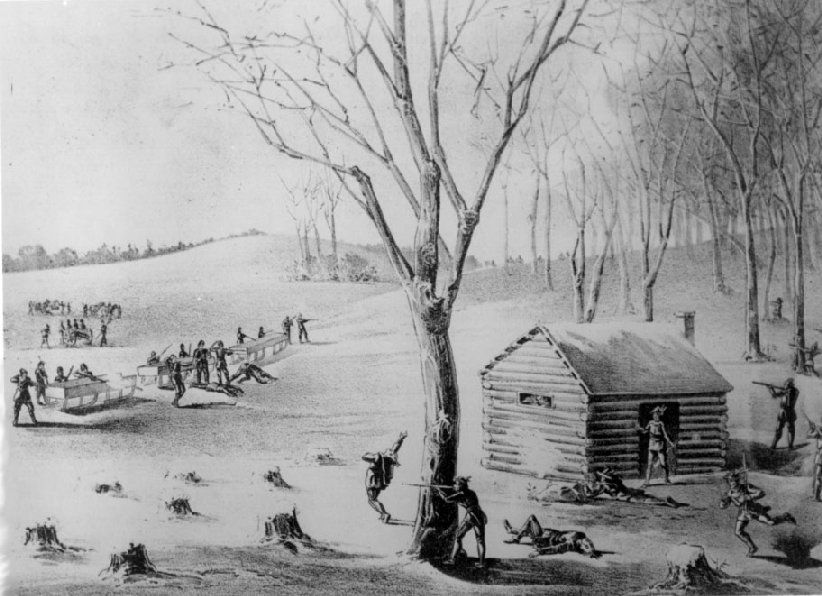
The first military action began as a raid for supplies. On March 25, Gabriel Dumont led 30 men to appropriate goods from Hillyard Mitchell's store near Duck Lake. The next day, North-West Mounted Police Superintendent Leif Crozier, warned of Métis activity, led a force of 56 police and 43 Prince Albert volunteers from Fort Carlton to confront them. Dumont, having been reinforced, commanded between 150 and 200 Métis and Cree fighters. He set an ambush about 3.5 kilometres from Duck Lake, using a gully and a log house for cover. Crozier's scouts detected the plan, and the Battle of Duck Lake commenced on March 26. The rebel force defeated the government column, forcing a retreat to Fort Carlton, which was accidentally destroyed by fire during its evacuation. This victory triggered wider unrest. On March 30, Cree bands approached Battleford, causing inhabitants to flee to Fort Battleford while the Cree took food and supplies. On April 2, at Frog Lake, a Cree war party led by Wandering Spirit killed nine unarmed civilians, including Indian Agent Thomas Quinn, an act committed against the wishes of Chief Big Bear.
Government Mobilization and Campaign Strategy
Prime Minister John A. Macdonald's government reacted swiftly to the news from Duck Lake, ordering the mobilization of the militia on March 23. Major General Frederick Middleton, commander of the Canadian Militia, was dispatched to Winnipeg to take charge. The government assembled a force of approximately 5,500 men, which included units of the small Permanent Active Militia, volunteer militia battalions from Ontario and Quebec, North-West Mounted Police, and armed local volunteers. The recently completed Canadian Pacific Railway, despite gaps in northern Ontario, proved crucial for transporting these troops westward. Middleton organized his forces into three main columns to converge on the rebel centres. His own central column of 900 men detrained at Qu'Appelle on April 6 and marched north toward Batoche. A second column under Lieutenant Colonel William Otter assembled at Swift Current with the objective of relieving the besieged settlement of Battleford. A third force, the Alberta Field Force under General Thomas Bland Strange, was formed at Calgary to secure Edmonton and then move down the North Saskatchewan River. The mobilization was logistically challenging, with troops enduring harsh winter conditions, marching through snow, and traversing unfinished rail sections on open flatcars.
- Central Column (Middleton): Departed Qu'Appelle April 6, objective Batoche.
- Northern Column (Otter): Departed Swift Current, objective Battleford and Cut Knife.
- Western Column (Strange): Assembled at Calgary, objectives Edmonton, Fort Pitt, and pursuit of Big Bear.
- Key Units: Included the 10th Royal Grenadiers and 2nd Queen's Own Rifles from Toronto, the 9th Voltigeurs from Quebec City, and the 65th Mount Royal Rifles from Montreal.
Key Battles and Rebel Victories
In April and early May 1885, rebel forces achieved several tactical victories against the advancing government troops. On April 24, Middleton's column was ambushed at Fish Creek, just 26 kilometres from Batoche, by about 200 Métis under Gabriel Dumont. The Métis inflicted significant casualties and halted Middleton's advance for two weeks, though they lacked the numbers for a decisive victory. Meanwhile, Cree forces scored a major success at Cut Knife Hill on May 2. Lieutenant Colonel Otter's column, attempting to attack a Cree encampment near Battleford, was repelled by warriors under war chief Fine-Day. Despite Otter's use of a Gatling gun, the Cree's defensive positions forced a Canadian retreat. Chief Big Bear, present but not fighting, persuaded the warriors not to pursue the fleeing soldiers. Earlier, on April 15, Cree fighters led by Big Bear's band had surrounded Fort Pitt. After a skirmish where NWMP Constable Cowan was killed, Inspector Francis Dickens surrendered the post. The Cree took civilian hostages but allowed the police to leave for Battleford, then destroyed the fort. These engagements demonstrated the rebels' tactical skill but also highlighted their critical shortages in manpower and sustained supplies.
| Battle/Skirmish | Date | Forces Involved | Outcome |
|---|---|---|---|
| Duck Lake | March 26, 1885 | Métis/Cree vs. NWMP & Volunteers | Rebel victory, government retreat |
| Frog Lake Incident | April 2, 1885 | Cree war party vs. civilians | Killing of nine civilians |
| Capture of Fort Pitt | April 15, 1885 | Cree vs. NWMP garrison | Fort surrendered, hostages taken, fort destroyed |
| Fish Creek | April 24, 1885 | Métis vs. Middleton's column | Rebel tactical victory, halted advance |
| Cut Knife | May 2, 1885 | Cree vs. Otter's column | Cree victory, government forced to retreat |
| Frenchman's Butte | May 28, 1885 | Cree vs. Strange's Alberta Field Force | Cree victory |
| Loon Lake | June 3, 1885 | Cree vs. NWMP scouts | Last armed engagement, Cree dispersed |
The Fall of Batoche and End of Major Fighting
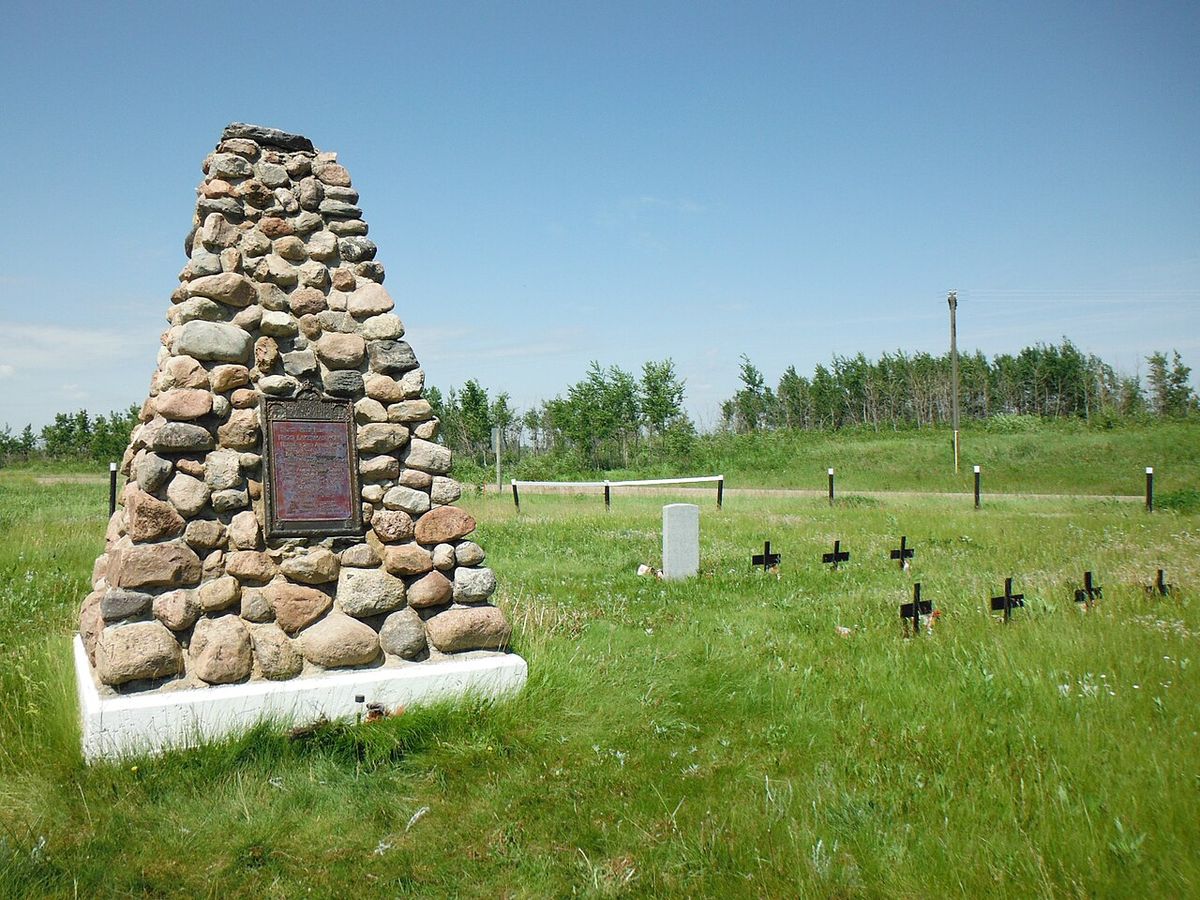
The rebellion reached its climax at the Métis headquarters of Batoche. After the delay at Fish Creek, Middleton's reinforced column laid siege to the settlement on May 9. For four days, roughly 250 Métis defenders, dug into rifle pits, held off a government force that eventually grew to over 800 men. The defenders, however, were critically short of ammunition and by the final day were firing nails, bolts, and small stones. On May 12, Middleton's troops launched a general assault and overran the Métis positions. The fall of Batoche marked the effective end of the Métis uprising. Louis Riel surrendered to government forces on May 15. Gabriel Dumont and several other fighters escaped across the border to the United States. The defeat at Batoche was followed by the surrender of major First Nations leaders. Chief Poundmaker surrendered to General Middleton at Battleford on May 26. Chief Big Bear's band, pursued by General Strange's Alberta Field Force, fought rear-guard actions at Frenchman's Butte and Loon Lake but finally dispersed, with Big Bear surrendering on July 2 near Fort Carlton. The District of Saskatchewan, with a total 1885 population of 10,595, had been the epicentre of the fighting, particularly the Prince Albert sub-district where Batoche was located.
Legal Reckoning: Trials and Executions
The suppression of the rebellion was followed by a series of trials that deeply affected Canadian society. Louis Riel was tried for high treason in Regina in July 1885. The trial lasted five days, and despite his defence arguing his actions were driven by the mental state of a religious prophet and the legitimate grievances of his people, the jury found him guilty. He was hanged on November 16, 1885, at the North-West Mounted Police barracks in Regina. In a separate legal process, Indigenous men were tried for murders committed outside military conflict, most notably for the Frog Lake killings. Chiefs Poundmaker and Big Bear were tried for treason-felony in Regina. Both were convicted and sentenced to three years in Stony Mountain Penitentiary in Manitoba. Both leaders were released early due to failing health. Eight Indigenous men were hanged in Canada's largest mass hanging at Battleford for murders committed at Frog Lake and Battleford. These harsh punishments were intended to crush further dissent and firmly establish Canadian legal authority.
Demographics and Divisions Within Communities
The 1885 census of Assiniboia, Saskatchewan and Alberta reported a total population of 48,362, of which about 40 percent were Status Indians. Within the District of Saskatchewan, the population was 10,595, divided into three sub-districts. The Prince Albert sub-district, the centre of the Métis uprising, had 5,373 people, including the Southbranch settlements with about 1,300 inhabitants. The Battleford sub-district, where the Cree uprising occurred, had 3,603 people. The Carrot River sub-district, with 1,770 people, remained quiet. The Métis population in the region was about 5,400, but they were not united. Only about 350 armed men actively supported Riel and the provisional government. His supporters tended to be older, less assimilated Métis with close ties to First Nations communities. A smaller group of Métis, led by Charles Nolin, opposed Riel. These opponents were generally younger, better educated, and sought greater integration into Canadian society rather than a separate domain. The great majority of First Nations did not support the rebellion, and Catholic clergy, alienated by Riel's prophetic claims, worked to minimize his support, with Father Albert Lacombe securing a promise of neutrality from Blackfoot Chief Crowfoot.
Historical Interpretation and Naming
The 1885 conflict is known by several names, each carrying distinct connotations. Contemporary government sources and many historical accounts traditionally called it the North-West Rebellion or the Second Riel Rebellion, framing it as an unlawful insurrection against the Crown. In recent decades, scholars, Indigenous communities, and institutions like The Canadian Encyclopedia and the Provincial Archives of Saskatchewan have increasingly used the term North-West Resistance or 1885 Resistance. This terminology reframes the conflict as an act of opposition by Indigenous peoples and the Métis against the imposition of Canadian sovereignty on their lands and the failure of the state to address legitimate grievances. The debate over nomenclature reflects the ongoing reassessment of the event's place in Canadian history, moving from a narrative of colonial triumph to a more critical understanding of its roots in broken promises, cultural conflict, and the struggle for Indigenous rights and survival in a rapidly changing West. The conflict cost the Canadian government about $5 million and was the country's first independent military action.
Questions about North-West Rebellion
What were the main causes of the North-West Rebellion?
The rebellion was caused by a combination of unresolved Métis land claims, lack of political representation, and dire conditions facing First Nations. Métis in the Southbranch settlements feared losing their river lot farms to the government's square township survey system and incoming settlers. They sent numerous petitions to Ottawa without a satisfactory response. Simultaneously, First Nations, particularly the Cree, faced starvation due to the disappearance of the bison herds and perceived failures of the federal government to honour treaty commitments regarding food rations and support. These parallel crises created a tinderbox of frustration and insecurity across the North-West Territories.
Who were the key leaders on both sides of the conflict?
The rebel forces were led politically and spiritually by Métis leader Louis Riel and militarily by Gabriel Dumont. They were joined by Cree chiefs Big Bear and Poundmaker, whose bands participated in associated uprisings, and war chiefs like Wandering Spirit and Fine-Day. The Canadian government response was commanded by Major General Frederick Middleton of the Canadian Militia. Other key government commanders included Lieutenant Colonel William Otter, who led the column to Battleford, and General Thomas Bland Strange, who commanded the Alberta Field Force from Calgary. Prime Minister John A. Macdonald directed the political and strategic response from Ottawa.
What was the outcome of the Battle of Batoche?
The Battle of Batoche, fought from May 9 to 12, 1885, was the decisive engagement of the rebellion. Approximately 250 Métis defenders, entrenched in rifle pits around their settlement, held off a larger government force under General Middleton for four days. The Métis eventually ran out of conventional ammunition and resorted to firing scrap metal and stones. On the final day, Middleton's troops launched a successful frontal assault, overrunning the Métis positions. The fall of Batoche broke the back of the Métis military resistance, leading to Riel's surrender on May 15 and the effective end of the major uprising.
How did the Canadian government respond to the rebellion?
The government responded with a rapid and large-scale military mobilization. Within days of the clash at Duck Lake, Prime Minister Macdonald ordered militia units from Ontario and Quebec into active service. A force of about 5,500 men was organized into three columns that marched into the rebel territory from different points. The Canadian Pacific Railway was crucial for transporting troops. This overwhelming display of force, coupled with the rebels' limited numbers and supplies, ensured a government victory within a few months.
What happened to Louis Riel after the rebellion?
After surrendering on May 15, 1885, Louis Riel was tried for high treason in Regina in July. His defence, led by lawyers who argued he was not legally responsible due to his mental state, failed to convince the jury. He was found guilty and sentenced to death. Despite a significant public campaign for clemency, particularly from Quebec and Métis supporters, Prime Minister John A. Macdonald refused to commute the sentence. Riel was hanged on November 16, 1885, in Regina. His execution remains one of the most controversial events in Canadian history.
What is the difference between calling it a rebellion and a resistance?
The terminology reflects different historical perspectives. 'Rebellion' is the traditional term used by the Canadian government and many historical accounts, implying an unlawful uprising against established authority. 'Resistance', increasingly used by scholars, Indigenous peoples, and institutions today, frames the conflict as a defensive struggle by the Métis and First Nations to protect their lands, rights, and ways of life against encroaching Canadian sovereignty and colonial policies. The choice of term often signals one's interpretation of the legitimacy of the Métis and Indigenous cause and the nature of Canadian expansion into the West.
Sources and further reading
- North-West Rebellion (Wikipedia)
- 1885 Northwest Resistance (indigenouspeoplesatlasofcanada.ca)
- Shifting Riel-ity: The 1885 North-West Rebellion (canadashistory.ca)
- The North-West Resistance (thediscoverblog.com)
- North-West Resistance (thecanadianencyclopedia.ca)
Checked by the Nosy Mag desk. Last updated 2026-10-24.