Federation of Sovereign Indigenous Nations
The Federation of Sovereign Indigenous Nations (FSIN) is the principal political organization representing 74 First Nations across Saskatchewan. Founded in 1946 as the Union of Saskatchewan Indians, the FSIN is dedicated to protecting the inherent and treaty rights of its member nations, honouring the spirit and intent of the historic Numbered Treaties. The organization advocates for First Nations' sovereignty, economic development, and social advancement within the province. In October 2026, Indigenous Services Canada ordered the FSIN to repay $12.3 million following a forensic audit of federal funding from 2019 to 2024, a situation that has tested its governance.
Historical Development and Governance
In 1919, the League of Indians of Canada was established, holding its first Saskatchewan congress at Thunderchild First Nation in 1921. This evolved into the League of Indians of Western Canada in 1929, with John Tootoosis of Poundmaker First Nation as its first president. In 1943, the Association of Saskatchewan Indians was formed, led by Joe Dreaver. In 1946, with the involvement of Saskatchewan Premier T.C. Douglas, provincial groups amalgamated in Fort Qu'Appelle to form the Union of Saskatchewan Indians, with John Tootoosis as president. This union merged the Protective Association for the Indians and their Treaties and the Association of Saskatchewan Indians, which had been incorporated in 1945 under Joe Dreaver.
In 1958, leaders reformed the organization into the Federation of Saskatchewan Indians, a non-profit structured as a federation where power resided with the Chiefs. A convention of 69 Saskatchewan Indian Chiefs in April 1982 transformed it into the Federation of Saskatchewan Indian Nations (FSIN), establishing a governing structure of Chiefs-in-Assembly, a Senate, an Elders' Council, an executive council, and an Indian Government Commission. The organization's current name, the Federation of Sovereign Indigenous Nations, was adopted by a vote of the Chiefs-in-Assembly in May 2016, though the FSIN acronym was retained. The leadership of the organization has included many notable figures over its history.
- John Tootoosis (1958 to 1961)
- David Knight (1961 to 1964)
- Wilfred Bellegarde (1964 to 1966)
- Walter Deiter (1966 to 1968)
- David Ahenakew (1968 to 1978)
- Albert Bellegarde (1978 to 1979)
- Sol Sanderson (1979 to 1986)
- Roland Crowe (1986 to 1994)
- Blaine Favel (1994 to 1998)
- Perry Bellegarde (1998 to 2003)
- Alphonse Bird (2003 to 2006)
- Lawrence Joseph (2006 to 2009)
- Guy Lonechild (2009 to 2011)
- Morley Watson, interim (2011 to 2012)
- Perry Bellegarde (2012 to 2014)
- Kim Jonathan, interim (2014 to 2015)
- Bobby Cameron (2015 to present)
The FSIN's governance is rooted in the authority of its 74 member First Nations in Saskatchewan, with the Chiefs-in-Assembly serving as its supreme decision-making body. Its long evolution began with precursors like the League of Indians of Canada, established in 1919, and the Association of Saskatchewan Indians, formed in 1943. The organization has a consistent mission to encourage the economic, educational, and social growth of First Nations people while protecting the spirit and intent of the Numbered Treaties, promises made over a century ago. It was originally founded as the Federation of Saskatchewan Indian Nations in 1982 before adopting its current name, the Federation of Sovereign Indigenous Nations, in May 2016.
Key Advocacy and Treaty Work
A core function of the FSIN and its predecessor organizations has been the defence and protection of treaty rights, land, and resources. The numbered treaties covering Saskatchewan are Treaty 4 (1874), Treaty 5 (1875-76), Treaty 6 (1876), Treaty 8 (1899 to 1900), and Treaty 10 (1906-07), with small portions also under Treaty 2 and Treaty 7. In April 1982, coinciding with the signing of the Canadian Constitution, First Nations leaders signed the Federation of Saskatchewan Indian Nations Convention, uniting to protect treaty rights and political, economic, social, and cultural characteristics. This period was documented in special issues of the FSIN's Saskatchewan Indian journal, such as the July 1979 'The Constitutional Journey' and the April 1982 'Constitution Special Issue', which covered Indigenous efforts in constitutional repatriation and the work of the FSI's Constitution Commission.
The FSIN's treaty advocacy led to the 1989 agreement with the Government of Canada to create the Office of the Treaty Commissioner (OTC). Established to serve as an independent and impartial office for researching and providing recommendations on treaty land entitlement and education, the OTC's initial mandate from 1991 to 1996 was later expanded and extended for another five years from 1997 to 2002, and then stretched to ten years. The office remains active today, facilitating discussions between First Nations and the Crown. The FSIN has also been instrumental in advancing First Nations' agricultural interests through the Saskatchewan Indian Agricultural Program (SIAP), which was created in the 1970s to promote farming on reserve lands and to regain lands leased to non-Indigenous farmers, with Alex Kennedy of Little Pine First Nation serving as its first chairman.
Institutions and Economic Development
The FSIN has been a driving force behind the creation of several enduring First Nations-controlled institutions in Saskatchewan, particularly in the fields of education and culture. The Saskatchewan Indian Cultural College, established in 1972, was the first provincial-level First Nations controlled educational institution. It is now known as the Saskatchewan Indigenous Cultural Centre (SICC) after a name change in 2016. The Saskatchewan Indian Federated College was proposed in 1971, established in 1976, and immediately federated with the University of Regina, initially offering a Bachelor of Arts in Indian Studies and later programs in Indian Art, Education, Management, and Social Work. Blair Stonechild was its first lecturer and Ida Wasacase its first director, and in 2003, it was renamed the First Nations University of Canada, with a new vision statement and a building designed by Indigenous architect Douglas Cardinal.
Founded in 1976 as the Saskatchewan Indian Community College, the institution focused on adult education and vocational training, changing its name to the Saskatchewan Indian Institute of Technologies (SIIT) in 1985. The Saskatchewan Indian Institute of Technologies Act in 2000 affirmed its status as a full post-secondary institution. On the economic front, the FSIN helped establish the Saskatchewan Indian Equity Foundation in 1986. The Saskatchewan Indian Agricultural Program (SIAP), incorporated in 1978, was a major initiative that created an estimated 600 farm units, a marketing company later known as Grey Owl Marketing, and the Saskatchewan Indian Loan Company (SILCO). SILCO eventually amalgamated with the Saskatchewan Indian Equity Foundation and the Inpro West Investment Corporation around 2002 to 2003, consolidating financial services for First Nations economic development.
The 2026 Financial Audit and Repayment Order
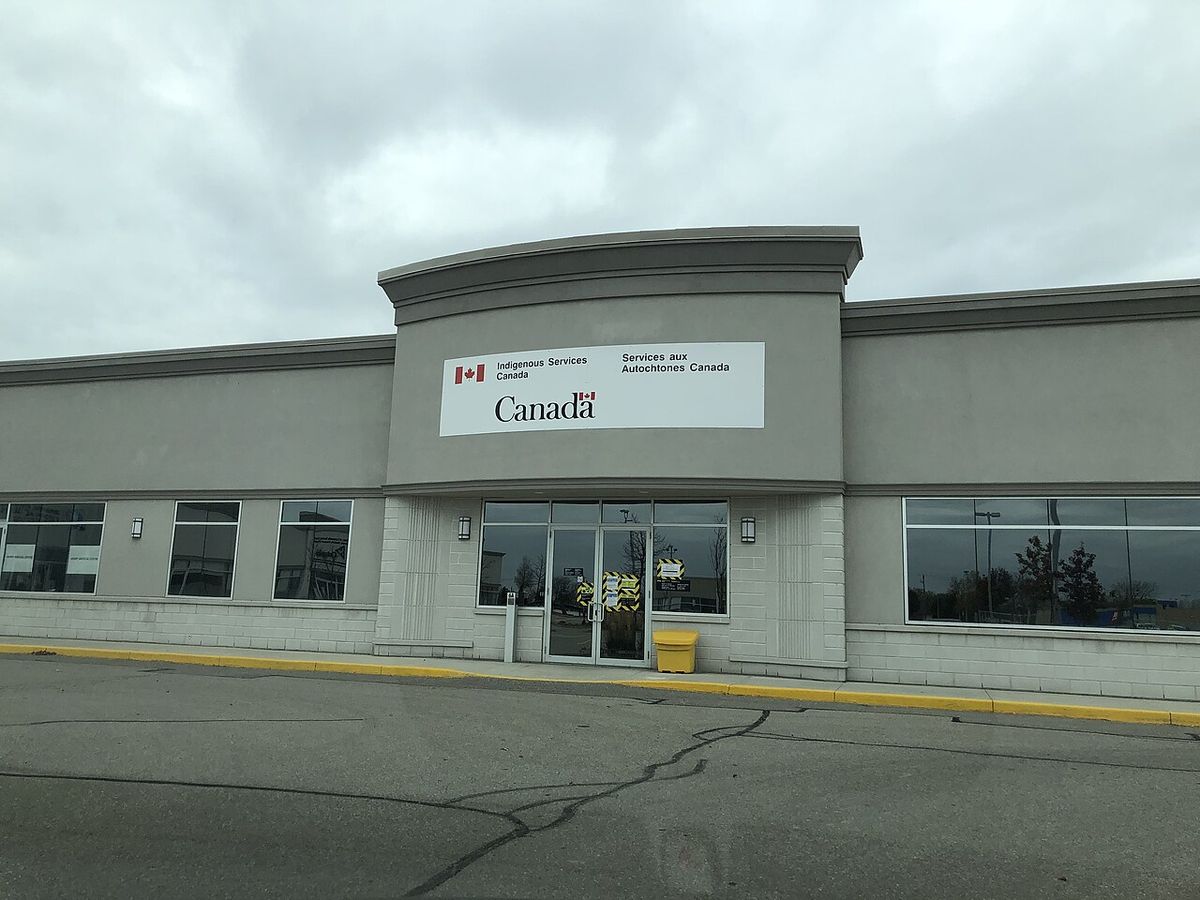
In October 2026, the FSIN became embroiled in a major financial and political controversy following a forensic audit of its use of federal funds. Indigenous Services Canada (ISC) sent a letter dated October 14, 2026, to FSIN Chief Bobby Cameron and CEO Martin Paul, outlining that the organization owed $12.3 million to the federal government. This amount was deemed ineligible following a review of a forensic audit covering the period from April 1, 2019, to March 31, 2024. The initial audit by KPMG had identified over $34 million in questionable, ineligible, or unsupported spending, including $23.4 million in COVID-19 funding where supporting documentation was incomplete, and it questioned spending on a former employer, administration fees, and the new FSIN office building.
The ISC letter stated the amount was now a debt owing to the Crown and demanded full repayment by November 13, 2026, threatening to offset future funding if payment was not received and to formalize the debt via a Statement of Claim. The FSIN responded forcefully, rejecting the audit decision and announcing it had launched legal action. The organization stated that after negotiations, ISC staff had confirmed in June 2026 that nearly $8 million for PPE purchases had been substantiated and removed from the disputed list, and they were surprised it was reinstated. The FSIN argued the remaining $4.4 million was mainly for administration fees which ISC had failed to properly justify, and Chief Bobby Cameron asserted confidence that a fair, independent review would prove all expenditures eligible and the allegations false.
Internal Governance and Transparency Debate
The financial audit precipitated significant internal debate about transparency and governance within the FSIN. In the spring of 2026, the organization held its first general assembly since the repayment demand was made public, meeting in North Battleford at the Northland Power Curling Centre. The assembly was closed to several media outlets including Global News and to public observers like advocate Aaron Thomas of the Band Members Alliance and Advocacy Association of Canada (BMAAAC), which had first shared the ISC letter online after receiving it from a whistleblower. A leaked agenda included an item for a 'fiscal audit update' and a proposed amendment to the FSIN's Financial Management Act to add a confidentiality clause for Treasury Board members.
This proposed amendment sparked public opposition from some chiefs and board members on social media ahead of the assembly. Tyler George, headperson for Ochapowace First Nation, stated on Facebook that he did not support non-disclosure agreements in this context, emphasizing leaders' duty to report back to their nations on financial matters. Delber Wapass, Chief of Thunderchild First Nation, posted on LinkedIn that the amendment was being used to 'silence criticism' and suppress information within the Treasury Board, arguing it risked being weaponized to punish transparency. Political strategist Jennifer Laewetz, who was also asked to leave the assembly, echoed these concerns, noting that calls for confidentiality were troubling amidst the ongoing audit controversy.
Publications and Cultural Contributions
The FSIN and its predecessor organizations have been prolific publishers, producing works that document their political advocacy, legal positions, and cultural heritage. Worldcat records show approximately 84 works published by the Federation of Saskatchewan Indians between 1970 and 1985, and about 168 works by the Federation of Saskatchewan Indian Nations from 1982 to 1983 to 2015 to 2016, in multiple languages. Landmark publications include Delia Opekokew's edited volume 'The First Nations: Indian Government and the Canadian Confederation' in 1980 and her follow-up 'The First Nations: Indian Government and the Community of Man' in 1982. The organization also supported the publication of Cree language resources, such as Freda Ahenakew's 'Nēhiyaw nikamona: songs in Cree and English' in 1986 and 'Our language, our survival' in 1987, co-authored with Shirley M. Fredeen. The unpublished but frequently cited 'Principles of Indian Government' from 1975 and 1977 outlined foundational political concepts. The Saskatchewan Indigenous Cultural Centre maintains an extensive library catalogue of cultural and educational materials.
Honours and Recognition
The FSIN Chiefs-in-Assembly have used their platform to honour individuals for significant contributions to First Nations communities. One notable recognition was bestowed upon Gwendolyn Lucy O'Soup Crane, whom the assembly honoured for her lifetime achievements. She was formally recognized as Canada's first female First Nations Chief elected under the current electoral system, having led The Key First Nation. This acknowledgement highlights the FSIN's role in celebrating leadership and historical milestones within its constituency.
Questions about Federation of Sovereign Indigenous Nations
What does the Federation of Sovereign Indigenous Nations do?
The FSIN is the principal political advocacy organization for 74 First Nations in Saskatchewan. Its core mandate is to protect the inherent and treaty rights of its member nations, honouring the promises made in the historic Numbered Treaties. The organization lobbies governments, engages in legal action, and develops policy to advance First Nations' interests in areas like education, health, economic development, and land rights. It also oversees or has helped establish key institutions like the First Nations University of Canada and the Saskatchewan Indigenous Cultural Centre to serve its communities and preserve cultural knowledge.
Why is the FSIN being asked to repay $12.3 million?
In October 2026, Indigenous Services Canada ordered the FSIN to repay $12.3 million following a forensic audit of its funding from April 2019 to March 2024. The audit, conducted by KPMG, identified this amount as ineligible or unsupported expenditures. A significant portion was related to COVID-19 funding where complete documentation was lacking, and other questioned spending included administration fees and costs for a new office building. The federal government considers this a debt owed to the Crown. The FSIN has rejected the findings, stating it provided ample evidence for the expenditures, and has launched legal action to challenge the repayment order.
Who is the current leader of the FSIN?
The current Chief of the Federation of Sovereign Indigenous Nations is Bobby Cameron. He was first elected to the position in 2015 and remains in office as of 2026. Cameron has been a prominent figure during the recent financial dispute with the federal government, publicly defending the FSIN's expenditures and announcing legal action against the repayment order. The organization's next scheduled election is set for 2026.
What is the difference between FSIN and a Tribal Council?
The FSIN is a provincial-level political organization representing 74 distinct First Nations across the entire province of Saskatchewan. Its focus is on broad advocacy, treaty rights, and policy affecting all member nations. A Tribal Council, by contrast, is typically a smaller grouping of specific First Nations within a region that provides shared administrative services like governance support, program delivery, and technical advice to its members. First Nations can be members of both their regional Tribal Council and the province-wide FSIN.
What educational institutions has the FSIN helped create?
The FSIN and its predecessors were instrumental in founding several major First Nations-controlled educational institutions. These include the First Nations University of Canada, originally the Saskatchewan Indian Federated College established in 1976 and federated with the University of Regina. The Saskatchewan Indian Institute of Technologies (SIIT) began as the Saskatchewan Indian Community College in 1976. The Saskatchewan Indigenous Cultural Centre (SICC) started as the Saskatchewan Indian Cultural College in 1972. These institutions provide post-secondary education, vocational training, and cultural programming under Indigenous governance for students across the province.
How can I contact the FSIN or find official updates?
The FSIN can be contacted via email at [email protected] or by phone at 306-665-1215. The organization's website, FSIN.ca, is a source for official updates, announcements, and information about upcoming assemblies and events. For instance, the site listed a general assembly for September 2-3, 2026, in Saskatoon and noted the 2026 FSIN election. The public can also follow news releases from the organization for statements on current issues like the financial audit.
Sources and further reading
- Federation of Sovereign Indigenous Nations (Wikipedia)
- FSIN receives letter outlining its $12 million debt to Canada (aptnnews.ca)
- FSIN holds first general assembly since asked to repay ... (globalnews.ca)
Checked by the Nosy Mag desk. Last updated 2026-11-01.