First Nations in Canada
First Nations are the Indigenous peoples of Canada who are neither Inuit nor Métis, living predominantly south of the Arctic Circle. The term refers to over 634 distinct communities, bands, and nations, each with unique histories, languages, and cultures. Recognized under the Canadian Constitution, First Nations are central to the country's social, cultural, and political fabric. Their ongoing advocacy for treaty rights, self-determination, and cultural preservation remains a core part of national conversations on reconciliation and inclusion.
Terminology and Identity
The term First Nations came into official use in the 1980s, replacing the term Indian band, and was widely adopted during the activism of the 1970s. It serves as a collective identifier for the Indigenous peoples of Canada who are not Inuit or Métis. No legal definition of the term exists, but it is used to describe status and non-status Indigenous peoples, as well as specific bands or nations. The word Indian is considered a misnomer originating from European explorers, and its use has declined in favour of more specific and respectful terms. Within Canada, the term is capitalized, reflecting its importance as a proper noun. Many individuals and communities increasingly identify by their specific tribal or national identity, such as Haida or Anishinaabe, emphasizing the diversity within the broader category.
A band is the basic unit of government under the Indian Act, defined as a body of Indians for whose use lands have been set apart or moneys are held in trust. There are 634 recognized First Nations governments or bands across Canada. These bands are often referred to as First Nations communities, each typically governed by a Band Council. The council, usually consisting of an elected chief and councillors, administers local services and business, though these structures are colonial impositions distinct from traditional governance systems. The term First Nation is also used by many communities to replace band in their formal names, reflecting a reclamation of identity and autonomy.
Historical Nations and Pre-Contact Societies
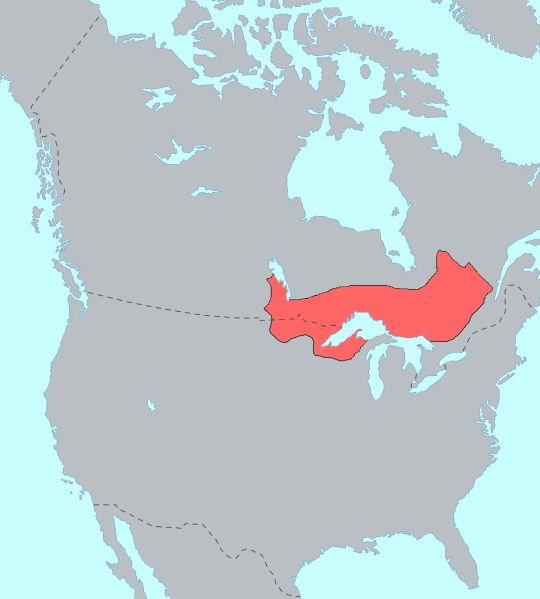
First Nations peoples established settlements and complex trade networks across what is now Canada by 500 BCE to 1000 CE. Diverse nations developed with distinct cultures, customs, and languages. In the northwest were Athapaskan-speaking peoples like the Slavey and Tłı̨chǫ. The Pacific coast was home to the Haida, Salish, and Nuu-chah-nulth nations. The Great Plains were the territory of the Blackfoot Confederacy, Cree, and Assiniboine. Around the Great Lakes lived the Anishinaabe, Algonquin, and Iroquois Confederacy, while the Atlantic coast was inhabited by the Mi'kmaq, Wolastoqiyik, and Beothuk. These societies were organized and self-sufficient, with sophisticated knowledge systems passed down through oral traditions.
Oral histories provide rich accounts of origins and life prior to European contact. For instance, Squamish history tells of life before a great flood and repopulation from specific villages. The Iroquois Confederacy, formed around 1142 according to oral tradition, became a powerful entity through its political structure and cultivation of crops. The Ojibwe migration story, recorded in birch bark scrolls, describes the teaching of the mide way of life by spiritual beings. Archaeological discoveries, such as the naturally mummified Kwäday Dän Ts'inchi found in British Columbia in 1999, have provided significant physical evidence of life from 1450 to 1700 AD, linking directly to modern Champagne and Aishihik First Nations.
Early European Contact and Its Impacts
Sporadic contact between Aboriginal peoples and Europeans occurred as early as 1000 AD with Norse explorers, but sustained interaction began with permanent European settlements in the 17th and 18th centuries. Early written European accounts often noted the friendliness of First Nations, who engaged in profitable trade. This trade, particularly in furs, strengthened some political entities like the Iroquois Confederation. However, European colonization had devastating demographic consequences. The Aboriginal population, estimated between 200,000 and two million in the late 15th century, decreased by 40 to 80 percent post contact. This catastrophic decline was primarily due to outbreaks of European diseases like smallpox and measles, to which Indigenous peoples had no immunity.
Repeated epidemics disrupted societies. In the late 1630s, smallpox killed more than half of the Huron people, who were then attacked by their traditional Iroquois enemies. In the Maritimes, the Beothuk people disappeared entirely. Early explorers and settlers relied heavily on First Nations knowledge and resources to survive. The relationship was initially cooperative, with First Nations often allying with French or British forces in various conflicts. Antagonism grew later as colonial powers established dominance, began to break treaties, and forcibly displaced Indigenous peoples from their lands. The earliest known Portuguese expeditions, like those of the Corte-Real brothers around 1500, resulted in the capture of Aboriginal people as slaves, marking a grim precedent for future relations.
Colonial Era and the Fur Trade
The 16th to 18th centuries saw the establishment of French and British colonial claims, fundamentally altering First Nations life. France's first successful colony, Acadia, was founded in 1604, followed by Quebec City in 1608 under Samuel de Champlain. The colony of New France grew slowly, supported by cod fisheries and farm economies along the St. Lawrence River. The fur trade became the economic engine, with French voyageurs travelling deep into the interior to trade European goods like guns and kettles for beaver pelts with First Nations partners. This trade kept French colonial interest alive but discouraged large scale agricultural settlement, resulting in a relatively small colonial population.
This pattern of settlement in New France, often in areas depopulated by disease, contrasted with the British colonies to the south. French settlement did not initially involve the same degree of direct land intrusion and destructive wars over territory that characterized British expansion. The Métis people emerged from unions between First Nations women, primarily Cree, Ojibwe, and Algonquin, and European fur traders, mainly French. They developed distinct cultures and languages, such as Michif and Métis French. The fur trade era created complex interdependencies but also set the stage for future conflicts over land and sovereignty as European territorial ambitions expanded.
The Indian Act and Modern Governance
The Indian Act, first passed in 1876, remains the principal statute through which the federal government administers most local First Nations governments and manages reserve land. It defines status Indian, a legal recognition that affords certain rights, such as the right to live on reserve land. The Act outlines federal obligations and has historically been used to impose colonial governance structures, including Band Councils with elected chiefs and councillors. These councils manage community services like education, water, and housing, but they are distinct from traditional, pre contact governance systems. The Act has been widely criticized as a tool of assimilation and control over First Nations lives.
A reserve is land set apart by the Crown for the use and benefit of a specific band. It is not to be confused with the much larger traditional territories that are the subject of land claims. Land claims are divided into two categories, comprehensive claims which are modern treaties, and specific claims which address grievances related to pre existing treaties or obligations. The ongoing legacy of the Indian Act includes policies like the second generation cut off rule, which Indigenous leaders argue threatens community continuity by restricting status registration. This rule is seen as an extension of historic assimilation policies, and there is significant advocacy to end it.
The Assembly of First Nations and National Advocacy
The Assembly of First Nations is the national advocacy organization representing First Nation citizens in Canada, including over 900,000 people living in 634 communities and urban centres. Founded at the first assembly of Chiefs in Penticton, British Columbia, in April 1982, its charter was adopted in 1985. The AFN works to advance the collective aspirations of First Nations on matters of national and international concern. It is guided by an Executive Committee consisting of an elected National Chief and Regional Chiefs from each province and territory. The organization is also supported by national councils representing Knowledge Keepers, Youth, Veterans, 2SLGBTQQIA+ people, and Women.
The AFN hosts two assemblies each year where mandates are established through resolutions from elected Chiefs or their proxies from member First Nations. As of 2026, the National Chief is Cindy Woodhouse Nepinak from Pinaymootang First Nation in Manitoba, a leader dedicated to protecting treaty rights, title, and self determination. The AFN engages in high level forums like the First Nations First Ministers' Meeting, a government hosted event with limited attendance. In October 2026, National Chief Woodhouse Nepinak joined with the National Congress of American Indians to call on governments to respect First Peoples' cultures and languages across borders, highlighting the international scope of Indigenous advocacy.
Contemporary Context and Recognition
First Nations are a constitutionally recognized group and are identified as a designated group under federal employment equity law, alongside women, visible minorities, and people with disabilities. They are not included in the visible minority category collected by Statistics Canada, which maintains a separate category for First Nations, Métis, and Inuit. This legal and statistical recognition underscores their unique status and the distinct relationship with the Crown. National Indigenous Peoples Day, celebrated on June 21, marks a time to recognize and celebrate First Nations, Inuit, and Métis cultures, with 2026 being its 30th anniversary.
First Nations inclusion is increasingly prioritized in national projects and events. For example, Canada has identified Indigenous engagement as a key priority for the 2026 FIFA World Cup, ensuring territorial protocols are respected and local communities are involved. The interactive First Nation profiles map provided by Indigenous Services Canada offers detailed information on individual communities. First Nations continue to assert their inherent rights as original nations that have never relinquished their title, rights, or governance through treaty. The ongoing work toward reconciliation, the resolution of land claims, and the revitalization of languages and cultures define the contemporary journey of First Nations in Canada.
Questions about First Nations in Canada
What is the difference between First Nations, Inuit, and Métis?
First Nations, Inuit, and Métis are the three distinct groups of Indigenous peoples recognized by the Canadian Constitution. First Nations are Indigenous peoples who live predominantly south of the Arctic. Inuit are the Indigenous peoples of Arctic Canada. Métis are people of mixed First Nations and European ancestry who developed distinct cultures, particularly in the Prairie provinces. The term First Nations applies to status and non status Indigenous peoples and refers to specific bands or nations, but it does not include Inuit or Métis.
How many First Nations are there in Canada?
There are 634 recognized First Nations governments or bands across Canada. Roughly half of these are located in the provinces of Ontario and British Columbia. These bands are also referred to as First Nations communities. Each band has its own governing Band Council and represents a distinct community, though many nations are composed of multiple bands. The Assembly of First Nations represents citizens from all these communities, totaling more than 900,000 people living both on reserve and in urban areas.
What is a status Indian?
A status Indian is an individual who is registered under the Indian Act, a federal law first introduced in 1876. This legal recognition affords certain rights and entitlements, such as the right to live on reserve land and access to specific programs and services offered by federal and provincial governments. Status is determined by the federal government and can be affected by complex rules, including the controversial second generation cut off. Not all First Nations people have status, and the concept is separate from one's cultural or community identity as a First Nations person.
What is the Assembly of First Nations?
The Assembly of First Nations is the national advocacy organization that represents First Nation citizens across Canada. It was founded in 1982 and works to advance collective aspirations on issues of national importance. The AFN is led by a National Chief and an Executive Committee of Regional Chiefs, guided by resolutions from member First Nations at semi annual assemblies. As of 2026, the National Chief is Cindy Woodhouse Nepinak. The organization focuses on protecting treaty rights, title, jurisdiction, and the right to self determination for all First Nations.
What is the Indian Act?
The Indian Act is the principal federal statute governing the relationship between the Canadian government and First Nations. Enacted in 1876, it outlines federal obligations and administers local First Nations governments, reserve lands, and the legal status of individuals. It imposed colonial governance structures like Band Councils and has historically been used to regulate many aspects of life, often with the goal of assimilation. While amended many times, it remains a controversial and central piece of legislation that defines much of the political and legal reality for status First Nations people in Canada today.
What is a First Nations reserve?
A reserve is a tract of land set apart by the Crown for the use and benefit of a specific First Nation band. Reserves are created under the Indian Act and should not be confused with a nation's much larger traditional territory, which is often the subject of land claims. Band Councils typically administer services and governance on reserve land. Reserves represent only a small fraction of the traditional lands historically used and occupied by First Nations, and many claims and treaties seek to address the disparity between reserve land and original territories.
Sources: Wikipedia and current public reporting, checked by the Nosy Mag desk. Last updated 2026-10-18.