Terrorism in Canada
Terrorism in Canada encompasses acts of violence or threats intended to intimidate the public or compel governments for political, religious, or ideological purposes, as defined under Canadian law. The history of such incidents includes both domestic extremism, such as the 1970 FLQ crisis, and international terrorism, most notably the 1985 Air India Flight 182 bombing which remains the deadliest terrorist attack in Canadian history. In the 21st century, the threat landscape has evolved to include attacks inspired by foreign terrorist organizations like ISIS, as seen in the 2014 attacks in Saint-Jean-sur-Richelieu and Ottawa. The Canadian government's response involves a comprehensive legal framework, dedicated security agencies, and a national counterterrorism strategy.
Legal and Policy Framework
The foundation of Canada's approach to terrorism is its legal definition, codified in the Criminal Code. Terrorist activity is defined as an act or omission, inside or outside Canada, undertaken for a political, religious, or ideological purpose with the intent to intimidate the public regarding its security, including its economic security, or to compel a person, government, or organization to act or refrain from acting. This act must intentionally cause specific forms of serious harm such as death, serious bodily harm, endangerment of life, or serious interference with essential infrastructure. The primary minister responsible for national security and counterterrorism is the Minister of Public Safety and Emergency Preparedness, who heads Public Safety Canada. Other key ministers in this domain include the Minister of Foreign Affairs and the Minister of National Defence. The legal regime was significantly strengthened after the September 11, 2001 attacks with the introduction of the Anti-Terrorism Act, which was introduced as Bill C-36 on October 15, 2001. This legislation amended multiple statutes including the Criminal Code, the Official Secrets Act, the Canada Evidence Act, and the Proceeds of Crime (Money Laundering) Act, created a list of terrorist entities, and replaced the Official Secrets Act with the Security of Information Act. Further amendments came with the Combating Terrorism Act in 2013, which created four new offences to prevent individuals from leaving Canada for terrorism-related purposes. The Justice for Victims of Terrorism Act allows victims to sue perpetrators and state supporters of terrorism in Canadian courts, while amendments to the State Immunity Act permit suits against listed countries like Syria and Iran, which were listed in 2012. Under the Criminal Code, a person who carries out a terrorist attack or instructs someone else to do so receives a mandatory life sentence, while anyone who facilitates an attack is liable to imprisonment for a maximum of ten years. The Public Prosecution Service of Canada prosecutes these offences on behalf of the federal government. For listing terrorist entities, the Anti-Terrorism Act provides that the Governor in Council may establish a list by regulation on the recommendation of the Minister of Public Safety, targeting entities that have knowingly carried out, attempted, participated in, or facilitated terrorist activity. The government's Anti-terrorism Plan, of which the ATA was a key component, had four objectives which included preventing terrorists from entering Canada and bringing them to justice. This legal framework is designed to meet Canada's international obligations under United Nations Security Council Resolution 1373, adopted on September 28, 2001, which required member states to prevent terrorist financing and deny safe haven to terrorists.

Key Historical Incidents and Evolving Threats
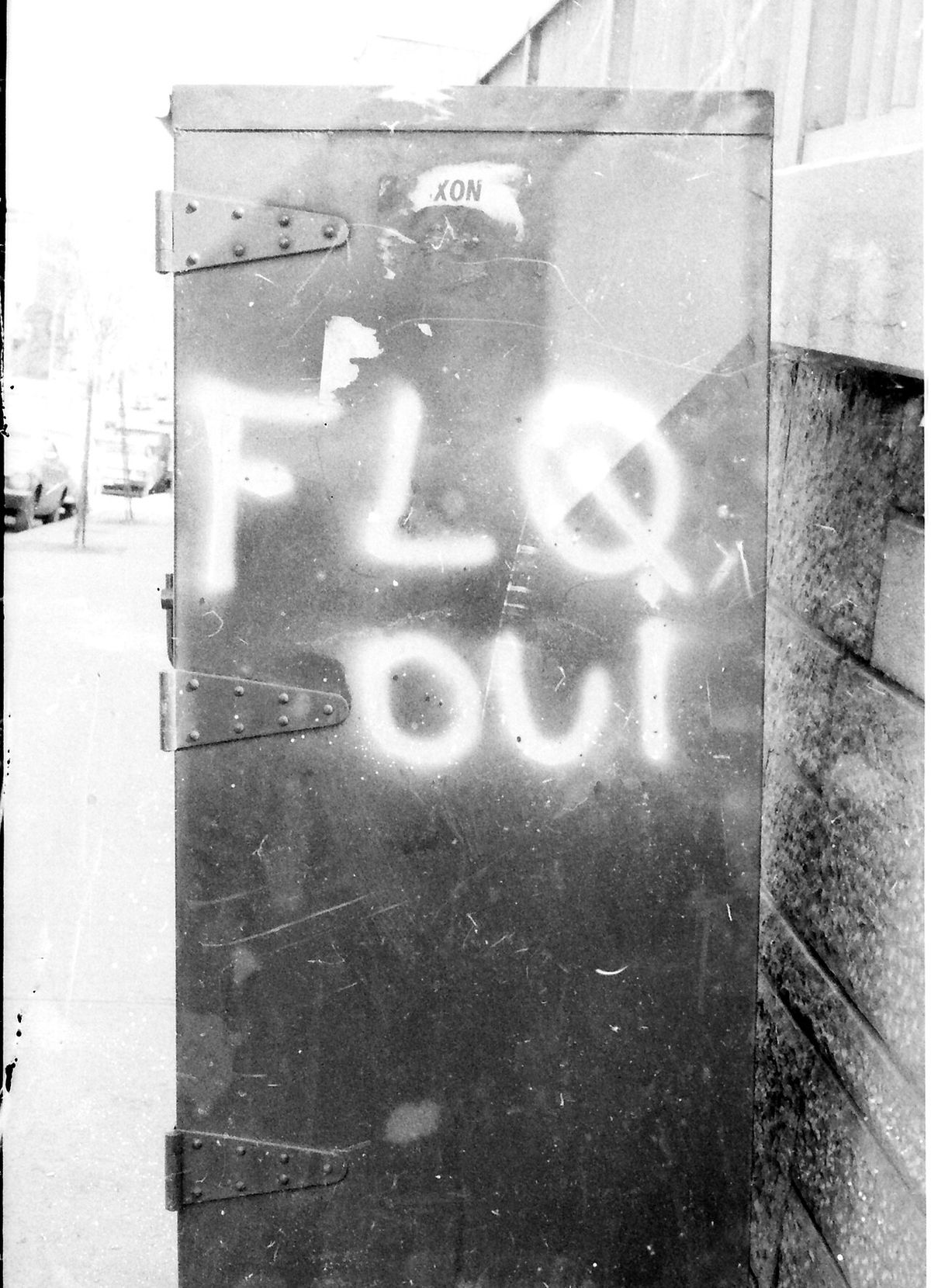
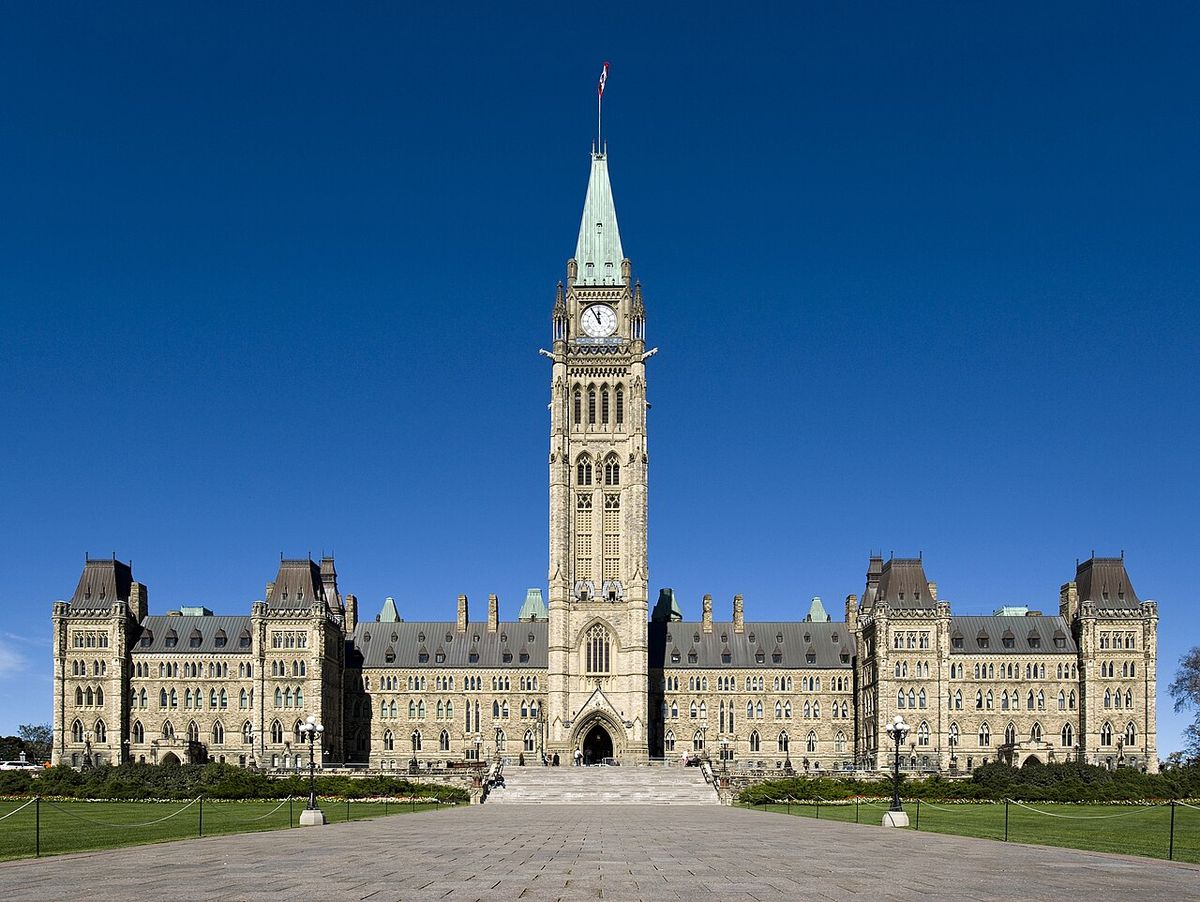
Canada has experienced terrorism stemming from both internal separatist movements and international ideologies over many decades. The 1970 October Crisis, involving the Front de libération du Québec (FLQ), was a seminal domestic event that included the kidnappings of British diplomat James Cross and Quebec Labour Minister Pierre Laporte, whose murder led to the invocation of the War Measures Act. The deadliest act of terrorism in Canadian history occurred on June 23, 1985, when Air India Flight 182 was destroyed by a bomb, killing all 329 people on board, including 280 Canadians. A related bombing at Narita Airport in Japan killed two baggage handlers. This attack, linked to Sikh extremism, prompted a major public inquiry launched on May 1, 2006, which examined issues like terrorist financing and inter-agency cooperation. From December 2011 to July 2012, the Canadian government offered a one-time ex gratia payment to families of the victims as a demonstration of solicitude for the administrative disdain they experienced. The tragedy led to the establishment of a National Day of Remembrance for Victims of Terrorism observed every June 23. The threat profile shifted in the 21st century with the rise of terrorism inspired by Islamist extremist groups like Al Qaeda and later the Islamic State (ISIS). In October 2014, two attacks occurred within days of each other. On October 20, Martin Couture-Rouleau, who used the online moniker Ahmad LeConverti, ran down two Canadian Armed Forces members in Saint-Jean-sur-Richelieu, killing Warrant Officer Patrice Vincent. On October 22, Michael Zehaf-Bibeau fatally shot Corporal Nathan Cirillo at the National War Memorial in Ottawa before proceeding to the Centre Block of Parliament where he was killed in a shoot-out. These incidents, motivated by ISIS ideology and Canada's participation in airstrikes against the group, showed the challenge of lone actor attacks. More recent threats include the emergence of decentralized online extremist networks like the entity designated as 764, a transnational network of nihilistic violent extremists whose members engage in criminal conduct to erode social norms. This network has been linked to incidents including a February 2024 case in Alberta where a 14-year-old member was charged with child pornography and explosives-related crimes, and a January 2025 knife attack in Sweden by a minor who uploaded video from a 764-linked account.
Notable historical incidents and plots include several major cases that have shaped Canada's security response. The 1970 October Crisis involving the FLQ was a defining moment in domestic terrorism. The 1985 Air India Flight 182 bombing resulted in the largest loss of life from a single terrorist act. A series of arrests in 2006 in the Greater Toronto Area involved individuals alleged to have plotted attacks. The 2014 attacks in Saint-Jean-sur-Richelieu and Ottawa marked the first successful deadly attacks by ISIS-inspired individuals. The 2017 shooting at a Quebec City mosque was a violent act against a religious community. The 2018 Toronto van attack, while not legally classified as terrorism, used terroristic tactics. The 2020 stabbing attack in Toronto was inspired by ISIS ideology. Other significant operations include Project Shock, initiated by the RCMP after the 9/11 attacks to collect information on possible threats from Muslims in Canada, and Project Thread, a 2003 police operation that led to the arrest of 24 immigrants in the Greater Toronto Area over alleged ties to al-Qaeda. The government of Canada has banned more than 52 terrorist organizations. These include Al Qaeda, the Armed Islamic Group, Euskadi Ta Askatasuna (ETA), Liberation Tigers of Tamil Eelam (LTTE), the International Sikh Youth Federation, the Palestinian Liberation Front, the Popular Front for the Liberation of Palestine, the Popular Front for the Liberation of Palestine-General Command, Hamas, Palestinian Islamic Jihad, Hezbollah, Kahane Chai, and the Taliban. In 2019, Combat 18 and Blood & Honour were the first neo-Nazi groups in Canada to be banned by the government. In April 2006, the Canadian government designated the Liberation Tigers of Tamil Eelam as a terrorist group. In December that year, the government expanded the federal ban of Hezbollah from the purely militant wing to all 16 sub-organizations.
Counterterrorism Institutions and Coordination
A wide array of federal organizations work to prevent, investigate, and respond to terrorist threats in Canada, operating under a coordinated framework. The Canadian Security Intelligence Service is the primary national intelligence agency, responsible for collecting, analyzing, and reporting on threats to security, and it houses the Global Operations Centre. CSIS also hosts the Integrated Terrorism Assessment Centre, a cooperative initiative to facilitate intelligence information sharing and analysis within the Canadian intelligence community and to first responders like law enforcement. The Royal Canadian Mounted Police holds primary responsibility for national security law enforcement and criminal investigations under the Security Offences Act, and it conducts extraterritorial investigations of terrorist activity committed against or by a Canadian citizen abroad. The RCMP operates Integrated National Security Enforcement Teams that bring together federal, provincial, and municipal police and intelligence resources to collect, share, and analyze information for criminal investigations and threat assessments. The RCMP also runs the Counter-terrorism Information Officer initiative to provide first responders with terrorism awareness training and operates a National Operations Centre as a 24/7 command centre. For emergency response coordination, the Government Operations Centre, under Public Safety Canada, supports whole-of-government coordination during critical incidents and major events on behalf of the federal government. The Canadian Armed Forces, through Canada Command which coordinates with other federal departments, and special forces units like Joint Task Force 2, which exists to combat terrorism and threats to Canadians at home and abroad, can be called upon to support responses to terrorist incidents under the National Defence Act or Crown Prerogative.
Other critical agencies form an extensive network supporting counterterrorism efforts from different angles. The Canada Border Services Agency screens travellers and monitors cross-border currency flows, with its Immigration Security Screening program detecting the movement of potential subjects of interest applying for residence or refugee status under the Immigration and Refugee Protection Act. The Financial Transactions and Reports Analysis Centre works to prevent and deter terrorist financing under the Proceeds of Crime (Money Laundering) and Terrorist Financing Act. The Communications Security Establishment, administered under the Department of National Defence, is responsible for foreign signals intelligence and protecting government electronic communication networks. Transport Canada is the lead department for transportation security across aviation, marine, rail, and road systems, operating under statutes like the Aeronautics Act and the Marine Transportation Security Act. The Canadian Air Transport Security Authority handles aviation security screening, while the Canadian Centre for Cyber Security focuses on national cyber security readiness and response. Policy and assessment support comes from the Privy Council Office's Security and Intelligence Secretariat, which supports the National Security Advisor and coordinates committees, and its International Assessment Staff, which provides policy-neutral assessments of foreign developments. The National Security Advisor is responsible for providing advice on security and intelligence to the Prime Minister, coordinating the security and intelligence community, and overseeing intelligence assessment. Various federal organizations, particularly the Canada Centre for Community Engagement and Prevention of Violence, closely collaborate with partners in the Five Eyes (United States, United Kingdom, Australia, New Zealand), the Group of Seven (G7), and the European Union. The Canadian government also engages in the Global Coalition against Daesh, a partnership of 79 countries that works towards defeating Daesh through such activities as preventing the flow of foreign terrorist fighters across borders.
Threat Assessment and National Strategy
The Canadian government assesses the terrorist threat through the publicly communicated National Terrorism Threat Level, which identifies the probability of a violent act of terrorism occurring in Canada. As of May 22, 2021, the level has been set at Medium, indicating that a violent act of terrorism could occur, and this level has been in place since October 2014. A Medium rating signifies that intelligence indicates extremist groups and individuals, both in Canada and abroad, possess the intent and capability to carry out an attack in Canada. The overarching strategic document guiding the government's efforts is the 2013 counterterrorism strategy titled Building Resilience Against Terrorism, which was Canada's first such strategy. This strategy is built on four pillars: Prevent individuals from engaging in terrorism, Detect terrorist activities early, Deny terrorists the means and opportunities to act, and Respond effectively to mitigate the effects of attacks. It aims to counter both domestic and international terrorism to protect Canada, its citizens, and its interests abroad, and it assesses the nature and scale of the threat while setting out basic principles for government activities. The strategy emphasizes community engagement and building societal resilience to counter violent extremist ideologies, claiming the safety and security of Canadians as the government's first priority. The National Security Advisor to the Prime Minister coordinates the security and intelligence community and oversees intelligence assessment, supported by the Privy Council Office's Security and Intelligence Secretariat. This structured approach is designed to balance security measures with the protection of Canadian rights and freedoms as enshrined in the Charter of Rights and Freedoms, and it operates in concert with international partners while being a made-in-Canada solution.
Intelligence assessment is a critical function distributed across several key agencies within the Canadian security apparatus. The Canadian Security Intelligence Service compiles information from its own collections and other sources to provide Parliament with intelligence assessments on terrorist threats. The Integrated Terrorism Assessment Centre, housed at CSIS, integrates intelligence from across departments and agencies as well as from external partners to produce its assessments for government and first responders. The Communications Security Establishment provides foreign signals intelligence that contributes to the overall threat picture. The Privy Council Office's International Assessment Staff helps coordinate the efforts of the Canadian assessment community and provides senior government clients with assessments of foreign developments and trends that may affect Canadian interests. This multi-agency assessment process ensures that threat levels and strategic responses are based on a comprehensive analysis of all available information, from both domestic investigations and international intelligence sharing. The government's commitment to this strategy was reiterated with the introduction of Bill C-59 in June 2017, legislation designed to enhance national security while safeguarding rights and freedoms, reflecting an ongoing evolution in policy response. On 11 December 2018, the Canada Centre for Community Engagement and Prevention of Violence launched the "National Strategy on Countering Radicalization to Violence," which explains radicalization to violence and outlines the federal government's approach and key priorities in countering and preventing it. Implementation of the National Strategy is supervised by the National Expert Committee on Countering Radicalization to Violence.
Financial and Border Security Measures
Disrupting the flow of money to terrorist organizations is a critical component of Canada's counterterrorism efforts, addressed through a specific legal and administrative regime. The primary legislation addressing this is the Proceeds of Crime (Money Laundering) and Terrorist Financing Act, which works alongside the Income Tax Act and the Charities Registration (Security Information) Act. This regime is designed to prevent and suppress the financing of terrorist acts, criminalize the wilful provision of funds for terrorism, and ensure non-profit organizations are not misused, in line with UN Security Council Resolution 1373 and the FATF Special Recommendations on Terrorism Financing adopted in October 2001. The Financial Transactions and Reports Analysis Centre is the agency dedicated to collecting, analyzing, and disclosing financial intelligence related to money laundering and terrorist activity financing. The Charities Directorate of the Canada Revenue Agency reviews applications, conducts audits, and collects multi-source intelligence to detect and address risks to Canada's charitable sector under the Income Tax Act and related statutes. The Department of Finance leads Canadian efforts in related international activities, particularly regarding the work of the Financial Action Task Force on Money Laundering. At the border, security is managed under the Immigration and Refugee Protection Act, which facilitates the assessment of admissibility for those applying for temporary or permanent residence or refugee status. The Canada Border Services Agency conducts immigration security screening to detect the movement of potential subjects of interest and monitors the cross-border flow of currency, with authority to seize unreported currency suspected of being linked to crime or terrorist financing.
The government employs specific legal instruments under IRPA to manage threats from non-citizens within Canada. Security certificates can be issued to detain and deport foreign nationals and all other non-citizens living in Canada who are perceived to be a threat to national security. A certificate can be issued against a permanent resident or any non-citizen suspected of violating human rights or having membership within organized crime, in addition to terrorism threats. This tool allows for the removal of individuals who pose a security risk but cannot be prosecuted in open court for reasons of national security confidentiality. The cross-border movement of potential threats is a joint responsibility of the CBSA and Immigration, Refugees and Citizenship Canada, which work together to assess applications and enforce admissibility decisions. These financial and border measures are integral to the Deny pillar of Canada's counterterrorism strategy, aiming to deny terrorists the means and opportunities to carry out their activities by cutting off funding and restricting their ability to enter or operate within Canada. The continuous operation of these systems relies on inter-agency cooperation and international information sharing to track suspicious transactions and movements globally. Public Safety Canada and Transport Canada jointly oversee the Canadian no-fly list, called the Passenger Protect program, which identifies individuals who may pose a threat to aviation security and prevents them from boarding an aircraft.
Recent Trends and Statistical Context
While Canada experiences fewer terrorist incidents than many other nations, the nature of the threat continues to evolve with new challenges emerging from online radicalization and decentralized networks. According to the Global Terrorism Index 2026, Canada has recorded incidents since 2007 resulting in a total of 28 deaths. The years 2017 and 2018 were particularly severe, with 18 deaths and 52 incidents combined, influenced by the 2017 Quebec City mosque shooting and the 2018 Toronto van attack which law enforcement did not connect to terrorism. The trend in recent years has involved attacks carried out by individuals inspired by online extremist propaganda rather than directed by formal terrorist cells, a shift that makes detection and disruption exponentially more difficult. These lone actors often use simple tactics like vehicle-ramming or knife attacks, which require little planning or coordination. The response to these evolving threats involves continuous adaptation of security and intelligence practices, with a focus on monitoring online spaces for radicalization and threat indicators through initiatives like the RCMP's Counter-terrorism Information Officer training for first responders. The government also works to counter extremist narratives through community-led prevention programs and by addressing the root causes of radicalization as part of a broad multi-faceted approach. The persistent Medium national threat level reflects the assessment that the underlying conditions for such attacks remain, with both intent and capability present among extremist elements.
The Canadian government states that there has not been an increase, nor does it expect an increase, in the number of Canadian Extremist Travellers (CETs) who have returned to Canada. The total number of CETs identified by the government includes around 190 individuals who have a nexus to Canada, and near 60 who have returned. In 2026, Canadian Security Intelligence Service declared Khalistani extremists a national security threat, highlighting that the group uses institutions to promote its "violent extremist agenda" in the country. The agency, in its 2025 Public Report, had stated that the involvement of Canada-based Khalistani extremist (CBKE) in violent activities "continues to pose a national security threat to Canada and to Canadian interests." The Kanishka Project was a CA$10 million, five-year initiative of Public Safety Canada that provided funding to research on terrorism-related matters affecting Canada. Announced in June 2011, it funded nearly 70 projects and contributed to hosting various events related to discussing counter-terrorism. The Canadian Network for Research on Terrorism, Security and Society (TSAS), located at the University of Waterloo, is an academic research network purposed to form multidisciplinary research on terrorist radicalization. It was created in 2012 with funding both the Kanishka Project and a grant from the Social Sciences and Humanities Research Council (SSHRC).
| Metric | Detail |
|---|---|
| Total Deaths from Terrorism (2007 to 2026) | 28 deaths (Global Terrorism Index 2026) |
| Deadliest Single Attack | Air India Flight 182 (1985), 329 killed |
| National Threat Level (2014 to 2021+) | Medium |
| Key Legislative Response Post-9/11 | Anti-Terrorism Act (2001) |
| Primary Counterterrorism Strategy | Building Resilience Against Terrorism (2013) |
| Ex Gratia Payments for Air India Families | Payments made for 275 victims (2011 to 2012) |
| Canadian Extremist Travellers Identified | ~190 individuals with a nexus to Canada |
| Canadian Extremist Travellers Returned | ~60 individuals |
| Terrorist Organizations Banned | More than 52 organizations |
| Kanishka Project Funding | CA$10 million over five years |
| Community Resilience Fund Annual Budget | $7 million available each year (2019‑2020 onward) |
Questions about Terrorism in Canada
What was the deadliest terrorist attack in Canadian history?
The deadliest terrorist attack in Canadian history was the bombing of Air India Flight 182 on June 23, 1985. The explosion killed all 329 passengers and crew on board, including 280 Canadian citizens. A related bombing at Narita Airport in Japan on the same day killed two baggage handlers. This tragedy is commemorated annually on the National Day of Remembrance for Victims of Terrorism.
What is Canada's current terrorism threat level?
As of May 22, 2021, Canada's National Terrorism Threat Level is Medium. This level has been in place since October 2014 and indicates that a violent act of terrorism could occur. The Medium rating specifically means that extremist groups and individuals, both within Canada and abroad, are assessed to have both the intent and the capability to carry out a terrorist attack in Canada. The Canadian government uses this system to identify the probability of terrorism occurring.
What is the Anti-Terrorism Act?
The Anti-Terrorism Act is a key piece of legislation passed by the Canadian Parliament following the September 11, 2001 attacks. Introduced as Bill C-36 on October 15, 2001, it is an amending statute that changed several laws, including the Criminal Code. The ATA created a legal framework for defining terrorist activity, established a list of terrorist entities, and introduced new investigative tools and offences. It also replaced the Official Secrets Act with the Security of Information Act.
Which government agencies are responsible for counterterrorism in Canada?
Multiple federal agencies share counterterrorism responsibilities. The Canadian Security Intelligence Service is the lead intelligence agency, while the Royal Canadian Mounted Police has primary law enforcement responsibility. The Canada Border Services Agency handles border security, and the Financial Transactions and Reports Analysis Centre tracks terrorist financing. The Communications Security Establishment provides foreign signals intelligence, and the Canadian Armed Forces can be deployed in response to incidents. Other key bodies include the Integrated Terrorism Assessment Centre and the Canada Centre for Community Engagement and Prevention of Violence.
What was the significance of the October 2014 attacks in Canada?
The attacks in Saint-Jean-sur-Richelieu and Ottawa in October 2014 marked a significant shift, representing the first successful deadly attacks on Canadian soil inspired by the Islamic State (ISIS). On October 20, Martin Couture-Rouleau killed Warrant Officer Patrice Vincent in a vehicle attack. Two days later, Michael Zehaf-Bibeau shot and killed Corporal Nathan Cirillo at the National War Memorial before storming Parliament's Centre Block. These lone-actor attacks highlighted the challenges of detecting and preventing attacks by self-radicalized individuals.
Can victims of terrorism sue perpetrators in Canada?
Yes, victims of terrorism can sue perpetrators and their supporters under the Justice for Victims of Terrorism Act. This Act allows for lawsuits for loss or damage from an act of terrorism committed in Canada or abroad. Amendments to the State Immunity Act also permit lawsuits against countries listed by Canada as state supporters of terrorism, such as Syria and Iran which were listed in 2012. These laws allow victims to seek redress through Canadian courts.
Sources and further reading
- Terrorism in Canada (Wikipedia)
- Currently listed entities (publicsafety.gc.ca)
- Canada's New Challenges Facing Terrorism At Home (cgai.ca)
- Premier's statement on National Day of Remembrance for ... (news.gov.bc.ca)
- About the Anti-terrorism Act (justice.gc.ca)
Checked by the Nosy Mag desk. Last updated 2026-10-30.