Immigration and Refugee Protection Act
The Immigration and Refugee Protection Act (IRPA) is the principal federal law governing immigration to Canada and the protection of refugees. It came into force on June 28, 2002, replacing the Immigration Act of 1976. The Act establishes the legal framework for selecting immigrants, managing borders, and determining refugee claims. It is administered by Immigration, Refugees and Citizenship Canada (IRCC) and the Canada Border Services Agency (CBSA). The independent Immigration and Refugee Board (IRB) adjudicates cases. The Act has been amended several times, including by the Strengthening Canada's Immigration System and Borders Act in 2026.
Legislative Framework and Administration
The Immigration and Refugee Protection Act provides the statutory authority for Canada's immigration system. The Act sets out the objectives of Canadian immigration policy. These objectives include pursuing social, cultural, and economic benefits for Canada. They also include protecting the health and safety of Canadians and promoting international justice and security. The Act further aims to enrich the cultural and social fabric of Canada while respecting its federal and bilingual character. It seeks to support the development of minority official languages communities. Operational details are specified in the Immigration and Refugee Protection Regulations (IRPR). The Act assigns clear ministerial responsibilities. The Minister of Immigration, Refugees and Citizenship has overall responsibility. The Minister of Public Safety and Emergency Preparedness oversees enforcement and security matters. This division separates policy development from border enforcement. The independent Immigration and Refugee Board of Canada operates as an administrative tribunal. It makes decisions on refugee protection claims, immigration appeals, and admissibility hearings. The IRB has four divisions: the Refugee Protection Division, the Refugee Appeal Division, the Immigration Division, and the Immigration Appeal Division.
Key Provisions and Categories
IRPA structures immigration into several broad categories. The economic immigration category includes programs for skilled workers, business people, and caregivers. The Federal Skilled Worker Program, the Federal Skilled Trades Program, and the Canadian Experience Class are key economic pathways. The family class allows Canadian citizens and permanent residents to sponsor close family members. Eligible relatives include spouses, common-law partners, conjugal partners, dependent children, parents, and grandparents. The refugee and protected persons category encompasses the in-Canada asylum system and the refugee resettlement program. The Act also establishes rules for temporary residence for visitors, students, and temporary foreign workers. A fundamental component is the list of grounds for finding a person inadmissible to Canada. These grounds include security threats, human or international rights violations, serious criminality, organized criminality, health grounds, financial reasons, and misrepresentation. Serious criminality generally refers to crimes punishable by a maximum term of imprisonment of at least 10 years in Canada. The process for determining admissibility and the rights of individuals facing removal are detailed within the Act. The Act also contains provisions for detention review and statutory release for detained foreign nationals.
Constitutional Challenges and Reforms
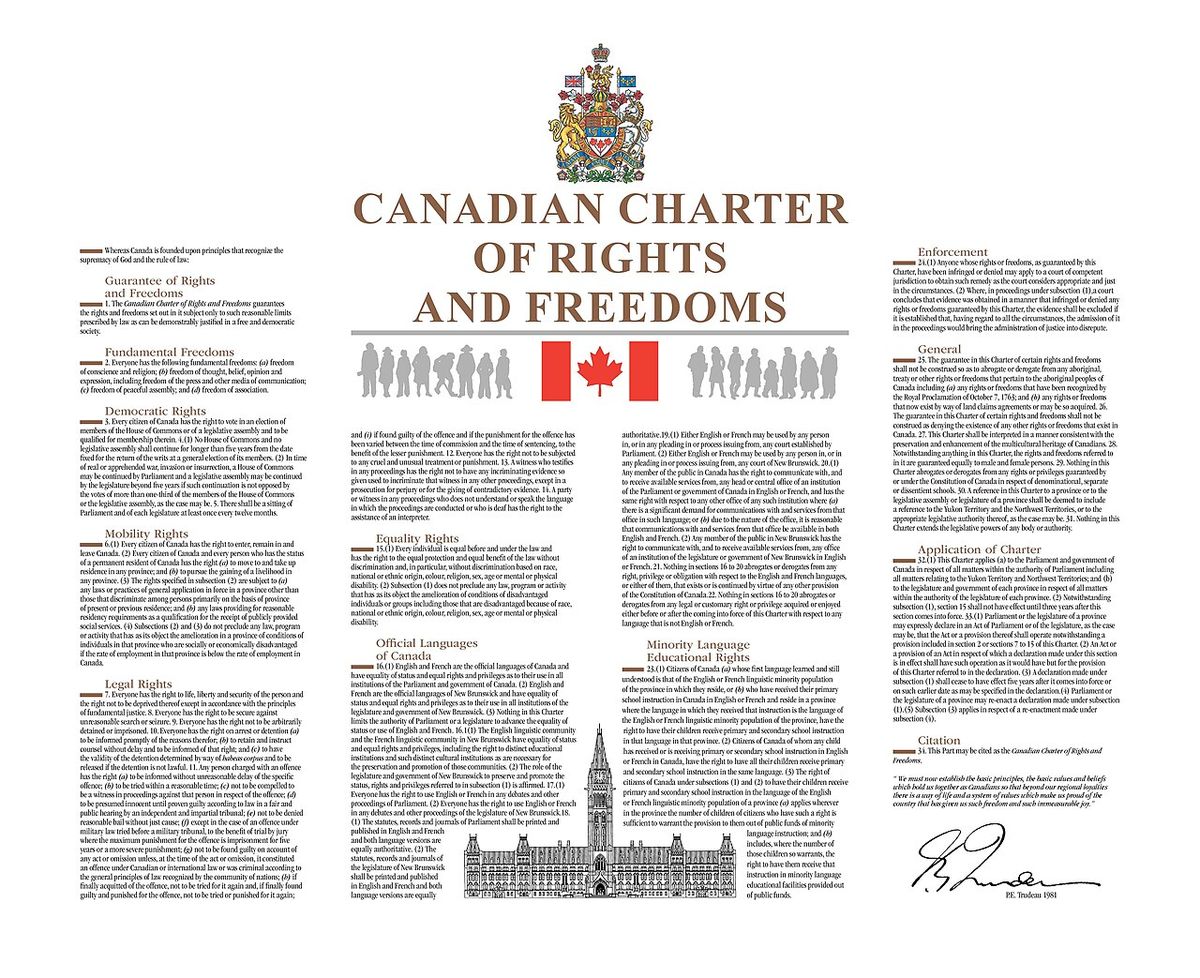
The Act's provisions have faced significant constitutional scrutiny under the Canadian Charter of Rights and Freedoms. In the 2007 case Charkaoui v. Canada, the Supreme Court of Canada found that the security certificate process violated section 7 of the Charter. Chief Justice Beverley McLachlin wrote the decision. The Court ruled that the process allowed the government to use secret evidence not fully disclosed to the detainee. This did not provide a sufficient mechanism for the individual to know and challenge the case. The Court also found that certain detention time limits for foreign nationals were arbitrary, violating Charter sections 9 and 10(c). In response, Parliament amended IRPA in 2008 to create a special advocate system. Under this system, security-cleared lawyers review confidential evidence and advocate for the detainee's interests during closed hearings. They cannot share the secret information with the detainee. The special advocates are appointed from a list of lawyers who have received security clearance. Other notable Charter challenges include Suresh v. Canada (2002), where the Supreme Court held that deporting a person to a risk of torture generally violates section 7. The principles from the pre-IRPA case Singh v. Minister of Employment and Immigration, which established a right to an oral hearing for refugee claimants, were later incorporated into the Act.
Recent Amendments and System Pressures
The federal government passed the Strengthening Canada's Immigration System and Borders Act, which received royal assent on March 26, 2026. This amending legislation introduced changes to IRPA designed to improve the efficiency of the asylum process. The legislative changes required complementary regulatory amendments to the IRPR. These regulatory amendments, proposed in 2026, aimed to streamline the claim process and address bottlenecks. The need for reform was showed by increases in claim volumes. There were approximately 144,000 claims in 2023, 173,000 in 2024, and 115,000 in 2025. This was a sharp rise from about 64,000 claims in 2019. The inventory of asylum claimants awaiting a decision from the Immigration and Refugee Board grew from around 70,000 at the end of 2022 to nearly 300,000 by the end of 2025. The government estimated the cost of implementing the regulatory changes at $14.0 million in present value. Previous major amendments to IRPA include the Protecting Canada's Immigration System Act (2012). The 2012 Act introduced the Designated Country of Origin (DCO) concept and imposed tighter timelines on certain refugee claims.
Immigration Levels and Program Changes
The government's annual immigration levels plan is set under the authority of IRPA. The Minister of Immigration tables the plan in Parliament each year. The 2026 plan increased the economic share of immigration to 64 percent of overall admissions. This resulted in cuts to other categories. Targets for refugee resettlement from overseas were reduced. Privately sponsored refugee spots fell from 23,000 in 2025 to 16,000 in 2026. Government-assisted refugee targets were lowered from 15,250 to 13,250. The plan included a special initiative to grant permanent residence to 115,000 protected persons already in Canada over two years. This addressed a backlog of close to 150,000 applications. Family class immigration targets were also reduced. The plan included major cuts to temporary resident targets from 516,600 in the 2025 plan to 385,000 in 2026. The 2026 plan set the overall permanent resident admission target at a level similar to the previous year but shifting the composition. The Canadian Council for Refugees criticized the cuts to the refugee resettlement program. The group noted that refugee resettlement constituted only 8 percent of the total immigration levels plan. This was far short of their recommended 15 percent. The Council also criticized cuts to settlement services and the focus on cutting temporary residents instead of ensuring pathways to permanence.
| Category | 2025 Target | 2026 Target |
|---|---|---|
| Privately Sponsored Refugees | 23,000 | 16,000 |
| Government-Assisted Refugees | 15,250 | 13,250 |
| Protected Persons in-Canada (2-year initiative) | N/A | 115,000 |
| Temporary Resident Target | 516,600 | 385,000 |
| Economic Immigration Share | Not specified | 64% |
Regulations and Rules
The Immigration and Refugee Protection Regulations are the primary set of rules that specify how IRPA is applied. These regulations cover detailed requirements for every immigration program. They include the points grid for the Federal Skilled Worker Program, minimum necessary income levels for sponsors, and medical examination protocols. Other important regulations and rules govern specific processes under the Act. The Immigration and Refugee Board has its own sets of rules for its divisions. These include the Refugee Protection Division Rules (SOR/2012-256), the Refugee Appeal Division Rules (SOR/2012-257), and the Immigration Division Rules (SOR/2002-229). Other key regulations include the Protection of Passenger Information Regulations (SOR/2005-346) and the Preclearance in Canada Regulations (SOR/2019-183). Over time, some regulations have been repealed and replaced. The original Refugee Protection Division Rules from 2002 were replaced by new rules in 2012. The Ministerial Responsibilities Under the IRPA Order (SI/2015-52) formally delineates the powers of the relevant ministers. The Order Designating the Minister of Citizenship and Immigration (SI/2001-120) is another key instrument. The Federal Courts Citizenship, Immigration and Refugee Protection Rules (SOR/93-22) govern proceedings in the Federal Court related to IRPA matters.
- Immigration and Refugee Protection Regulations (SOR/2002-227)
- Refugee Protection Division Rules (SOR/2012-256)
- Refugee Appeal Division Rules (SOR/2012-257)
- Immigration Division Rules (SOR/2002-229)
- Immigration Appeal Division Rules (SOR/2002-230)
- Protection of Passenger Information Regulations (SOR/2005-346)
- Preclearance in Canada Regulations (SOR/2019-183)
- Ministerial Responsibilities Under the IRPA Order (SI/2015-52)
- Federal Courts Citizenship, Immigration and Refugee Protection Rules (SOR/93-22)
Asylum System Statistics and Global Context
Canada has become a major destination for asylum seekers. It ranked as the fourth-largest recipient of new individual asylum applications globally in 2024. This was up from fifth place in 2023. The backlog of claims awaiting a decision from the Immigration and Refugee Board represents a significant operational challenge. This leads to wait times of several years for a final determination. The United Nations Refugee Agency reported that 4.8 million people sought international protection worldwide in 2024. The government's increased annual funding for the asylum system by $159.5 million, announced in Budget 2024, was intended to bolster processing capacity. It was deemed insufficient to handle the sustained high volume of incoming claims. This prompted the 2026 legislative and regulatory reforms. The number of asylum claims finalized by the IRB has also varied. The acceptance rate for refugee claims in Canada has historically fluctuated. The top source countries for asylum claims in Canada in recent years have included India, Mexico, and Haiti. The Safe Third Country Agreement with the United States, enacted under IRPA, requires refugee claimants to request protection in the first safe country they arrive in, affecting claims made at land borders.
| Year | Asylum Claims in Canada | Global Ranking for New Applications |
|---|---|---|
| 2019 | 64,000 | Not top five |
| 2023 | 144,000 | 5th |
| 2024 | 173,000 | 4th |
| 2025 | 115,000 | Data not yet available |
Questions about Immigration and Refugee Protection Act
What is the main purpose of the Immigration and Refugee Protection Act?
The main purpose is to provide the legal framework for managing immigration to Canada and offering protection to refugees. It establishes rules for selecting immigrants under economic, family, and humanitarian categories. It defines procedures for adjudicating refugee claims and outlines grounds for denying entry or removal. The Act aims to balance Canada's economic and social needs with its humanitarian obligations. Specific objectives listed in the Act include enriching the cultural and social fabric of Canada and supporting the development of minority official languages communities.
Which government agencies are responsible for enforcing IRPA?
Immigration, Refugees and Citizenship Canada (IRCC) is responsible for overall administration, policy development, and processing applications. The Canada Border Services Agency (CBSA) is responsible for enforcement, examinations at ports of entry, arrests, detentions, and removals. The independent Immigration and Refugee Board of Canada (IRB) hears and decides on refugee claims, appeals, and admissibility hearings. The IRB has four divisions: the Refugee Protection Division, Refugee Appeal Division, Immigration Division, and Immigration Appeal Division.
How did the Supreme Court of Canada rule on IRPA's security certificate process?
In Charkaoui v. Canada (2007), the Supreme Court ruled the security certificate process violated section 7 of the Charter. The Court found it unconstitutional because it allowed detention based on secret evidence not fully disclosed to the detainee. It also ruled certain detention time limits for foreign nationals were arbitrary, violating Charter sections 9 and 10(c). This led to the 2008 amendments creating the special advocate system. Special advocates are security-cleared lawyers who review confidential evidence but cannot share it with the detainee.
What changes were made to IRPA by the 2026 Strengthening Canada's Immigration System and Borders Act?
The 2026 Act amended IRPA to address backlogs and inefficiencies in the asylum system. The changes were designed to streamline the refugee claim process and enable faster processing. They required follow-up regulatory changes to the Immigration and Refugee Protection Regulations. The reforms aimed to tackle a backlog that grew from about 70,000 claimants awaiting a decision at the end of 2022 to nearly 300,000 by the end of 2025. Earlier major amendments include the Protecting Canada's Immigration System Act (2012) which introduced the Designated Country of Origin concept.
How did the 2026 Immigration Levels Plan affect refugee resettlement?
The 2026 Plan reduced targets for overseas refugee resettlement. Privately sponsored refugee spots were cut from 23,000 in 2025 to 16,000. Government-assisted refugee targets were reduced from 15,250 to 13,250. These cuts were part of a shift to increase the economic immigration share to 64 percent. The plan did include a special two-year initiative to grant permanent residence to 115,000 protected persons already in Canada. The overall permanent resident admission target remained at a level similar to the previous year.
What are the Immigration and Refugee Protection Regulations?
The Immigration and Refugee Protection Regulations (IRPR) are the detailed rules that specify how IRPA is applied. They provide operational criteria for all immigration programs, including points systems and financial requirements. The regulations are frequently amended. Other important rules under IRPA include the Refugee Protection Division Rules and the Immigration Division Rules, which govern procedures at the Immigration and Refugee Board. The Federal Courts Citizenship, Immigration and Refugee Protection Rules govern related court proceedings.
Sources and further reading
- Immigration and Refugee Protection Act (Wikipedia)
- Release: 2026 Immigration Levels (ccrweb.ca)
- Regulations Amending the Immigration and Refugee ... (gazette.gc.ca)
Checked by the Nosy Mag desk. Last updated 2026-11-01.