Communications Security Establishment
The Communications Security Establishment (CSE) is Canada's national cryptologic intelligence and security agency, operating under the National Defence portfolio. It is responsible for foreign signals intelligence, conducting defensive and active cyber operations, providing cybersecurity for government systems and designated critical infrastructure, and offering technical assistance to federal partners. The agency, which traces its origins to wartime code-breaking efforts in 1941, plays a central role in protecting Canada's national security and digital interests. Its work is conducted within a legal framework established by the Communications Security Establishment Act and is subject to independent review.
History and evolution
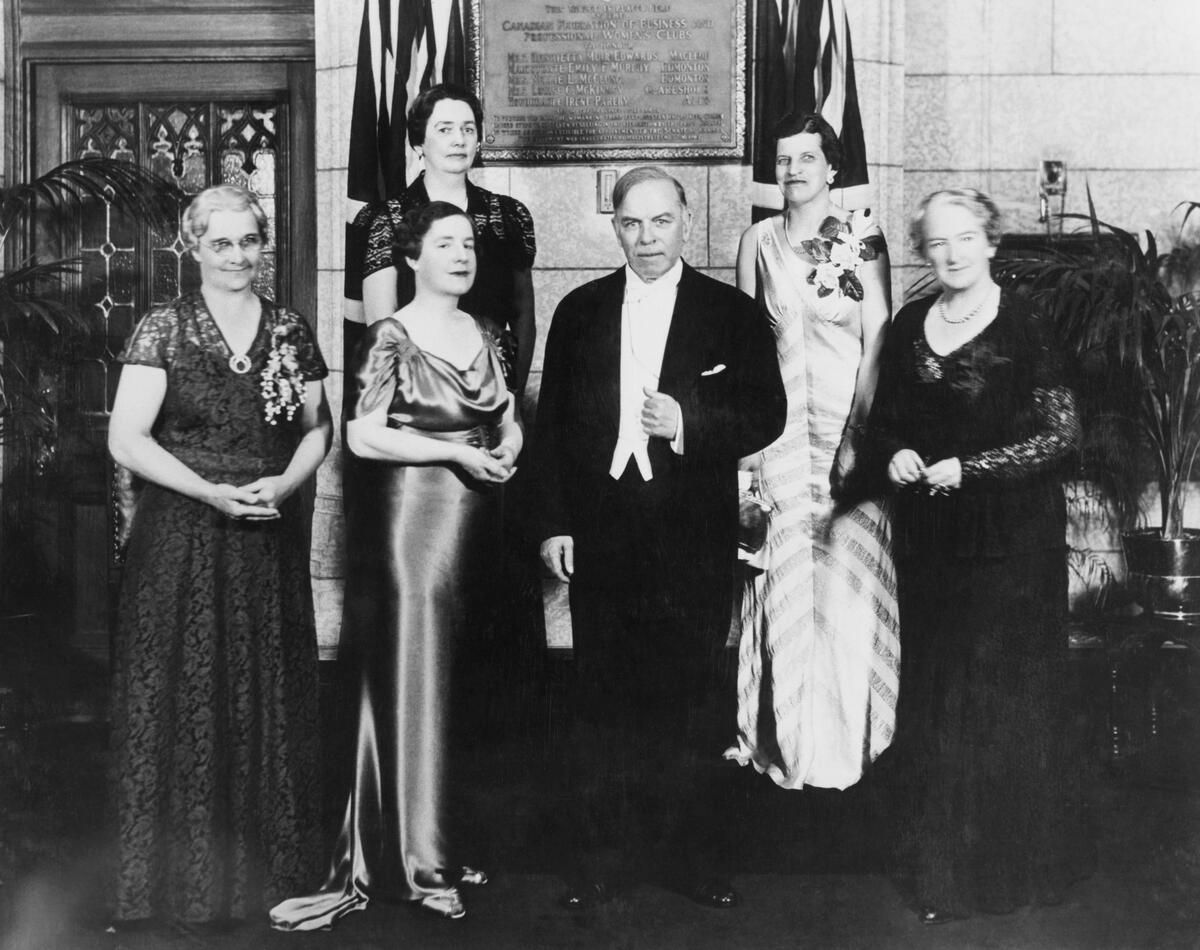
The Communications Security Establishment originated from Canada's joint military and civilian code-breaking efforts during the Second World War. The Examination Unit (XU) was established in June 1941 as a branch of the National Research Council, initially tasked with intercepting communications of Vichy France and Nazi Germany. Its mandate later expanded to include Imperial Japanese communications. The unit had an estimated 50 staff members at any one time and a total of 77 people throughout its existence. It moved to Laurier House in Ottawa's Sandy Hill neighbourhood in March 1942. In September 1942, the Department of External Affairs established its Special Intelligence Section at XU to review decoded signals intelligence and produce summaries. Following the war, a secret Order in Council on 13 April 1946 allowed for the continuation of cryptologic work, leading to the creation of the Communications Branch of the National Research Council (CBNRC).
This new agency combined the civilian Examination Unit with the military Joint Discrimination Unit and was headquartered at LaSalle Academy, with Edward Drake as its first director. It worked with intercepted communications collected from stations like Rockcliffe Airport and Canadian Forces Station Leitrim, which had a complement of 75 personnel in 1946. The CBNRC operated in secrecy for 34 years, focusing on signals intelligence related to Soviet military operations during the Cold War. Its existence was first publicly revealed on 9 January 1974 by a CBC Television documentary titled The Fifth Estate: The Espionage Establishment, prompting government acknowledgement in the House of Commons. In 1975, the organization was transferred to the Department of National Defence and renamed the Communications Security Establishment.
Key milestones in CSE's development include the creation of the Canadian System Security Centre in 1988, which led to the Canadian Trusted Computer Product Evaluation Criteria. Following the September 11 attacks, the Anti-terrorism Act of 2001 formally acknowledged and mandated CSE's activities in law. The agency adopted the applied title Communications Security Establishment Canada (CSEC) in early 2008 but reverted to its legal name, CSE, in public communications by mid-2014. A significant legal milestone was reached in June 2019 with the passage of the Communications Security Establishment Act as part of the National Security Act 2017, which clearly defined its mandate and powers and transferred oversight to the new National Security and Intelligence Review Agency (NSIRA).
- June 1941: Examination Unit (XU) established under the National Research Council.
- 13 April 1946: Secret Order in Council creates the Communications Branch of the NRC (CBNRC).
- 9 January 1974: CBC's The Fifth Estate documentary first publicly reveals the agency's existence.
- 1975: CBNRC transferred to DND and renamed Communications Security Establishment.
- 18 December 2001: Anti-terrorism Act receives royal assent, formally mandating CSE.
- November 2011: CSE becomes an independent agency.
- June 2019: Communications Security Establishment Act is passed.
- 29 June 2026: CSE reported targeting criminals brokering fentanyl ingredients through cyber operations.
In August 2021, CSE foreign signals intelligence assisted Global Affairs Canada and the Canadian Armed Forces with the operation to airlift Canadians out of Kabul after the Taliban retook Afghanistan. On October 11, 2023, CSE Chief Caroline Xavier said in an interview with CBC News that CSE offices in various cities may be opened to alleviate staffing shortages. CSE is a standalone agency under the National Defence portfolio. The agency employs code-makers and code-breakers to provide the Government of Canada with foreign intelligence and information technology security services.
Core mandate and activities
CSE's work is organized around four core activities authorized by its governing legislation. Its foreign intelligence mandate involves collecting information from the global information infrastructure regarding foreign entities, with a focus on international affairs, defence, or security. As a member of the Five Eyes intelligence alliance with the United States, United Kingdom, Australia, and New Zealand, CSE shares collection burdens and intelligence yields with these closest partners. During the Cold War, its primary client was National Defence and the focus was Soviet military operations, but today its intelligence supports a broader range of government departments on political, defence, and security issues, including terrorism and transnational crime.
The agency's cyber operations are divided into defensive and active categories, both of which must relate to international affairs, defence, or security. Defensive cyber operations involve actions taken to protect federal systems and other designated systems of importance from foreign cyber threats. The Minister of National Defence can designate systems such as energy grids, telecom networks, healthcare databases, banking systems, and elections infrastructure for CSE to defend. For example, CSE could disable a foreign cyber actor's server attempting to steal information from a government network. Active cyber operations allow CSE to take pre-emptive actions outside Canada to disrupt the capabilities of foreign adversaries, including terrorist groups, cyber criminals, transnational criminals, hostile intelligence agencies, and state-sponsored hackers. An example would be disrupting an adversary's communication means as part of a military operation.
CSE is mandated to provide technical and operational assistance to federal partners, including the military, the Royal Canadian Mounted Police, and the Canada Border Services Agency. The type of assistance can include the collection and processing of communications, providing technical solutions, offering linguistic support, and conducting operations. While operating under this assistance mandate, CSE can target Canadians if the requesting agency possesses the proper legal authority, such as a warrant. This framework ensures CSE's powerful capabilities can be leveraged to support domestic law enforcement and security operations within a legal context. CSE also assists the Canadian Air Transport Security Authority.
The Canadian Centre for Cyber Security
The Canadian Centre for Cyber Security (CCCS or Cyber Centre) is a key unit within CSE, acting as the government's central authority for cybersecurity. Officially launched on 1 October 2018, it consolidated several existing federal cybersecurity units, including Public Safety Canada's Canadian Cyber Incident Response Centre, Shared Services Canada's Security Operations Centre, and CSE's own Information Technology Security branch. The Cyber Centre is responsible for monitoring threats, protecting critical infrastructure, and coordinating the national response to cyber incidents. Although its main focus is federal government systems, the Minister of National Defence can designate other vital systems for protection under special circumstances.
The creation of the Cyber Centre followed public consultations in 2016 that identified issues with accountability, departmental coordination, and leadership in federal cybersecurity. The February 2018 federal budget allocated funds for CSE, in collaboration with Public Safety Canada and Shared Services Canada, to launch the centre. Scott Jones was appointed as its first head in June 2018 by Minister Ralph Goodale. The centre's automated defence systems are highly active, with CSE reporting that in the 2024-25 period they defended against a total of 2.3 trillion malicious actions, averaging approximately 6.3 billion per day. In its 2025 to 2026 annual report, the Cyber Centre noted it recorded more than 3,200 cyber incidents affecting Government of Canada institutions and critical infrastructure.
The Cyber Centre's predecessor, CSE's Information Technology Security branch, grew from a need to protect sensitive communications for departments like Foreign Affairs, the Canada Border Services Agency, National Defence, and the RCMP. This function was originally known as communications security (COMSEC), with CBNRC beginning domestic COMSEC efforts on 1 January 1947. From the 1990s to mid-2000s, this program used a distinctive logo featuring a triangle representing threats and an arc symbolizing protection to identify its products and publications. The branch's evolution into the Cyber Centre represents the government's effort to create a single, accountable organization to lead Canada's cybersecurity efforts.

Research institutes and technical capabilities
CSE fosters advanced research through specialized internal divisions and partnerships with academic institutions. The Vulnerability Research Centre (VRC), part of CSE's Research Directorate, focuses on strategic vulnerability research to advance Canada's interests. Its activities include conducting security reviews of government systems, researching computer security vulnerabilities through techniques like source code auditing and software reverse engineering, and developing novel research techniques. The VRC publicly partners with universities including the University of Toronto, Ontario Tech University, and Concordia University to augment its capabilities and help train the next generation of cybersecurity experts.
The Tutte Institute for Mathematics and Computing (TIMC) is a CSE-sponsored research institute formally named in September 2011 after cryptanalyst and mathematician William T. Tutte, though it was officially founded in 2009. Based in the Edward Drake Building in Ottawa, TIMC conducts classified and unclassified research in cryptology and knowledge discovery to support the Canadian Cryptologic Program and its Five Eyes partners. The institute is partnered with several organizations including the Institute for Defence Analysis centres in Princeton, La Jolla, and Bowie, the Heilbronn Institute for Mathematical Research, Carleton University, and the University of Calgary. It was proposed and established by CSE researchers led by Dr. Drew Vandeth, with Dr. Hugh Williams serving as its first director and Dr. Vandeth as the first Deputy Director.
- Uniform Manifold Approximation and Projection (UMAP): Algorithm developed by TIMC researchers Leland McInnes and John Healy for malware analysis, later released as open-source.
- Open-source downloads: As of 2024-25, TIMC's open-source contributions averaged over 2.5 million downloads per month.
- Platform adaptations: TIMC's work has been adapted into NVIDIA's RAPIDS and HypernetX platforms.
- Academic partnerships: The VRC partners with the University of Toronto, Ontario Tech University, and Concordia University.
The agency's code-breaking capabilities have historically relied on advanced supercomputers. Code-breaking capabilities were upgraded significantly with the acquisition of a Cray X-MP/11 supercomputer delivered to the Sir Leonard Tilley building in March 1985, which was at the time the most powerful computer in Canada. In the early 1990s, the Establishment purchased a Floating Point Systems FPS 522-EA supercomputer at a cost of $1,620,371, which was later upgraded to a Cray S-MP superserver after Cray acquired Floating Point Systems in December 1991. These investments were crucial as CSE's code-breaking capabilities had degraded substantially in the 1960s and 1970s before this technological renewal.
Facilities, insignia, and key partnerships
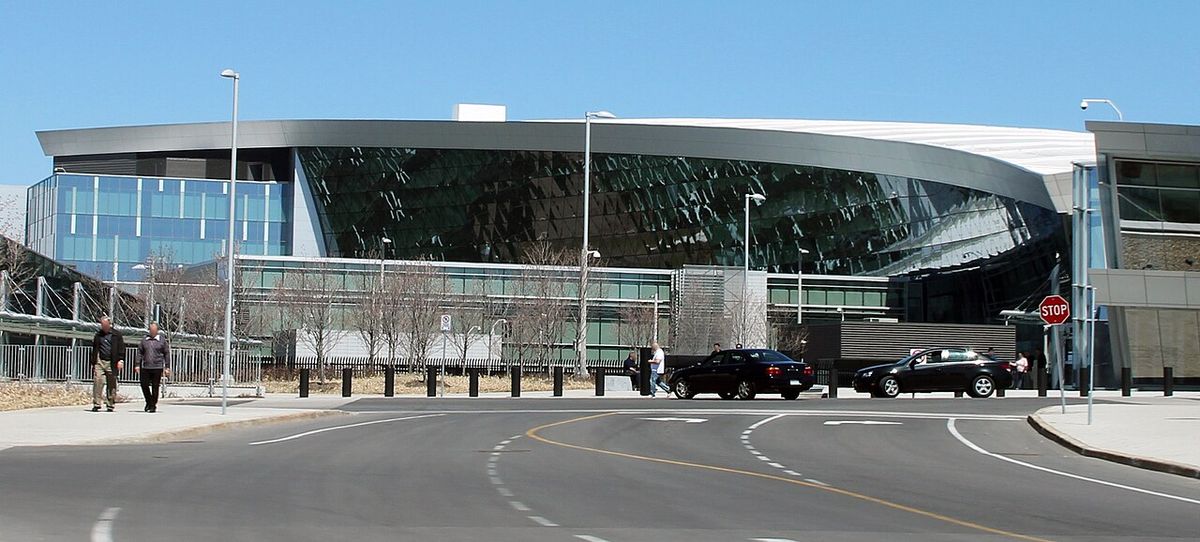
CSE operates from two main buildings in Ottawa. Its headquarters is the Edward Drake Building, inaugurated in 2015 and named for the agency's first director, Lieutenant Colonel Edward Drake. With the launch of the Canadian Centre for Cyber Security in 2018, CSE expanded into a second location at 1625 Vanier Parkway, which also houses a Learning Hub for government cybersecurity and communications security training. The agency previously occupied the Sir Leonard Tilley Building at 719 Heron Road from June 1961 until the move to the Edward Drake Building. The Tilley building was named for Samuel Leonard Tilley, a federal Finance Minister from 1873 to 1878.
For signals intelligence collection, CSE utilizes key stations across the country. Canadian Forces Station Leitrim, established by the Royal Canadian Signal Corps in 1941, is Canada's oldest operational signals intelligence collection station, located just south of Ottawa. It had around 2,000 employees in the 2013 to 2014 period. CSE also uses two FRD-10 Wullenweber circularly disposed antenna arrays for radio direction finding, located in Gander, Newfoundland (48.9511°N 54.5252°W) and Masset, British Columbia (54.0288°N 132.0654°W). These arrays are used to triangulate radio signals for intelligence gathering, navigation, search and rescue, and enforcement of broadcasting laws.
While CSE uses generic federal identifiers, it is one of several security agencies granted a heraldic badge by the Canadian Heraldic Authority in 1994. The agency's pennant was first raised in 1996 to mark the organization's 50th anniversary. CSE's international partnerships are foundational to its work, primarily through the Five Eyes alliance. Historically, collaboration was formalized as early as February 1950 with the appointment of R. S. McLaren as the first CBNRC Senior Liaison Officer to Washington, D.C. Technical collaboration has also included joint projects like "Canadian ALVIS" (CID 610), the first and only Canadian cipher machine to be mass-produced, based on the British ALVIS and begun in December 1964.
| Facility | Location | Primary Use | Notable Fact |
|---|---|---|---|
| Edward Drake Building | Ottawa, ON | Headquarters | Inaugurated in 2015, houses TIMC. |
| 1625 Vanier Parkway | Ottawa, ON | Cyber Centre & Learning Hub | Second location opened in 2018. |
| CFS Leitrim | South of Ottawa, ON | SIGINT Collection | Oldest operational SIGINT station (est. 1941). |
| FRD-10 Array | Gander, NL | Radio Direction Finding | Used for triangulation and intelligence gathering. |
| FRD-10 Array | Masset, BC | Radio Direction Finding | Used for triangulation and intelligence gathering. |

Leadership, accountability, and public reporting
The head of CSE is the Chief, a position held by Caroline Xavier since 31 August 2022. The Chief is accountable to the Minister of National Defence, who in turn is accountable to Parliament and Cabinet. CSE became a standalone agency in November 2011, providing it with greater operational independence while remaining within the National Defence portfolio. The legal framework for the agency's activities and oversight was fundamentally updated with the Communications Security Establishment Act, which came into force in August 2019, two months after its passage. This act explicitly set out CSE's four mandates and authorities for the first time in standalone legislation.
Oversight of CSE's activities is conducted by the National Security and Intelligence Review Agency (NSIRA), an independent body created by the same 2019 legislation. NSIRA reviews all of CSE's activities to ensure they are lawful, reasonable, and necessary. CSE is subject to review by the Intelligence Commissioner, the National Security and Intelligence Committee of Parliamentarians (NSICOP), and other federal bodies like the Privacy Commissioner and the Auditor General. CSE publishes an unclassified annual report detailing its activities. The report for 2025 to 2026 highlighted the agency's work on Canada's digital frontline as it entered its 80th year of operation. The report also provides statistics, such as the more than 3,200 cyber incidents recorded by the Cyber Centre in that fiscal year.
CSE's workforce and recruitment are critical to its mission. The agency offers career opportunities for professionals and students, emphasizing roles for team players, pathfinders, and problem solvers. It promotes equity, diversity, and inclusion across its workplace. The security screening process for employment is rigorous, reflecting the sensitive nature of the work. As noted in its 2025 to 2026 planning documents, CSE continues to work on initiatives that will carry forward into the 2026 to 2028 period, ensuring its capabilities evolve with the threat landscape. The agency also participates in public awareness campaigns like Cyber Security Awareness Month to educate Canadians on digital safety.
Questions about Communications Security Establishment
What does the Communications Security Establishment do?
The Communications Security Establishment is Canada's national cryptologic agency with four main roles. It collects foreign signals intelligence to inform government decision-making on international affairs and security. It conducts defensive cyber operations to protect federal systems and designated critical infrastructure like energy grids from attack. It carries out active cyber operations to disrupt foreign adversaries such as terrorist groups or state-sponsored hackers. Finally, it provides technical and operational assistance to federal partners including the military, the RCMP, and border services.
What is the Canadian Centre for Cyber Security?
The Canadian Centre for Cyber Security (Cyber Centre) is the Government of Canada's unified authority on cybersecurity and is a branch of CSE. Created on 1 October 2018, it consolidated several federal cybersecurity units. The Cyber Centre monitors threats, protects government networks and critical infrastructure, and coordinates national responses to cyber incidents. In the 2024-25 period, its automated systems defended against an average of 6.3 billion malicious actions per day, highlighting the scale of the cyber threat environment.
How can I report a cybersecurity incident or scam?
The Canadian Centre for Cyber Security is the point of contact for reporting cyber incidents affecting Canadian organizations. The public is advised that CSE and the Cyber Centre do not proactively contact members of the public by phone without cause. There have been reports of fraudsters impersonating CSE officials. For cybersecurity guidance or to report a scam, individuals should visit the official Cyber Centre website. For immediate threats, contact local law enforcement.
Is CSE allowed to spy on Canadians?
CSE's core foreign intelligence and cyber operations mandates prohibit it from directing its activities at Canadians or anyone in Canada. Its foreign intelligence role focuses on foreign communications, while its cyber operations are defensive and active measures against foreign threats. However, under its assistance mandate, CSE can provide technical support to federal partners like the RCMP or CBSA. While assisting, CSE operates under the requesting agency's legal authority, which means it can target Canadians if that agency has the proper authority, such as a court warrant. All CSE activities are subject to independent oversight by the National Security and Intelligence Review Agency (NSIRA) to ensure compliance with the law.
How does CSE work with other countries?
CSE works closely with other countries primarily through the Five Eyes intelligence alliance, which includes the United States, United Kingdom, Australia, and New Zealand. As part of this partnership, the agencies share the burden of collecting foreign signals intelligence and distribute the resulting intelligence yield. This collaboration makes Canada a substantial beneficiary, providing access to a wider scope of intelligence than it could gather independently. The partnership has historical roots in Cold War efforts and now addresses modern threats like terrorism and transnational crime. CSE also collaborates with international academic partners through its Tutte Institute for Mathematics and Computing.
Where is CSE located?
CSE is headquartered at the Edward Drake Building in Ottawa, named for the agency's first director, Lieutenant Colonel Edward Drake. Since 2018, CSE has also operated from a second Ottawa location at 1625 Vanier Parkway, which houses the Canadian Centre for Cyber Security and a Learning Hub for employee training. Historically, CSE occupied the Tilley Building at 719 Heron Road from 1961 until moving to its current headquarters. For signals intelligence collection, CSE utilizes facilities like Canadian Forces Station Leitrim south of Ottawa and FRD 10 Wullenweber antenna arrays in Gander, Newfoundland and Masset, British Columbia.
Sources and further reading
- Communications Security Establishment (Wikipedia)
- Communications Security Establishment Canada (cse-cst.gc.ca)
- Communications Security Establishment Canada (CSE) ... (hellodarwin.com)
Checked by the Nosy Mag desk. Last updated 2026-10-27.