History of New Brunswick
The history of New Brunswick covers millennia of human habitation, from the First Nations who first shaped its landscapes to its role in the formation of modern Canada. For thousands of years, the lands were home to the Mi'kmaq, Maliseet, and Passamaquoddy peoples, whose cultures were tied to the region's rivers and coasts. European contact began with French exploration in the 16th century, leading to Acadian settlement, a period altered by British conquest and the deportation of the Acadians in the 18th century. The province's modern character was forged by the influx of United Empire Loyalists after the American Revolution, which led to its establishment as a separate British colony in 1784 and its entry into Canadian Confederation in 1867. The 20th century saw the province address linguistic inequities, culminating in its official bilingual status in 1969.
Indigenous Foundations and Early Contact
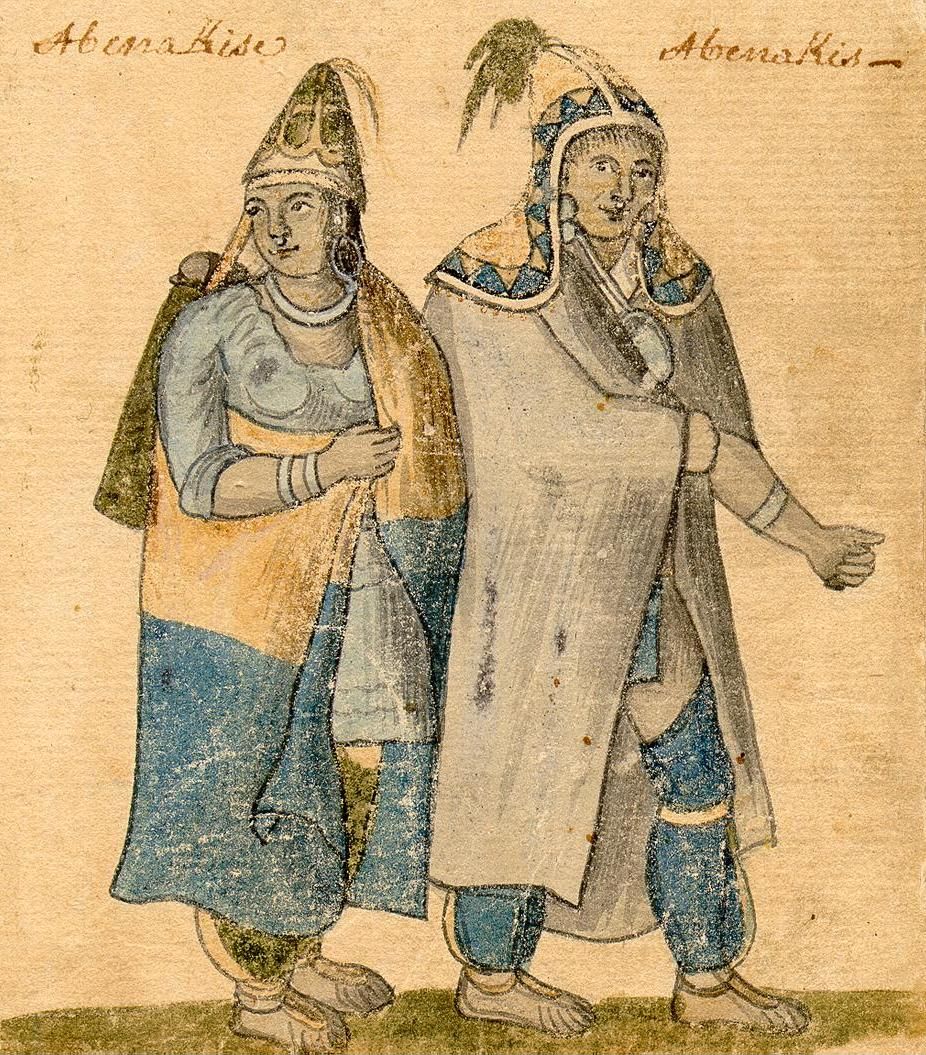
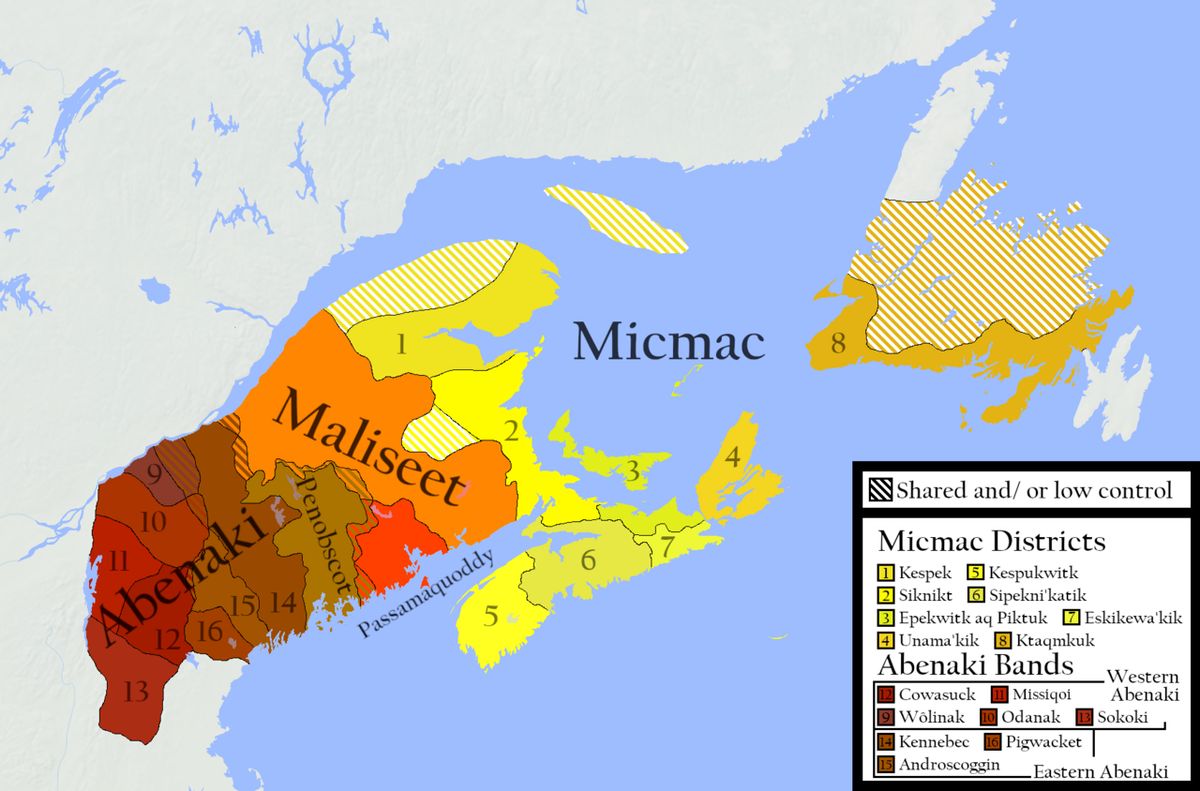
Human presence in what is now New Brunswick dates back at least 13,000 years. The Mi'kmaq inhabited the eastern parts of the province and the Gaspé Peninsula. The Maliseet, also known as the Wəlastəkwiyik, occupied the entire watershed of the Saint John River, a territory they called the Wəlastəkw, meaning good river. The Passamaquoddy, whose name means pollock spearer, lived around Passamaquoddy Bay and the St. Croix River. These societies developed seasonal economies based on the resources of the land and sea. They moved to river valleys in spring to plant corn, beans, and squash, to the coast in summer for seafood and berries, and dispersed inland for winter hunting. In 1616 Father Biard estimated the Mi'kmaq population exceeded 3,000, though European diseases had already caused significant population decline. During the colonial period, these nations, along with the Abenaki and Penobscot, formed the Wabanaki Confederacy, a military and political alliance. Norse explorers likely coasted Atlantic Canada around the year 1000, with evidence from butternut shells at L'Anse aux Meadows suggesting travel south. The Maliseet and Passamaquoddy were part of the broader group sometimes called Étchemins by the French.
French Colonial Era and Acadian Development
The first recorded European to sight the coast was French explorer Jacques Cartier in 1534, who named the Baie des Chaleurs. Permanent European presence began in 1604 when a French expedition led by Pierre Dugua, Sieur de Mons, and Samuel de Champlain established a winter camp on St. Croix Island. The settlement suffered from scurvy, with 36 of the 87 members of the party dying by winter's end, prompting a relocation to Port Royal in Nova Scotia the following year. French settlement expanded as part of the colony of Acadia. Key Acadian communities developed along the Saint John River at sites like Fort La Tour and Fort Anne, in the Memramcook and Petitcodiac river valleys known as Trois Rivière, and at Beaubassin on the Chignecto Isthmus. The French maintained generally good relations with First Nations. This era included the Acadian Civil War in the mid 17th century, a rivalry between Charles de Menou d'Aulnay based at Port Royal and Charles de Saint Étienne de la Tour at Saint John. The war involved four major battles between 1640 and 1645. The Treaty of Utrecht in 1713 forced France to cede peninsular Acadia to Britain, though the area that became New Brunswick remained under French control, leading to an influx of Acadian refugees in what is called the Acadian Exodus.
Wars, Deportation, and British Conquest
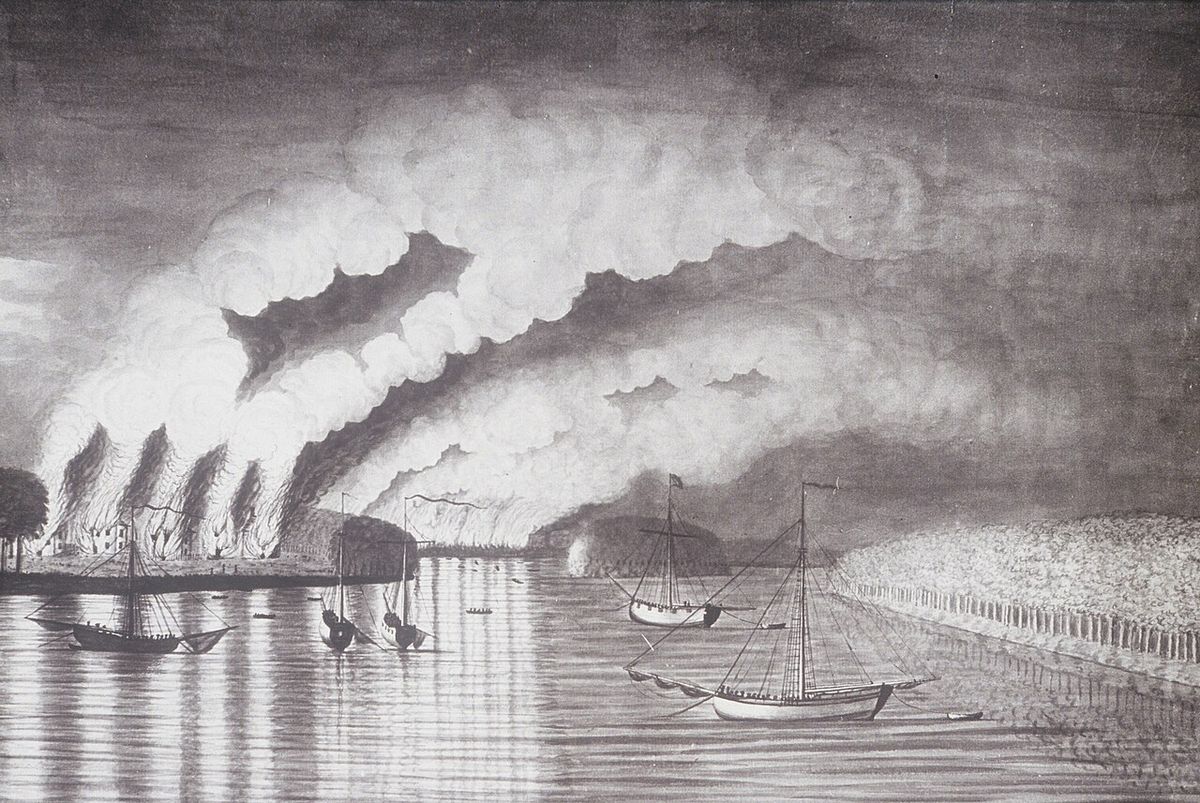
The 18th century was a period of imperial rivalry that delivered New Brunswick to British control. The French constructed forts including Fort Nashwaak, Fort Boishebert, Fort Menagoueche, Fort Gaspareaux, and Fort Beauséjour. First Nations participated in raids against New England during conflicts like King William's War and Father Rale's War. The British moved to eliminate the Acadian presence. The deportation of the Acadians began in 1755 after the capture of Fort Beauséjour. Campaigns such as the St. John River Campaign and the Petitcodiac River Campaign in 1758 led by Colonel Robert Monckton brought all of present day New Brunswick under British control. The Gulf of St. Lawrence Campaign the same year aimed to clear Acadian villages to prevent interference with the Siege of Quebec. The Treaty of Paris in 1763 confirmed British sovereignty. Initially, the region was administered as Sunbury County within Nova Scotia. The American Revolutionary War affected the New Brunswick region, with conflicts including the Maugerville Rebellion in 1776 and the Siege of Saint John in 1777. Some American settlers favoured the revolutionary cause, with Jonathan Eddy harassing British garrisons at Fort Cumberland. Significant population growth occurred after the American Revolution with the arrival of Loyalist refugees who were given free land.
The Loyalist Influx and Political Birth of a Colony
The arrival of tens of thousands of United Empire Loyalists transformed New Brunswick demographically and politically. A major group settled at Parrtown at the mouth of the Saint John River in 1783. These Loyalists felt alienation from the government in Halifax, which they perceived as sympathetic to American republicanism. Colonel Thomas Dundas wrote from Saint John in 1786 that the Loyalists had experienced every possible injury from the old inhabitants of Nova Scotia. Their desire for self government and land led to the partition of Nova Scotia. On August 16, 1784, New Brunswick was established as a separate British colony, named for the British royal family's ancestral House of Brunswick. The first legislature, elected in 1785, opened at Saint John. The election of 1786 was bitterly contested and pitted loyalty to the king and his appointed governors against loyalty to the king with local affairs handled by locals. Hundreds who protested the election were arrested for sedition. The early colonial period also saw the establishment of key institutions. The British administrators felt Halifax was too distant from the developing territories west of the Isthmus of Chignecto. Saint John became Canada's first incorporated city in 1785. The colony's first governor was Sir Thomas Carleton.
Pre-Confederation Development and Border Disputes
The early to mid 19th century in New Brunswick was marked by institutional growth, economic development and border conflicts. The colony's northeastern border with Maine was a persistent source of tension, leading to the Aroostook War in 1842. The Webster Ashburton Treaty in 1842 settled the dispute. Some local residents in the Madawaska region referred to the area as the Republic of Madawaska. Politically, the movement for responsible government gained supporters like John Mercer Johnson, first elected to the assembly in 1850. Future Fathers of Confederation such as Samuel Leonard Tilley, born in Gagetown, and Peter Mitchell, born in Newcastle, began their political careers during this period. The economy was based on shipbuilding, logging and farming. The ship Marco Polo, launched from Saint John in 1851, was one of the fastest clipper ships. Immigration in the early part of the century was from the west country of England, Scotland and Ireland. A large influx of Catholic settlers arrived from Ireland in 1845 due to the Great Famine, leading to tensions like the riot of 12 July 1849 in Saint John where at least 12 died. The New Brunswick Supreme Court heard freedom suits in 1799 but slavery continued until it was essentially extinct by 1820 and abolished by the British Slavery Abolition Act 1833. In 1819, the first Welsh settlers arrived from Cardigan.
Confederation and 19th Century Economic Shifts
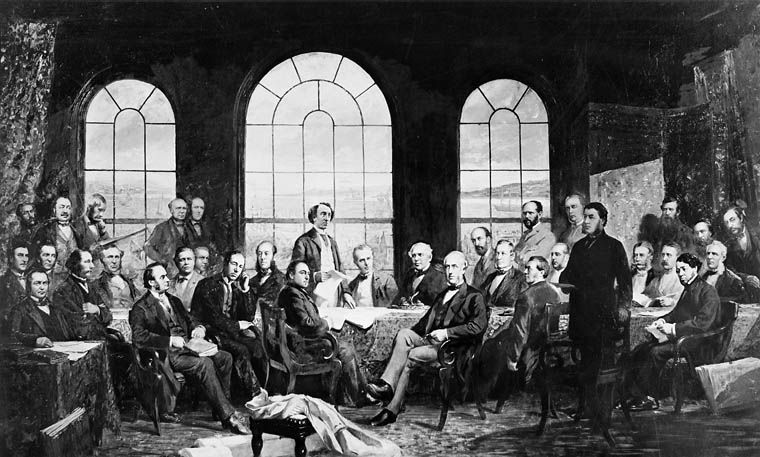
By the 1860s, discussions about a union of the British North American colonies gained momentum, partly driven by earlier ideas of a Maritime Union. New Brunswick's path to Confederation was not smooth, with significant anti Confederation sentiment. In the 1865 election centred on Confederation, pro Confederation Premier Samuel Leonard Tilley lost his seat. However, shifting economic and political pressures, including concerns about American expansionism and trade, led to a reversal. A new election in May 1866 returned a pro Confederation government, allowing Tilley and others like Charles Fisher and Peter Mitchell to proceed. New Brunswick delegates attended the Charlottetown, Quebec, and London conferences. Tilley is credited with proposing the term Dominion for the new nation at the London Conference in 1866. On July 1, 1867, New Brunswick united with Nova Scotia and the Province of Canada to form the Dominion of Canada. The late 19th century brought an economic downturn to the province. The New Brunswick Historical Society, which had begun informally in 1874, was formally incorporated by the legislature in 1882. Many of its early records were lost in the Great Saint John Fire of 1877. The society was rejuvenated during the 1883 centennial of the province. After Confederation, the Maritimes suffered from new national policies that disrupted trade with New England.
20th Century Reforms and Historical Commemoration
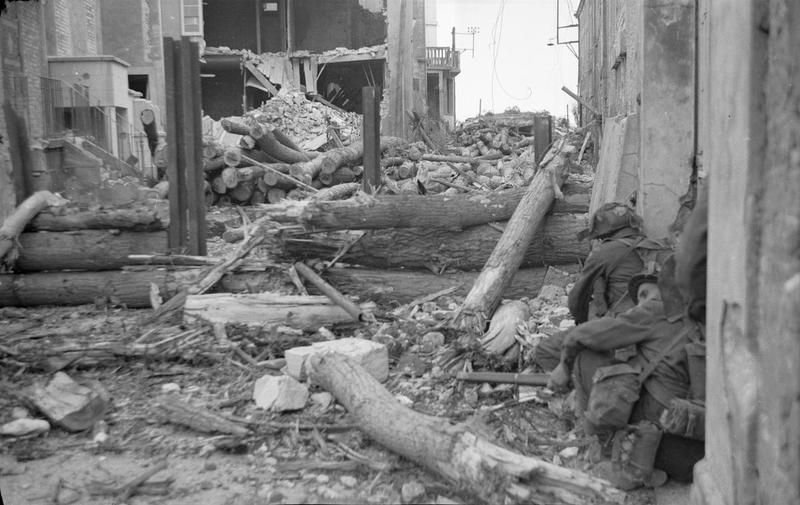
The 20th century saw New Brunswick confront and begin to redress historical inequities, particularly between its linguistic communities. A landmark development was the 1960s Equal Opportunity program under Premier Louis Robichaud, which aimed to standardize social services and education across the province's often poorer, francophone regions. This led directly to the New Brunswick Official Languages Act of 1969, which made New Brunswick Canada's only officially bilingual province. The preservation and celebration of the province's complex history became a formal public endeavour. The New Brunswick Historical Society continues to operate the Loyalist House Museum in Saint John. The New Brunswick Black History Society works to document and preserve the province's Black heritage. The establishment of New Brunswick Day in 1976 created an annual statutory holiday on the first Monday of August. After World War II, the province's economy expanded with manufacturing and pulp and paper mills. The Great Depression provided a setback. Two influential families, the Irvings and the McCains, emerged from the depression to modernize and vertically integrate the provincial economy. During World War II, New Brunswick contributed troops like the 104th Regiment of Foot and hosted British Commonwealth Air Training Plan bases in Moncton, Chatham, and Pennfield Ridge. The province sustained 1808 fatalities in the war.
Notable Figures and Lasting Institutions
The historical narrative of New Brunswick is populated by individuals whose actions shaped its political, cultural, and scientific landscape. From the colonial era, figures like Charles de Saint Étienne de la Tour and Charles de Menou d'Aulnay defined the Acadian period through their conflict. The Loyalist era and early province were shaped by political sentiments that led to the colony's creation. The 19th century produced several Fathers of Confederation from the province, including Samuel Leonard Tilley, Charles Fisher, and Peter Mitchell. Inventor Abraham Gesner contributed to scientific education with his museum. The commitment to preserving this history is institutionalized in societies and museums dedicated to specific aspects of the provincial story. These individuals and the enduring societies that study them ensure the diverse history of New Brunswick remains a living part of the province's culture. In the early 2020s, during the COVID 19 pandemic, New Brunswick grew significantly in population through interprovincial migration and immigration, breaking records for annual population growth. The 2023 local governance reform resulted in the amalgamation of several local service districts.
Questions about History of New Brunswick
What is New Brunswick Day and when is it in 2026?
New Brunswick Day is a provincial statutory holiday established in 1976 to celebrate the province's history and cultures. It falls on the first Monday of August each year. In 2026, New Brunswick Day will be on Monday, August 3. The official celebrations for 2026 will be hosted by Grand Falls.
What role did New Brunswick play in Canadian Confederation?
New Brunswick was a founding partner in Confederation. Initial anti Confederation sentiment led to the defeat of Premier Samuel Leonard Tilley's government in 1865. Fears of American expansion and economic concerns led to a pro Confederation victory in the May 1866 election. New Brunswick delegates attended all the major conferences. Tilley is credited with proposing the name Dominion. The province became a founding member of Canada on July 1, 1867.
When did New Brunswick become a province?
New Brunswick was established as a separate British colony on August 16, 1784, after being partitioned from Nova Scotia. This was largely a response to the arrival of thousands of United Empire Loyalists. The colony entered Canadian Confederation on July 1, 1867, becoming one of the four founding provinces of the Dominion of Canada.
Who were the first inhabitants of New Brunswick?
The first inhabitants were several First Nations groups who occupied the lands for at least 13,000 years. The principal groups were the Mi'kmaq in the east, the Maliseet along the Saint John River valley, and the Passamaquoddy in the southwest. These peoples lived migratory lives, moving seasonally to fish, plant crops, and hunt. They allied with the Abenaki and Penobscot to form the Wabanaki Confederacy during the colonial period.
What was the Acadian Expulsion and how did it affect New Brunswick?
The Acadian Expulsion was the forced deportation of the French Acadian population by British authorities primarily between 1755 and 1763. In the New Brunswick region, this involved specific military campaigns such as the St. John River Campaign and the Petitcodiac River Campaign in 1758. The removal of the Acadian population from settlements created a significant population vacuum, which later facilitated the settlement of Loyalists in the 1780s and shaped the demographic future of the colony.
Why is New Brunswick officially bilingual?
New Brunswick is officially bilingual because of the New Brunswick Official Languages Act of 1969, which designated English and French as the province's official languages. This legislation followed the Equal Opportunity program of the 1960s which aimed to standardize services like education and health care across all counties. The act made New Brunswick Canada's only officially bilingual province by statute, recognizing both languages as having equal status in government institutions.
Sources and further reading
- History of New Brunswick (Wikipedia)
- New Brunswick Day 2026 (gnb.ca)
- New Brunswick Day 2026: Date, Holidays & Events (remitly.com)
- New Brunswick (thecanadianencyclopedia.ca)
- New Brunswick Historical Society (nbhs-shnb.ca)
Checked by the Nosy Mag desk. Last updated 2026-10-23.