Canada-France relations
The bilateral relationship between Canada and France is a historically deep connection, rooted in the legacy of French colonization and sustained by a shared language and cultural ties. As two of the world's leading democracies and members of the G7, NATO, and the Organisation internationale de la Francophonie, their partnership spans diplomatic, economic, security, and cultural spheres. The relationship has experienced periods of significant tension, particularly surrounding Quebec's role in the 1960s, but has evolved into a strong strategic alliance. In the 2020s, under leaders like Prime Minister Mark Carney and President Emmanuel Macron, cooperation has intensified on issues from artificial intelligence and defence to climate change and trade, reflecting a modern partnership focused on global challenges.
Colonial Foundations and Early Diplomacy
In 1720, the British controlled Newfoundland, Nova Scotia, and much of Western Canada, but nearly all of Eastern Canada from the Labrador shore to the Great Lakes was under French domination. This era ended with the British conquest, culminating at the Plains of Abraham in 1759, which transferred control of New France to Britain. Despite the conquest, the French-speaking population, including Québécois, Acadians, and Métis, remained a foundational element of Canadian society. French immigration to Canada continued on a small scale until the start of the wars between France and Britain from 1792 to 1815. The ideas of the French Revolution influenced Canadian intellectual life, though its anti-clericalism was rejected by the conservative, Catholic rural populace in Quebec.
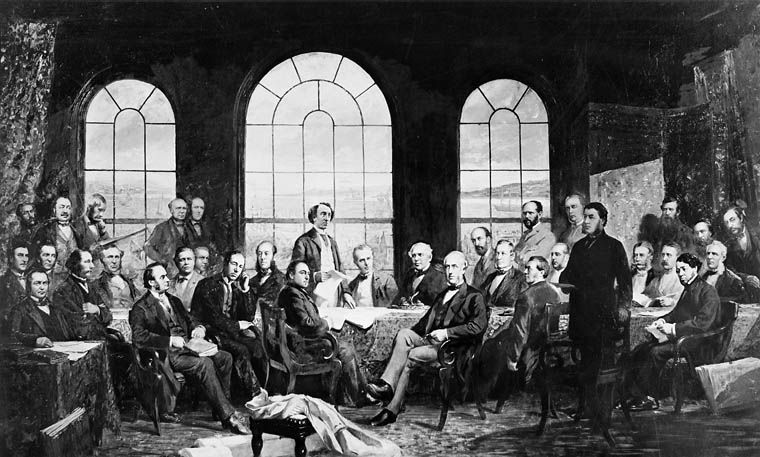
After Canadian Confederation in 1867, foreign policy was initially controlled by the British government. Canada began to assert its own diplomatic interests, with figures like Alexander Galt attempting to negotiate a commercial treaty with France in 1878. British policy and French protectionism initially blocked these efforts. The breakthrough came in 1893 when Sir Charles Tupper, Canada's High Commissioner in London, successfully negotiated a treaty, though it was formally signed by the British ambassador. In 1910, Quebec appointed its own representative to Paris, Hector Fabre. The federal government co-opted this move by naming him Canada's agent-general, marking an early, informal step in establishing direct representation. In 1912, the federal government asked his successor, Philippe Roy, to resign from the Quebec position over conflict of interest fears.
Alliance Through Two World Wars
The 20th century saw Canada and France become formal allies during the two world wars. In the First World War, the Canadian Expeditionary Force fought extensively on French soil, with the 1917 victory at Vimy Ridge becoming a central event in Canadian national identity. The war also brought tragedy to Canadian shores through the Halifax Explosion in December 1917, caused by the accidental detonation of the French munitions ship SS Mont-Blanc, which killed 2,000 people. France was not held responsible, and charges against its captain were dropped. During the Second World War, the alliance was tested after the Fall of France in 1940. Canada maintained relations with the Vichy regime until 1942, while also becoming a crucial supporter of General Charles de Gaulle's Free French Forces. De Gaulle re-entered France after the Invasion of Normandy via the Canadian-won Juno Beach and gave a famous speech in Ottawa in 1944.
The war period also involved a minor territorial issue, as Canada had planned a military invasion of the Vichy-controlled islands of Saint Pierre and Miquelon. This move was pre-empted by their liberation by Free French forces under Admiral Muselier. These shared wartime sacrifices solidified a bond between the two nations, establishing a foundation of military cooperation and mutual respect that would endure despite future political disagreements. The personal link forged with de Gaulle during this period would later have major consequences for bilateral relations in the 1960s.
The Gaullist Crisis and Quebec
Relations entered a period of deep strain in the 1960s, centred on the role of Quebec within Canada. The catalyst was French President Charles de Gaulle's official visit in July 1967, during Canada's centennial year. From a balcony in Montreal, he exclaimed "Vive le Québec libre!" (Long live free Quebec), a phrase associated with the sovereignty movement. This endorsement by a revered French leader ignited a major diplomatic crisis and deeply affected intergovernmental relations within Canada. De Gaulle, a proponent of Quebec sovereignty, later suggested an "Austro-Hungarian solution" for Canada, akin to a dual-monarchy, mirroring the "sovereignty-association" model later promoted by Quebec Premier René Lévesque.
This period saw France actively cultivate a direct relationship with Quebec, often bypassing the federal government in Ottawa. A 1965 Master Agreement between Canada and France allowed provinces to cooperate directly with France in areas of provincial jurisdiction, such as education. French officials, particularly a group within the French foreign service nicknamed the "Quebec Mafia" by Canadian media, exploited this agreement to advance a vision of Quebec's distinct international personality. The French Consulate-General in Quebec City was enlarged and its consul general was redesignated as an envoy to the Quebec Government, functioning like a de facto embassy. Many French officials, like Secretary of State Jean de Lipkowski, openly supported Quebec independence while in Canada, angering the federal government.
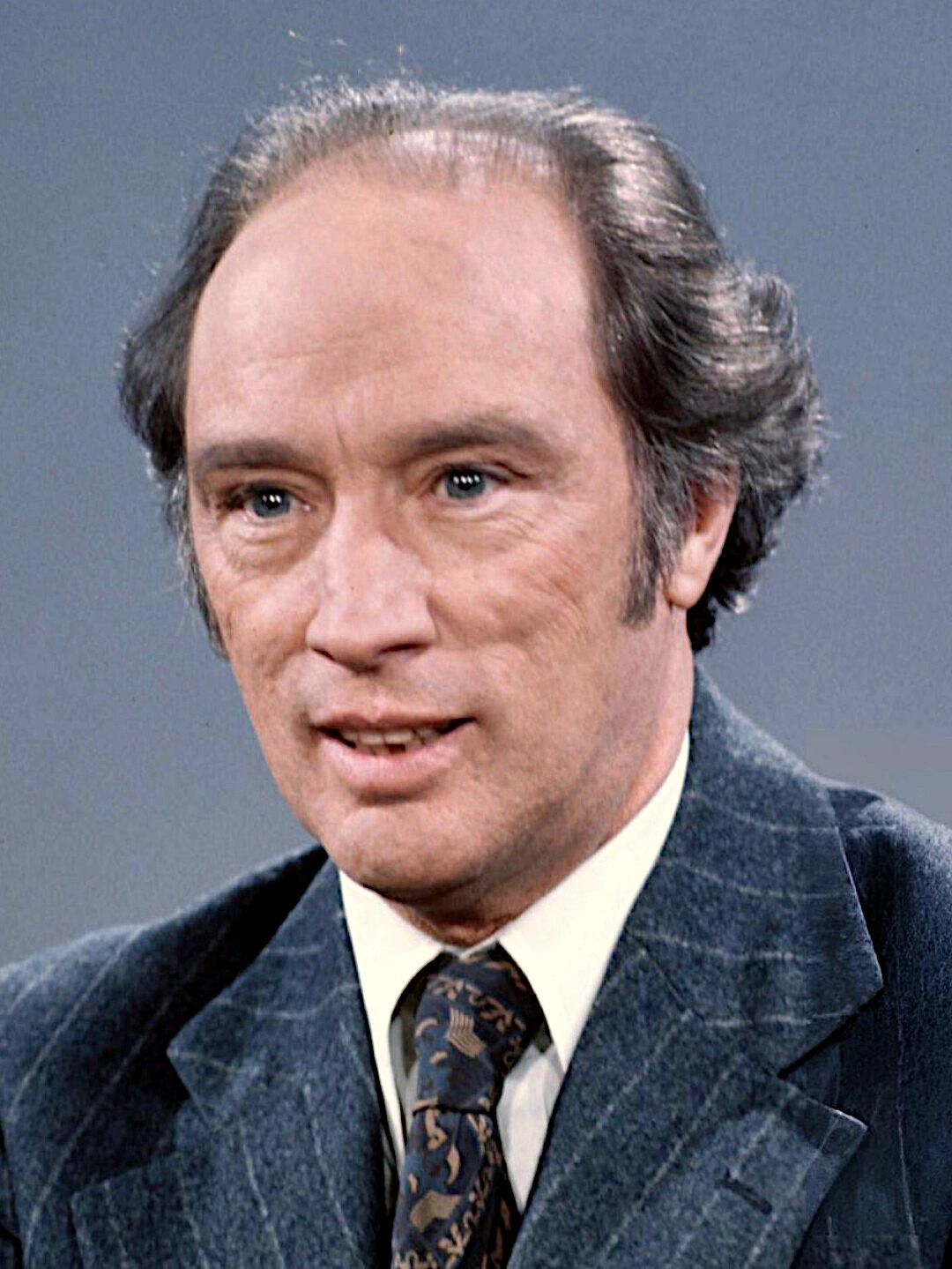
A major flashpoint was the creation of la Francophonie, an organization of French-speaking nations. France insisted that Quebec participate as a full, independent member, while Canada argued for a single federal delegation that included Quebec and other provinces. The conflict escalated in 1968 when Gabon, under French pressure, invited only Quebec to a conference. Canada broke off relations with Gabon in retaliation, and Justice Minister Pierre Trudeau accused France of using newly independent countries for its own purposes. A subsequent 1969 conference in Congo-Kinshasa saw a compromise, with Quebec attending as part of a unified Canadian delegation. The founding conference in Niger later that year, influenced by Canadian aid promises, formally established the precedent of a single Canadian delegation including provincial representatives, a model that continues today.
Normalization and Modern Strategic Partnership
Following de Gaulle's resignation in 1969 and the 1970 election of Quebec Liberal Premier Robert Bourassa, relations gradually normalized. France's official policy shifted from "dualism" to "ni-ni" (ni ingérance, ni indifférence), meaning no interference but no indifference toward Quebec's future. While maintaining cultural ties with Quebec, successive French governments have shown greater respect for federal jurisdiction. In 2012, President François Hollande explained the policy as ensuring France's neutrality while accompanying Quebec in its destinies. Incidents like a 1997 proposal by former Gaullists for a French stamp commemorating de Gaulle's 1967 visit caused minor friction but did not disrupt the overall trend toward stable, cooperative relations.
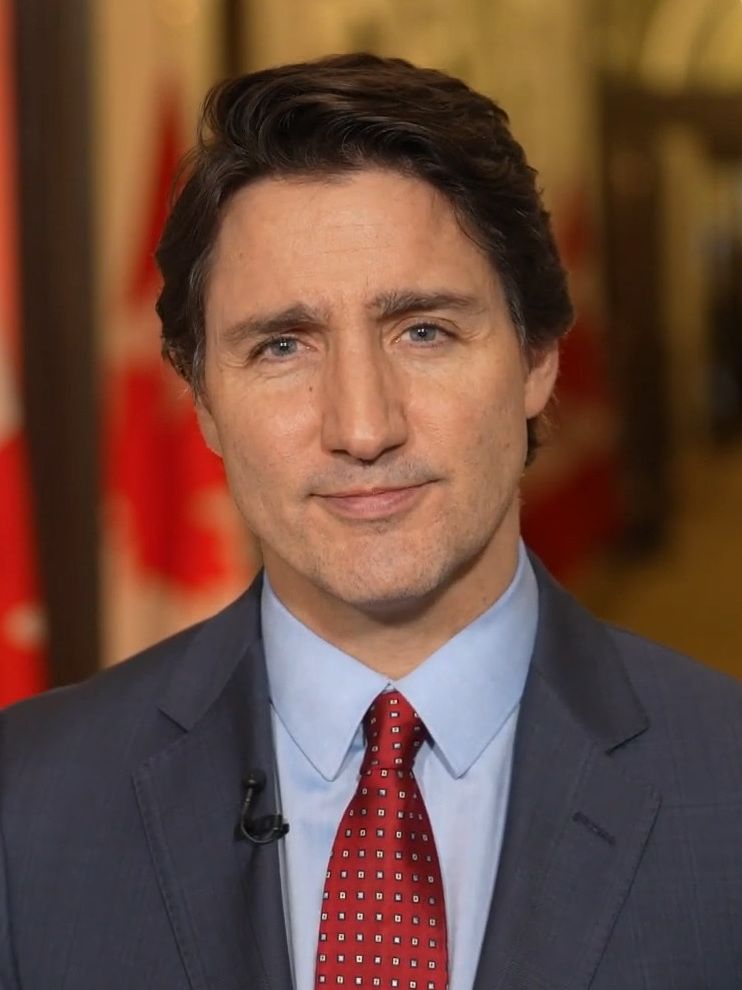
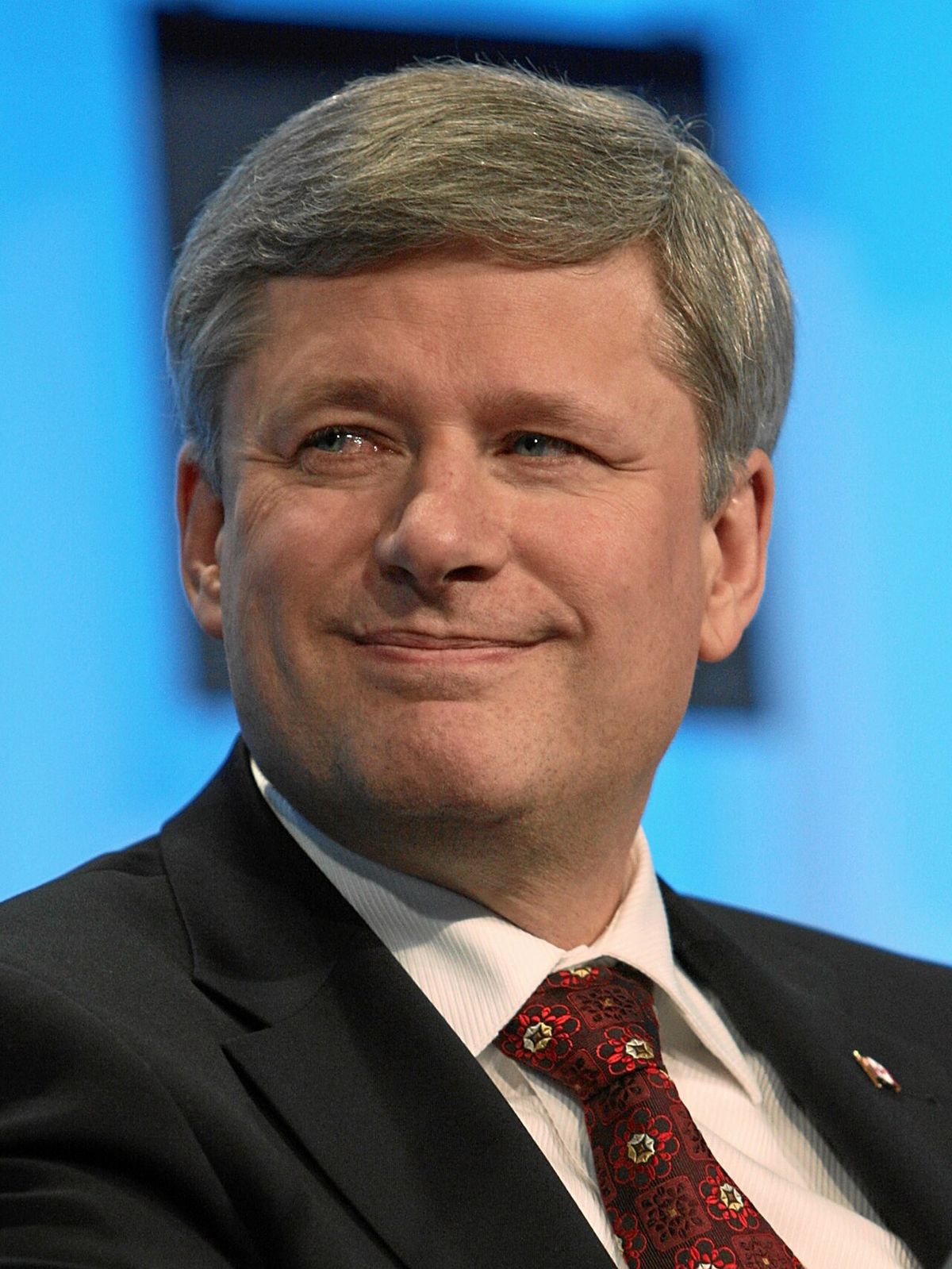
Leaders like French President Nicolas Sarkozy, Canadian Prime Minister Stephen Harper, and Quebec Premier Jean Charest jointly advocated for a Canada-EU free trade agreement in 2007 to 2008, and Sarkozy addressed the Quebec National Assembly in 2008. The relationship deepened significantly under Canadian Prime Minister Justin Trudeau and French President Emmanuel Macron. A key moment was Macron's September 2024 visit to Canada, where the leaders signed joint declarations on defence and security, artificial intelligence, and ocean protection. This was followed by Prime Minister Mark Carney choosing France for his first official international visit in May 2025, meeting with Macron to discuss trade, defence, and global crises.
- April 2024: PM Trudeau and French PM Gabriel Attal inaugurate the Amicitia France-Canada Monument in Ottawa.
- September 2024: President Macron visits Canada, signing key joint declarations.
- May 2025: PM Mark Carney makes his first official trip abroad to France.
- June 2026: PM Carney visits Paris ahead of the G7 Summit to deepen partnerships in trade, defence, AI, and critical minerals.
- September 2026: President Macron and PM Carney meet on Saint Pierre and Miquelon, pledging closer cooperation, including on space launches.
The partnership is now characterized by dense cooperation across multiple domains. Canada and France are the two largest donors to the Organisation internationale de la Francophonie, collaborating on promoting French language and culture, notably through the global digital platform TV5MONDEPlus launched in 2020. A youth mobility agreement allows those aged 18 to 35 to work and travel in each other's countries for up to 24 months. Scientific and technological cooperation is a priority, with a Joint Committee on Science, Technology and Innovation inaugurated in April 2023, focusing on aerospace, AI, quantum technologies, and green energy.
Economic and Trade Relations
France is a significant economic partner for Canada. In 2006, France was Canada's 11th largest destination for exports and its fourth largest in Europe. It was also Canada's ninth-largest source of imports. France is Canada's third-largest merchandise export market in the European Union and a major source of foreign investment. The bilateral economic relationship is substantial and has grown in recent years. In 2025, total bilateral merchandise trade between the two countries reached $15.2 billion Canadian. The Montreal-Paris air route is one of the most flown routes between European and non-European cities. Canada and France cooperate closely on insulating cultural industries from free trade agreements, which both countries strongly support.
| Sector | Examples of Cooperation |
|---|---|
| Aerospace & Defence | Industrial partnerships, security collaboration |
| Advanced Technology | Artificial intelligence, quantum technologies |
| Resource Development | Critical minerals, green technologies |
| Agri-food & Biotechnology | Precision agriculture, medical biotech |
Ongoing Diplomatic and Security Cooperation
On the world stage, Canada and France are closely aligned, collaborating within numerous multilateral forums including the United Nations, NATO, the G7, and the G20. They actively cooperate to support a rules-based international order, international security, human rights, and gender equality. This alignment was evident during the 2026 G7 Summit hosted by France in Évian, where Prime Minister Carney worked with allies on economic security and clean energy. France's assumption of the presidency of the UN Security Council for September 2026 further highlights its central role in global governance, where Canadian and French positions often converge on major issues.
Defence and security cooperation is a key pillar of the modern relationship. The two nations have pledged to deepen their partnership in response to geopolitical crises, including the war in Ukraine and conflicts in the Middle East. Joint statements by their foreign ministers on international issues, such as the postponement of Palestinian elections, demonstrate coordinated diplomacy. Military ties are also active, exemplified by the visit of French Navy ships to Nova Scotia in May-June 2026 as part of the Mission Jeanne d'Arc training deployment. This ongoing strategic dialogue ensures that the Franco-Canadian alliance remains a relevant and active force in addressing contemporary global challenges, from climate change to the responsible development of artificial intelligence.
The Saint Pierre and Miquelon Boundary Dispute
The maritime boundary around the French islands of Saint Pierre and Miquelon, located off the coast of Newfoundland and Labrador, has been a longstanding point of contention. As both countries extended their exclusive economic zones to 200 nautical miles in the late 20th century, their claims overlapped. A 1967 moratorium on drilling was challenged by speculation about oil deposits and the collapse of the cod fishery, prompting renewed negotiations. In 1989, the two countries submitted the dispute to international arbitration. The 1992 ruling granted France a 24-nautical-mile zone around the islands and a narrow 200-nautical-mile corridor to international waters, totalling 3,607 square nautical miles.
This award was less than France had sought, and the reduced fishing quotas caused local resentment until a joint fisheries management agreement was reached in 1994. The dispute also involved espionage, as it was revealed in 1999 that Canada used the ECHELON surveillance system to spy on French communications over the issue. The potential application of newer United Nations Convention on the Law of the Sea (UNCLOS) rules regarding the continental shelf may lead to future claims by France south of the 1992 corridor, indicating this issue may not be permanently settled. Despite this historical tension, the islands have also served as a symbolic venue for cooperation, hosting the 2026 meeting between Presidents Macron and Carney where they pledged closer ties.
Questions about Canada-France relations
What did Charles de Gaulle say in Canada in 1967?
During an official state visit to Canada in July 1967, French President Charles de Gaulle stood on a balcony in Montreal and shouted "Vive le Québec libre! (Long live free Quebec) to a crowd. This phrase was a slogan of the Quebec sovereignty movement. The statement, made during Canada's centennial celebrations, caused a major diplomatic crisis as it was seen as French interference in Canadian domestic affairs and an endorsement of Quebec separatism, severely straining relations between the two governments for several years.
What is the current trade value between Canada and France?
Bilateral merchandise trade between Canada and France is significant. In 2025, the total value of merchandise trade reached $15.2 billion Canadian. In 2006, France was Canada's 11th largest export destination and its fourth largest in Europe. France is Canada's third-largest merchandise export market within the European Union and a top source of foreign investment. Leaders from both countries continue to work on deepening trade ties, particularly in sectors like aerospace, advanced technology, and critical minerals.
What was the dispute over Saint Pierre and Miquelon?
The dispute concerned the maritime boundary between Canada and the French islands of Saint Pierre and Miquelon, located near Newfoundland. As both nations expanded their exclusive economic zones, their claims overlapped. The issue was put to international arbitration in 1989. The 1992 decision awarded France a 24-nautical-mile zone around the islands and a narrow corridor to international waters, which was less than France had claimed. The ruling affected fishing rights and caused local tension until a joint management deal was struck in 1994. The boundary remains a defined but historically sensitive issue.
How did Canada and France cooperate during the World Wars?
In both World Wars, Canada and France were allied against Germany. During the First World War, Canadian soldiers fought extensively in France, with the Battle of Vimy Ridge in 1917 becoming a defining national moment. In the Second World War, Canada initially maintained relations with the Vichy French regime until 1942 but became a vital supporter of General Charles de Gaulle's Free French Forces, providing material and diplomatic backing. De Gaulle re-entered France via the Canadian sector on D-Day and gave a famous speech in Ottawa in 1944, cementing the wartime alliance.
What is the 'ni-ni' policy in France-Canada relations?
The "ni-ni" policy (ni ingérance, ni indifférence) is France's official stance regarding Quebec, meaning "no interference, but no indifference. It replaced the more confrontational Gaullist policy of "dualism" from the 1960s. Adopted after relations normalized, this policy signifies that France will not interfere in Canada's internal constitutional affairs but also will not be indifferent to the future of Quebec, with which it maintains close cultural and diplomatic ties. In 2012, President François Hollande explained it as ensuring France's neutrality while accompanying Quebec in its destinies.
When did Canadian Prime Minister Mark Carney first visit France?
Prime Minister Mark Carney made his first official international visit to France in May 2025. During the visit, he met with French President Emmanuel Macron to discuss strengthening the bilateral partnership. The leaders focused on deepening ties in trade, defence, artificial intelligence, and addressing global crises like the war in Ukraine. Carney visited France again in June 2026 for bilateral meetings ahead of the G7 Summit in Évian, highlighting the continued high priority both governments place on the relationship.
Sources and further reading
- Canada-France relations (Wikipedia)
- Canada-France relations (international.gc.ca)
- List of news, statements and events, Page 1 sur 4 (ca.diplomatie.gouv.fr)
- France and Canada Pledge Closer Ties at Atlantic Island ... (worldbrief.info)
Checked by the Nosy Mag desk. Last updated 2026-11-01.