Hector Fabre
Hector Fabre was a foundational figure in Canadian diplomacy and journalism during the crucial period of nation-building following Confederation. Born into a prominent Montreal family with deep ties to the Patriote movement, he leveraged his political connections and literary talents to become Canada's first General Agent in Paris, a dual role he held for nearly three decades. His appointment in 1882 marked a significant early step in establishing Canada's independent international presence. Fabre's work in Paris, coupled with his ownership of the newspaper L'Événement and his publication of the magazine Paris-Canada, made him a key conduit for European investment and cultural exchange with Quebec and Canada.
Early Life and Family Influences
Louis-Roch-Hector Fabre was born on 9 August 1834 in Montreal, the eldest son of bookseller Édouard-Raymond Fabre and Luce Perrault. The family home and bookstore on Saint-Vincent Street served as a regular meeting place for leading political figures of the era, including Louis-Hippolyte La Fontaine, Augustin-Norbert Morin, Edmund Bailey O'Callaghan, and Édouard-Étienne Rodier, who gathered daily to discuss current affairs. This environment immersed the young Hector in the fervent political debates of pre-Confederation Lower Canada. Following the failed Rebellions of 1837 and 1838, his father was arrested in November 1838 and the family went into hiding, first in Lavaltrie and later in Contrecœur, events that left a lasting impression. Fabre's education began with the Brothers of the Christian Schools in Montreal from 1842 to 1845, followed by studies at the Collège de l'Assomption and the Petit séminaire de Montréal, where his intellectual foundation was laid. His family connections extended widely through his siblings and other relatives.
Hector Fabre was the oldest son of Luce Perrault and Édouard-Raymond Fabre, who was a bookseller, a member of the Patriotes, and a mayor of Montreal. His father was a close associate of fellow Patriote Louis-Joseph Papineau. Fabre's brother, Édouard-Charles, became the first archbishop of Montreal. His sister, Hortense, married the prominent politician George-Étienne Cartier in 1846.
- His brother, Édouard-Charles Fabre, became the first Archbishop of Montreal.
- His sister, Hortense Fabre, married Father of Confederation Sir George-Étienne Cartier in 1846.
- His other sister was named Hectorine.
- His uncles, Louis Perrault and Charles-Ovide Perrault, were both leaders in the Patriote movement.
- His aunt, Julie Fabre, was married to the Parisian bookseller Hector Bossange.
- His wife, Flora Stein (married 1864), was the daughter of Adolphus Stein, a former warden of Arthabaska county and mayor of Arthabaskaville.
Career in Law, Journalism, and Politics
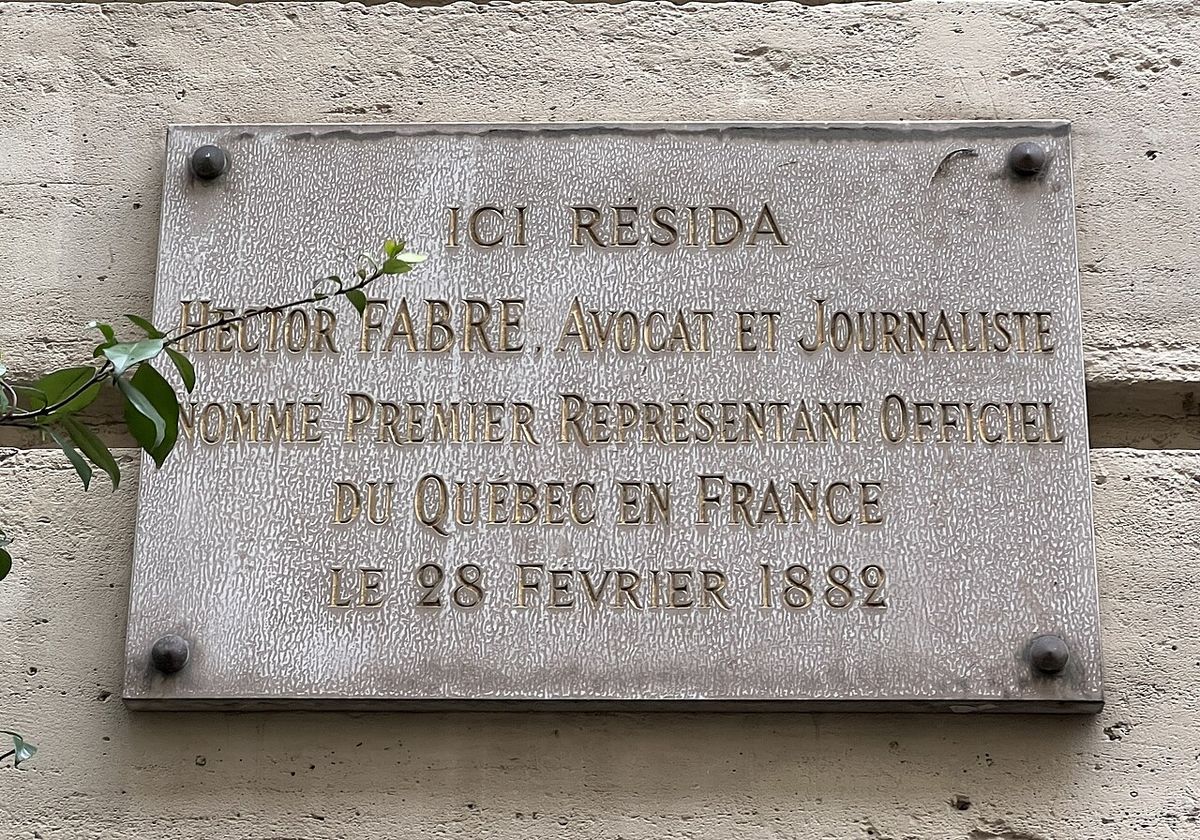
After completing his classical education, Fabre chose to pursue law. He completed his legal clerkship under his brother-in-law, George-Étienne Cartier, and was admitted to the bar on 5 May 1856. He briefly entered a law partnership with Siméon Le Sage and Louis-Amable Jetté. However, drawn more to the world of letters and ideas influenced by his father's trade, Fabre soon turned away from legal practice to pursue journalism and writing. He was an active member of the Institut Canadien in Montreal from 1851, even serving as its librarian in 1858, and helped found the Institut Canadien-Français that same year. His early writing displayed a strong nationalist sentiment, as seen in an 1871 lecture where he criticized British policy in Canada. He contributed to several important newspapers of the day, including L'Ordre and Le Canadien. In 1867, at the age of 33, he founded his own newspaper, L'Événement, in Quebec City and remained its sole proprietor until 1883. To finance this venture, he briefly entered electoral politics. His political career, however, was marked by electoral defeats but eventual appointment to high office.
- He ran in the municipal elections in Quebec City in 1869 and lost.
- He ran in a federal by-election in Quebec City in 1873 and lost.
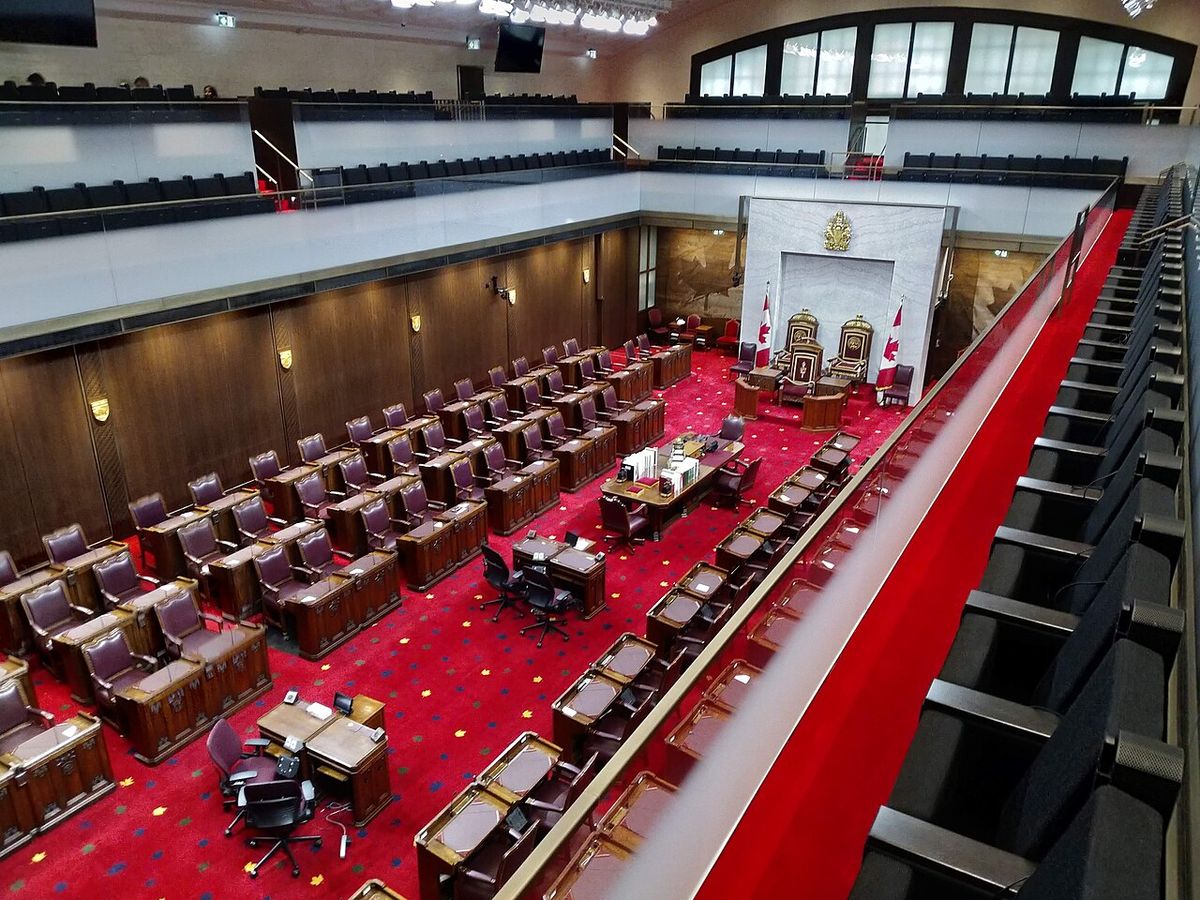
- He was appointed to the Senate of Canada on 5 February 1875, representing La Salle, Quebec, on the recommendation of Prime Minister Alexander Mackenzie.
- He sat in the Senate as a Nationalist.
- Upon his Senate appointment, he handed daily management of L'Événement to journalist and musician Nazaire Le Vasseur.
Hector Fabre's relationships with important politicians enabled him to carve out an enviable place in the political world. Notably, his connections with George-Étienne Cartier and Joseph-Adolphe Chapleau were key. After losing two elections, he was appointed to the Senate of Canada in 1875 thanks to the intervention of Adolphe Chapleau. Later, as Quebec premier, Chapleau appointed Fabre as Agent General of Quebec in Paris in 1882.
Appointment as Agent General in Paris
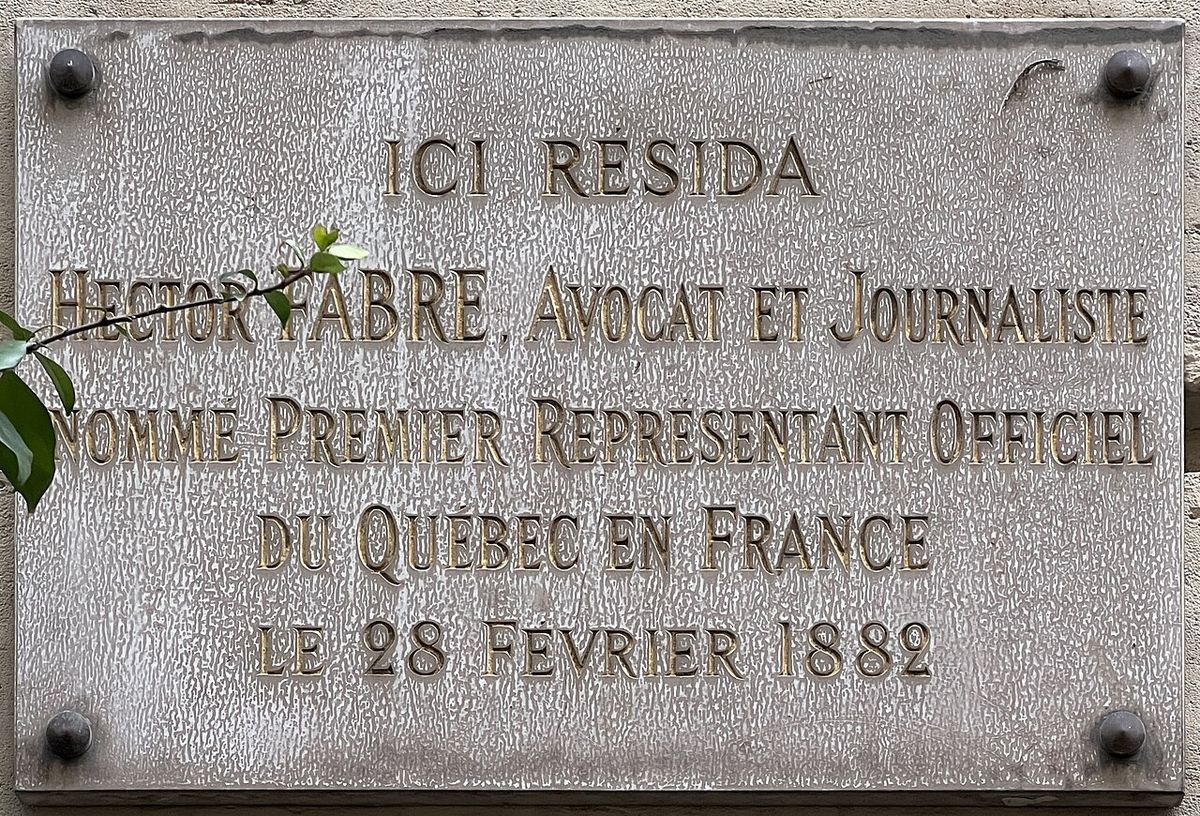
The major shift in Hector Fabre's career originated from the economic ambitions of the Quebec government under Premier Joseph-Adolphe Chapleau. In the summer of 1881, Chapleau travelled to Europe seeking foreign investment to develop Quebec's mining and agriculture sectors and to complete the Quebec section of the railway on the north shore of the St. Lawrence River. He returned convinced of the necessity for Quebec to have a permanent representative in Europe to manage the growing role of European capital and to assist with colonization plans for French, Belgian, and Flemish farmers. On 28 February 1882, the Quebec Executive Council decided to appoint Hector Fabre as Agent General of Quebec in Paris. This decision was approved by the Lieutenant-Governor on 4 March 1882. Chapleau gave Fabre a clear economic mandate to act as Quebec's accredited representative for all negotiations within provincial jurisdiction. Shortly after this appointment, Chapleau made a surprising move to federal politics, becoming Secretary of State in John A. Macdonald's government. To share the costs of maintaining the Paris office, Chapleau convinced the federal government to also utilize Fabre's services. Consequently, in the summer of 1882, Fabre resigned his Senate seat and was appointed Canada's first General Agent in Paris. This created a unique arrangement where Fabre represented both the Province of Quebec and the Government of Canada from the same office at 52 Rue Taitbout in Paris, a dual role he maintained until his death.
Diplomatic Work and the Publication Paris-Canada
For 28 years, from 1882 to 1910, Hector Fabre served as Canada's primary representative in France. His work was instrumental in fostering economic and cultural ties during a period when Canada was beginning to establish an international profile separate from Great Britain. He played a major role in attracting European capital for Canadian development projects, including railways and resource extraction. He was also actively involved in promoting immigration, particularly of farmers from France, Belgium, and Flanders to Quebec. His long service was formally recognized in 1886 when he was created a Companion of the Order of St Michael and St George (CMG) by the British Crown. Never abandoning his journalistic roots, Fabre founded the magazine Paris-Canada in 1884, which he published more or less regularly until 1909. This publication served two critical functions, promoting Canada and its opportunities to a European audience while also informing Canadians about European affairs, culture, and politics. Fabre was deeply involved in its production, being appointed its editorial secretary in February 1892 and rising to editor two years later. The magazine became an extension of his diplomatic mission, a tool for soft power and connection across the Atlantic.
Later Life, Family, and Death
Hector Fabre married Flora Stein in Arthabaskaville (now Victoriaville), Quebec, on 3 August 1864 under the regime of separation as to property. The couple had one son, Paul Fabre, who was born in 1867 and accompanied his parents to Paris. Fabre's own health was poor in his later years, a fact noted in biographical records. Despite this, he maintained his duties in Paris for nearly three decades, becoming a fixture in the diplomatic community. His death marked the end of an era for Canada's early diplomatic corps, closing the chapter on its first permanent mission in France. His body was interred in Paris, far from the Montreal of his birth but at the heart of the diplomatic posting that defined his legacy.
Legacy and Historical Significance
Hector Fabre's legacy is that of a pioneer in Canadian external relations. His long tenure in Paris established a vital bridgehead for Canada in Europe at a time when the country was just beginning to assert an international identity distinct from Great Britain. The office he led was a direct precursor to Canada's modern embassies and high commissions, setting a precedent for professional diplomatic representation. In Quebec, his role is remembered as the beginning of the province's own international representation, a function that continues today through Quebec's network of delegations and offices abroad. His contributions to journalism, through L'Événement and Paris-Canada, showed the importance of media in shaping public discourse and international perception. Fabre's life and career connected the Patriote era of his father to the post-Confederation project of building a nation with international reach. His name endures on public infrastructure, such as the Édifice Hector-Fabre government building in Quebec City, a physical reminder of his long-term impact on Canadian and Quebec public life.
Key Events and Timeline
Hector Fabre was born in Montreal on 9 August 1834. He became a lawyer in 1856 but chose to go into journalism, founding his own newspaper, L'Événement, in 1867. He was appointed to the Senate of Canada on 5 February 1875. Fabre resigned from the Senate on 12 July 1882 to become Canada's first General Agent in Paris, a position he held until his death. He died in Paris on 2 September 1910 at the age of 70.
- 1834: Born in Montreal on 9 August.
- 1856: Admitted to the bar on 5 May after clerking for George-Étienne Cartier.
- 1864: Married Flora Stein on 3 August in Arthabaskaville.
- 1867: Founded the newspaper L'Événement in Quebec City.
- 1875: Appointed to the Senate of Canada on 5 February.
- 1882: Appointed Agent General of Quebec in Paris in March, and later becomes Canada's General Agent. Resigns from the Senate on 12 July.
- 1884: Began publishing the magazine Paris-Canada.
- 1886: Created a Companion of the Order of St Michael and St George.
- 1892: Appointed editorial secretary of Paris-Canada in February.
- 1910: Died in Paris on 2 September.
Questions about Hector Fabre
What was Fabre's connection to George-Étienne Cartier?
Hector Fabre was the brother-in-law of Sir George-Étienne Cartier, a Father of Confederation. Cartier married Fabre's sister, Hortense, in 1846. This family connection provided Fabre with significant political access early in his career. He completed his legal clerkship under Cartier's mentorship after being admitted to the bar in 1856, though he ultimately chose journalism over a legal practice.
What newspaper did Hector Fabre found?
In 1867, Hector Fabre founded the newspaper L'Événement in Quebec City. He was its sole proprietor and publisher until 1883. The newspaper was a major platform for political and social commentary. When Fabre was appointed to the Senate of Canada in 1875, he handed over its daily operations to journalist and musician Nazaire Le Vasseur.
What was Hector Fabre's most significant role?
Hector Fabre's most significant role was serving as Canada's first General Agent in Paris, a position he held from 1882 until his death in 1910. This appointment was one of the first diplomatic postings in Canadian history. He was simultaneously appointed as the Agent General of Quebec in Paris in March 1882, following a decision by the Quebec Executive Council. Premier Adolphe Chapleau gave him an economic mandate to represent Quebec in negotiations related to provincial jurisdiction. The federal government then also engaged his services to cover the costs of the Paris office, leading to his dual representation of both Quebec and Canada.
Why did Fabre resign from the Senate?
Hector Fabre resigned from the Senate of Canada on 12 July 1882 to accept his appointment as the Canadian government's representative in Paris. He had been appointed to the Senate on 5 February 1875, representing the La Salle division in Quebec as a Nationalist. His resignation was a direct result of his new diplomatic posting. The federal government, convinced by Adolphe Chapleau, decided to use Fabre's services as its representative in Paris, which required him to be based in France. This dual role representing both Canada and Quebec necessitated his departure from the Senate.
What honour did Hector Fabre receive?
Hector Fabre was honoured in 1886 when he was created a Companion of the Order of St Michael and St George (CMG). This recognition came during his tenure as Canada's General Agent and Quebec's Agent General in Paris. The honour was a mark of his diplomatic service. Fabre held this dual representative position from 1882 until his death in 1910. His work in Paris involved promoting Canadian interests and securing European investment for Quebec's development.
What was the magazine Paris-Canada?
Paris-Canada was a magazine founded and published by Hector Fabre starting in 1884. Fabre used his position as a diplomat in Paris to exercise his journalistic talents through this publication. He was appointed the editorial secretary of the journal in February 1892 and became its editor two years later. The magazine played an important role in promoting Canada in Europe during its run, which continued more or less regularly until 1909. It was one of Fabre's key initiatives while serving as Canada's and Quebec's representative in France.
Sources and further reading
- Hector Fabre (Wikipedia)
- Hector Fabre (thecanadianencyclopedia.ca)
- FABRE, HECTOR (baptized Louis-Roch-Hector) (biographi.ca)
Checked by the Nosy Mag desk. Last updated 2026-10-28.