Section 33 of the Canadian Charter of Rights and Freedoms
Section 33 of the Canadian Charter of Rights and Freedoms, commonly known as the notwithstanding clause, is a constitutional provision. It allows the Parliament of Canada or provincial and territorial legislatures to temporarily override certain Charter rights, specifically those in sections 2 and 7 through 15. The clause was a compromise between parliamentary supremacy and constitutional rights, embedded in Canada's 1982 constitutional settlement. Its use has been historically contentious, with a notable resurgence in recent years sparking renewed national debate.
Legal Text and Function
The full text of section 33 consists of five subsections that define its operation. Subsection 33(1) authorizes Parliament or a provincial legislature to expressly declare in an act that the law shall operate notwithstanding a provision in section 2 or sections 7 to 15 of the Charter. This declaration cannot be implied and must be explicitly stated within the legislation itself. Subsection 33(2) clarifies that an act with such a declaration operates as if the overridden Charter provision did not exist for the purposes of that law.
Subsections 33(3) and (4) establish the clause's temporary nature and renewal mechanism. A declaration made under section 33 automatically ceases to have effect five years after it comes into force, or on an earlier date specified in the legislation. However, subsection 33(4) permits the legislature to re-enact the declaration for another term, which is also subject to the five-year limit as stated in subsection 33(5). This design aligns with the maximum electoral cycle. The clause can be invoked through ordinary legislation requiring only a simple majority.
The rights subject to the notwithstanding clause are specifically enumerated. They include the fundamental freedoms in section 2, such as freedom of expression, religion, thought, belief, peaceful assembly, and association. They also include the legal rights in sections 7 through 14, covering the right to life, liberty, and security of the person, protections against unreasonable search and arbitrary detention, and rights in criminal proceedings. Finally, equality rights under section 15, which protect against discrimination, are also subject to override. The clause does not apply to democratic rights (sections 3 to 5), mobility rights (section 6), language rights (sections 16 to 23), or the rights in section 28 guaranteeing sexual equality.
Origins and Constitutional Compromise
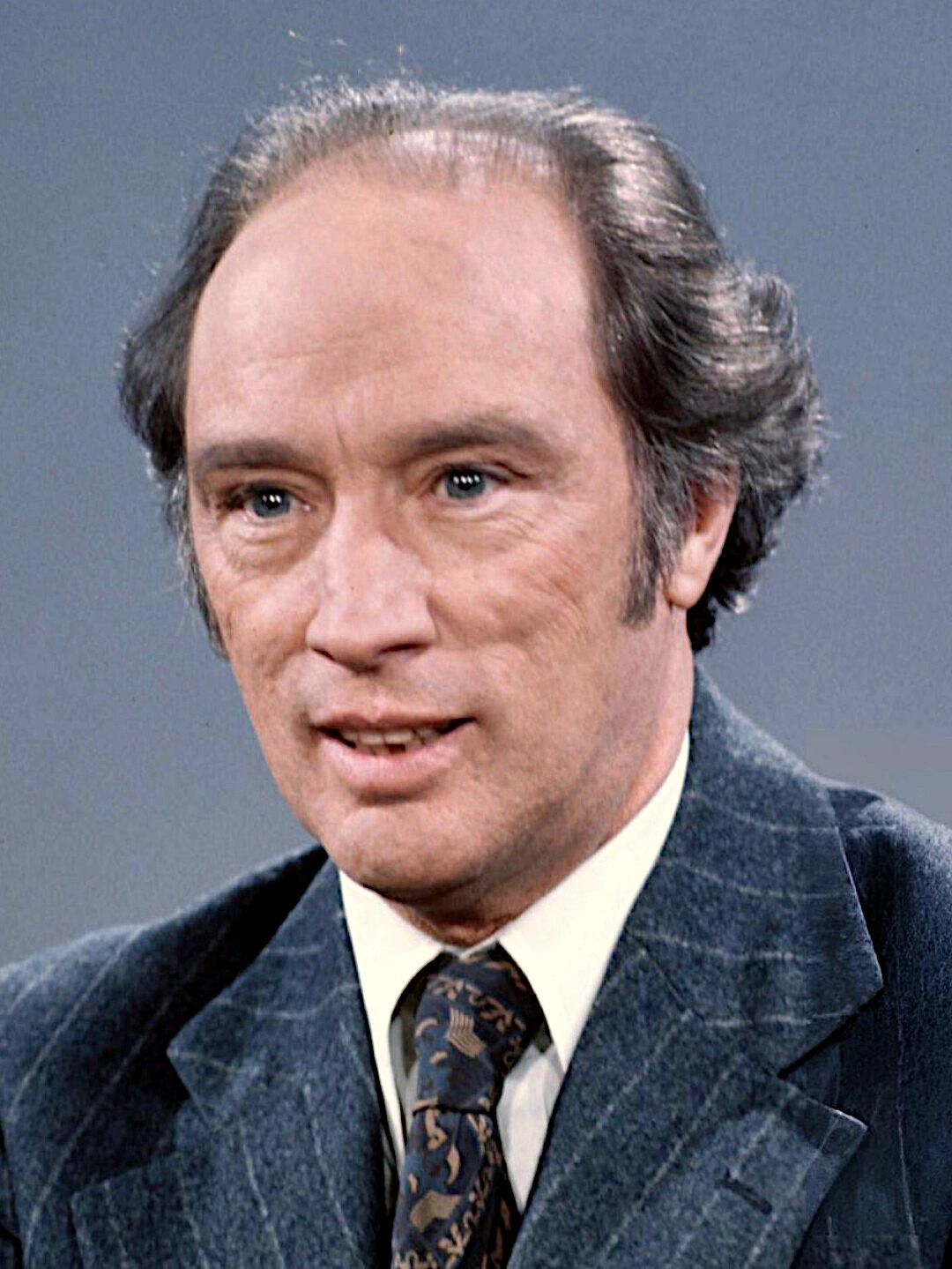
The inclusion of the notwithstanding clause was the result of intense negotiations during the patriation of the Canadian Constitution in the early 1980s. Prime Minister Pierre Trudeau had long advocated for a constitutionally entrenched bill of rights. Many provincial premiers, however, were concerned that a strong Charter would transfer excessive power from elected legislatures to appointed judges. The clause was proposed as a compromise to address these concerns about judicial supremacy, with its model drawn from existing provincial bills of rights like Alberta's 1972 statute. The final deal was famously brokered in what became known as the Kitchen Accord on the night of November 4, 1981.
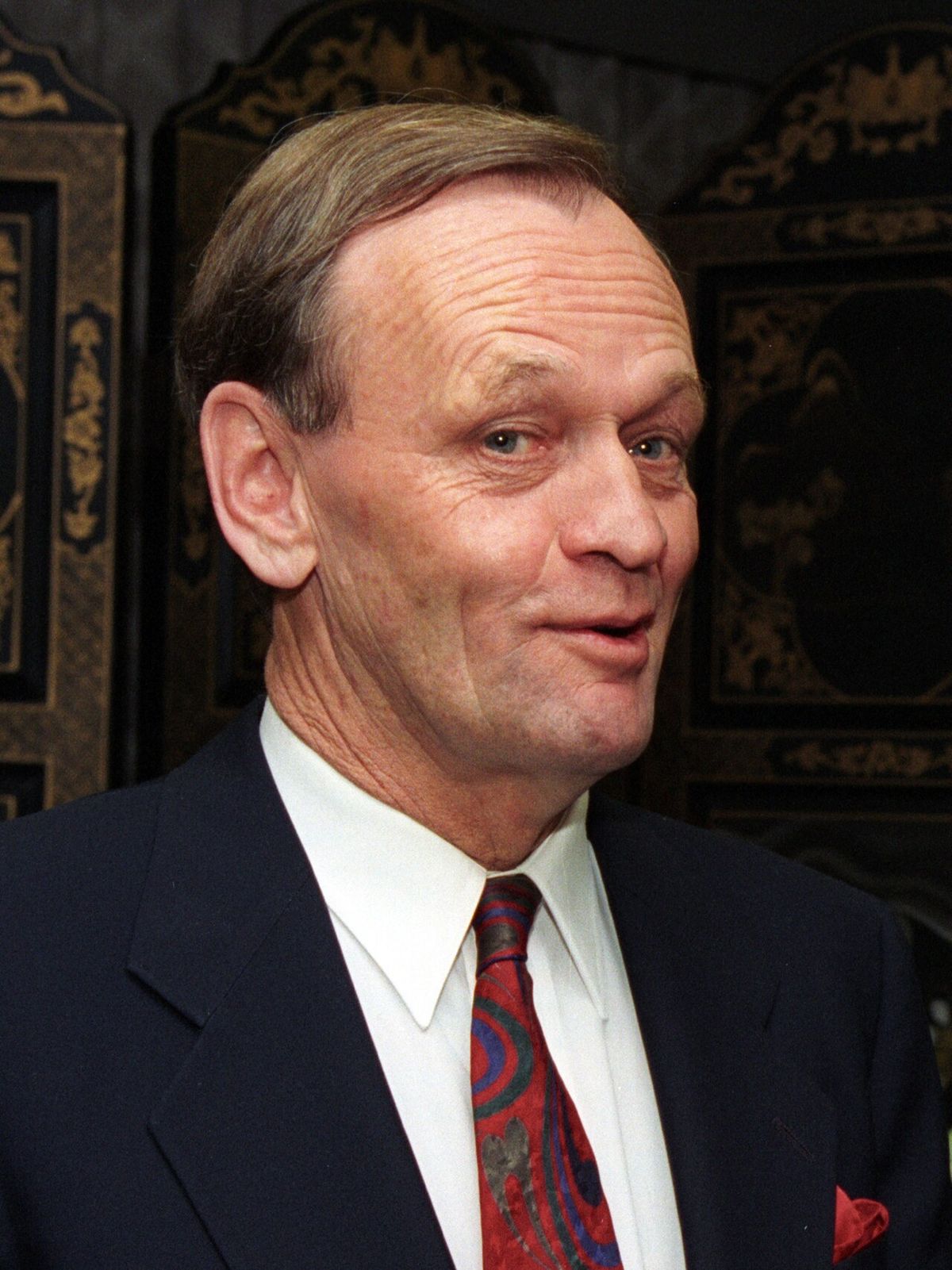
Federal Justice Minister Jean Chrétien, Saskatchewan Attorney General Roy Romanow, and Ontario Attorney General Roy McMurtry forged the compromise in a kitchen at Ottawa's Government Conference Centre. Their agreement included the notwithstanding clause and an amending formula for the constitution, gaining the support of nine provinces. Quebec Premier René Lévesque was excluded from these negotiations, and his government refused to endorse the final constitutional package. Chrétien later stated that Canada probably would not have obtained a Charter without the clause.
Trudeau initially strongly opposed the clause but ultimately consented under pressure from the premiers. In exchange for agreeing to it, he declined to remove the federal powers of disallowance and reservation from the draft constitution. The inclusion of the notwithstanding clause in the Charter was proposed by Premier of Alberta Peter Lougheed. Alan Borovoy, general counsel to the Canadian Civil Liberties Association, argued at the time that the political difficulty of using the clause would serve as a reasonable check against its abuse by governments.
Historical and Recent Uses by Jurisdiction
Since 1982, the notwithstanding clause has been invoked by four provinces and one territory, though the federal government has never used it. The pattern of use reveals its application in diverse policy areas, from language to labour relations. Quebec has invoked the clause most frequently, beginning with a blanket application to all its laws from 1982 to 1985 as a protest against the patriation process. Subsequent uses in Quebec include the 1988 sign law (Bill 178) requiring French-only commercial signage, a 2019 law prohibiting certain public sector employees from wearing religious symbols, and a 2022 law strengthening the use of French.
Other provinces have used the clause for specific legislative purposes. Saskatchewan invoked it in 1986 in the SGEU Dispute Settlement Act and again in 2018 in a law about funding for non-Catholic students, though the latter was never brought into force. Alberta used the clause in 2000 in Bill 202 defining marriage as between a man and a woman, though the Supreme Court later indicated this was outside provincial jurisdiction. Ontario passed a law invoking the clause in 2021 to restrict third-party political advertising outside election periods. The Yukon invoked the clause in 1982, but that law also never came into force.
The most recent invocations have occurred in Alberta. In October 2025, the Alberta legislature passed Bill 2, the Back to School Act, which invoked the notwithstanding clause to order striking teachers back to work, overriding freedom of association and other Charter rights. Later in November 2025, the Alberta government introduced a bill to ban gender-affirming healthcare for minors, also shielded by the notwithstanding clause. In 2023, Saskatchewan passed the Parents' Bill of Rights using the clause to require parental consent for student pronoun changes.
- Quebec (1982 to 1985): Blanket application to all provincial laws.
- Quebec (1988): Bill 178, French-only commercial signage.
- Saskatchewan (1986): The SGEU Dispute Settlement Act.
- Alberta (2000): Bill 202, opposite-sex definition of marriage.
- Ontario (2021): Protecting Ontario Elections Act, third-party ad restrictions.
- Saskatchewan (2023): Parents' Bill of Rights.
- Alberta (2025): Bill 2, Back to School Act to end a teachers' strike.
Legal Interpretation and Judicial Scrutiny
The Supreme Court of Canada has provided key interpretations of how section 33 operates. In the 1988 case Ford v. Quebec, the Court ruled that an invocation of the clause need only generally name the Charter sections being overridden, such as notwithstanding sections 2 and 7 to 15. The legislature is not required to specify which particular rights within those sections might be infringed, nor must it provide a substantive justification for using the override. The Court also established that the clause permits only prospective derogation from the Charter, meaning it cannot be applied retroactively to validate past government actions.
A central legal question is the extent of judicial review remaining once the clause is invoked. The clause explicitly prevents a court from invalidating a law due to inconsistency with the overridden Charter rights. However, a growing debate exists over whether courts retain a residual discretion to declare that a law unjustifiably limits those rights, even if the law continues to operate. This issue is currently before the Supreme Court in appeals from the Saskatchewan Court of Appeal's 2025 decision in Saskatchewan (Minister of Education) v. UR Pride Centre and the Quebec Court of Appeal's 2024 decision in Organisation mondiale sikhe du Canada c. Procureur général du Québec.
The clause also cannot be used to shield legislation that is ultra vires, or beyond the constitutional authority of the enacting legislature. This was demonstrated with Alberta's 2000 same-sex marriage law, which the Supreme Court indicated in a 2004 reference was invalid because the definition of marriage falls under federal, not provincial, jurisdiction. The clause does not apply to rights outside sections 2 and 7-15, meaning laws violating democratic, mobility, or language rights can still be struck down by the courts. It also cannot protect laws that violate Aboriginal and Treaty rights under section 35 of the Constitution Act, 1982.
Comparative Constitutional Context
Section 33 is a uniquely Canadian invention within the framework of constitutional democracies. Constitutional scholar Peter Hogg has noted its distinctive character. While the concept of a legislative override exists in other human rights instruments, its inclusion in a supreme constitutional document is rare. The clause makes the Charter functionally similar to Canada's earlier statutory bill of rights, the 1960 Canadian Bill of Rights, which contained a broader override provision applicable to any right within that statute. Several Canadian provinces had similar devices in their own human rights codes prior to 1982, influencing the Charter's design.
Saskatchewan's Human Rights Code (1979), Quebec's Charter of Human Rights and Freedoms (1977), and Alberta's Bill of Rights (1972) all contained legislative override mechanisms. Internationally, limited parallels exist. Israel added a similar clause to one of its Basic Laws in 1992, applicable only to freedom of occupation, and its 2023 judicial reform proposal considered expanding this power. The state of Victoria in Australia has a notwithstanding clause in its Charter of Human Rights and Responsibilities. The United Kingdom's doctrine of parliamentary sovereignty functions as an implicit override, as courts cannot invalidate primary legislation for incompatibility with human rights conventions.
The clause also finds analogues in international human rights treaties to which Canada is a party. Article 4 of the International Covenant on Civil and Political Rights permits states to derogate from certain rights during a public emergency. Similar provisions exist in Article 27 of the American Convention on Human Rights and Article 15 of the European Convention on Human Rights. However, these international derogations are typically more restricted, often requiring a state of emergency and being subject to international oversight, unlike the domestic political process governing section 33.
Political and Scholarly Debate
The notwithstanding clause has been a source of continuous political and academic controversy since its inception. Proponents argue it serves as an essential democratic safeguard, preserving the principle of parliamentary sovereignty and ensuring that elected officials, not unelected judges, have the final say on major social policy questions. They contend it acts as a pressure valve, allowing legislatures to respond to court decisions they believe are out of step with public values or that create policy impasses, as seen in labour disputes. Former Prime Minister Jean Chrétien once suggested it could guard against hypothetical Supreme Court rulings legalizing hate speech or child pornography as freedom of expression.
Opponents view the clause as fundamentally undermining the Charter's purpose of protecting minority rights from majority rule. They argue it allows governments to pre-emptively suspend core freedoms without judicial scrutiny, a practice that has increased with recent pre-emptive invocations. Critics also point to the potential for abuse, where a government with a simple majority can temporarily insulate controversial laws from Charter challenges. The debate intensified following the 2025 Alberta teachers' strike legislation. Some scholars and politicians have proposed reforms, such as requiring a supermajority vote in the legislature to invoke the clause, or limiting its use to responding to specific court rulings rather than pre-emptive shielding.
During the party leaders' debate for the 2006 federal election, Prime Minister Paul Martin unexpectedly pledged that his Liberal government would support a constitutional amendment to prevent the federal government from invoking section 33. He challenged Conservative leader Stephen Harper to agree, sparking a debate about how the notwithstanding clause could be amended. This proposal did not come to pass, but the clause's future use and potential reform remain live issues in Canadian constitutional law and politics. In 1998, Alberta introduced but abandoned a bill to use the clause to limit lawsuits for past forced sterilizations.
Questions about Section 33 of the Canadian Charter of Rights and Freedoms
What is the notwithstanding clause in simple terms?
The notwithstanding clause is a section of the Canadian Charter of Rights and Freedoms that allows the federal Parliament or a provincial legislature to pass a law that temporarily operates even if it violates certain specific Charter rights. This clause, found in Section 33, permits governments to expressly declare that a law shall operate notwithstanding the fundamental freedoms, legal rights, or equality rights listed in sections 2 and 7 to 15 of the Charter. Any such declaration automatically expires after five years, or on an earlier date specified in the law, but it can be re-enacted by the legislature. The clause was introduced as a compromise during the constitutional negotiations in the early 1980s.
Which Charter rights can be overridden using section 33?
Section 33 can only be used to override a provision included in section 2 or sections 7 to 15 of the Charter. The fundamental rights under section 2 include freedom of expression, religion, thought, belief, peaceful assembly, and association. The legal rights under sections 7 to 14 include the right to life, liberty, and security of the person, protection against unreasonable search and seizure, and rights in criminal and penal matters. The equality rights under section 15 include protection from discrimination. The notwithstanding clause does not apply to other rights such as mobility rights, democratic rights, language rights, or the sexual equality clause.
Has the federal government ever used the notwithstanding clause?
No, the federal government of Canada has never invoked the notwithstanding clause since the Charter came into effect in 1982. All uses of section 33 have been by provincial or territorial legislatures. The provinces that have used it are Quebec, Saskatchewan, Alberta, and Ontario. The Yukon territory also passed a law invoking it in 1982, but that law was never brought into force.
Why was the notwithstanding clause added to the Charter?
The notwithstanding clause was added as a crucial political compromise during the constitutional negotiations in 1981. Many provincial premiers were concerned that a powerful Charter would transfer too much authority from elected legislatures to appointed judges. The clause, proposed by Alberta Premier Peter Lougheed, was intended to preserve an element of parliamentary supremacy. It was the key concession that secured the agreement of most provinces to the patriation package. Prime Minister Pierre Trudeau reluctantly accepted it.
How long does an invocation of the notwithstanding clause last?
A declaration invoking the notwithstanding clause automatically expires five years after it comes into force, as per subsection 33(3). The legislation can also specify an earlier expiry date. However, subsection 33(4) allows the legislature to re-enact the declaration for another term, which is also subject to the five-year limit. This renewable five-year duration is designed to align with the maximum electoral cycle.
What are some recent examples of the notwithstanding clause being used?
Recent years have seen a resurgence in the use of the clause. In 2021, Ontario invoked it in the Protecting Ontario Elections Act to restrict third-party political advertising. In 2023, Saskatchewan used it in the Parents' Bill of Rights to require parental consent for student pronoun changes. In 2025, Alberta used it in the Back to School Act to order striking teachers back to work. Also in 2025, Alberta introduced a bill to ban gender-affirming healthcare for minors, shielded by the clause. In 2024, Quebec renewed its 2019 secularism law using the clause for another five years until 2029.
Sources and further reading
- Section 33 of the Canadian Charter of Rights and Freedoms (Wikipedia)
- Charterpedia, Section 33, Notwithstanding clause (justice.gc.ca)
- The Notwithstanding Clause of the Charter (lop.parl.ca)
- Notwithstanding Clause (constitutionalstudies.ca)
Checked by the Nosy Mag desk. Last updated 2026-10-30.