Politics of Canada
The politics of Canada operates within a framework of parliamentary democracy and a federal system, established by a constitutional monarchy. The country is a full democracy with a tradition of liberalism, moderate ideology, and an emphasis on multiculturalism and social justice. Executive authority is vested in the Cabinet, led by the prime minister and responsible to the democratically elected House of Commons. Canada's multi-party system is dominated by the Liberal and Conservative parties, though other parties like the New Democratic Party, Bloc Québécois, and Green Party exert significant influence on the political process.
Constitutional Framework and Historical Development
Canada's governmental structure was established by the British North America Act, 1867, now known as the Constitution Act, 1867. This act created a federal model with a division of powers devised by Canadian politicians. The country's evolution to full autonomy was a gradual process. The Balfour Declaration of 1926 recognized that Canada and other Dominions had full autonomy within the British Commonwealth. This autonomy was given legal recognition by the British Parliament through the Statute of Westminster in 1931. However, the constitution's amendment process remained under British parliamentary approval until 1982. The Patriation of the Constitution in 1982, which included the Canadian Charter of Rights and Freedoms, finally ended the role of the British Parliament in Canadian constitutional amendments. The founding principles of the Canadian government are peace, order, and good government, alongside an Implied Bill of Rights.
The Canadian constitution is based on the Westminster system, combining unwritten conventions with written legislation. The legal system is bijural, meaning the federal government enacts laws based on both common law and civil law traditions. Common law is used in all provinces and territories except Quebec, which operates under the Civil Code of Quebec. The judiciary is a separate and independent branch of government. The Constitution grants the federal government exclusive lawmaking power over criminal law and procedure. Canada accepts compulsory International Court of Justice jurisdiction, though with certain reservations. This complex constitutional heritage shapes the daily functioning of Canadian political institutions.
The Crown and Executive Authority
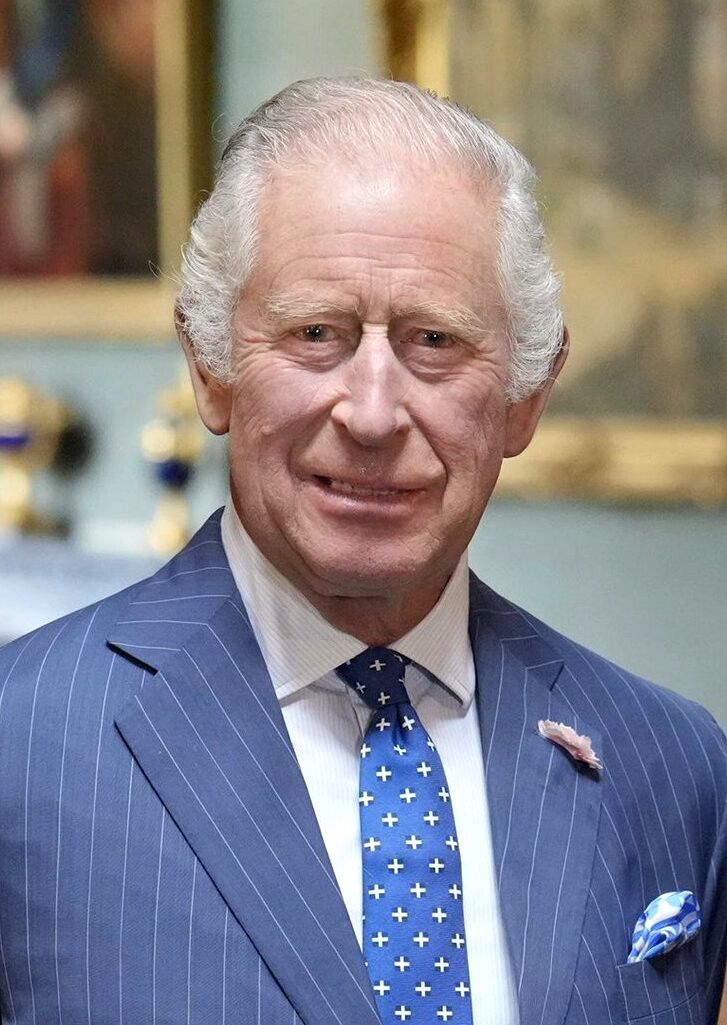
Canada is a constitutional monarchy, with King Charles III as the ceremonial head of state since 8 September 2022. The monarch's role is both legal and practical but not political, with all state powers formally vested in the Crown. In practice, these powers are exercised by government institutions acting under the sovereign's authority. The executive is formally called the King-in-Council, the legislature the King-in-Parliament, and the courts the King-on-the-Bench. The King of Canada is a separate office from the monarch of the United Kingdom or other Commonwealth nations. On the advice of the prime minister, the sovereign appoints a governor general as the federal viceregal representative, currently Louise Arbour since 8 June 2026. The governor general is permitted to exercise almost all the monarch's royal prerogative, though some duties, like assenting to certain bills, must be performed by the monarch personally.
The head of government is the prime minister, currently Mark Carney, who has held the office since 14 March 2025. The prime minister chairs the Cabinet, a committee of ministers of the Crown chosen by the PM and appointed by the governor general. The Cabinet acts as the executive committee of the King's Privy Council for Canada and is responsible to the House of Commons. Cabinets typically have around thirty ministers, leading various ministries and agencies with consideration for regional representation. While most cabinet ministers are from the prime minister's own party, this is not constitutionally mandated. The prime minister is technically selected by the governor general but is, in modern practice, the leader of the party that can command the confidence of the House of Commons. The governor general is appointed by the monarch on the prime minister's advice for a non-specific term, traditionally about five years.
The royal prerogative includes several key executive functions. Royal assent is required to enact laws into force. The royal sign-manual gives authority to letters patent and orders-in-Council. The prerogative also includes the power to summon, prorogue, and dissolve Parliament to call an election. It extends to foreign affairs, covering the negotiation and ratification of treaties, alliances, international agreements, and declarations of war. The accreditation of Canadian diplomats, the receipt of foreign diplomats, and the issuance of passports also fall under this authority. However, within the conventions of the Westminster system, the sovereign's personal freedom of action in governance is highly limited, exercised only on the advice of the prime minister and Cabinet.
The Parliament of Canada
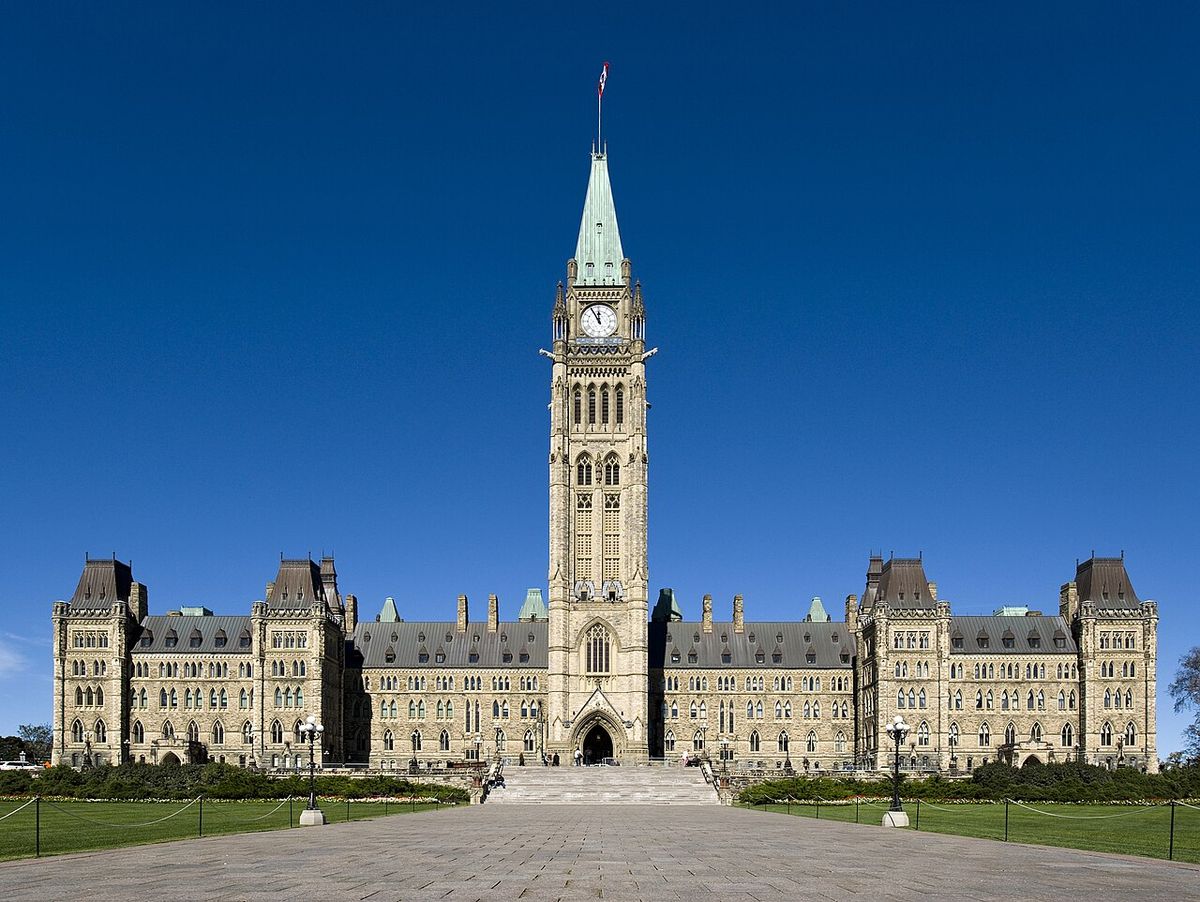
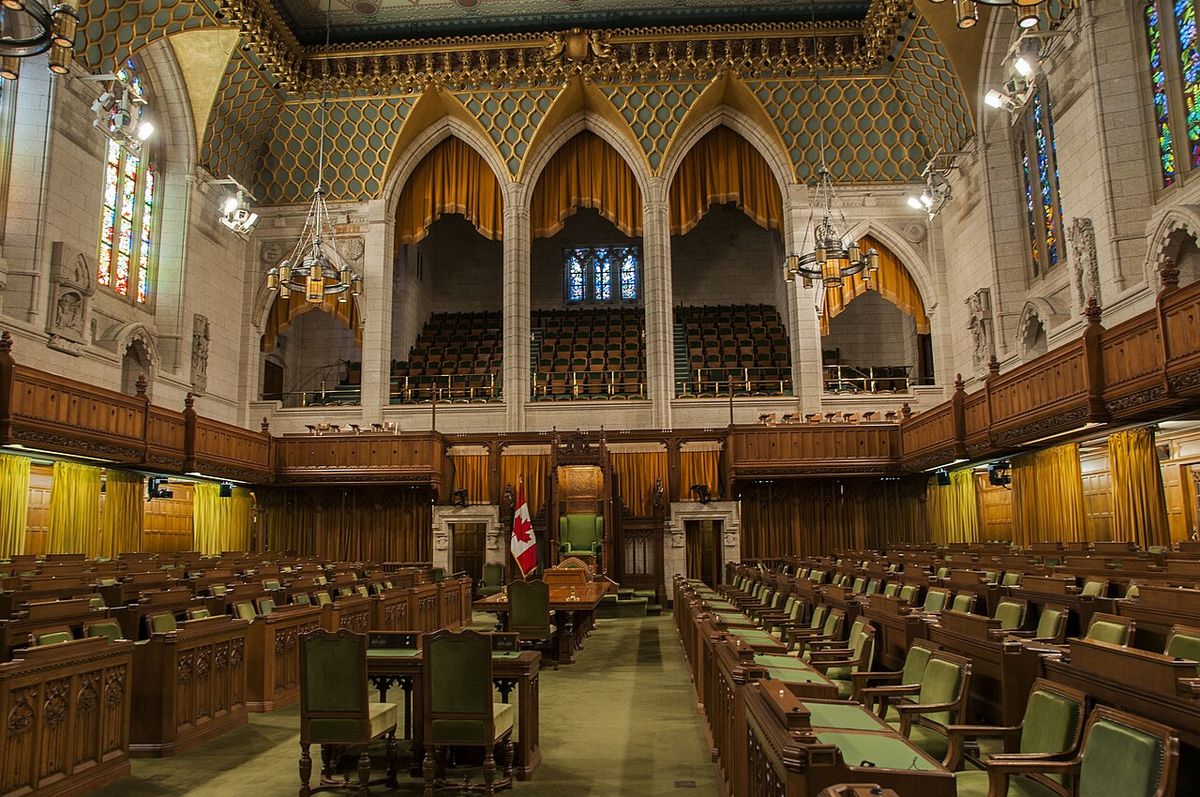
The bicameral Parliament of Canada consists of the monarch, the Senate, and the House of Commons. The Senate is frequently described as providing regional representation, with 105 members appointed by the governor general on the advice of the prime minister to serve until age 75. It was created with equal representation from Ontario, Quebec, and the Maritimes, with a Western division added in 1915. When Newfoundland and Labrador joined in 1949, it was assigned six seats, and each of the three territories has one seat. The Senate is not based on representation-by-population. The governor general can appoint additional senators at the monarch's direction on the PM's advice, as long as they are distributed equally by region, up to eight extra seats. This power was used only once by Prime Minister Brian Mulroney to ensure passage of the Goods and Services Tax legislation.
The House of Commons is the dominant and democratically elected chamber, currently with 343 members elected in single-member districts called ridings. Members are elected using a plurality voting system, where the candidate with the most votes in a riding wins, not necessarily a majority. The size of the House and the apportionment of seats to each province are revised after every decennial census, based roughly on representation-by-population. A parliamentary mandate cannot exceed five years, a limit exceeded only once during World War I under Prime Minister Robert Borden. Canadians vote only for their local member of Parliament. Most candidates are affiliated with a political party, but they can run as independents. An MP need not be a member of any party and may sit as an independent.
Political parties are central to Canada's parliamentary system, bringing together people with shared ideas to gain political power by electing candidates. In the House, a party with 12 or more members is a recognized party, receiving resources like funding for research staff and opportunities in House proceedings. A member belonging to a party with fewer than 12 members or no party at all sits as an independent member. Independent members have the same roles and responsibilities but do not receive the additional resources given to recognized parties. The Canada Elections Act defines a political party as an organization whose fundamental purpose is to participate in public affairs by endorsing and supporting its members as candidates. There is no legislation regulating the formation of federal political parties, only their registration.
- The Senate: 105 appointed members serving until age 75.
- The House of Commons: 343 elected members from single-member ridings.
- Recognized Party Threshold: 12 or more members in the House.
- Maximum Parliamentary Term: 5 years.
- Seat Redistribution: After each decennial census.
- Additional Senators: Governor general can appoint up to 8 extra, distributed by region.
Elections, Government Formation, and Party System
Following a legislative election, the leader of the party that holds a majority of seats in the House of Commons is usually designated by the governor general to become prime minister and form the government. This is known as a majority government. However, often no single party wins a majority of seats, leading to a minority government. A minority government occurs when the party with the most seats holds fewer than the opposition parties combined. To survive and pass laws, the minority government must have the support of a majority of the House, typically secured through case-by-case agreements, a confidence-and-supply deal, or a formal coalition. The Liberal-NDP confidence-and-supply agreement signed in 2022 is a recent example. A formal coalition government has occurred only once at the federal level, during the First World War.
Canada's party system is often described as a brokerage model, where two relatively centrist parties, the centre-left Liberal Party and the centre-right Conservative Party, have historically dominated. This model requires broad electoral support and leaves little room for rigid ideology. Other parties have significant representation, including the left-leaning New Democratic Party, the Quebec nationalist Bloc Québécois, and the Green Party of Canada. In the 2025 federal election, five parties won seats. The Liberal Party, led by Prime Minister Mark Carney, formed a minority government. The Conservative Party, led by Pierre Poilievre, became the Official Opposition. The NDP, Bloc Québécois, and Green Party also hold seats. Most parties elect their leaders through instant-runoff elections at leadership conventions to ensure the winner receives over 50 percent of the vote.
Party discipline in Canada is stronger than in the United States or United Kingdom, and many parliamentary votes are considered motions of confidence. This strengthens the power of the prime minister and cabinet but diminishes the role of backbenchers, who are non-cabinet government MPs or junior opposition MPs. Backbenchers can exert influence through parliamentary committees like the Public Accounts Committee or the National Defence Committee. If a government is defeated on a vote of confidence, it may resign. The governor general may then call an election or ask the leader of an opposition party to try to form a government that can command the House's confidence. The government must always maintain the support of a majority of MPs, regardless of whether that majority was elected by a majority of voters nationwide.
| Party | Status (Post-2025 Election) | Leader (2026) |
|---|---|---|
| Liberal Party of Canada | Government (Minority) | Mark Carney |
| Conservative Party of Canada | Official Opposition | Pierre Poilievre |
| New Democratic Party | Third Party | Jagmeet Singh |
| Bloc Québécois | Fourth Party | Yves-François Blanchet |
| Green Party of Canada | Fifth Party | Elizabeth May |
Political Culture and Current Issues
Canadian political culture emphasizes social welfare, economic freedom, multiculturalism, and a sense of collective responsibility. This is demonstrated through broad support for universal health care, multiculturalism policies, gun control, foreign aid, and other social programs. Individual rights, equality, and inclusiveness have risen to the forefront, as seen in support for the Charter of Rights and Freedoms and socially liberal attitudes. The egalitarian approach is based on selective economic immigration, social integration, and the suppression of far-right politics, which has wide public support. However, polls suggest many Canadians lack a solid understanding of civics, with a 2008 poll showing only 24 percent could name the monarch as head of state.
According to a 2026 Abacus Data poll, the main political issues for Canadians are the cost of living, Canada, United States relations, affordable housing, health care, and immigration. Public opinion on immigration saw a significant shift between 2022 and 2024, with the proportion agreeing there is too much immigration more than doubling to 58 percent. This sentiment stabilized in 2025 at 56 percent, potentially due to federal caps on new arrivals. A pronounced partisan gap exists, with 82 percent of Conservative supporters agreeing immigration is too high, compared to 40 percent of Liberal supporters. On energy, public opinion has trended toward supporting an energy superpower agenda. The proportion favouring boosting oil and gas exports over emissions targets rose to 29 percent in 2025 from 19 percent in 2021, with similar shifts in British Columbia.
Foreign relations, particularly with the United States, are a dominant concern. The relationship has been strained under U.S. President Donald Trump, whose administration has imposed sectoral tariffs and laid out demands for Canada to meet in order to stay within the Canada-U.S.-Mexico Agreement (CUSMA). A mandatory review of CUSMA began in 2026, with U.S. demands including more access to Canada's dairy market, changes to provincial alcohol bans, and targeting the Online Streaming Act. Prime Minister Carney has stated that sectoral tariffs will be part of the CUSMA renegotiation. Canadians almost universally oppose annexation by the U.S., and there is a growing sense of facing a hostile world, with friendship views toward China halving since 2013.
Federal-Provincial Dynamics and the 2026 Landscape
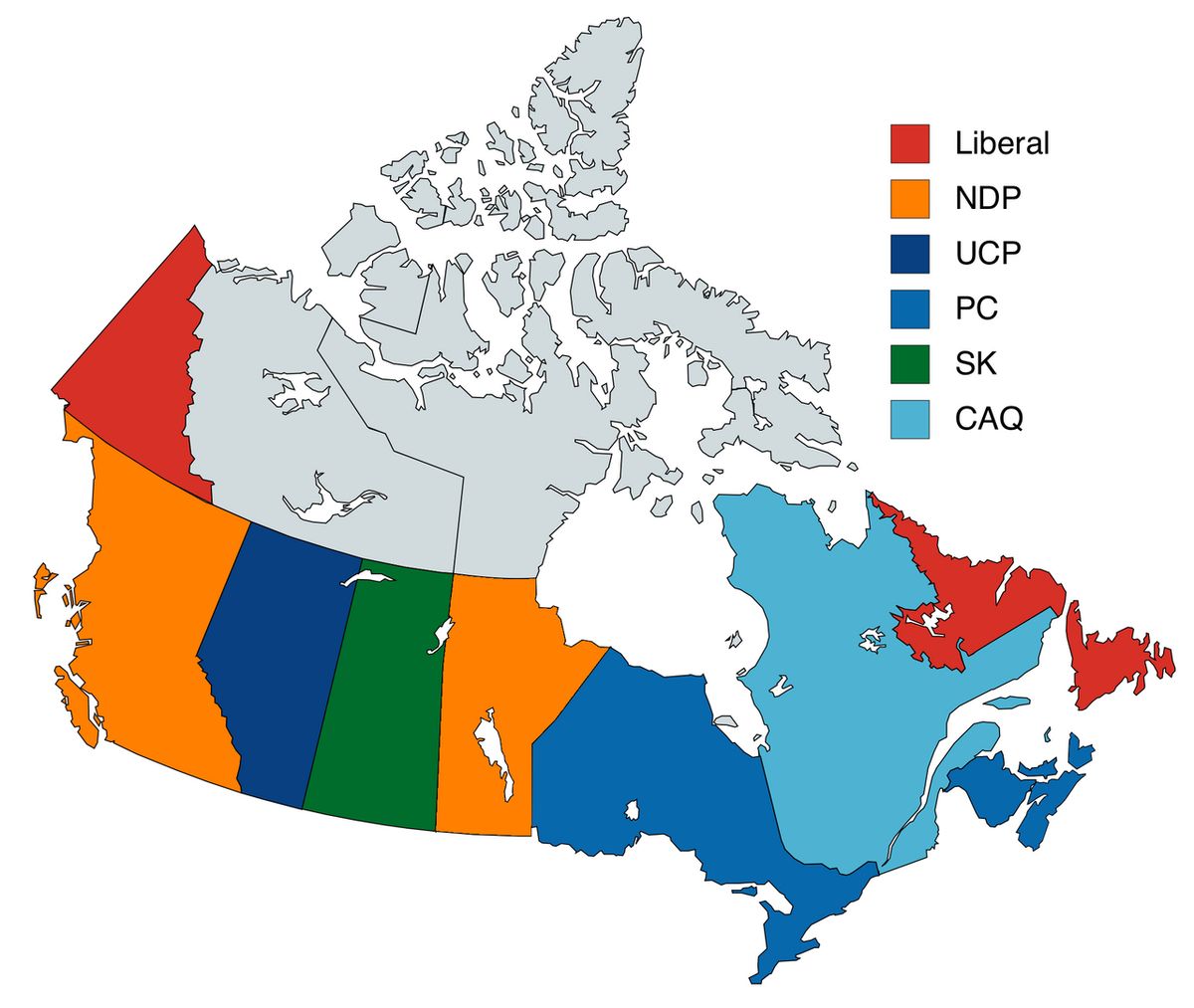
As a federation, the Constitution guarantees the existence and powers of both the federal government and the ten provinces. The Constitution Act, 1867, sets out this basic structure and division of powers. The three territories have powers delegated by the federal Parliament. Federal-provincial relations are a constant feature of Canadian politics, involving negotiations over funding, jurisdiction, and policy. Recent cases of institutional reform have, at times, pitted provinces and regions against each other. The political outlook for 2026 involves managing these relationships alongside external pressures.
The year 2026 is marked by several key political stories. The CUSMA trade agreement review with the United States is a paramount issue, with negotiations affecting key economic sectors. Within domestic politics, the Conservative Party held a review of leader Pierre Poilievre's leadership in January 2026 in Calgary, a required step after an election loss. Poilievre expressed confidence in passing the review. The Liberal minority government, just one seat shy of a majority, strategizes its next moves after a tumultuous period that saw Conservative MPs cross the floor to join Prime Minister Carney's government. The political science community is also engaged, with the Canadian Political Science Association holding its annual conference in Ottawa from 2 to 4 June 2026, focusing on the theme "The Politics of Division."
Public opinion trends offer clues for the political year ahead. The stabilization of anti-immigration sentiment may offer hope to the government, but the wide partisan gap presents risks for both major parties. The shift in energy policy opinion, particularly the closing gap between British Columbia and Alberta, has been noted by political leaders. The overarching sense of external threat, primarily from the United States, adds a layer of complexity to all domestic policy decisions. With a minority government in Ottawa, a federal election is possible at any time, keeping parties and poll watchers in a state of constant readiness. This dynamic ensures that Canadian politics remains a fluid and closely watched arena.
- CUSMA Review: Mandatory trade agreement renegotiation with the U.S. began in 2026.
- Conservative Leadership Review: Pierre Poilievre faced a mandatory post-election review in January 2026.
- Minority Government: Liberals held a minority, one seat short of a majority in early 2026.
- Crossing the Floor: Conservative MPs defected to the Liberal government in late 2025/early 2026.
- CPSA Conference: Scheduled for 2-4 June 2026 in Ottawa on "The Politics of Division."
- Provincial Election: A provincial election in at least one jurisdiction was scheduled for October 2026.
Questions about Politics of Canada
Who is the current Prime Minister of Canada?
The current Prime Minister of Canada is Mark Carney. He assumed office on 14 March 2025 following the federal election that year. Carney leads a Liberal minority government, meaning his party holds the most seats in the House of Commons but not a majority. Prior to becoming prime minister, Carney served as the Governor of the Bank of Canada and the Governor of the Bank of England.
What is the role of the Governor General?
The Governor General is the federal viceregal representative of the Canadian monarch, currently King Charles III. Appointed by the monarch on the advice of the prime minister, the Governor General exercises almost all of the monarch's constitutional and ceremonial duties in Canada. Louise Arbour has held the position since 8 June 2026. Key responsibilities include giving royal assent to bills passed by Parliament, summoning and dissolving Parliament on the government's advice, and officially appointing the prime minister.
How does a minority government work in Canada?
A minority government is formed when the party with the most seats in the House of Commons has fewer seats than all the opposition parties combined. To pass legislation and survive confidence votes, the governing party must secure support from MPs of at least one other party. This can be achieved through informal case-by-case agreements, a formal confidence-and-supply agreement, or a rare formal coalition government. The Liberal government under Prime Minister Mark Carney is a minority government. The only formal federal coalition occurred during the First World War.
What are the main political parties in Canada?
Canada has a multi-party system with five parties currently represented in the House of Commons. The two historically dominant brokerage parties are the centre-left Liberal Party of Canada, led by Prime Minister Mark Carney, and the centre-right Conservative Party of Canada, led by Pierre Poilievre as the Official Opposition. The left-leaning New Democratic Party (NDP) is the third party, led by Jagmeet Singh. The Bloc Québécois is a Quebec nationalist party that runs candidates only in Quebec. The Green Party of Canada focuses on environmental issues.
How are Senators chosen?
Senators are appointed by the Governor General on the advice of the Prime Minister. There are 105 senators, who serve until they reach the mandatory retirement age of 75. The Senate is designed to provide regional representation, with seats distributed among four regions: Ontario, Quebec, the Maritimes, and Western Canada, plus representation for Newfoundland and Labrador and the territories. This system is not based on population. The Governor General can also appoint extra senators, up to eight, if directed by the monarch on the PM's advice, a power used only once in history by Prime Minister Brian Mulroney.
What is the biggest political issue facing Canada in 2026?
According to polling, key issues include the cost of living, Canada, United States relations, affordable housing, healthcare, and immigration. The relationship with the United States is particularly salient due to the ongoing renegotiation of the Canada-U.S.-Mexico Agreement (CUSMA). Domestically, immigration levels remain a divisive topic, with a majority of Canadians in 2025 still believing levels are too high. The Liberal minority government must manage these complex issues while maintaining the confidence of the House of Commons.
Sources and further reading
- Politics of Canada (Wikipedia)
- What's coming up next in Canadian politics? Here are five ... (ici.radio-canada.ca)
- Members' Snapshot, Report to Canadians (2026) (ourcommons.ca)
- What public opinion tells us about the political outlook for 2026 (policyoptions.irpp.org)
Checked by the Nosy Mag desk. Last updated 2026-10-29.