Canadian corporate law
Canadian corporate law is the body of law that governs the formation, operation, and dissolution of corporations within Canada. Corporations can be established under either federal or provincial authority, with the federal framework primarily set by the Canada Business Corporations Act (CBCA) administered by Corporations Canada. The system is characterized by a division of powers established at Confederation, strong shareholder rights, and stringent director duties. This legal framework is crucial for the Canadian economy, providing the structure for businesses from small private companies to large publicly traded entities listed on exchanges like the Toronto Stock Exchange.
Historical Development and Constitutional Framework
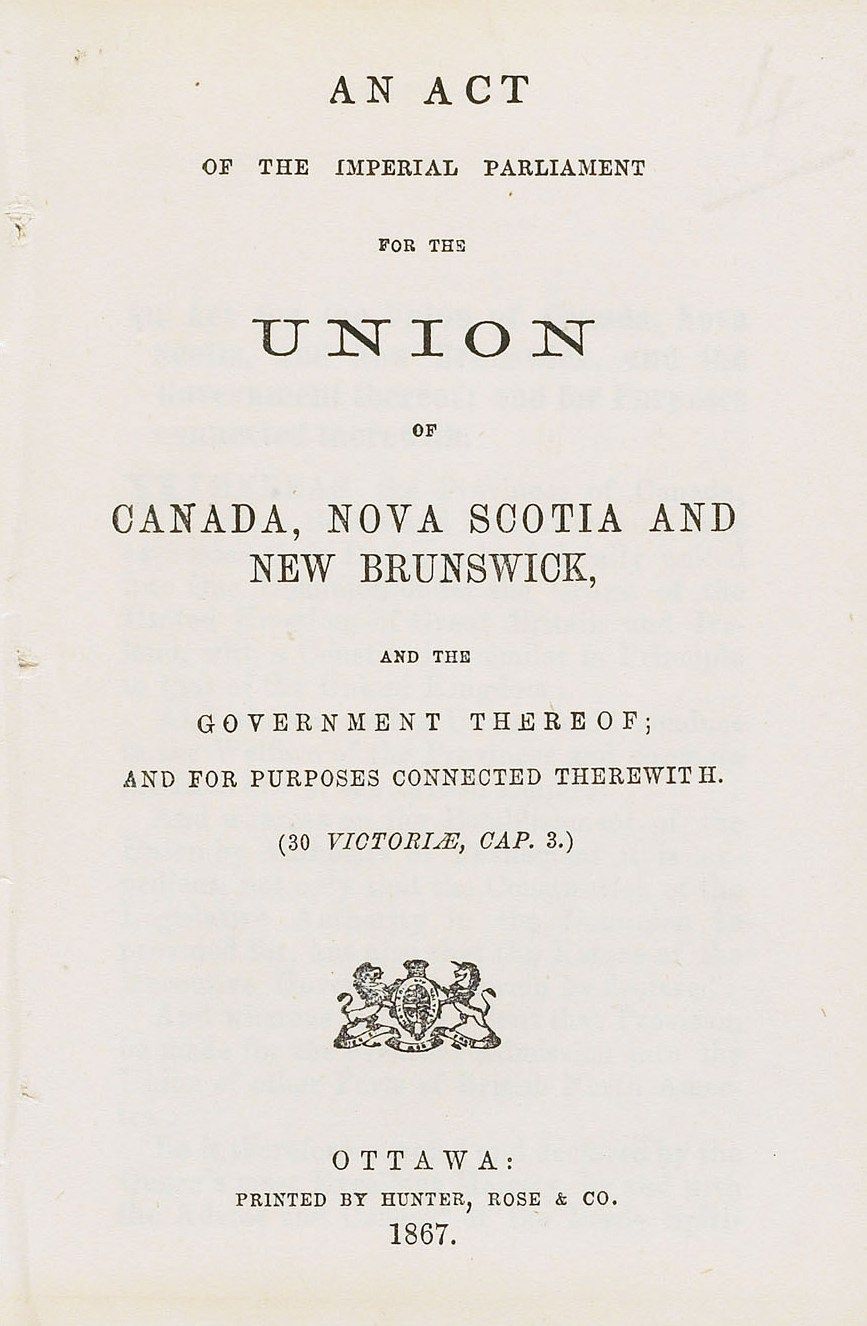
The roots of Canadian corporate law predate Confederation, with companies originally formed through royal charter, special acts of Parliament, or as unincorporated partnerships. A major shift occurred in 1862 when the United Kingdom introduced limited liability as a general principle in company law, which Canadian colonies soon adopted. The Constitution Act, 1867 fundamentally shaped the modern system by granting provinces jurisdiction over the 'Incorporation of Companies with Provincial Objects' under section 92(11). This division of power led to significant judicial interpretation, establishing that federally incorporated companies could operate nationally. In the 1914 John Deere case, it was held that provinces could not require federal companies to register locally to conduct business. The 1916 Bonanza Creek decision clarified that a company with provincial objects was not restricted to operating solely within its incorporating province, provided it was properly licensed elsewhere. Early federal and provincial acts used a letters patent system for incorporation, a method still retained by Prince Edward Island today, while most jurisdictions now use articles of incorporation.

Federal Regulation and Corporations Canada
At the federal level, corporate regulation is the responsibility of Corporations Canada, an agency operating under Innovation, Science and Economic Development Canada. This regulator administers corporate laws for federal businesses, excluding financial institutions which fall under the Office of the Superintendent of Financial Institutions. Corporations Canada holds the authority to dissolve corporations that fail to file their mandatory annual returns. The agency is directly responsible for administering several key federal statutes that form the backbone of federal business regulation. The primary statute for for-profit businesses is the Canada Business Corporations Act. Other important acts under its purview include the Canada Cooperatives Act, the Canada Not-for-Profit Corporations Act, and the Boards of Trade Act. This centralized administration provides consistency for businesses that choose to incorporate federally, often to gain national recognition and operate under a uniform set of rules across all provinces and territories.
Corporate Governance and Board Structure
Corporate governance in Canada is shaped by statute, stock exchange rules, and evolving best practices. The board of directors is central to this structure, elected by shareholders typically under a 'one share, one vote' principle, though cumulative voting is permitted if specified in the articles of incorporation. Directors generally serve until the annual meeting following their election, with terms limited to three annual meetings. For companies listed on the Toronto Stock Exchange, specific enhanced rules have applied since 31 December 2012. These rules mandate that directors be elected individually rather than as a slate and that elections be held annually. Listed companies must also disclose annually whether they have adopted a majority voting policy for uncontested director elections and explain their reasoning if they have not. Directors set their own remuneration, but they owe a fiduciary duty to the corporation when doing so, and unusually high fees can lead to oppression remedy claims. While the CBCA does not have a 'say on pay' rule, many Canadian companies have adopted such votes due to shareholder proposals. Governance is further guided by National Instruments from the Canadian Securities Administrators, such as National Instrument 58-101 on corporate governance disclosure and National Instrument 52-110 on audit committees.
Key governance instruments and requirements for Canadian corporations include the articles of incorporation, which can provide for different classes of shares and the election of directors. The Canada Business Corporations Act and similar provincial statutes outline the duties of directors and officers, requiring them to act honestly and in good faith with a view to the best interests of the corporation. Publicly traded companies on the Toronto Stock Exchange must comply with specific requirements, such as electing directors individually and holding annual elections. Shareholders have rights to vote, requisition meetings, and submit proposals, which are governed by provisions like section 140 and section 137 of the CBCA.
- National Instrument 51-102: Continuous Disclosure Obligations.
- National Instrument 52-109: Certification of Disclosure in Issuers' Annual and Interim Filings.
- National Instrument 52-110: Audit Committees.
- National Instrument 58-101: Disclosure of Corporate Governance Practices (mandatory for TSX-listed companies).
- Proxy Voting Principles and Guidelines from major pension plans and investment funds.
- 2013 Best Practices for Proxy Circular Disclosure.
Shareholder Rights and Participation
Canadian corporate law provides shareholders with significant rights to influence corporate direction. The foundational right, under section 140(1) of the CBCA, is the right to vote, with shareholders of the same class being treated equally. Shareholders holding at least five percent of voting rights can requisition a directors' meeting. A uniquely Canadian feature is found in section 137 of the CBCA, which allows beneficial owners of shares, not just registered owners, to submit proposals for inclusion in meeting materials, significantly broadening participation. These proposals can include nominations to the board of directors. Corporations can refuse a proposal if it does not relate significantly to the business or is deemed an abuse to secure publicity, a decision only challengeable by court application. Proposals that received less than a threshold of votes (3%, 6%, or 10% depending on submission history) in the past five years can also be refused. While directors manage the corporation's business, shareholders can unanimously agree to any corporate act and can amend the articles with a three-quarters majority vote. Since 2006, corporations have been prohibited from making political donations, a change enacted by the Federal Accountability Act.
Duties and Liabilities of Directors and Officers
The duties of directors and officers are codified in section 122 of the CBCA, which serves as a model for provincial laws. This section imposes a dual duty: to act honestly and in good faith with a view to the best interests of the corporation, and to exercise the care, diligence, and skill of a reasonably prudent person. Canadian jurisprudence has significantly expanded on these statutory duties. Wise, the Supreme Court of Canada held that the duty to act in the corporation's best interests is also owed to corporate stakeholders, including shareholders, employees, creditors, and the environment. The duty of care requires directors to meet a minimum standard of competence, with the standard rising if a director possesses special skills. Courts have ruled that the 'business judgment rule' only protects decisions where the board has exercised real, informed judgment after diligent deliberation. Directors also have a strict duty to avoid conflicts of interest, which includes disclosing any material interest in a corporate transaction. The rules on taking corporate opportunities were established in cases like Cook v Deeks, requiring director authorization for personal profit from opportunities the company could have pursued. Later cases, such as Peso Silver Mines Ltd. v. Cropper and Canadian Aero Service Ltd. v. O'Malley, refined this analysis, focusing on the opportunity's connection to the company and the director's relationship to it.
Corporate Litigation and Shareholder Remedies
Shareholders and other stakeholders have access to powerful tools to address corporate wrongdoing, primarily through derivative actions and the oppression remedy. A derivative action is used when the corporation itself is harmed, and the injury to shareholders is indirect. In contrast, the oppression remedy is a personal action available when conduct is oppressive, unfairly prejudicial, or unfairly disregards the interests of a security holder, creditor, director, or officer. The oppression remedy under the CBCA is notably broad, described by the Supreme Court in the Peoples Department Stores case as 'the broadest, most comprehensive and most open-ended shareholder remedy in the common law world.' Access to these remedies is available to a wide range of complainants, including shareholders, directors, officers, and any other person the court deems proper, which can include creditors. To pursue a derivative action, a complainant must give 14 days' notice to the directors, act in good faith, and demonstrate it is in the corporation's interest. For an oppression claim, the court applies a two-step test from BCE Inc. v. 1976 Debentureholders: it first determines if the claimant had a reasonable expectation, and then if that expectation was violated by oppressive conduct. Where conflicting interests arise, directors must resolve them in accordance with their fiduciary duty, balancing interests without absolute rules favouring one group over another.
The Modern Legal Landscape and Professional Development
The practice of corporate law in Canada is dynamic, with ongoing professional development and educational initiatives reflecting its complexity. Law firms like SkyLaw, voted a Top 10 Corporate Law Boutique in Canada, specialize in mergers and acquisitions and cross-border transactions. Major conferences, such as the Canadian Legal Summit 2026 and the annual Advertising and Marketing Law conference, provide forums for in-house counsel and law firm leaders to discuss trends, technology, and governance. Universities offer specialized programs, including the Corporate Law Summer Institute, a group study program for Juris Doctor students run by the University of Calgary Faculty of Law with a tentative itinerary for London and Brussels in August 2026. This program, with an estimated cost of $14,630, focuses on international business transactions and exposes students to global legal institutions. Continuing legal education is essential, with conferences often accredited for Continuing Professional Development hours by law societies. The legal market is increasingly focused on topics like artificial intelligence, legal operations, and the evolving relationship between general counsel and law firms, ensuring practitioners remain equipped to advise businesses in a competitive global environment. The encyclopedia article does not contain any information about notable conferences or educational programs occurring in the year 2026. They detail the roles of federal and provincial regulators, corporate governance structures, and shareholder rights. Therefore, no specific facts about 2026 events can be derived from the given material.
- Canadian Legal Summit 2026: A major forum for in-house counsel and law firm leaders.
- Advertising and Marketing Law Conference: Canada's most comprehensive conference on the topic.
- CBA Business Law Conference: Inaugural conference covering private company M&A and automation.
- Corporate Law Summer Institute: A University of Calgary Faculty of Law international study program.
- Queen's Certificate in Law (Corporate Law): An introductory certificate program.
- Various LLM programs in Business and Commercial Law at Canadian institutions.
Comparative Governance and International Context
Canadian corporate governance shares similarities with other Commonwealth jurisdictions but has developed distinct features. The 'one share, one vote' principle aligns with practices in the United Kingdom and Europe, while the detailed disclosure requirements for TSX-listed companies reflect influences from both UK and US governance models. The Canadian approach to director duties, particularly the expansive view of stakeholder interests established in the Peoples Department Stores case, represents a significant development in Commonwealth corporate law. The oppression remedy's breadth is unique, offering stronger protections to creditors and other stakeholders than many other common law jurisdictions. Successful Canadian corporations often operate internationally, raising capital in markets like the United States and the United Kingdom, which requires their legal advisors to be proficient in cross-border transactions and comparative corporate structures. This international orientation is reflected in legal education, such as the Corporate Law Summer Institute's focus on London's financial and legal institutions. The integration of global best practices, alongside domestically developed rules like the TSX's majority voting guidance, ensures the Canadian framework remains strong and adaptable for businesses competing worldwide.
Questions about Canadian corporate law
What is the difference between federal and provincial incorporation in Canada?
Businesses in Canada can choose to incorporate under federal law via the Canada Business Corporations Act or under a provincial or territorial statute. Federal incorporation, administered by Corporations Canada, provides a company with the right to use its name across Canada and operates under a uniform national law, which can be advantageous for businesses operating in multiple provinces. Provincial incorporation is governed by the laws of that specific province and is often chosen for businesses that intend to operate primarily within that province's borders. The choice depends on factors like the scope of business, desired corporate rules, and administrative preferences.
What are the main duties of a corporate director in Canada?
Under section 122 of the Canada Business Corporations Act, every director and officer has two primary duties. First, they must act honestly and in good faith with a view to the best interests of the corporation. Second, they must exercise the care, diligence, and skill that a reasonably prudent person would in comparable circumstances. Courts have interpreted the 'best interests of the corporation' to include the interests of stakeholders such as shareholders, employees, creditors, and the environment. Directors must also avoid conflicts of interest, disclose any material personal interest in corporate transactions, and comply with the corporation's articles, bylaws, and unanimous shareholder agreements.
What is the oppression remedy in Canadian corporate law?
The oppression remedy is a powerful legal tool available to shareholders, directors, officers, and other proper persons when a corporation's affairs are conducted in a manner that is oppressive, unfairly prejudicial, or that unfairly disregards their interests. It is considered one of the broadest shareholder remedies in the common law world. To succeed, a claimant must demonstrate they had a reasonable expectation that was violated by the corporation's conduct. Courts have wide discretion to grant remedies, including rectifying the oppressive conduct, regulating the corporation's affairs, or ordering compensation. This remedy is available under the CBCA and most provincial corporate statutes.
Can shareholders nominate directors in a Canadian corporation?
Yes, shareholders can nominate directors. Under section 137 of the Canada Business Corporations Act, a shareholder or even a beneficial owner of shares (someone who owns shares through a broker) can submit a proposal that includes nominations for the board of directors. This proposal must be included in the management information circular sent before a shareholders' meeting, provided it is submitted within prescribed time limits. The corporation can refuse the proposal only on specific grounds, such as if it does not relate significantly to the business or is an abuse meant to secure publicity, but the shareholder can challenge that refusal in court.
What governance rules apply to companies listed on the Toronto Stock Exchange?
The Toronto Stock Exchange requires listed companies to adhere to specific corporate governance practices. Since 31 December 2012, these include electing directors individually rather than as a slate and holding elections annually instead of using multi-year staggered terms. Companies must also disclose annually whether they have adopted a majority voting policy for uncontested director elections. If they have not, they must explain why. If a director receives a majority of 'withhold' votes in an uncontested election at a company without a majority voting policy, the company must notify the TSX and issue a press release. These rules are complemented by National Instruments from provincial securities regulators on continuous disclosure, audit committees, and governance practices.
How has Canadian corporate law addressed corporate political donations?
Corporate political donations at the federal level have been prohibited since 2006. The Federal Accountability Act repealed section 404.1 of the Canada Elections Act, which had allowed corporations and trade unions to make political contributions. This change means that corporations incorporated under federal law, such as the Canada Business Corporations Act, cannot make donations to federal political parties, candidates, or electoral district associations. Similar restrictions exist in many provinces, reflecting a legislative trend to limit the influence of corporate and union money in the political process and to ensure elections are funded primarily by individual citizens.
Sources and further reading
- Canadian corporate law (Wikipedia)
- 2026 Corporate Law Summer Institute (ucalgary.ca)
- Corporate & Securities Law (skylaw.ca)
Checked by the Nosy Mag desk. Last updated 2026-11-03.