Canadian contract law
Canadian contract law governs the formation, interpretation, and enforcement of legally binding agreements across the country. It is composed of two distinct legal systems: a common law framework applied in the provinces and territories outside Québec, and a civil law framework codified within Québec's Civil Code. This dual structure reflects Canada's legal heritage, with common law derived from English tradition and Québec's civil law originating from French legal principles. Contract law is a foundational element of commercial and personal dealings, providing the rules for economic exchange and defining remedies when promises are broken. As contract law is primarily under provincial jurisdiction, its specific rules can vary between common law provinces, though federal law harmonizes aspects related to areas like banking and maritime law.
The Dual Legal Systems
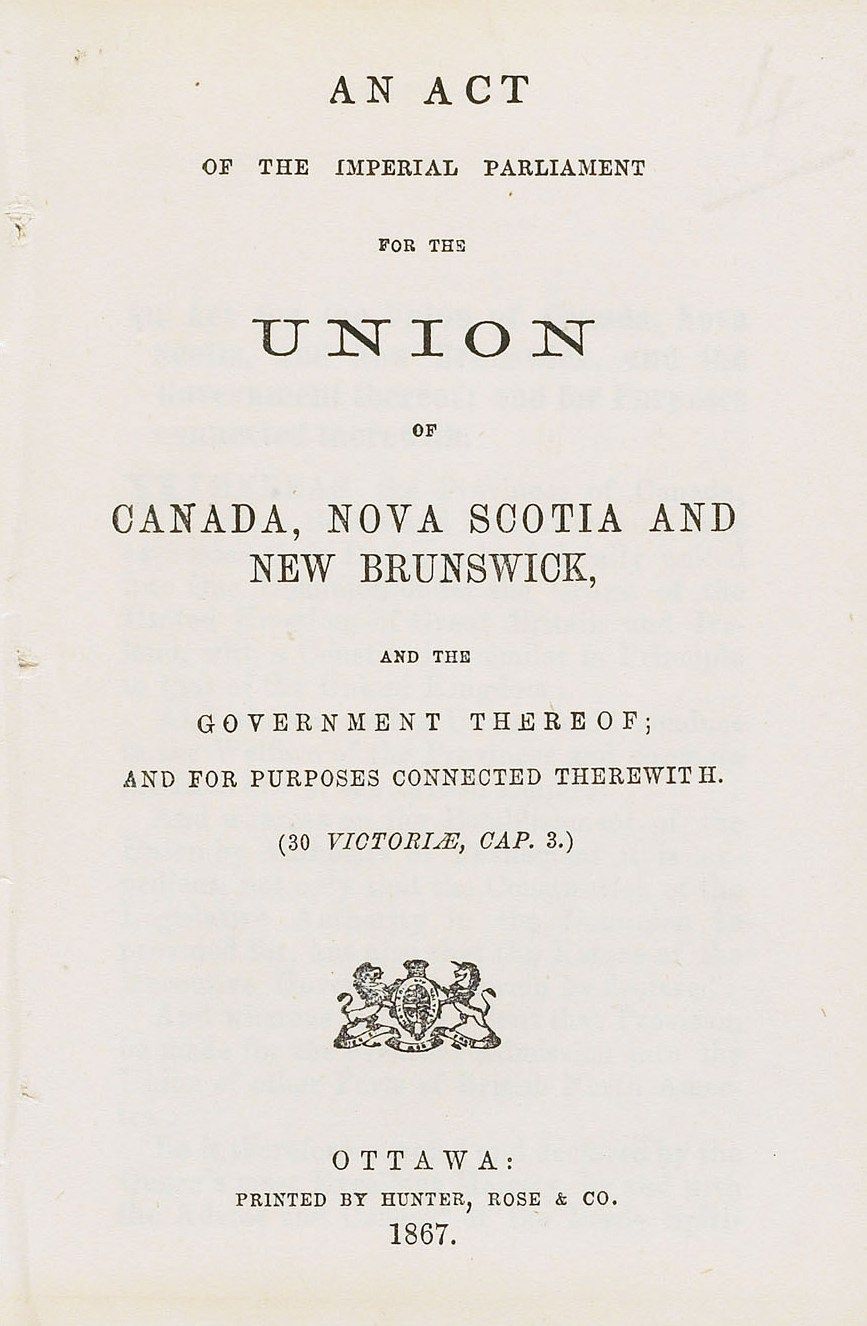
Canadian contract law operates under two parallel frameworks, a division rooted in the country's constitutional and historical development. Outside the province of Québec, contract law is based on the English common law tradition, which relies on judicial precedent to develop legal principles. Since Confederation in 1867, Canadian common law has evolved distinctly from its English origins, adapting to local circumstances. Within Québec, contract law is governed by the civil law system, originally derived from French law as it existed at the time of Québec's annexation into the British Empire. This system was comprehensively overhauled and codified first in the Civil Code of Lower Canada and later in the current Civil Code of Quebec, which integrates most contract law rules into its broader law of obligations.
The division of powers under the Constitution Act, 1867, places property and civil rights, which encompass most contract law, under provincial jurisdiction. This means contract law can differ not only between Québec and the common law provinces but also among the common law provinces themselves. Individual common law provinces have enacted statutes like Sale of Goods Acts to codify certain contractual rules, resembling similar legislation in other Commonwealth nations. Conversely, Section 91 of the Constitution grants the federal government authority over specific areas like bills of exchange, banking, and maritime law. Consequently, contract law pertaining to these federally regulated subjects, particularly in international shipping and transportation, is harmonized across the country, creating a uniform national standard in those fields.

Formation of a Contract in Common Law
In Canada's common law provinces and territories, the formation of a valid contract requires three fundamental components: offer, acceptance, and consideration. The parties must also possess the legal capacity to contract and demonstrate an intention to create legal relations. An offer is a clear indication by one party, the offeror, to another, the offeree, of a willingness to be bound by specific terms. The test for intention is objective, meaning courts look at what a reasonable person would understand from the parties' words and conduct. Commercial agreements are generally presumed to be intended as legally binding, while social or domestic arrangements typically are not.
Acceptance must be an absolute and unqualified agreement to all the terms of the offer. Any variation, even on a minor point, generally constitutes a counter-offer rather than an acceptance, which then requires acceptance by the original offeror to form a contract. Distinguishing an offer from a mere invitation to treat, such as most advertisements or the display of goods in a store, is crucial. Exceptions exist, as seen in cases like Carlill v. Carbolic Smoke Ball Co., where a unilateral offer to the public was found in an advertisement. The rules for calls for tenders have been particularly developed in Canadian law, with leading cases like R. v. Ron Engineering & Construction Ltd. and M.J.B. Enterprises Ltd. v. Defence Construction (1951) Ltd. establishing that a tender call can itself create a preliminary contract, known as Contract A, upon submission of a compliant bid.
The doctrine of consideration requires that each party to a contract provide something of value in exchange for the promise of the other. This means gratuitous promises are generally not enforceable in common law. The doctrine is controversial, criticized for creating uncertainty and unnecessary litigation, and is rejected by international instruments like the UNIDROIT Principles. In practice, parties sometimes use nominal or 'peppercorn' consideration to satisfy the technical requirement. Canadian courts may evaluate whether consideration is sufficient, and some provinces, like New Brunswick and British Columbia, have abrogated the rule that performance of a pre-existing duty cannot be consideration for amending a contract, while Ontario courts have maintained it.
Formation of a Contract in Québec Civil Law
The rules for contract formation under Québecois law are systematically codified in Book Five, Title One, Chapter 2, Division 3 of the Civil Code of Quebec. A contract is formed by the exchange of consent between persons with the capacity to contract, and it must also have a cause and an object. The cause is the reason that determines each party to enter into the contract, which does not need to be explicitly stated. The object is the specific juridical operation, or exchange of legal rights, contemplated by the parties at the time of formation. An object is only valid if it is not prohibited by law or public policy. A contract failing to meet these conditions may be annulled.
Consent is typically exchanged through an offer and acceptance. An offer must contain all essential elements of the proposed contract and signify the offeror's willingness to be bound upon acceptance. It can be made to a specific or general person and may include a time limit for acceptance. If a time limit is attached, the offer cannot be revoked before it expires. Without a time limit, it can be revoked at any time before acceptance is received. Consent must be 'free and enlightened' and can be vitiated by error, fear, or lesion, which is similar to the common law concept of unconscionability. Error vitiates consent if it relates to the nature of the contract, the object of the prestation, or any essential element. Lesion involves the exploitation of one party by the other, creating a serious disproportion between their obligations.
- Offer: Proposal containing all essential terms, showing intent to be bound.
- Acceptance: Unqualified agreement to the offer's terms, communicated to the offeror.
- Capacity: Legal ability of the parties to bind themselves.
- Cause: The reason motivating each party to enter the contract.
- Object: The specific legal operation or exchange intended by the parties.
- Vitiated Consent: Consent invalidated by error, fear, or lesion, leading to potential annulment or damages.
Contract Interpretation
Across all Canadian jurisdictions, contracts are interpreted to balance giving effect to the parties' intent with protecting the public interest and parties with less bargaining power. Provincial superior courts are primarily responsible for interpreting contracts in legal disputes. In the common law provinces, the rules of interpretation are established by judicial precedent and broadly resemble those in other Commonwealth jurisdictions. These rules focus on the objective meaning of the language used, the contract's commercial context, and the need to avoid absurd results. In Québec, the rules are explicitly codified in the Civil Code, with Section 1425 prioritizing the common intention of the parties over the literal meaning of the words in a written document.
Section 1426 requires courts to consider the contract's nature, the circumstances of its formation, relevant customs, and any prior interpretations. Section 1427 mandates that each clause be interpreted in the context of the others, giving meaning derived from the contract as a whole. Section 1430 states that a clause meant to eliminate doubt does not restrict a contract otherwise expressed in general terms, while section 1431 provides that clauses cover only what the parties intended to include. Section 1432 codifies the contra proferentem rule, meaning ambiguous clauses are interpreted against the party that drafted them. This structured approach in Québec contrasts with the more flexible, case-by-case development of interpretation principles in the common law provinces.
International Contracts and the CISG
For international commercial transactions, Canadian contract law is significantly influenced by the United Nations Convention on Contracts for the International Sale of Goods (CISG). Canada is a contracting state, and the CISG automatically applies to contracts for the sale of goods between parties whose places of business are in different contracting states, unless the parties expressly exclude it. This convention substantially harmonizes contract formation rules across civil, common, and mixed law jurisdictions, facilitating international trade by providing uniform rules for formation, delivery, obligations, and remedies for breach. The CISG also applies if conflict of law rules point to the law of a Contracting State, such as when a contract specifies arbitration in Toronto under Ontarian law.
Under the CISG, a contract is concluded by an offer and acceptance. An offer must be addressed to specific persons, be sufficiently definite by describing the goods, quantity, and price, and indicate an intent to be bound. Proposals not addressed to specific persons are generally treated as invitations to treat. The CISG does not require consideration for a contract to be valid, aligning with civil law and diverging from the common law doctrine. An offer can typically be revoked before an acceptance is dispatched, unless it indicates it is irrevocable or the offeree reasonably relied on it. Acceptance requires a positive act. Silence or inactivity does not constitute acceptance. A reply that purports to accept but contains additions or modifications is a counter-offer, unless the alterations are not material.
| Feature | CISG Rule | Impact in Canada |
|---|---|---|
| Application | Automatic for international sale of goods between contracting states | Overrides domestic provincial law for applicable contracts |
| Formation | Offer and acceptance, no consideration required | Harmonizes common law and civil law approaches for international sales |
| Offer Revocation | Generally allowed until acceptance dispatched | Provides clear, uniform rule for international dealings |
| Acceptance | Requires positive act, silence is not acceptance | Clarifies rules for cross-border communications |
Duties and Equitable Doctrines
Canadian contract law imposes duties of good faith and employs equitable doctrines to ensure fair dealing. The duty to negotiate in good faith is enshrined in Québec's civil code and recognized in common law provinces in situations with a bargaining power imbalance, such as franchising, tendering, and fiduciary relationships. A distinct duty of honest contractual performance, rooted in Québec's doctrine of abuse of rights, was extended to common law provinces by the Supreme Court in Bhasin v. Hrynew. This duty prohibits parties from lying or knowingly misleading each other about matters directly linked to contract performance.
The doctrine of estoppel prevents a party from relying on a contract's strict terms if its words or conduct led the other party to believe those terms would not be enforced. Unconscionability is a doctrine that restricts the enforceability of unfair agreements resulting from an inequality of bargaining power. The test involves determining if there was an inequality and if it resulted in an improvident bargain for the weaker party. This doctrine is particularly relevant to standard form contracts and choice of law clauses.
- Duty to Negotiate in Good Faith: Recognized in franchising, tendering, and where a pre-existing relationship exists.
- Duty of Honest Performance: Prohibits lying or misleading about contractual performance (Bhasin v. Hrynew).
- Estoppel: Prevents enforcement of a term if one party led the other to believe it would not be invoked.
- Unconscionability: Allows courts to refuse enforcement of unfair contracts due to bargaining power inequality.
- Contract A Doctrine: In tendering, a process contract is formed upon submission of a compliant bid, requiring the owner to deal fairly with all bidders.
Nominate Contracts
Both Québec and the common law provinces have enacted special rules for certain categories of contracts, known as nominate contracts. These include contracts for the sale of goods, sale of immovable property, and lease of immovable property, each with standardised protections and obligations. In Québec, a sales contract is defined as a transfer of property ownership for a price. The Civil Code provides warranties of ownership and quality for buyers, and obligations for delivery. In common law provinces, statutes like Ontario's Sale of Goods Act define similar rules, including the seller's duty to deliver goods and the buyer's duty to accept and pay. For the sale of immovable property, provinces have Conveyancing and Property Acts governing formalities and land registration. Residential tenancy agreements are heavily regulated across all provinces, with rules on rent control, security deposits, and tenant rights to quiet enjoyment and assignment. Québec's Civil Code and statutes like Ontario's Residential Tenancies Act and British Columbia's Residential Tenancy Act prescribe these terms.
| Contract Type | Key Québec Provisions | Key Common Law Provisions |
|---|---|---|
| Sale of Goods | Warranties of ownership and quality in the Civil Code | Seller's duty to deliver, buyer's duty to accept and pay under provincial Sale of Goods Acts |
| Sale of Immovable Property | Formalities and cadastral system rules in the Civil Code | Conveyancing rules and land registration under provincial property acts |
| Residential Lease | Habitable condition, rent control, assignment rights in the Civil Code | Rent control, security deposit limits, quiet enjoyment under provincial residential tenancy acts |
Remedies for Breach
Remedies for breach of contract in Canadian law are divided into damages, specific relief, and rescission. The most common remedy is compensatory damages, intended to put the innocent party in the position they would have been in had the contract been performed. Restitutionary damages aim to restore benefits conferred. Liquidated damages are amounts specified in the contract itself for breach.
Specific relief includes specific performance, where a court orders the breaching party to fulfil its contractual obligations. This is typically reserved for unique goods, like land, where damages are inadequate. Injunctions are court orders to refrain from doing something. Rescission cancels the contract, returning the parties to their pre-contractual positions. In Québec, the Civil Code lays out general rules for damage assessment, compensating for the actual loss suffered and gains deprived.
Questions about Canadian contract law
What are the main differences between contract law in Québec and the rest of Canada?
The main difference is the legal system: Québec uses a civil law system codified in the Civil Code of Quebec, while the other provinces and territories use a common law system based on judicial precedent. In formation, common law requires offer, acceptance, and consideration, whereas Québec civil law requires consent, capacity, cause, and object. The requirement for consideration is the most significant practical difference, as gratuitous promises are generally not enforceable in common law but can be under Québec's civil law if other conditions are met. Interpretation rules are also codified in Québec but developed through case law in common law provinces.
Can a text message or an emoji form a legally binding contract in Canada?
Yes, under certain circumstances. Canadian courts have recognized that electronic communications like emails and text messages can form binding contracts. In a 2024 Saskatchewan case, Achter Land & Cattle Ltd. v. South West Terminal Ltd., the Court of Appeal upheld a finding that a thumbs-up emoji in a text message chain formed part of an enforceable contract for the sale of grain and satisfied a legal signature requirement. The Supreme Court of Canada refused to hear an appeal in 2025. Whether such communications constitute acceptance depends on the context, the parties' words and conduct, their previous dealings, and any applicable statutory rules.
What is consideration and why is it important in Canadian common law?
Consideration is a fundamental requirement for the formation of a valid contract in Canada's common law provinces and territories. It means that each party must exchange something of value for the promise of the other. A mere gratuitous promise, like a gift, is generally not legally enforceable because it lacks consideration. The doctrine aims to distinguish serious, bargained-for promises from informal social ones. It is controversial, as it can create technical barriers and is not required in Québec civil law or under international commercial treaties like the United Nations Convention on Contracts for the International Sale of Goods (CISG). Parties sometimes use nominal 'peppercorn' consideration to satisfy the rule.
How does international sale of goods contract law work in Canada?
Contracts for the international sale of goods in Canada are primarily governed by the United Nations Convention on Contracts for the International Sale of Goods (CISG). Canada is a contracting state, so the CISG automatically applies to commercial sales contracts between parties whose places of business are in different contracting states, unless the parties explicitly opt out. The CISG provides uniform rules for contract formation, obligations, and remedies, harmonizing the law across different legal systems. Importantly, it does not require consideration for a contract to be valid. This means for many international business transactions, the CISG overrides the domestic provincial contract law that would otherwise apply.
What happens if a contract is found to be unfair or unconscionable?
Canadian courts, in both common law and civil law jurisdictions, have mechanisms to address unfair or unconscionable contracts. In common law, a contract may be set aside if it is found to be unconscionable, typically involving a significant power imbalance and a resulting bargain that is grossly unfair. The test assesses inequality of bargaining power and whether it led to an improvident bargain. In Québec civil law, the similar concept is 'lesion', which results from the exploitation of one party by the other, creating a serious disproportion between their obligations. Lesion creates a presumption of exploitation. In such cases, the aggrieved party may apply to have the contract annulled or seek a reduction of their obligations.
What are the key duties of good faith in Canadian contract law?
Canadian contract law recognizes two key duties of good faith. The duty to negotiate in good faith applies in situations with a bargaining power imbalance, such as tendering or franchising. The duty of honest contractual performance, established by the Supreme Court in Bhasin v. Hrynew, requires parties not to lie or knowingly mislead each other about matters directly linked to performing the contract. In Québec, these duties are rooted in the Civil Code's requirement to exercise civil rights in good faith and the doctrine of abuse of rights. These duties limit how parties may exercise their contractual rights and aim to ensure fair dealing.
Sources and further reading
- Canadian contract law (Wikipedia)
- Contract Law 2026 (osgoodepd.ca)
- Canadian Contract Law, 5th Edition | LexisNexis Canada (store.lexisnexis.com)
- Contract Law in Canada (thecanadianencyclopedia.ca)
- 7 Demystifying Contract Formation Laws in Canada (2026) (lawvo.com)
Checked by the Nosy Mag desk. Last updated 2026-11-03.